

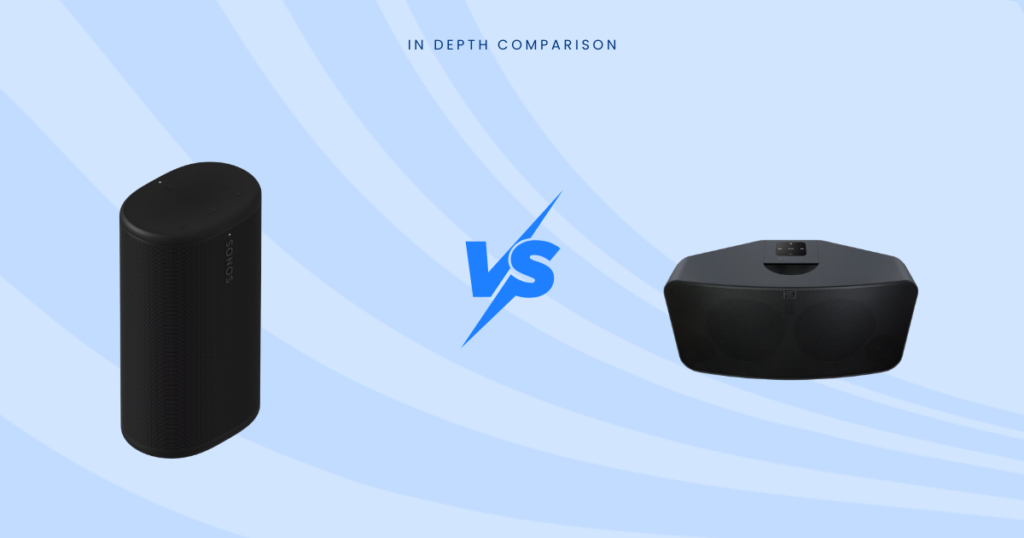
Trying to choose between the Sonos Play vs Bluesound (Pulse series)? The real question is simple, do you want the easier all-around speaker, or the one built for a more audio-first setup?
This comparison breaks down sound, app experience, room fit, portability, features, and value, so you can see where each one makes sense. If you want the solo Sonos angle first, the Sonos Play review is a good place to start.
Short version, Sonos is the easier pick for everyday use. Bluesound is usually the better call when hi-res audio and wired flexibility matter more.
RELATED: Sonos Play vs Sonos Roam 2: Is it worth Upgrading?

Quick Summary
Sonos Play is the easier all-around buy. It is portable, rugged, battery powered, and built to move from room to room without making you think about cables or placement. It also fits neatly into the Sonos ecosystem, which matters if you want simple grouping and a speaker that plays nice with your other gear.
Bluesound Pulse models are more home-focused. They lean harder into hi-res playback, wired options, and a more serious audio setup. That makes them a better fit if your listening space is fixed and you care more about source quality than grab-and-go convenience.
For a broader brand-level view, this Sonos vs Bluesound review makes the same basic split pretty clear, Sonos is easier, Bluesound is more audio-first.
If you move speakers around a lot, Sonos has the cleaner answer.
If you park a speaker in one room and listen closely, Bluesound starts to make more sense.
Winner: Sonos Play. You get more flexibility, and that usually matters more than a few extra audio niceties.
Specifications
Here’s the fast side-by-side view.
| Spec | Sonos Play | Bluesound Pulse series |
|---|---|---|
| Product focus | Portable all-in-one speaker | Home-focused multi-room speakers |
| Wireless | Wi-Fi 6, Bluetooth 5.3 | Wi-Fi, Bluetooth aptX HD |
| AirPlay | AirPlay 2 | AirPlay 2 |
| Audio ecosystem | Sonos app, Spotify Connect, grouped Sonos playback | BluOS multi-room system |
| Battery / power | Up to 24 hours, charging cradle, USB-C, power bank use | Mostly plug-in, FLEX can use an optional battery pack |
| Portability | 1.3kg, grab-and-go, IP67 | Usually stationary, room-first |
| Sound tuning | Automatic Trueplay | Hi-res playback focus |
| Audio support | Strong everyday streaming playback | Up to 24-bit/192kHz, MQA, DSD256 |
| Stereo / pairing | Two Plays can form a stereo pair | Two speakers can pair for stereo or rear use |
| Wired options | USB-C, optional line-in adapter, optional combo Ethernet adapter | USB-C input, optical/analog combo jack on some models |
| Voice control | Local voice control, Amazon Alexa | More limited voice control support |
| Price | $299 | Varies by model |
The table tells the story fast, Sonos is the more flexible everyday speaker, while Bluesound is built for people who care a lot about format support and fixed-room listening.
Winner: Sonos Play. The combination of battery, portability, and ecosystem support gives you more ways to use it.
Design & Build Quality
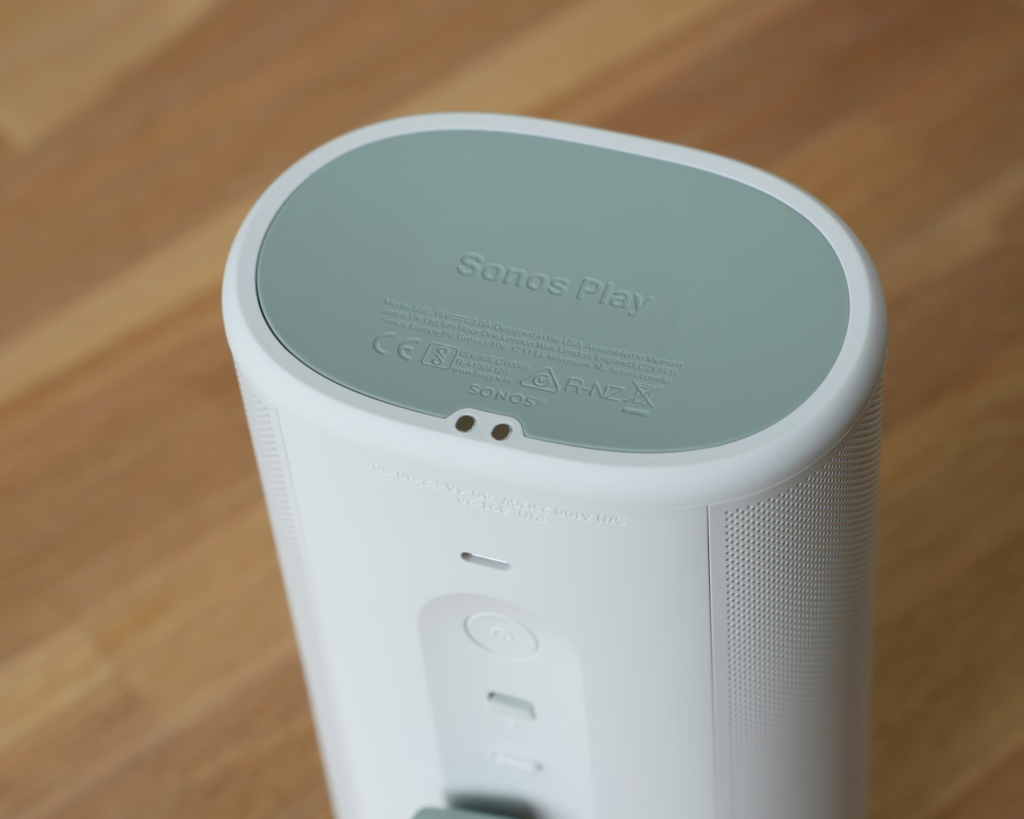
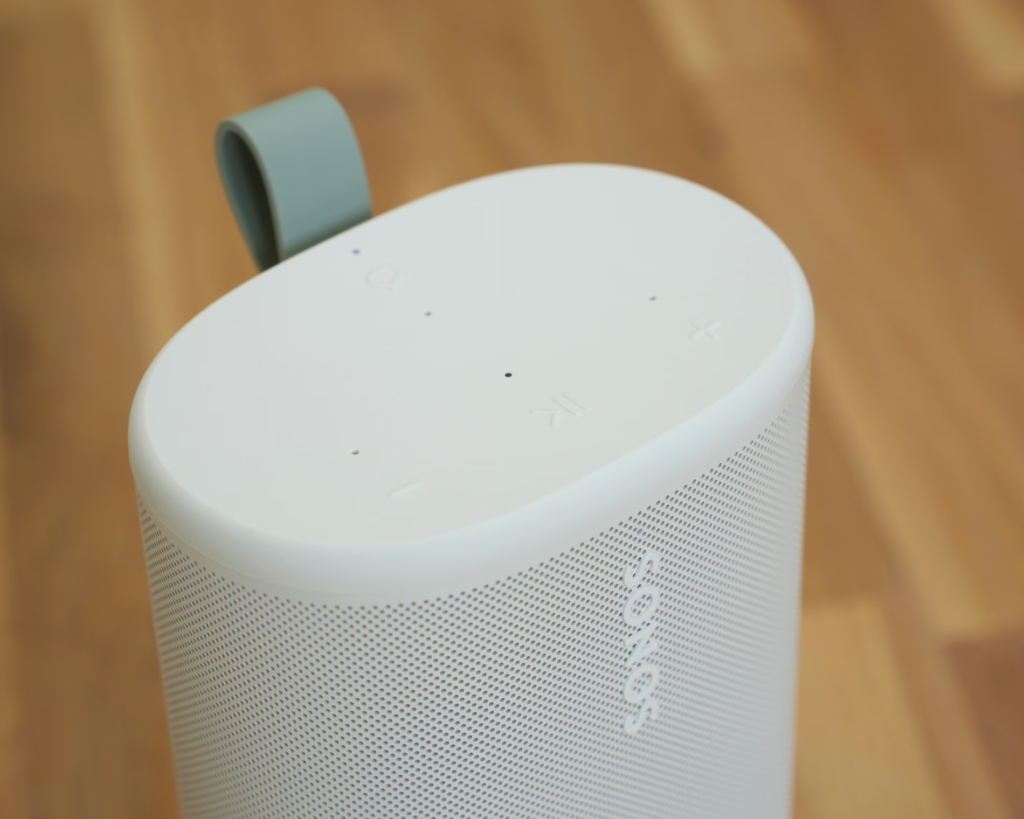
Sonos Play is the easier speaker to live with day to day. It is compact, weighs 1.3kg, and uses a rugged IP67 design with rubberized top and bottom sections. You also get a charging cradle, and the battery is replaceable, which helps it age better than a lot of portables.
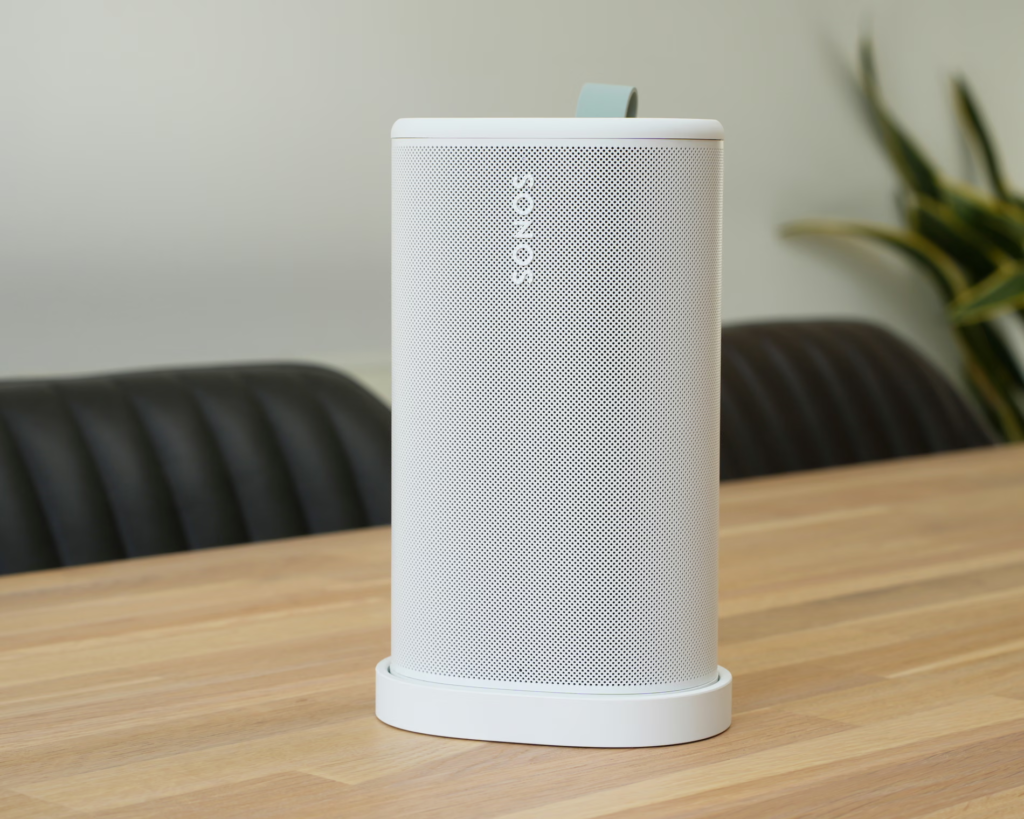
It also feels like a speaker built to move. You can carry it from the kitchen to the patio, then back inside, without planning around power. The small catch is that Sonos skips the charger in the box, and the buttons are small and flat, so first-time use can take a minute.
Bluesound Pulse speakers are built for the room, not the backpack. The Pulse Flex 2025 redesign uses a teardrop shape and swappable fabric grilles, while larger Pulse models are more traditional home speakers with a bigger footprint. That makes them easier to live with on a shelf or console, but less handy if you want to keep shifting the speaker around.
If you want a more fixed Sonos speaker for home use, the Sonos Era 100 review is the cleaner comparison. The Play is still the more flexible of the two here.
Winner: Sonos Play. It is easier to move, easier to place, and better built for life outside one room.
Sound Quality
Sonos Play sounds bigger than its size suggests. One reviewer said a single unit could cover a 500 sq ft living room at around 40% volume, and that lines up with the general feel here, loud, full, and confident at moderate levels. It also stays balanced at lower volumes, which is handy if you listen in the background.
The sound has good tonal separation, solid mids, and strong vocal clarity. Bass has good weight in the upper and mid bass, but it does not dig very deep. Push the volume too high, past roughly 80%, and the low end thins out while the upper mids can distort a bit. At around 60%, it seems to hit the sweet spot.
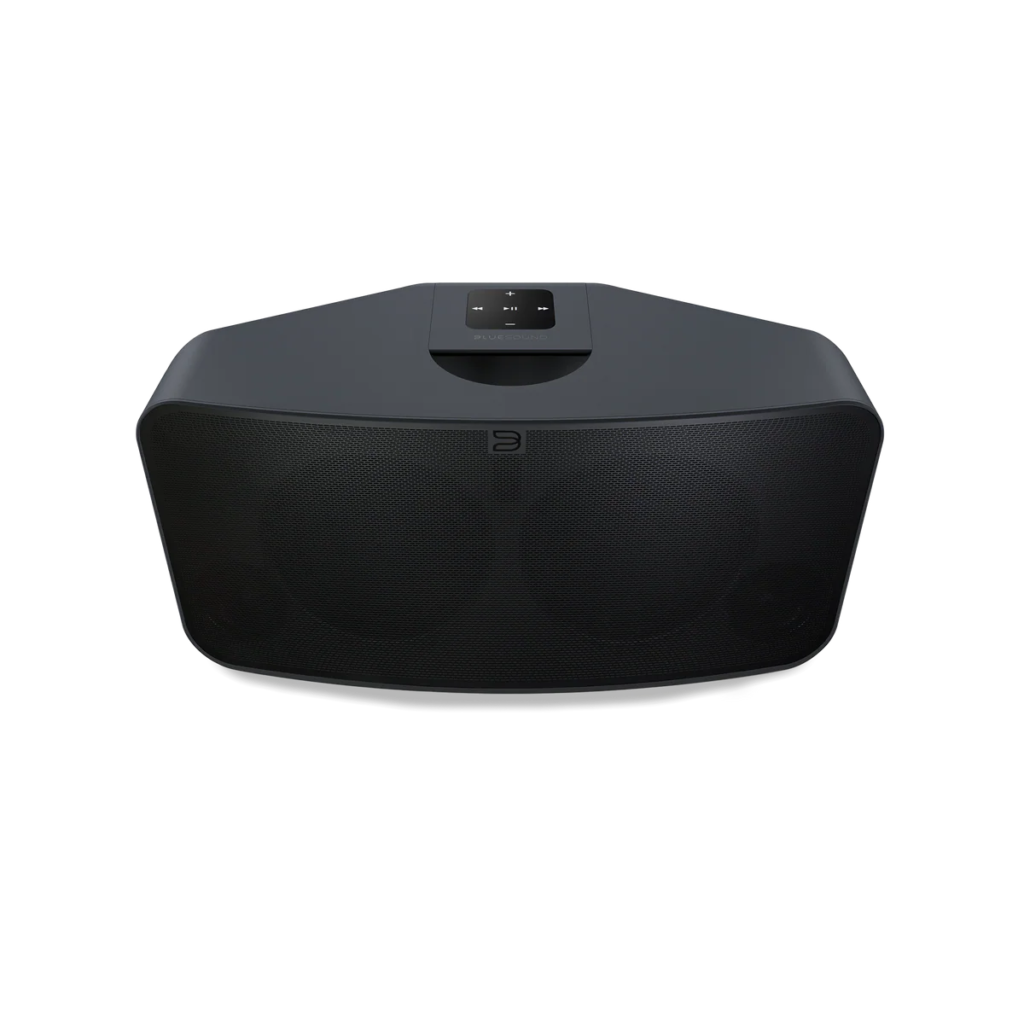
Bluesound Pulse models aim at a different target. The series is built around hi-res playback up to 24-bit/192kHz, plus MQA and DSD support on models like the Pulse Flex. That matters if you listen to higher-quality files and want more detail, more headroom, and a more audio-nerdy feature set. A Bluesound Pulse M review also points to that same focus, sound first, convenience second.
Sonos is the easier listen. Bluesound is the more serious listen.
Winner: Bluesound Pulse series. If sound quality and hi-res support are the main event, it has the stronger case.
Features & App Experience
Sonos Play is the easier system to use every day. The Sonos app now covers the basics well, including multi-room grouping, EQ, playlist editing, local music library playback, alarms, and unified search across services. You also get automatic Trueplay tuning, which helps the speaker adapt when you move it between different rooms.
That matters because Sonos is made for simple control. You can group speakers, move music around the house, and keep using major streaming services without much friction. It also supports stereo pairing, so two Plays can play as a pair when you want more width and power.
Bluesound’s BluOS setup is more for people who want playback control and audio flexibility. It is built around multi-room listening, hi-res file support, and more open audio options. Some Pulse models can also pair for stereo or even work as rear speakers in a home theater setup, which gives you more layout options in a fixed room.
If you want a deeper model-by-model comparison of the two ecosystems, this Bluesound vs Sonos breakdown is useful background. The short version is still the same, Sonos is smoother, Bluesound is more flexible for audio people.
Winner: Sonos Play. The app and feature set are easier to live with, and that wins most daily-use battles.
Connectivity & Controls
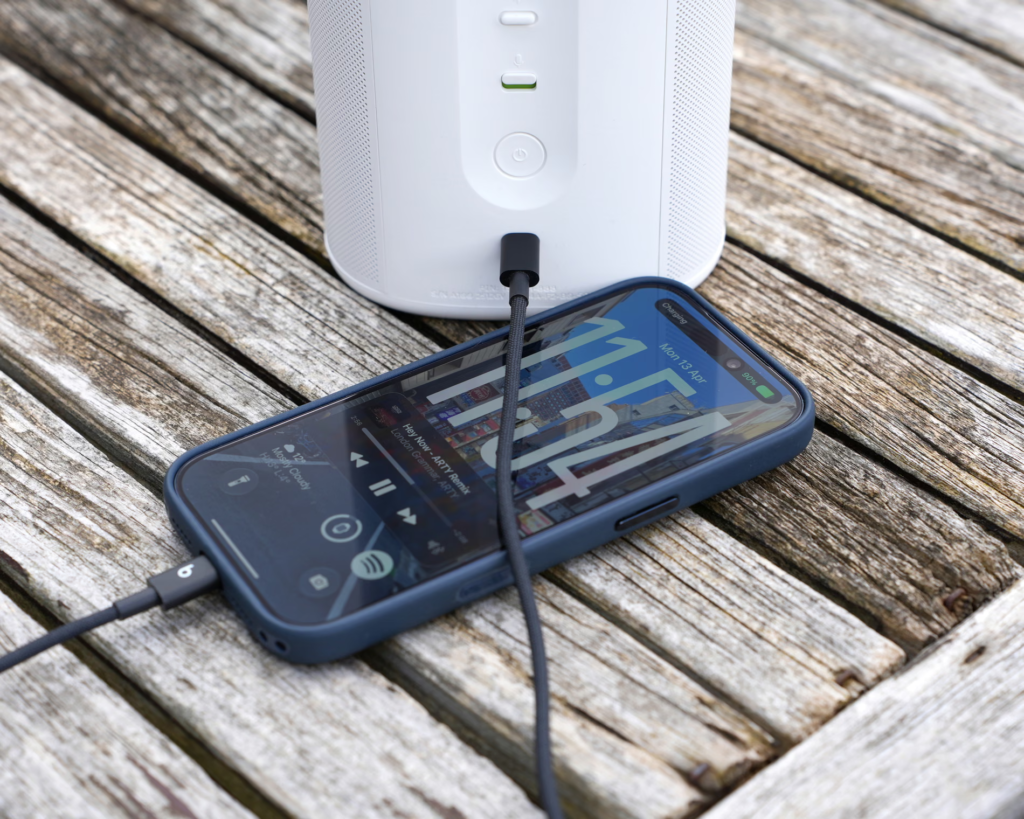
Sonos Play gives you a strong mix of wireless and portable-friendly options. You get Wi-Fi 6, Bluetooth 5.3, AirPlay 2, Spotify Connect, USB-C, and the option to add Sonos accessories for line-in or Ethernet use. It is also easy to mute the microphones with the rear switch when you want privacy.
The physical controls are simple, but not perfect. The buttons are small and flat, and they are not backlit, so you may fumble a little at first. Once you know the layout, they are fine. The speaker is clearly designed for quick tap-and-play use more than for a full control panel.
Bluesound Pulse models lean harder into home audio connectivity. The series supports Wi-Fi, Ethernet, Bluetooth aptX HD, AirPlay 2, and on some models, wired inputs like USB-C and an optical or analog combo jack. That makes Bluesound easier to slot into a more fixed system with sources you care about.
Sonos is more travel-friendly. Bluesound is more system-friendly.
Winner: Tie. Sonos wins on portable convenience, while Bluesound wins on wired flexibility at home.
Battery Life & Charging
This is Sonos Play territory, plain and simple. You get up to 24 hours of battery life, a charging cradle, USB-C charging, and even power bank use for a phone or similar device. The battery is replaceable too, so the speaker is not dead the day the cell wears out.
That makes Sonos the better choice if you want one speaker for the house, the patio, and the occasional trip outside. It is not a hiking speaker, but it is easy to move and easy to keep topped up.
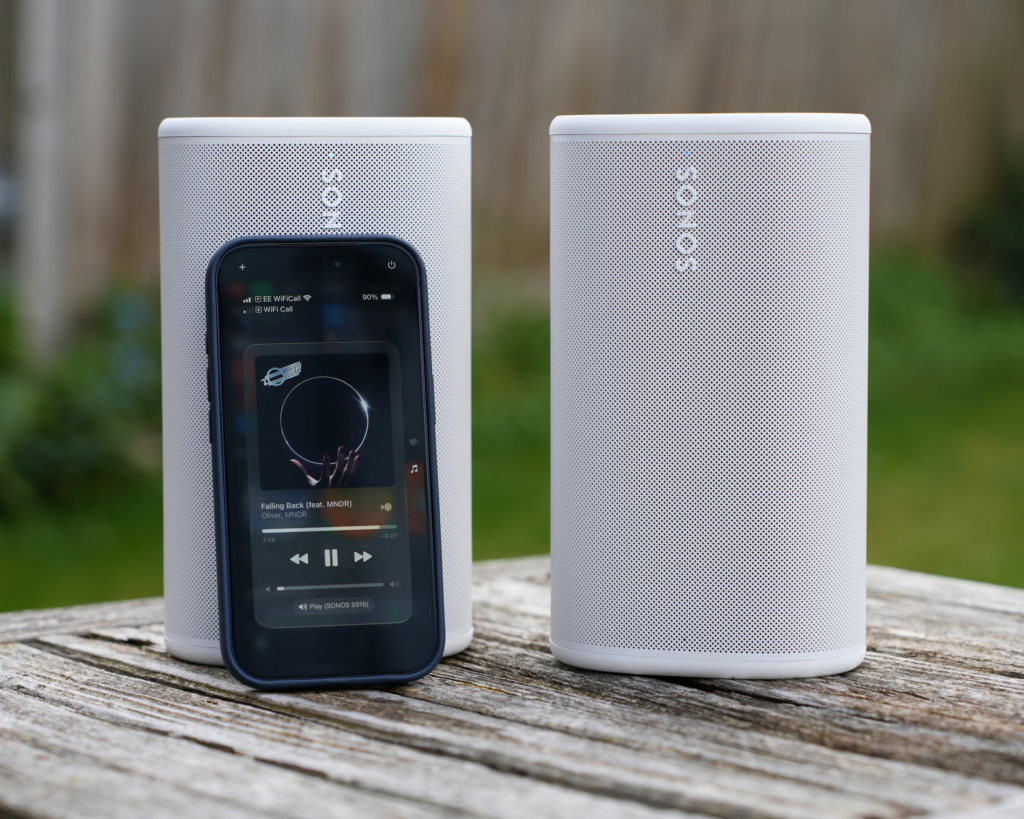
Most Bluesound Pulse speakers are plug-in units. The FLEX is the closest match if you add its optional battery pack, but the series is still aimed squarely at stationary home use. If you want true move-anywhere behavior, Sonos is the obvious fit.
Winner: Sonos Play. No other part of this comparison is as one-sided as the battery story.
Room Performance
Sonos Play is forgiving about placement. Automatic Trueplay listens to the room and adjusts the sound as you move it from a shelf, a bedroom, a kitchen counter, or even outdoors. That matters because a portable speaker changes character fast depending on walls, corners, and open space.
It means you do not have to fuss over placement as much. Put it down, let it tune itself, and it keeps sounding balanced across different rooms. That is one of the biggest practical wins in the whole package.
Bluesound Pulse speakers are better when you place them carefully in one room and leave them there. They are made to fill a fixed space with fuller, more detailed sound, and that works best when you treat them like part of the room, not like a speaker you keep moving around. The payoff is cleaner home listening, especially if you care about source quality.
Winner: Sonos Play. It adapts better when your listening space keeps changing.
Price & Value
Sonos Play lands at $299, which is easy enough to understand. You pay one price, and you get a portable speaker with a battery, a charging dock, IP67 protection, Wi-Fi, Bluetooth, and Sonos ecosystem support. The only real extras are things like the charger and line-in adapter.
Bluesound pricing varies by model, and that is part of the story. The Pulse series is less about one neat all-purpose buy and more about picking the right speaker for the right room and format needs. That can mean better sound value if hi-res playback matters to you, but it can also mean a higher total spend once you start adding accessories or moving up the line.
If you want the simple value equation, Sonos is the easier buy. If you want to spend for a more audio-focused setup, Bluesound can justify itself.
Winner: Sonos Play. It gives you more use cases for a cleaner upfront price.
Who Should Buy Sonos Play?
Choose Sonos Play if you want a speaker that moves with you. It makes sense if you want long battery life, easy room-to-room use, strong Sonos grouping, and a rugged design that does not feel precious.
Choose Sonos Play if you care about simple control. It works well when you want one speaker that handles streaming, Bluetooth, and casual home listening without turning into a project.
Choose Bluesound Pulse if you care most about sound quality. It fits better if hi-res playback, MQA, DSD support, and wired connections matter more than portability.
Choose Bluesound Pulse if the speaker will stay in one place. It also makes more sense if you want a more audiophile-leaning setup, or if you plan to build around room-specific listening and stereo pairing.
FAQs
Which sounds better, Sonos Play or Bluesound Pulse?
Bluesound Pulse usually gives you the cleaner, more precise sound, with better detail and a more hi-fi feel. Sonos Play sounds warmer, fuller, and easier to enjoy right away.
Which is easier to use every day?
Sonos is the simpler choice if you want quick setup and a friendlier app. Bluesound’s BluOS app is powerful, but you’ll spend more time tweaking things.
Is Sonos Play better for casual listening?
Sonos Play makes more sense if you want easy, room-filling sound without fuss. It’s the better pick when you care more about comfort than strict accuracy.
Does Bluesound Pulse work better for serious music fans?
Bluesound Pulse fits you better if you want sharper clarity, stronger streaming flexibility, and hi-res audio support. It’s built for listeners who notice small sound differences.
Which is better for a multi-room speaker setup?
Both handle multi-room audio well, but Sonos is usually the smoother system for most people. Bluesound gives you more control, especially if you like a more hi-fi setup.
Final Verdict
If portability, battery life, and all-around convenience matter most, Sonos Play is the stronger pick. It is the easier speaker to live with, and it gives you more ways to use it every day.
If your top priority is hi-res sound and a more serious home audio setup, the Bluesound Pulse series has the edge. It is built for people who care more about playback quality and wired flexibility than grabbing a speaker and heading out the door.
So the split is clear. Lean Sonos if you want one speaker that does a lot of jobs well. Lean Bluesound if your listening space is fixed and your ears want the more audio-first answer.