

Is the iPhone 17e worth buying, or is it the cheaper iPhone that keeps reminding you what you gave up? The short answer is that it makes a strong case for itself, especially if you care more about speed, battery life, and a good main camera than you do about flagship extras.
You get the A19 chip, MagSafe, 256GB of base storage, and a design that still feels like a real iPhone, not a stripped-down placeholder. The tradeoff is obvious too, and we’re going to get into it.
This review walks through the design, screen, performance, battery life, cameras, software, connectivity, and the kind of buyer who should actually stop and consider it.
RELATED: MacBook Neo Review: Best Cheap Mac That Feels Real

Quick Summary
The iPhone 17e is good at the things you feel every day. It opens apps fast, handles games without drama, lasts through a full day, and gives you a solid 48MP main camera. MagSafe is here too, which matters more than it sounds until you start snapping on chargers and wallets.
What keeps it from feeling like the obvious pick is the screen and the camera setup. You still get a 60Hz panel, thick bezels, a notch, and no ultrawide camera. That’s a real compromise if you care about smoother scrolling or wider shots.
You are not buying this for bragging rights. You are buying it because the basics land where they should, and the cuts are easy to live with if you do not chase the top shelf.
That’s the whole iPhone 17e story, really. It feels smart if you want a lower-priced iPhone that still feels premium. It feels less smart if you can stretch to the iPhone 17 and want the nicer screen, more cameras, and fewer reminders that this is the cheaper model.
Specifications
If you want the cleanest snapshot of the hardware, Apple’s own technical specs page lines up with the core details below.
| Feature | iPhone 17e |
|---|---|
| Display | 6.1-inch OLED |
| Resolution | 2532 x 1170, 460 ppi |
| Refresh rate | 60Hz |
| Chip | A19 |
| RAM | 8GB |
| Storage | 256GB, 512GB |
| Rear camera | 48MP Fusion main camera, 2x crop telephoto |
| Front camera | 12MP |
| Battery | Up to 26 hours video playback |
| Charging | 20W wired, MagSafe and Qi2 wireless up to 15W |
| Weight | 169g |
| Water resistance | IP68 |
| Colors | Black, white, soft pink |
That’s a more serious spec sheet than most budget phones get. The missing pieces are there too, but the core package is strong.
Design & Build Quality
What feels premium, and what gives away the price
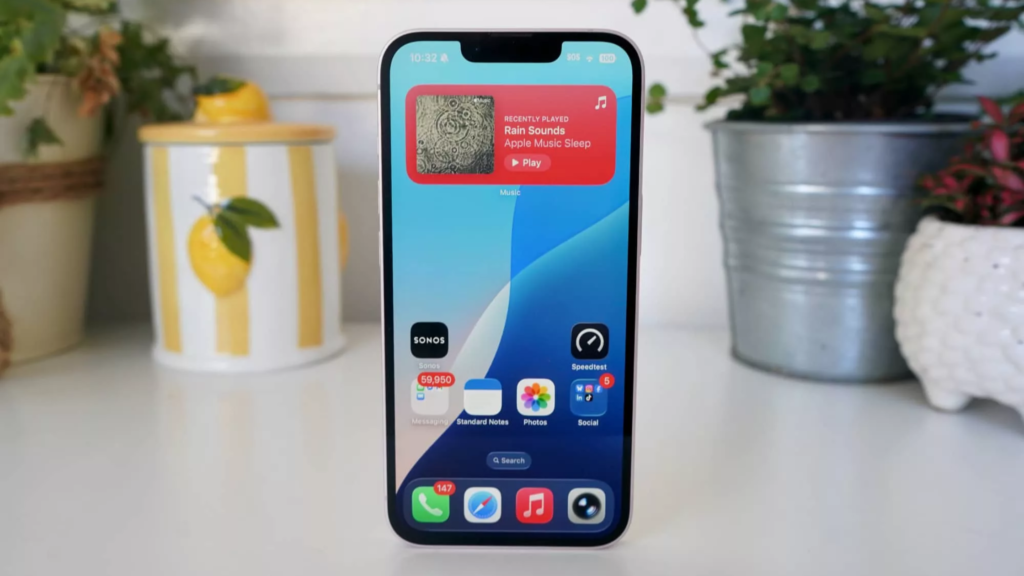
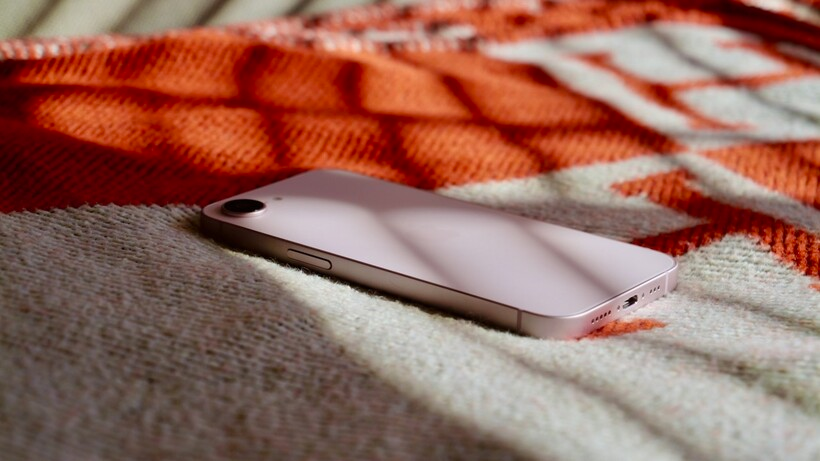
The iPhone 17e still feels like an iPhone in the hand, which is half the battle. The matte back glass resists fingerprints, the aluminum frame keeps it light, and Ceramic Shield 2 gives you the same kind of practical toughness Apple is pushing across the line.
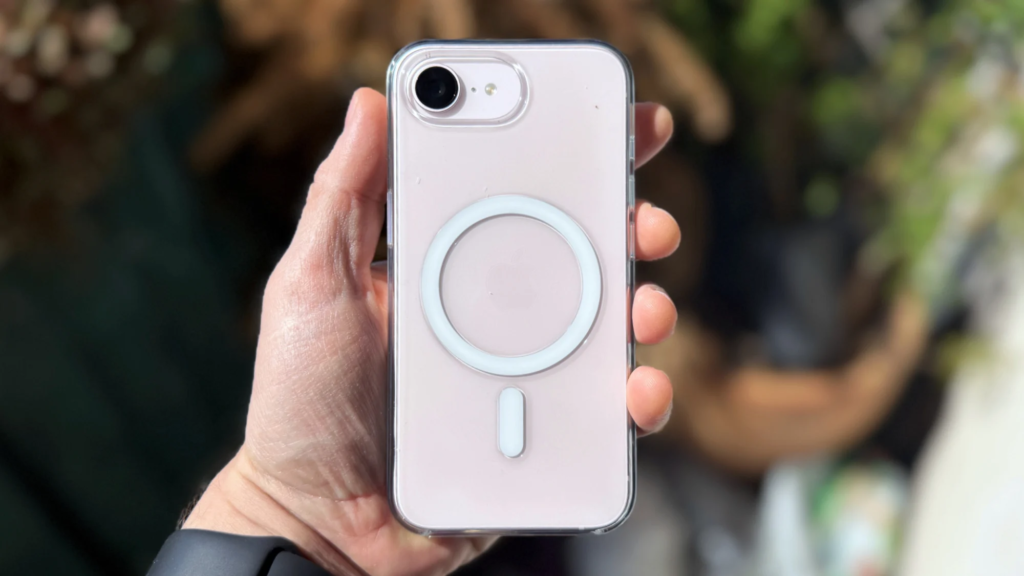
The big tells are visual, not tactile. The notch is still there, the bezels are thicker than on the higher-end models, and you do not get Camera Control. Those are the things that keep it from blending in with the more expensive phones. In daily use, though, the build quality never feels cheap.
Color, grip, and everyday handling
The soft pink option is the fun one, and it works because it does not scream for attention. Black and white are still here if you want something quieter. The whole phone is compact enough to disappear into a pocket, and that matters more than people admit.
If you like smaller phones, the 17e is easy to live with. If you prefer a bigger canvas for typing and scrolling, you may feel the size limit pretty fast. It is a comfortable one-handed phone, not a tiny one.
Display Quality
How the screen looks for media and scrolling
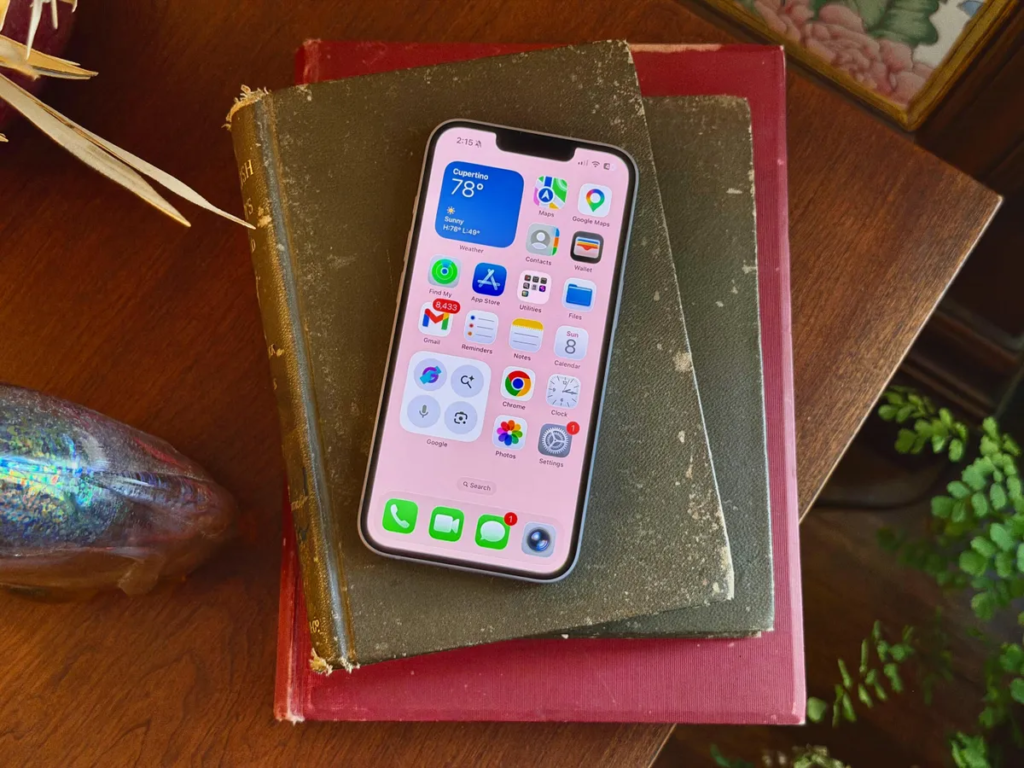
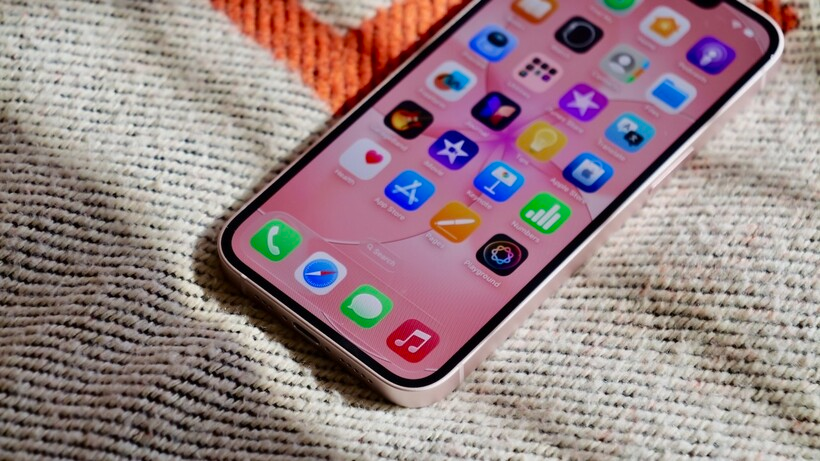
The 6.1-inch OLED display is sharp, colorful, and easy to like in normal use. Photos look good, video looks clean, and text is easy on the eyes. Brightness is solid enough for outdoor use, and Apple says the panel peaks at 1200 nits for HDR.
For a compact phone, that helps a lot. You get a screen that does its job without turning the phone into a brick. It is the kind of display you stop noticing after a day, which is usually a good sign.
Where the display falls behind the iPhone 17
The 60Hz refresh rate is the main catch. Once you use a smoother 120Hz screen, you feel the difference in scrolling and animations. The iPhone 17e does not give you that, and it also skips Always-On display and Dynamic Island.
None of that is a dealbreaker for everyone. It is more of a quality-of-life loss. But if you care about the display more than the average buyer, the regular iPhone 17 is the better move.
Performance
How fast it feels in daily use
The A19 chip gives the iPhone 17e a lot more speed than most phones at this price. App launches are quick, multitasking feels easy, and editing photos or short videos does not make the phone stumble around. The 8GB of memory and 256GB base storage help the whole thing feel less cramped too.
That combination matters because it keeps the phone feeling new for longer. You are not fighting the hardware just to get basic jobs done. It feels like a proper iPhone, just without the extras.
What the benchmarks say
The benchmark numbers back that up. In Geekbench 6, the iPhone 17e scored 3,320 in single-core and 8,531 in multi-core testing, which puts it well ahead of budget rivals like the Pixel 10A. It is also close enough to the iPhone 17 that most daily tasks will not expose the gap.
Graphics performance is strong too. In 3DMark Wild Life Extreme, it lands well above the Pixel 10A and right in the same general space as the Galaxy S25 FE. That means gaming is not a worry here, even if the top iPhone models still have a bit more room.
Battery Life & Charging
How long it lasts in a normal day
Battery life is one of the best parts of the iPhone 17e. Apple lists up to 26 hours of video playback, and real use backs up the idea that this is a dependable all-day phone. In mixed testing, it held up better than the Pixel 10A and Galaxy S25 FE.
In normal use, you should get through a full day without babying it. If your day looks like email, messaging, browsing, photos, and a bit of video, the battery should not become a source of stress.
Charging speeds and MagSafe convenience
MagSafe is a big deal here because it adds convenience you can feel immediately. You can snap on chargers, wallets, and cases without thinking about it. Wireless charging goes up to 15W, and wired charging can get you to about 50 percent in around 30 minutes with the right adapter.
Apple includes a USB-C cable in the box, but not a plug. That is normal now, but it still matters when you are comparing value. The good news is that the charging setup feels modern and easy to live with.
Software & Ecosystem
What iOS adds to the experience
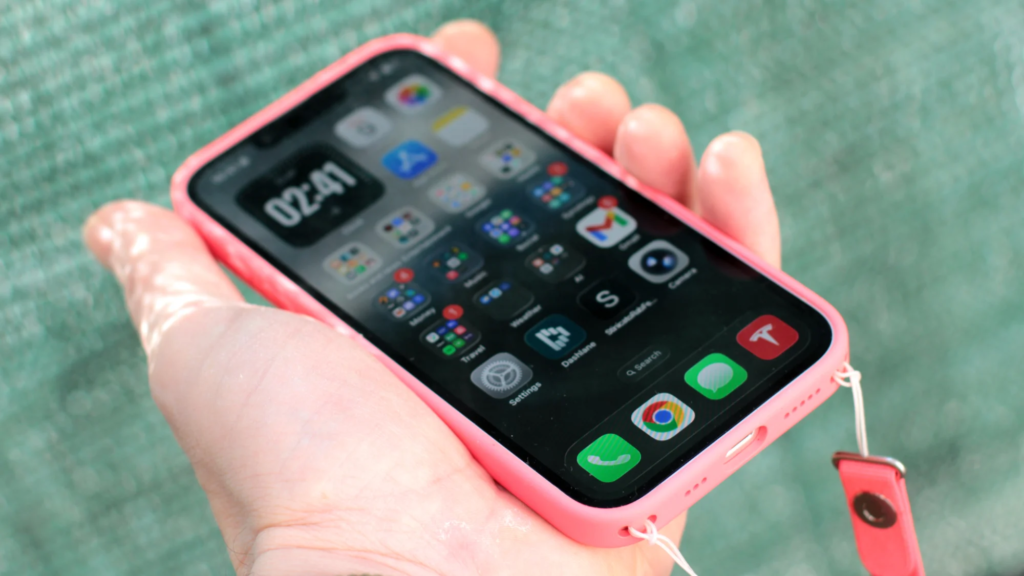
The iPhone 17e runs iOS 26, and if you already live in Apple’s world, you know the drill. Everything syncs cleanly, the controls feel familiar, and features like StandBy make the phone more useful while it is charging. That matters more than a lot of flashy software tricks.
You also get the usual long update runway Apple is known for. That helps the 17e make more sense as a phone you keep for years, not months.
Useful Apple features you still get
Apple Intelligence is here, along with Face ID, Emergency SOS via satellite, Crash Detection, and the Action button. The Action button is useful because you can map it to tasks like the flashlight or camera shortcut.
These features make the 17e feel complete, even without the higher-end extras. It is not loaded with every premium feature Apple sells, but the safety and convenience stuff is all in place.
Connectivity & Wireless Support
What you get for internet, Bluetooth, and mobile data
You get 5G, USB-C, Wi-Fi 6, and Bluetooth 5.3. For most people, that is enough. Cellular performance is helped by Apple’s C1X modem, and the phone supports either a physical SIM or an eSIM.
If you are mostly using the phone on home Wi-Fi, at work, or on the go with a normal data plan, you are covered. Nothing here feels old in a painful way.
What is missing compared with the higher-end iPhone 17
The missing extras are the ones that matter to nerdier buyers. There is no Wi-Fi 7, no UWB, and no Thread support. If your house is packed with newer smart-home gear, that gap may matter more to you.
For everyone else, it is mostly a future-proofing issue. You are not losing basic function, you are losing the newest layer of wireless polish.
Cameras, Mic & Speakers
How the main camera performs in real life
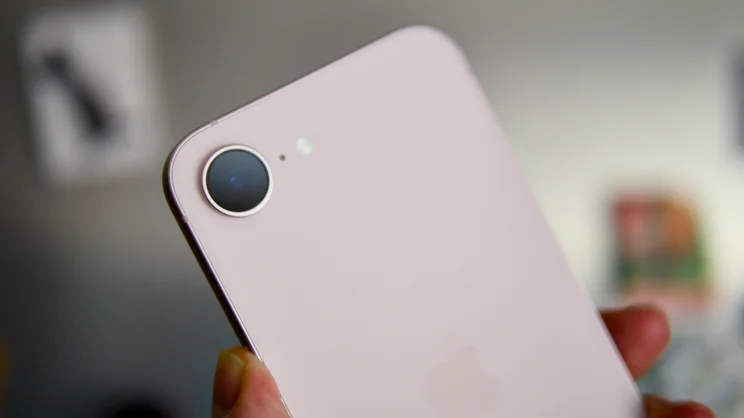
The rear setup is simple, one 48MP Fusion camera with a 2x crop option, and that simplicity works. Photos look detailed, portraits have decent depth, and the phone does a good job in daylight and low light. The 12MP selfie camera is fine too, even if it is not the upgraded front camera you get on the pricier models.
For a single-camera phone, the results are better than you might expect. The image processing is quick, and portraits get a more natural blur around the subject. That makes the camera feel more capable than the spec sheet suggests.
If you want another measured read, Consumer Reports’ iPhone 17e review lines up with the same basic hardware story.
The tradeoffs of a single-camera setup
The big loss is flexibility. You do not get an ultrawide camera, so wider scenes, group shots, and landscape framing are less convenient. You also miss Cinematic video, which some people will feel more than others.
The speakers and mic are good enough for everyday use, though. You can watch videos, take calls, and record casual clips without feeling like you bought a downgrade in the wrong place.
Extra Features
Face ID, Action button, and security
Face ID keeps unlocking fast and simple. You pick up the phone, look at it, and move on. The Action button adds a nice layer of control, since you can assign it to the camera, flashlight, or another shortcut you actually use.
That kind of convenience matters more than flashy specs. It is the stuff you touch every day.
Why MagSafe and durability matter
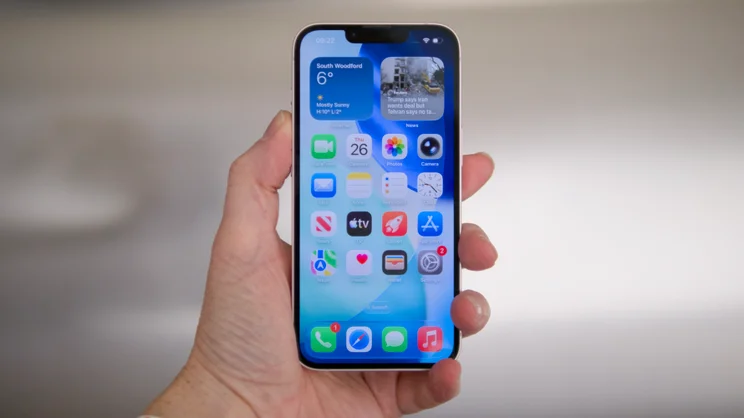
MagSafe changes the phone’s rhythm. You can drop it onto a charger, attach a wallet, or pop on a case without fuss. At this price, that feels like a real upgrade, not a gimmick.
Durability is strong too, with IP68 resistance and Ceramic Shield 2 on the front. You are still going to want a case, because phones are fragile little disasters, but the 17e is built with enough confidence to make you breathe easier.
Price & Value
Why the starting price makes sense
At $599, the iPhone 17e is not cheap in the old budget-phone sense. It does get easier to defend because the base model now starts at 256GB, not 128GB, and that change alone makes the pricing feel less annoying.
Add in the A19 chip, MagSafe, and strong battery life, and the value picture improves a lot. Apple’s own iPhone 17e page puts the focus exactly where it should be, on the core stuff you will use every day.
Where the value breaks down
The problem is the iPhone 17 sitting right above it. For about $200 more, you get a better screen, Dynamic Island, more camera flexibility, and a more complete premium experience. That is a hard gap to ignore if your budget can stretch.
If you are comparing it with Android, the cheapest iPhone still has a different kind of appeal. The best budget Android phones of 2026 can give you more hardware for the money, but they will not always give you the same iPhone feel or the same software support.
Who the iPhone 17e is for?
Buy it if you want a lower-priced iPhone that still feels premium
- You want strong battery life without thinking about it all day.
- You care more about a fast phone than a flashy screen.
- You want MagSafe and a good main camera at the cheapest new iPhone price.
- You are coming from an older iPhone, especially an iPhone 11, 12, or SE-era model.
- You want a compact phone that still feels modern in hand.
Skip it if you want the most features for your money
- You want a 120Hz display and always-on behavior.
- You care about ultrawide camera flexibility.
- You want Dynamic Island and the newer premium iPhone feel.
- You care about Wi-Fi 7, UWB, or Thread.
- You can already afford the iPhone 17 and do not want to settle.
FAQs
Is the iPhone 17E worth buying over the iPhone 16E?
It is a cleaner upgrade than the 16E, with an A19 chip, MagSafe, and 256GB base storage. If you already own a 16E, the jump still feels modest.
How much does the iPhone 17E cost and when did it launch?
You’re looking at $599 in the U.S. for the 256GB model. Apple announced it on March 2, 2026, and released it on March 11, 2026.
What makes the iPhone 17E feel more premium than its price?
The matte glass back, aluminum frame, MagSafe support, and Ceramic Shield 2 help a lot. It feels closer to a regular iPhone 17 than a stripped-down budget phone.
What are the iPhone 17E’s biggest compromises?
You give up Dynamic Island, always-on display, ultrawide camera, and 120Hz refresh. The notch, thick bezels, and single rear lens are the parts you notice fastest.
How does the iPhone 17E compare with the Pixel 10A?
The iPhone 17E wins on raw speed and graphics, and its benchmarks land well ahead of the Pixel 10A. The Pixel still gives you an ultrawide camera and a higher-refresh screen.
Is the iPhone 17E good for battery life and charging?
Battery life is strong enough for a full day, often with room left over. You also get MagSafe and faster wireless charging, up to 15W instead of the old 7.5W.
Final Verdict
The iPhone 17e gets the important stuff right. The A19 chip is fast, the battery life is strong, MagSafe is genuinely useful, and the main 48MP camera does good work. It also feels more premium than its price suggests.
The tradeoffs are easy to spot, though. You still get a 60Hz screen, a notch, and a single rear camera, so this is not the most complete iPhone you can buy.
If you want a lower-priced iPhone that feels solid, lasts well, and stays fast, the iPhone 17e makes sense. If you want the best overall iPhone experience, spend more on the iPhone 17.