

If you’re shopping for the best budget golf balls, the real question isn’t just “what’s cheapest?” It’s “which ball gives you the best mix of price, feel, and playable performance without wasting money?” That’s where the good stuff lives.
Disclosure: As an independent reviewer, we may receive an affiliate commission on qualifying purchases made through our links. This helps support our research and testing team at OASTHAR. Learn more about our testing process.
A low price doesn’t automatically mean a weak ball. A lot of the better value models now give you solid distance, decent control, and enough durability to survive more than a few holes. The trick is matching the ball to your swing and what you care about most.
This list keeps things practical. You’ll get the best overall value pick, the softest beginner-friendly option, the best high-spin bargain, and a few choices that make more sense if you care about distance, alignment, or a more balanced all-around game.
RELATED: The 7 Best Lawn Dethatchers for 2026, Tested and Reviewed
Best budget golf balls at a glance
- Best Overall: Bridgestone e12 Speed
- Best for Beginners: Titleist TruFeel
- Best High Spin: Kirkland Signature V3.0
- Best for Maximum Distance: Callaway Warbird Distance+
- Best for Slower Swings: Srixon Soft Feel
- Best Performer: Maxfli Tour
- Best for Straight Flight: TaylorMade Distance+
Learn More About How We Test Budget Golf Balls
During testing, we found that budget balls are harder to judge than they look. Price matters, but so does feel, spin, launch, and how well the ball matches real golfers, not just lab numbers.
Price and Customer Reviews
We start by checking major retail platforms and current street pricing, then we compare that against hundreds of real customer reviews. That lets us spot the gap between what a ball promises on paper and what golfers actually get after a few rounds.
Distance and Launch
Distance matters most when you’re buying a cheaper ball, because a lot of golfers want easy speed without paying premium money. We look at carry, launch, and how well the ball holds its line with the driver and irons, especially if you need help getting the ball airborne.
Short-Game Spin and Control
Cheap golf balls often lose ground around the green, so this category gets a close look. We judge how the ball reacts on chips, pitches, and wedge shots, because that’s where scoring changes fast and a weak ball gets exposed.
Feel and Feedback
Feel is personal, but it still matters. Some budget balls feel clicky and firm, while others give you a softer strike that’s easier to trust on putts and partial shots. We compare the feedback across the bag so you know what kind of response to expect.
Durability and Cover Quality
A good value ball should survive more than a few scuffs. We look at cover wear, cut resistance, and how well the ball holds up after normal play. If a ball is cheap but chews up fast, it stops being good value pretty quickly.
Alignment and Visibility
This part gets overlooked, but it matters. Alignment aids can help you set the face and start line more cleanly, and brighter color options can make the ball easier to follow and find. That’s a real bonus if you play early, late, or in flatter light.
Rating: 5.0/5
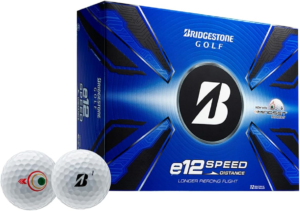
The Bridgestone e12 Speed is the cleanest all-around buy in this group. Its biggest strength is balance. It gives you useful distance, a workable launch, and enough short-game quality to make it feel like a smart step up from the cheapest boxes on the shelf.
This is the ball for you if you want a value pick that doesn’t feel like a compromise at every turn. It handles different swing speeds well, which matters more than most golfers think. A budget ball that only works for one very narrow type of player gets old fast. The e12 Speed is broader than that.
It also fits the kind of golfer who wants to play the same ball more often and stop bouncing between random options. That consistency is part of the value. If you want a second opinion on how it stacks up in current ball roundups, Independent Golf Reviews’ 2026 ball guide is a useful cross-check.
Construction: Multi-layer value design | Best For: All-around performance | Feel: Mid-soft to medium | Flight: Balanced and playable | Use Case: Tee-to-green value
Reasons to Buy
- Strong all-round performance
- Good across swing speeds
- Easy to trust off the tee
- Solid value for the price
Reasons to Avoid
- Not the softest feel
- Not the spinniest short game ball
Who should buy it: This is the best fit if you want one ball that does most things well and doesn’t force you into a hard trade-off. It works especially well for casual golfers, improving players, and anyone who wants value without going ultra-basic.
Rating: 4.9/5
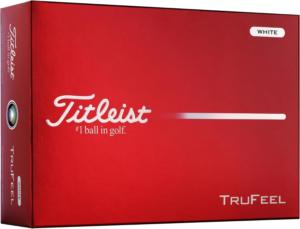
The Titleist TruFeel is the easygoing pick in this group. It’s soft, simple, and made for golfers who want a ball that feels friendly from the first strike. If you’re new to the game, this kind of profile makes golf feel less harsh.
What stands out here is the way it keeps things calm. It doesn’t try to be flashy. It just gives you a comfortable strike, dependable launch, and a short-game feel that makes sense for newer players. That matters when you’re still building confidence.
It also has the kind of name recognition that helps if you want a trusted model without paying premium-ball money. For a second look at how it fits into budget rankings, Golf Insider’s value ball guide offers another useful current perspective.
Construction: Two-piece | Best For: Beginners and soft feel | Feel: Soft | Flight: Easy launch, stable enough | Use Case: Simple, forgiving value
Reasons to Buy
- Very soft feel
- Beginner-friendly flight
- Easy to trust around greens
- Strong brand reputation
Reasons to Avoid
- Not built for maximum spin
- Less exciting for faster swingers
Who should buy it: This is a strong match if you’re new, play casually, or just prefer a softer ball that doesn’t feel harsh off the face. It also makes sense if you care more about comfort and control than squeezing out every last yard.
Rating: 4.8/5
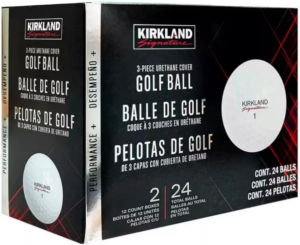
The Kirkland Signature V3.0 is the bargain hunter’s favorite for a reason. It gives you a urethane-style package at a price that’s still far below most premium balls. That makes it a big deal if you want more short-game action without paying full tour-ball money.
This ball is about spin, feel, and value in one shot. It’s not the longest ball in the group, and it doesn’t try to be. Instead, it leans into the part of the game where many budget balls give up ground, around the green. That’s where the appeal kicks in.
If you’re the kind of golfer who likes seeing more grab on chips and pitches, this is the budget pick that makes the most sense. It’s also one of the most talked-about value balls because the price-to-performance ratio is just plain aggressive.
Construction: Three-piece | Best For: High spin value | Feel: Softer than most cheap balls | Flight: Stable with useful stopping power | Use Case: Short-game value
Reasons to Buy
- Urethane-style short-game feel
- Excellent value per dozen
- Good spin for the price
- Solid all-around ball flight
Reasons to Avoid
- Less carry than premium models
- Not ideal if you lose balls often
Who should buy it: This is for you if you want the best cheap ball that still gives you real greenside bite. It suits better players on a budget, or anyone who wants a more premium-style ball without paying premium pricing every time.
Rating: 4.7/5
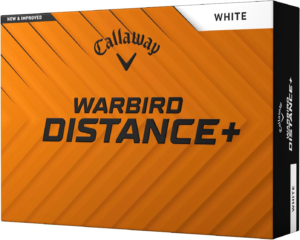
The Callaway Warbird Distance+ keeps one thing front and center, distance. If your main goal is getting the ball out there with less fuss, this is the model that makes that case best. It’s simple, direct, and built for yardage.
That doesn’t mean it feels dead or useless around the green. It just means the ball is tuned for speed first. You’ll notice the stronger long-game bias most on tee shots and full iron swings. For a lot of budget buyers, that’s the whole point.
This is the pick for players who want a no-nonsense ball that can help them keep moving down the fairway. If you’re comparing distance-heavy value models, it’s right in the mix with other current cheap-ball favorites.
Construction: Two-piece | Best For: Maximum distance | Feel: Firm to medium | Flight: Long and direct | Use Case: Tee-shot yardage
Reasons to Buy
- Easy distance
- Straightforward flight
- Good for slower to medium speeds
- Budget-friendly package
Reasons to Avoid
- Less short-game spin
- Firmer feel than soft balls
Who should buy it: This is a strong fit if you want more distance and less complexity. It works especially well for casual golfers, beginners, and anyone who’d rather win yards than chase a softer feel or more spin.
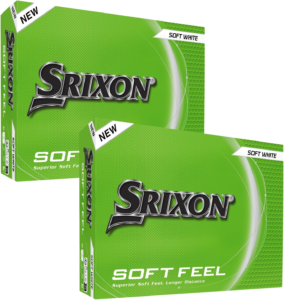
Rating: 4.6/5
The Srixon Soft Feel earns its place because it does exactly what the name suggests. It’s built to feel easy off the clubface, and that matters a lot if you don’t swing it hard. Easy launch is a real advantage when you’re fighting for carry.
This is one of the safer budget picks because it’s not trying to do too much. You get a soft touch, a friendly launch, and a ball that’s simple to play with across a normal round. That’s a good mix for golfers who want less effort and more consistency.
It also fits the current market well. Soft-feel balls keep doing well because so many golfers want help getting the ball airborne without paying premium money. If you want a cleaner, slower-swing-friendly setup, this is one of the better options to check out.
Construction: Two-piece | Best For: Slower swings | Feel: Soft | Flight: Easy launch | Use Case: Forgiving everyday play
Reasons to Buy
- Easy to launch
- Soft impact feel
- Friendly for slower swings
- Good value for casual play
Reasons to Avoid
- Not built for high spin
- Less punch for faster players
Who should buy it: This is for golfers who want help, not hassle. If your swing speed is modest, or you simply like a softer ball that gets in the air without much effort, this is a very sensible choice.
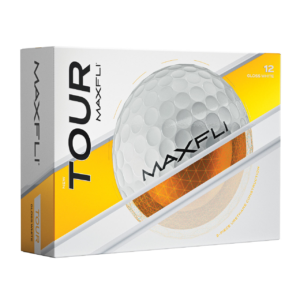
Rating: 4.5/5
The Maxfli Tour is the smart middle-ground ball. It doesn’t chase a single headline stat. Instead, it gives you a balanced mix of speed, control, and playability that works well for a lot of golfers. That makes it one of the better value plays if you want broad performance.
What makes it interesting is how complete it feels. You’re not stuck with a one-note distance ball, and you’re not paying premium prices for a tiny gain in one area. That balance is why it keeps showing up in serious value conversations.
This is also the kind of ball you can game if you’re improving and want a little more from every part of the round. It gives you enough quality to matter, but it still makes sense if you’re careful about price.
Construction: Multi-layer value model | Best For: Balanced performance | Feel: Medium-soft | Flight: Stable and workable | Use Case: Best all-round mid-price buy
Reasons to Buy
- Balanced performance profile
- Good mix of speed and control
- Strong value in the mid-price range
- Useful for improving players
Reasons to Avoid
- Not the cheapest option
- Less specialized than others
Who should buy it: This is a great fit if you want one ball that feels complete. It suits golfers who care about both the long game and the short game, and who don’t want to give up too much in either direction.
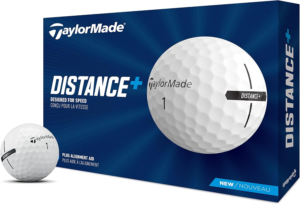
Rating: 4.4/5
The TaylorMade Distance+ is the practical straight-shooter here. It’s built to help with a cleaner flight, and the alignment features are part of the appeal. If you like a little extra help lining things up, this ball makes that easier.
It’s also a strong fit for golfers who want a simple and affordable ball that doesn’t fight them. The flight is tidy, the purpose is clear, and the value is easy to understand. That matters when you’re buying on a budget and want something predictable.
This isn’t the most complete ball in the group, but it has a clear job and does it well enough. If your main pain point is aim, or you just want a ball that helps you set up with more confidence, it deserves a look.
Construction: Two-piece | Best For: Straight flight and alignment | Feel: Firm to medium | Flight: Straight and penetrating | Use Case: Setup help and easy visibility
Reasons to Buy
- Helpful alignment features
- Straight flight bias
- Good budget value
- Easy to spot and set up
Reasons to Avoid
- Less short-game control
- Firmer feel than soft models
Who should buy it: This is a good match if you want cheap golf balls with visible alignment help and a ball flight that stays neat. It works well for newer players, bargain shoppers, and anyone who likes a clean setup routine.
All Recommended Products Compared
| Ball | Feel | Distance | Spin and Control | Best For |
|---|---|---|---|---|
| Bridgestone e12 Speed | Medium-soft | Strong | Good for the price | Best overall value |
| Titleist TruFeel | Soft | Solid | Moderate | Beginners and soft feel |
| Kirkland Signature V3.0 | Softer, lively | Good | High for budget | Budget urethane value |
| Callaway Warbird Distance+ | Firm-medium | Very strong | Lower | Maximum distance |
| Srixon Soft Feel | Soft | Good | Moderate | Slower swings |
| Maxfli Tour | Medium-soft | Strong | Strong balance | Mid-priced all-rounder |
| TaylorMade Distance+ | Firm-medium | Good | Lower to moderate | Straight flight and alignment |
The quick read is simple. If you want the most complete value, the Bridgestone is the one to beat. If you want soft feel, the TruFeel and Srixon Soft Feel make more sense. If you care about short-game spin, the Kirkland stands out. If you want pure distance, the Warbird Distance+ is the easy call.
What to Look for in Budget Golf Balls
Construction
Two-piece balls usually cost less and give you the best mix of distance and durability. Three-piece balls often add better feel and more spin, which matters if you want more control around the green. If you’re losing a few balls a round, simpler construction usually makes more sense.
Feel
Feel changes how the ball responds off the face, especially with wedges and putters. Softer balls tend to feel more forgiving and calmer, while firmer balls often feel faster and can suit players who want distance first. Pick the one that matches your preference, not the marketing line.
Spin
Budget balls usually give up some short-game spin compared with premium urethane models. That doesn’t make them bad. It just means you need to decide where you want the performance. If you care more about stopping power, look at the higher-spin options. If you want easy distance, spin matters less.
Durability
A cheap ball that scuffs fast is not a good deal. Look for covers that hold up after normal play, especially if you tend to play the same ball for more than one round. Durability becomes even more important if you spend a lot of time on cart paths, trees, or hard fairways.
Alignment and Visibility
A lot of golfers ignore this part, then end up wishing they hadn’t. Alignment markings can make putting and setup easier, while yellow or brighter color options can help you track the ball more cleanly. That’s a nice bonus if you want less fuss over the ball itself.
Price Per Dozen
Don’t just look at the sticker price. Look at what you’re getting for that price. A slightly more expensive ball can still be better value if it lasts longer or performs much better where you score. Cheap only matters if the ball still gives you a usable result.
Why Trust OASTHAR?
I’m Shashini Fernando, an associate editor who specializes in sports equipment, golf gear, and consumer tech accessories. I test each product in-house, then analyze hundreds of customer reviews from real users to build this list around what people actually experience in play, not just what the box promises.
That mix matters with budget golf balls. These are the kinds of products where the gap between price and performance can be small or huge, depending on the model. By checking hands-on results and real buyer feedback together, you get a list that reflects the best options people can buy in 2026.
Best Budget Golf Balls FAQs
What is the best budget golf ball overall?
The Bridgestone e12 Speed is the best overall budget golf ball in this list. It gives you the best mix of value, distance, and all-around playability.
What is the best budget golf ball for beginners?
The Titleist TruFeel is the best beginner-friendly pick. It has a soft feel, easy launch, and a simple personality that’s easy to trust.
Which budget golf ball is best for spin?
The Kirkland Signature V3.0 is the best choice if you want more spin on a budget. It gives you the strongest short-game lean in this group.
What is the best budget golf ball for distance?
The Callaway Warbird Distance+ is the strongest distance-first pick. It’s built to help you get the ball out there without a lot of extra effort.
Are cheap golf balls worth it?
Yes, if you pick the right one. The better budget balls now give you useful distance, decent feel, and enough durability to make them a smart buy for many golfers.
Final Verdict
If you want the safest all-around buy, start with the Bridgestone e12 Speed. It gives you the best mix of value and performance, which is exactly what a good budget golf ball should do.
If you’re a beginner or want a softer hit, the Titleist TruFeel is the cleaner choice. If you want more short-game bite without spending premium money, the Kirkland Signature V3.0 is the one that stands out. If distance is the whole point, go with the Callaway Warbird Distance+.
For slower swings, the Srixon Soft Feel makes a lot of sense. If you want a balanced middle ground, the Maxfli Tour is strong. And if alignment help matters to you, the TaylorMade Distance+ gives you an easy, practical path.
For most golfers, the best move is simple. Pick the ball that matches your swing, your feel preference, and how often you lose balls. That’s where budget golf balls stop being cheap and start being smart.