

Is the Garmin Fenix 9 a real upgrade, or an expensive rumor with a few exciting labels attached? As of the available August 2026 reports, Garmin had not officially confirmed the watch before its August 25 “Play Harder” livestream.
That matters because retailer listings, FCC paperwork, and leaked renders can point in the right direction, but they can’t replace final specifications. A name in a database is not a battery test. A radio filing is not proof of how well messages work on a cold ridge.
This Garmin Fenix 9 review separates the stronger evidence from the loose talk, then looks at design, screens, battery, software, connectivity, price, and who should wait.
RELATED: Samsung Galaxy Z Fold 8 Review: Is It Worth It in 2026?
Quick Summary
The Garmin Fenix 9 could be Garmin’s biggest outdoor-watch update in years, but only if reported LTE and satellite communication arrive without wrecking battery life. That is the whole fight here. Fenix has long been the watch you wear for weeks, load with maps, and trust when your phone is buried in a pack.
The product name, feature list, pricing, and availability were still unconfirmed in the pre-launch material. Garmin’s scheduled August 25 “Play Harder” event gave the leaks more weight, not official status.
Early call: Fenix 6 and Fenix 7 owners should watch closely. Fenix 8 owners should wait unless phone-free safety tools are a must. If you need communication away from your phone, do not buy until independent testers check GPS, battery drain, and real message delivery.
Specifications
The retailer information reportedly covered 18 configurations. It gives you a useful shape of the lineup, but it is not a Garmin spec sheet.
| Item | Reported or confirmed status |
|---|---|
| Product name | Garmin Fenix 9, unconfirmed by Garmin |
| Case sizes | 43 mm, 47 mm, and 51 mm, reported |
| Model tiers | Standard, Pro, and Pro inReach, reported |
| Display choices | AMOLED and MIP Solar, reported |
| MIP Solar availability | Reportedly linked mainly to Pro tiers |
| 43 mm Solar model | No listing reported |
| inReach connectivity | Reported on selected Pro inReach models |
| FCC radio evidence | LTE-M and 3GPP satellite connectivity on an unreleased Garmin wrist device |
| Launch event | Garmin “Play Harder,” August 25, confirmed |
| US pricing | Unconfirmed |
| Czech retailer range | 24,490 to 32,990 Kč, reported |
The reported SkiAndBike listings are the clearest source for sizes and price bands, as Notebookcheck’s retailer-leak coverage explains. Those Czech prices included local VAT, so the converted dollar figures are not US MSRP.
Design & Build Quality
A smaller serious outdoor watch
The reported 43 mm size may be more important than it sounds. If Garmin puts advanced connectivity into a smaller Fenix, you won’t have to wear a 51 mm slab to get the interesting hardware. For smaller wrists, that could be the difference between wearing the watch all day and leaving it on a desk.
Leaked listings point to 43 mm, 47 mm, and 51 mm options. The 43 mm model should feel less intrusive during sleep tracking and daily wear. The bigger cases may have room for more battery capacity. That trade-off never goes away.
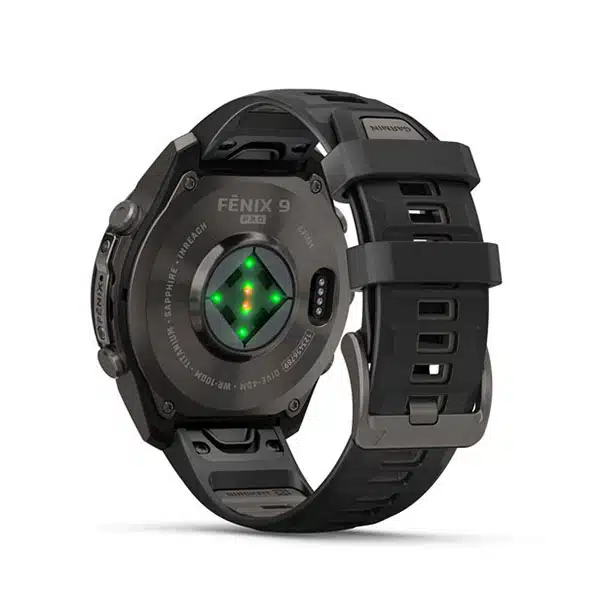
Familiar shape, unconfirmed materials
Leaked renders show the same rugged Fenix attitude, five physical buttons, exposed metal details, and a case shape close to the Fenix 8. Reports also claim the Pro could use a full-titanium body.
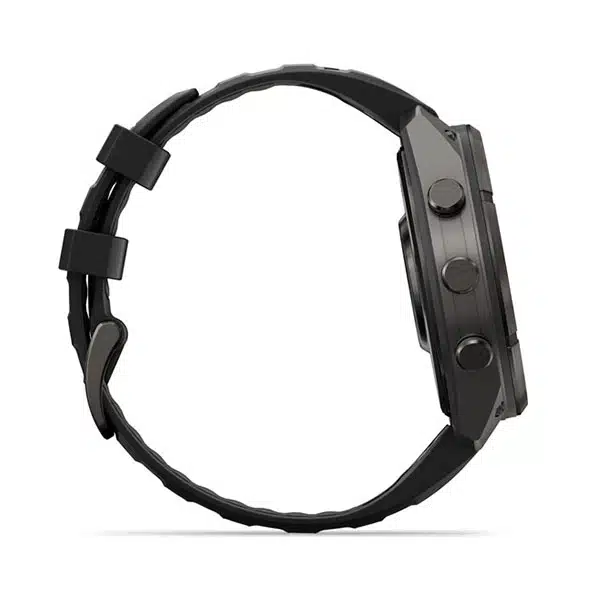
Treat all of that as leak-based. Garmin had not confirmed final weight, materials, durability ratings, or comfort. A tougher-looking watch is not automatically a more comfortable one.
Display Quality
Reports point to two display paths: AMOLED and MIP Solar. AMOLED should give you richer colors, sharper-looking maps, and easier notification reading indoors. It is the display you notice every time you glance down.
MIP Solar is the more practical pick for hard daylight and long days away from a charger. It is less flashy, but outdoor watches do not need to win a beauty contest at midnight.
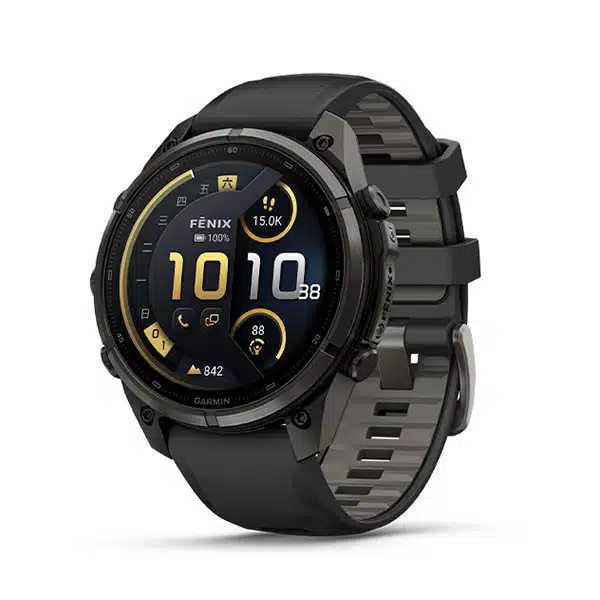
Visual quality versus endurance
The reported setup puts MIP Solar mostly on Pro models, while the standard Garmin Fenix 9 may be AMOLED-only. There was no MicroLED model in the retailer listings. That does not mean Garmin will never use MicroLED. It only means the reported list did not show one.
The key decision is simple. Choose AMOLED if maps and screen quality matter most. Choose MIP Solar if you want the best shot at long endurance. Garmin’s event timing and likely Fenix connection were also covered by TechRadar’s pre-launch report.
Performance
Maps are where speed matters
A premium outdoor watch should not hesitate when you pan a map, load a route, or change workout screens mid-run. For the Garmin Fenix 9, test menu speed, route loading, GPS lock time, map movement, and workout responsiveness before you call it an upgrade.
Fenix 7 and Fenix 8 models reportedly share the NXP i.MX RT595 processor. Map lag complaints have followed that platform, especially when users move around detailed maps. A faster chip would be meaningful, but no new processor has been confirmed.
Do not accept launch-stage claims about better GPS or faster navigation without independent multi-band GPS comparisons. A watch can look fast in a polished demo. Mud, tree cover, and a loaded route are less polite.
Battery Life & Charging
The battery question is bigger than the screen
Battery is what makes a Fenix a Fenix. Garmin rates the 47 mm Fenix 8 Solar at about 21 days of typical smartwatch use, or up to 28 days with solar. The 47 mm AMOLED version is rated at about 16 days with gesture wake, or about seven days with an always-on display.

Those are Fenix 8 figures, not Fenix 9 promises. You can compare the current model’s battery and navigation package in this Garmin Fenix 8 review.
LTE, satellite radios, AMOLED, GPS, and always-on settings all use power. Test Auto and Always On connectivity, mixed workouts, sleep tracking, message use, and charging speed. Wireless charging remained unconfirmed and was reported as unlikely. That is annoying, but it is not the deal-breaker. A daily charging habit would be.
The only battery figure that matters is the one after GPS, maps, and communication have all had their turn.
Software & Garmin Ecosystem
The hardware gets the attention. Garmin Connect is where you live with the watch.
Data needs to lead somewhere useful
You need clear workout planning, recovery guidance, health trends, map management, route navigation, and dependable syncing with your existing sensors. More metrics are not automatically better. Fifty charts that do not tell you when to train or rest are just homework.
No Fenix 9 software platform or new training feature was officially confirmed in the available reports. Check sensor compatibility, Garmin Connect behavior, and map tools once Garmin publishes its final documentation. If you value a deep sports and navigation stack more than a social smartwatch experience, Fenix is usually built for your kind of use.
Connectivity
The strongest clue, with a major warning
Reported FCC material for Garmin model A05170 described LTE-M, Wi-Fi, Bluetooth, ANT+, NFC, and 3GPP satellite connectivity on an unreleased wrist device. Retailer listings also included Fenix 9 Pro inReach names.

That is serious evidence that Garmin is working on a connected outdoor watch. It does not confirm the Fenix 9 name or final retail feature set. The5krunner’s event report also linked the August launch window to a possible Fenix 9 and Enduro 4 reveal.
If two-way messages and emergency tools work well, the value changes for hikers, trail runners, climbers, and travelers. You could carry less and still have a way to contact someone when cell coverage disappears.
Verify Wi-Fi, Bluetooth, ANT, Garmin Pay, and all radio features against Garmin’s final documentation. Also check subscription costs. inReach or cellular service may add a monthly bill. Test signal recovery, delivery times, battery drain, and privacy controls before trusting it far from home.
Cameras, Microphones & Speakers
A camera does not fit the reported Fenix 9 design, and there is no reason to expect one.
Microphone and speaker support were not reliably confirmed in the available sources, even though some rumor coverage discussed LTE calling. If Garmin confirms audio hardware, test call clarity, speaker volume, wind handling, and whether talking into a watch feels practical on a trail. Do not assume wrist calls work until real units prove it.
Extra Features
The usual Fenix checklist will still matter: heart-rate accuracy, stress tracking, skin temperature, training metrics, maps, navigation, emergency functions, solar charging, and water resistance.
Useful tools beat impressive charts
Reports mentioned a possible newer Elevate sensor and improved health tracking. Garmin had not confirmed a sensor upgrade. Blood-pressure features also appeared in broader smartwatch discussion, not as a confirmed Garmin Fenix 9 feature.

For remote users, satellite safety tools may matter more than another health graph. A reliable emergency message can change a bad day. A new readiness score usually cannot.
Judge each feature by a plain question: does it help you make a better decision today? If the answer is no, it is probably expensive decoration.
Price & Value
Official Garmin Fenix 9 pricing was not available in the sourced material. The Czech retailer leak ranged from roughly $1,170 to $1,570 after currency conversion, but those listings included Czech VAT and were not US prices.
Other rumor coverage placed a possible US range around $999 to $1,399 or higher. That is still speculation.
At that level, compare it against the Fenix 8, any eventual Enduro 4, and the cost of an inReach or cellular plan. Paying more makes sense if you get real safety tools, reliable navigation, and battery life that survives your routine. Paying more for a new number on the bezel does not.
Who Should Buy the Garmin Fenix 9?
Buy if
- You own a Fenix 6 or Fenix 7 and want a likely step up in screen options, connectivity, and hardware choice.
- You need serious navigation and long battery life for hikes, rides, trail runs, or travel.
- Phone-free satellite and cellular communication becomes essential to your safety after Garmin confirms it.
- A 43 mm Fenix with advanced features would fit your wrist and your routine better.
Do not buy if
- You already own a Fenix 8 and its current battery, maps, and training features work for you.
- You rarely leave cell coverage and would not use remote safety tools.
- You want a light smartwatch with a mature social app ecosystem and frequent wrist communication.
- Maximum battery life matters more than displays and communication features. In that case, the Enduro line may be the better fit if Garmin releases an Enduro 4.
Garmin Fenix 9 FAQs
Is Garmin Fenix 9 officially confirmed for an August 2026 launch?
Garmin hasn’t confirmed the Fenix 9, its specifications, or availability. The August 25 “Play Harder” livestream and retailer leaks make an announcement possible, not guaranteed.
What Fenix 9 sizes and display options do leaks suggest?
Leaked listings point to 43 mm, 47 mm, and 51 mm cases. Standard models may use AMOLED, while Pro versions could add MIP solar options.
Will Fenix 9 include LTE and inReach satellite messaging?
The Pro inReach model is expected to combine LTE with two-way satellite messaging. FCC paperwork supports the communications hardware, but Garmin hasn’t confirmed its final product name.
How much might Garmin Fenix 9 cost according to retailer listings?
Czech listings reportedly ranged from about $1,170 for a 43 mm AMOLED model to roughly $1,570 for a 51 mm Pro inReach version, including VAT.
Does Garmin Fenix 9 have a MicroLED display?
No leaked retailer configuration lists MicroLED. Current evidence points to AMOLED and MIP solar displays, although Garmin could still reveal hardware absent from retailer databases.
Could Fenix 9 offer better battery life than Fenix 8?
Battery improvements remain unconfirmed. Garmin must show that LTE, satellite connectivity, and brighter displays don’t reduce the multi-week endurance that makes Fenix watches appealing.
Should you upgrade from Fenix 8 or wait for reviews?
Fenix 8 owners should wait for independent GPS testing and battery benchmarks. Satellite communication could justify upgrading, but smaller refinements alone probably won’t.
What design changes might Garmin Fenix 9 introduce?
Leaked renders suggest a familiar Fenix 8-style shape, with slimmer sensor protection, revised buttons, cleaner case details, and full titanium bodies on some Pro models.
Final Verdict
The Garmin Fenix 9 looks promising as a possible battery-focused outdoor watch with a voice, but it was still pre-launch in the available August 2026 evidence. Its value depends on LTE and satellite battery drain, GPS reliability, clear pricing, and reasonable service costs.
Fenix 6 and Fenix 7 owners should watch the launch closely. Fenix 8 owners should wait unless Garmin confirms a major communication or safety upgrade. Check Garmin’s official specifications and independent reviews before you spend premium-watch money.