

Which speaker fits your life better, the Sonos Play vs Apple HomePod (2nd Gen)? They cost the same, but they go after two different kinds of buyers, and that makes this comparison more interesting than it first looks.
The Sonos Play is built around freedom. You get a battery, Bluetooth playback, Wi-Fi features, and outdoor-ready protection. The HomePod 2 is built around the house, and around Apple, with stronger smart home integration and a sound reputation that’s already well established.
If you’re trying to figure out which one sounds better, works better in your setup, and gives you more for $299, here’s the clean head-to-head.
RELATED: Apple HomePod 2 vs Apple HomePod 1st Gen: Is it worth Upgrading?
Quick Summary
This matchup comes down to philosophy more than price. The Sonos Play is a portable speaker first, even if it’s a pretty hefty one. It runs on battery power, handles Bluetooth music playback properly, and can move from the kitchen to the patio without missing a beat.
The HomePod 2 goes the other way. It wants a shelf, a power outlet, and an Apple household. In return, you get richer smart home features, tighter Apple Music integration, and a sound profile that already has a track record for being warm, balanced, and surprisingly big.
So where should you lean? If you want one speaker that can follow you around the house and outside, Sonos has the edge. If you want one speaker to stay put and act like a polished part of your Apple setup, HomePod makes more sense.
Winner: Tie. They cost the same, but the better pick depends almost entirely on where you listen and which ecosystem you already use.
Specifications
Here’s the quick spec view before you get into the real-world differences.
| Spec | Sonos Play | Apple HomePod (2nd Gen) |
|---|---|---|
| Price | $299 | $299 |
| Dimensions | 19.2 x 11.3 x 7.7 cm | 16.8 x 14.2 x 14.2 cm |
| Weight | 1.3 kg | 2.3 kg |
| Power source | Built-in rechargeable battery, charging dock | Wall power, removable cable |
| Battery life | Up to 24 hours claimed | None |
| Water and dust resistance | IP67 | Not rated for portable outdoor use |
| Bluetooth behavior | Full music playback, SBC and AAC | Mainly setup and background communication |
| Wi-Fi / AirPlay 2 | Yes / Yes | Yes / Yes |
| Driver setup | Two angled tweeters, one mid-woofer, passive radiators, three Class H amps | 4-inch high-excursion woofer, five horn-loaded tweeters |
| Lossless limit | Up to 24-bit/48kHz | Up to 24-bit/48kHz |
| Voice control | Voice control supported | Siri built in |
| Streaming highlights | Spotify Connect, Tidal Connect, Qobuz, Apple Music, Amazon Music | Apple Music direct, other services often through AirPlay 2 |
On paper, Sonos gives you more flexibility, while Apple gives you the stronger home-first smart speaker package.
Winner: Sonos Play. The spec sheet is more versatile, mostly because battery power and full Bluetooth playback change how you can use it.
Design, Portability & Build Quality
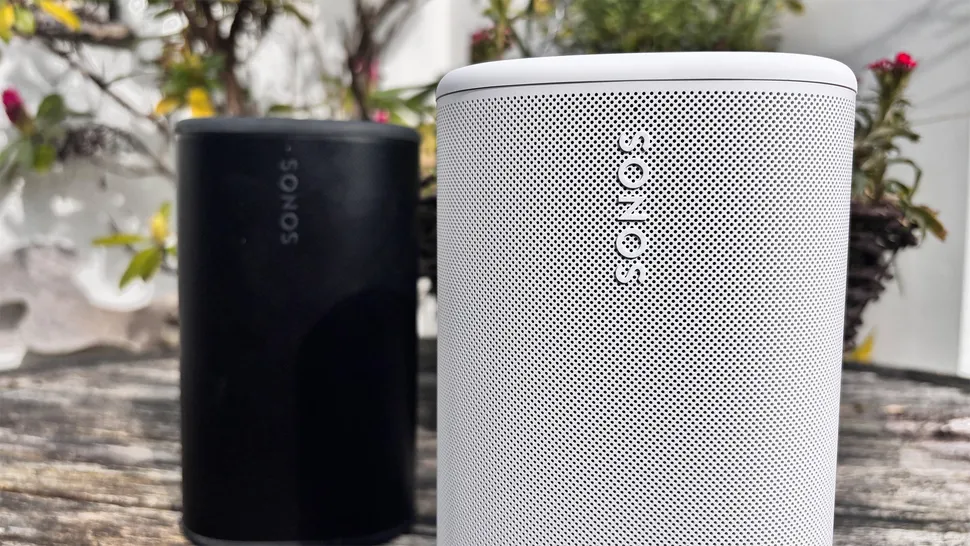
The design split is obvious the second you pick them up. Sonos Play is smaller, lighter, and easier to carry, at 1.3 kg versus the HomePod’s 2.3 kg. The cabinet is narrow, upright, and easier to place on a counter or shelf without taking over the space.
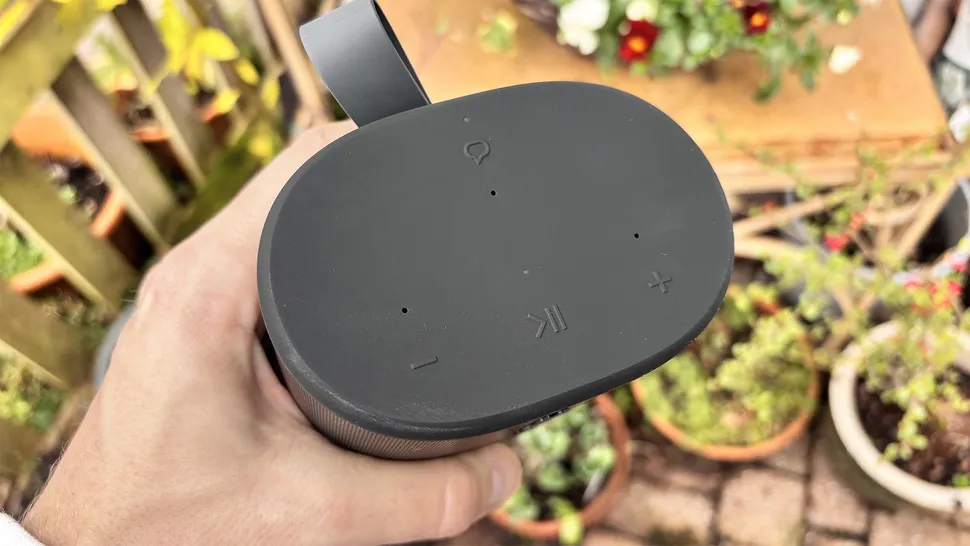
That size difference matters in real use. Sonos adds a utility loop, a charging dock, and IP67 water and dust resistance, so the speaker makes sense for patios, kitchens, garages, and backyard nights. The measurements line up with What Hi-Fi’s spec comparison, and the one-kilo weight gap is enough to notice every time you move it.
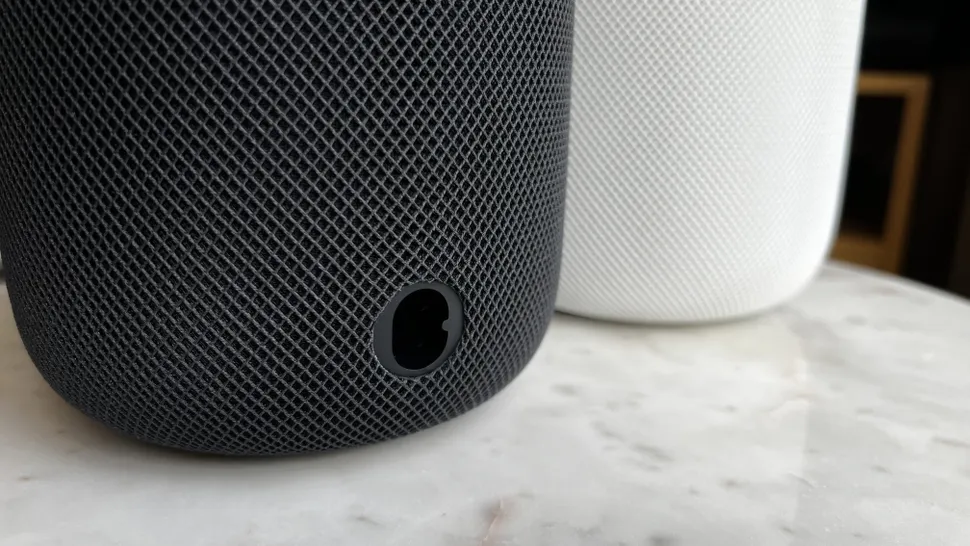
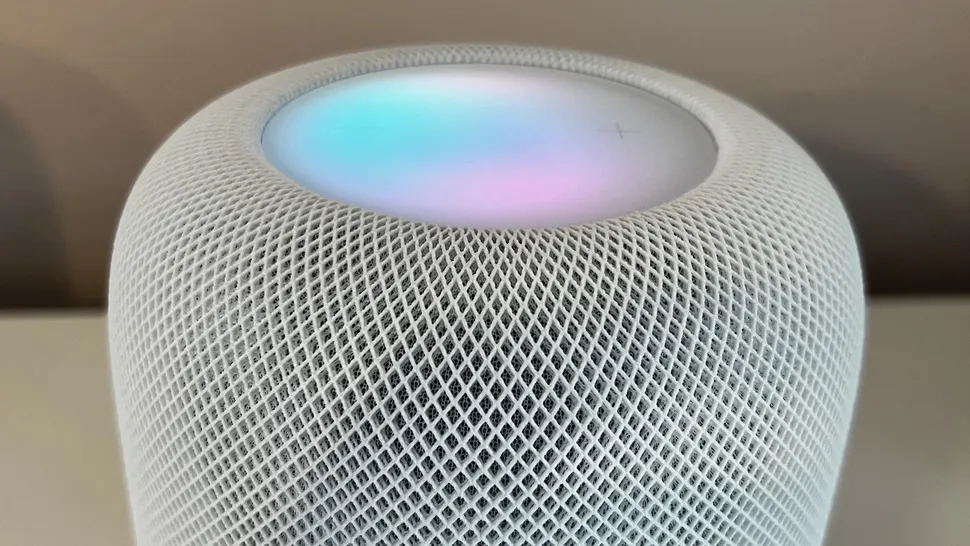
HomePod 2 feels more premium in the classic Apple way. It’s dense, solid, clean-looking, and better suited to staying in one place. The removable power cable is a small but welcome fix over the original model, but this is still a home speaker, not something you carry around.
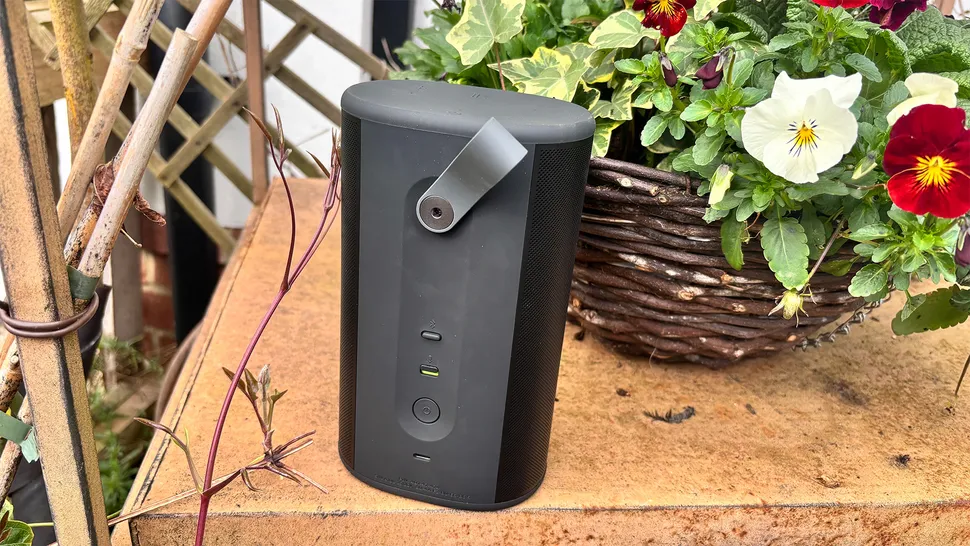
Controls tell the same story. Sonos uses tactile buttons that are easier to find by feel. Apple uses top-surface gestures, which look nicer but are less friendly when you’re moving around or reaching in a hurry.
Winner: Sonos Play. It fits more situations without giving up a premium build.
Sound Quality
If sound quality is your main priority, HomePod 2 is still the safer pick today. Its sound has been tested more heavily, and the verdict is pretty consistent: strong bass, clear vocals, smooth highs, and a balanced presentation that doesn’t fall apart when tracks get busy.
Sonos Play shows promise, but the full picture is still forming. Early listening points to solid output, a wide sweet spot for a single box, and bass that feels larger than the cabinet suggests. At lower volumes, clarity is good. Push bass-heavy tracks harder, though, and the low end can start to crowd the mix a bit.
If you want a closer look at how Apple’s speaker behaves with different genres and stereo pairing, the Apple HomePod 2 review goes deeper. The short version is simple: Apple’s speaker is more proven right now.
Bass, mids, and treble: how each speaker handles the mix
HomePod 2 does a nice job of keeping bass attached to the rest of the song. You get weight and punch, but not a detached thump that swallows vocals. That’s a big reason it sounds more refined than many smart speakers its size.
The mids are a strength too. Voices come through warm and focused, and treble stays lively without turning sharp. Sonos Play sounds more easygoing than flat-out analytical, which makes it pleasant for casual listening, but the final word on its tuning still needs fuller testing.
Spatial audio and room-filling sound
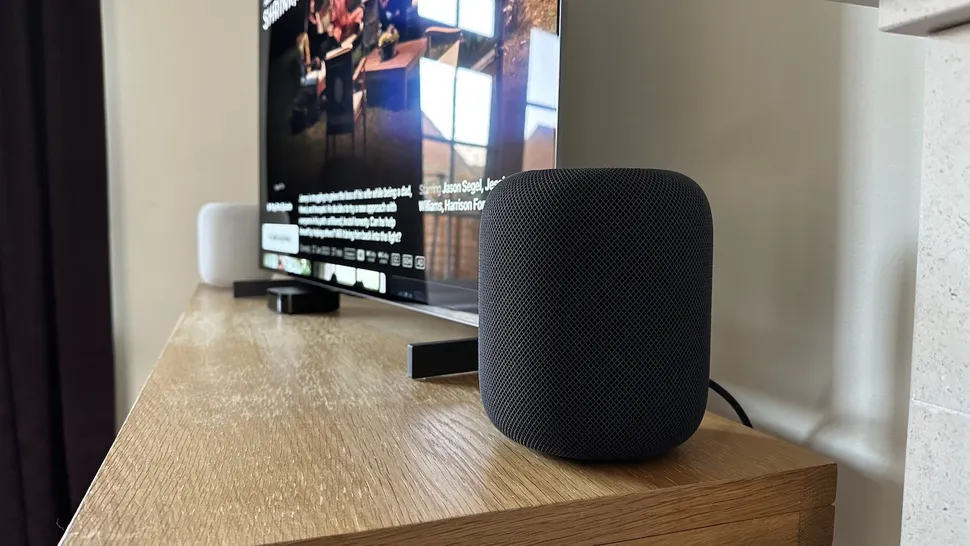
Both speakers support spatial audio, but they take different routes. HomePod 2 is at its best with Apple Music and Dolby Atmos, and it becomes more compelling if you also use an Apple TV 4K. A stereo pair goes even further, with noticeably better openness and placement.
Sonos is broader here. The Play supports immersive audio across more services, including Apple Music and Amazon Music, and it can stereo pair over Wi-Fi. That gives you more service freedom, even if Apple’s speaker still feels more polished in single-speaker listening.
Winner: Apple HomePod 2. Sonos is promising, but HomePod has the stronger and more proven sound case today.
Features, Voice Control & App Experience
HomePod 2 is easy to like if you’re already in Apple’s system. Setup is fast with an iPhone, Siri works as the built-in assistant, and the speaker doubles as a smart home hub with temperature and humidity sensors, Intercom, and support for newer standards like Matter and Thread.
Sonos Play is less about one ecosystem and more about control options. Over Wi-Fi, it slots into Sonos multi-room audio, supports automatic room tuning, and gives you app-based control that works well when the speaker is part of a bigger system. If you want more day-to-day detail, this Sonos Play review covers how it behaves at home and over Bluetooth.
Streaming support and music service flexibility
This is one of the biggest practical gaps. HomePod works best with Apple Music. If you use Spotify, Tidal, or other services, you often start on your phone and send audio over AirPlay 2. That extra step won’t bother everyone, but it’s there.
Sonos is more open. You get native support for Spotify Connect, Tidal Connect, and more services through the Sonos app, including Qobuz. If you bounce between apps, playlists, and services, Sonos is easier to live with.
Codecs, EQ, and smart home control
Sonos supports SBC and AAC over Bluetooth, and it gives you EQ and system controls in the app. The catch is that some app features still depend on Wi-Fi, even when you’re listening over Bluetooth. So it isn’t as independent from your home network as a typical travel speaker.
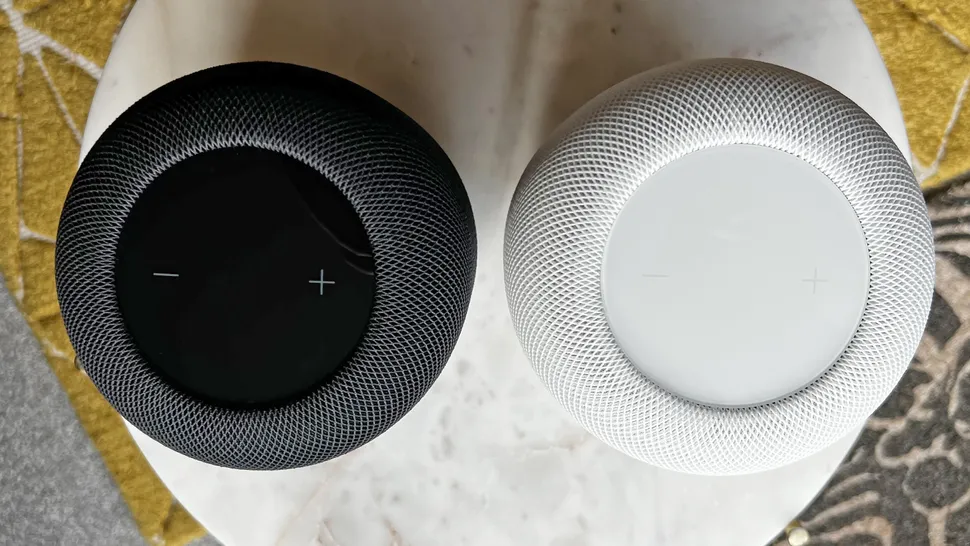
HomePod keeps things tighter and simpler. You get less service freedom, but stronger Apple Home behavior and cleaner smart home control if your house already runs through Apple’s platform.
Winner: Apple HomePod 2. Sonos is more flexible for music services, but HomePod gives you the stronger smart speaker experience.
Connectivity & Controls
Sonos Play is the easier speaker if you use more than one platform. Bluetooth playback works the way you’d expect, Wi-Fi adds multi-room and higher-end features, and AirPlay 2 is there when you want it. You can also stereo pair two Play speakers over Wi-Fi, and Sonos says you can group up to four compatible speakers for bigger outdoor sound.
HomePod is easier only if your life is already Apple-shaped. Bluetooth isn’t meant for normal music playback, so you lean on Wi-Fi, AirPlay 2, and Apple devices. That works fine, but it gives you fewer paths in.
The physical controls help Sonos again. Buttons beat touch gestures when you’re outside, moving fast, or not staring right at the speaker.
Winner: Sonos Play. It gives you more ways to connect and less friction when you’re not locked into Apple gear.
Battery Life, Charging & Outdoor Use
This section is short because the gap is huge. Sonos Play has a built-in battery, a charging dock in the box, and a claimed 24-hour runtime. One standardized test landed closer to 14 hours and 25 minutes at 75 dB, which is still solid for a speaker this size.
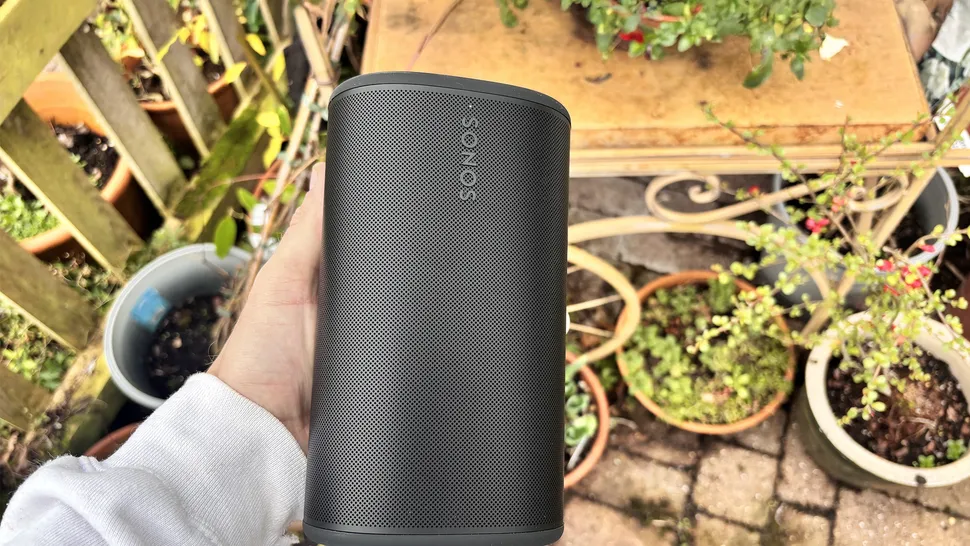
That freedom changes the whole product. You can use one speaker in the kitchen in the morning, move it outside later, and keep going without hunting for a wall outlet. It’s portable, but more “around your home and patio” than “throw it in a backpack for a weekend trip.”
HomePod 2 doesn’t play this game at all. It stays plugged in, and that’s that.
Winner: Sonos Play. Battery power and IP67 protection make it useful in places the HomePod can’t go.
Price & Value
At $299, neither speaker is cheap, and neither is the wrong buy. The value question is about fit. If you already pay for Apple Music, use HomeKit, and want one speaker that sounds great in a fixed room, HomePod 2 can feel like the better deal.
If you want portability, wider streaming support, and proper Bluetooth playback, Sonos Play stretches your money further. It’s the broader tool, even if it isn’t the best pure sound bet yet.
A lot of Apple users frame the same trade-off in this HomePod community discussion: Apple’s speaker gives you tighter integration, while Sonos gives you more freedom outside that bubble.
Winner: Tie. Your money goes further with Sonos for flexibility, and further with Apple for home-focused polish.
Who is Each Speaker Best for?
Choose the Sonos Play if:
- You want one speaker for indoors and outdoors.
- You use Spotify Connect, Tidal Connect, or multiple music services.
- You care about Bluetooth playback and battery power as much as Wi-Fi features.
Choose the Apple HomePod 2 if:
- You already use Apple Music, HomeKit, and other Apple devices.
- You want the more proven sound performer right now.
- You want a home speaker that also works as a smart home hub.
If you’re stuck in the middle, use this simple test. If your speaker needs to move, Sonos is the better fit. If your speaker needs to anchor your Apple setup, HomePod is.
Winner: Tie. These speakers are built for different buyers, and that split is the whole point.
FAQs
Which speaker sounds better overall?
The HomePod 2 has the cleaner, more balanced sound, with better imaging when you use two of them. The Sonos Play sounds fuller and punchier, but the Apple speaker is the safer pick for pure fidelity.
Is the HomePod 2 worth it if you already use Apple gear?
It is, especially if you live in Apple Music, use an iPhone, and want Siri, AirPlay 2, and HomeKit control in one box. Outside Apple’s world, it loses a lot of its appeal.
Can you use the Sonos Play without Wi-Fi?
You can use it over Bluetooth, but that’s not the whole story. Its best features still live in the Sonos app and Wi-Fi setup, so it feels much better at home than on the road.
Does the HomePod 2 work well as a stereo pair?
It does, and that’s where it really wakes up. Two HomePods sound bigger, more organised, and more open, especially with Dolby Atmos tracks and Apple TV 4K.
Which speaker is better for mixed households?
The Sonos Play is the easier sell if your house uses both Android and Apple devices. The HomePod 2 is tighter, smarter, and better integrated, but it’s far more Apple-only.
Can you stream Spotify or Tidal easily to both?
The Sonos Play is less fussy here, since Sonos handles more services through its app. The HomePod 2 can play them, but usually through AirPlay, not Siri.
Which one makes more sense for home cinema?
The HomePod 2 gets the nod if you already have Apple TV 4K, since two units can handle stereo and spatial audio well. The Sonos Play is more about flexible multi-room use than TV duty.
Which one is easier to place around the house?
The HomePod 2 adjusts to its position and room automatically, which makes placement almost laughably simple. The Sonos Play is more portable, but it still behaves like a speaker you move with intent.
Is one clearly better value for money?
The Sonos Play makes more sense if you want portability plus Wi-Fi features in one speaker. The HomePod 2 is the better buy only if you’re committed to Apple and want the best sound in that setup.
Final Verdict
Portability, platform support, and sound quality are the deciding factors here. If you want the most flexible speaker, the Sonos Play is the better buy, because battery power, Bluetooth playback, and broader service support open up way more use cases.
If you live inside Apple’s world and care most about a polished home speaker with proven sound, the HomePod 2 is still the stronger choice. It sounds more settled, acts more like a smart home centerpiece, and asks less from you once it’s set up.
Pick Sonos for freedom. Pick HomePod for Apple-first living.