

Is the Samsung Galaxy Z Fold 7 finally the foldable that feels normal to use every day? For the first time, the answer is close enough that you don’t have to squint.
Samsung fixed the parts that used to make the Fold feel like a compromise. The body is thinner and lighter, the outer screen is wider, the inner display is bigger, and the 200MP main camera is no longer a side note.
You still give something up. The battery stays at 4,400mAh, S Pen support is gone, and the price is still serious money. But if you’ve been waiting for the Fold idea to grow up, this is the one worth looking at.
RELATED: OPPO Find N6 Review (2026): Best Foldable That Feels Ready
Quick Summary
The short version is simple. When it’s closed, this phone finally feels much closer to a normal flagship. When you open it, it turns into a pocket tablet that makes multitasking, reading, and media feel indulgent in the best way.
The biggest wins are the thinner body, the wider 6.5-inch cover display, the larger 8-inch inner screen, and the much better 200MP main camera. The biggest drawbacks are also easy to spot, battery life is good rather than great, the camera bump is chunky, and losing S Pen support will sting if you used the Fold for notes or sketching.
If you want the most polished Fold yet, this is it.
Specifications
Here are the core specs you need at a glance, and Samsung’s official Fold 7 page lines up with the basics below.
| Spec | Samsung Galaxy Z Fold 7 |
|---|---|
| Announced | July 9, 2025 |
| Released | July 25, 2025 |
| Cover display | 6.5-inch AMOLED, 21:9, 120Hz |
| Main display | 8.0-inch foldable AMOLED, 120Hz |
| Chip | Snapdragon 8 Elite for Galaxy |
| Rear cameras | 200MP main, 12MP ultrawide, 10MP 3x telephoto |
| Front cameras | 10MP cover, 10MP inner |
| Battery | 4,400mAh |
| Software | Android 16, One UI 8 |
| Storage | 256GB, 512GB, 1TB |
| Durability | IP48, Armor Aluminum frame, Gorilla Glass protection |
| Weight and thickness | 215g, 8.9mm folded, 4.2mm unfolded |
The numbers matter here because Samsung shrank the body without shrinking what the phone can do.
Design & Build Quality
Thinner, lighter, and easier to carry
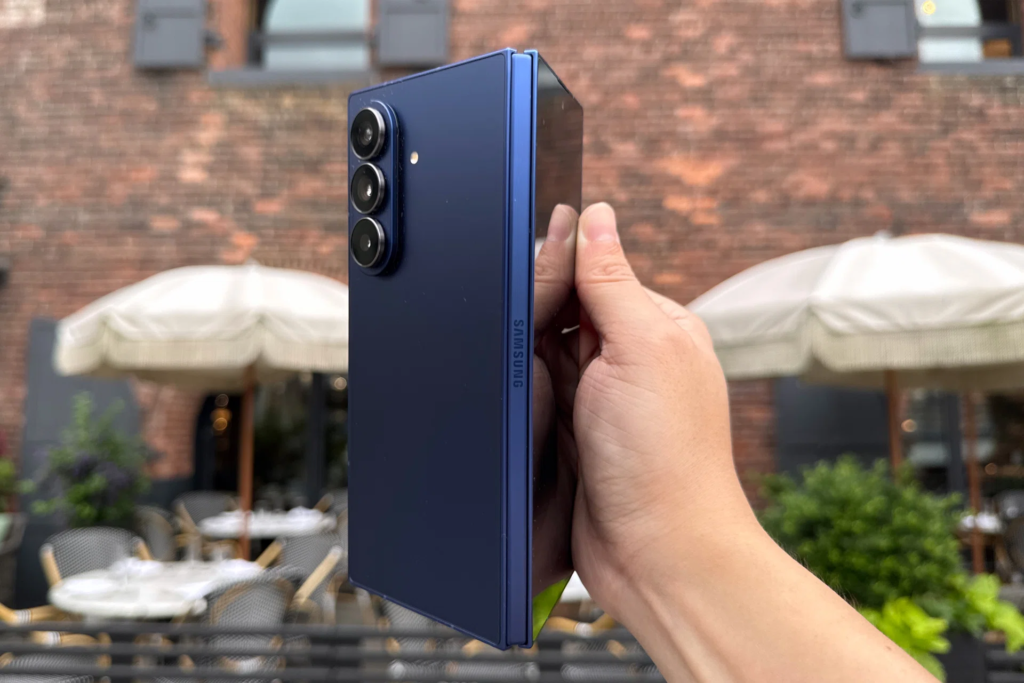
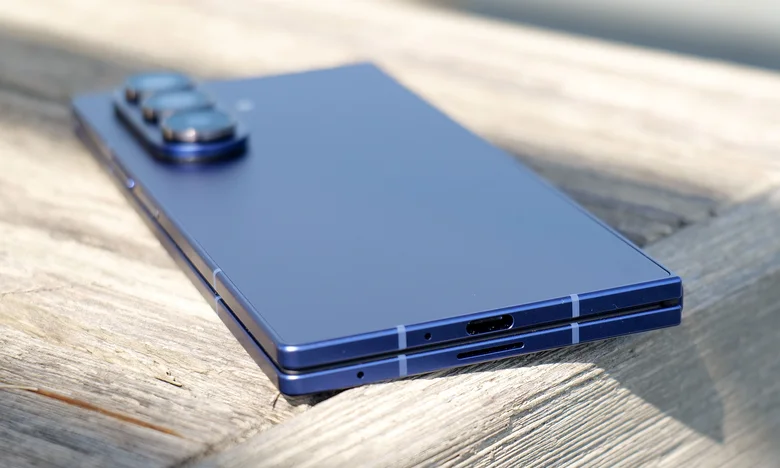
This is the first Fold in years that doesn’t feel like you’re carrying a compromise in your pocket. Folded shut, it’s 8.9mm thick. Opened up, it’s only 4.2mm. At 215g, it’s also lighter than older Fold models by enough that your hand notices it long before a spec sheet does.
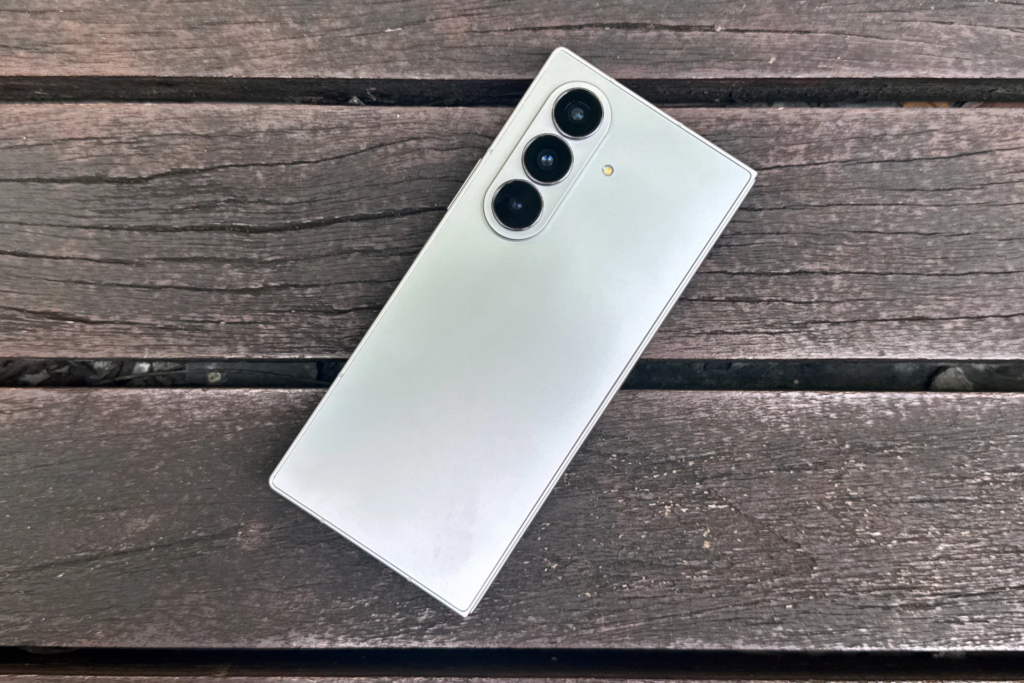
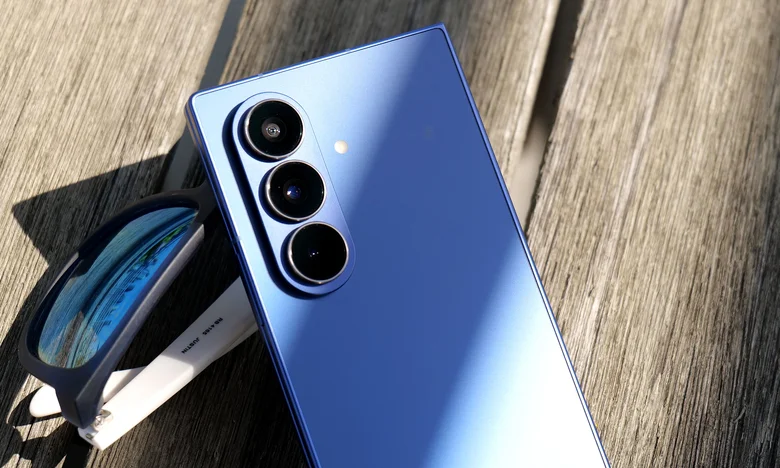
That change matters more than it sounds. You can pull it out, answer a message, check Maps, scroll for a minute, and not feel pushed into opening the big screen every time. With a case, it still becomes a large device, especially around the camera bump, but the base design is finally working with you instead of against you.
Hinge, crease, and durability in everyday use
The hinge feels tighter and more precise than older Fold generations. It opens flat, holds angles well, and folds shut without a gap. The crease is still there, so nobody should pretend otherwise, but it feels flatter under your finger and disappears faster once the screen lights up.
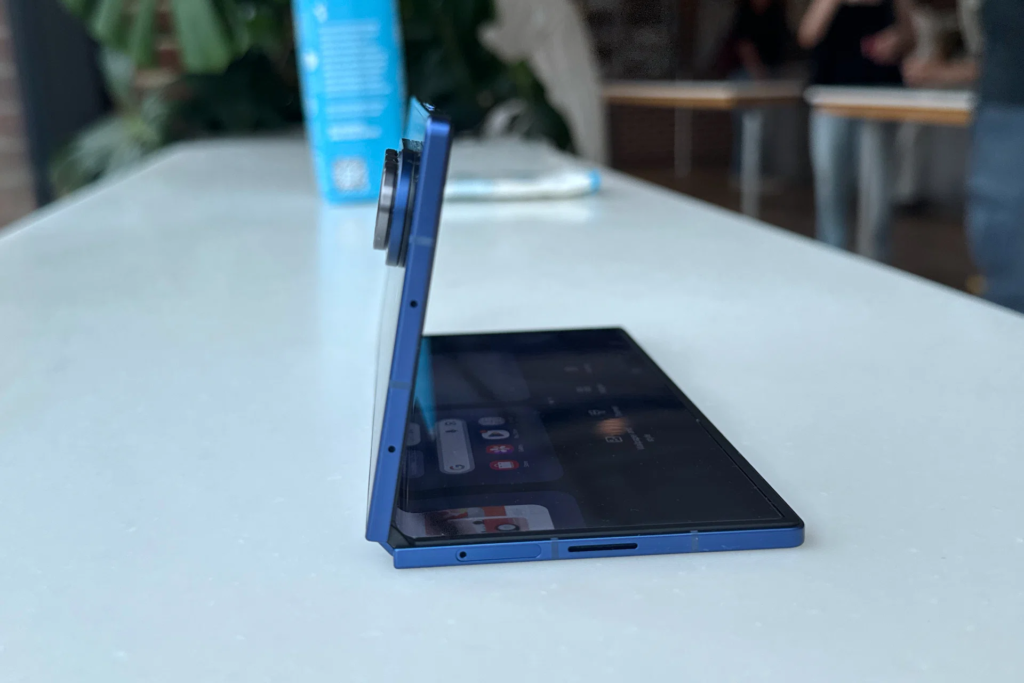
You also get an Armor Aluminum frame, Gorilla Glass on the outside, and IP48 protection. That’s enough for daily confidence, not beach confidence. Water resistance is welcome. Dust and sand are still the part to worry about. This is a premium phone, not a rugged one.
Display Quality
Why the wider cover screen feels much more natural
The best change might be the simplest one. The 6.5-inch outer display now uses a 21:9 shape, and that fixes years of awkwardness. Older Fold cover screens could feel like typing on a TV remote. This one feels like a phone.
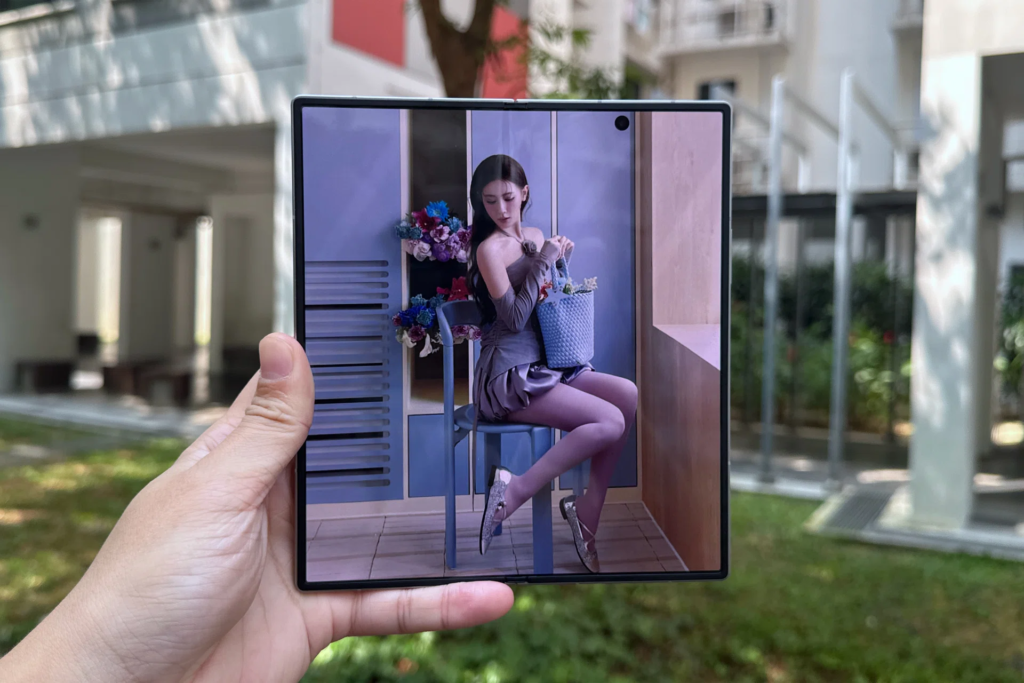
That means quicker replies, easier one-handed scrolling, and less need to unfold the device for small tasks. Brightness is strong enough for outdoor use, colors look rich, and the 120Hz refresh rate keeps everything smooth.
If you’ve ever bounced off older Fold models because the front screen felt cramped, this is the fix.
What the 8-inch inner screen does best
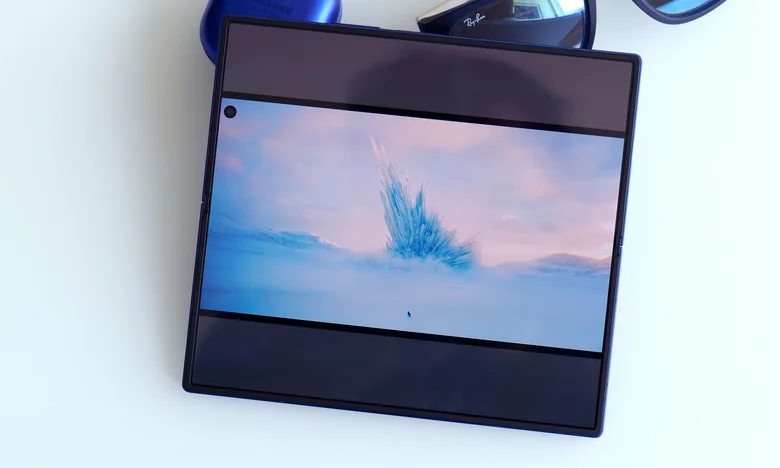
Open the phone and the whole pitch makes sense. The 8-inch inner display is large enough for split-screen work, comfortable reading, and the kind of browsing that feels closer to a small tablet than a stretched phone.
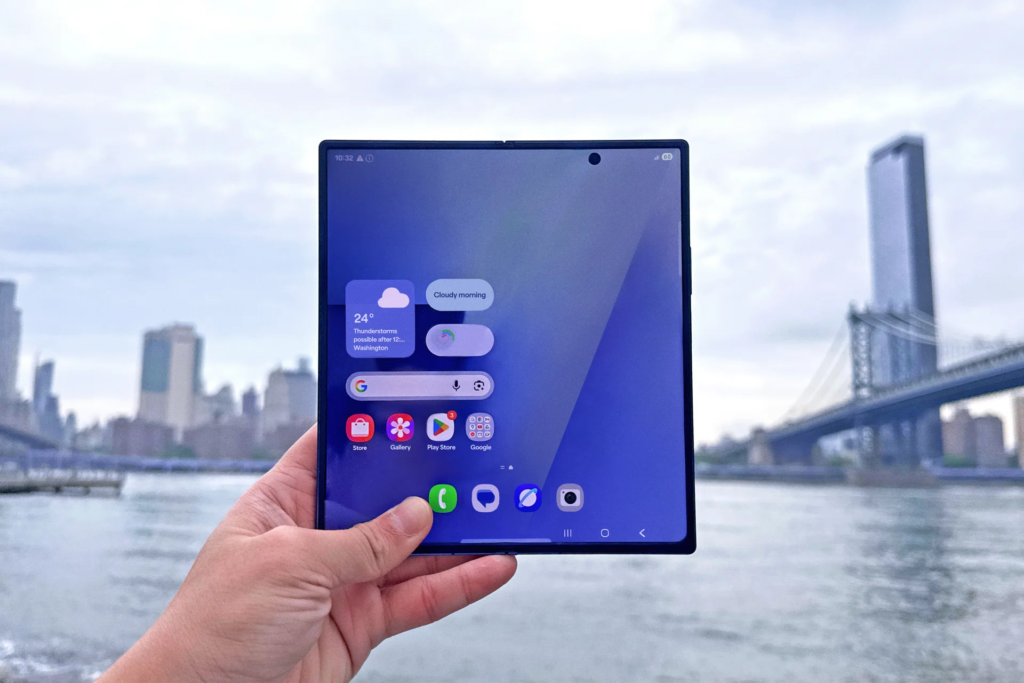
Video still gets black bars because of the squarer shape, but the panel is sharp, colorful, and bright. Where it really earns its keep is multitasking. Two apps side by side feel natural. A third floating window doesn’t feel absurd. That’s the point of this phone, and Android Faithful’s “tablet in your pocket” take lands because the big screen changes how you use it.
Performance
How it handles heavy multitasking
The Snapdragon 8 Elite for Galaxy gives the Fold 7 the kind of speed you notice in bursts all day. Apps open fast. Split-screen layouts stay responsive. You can juggle lots of browser tabs, music, chat, video, and AI tools without the phone feeling confused.
That’s where this hardware makes the most sense. The Fold 7 isn’t about winning a benchmark screenshot contest. It’s about jumping between things without friction, and it does that well.
What the heat and throttling mean for you
The catch is heat. In longer stress tests and heavy gaming sessions, the thin chassis gives the chip less room to breathe, so performance can drop over time. You probably won’t notice that while messaging, browsing, editing, or multitasking.
You might notice it if you push long gaming sessions hard. In normal use, it feels quick. Under sustained load, it behaves like a very thin flagship, because that’s exactly what it is.
Battery Life & Charging
The 4,400mAh battery hasn’t grown, and that’s still the weakest part of the hardware story. The good news is efficiency does some heavy lifting. In real use, you can get through a full day if your mix is normal, with many reviewers landing around 6 to 8 hours of screen-on time.
That’s solid. It isn’t class-leading.
Wired charging is still modest for a phone at this price, and you buy the charger separately. Wireless charging and reverse wireless charging are here, which helps, but battery life remains an area where slab flagships can still feel easier.
Software & Ecosystem
One UI 8 makes the foldable feel more finished
This is one of the first foldables where the software feels properly caught up to the hardware. You get Android 16 and One UI 8 out of the box, plus Samsung promises seven major OS upgrades and seven years of security patches. That’s a long runway.
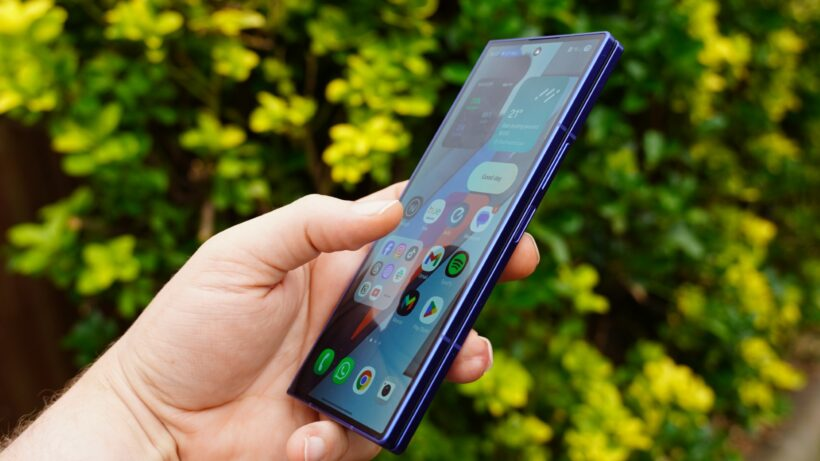
The interface makes good use of the inner display. The taskbar helps with app switching. Split-screen and pop-up windows are easy to manage. Samsung’s newer 90:10 layout is handy when one app is there for reference and the other is doing the real work. If you like comparing raw platform details, the GSMArena spec page is a useful companion.
Samsung and Google AI tools that actually help
The AI story is better here because it stays practical. Circle to Search now works in games. Gemini and Gemini Live fit naturally into the larger display. Samsung adds Sketch to Image, Object Erase, and Audio Eraser without turning the phone into a demo reel for features you’ll never touch again.
The best part is how these tools fit into multitasking. You can search, summarize, erase, or generate while keeping other apps on screen. That’s where a foldable has room to do more than a regular phone.
Connectivity
This part is simple, and that’s a good thing. Physical SIM support is still here, which matters if your carrier or travel setup isn’t fully eSIM-friendly.
For day-to-day use, the Fold 7 covers the flagship basics you expect, including reliable calls, streaming, hotspot use, and travel-friendly flexibility. Nothing flashy, nothing weird.
Cameras, Mic & Speakers
The 200MP main camera finally changes the Fold story
The main camera is the reason this version feels different. Samsung moved to a 200MP wide sensor, and that gives the Fold 7 much more freedom to crop without shots falling apart. Detail is stronger, dynamic range is better, and the gap between the Fold and Samsung’s Ultra phones is much smaller now.
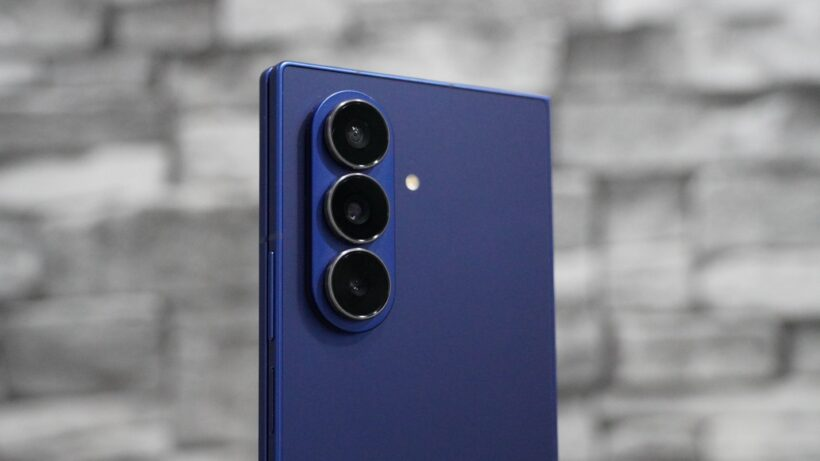
That matters because older Fold cameras often felt like the compromise you made for the form factor. This one doesn’t. Daylight shots look sharp and balanced. Portraits look cleaner. Low-light results from the main camera hold up well enough, and 8K video at 30fps is there if you want it.
Where the ultrawide, telephoto, and selfies stand
The 12MP ultrawide is more useful than the numbers suggest. Its autofocus means it can pull double duty for macro shots, and that makes it one of the more fun cameras on the phone. The 10MP 3x telephoto is fine in good light, but it’s the weak link once the light drops. If zoom is your obsession, this isn’t the best Samsung phone for it.
Selfies are finally better handled. The inner display no longer hides a mediocre under-display camera. You get a regular 10MP cutout camera instead, and image quality improves because of it. The best option is still using the rear cameras with the cover screen as your viewfinder.
Speaker quality is decent, but not a standout. Reviews point to lower loudness than the last model, with clear vocals and thin bass. For video calls or hands-free recording, the bigger advantage is the phone’s ability to hold its own angle like a mini tripod.
Extra Features
Biometrics and hardware extras
The side-mounted fingerprint reader is small, but it’s quick and reliable. That’s one of those features you stop thinking about fast, which is exactly what you want.
Flex mode still earns its place, too. The phone can prop itself up for calls, photos, long videos, or group shots. That sounds minor until you use it a few times and realize you didn’t need a stand.
What you lose by skipping S Pen support
The loss of S Pen support is not a tiny footnote. Samsung removed the digitizer layer to slim the phone down, and that means no proper stylus experience.
If you never used the pen before, you may not care. If you bought past Fold models for handwritten notes, markup, or sketching, this change lands hard.
Price & Value
At around $2,000 in the US, the Fold 7 still asks a lot. The difference this time is that the hardware feels much closer to the asking price. You aren’t paying only for the trick of unfolding a phone. You’re paying for a far better front screen, a genuinely improved camera, and a design that feels mature.
That still doesn’t make it a bargain. It makes it easier to justify. If you’re also curious where Samsung goes next, this Galaxy Z TriFold vs Galaxy Z Fold 7 comparison shows why the Fold 7 is still the smarter daily carry for most people.
Who is it for?
Buy it if these sound like you:
- You want a big-screen phone for multitasking, reading, and split-screen work.
- You watch a lot of video, browse a lot, and like the idea of a tablet that fits in a pocket.
- You want Samsung’s best foldable hardware so far, especially for design and camera upgrades.
Don’t buy it if these sound more familiar:
- You care most about long battery life and faster charging.
- You want the toughest, simplest phone possible for rough use.
- You need S Pen support or stronger zoom than a 3x telephoto can give you.
If you still think book-style foldables are better treated as pocket tablets than normal phones, you’re not wrong. This one just happens to be the closest Samsung has come to making both sides of that idea work.
FAQs
Is the Galaxy Z Fold 7 worth the money?
You should care if you want a foldable that finally feels polished for daily use. At around ₹174,999, it’s pricey, but the cameras and design earn it.
Does the wider cover screen feel like a normal phone?
You get a 6.5-inch, 21:9 outer screen that feels far less cramped than older Folds, so texting, browsing, and Maps all work without opening it.
How good is the 200MP camera in real use?
You get the best camera setup Samsung has ever put on a Fold. The 200MP main sensor gives sharp crops, while portraits and low light stay balanced.
Can it handle heavy multitasking and gaming?
You can push it hard, and it holds up well. Split-screen work, 40-plus Chrome tabs, Spotify, and games all run smoothly, even if sustained performance can dip.
Should you care about the missing S Pen support?
You should if you built your workflow around Samsung’s stylus. The Fold 7 drops S Pen support to stay this thin, so note-taking and precision work lose a lot.
Final Verdict
The Samsung Galaxy Z Fold 7 is the most polished Fold yet, and the upgrade feels easy to see in daily use. You get a thinner design, a much better cover screen, a bigger inner display, and a 200MP main camera that finally belongs at this price.
The weak spots haven’t vanished. Battery life is only solid, the phone is still expensive, and S Pen fans lose a feature they may care about more than thinness.
If you want the best foldable Samsung has made and you plan to use that big screen often, this is the one to buy. If your priorities are battery life, ruggedness, lower cost, or stylus support, you should skip it and wait.