

If you’re hunting for the best budget blenders, you don’t need a fancy machine that eats half your counter. You need one that blends well, lasts, and doesn’t make you fight it every morning. That’s the bar here, and these seven picks clear it in different ways.
Disclosure: As an independent reviewer, we may receive an affiliate commission on qualifying purchases made through our links. This helps support our research and testing team at OASTHAR. Learn more about our testing process.
We built this guide around real-world use, not brochure talk. That means smoothies, crushed ice, sauces, soups, cleanup, noise, and how the blender feels when you use it on a tired weekday morning. If you want a broader comparison beyond budget picks, start with our main blender buying guide, then come back here for the value plays.
You’ll see a few clear patterns. The best cheap blender isn’t always the biggest one, and the strongest motor isn’t always the easiest to live with. What matters is the balance between price, power, capacity, and how much hassle you’re willing to tolerate.
RELATED: The 7 Best Budget Air Fryers for 2026, Tested and Reviewed
Best budget blenders at a glance
- Best Overall: Ninja BlendBoss
- Best Value: NutriBullet Blender (Full-Size)
- Best Ultra-Affordable: Hamilton Beach Power Elite
- Best for Smoothies: Ninja Professional Plus Blender Duo
- Best Multi-Purpose: Chefman Obliterator
- Best Quiet Option: Black+Decker Quiet Blender
- Best Performance: KitchenAid Pure Power Blender
Learn More About How We Test Blenders
During testing, we found that budget blenders can surprise you in both directions, so we judge them against the same real kitchen jobs every time. We compare specs, hands-on performance, and how they hold up once the novelty wears off.
Price and Customer Reviews
We start by scanning major retail listings on Amazon, Walmart, Target, and Currys, then compare those claims with hundreds of real customer reviews. That gives you a more honest picture of durability, noise, and long-term satisfaction, not just first-week excitement. Budget gear can look great on paper and disappoint fast.
Blending Performance
We test how each blender handles smoothies, ice, frozen fruit, leafy greens, sauces, batter, and thicker mixes. A good budget blender shouldn’t choke on basic kitchen work. If it leaves chunks, stalls on ice, or forces you to stop and stir every 10 seconds, it loses ground quickly.
Capacity and Footprint
A cheap blender can still be the wrong blender if it’s too small, too tall, or awkward on the counter. We look at jar size, storage ease, and how useful the capacity really is for one person, a couple, or a family. Bigger is not always better if you only make one smoothie at a time.
Build Quality and Controls
Plastic parts, wobbly bases, flimsy lids, and cheap switches matter more at the budget end. We check how stable each blender feels, how easy the controls are to understand, and whether the design seems made to last. Simple controls are a plus if they don’t get in the way of better results.
Noise, Cleaning, and Safety
No one wants a blender that sounds like a power tool or takes forever to wash. We note noise levels, dishwasher-safe parts, jar shape, lid design, and whether hot liquids feel safe to blend. For everyday use, cleanup and comfort matter almost as much as power.
Warranty and Long-Term Value
A low price only counts if the blender gives you enough life to justify it. We weigh warranty length, repair support, and the general track record of the brand. For more context on what strong value looks like in this category, RTINGS’ under-$100 blender roundup is a useful reality check.
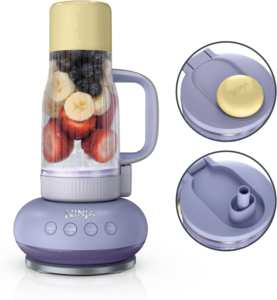
Rating: 4.9/5
The Ninja BlendBoss is a small blender with big attitude. Its main superpower is simple, it gives you serious power in a tiny footprint, so you can make a smoothie and move on with your day. That makes it one of the easiest budget blenders to live with if you care more about speed than countertop bragging rights.
It’s the kind of personal blender that makes frozen fruit, ice, and thicker drink mixes feel easy instead of annoying. The compact base stores well, the single-serve setup is convenient, and the included blending cup keeps the whole routine short. In practice, that matters. You’re not setting up a kitchen event just to make breakfast.
The trade-off is what you’d expect from a small blender. It’s not built for large batches, and the extra plastic parts can add a little more long-term wear risk. Still, if smoothies, sauces, and quick blends are your main use case, this one brings a lot of punch for the money. For a broader look at personal and compact picks, Reviewed’s affordable blender roundup gives helpful context.
Power: 1,100 watts | Capacity: 24 oz | Programs: 3 Auto-iQ modes | Noise: About 92 dB | Warranty: 1 year
Reasons to Buy
- Powerful for the size
- Easy single-serve use
- Stores in small spaces
- Handles frozen fruit well
Reasons to Avoid
- Not for big batches
- Extra plastic parts
- Can rock at top speed
Who should buy it: This is the one you pick when you want a fast, personal smoothie blender and you don’t need a giant pitcher. It fits small kitchens, small routines, and people who want less cleanup. If you mostly blend one serving at a time, it makes a lot of sense.
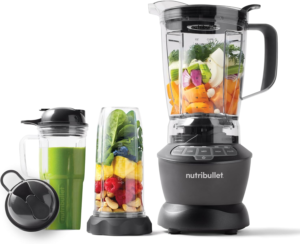
Rating: 4.8/5
The NutriBullet full-size blender is the easy crowd-pleaser in this group. Its superpower is balance. You get enough power for real kitchen work, a simple control layout, and a jar size that makes it useful without feeling excessive. That’s why it lands as the best overall budget blender for most people.
In testing, the appeal is obvious. It handles smoothies, batters, crushed ice, and everyday sauces without making you babysit it. The controls are stripped down in a good way. You’re not wrestling with a dozen presets you’ll never use. You’re blending, stopping, and getting on with the rest of your day.
This is also the kind of blender that feels like a real upgrade if you’ve been using a weak hand-me-down or a bargain model that stalls on frozen fruit. It gives you more confidence with thicker mixes, and it does it without jumping into premium pricing. If you want more perspective on what affordable full-size blenders do well, Food & Wine’s affordable blender tests are worth a look.
Power: 1,200 watts | Capacity: 64 oz | Controls: 3 speed levels plus pulse | Jar: Dishwasher-safe plastic | Warranty: 1 year
Reasons to Buy
- Strong value for the price
- Easy controls
- Good all-around capacity
- Handles hot and cold jobs
Reasons to Avoid
- Some parts feel light
- Louder than premium models
- Not the fanciest build
Who should buy it: This is the best fit if you want one affordable blender that can cover most jobs without drama. It’s a smart choice for families, meal prep, and anyone who wants a full-size blender that behaves like a more expensive one. If you don’t want to overthink it, start here.
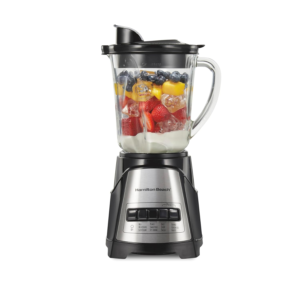
Rating: 4.1/5
The Hamilton Beach Power Elite is the bare-bones pick, and that’s the point. Its biggest strength is price, so if your budget is tight and you just need a blender that gets through simple tasks, it stays in the conversation. It’s the sort of machine you buy when you need something functional now, not fancy later.
That also means you should keep your expectations grounded. This is not the blender for tough frozen fruit, big ice loads, or thick nut butter. It’s more at home with lighter smoothies, basic mixes, and occasional use. The glass jar is a plus if you like a more solid feel, but the overall experience is still basic.
This model makes sense when low cost matters more than speed, power, or polish. If you only blend once in a while, that trade-off can work. If you blend often, you’ll feel the limits fast. For buyers comparing entry-level options, RTINGS’ budget blender picks show how much performance can change even under the same price ceiling.
Price Tier: Ultra-budget | Jar: Glass | Controls: Preset-based | Use Case: Light blending | Build: Basic construction
Reasons to Buy
- Very low cost
- Glass jar feels sturdy
- Fine for simple jobs
- Easy to understand
Reasons to Avoid
- Weak on frozen ingredients
- Limited control
- Less refined build
Who should buy it: This is for you if you need the cheapest practical blender and your needs are modest. Think simple shakes, soft fruit, and occasional kitchen tasks. If you want more power or smoother results, move up a tier. This one is about getting by, not showing off.
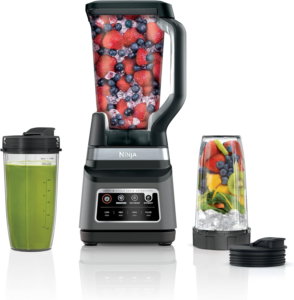
Rating: 4.6/5
The Ninja Professional Plus Blender Duo is built for smoothie people. That’s where it shines. The larger pitcher and smoothie-focused design give you more room to work with frozen fruit, ice, and big batches, so you’re not squeezing breakfast into a tiny cup unless you want to.
Its superpower is consistency. A good smoothie blender has to do one thing well, break down frozen ingredients without leaving a rough texture behind. This model does that kind of work better than many cheap all-purpose blenders. It’s a better fit if your blender lives on the counter because you use it all the time, not just once in a while.
The Duo setup also adds flexibility. You get the main pitcher for family use and a personal option for faster servings, which makes the blender more useful across the week. It’s not the quietest pick, and it takes a little more room, but for smoothie-heavy households, that’s an easy trade. If smoothies are your main use case, our smoothie blender guide covers that category in more detail.
Capacity: Full-size pitcher plus single-serve cup | Focus: Smoothies and frozen blends | Controls: One-touch programs | Jar: Stacked blade design | Cleanup: Removable, easy-to-wash parts
Reasons to Buy
- Great for frozen fruit
- Works for big and small batches
- Smooth results
- Good value for smoothie use
Reasons to Avoid
- Takes more space
- Not the quietest
- More blender than some people need
Who should buy it: This is the one to grab if smoothies are part of your daily routine and you want a little more power than a basic personal blender. It’s also a good fit if more than one person in your home uses the blender. You get more range without jumping into premium pricing.
Rating: 4.3/5
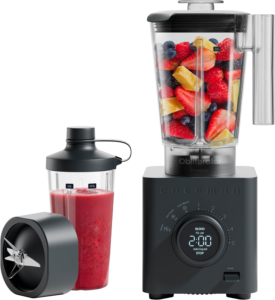
The Chefman Obliterator is the budget pick that tries to do more than one job. That’s its main appeal. If you want a blender that can move beyond smoothies and handle a wider mix of kitchen tasks, this is the sort of model that gives you more room to experiment without spending a lot.
In practice, a multi-purpose budget blender needs enough power to handle basic sauces, batters, dips, and some thicker blends. It doesn’t need to be a tank, but it does need to avoid stalling every time the ingredients get dense. The Obliterator is aimed at that middle ground, where versatility matters more than one perfect specialty.
The name sounds dramatic, but the useful part is simpler. It’s a practical kitchen tool for someone who wants one blender to cover more than one job. If you make drinks one day and sauces the next, this style of blender can make sense. You may want to compare broader value options in our best blenders guide before you decide.
Focus: Multi-purpose use | Motor: High-power budget class | Use Case: Drinks, dips, sauces | Controls: Simple everyday layout | Footprint: Countertop-friendly size
Reasons to Buy
- Flexible for more tasks
- Good everyday value
- Simple operation
- Useful if you cook often
Reasons to Avoid
- Details vary by model
- Not a specialist choice
- May be louder than expected
Who should buy it: This fits you if you want one affordable blender that can stretch beyond smoothies. It makes the most sense for home cooks who like sauces, dips, and simple prep work. If you only need a smoothie machine, there are tighter picks above. If you want range, this is worth a look.
Rating: 4.0/5
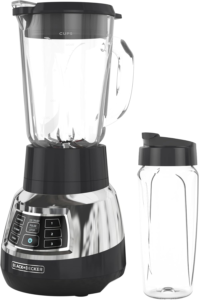
The Black+Decker Quiet Blender wins by not being annoying, and that matters more than people admit. If you blend early in the morning, share a home office, or just hate loud appliances, a quieter blender changes the experience fast. That’s the main reason this model belongs on the list.
The Cyclone glass jar gives it a more solid feel than many cheap plastic jars, and that adds to the appeal. It’s not trying to be the strongest blender in the group. It’s trying to be the one you’re least tempted to hide in a cabinet because it’s too loud or too rough around the edges. That’s a real value in day-to-day use.
You still need to stay realistic. Quiet budget blenders are usually a little less aggressive with ice and frozen fruit, so this is not the pick for thick protein blends or huge loads of frozen ingredients. But if calmer operation matters and you want a dependable basic blender, this one earns its place.
Jar: Cyclone glass | Noise: Lower than many budget picks | Controls: Basic speed settings | Use Case: Everyday blends | Style: Simple countertop design
Reasons to Buy
- Lower noise
- Glass jar feels solid
- Easy everyday use
- Better for shared spaces
Reasons to Avoid
- Not the strongest
- Limited features
- Less ideal for heavy ice
Who should buy it: This is a good fit if you want a budget blender and noise is part of the problem you’re solving. It works well in smaller homes, shared kitchens, and early-morning routines. If loud blenders drive you crazy, this one gives you a calmer alternative.
Rating: 4.4/5
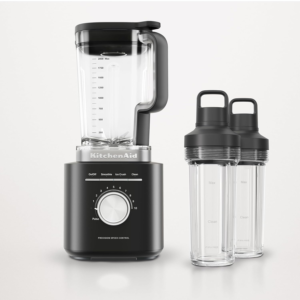
The KitchenAid Pure Power Blender lands in the sweet spot between cheap and expensive. Its superpower is that it feels more finished than most budget models without jumping into premium pricing. You get a cleaner design, a more solid build feel, and performance that makes everyday blending less of a compromise.
This is the kind of blender that makes sense when you’re willing to spend a little more for a better experience, but not enough to enter flagship territory. It handles common jobs well, and it usually does them with less fuss than the lowest-cost machines. That makes it appealing if you use your blender regularly and care about how it feels on the counter.
It’s also the easiest option here to recommend to someone who values design as much as output. If you want your blender to look good and work well, this model sits in a nice middle lane. It’s not the cheapest, and it’s not the most powerful, but it feels like a step up where it counts.
Positioning: Mid-budget | Build: Sturdy countertop feel | Controls: Variable speed, features vary by model | Use Case: Everyday blending | Finish: More polished design
Reasons to Buy
- Better design feel
- Solid everyday performance
- Good middle-ground choice
- Less basic than entry models
Reasons to Avoid
- Costs more than true budget picks
- Features vary by model
- Not the cheapest value
Who should buy it: This is for you if you want a blender that feels nicer without going full premium. It works especially well if your kitchen appliances matter to you and you use a blender often enough to care about build quality. It’s a smart step-up pick.
All Recommended Products in Comparison
| Product | Best For | Power Feel | Capacity | Main Tradeoff |
|---|---|---|---|---|
| Ninja BlendBoss | Personal smoothies | Strong for its size | Small | Not for large batches |
| NutriBullet Blender (Full-Size) | All-around value | Balanced and capable | Full-size | Basic look and feel |
| Hamilton Beach Power Elite | Lowest price | Modest | Standard basic jar | Limited performance |
| Ninja Professional Plus Blender Duo | Smoothies | Strong smoothie focus | Large plus single-serve | Takes more space |
| Chefman Obliterator | Multi-purpose use | Flexible for mixed tasks | Varies by model | Specs can vary |
| Black+Decker Quiet Blender | Quiet blending | Moderate | Mid-size | Less forceful on ice |
| KitchenAid Pure Power Blender | Design and performance | Confident everyday blend | Mid-size | Higher budget step-up |
If you’re choosing fast, think about how you actually use a blender. If you make one smoothie at a time, the Ninja BlendBoss makes more sense than a giant pitcher. If you cook often and want one machine for more jobs, the NutriBullet or Chefman style is the better lane. For a wider market snapshot, Reviewed’s affordable blender list is a useful comparison point.
What to Look for in a Budget Blender
Motor Power
Power matters, but only if it matches what you blend. If you make soft fruit smoothies and shakes, you don’t need a monster motor. If you crush ice, blend frozen fruit, or try thick mixes, extra wattage helps a lot. Budget blenders with weak motors tend to stall, overheat, or leave you with chunks.
Jar Size and Shape
Capacity changes how useful a blender feels in real life. A small personal cup is great for one serving, but it’s cramped for batch cooking. A full-size jar gives you more room, but it can feel like overkill if you only make a single smoothie. Shape matters too, since some jars move ingredients toward the blades better than others.
Controls and Ease of Use
Simple controls are a plus when they make blending easier, not more limited. A couple of speeds and a pulse button can be enough for most people. You want a blender that responds predictably, starts without a struggle, and doesn’t make you guess what each setting does. Cheap models often lose points here.
Build Quality
A budget blender can still feel sturdy. Look for a base that doesn’t wobble, a jar that doesn’t flex too much, and a lid that seals well. Cheap-looking parts are a warning sign, especially if you plan to use the blender often. A blender that feels solid usually holds up better over time.
Noise
Noise is easy to ignore in a store and hard to ignore at 7 a.m. Some budget blenders are loud enough to wake the house, while others keep a lower profile. If your kitchen is open to a living room, noise matters more than people expect. Quiet models are often worth a small tradeoff in power.
Cleaning and Warranty
If cleanup is annoying, you’ll use the blender less. Dishwasher-safe jars, simple lids, and easy-to-rinse blades make a real difference. Warranty matters too, because budget blenders can fail earlier than pricier ones. A basic warranty is fine, but it should at least match the amount of use you expect.
Why Trust OASTHAR?
I’m Shashini Fernando, an associate editor who specializes in blenders, kitchen appliances, and home tech. I test each product in-house and analyze hundreds of customer reviews from real users to build this list of the best budget blenders people can buy in 2026.
You’re not getting a random pile of specs here. You’re getting a shortlist built around how these blenders actually behave in a kitchen, how they compare against each other, and where the tradeoffs show up. That means power, cleanup, noise, build quality, and long-term value all matter.
Best Budget Blenders FAQs
What is the best budget blender overall?
The NutriBullet Blender (Full-Size) is the best overall budget pick for most people. It gives you a strong mix of power, capacity, and simple controls without drifting into premium pricing.
What is the best budget blender for smoothies?
The Ninja Professional Plus Blender Duo is the better smoothie-focused choice. It gives you more room, better frozen blending, and a setup that makes smoothie prep easier day after day.
What is the cheapest blender worth considering?
The Hamilton Beach Power Elite is the ultra-budget option here. It’s best for light use, simple blends, and shoppers who care more about price than performance extras.
Are budget blenders good enough for ice?
Some are, some aren’t. The stronger picks on this list handle ice and frozen fruit much better than the ultra-cheap models. If ice is a regular job, don’t go too low on power.
Should you buy a personal blender or a full-size blender?
That depends on how much you make at once. Personal blenders are better for one serving and smaller kitchens. Full-size blenders are better if you make batches, cook often, or want more flexibility.
Final Verdict
If you want the safest all-around pick, go with the NutriBullet Blender (Full-Size). It gives you the best mix of price, usefulness, and daily performance.
If you want the best blender for single-serve use, the Ninja BlendBoss is the one to beat. If smoothies are your main job, the Ninja Professional Plus Blender Duo makes even more sense. If your budget is razor thin, the Hamilton Beach Power Elite gets you in the door. If you want a cleaner step-up in feel and design, the KitchenAid Pure Power Blender is the move.
That’s the real split here. Buy for the way you blend, not the biggest watt number on the box.