

Technics EAH-AZ100 Review: The Sound Pick, but Is the ANC Enough?
Three-device multipoint and top sound, but how strong is the noise cancelling? This Technics AZ100 review covers fit, battery, calls and which to buy.
Affiliate disclosure: As an Amazon Associate, OASTHAR earns from qualifying purchases.
OASTHAR score
- Design and Comfort8.4
- Sound Quality9.1
- Noise Cancelling8.3
- Battery Life9.0
- Value8.2
The verdict
If sound comes first for you, I'd buy the Technics EAH-AZ100, and on Android they get even better thanks to LDAC and LC3. If you mainly want the quietest cabin or clear calls on a busy street, I'd get the Sony WF-1000XM6 or the Bose QuietComfort Ultra Earbuds (2nd Gen) instead.
The catch is noise cancelling and calls. SoundGuys measured a strong cut of low rumble, but the Sony blocks up to 15 to 20 dB more in parts of the upper range, and the single mono mic struggles in noise. The default tuning also leans dark and boomy to some ears, so plan on a minute with the EQ.
The rest is easy to like: three-device multipoint, about 10 hours per charge with ANC on, five tip sizes and a light 5.9 g bud. If your EAH-AZ80 still fit and work, I'd keep them. Skip the AZ100 if you take lots of calls outdoors or need more than IPX4.
Buy it ifListeners who put sound first, juggle up to three devices and want long battery with ANC on.
Reasons to buy
- Detailed, spacious sound that What Hi-Fi rates above the Sony WF-1000XM5.
- Three-device multipoint, so phone, laptop and tablet stay connected at once.
- SoundGuys measured 10 h 40 min per charge with ANC on, longer than the Sony WF-1000XM6.
- Light 5.9 g buds, five tip sizes and an in-app fit test.
Skip it ifSkip them if you want the strongest noise cancelling or take calls in noise. Get the Bose QC Ultra Earbuds (2nd Gen) instead.
Reasons to avoid
- Noise cancelling trails the Sony WF-1000XM6 and Bose, letting more voices and keyboard noise through.
- A single mono mic struggles in noise, and Voice Focus AI can make you sound robotic.

Prices and availability can change. Details
Product prices and availability are accurate as of the date/time indicated and are subject to change. Any price and availability information displayed on Amazon.com at the time of purchase will apply to the purchase of this product.
What are the Technics EAH-AZ100, and who are they for?
Tired of premium earbuds that block noise well but sound flat? That's the buyer Technics is courting. The EAH-AZ100 are sealed noise cancelling earbuds built around sound first, with a few rare extras on the side.
Read those four numbers as the pitch: a light bud, a full workday per charge, and one pair that stays linked to your phone, laptop and tablet together. All four come from Panasonic's spec page. Inside sits a 10 mm Magnetic Fluid Driver, and the buds speak SBC, AAC, LDAC and LC3 over Bluetooth 5.3.
They replaced the EAH-AZ80 and appeared at CES 2025, and no successor has surfaced since. So you're not buying a model that's about to be retired, as far as anyone has announced.
Picture a workday where your laptop plays a meeting, your phone rings at lunch and your tablet carries a show on the train home. Three-device multipoint means no re-pairing at any of those moments. Now the honest part: the noise cancelling is good, not the best, and the mic is weak in noise. If sound and battery matter most to you, keep reading. If silence matters most, the ANC section will save you a return.
Who should buy the EAH-AZ100, and who should skip them?
Your priorities settle this faster than your phone does, since the app and most features work on iPhone and Android alike.
- Get the EAH-AZ100 if sound quality is your first reason to buy and you don't mind a minute with the EQ.
- Get them if you juggle three devices, since few earbuds hold three connections at once.
- Get them on Android if you want LDAC, and accept that the full 990 kbps rate means turning multipoint off.
- Keep your EAH-AZ80 if they fit well and still work. The upgrade is a lighter bud and more bass, not a new kind of product.
- Get the Sony WF-1000XM6 if you want stronger noise cancelling and better calls in noise, per SoundGuys' head-to-head.
- Get the Bose QuietComfort Ultra Earbuds (2nd Gen) if blocking noise on flights is the whole point.
- Get the AirPods Pro 3 if you carry an iPhone and want Apple's features, since the Technics stop at AAC there.
- Skip them if you take lots of calls on loud streets or need more than IPX4.
Say you're a commuter who listens for two hours a day and calls home once a week from a quiet room. That's an easy yes. Say you run a sales line from a busy sidewalk. That's a no, and the mic is why. My call: buy for the music, not for the phone calls.
What changed from the Technics EAH-AZ80?
Own the older pair and wondering if you're missing much? Less than the new box suggests. The real changes are a lighter bud, a new driver with more bass and a few software extras.
| Feature | EAH-AZ80 | EAH-AZ100 |
|---|---|---|
| Weight per bud | 7 g | 5.9 g |
| Driver | Older driver | 10 mm Magnetic Fluid Driver |
| Bass | Less impact | More impact |
| Three-device multipoint | Yes | Yes |
| LC3 and LE Audio | No | Yes |
| Dolby Atmos with head tracking | No | Yes |
| Voice Focus AI for calls | No | Yes |
| Per charge, ANC on | Not stated | Up to 10 h, AAC, claimed |
| Launch price | Same tier | Same tier |
Source: weight and bass from What Hi-Fi; driver and battery from Panasonic; the other rows from Engadget and What Hi-Fi.
Take one thing from that table: multipoint, the headline feature, isn't new. What you'd notice day to day is the smaller, lighter shell and the fuller low end. I couldn't find a published AZ80 battery figure to set beside the new one, so I won't guess at that gap.
Picture a long-haul flight where the older, heavier buds start to ache by the second movie. That's the AZ80 owner I'd nudge toward the upgrade.
How do the fit, comfort and ear tips hold up?
Will they hurt after a few hours? For most ears, probably not. Engadget found they stayed in place without irritation for hours, and What Hi-Fi calls the fit secure for both small and large ears, and more comfortable than the AZ80.
Each bud weighs about 5.9 g, and the shell measures about 21 x 26 x 25 mm with the medium tip, per Panasonic. SoundGuys still calls the shape chunkier than Sony's pill-shaped buds, with soft rectangular nozzles and touch-sensitive backs.
That ML size is the useful one. It sits between the two most common sizes, which helps if medium leaks and large presses. SoundGuys counts four sizes, but Panasonic's list of five is the one I'd trust.
Now the small annoyances. What Hi-Fi found single taps sometimes register as double taps, so a pause can skip a track instead. Controls are fully customisable in the app, which softens that.
Water is the real limit. The buds are IPX4, and the case has no water rating at all. Say you toss the case in a gym bag beside a leaking bottle. That's the moment to worry. My take: fine for sweat, not for rain-soaked runs.
How good do the EAH-AZ100 sound?
Is the sound really the reason to buy? Yes, with one footnote about the default tuning. Every outlet rates it highly, but they don't agree on how it sounds out of the box.
| Outlet | What it heard or measured |
|---|---|
| What Hi-Fi | Clear, detailed, balanced and spacious; rated above the Sony WF-1000XM5 |
| Engadget | Among the best its author has heard; punchy, detailed bass |
| SoundGuys, measured | MDAQS 4.3 out of 5; immersiveness 4.8; calls the default sound odd |
| SoundGuys head-to-head | Bass rise starts too high, 2 to 4 kHz recessed, dark and boomy; MDAQS 4.5 with Treble+ |
So who's right? Both camps, honestly. If you like warm, spacious sound, the default will please you. If you want a neutral curve, switch on the Treble+ preset or use the 8-band EQ, which lifted the SoundGuys score from 4.3 to 4.5.
Spatial audio is the weaker extra. Engadget found Dolby Atmos tracks on Apple Music sounded strongest, but the spatial mode itself sounded thin and didn't help the default tuning. It's off unless you switch it on in the app.
On Android with LDAC, Panasonic claims a range of 20 Hz to 40 kHz at 96 kHz and 990 kbps. Picture a late-night jazz album on a phone that supports LDAC, with multipoint off. That's this pair at its best. My call: the sound earns the purchase, as long as you'll touch the EQ once.
How strong is the noise cancelling, and how do calls sound?
Will it quiet a plane cabin? Mostly, yes. SoundGuys scored the noise cancelling 8.3 out of 10 and calls it strong on planes and trains, just not record-setting.
Read those together. The low rumble of engines and buses gets cut hard, while voices, keyboards and other higher sounds leak through more than on the Sony WF-1000XM6. No outlet published an average reduction percentage for the Technics, so nobody can rank it to the decimal.
What Hi-Fi put it very close to Bose's first QuietComfort Ultra Earbuds, with Bose better at mids such as keyboard typing. Engadget found it weaker with office chatter and steady fan noise. Transparent mode is the one to use; What Hi-Fi found the Attention voice mode over-processed.
Calls are the real weak spot. There's a single mono mic, fine in quiet rooms, but it struggles in noise. Voice Focus AI strips out wind and traffic, yet What Hi-Fi and Engadget both found it can make you sound robotic. In a SoundGuys reader poll, 51% rated the mic samples good or perfect and 13% bad or awful.
Say you take a call at a windy bus stop. That's where the Sony, with eight mics, pulls ahead; my WF-1000XM6 review covers its calls in wind. Bottom line: good ANC, average calls.
How long does the battery last, and how do you charge it?
Afraid they'll die before your flight lands? Unlikely. The one measured run beat Panasonic's own claim.
| Source | Conditions | Reported figure |
|---|---|---|
| Panasonic claim | Buds, AAC, ANC on / off | 10 h / 12 h |
| Panasonic claim | With case, AAC, ANC on / off | 28 h / 29 h |
| Panasonic claim | Buds, LDAC, ANC on / off | 7 h / 8 h |
| Panasonic claim | With case, LDAC, ANC on / off | 18 h / 19 h |
| SoundGuys | SBC, ANC on, music peaking at 75 dB | 10 h 40 min |
| Engadget | ANC on, codec not stated | 20% left after 10 h |
| Engadget, as written | With case; LDAC | 18 h; 7 h and 11 h, unlike the spec page |
| Panasonic claim | 15 min quick charge, AAC, ANC on | About 90 min |
| Panasonic claim | Full charge: buds; case by USB / Qi; both by USB / Qi | 2 h; 2.5 h / 3.5 h; 3 h / 4 h |
Plan around the SoundGuys line, since it states codec, mode and volume. For the case totals, I'd trust Panasonic's spec page over Engadget's lower numbers.
The case charges over USB-C or Qi, but there's no charger in the box. Picture a red-eye, then a full workday after landing: one charge covers it.
What works on iPhone, and what works on Android?
Good news for once: the Technics Audio Connect app runs on both, so iPhone owners don't lose the EQ or the controls. The split is codecs.
| Feature | iPhone | Android |
|---|---|---|
| App: EQ, ANC level, controls, battery per bud | Yes | Yes |
| Codecs | SBC and AAC | SBC, AAC, LDAC; LC3 on LE Audio phones |
| LDAC 990 kbps | No | Yes, with multipoint off |
| Three-device multipoint | Yes | Yes, with SBC, AAC or LDAC 330 kbps |
| Dolby Atmos head tracking | Set in the app; not split by phone | Set in the app; not split by phone |
| Find My earbuds, wear detection | Yes | Yes |
| Auracast | Not confirmed | Not confirmed |
So iPhone owners get the same app and controls, just not the hi-res codecs. And no feature is locked to one phone brand, which isn't true of the Galaxy Buds4 Pro or the AirPods Pro 3.
Here's the fine print that bites. Say you set up phone, laptop and tablet, then wonder why your lossless library doesn't sound special. That's the trade at work. Auracast is unclear too: SoundGuys says it isn't there, and I couldn't confirm any other claim. My call: pick multipoint or LDAC for each day, not both.
What do owners report, and has firmware fixed it?
Is there a common fault you'd regret not knowing about? I couldn't find a clear owner pattern for this pair. No public owner thread I could read showed a repeated complaint, so treat what follows as outlet findings and maker notes.
The one problem Panasonic admits sits on its own firmware page. After firmware 1.030, released March 26, 2025, some devices may lose connection. The fix it gives is to unpair and re-pair the buds. That same update improved connectivity in some places and added the tip-fit test. Firmware 1.010 in January 2025 improved call voice quality.
A few smaller niggles round it out. What Hi-Fi found the case lid magnet weaker than Sony's, and noted no speech detection to pause music when you talk. Engadget calls the app's settings menu overwhelming. The LDAC and multipoint limit is by design, so don't expect a patch.
Say your laptop drops the buds the morning after an update. Unpair, re-pair, and you're back. My read: no deal-breaker here, but test calls in a loud spot during your first week, while returns are still easy.
Which colour should you buy, and are they worth it?
Stressed about picking the wrong version? Don't be. There's one bud size and no feature difference between colours, so you're choosing a finish.
You get black (EAH-AZ100-K), silver (EAH-AZ100-S) and a Champagne Gold 60th anniversary edition from July 2025, which is a colour change only. Model codes vary by market on Panasonic's pages, but I found no feature split between them. In the box are the buds, the case, five tip sizes and a short USB-C cable, so bring your own charger or Qi pad.
The bigger question is which pair. If you want the quietest flights, the Bose QuietComfort Ultra Earbuds (2nd Gen) or the Sony WF-1000XM6 suit you better, and the WF-1000XM6 against the EAH-AZ100 is the matchup most buyers weigh. On an iPhone with Apple's extras in mind, the AirPods Pro 3 fit better, and my AirPods Pro 3 review lists those extras. On a recent Galaxy, the Galaxy Buds4 Pro bring Samsung's features, though without true multipoint, and my Galaxy Buds4 Pro review goes through them. For the full field, see the best noise cancelling earbuds.
If this were my money and my commute, I'd buy them, set Treble+ on day one, and keep calls for quiet rooms.
EAH-AZ100 specs
- Compatibility
- iPhone and Android; LDAC needs Android; Audio Connect app on both
- Noise Cancelling
- Adaptive hybrid ANC; Transparent and Attention ambient modes
- Battery
- 10 hrs ANC on, 12 off (AAC); case 28 / 29 hrs (claimed)
- Case and Charging
- USB-C and Qi wireless; 15 min gives 90 min (claimed)
- Water Rating
- Buds IPX4; case not rated
What the experts found
A capable, recommended contender with strong noise cancelling and a deep feature set, best for Android owners without Snapdragon Sound; its odd default tuning benefits from the app EQ.
A well-thought-out, friendly pair of premium wireless earbuds with detailed, spacious sound and excellent noise cancelling; a What Hi-Fi Awards 2025 winner.
 Engadget85/100
Excellent sound quality that few earbuds can match, with three-device multipoint, but noise cancelling lags the best and smart features are thin.
Also consider

Bose QuietComfort Ultra Earbuds (2nd Gen)
Bose stays at the top for blocking noise and the stability bands hold the fit. The trade is a much shorter battery, rated 6 hours per charge.

Apple AirPods Pro 3
SoundGuys measured about 90% average noise reduction, and heart rate and a hearing aid mode work on an iPhone. They play SBC and AAC only, with no LDAC.
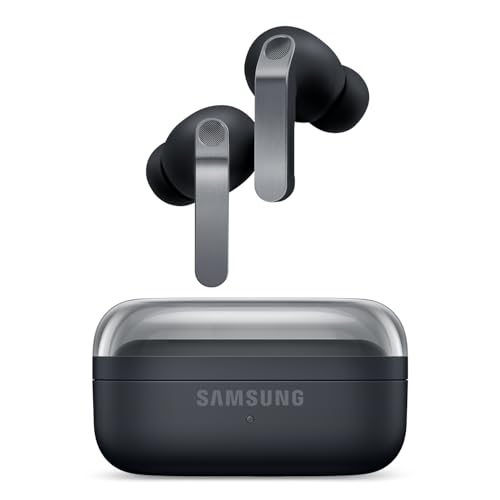
Samsung Galaxy Buds4 Pro
Sound among the best in their class and strong noise cancelling on a recent Galaxy. There's no true multipoint, and the best features need a Galaxy phone.
EAH-AZ100: frequently asked questions
Do the Technics EAH-AZ100 work with iPhone?
Yes. The Technics Audio Connect app runs on iOS with the EQ, controls, ANC level and multipoint settings. You get SBC and AAC only, so LDAC and its higher rates stay on Android.
Can the EAH-AZ100 connect to three devices at once?
Yes, three at once, with memory for up to 10 paired devices, per Panasonic. SoundGuys found three-device multipoint works with SBC, AAC or LDAC at 330 kbps, not LDAC at 990 kbps or LC3.
Is the EAH-AZ100 noise cancelling as good as Sony or Bose?
Close, but not equal. SoundGuys measured about 35 to 38 dB of cut below 100 Hz, while the Sony WF-1000XM6 blocks up to 15 to 20 dB more in parts of 2 to 10 kHz. Engadget and What Hi-Fi both put Bose ahead.
How long does the EAH-AZ100 battery last?
Panasonic claims 10 hours with ANC on and 28 hours with the case, using AAC. SoundGuys measured 10 h 40 min with ANC on. With LDAC, the claim drops to 7 hours per charge and 18 with the case.
Are the EAH-AZ100 good for calls?
In quiet rooms, yes. The single mono mic struggles with background noise, and Voice Focus AI removes wind and traffic but can make your voice sound robotic, per What Hi-Fi and Engadget.
Should I upgrade from the EAH-AZ80 to the EAH-AZ100?
Only if the AZ80 feel heavy or you want more bass, LC3 or Dolby Atmos head tracking. Both have three-device multipoint. If yours fit and work, I'd keep them.
Are the Technics EAH-AZ100 waterproof?
No. The buds are IPX4, so sweat and light splashes are fine, and the case has no water rating at all. Keep both away from rain and pools.
Does the EAH-AZ100 come with a charger?
No. The box has the buds, the case, five tip sizes and a USB-C to USB-C cable of about 0.2 m. The case charges over USB-C or a Qi wireless pad.