

You’re trying to decide if Sony’s latest flagship buds are a real upgrade or just a new number. In the Sony WF-1000XM6 vs Sony WF-1000XM5 matchup, the short answer is yes, upgrading makes sense if you care most about sound realism, stronger ANC, and clearer calls.
The XM5 still holds up with a smaller profile and top-tier detail, plus a solid 8-hour battery with ANC. But the XM6 pushes a more natural, fuller tuning, adds a newer noise-cancelling processor and more mics, and it stays stable in busy places thanks to a bigger antenna.
Next, you’ll see the full breakdown, specs table, design and fit, bass and treble differences, ANC strength, mic performance, app features and EQ, controls, battery, and price value so you can pick with confidence.
RELATED: Sony WF-1000XM6 vs Bose QuietComfort Ultra Earbuds: Which is Better?
Quick Summary
The WF-1000XM6 officially lands in February 2026, and it costs more in the US at about $329 versus the XM5’s $299 launch price. So you’re paying extra up front, even before sales enter the chat.
Day to day, the most meaningful change is noise handling. Sony positions the XM6 as a step up with more microphones (8) and a newer QN3e class noise-canceling processor, plus adaptive noise-canceling features. The XM5 already sits near the top of the category, but Sony is clearly trying to squeeze more quiet out of travel noise and office chatter with the XM6.
On the sound and tuning side, XM6 adds a 10-band EQ in the Sony Sound Connect app, while XM5’s EQ is more limited (commonly referenced as a 5-band setup). That extra control matters if you like to trim bass, bump vocals, or tame treble without guessing.
Meanwhile, the WF-1000XM5 has the advantage of a long track record: it’s widely praised for detail and clarity, has earned major awards, and it’s easier to justify when it drops in price. Comfort is strong, but some listeners say the fit can feel less locked-in than certain rivals with stabilizer wings.
For more perspective from other testers, check a recent PCMag XM6 vs XM5 comparison and keep an eye on how they frame the upgrade value.
Winner: Sony WF-1000XM6 because its mic and processing upgrades, plus 10-band EQ, are the most likely changes you’ll notice every day.
If you mostly commute or fly
If your week includes subway rumble, bus engine growl, or plane cabin noise, the XM6 is built to take the lead. The jump to 8 microphones and the newer QN3e processor is aimed straight at more consistent canceling across different environments.
Still, the XM5 is already “premium quiet.” It also benefits from a smaller, smoother shape that can help reduce wind noise, and it’s the kind of ANC that makes a coffee shop feel muted instead of chaotic.
If you already own the XM5
You’ll notice upgrades most if you care about call clarity, tuning control, and next-gen wireless features like LE Audio and Auracast. If you mostly listen at home and your XM5 fit is perfect, the practical jump might feel smaller, especially if XM6 stays near full price.
Specifications
Here’s the spec snapshot that matters for buying.
| Spec | Sony WF-1000XM6 | Sony WF-1000XM5 |
|---|---|---|
| Release timing | February 2026 | July 2023 |
| US launch price | $329 (approx.) | $299 (approx.) |
| Bluetooth version | Bluetooth (version not stated in sources) | Bluetooth 5.3 |
| Codec support (confirmed/reported) | SBC, AAC, LDAC, LE Audio, Auracast | SBC, AAC, LDAC |
| Battery life (buds, ANC on) | 8 hours | 8 hours |
| Total battery (with case) | 24 hours (reported) | 24 hours |
| Water resistance | IPX4 | IPX4 |
| Weight (each earbud) | 6.5g | 5.9g |
| Colors | Black, Platinum Silver | Black, Silver |
| App | Sony Sound Connect | Sony Sound Connect |
| EQ in app | 10-band EQ | 5-band EQ (as referenced in sources) |
| Microphones | 8 (reported) | 6 (3 per earbud) |
A few specs matter more than the rest:
- Microphones and processor tend to drive real ANC and call improvements.
- EQ bands change how precisely you can tune the sound.
- Fit and seal still beat any spec sheet, because they decide bass and ANC.
Winner: Sony WF-1000XM6 because the mic count jump, LE Audio plus Auracast, and 10-band EQ are meaningful spec gains.
Design, Comfort & Build Quality
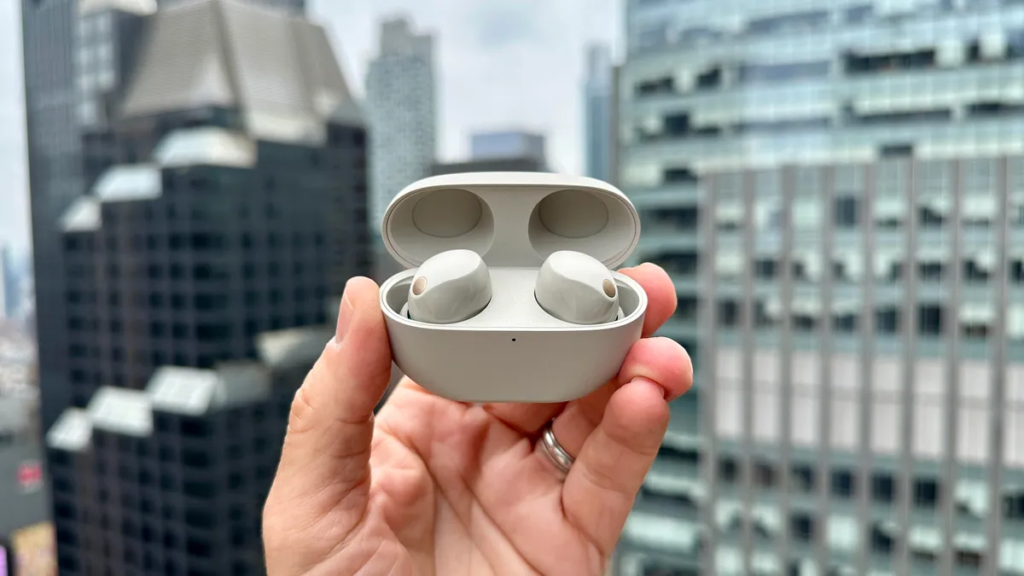
The WF-1000XM5 moved Sony’s design forward with a smaller, less protruding shape than the prior generation, plus smoother lines that help with wind noise. It’s also very light in the ear, and the case shrank too, which makes daily carry easier.

There’s one catch: the XM5 uses a glossier finish on much of the bud. It can feel slippery when you’re pulling it out of the case, and it shows smudges more easily.
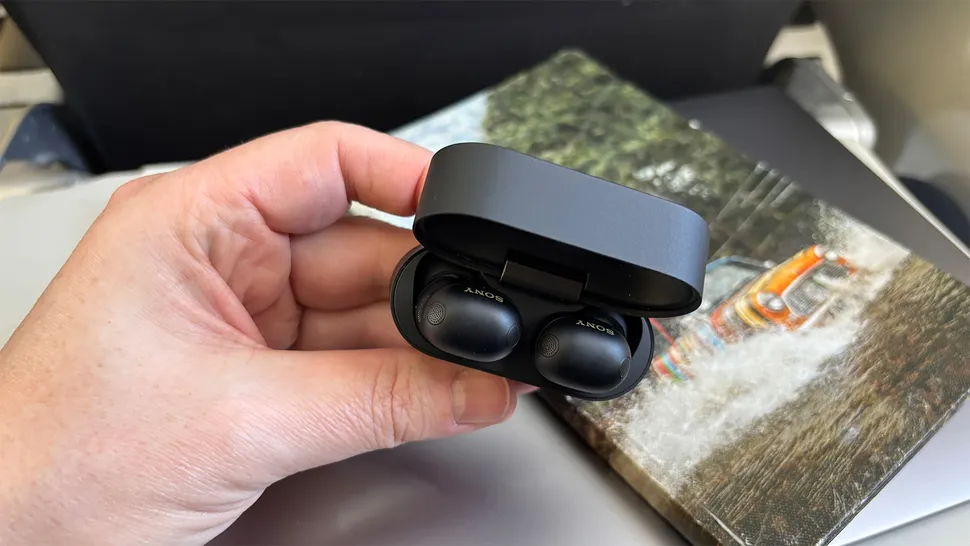
The WF-1000XM6 shifts the vibe. Leaks and release coverage point to a return to a matte plastic feel, which a lot of people prefer for grip. The earbud body is described as a bit more pill-shaped, with a nozzle angle change, and the case design looks narrower and taller. That could be great in a bag, but it might be less friendly in a tight jeans pocket.
Both stay at IPX4, so you’re covered for sweat and light splashes, but neither is “worksite tough.”
If you want a broader shopping short-list before you pick, this best true wireless earbuds guide can help you sanity-check whether you even need flagship pricing.
Winner: Tie because XM5 wins for small-in-pocket carry, while XM6 sounds better for grip and finish preference.
Fit and seal, why foam tips and nozzle angle can change everything
A great seal is like closing a door in a noisy room. Bass tightens up, and ANC works the way it should. With XM5, comfort is widely praised, but some people wish the fit felt more secure, especially compared to designs that use wings.
XM6 is positioned with ergonomic tweaks and fit guidance in the app, and a nozzle change can affect pressure and stability. Either way, plan to try multiple tip sizes and use the insert-and-twist technique to lock the seal.
Sound Quality
The WF-1000XM5 has a clear reputation: it aims for detail, clarity, and timing more than big, party-style bass. Reviews often describe a more open, analytical presentation than older Sony flagships. Vocals sit cleanly in the mix, and instruments stay separated, even when a track gets busy.

That said, not everyone hears the same balance. Some listeners note the XM5 can still push bass and sub-bass enough to mask fine detail on certain songs, especially below about 300Hz. In other words, it can sound punchy, but it can also get a bit thick if your library is already bass-heavy.
WF-1000XM6 is where you have to keep expectations grounded. Sony and early coverage point to a new speaker, plus upgrades to the DAC and amplifier, and you also get 10-band EQ. Those are the right ingredients for cleaner treble texture, more controlled bass, and less fatigue over long sessions, but the exact tuning still depends on how Sony voiced it.
For another early take from hands-on testing, see this Android Central XM6 vs XM5 comparison.
Winner: Sony WF-1000XM6 because the hardware update plus 10-band EQ gives you more control and more upside, even if XM5 already sounds excellent.
Bass: punch vs control for hip hop
With XM5, you can get satisfying slam, but bass can occasionally crowd out finer details depending on track and fit. It also tends to sound less “thick” than the older XM4, which some people will call a win.
XM6 should be easier to shape. If you want less thump for podcasts, drop the low bands. If you want club energy, push them back up.
Mids and treble
XM5’s midrange gets a lot of love because voices and guitars come through with strong presence and clean edges. Treble detail is a highlight too, which helps cymbals and room cues feel more real.
XM6 should let you fine-tune that presence region better, which matters if you’re sensitive to sharpness or you want extra vocal pop.
ANC
XM5 is already a serious ANC earbud. Sony claimed a notable improvement versus XM4, helped by extra microphones and updated processing, and many listeners treat it as one of the safer picks for travel.

Even so, strong ANC can bring a “pressure” sensation for some ears, and some competitors cancel even more noise but can feel more vacuum-like. Sony’s approach tends to feel a bit more subtle than the most aggressive alternatives.
XM6 pushes further. Reported upgrades include 8 adaptive microphones, an adaptive NC optimizer, and the newer QN3e processor, which is described as much faster than the prior generation. In plain terms, that should help the earbuds react better when noise changes quickly, like when you move from a quiet gate area to a loud jet bridge.
If you care most about noise canceling progress, this kind of update is the reason to buy the newer model.
Winner: Sony WF-1000XM6 because more mics and newer processing target the exact situations where ANC matters most.
Transparency and ambient modes
XM5 already supports smart ambient behavior through features like Adaptive Sound Control, which can change modes based on location and activity. That’s practical when you want ANC on the train but more awareness in the office.
XM6 adds multiple ambient modes as well, with the promise of better processing. If you take lots of quick chats at a cafe, XM6 has more room to improve naturalness.
Mic & Call Quality
Sony took calls seriously on XM5. The design aims to cut wind noise, and Sony also used AI noise reduction and bone-conduction sensing to keep your voice clear. You even get head gestures for answering or rejecting calls, which is handy when your hands are full.
XM6 builds on that direction. Reported features include beamforming plus bone conduction, wind reduction, advanced AI, and the move to 8 microphones. If you take calls outdoors, or you walk near traffic, extra mics can help keep consonants crisp and reduce that “underwater” sound.
For a quick outside perspective from early testing, you can compare notes with Techlicious’ XM6 vs XM5 impressions.
Winner: Sony WF-1000XM6 because more microphones and updated voice processing are the most direct path to clearer calls.
Features
Both earbuds run through the Sony Sound Connect app, and both focus on the same core experience: strong ANC controls, smart automatic modes, and deep sound options.
On XM5, you get DSEE Extreme upscaling, 360 Reality Audio with head tracking, Adaptive Sound Control, Speak-to-Chat, and multipoint. It’s a stacked feature list, and it works across platforms, which matters if you bounce between Android, Windows, and iOS devices.

XM6 keeps those premium features and adds the stuff that changes daily use for picky listeners. The big one is the 10-band EQ, because it’s much easier to fix small annoyances like boomy lows or sharp treble when you have more control. XM6 also adds LE Audio and Auracast, which are forward-looking features for compatible devices and broadcast-style audio scenarios.
Winner: Sony WF-1000XM6 because 10-band EQ and Auracast support are real feature upgrades, not just marketing.
Codecs and wireless audio
If you listen on Android and your phone supports it, LDAC can improve quality on high-bitrate streams. On iPhone, AAC is the practical baseline.
LE Audio is about efficiency and modern features, and Auracast can enable shared or public audio broadcasts where supported. Importantly, aptX support isn’t confirmed here, so don’t buy expecting it.
Connectivity & Controls
XM5 supports multipoint out of the box, so you can connect to two devices at once and switch without re-pairing. It also improved touch controls compared to older Sonys by letting you manage playback, sound modes, and volume at the same time, even if multi-tap controls still take practice.

XM6 keeps the multipoint idea and adds more “smart” control options in reported feature lists, like smart gestures, voice control, and microphone management. If those features matter to you, XM6 is the cleaner bet, but XM5 already covers the basics really well.
Practical tip: spend five minutes in the app and set controls the way you actually listen. Otherwise, you’ll keep fighting default tap patterns.
Winner: Tie because XM5 already nails multipoint and usable controls, while XM6’s added control features depend more on your habits.
Battery Life & Charging
Battery is a wash on paper. XM5 is rated around 8 hours with Bluetooth and ANC on, with 24 hours total including the case. XM6 is reported at the same basic numbers, plus fast charging and wireless charging support.
Real life varies a lot. Higher volume, LDAC use, and stronger ANC can all cut run time. Still, if you want “workday plus commute” endurance, both are built for it.
Winner: Tie because the headline battery numbers are essentially the same for most people.
Price & Value
In the US, XM6 sits around $329 at launch. XM5 launched at $299, and it’s been on the market long enough to see meaningful discounts during major sales. That makes XM5 the model you can sometimes buy like a flagship, but pay like a tier below.
The value question is really about your tolerance for paying full price. If you want the newest ANC and call tech, XM6 earns its premium. On the other hand, if you’re bargain-aware and you don’t need LE Audio or Auracast yet, XM5 on sale can feel like stealing a top-shelf product.
To cross-check how other outlets frame the money side, this XM6 vs XM5 comparison breakdown is another useful reference point.
Winner: Sony WF-1000XM5 because discounts can undercut XM6 by enough to outweigh the newer model’s upgrades for many buyers.
Who is Each One For?
Choose WF-1000XM6 if…
- You want Sony’s best current ANC setup, with more mics and newer processing.
- You take lots of calls and want stronger wind and traffic handling.
- You tune your sound often and will use the 10-band EQ, LE Audio, or Auracast.
Choose WF-1000XM5 if…
- You want a proven flagship sound with a strong reputation for detail.
- You care about pocketability, and you prefer a smaller case style.
- You’re shopping deals and want the best value when prices drop.
Winner: Tie because each model fits a different buyer, and “best” depends on whether you prioritize newest features or best deal.
FAQs
What are the biggest WF-1000XM6 upgrades over the WF-1000XM5?
You’re mainly paying for stronger ANC and call upgrades, with a faster QN3e processor and far more microphones per earbud. You also get refreshed audio hardware and a 10-band EQ.
Is Sony WF-1000XM6 noise canceling clearly better than XM5?
Yes, it’s the headline change. You get a newer QN3e chip and eight mics per earbud (XM5 uses three), so mid and high noise drops harder.
Does the WF-1000XM6 sound better than the WF-1000XM5?
It should, because Sony updated the driver and also improved the DAC and amp. If you like tuning your sound, the 10-band EQ gives you more control.
Are WF-1000XM6 calls noticeably clearer than WF-1000XM5 calls?
They can be, especially outdoors. The XM6 adds AI beamforming mics plus a bone-conduction sensor for voice pickup, and Sony also pushes stronger wind and noise reduction.
Is WF-1000XM6 battery life better than WF-1000XM5?
No. You still get up to 8 hours from the buds with ANC on, and 24 hours total with the case. If you want longer runtime, look elsewhere.
Do you lose anything by sticking with the WF-1000XM5?
Not much for most people. The XM5 already nails detail and clarity, has multipoint, LDAC, and solid ANC. The main trade-off is weaker noise control versus XM6.
Is the WF-1000XM6 worth upgrading from WF-1000XM5?
Upgrade if you take lots of calls, commute often, or hate midrange chatter. If your XM5 fit well and ANC feels fine, waiting for XM6 discounts makes sense.
What’s the WF-1000XM6 price, release date, and colors?
You can buy it now because it launched February 12, 2026. US price is $329.99, and you get Black and Platinum Silver options at launch.
Final Verdict
If you’re buying today and you want Sony’s strongest noise handling plus deeper tuning control, the WF-1000XM6 is the cleaner pick. You’re paying more, but you’re getting real upgrades: more microphones, a newer QN3e processor, LE Audio plus Auracast, and a 10-band EQ. If you’d rather spend less and still get top-tier sound and a loaded feature set, the WF-1000XM5 remains an easy recommendation when it’s discounted. XM5 also has the comfort and sound credibility that comes from years of real-world feedback.
Winner: Sony WF-1000XM6 because it offers the most complete flagship package in February 2026, even though XM5 is often the smarter deal.