

You’re picking between two heavy hitters, and the stakes feel high because you’ll wear them for hours. In Sony WF-1000XM6 vs Galaxy Buds 3 Pro, Sony is the safer “best overall” bet if you want top-tier sound and noise cancelling, while Samsung makes more sense if you use a recent Galaxy phone and want a lively, punchy tuning for less money.
The XM6 plays it more natural and balanced, with strong dynamics and ANC that sits near the top of the class. Meanwhile, the Buds 3 Pro sound fast and energetic, but they can come off a bit forward, and their best codec perks really show up on newer Samsung devices.
Next, you’ll get a clean breakdown of specs, design and comfort, sound (bass, mids, treble), ANC, mic quality, features, controls, battery, price, and who each pair fits best.
RELATED: Sony WF-1000XM6 vs Apple Airpods 3 Pro: Which is Better?
Quick Summary
Sony’s WF-1000XM6 sound more natural and “whole.” You get weighty bass that stays controlled, clear mids, and highs that don’t feel sharp. Samsung’s Galaxy Buds 3 Pro come off more energetic and forward, which can be a blast, but they can also feel a bit brash if you’re sensitive to treble.
Noise canceling is another split. Sony’s ANC is closer to the top of the category, especially for travel and office noise. Samsung’s ANC is solid and does a good job lowering the general roar around you, but it doesn’t lead the pack.
Calls lean Sony too. The XM6 use AI beamforming plus bone-conduction sensing, which tends to keep your voice cleaner when wind and crowds show up. Samsung’s call quality is also strong, but the overall “set it and forget it” feel is better on Sony.
Finally, ecosystem fit matters. Sony plays nicer across Android and iPhone because you still get full app support. Samsung’s best perks, including its high-quality SSC UHQ codec option, are mainly for recent Galaxy devices. For another perspective on the XM6, see this Sony WF-1000XM6 review coverage.
Winner: Sony WF-1000XM6 because you get the more consistent all-around experience across phones, with stronger ANC and calls.
Specifications
Here are the confirmed headline specs that most affect daily use.
| Spec | Sony WF-1000XM6 | Samsung Galaxy Buds 3 Pro |
|---|---|---|
| List price (USD) | $330 | $249 |
| Bluetooth version | 5.3 | 5.4 |
| Codec support | SBC, AAC, LDAC | AAC, SBC, SSC UHQ |
| Active noise canceling | Yes | Yes |
| Battery (ANC on, earbuds) | 8 hours | 6 hours |
| Battery (ANC on, total) | 24 hours | 26 hours |
| Battery (ANC off, earbuds) | 7 hours | 7 hours |
| Battery (ANC off, total) | 30 hours | 30 hours |
| Earbud weight (each) | 6.2g | 5.4g |
| Case weight | 47g | 46.5g |
Codecs and battery behavior matter more than Bluetooth version numbers. If you stream a lot and care about higher-quality Bluetooth audio, Sony’s LDAC support can be a practical edge. On the other hand, Samsung’s SSC UHQ is the “best-case” route, but it’s tied to newer Galaxy devices.
Winner: Tie because the spec advantages depend on your phone and whether you prioritize LDAC (Sony) or Samsung’s Galaxy-focused codec path.
Design, Comfort & Build Quality
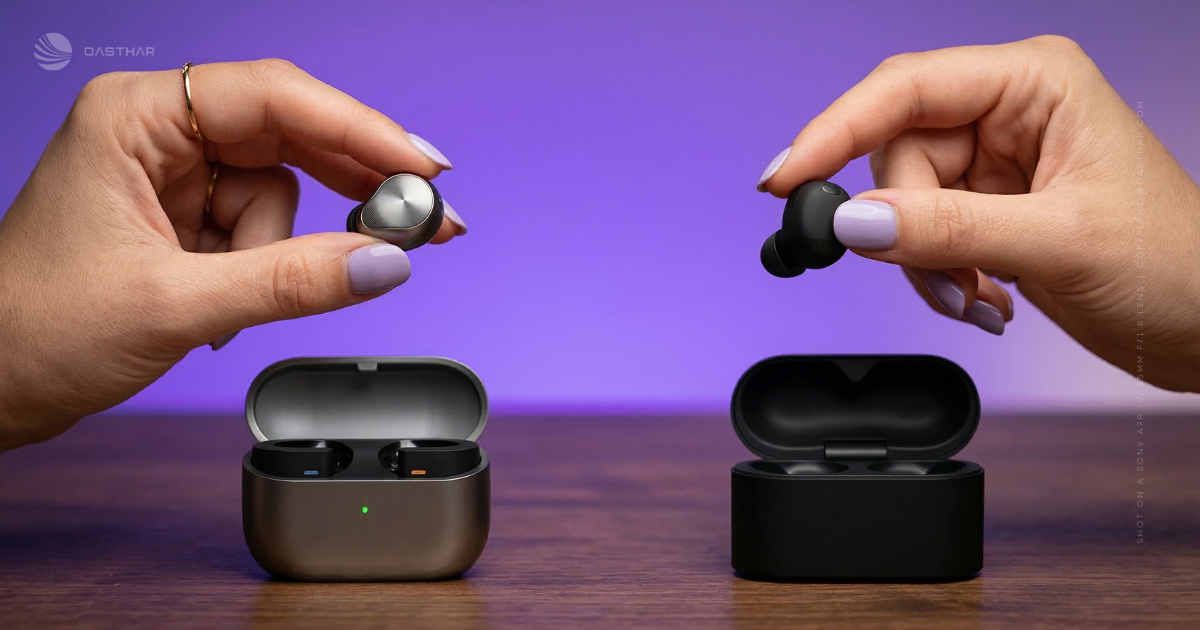
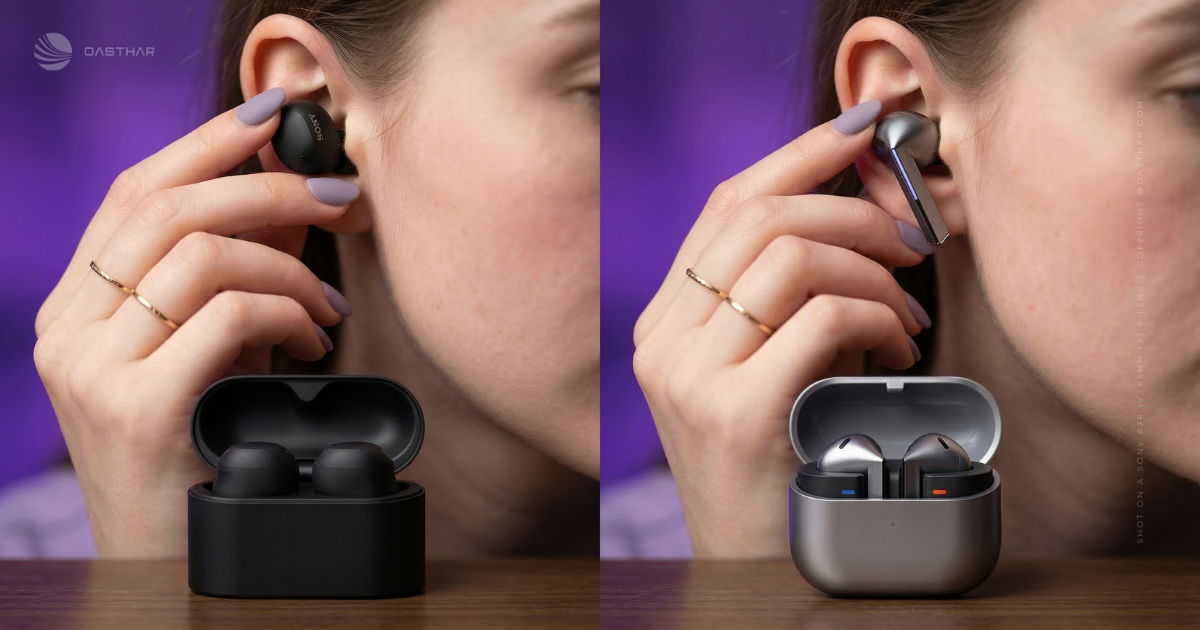
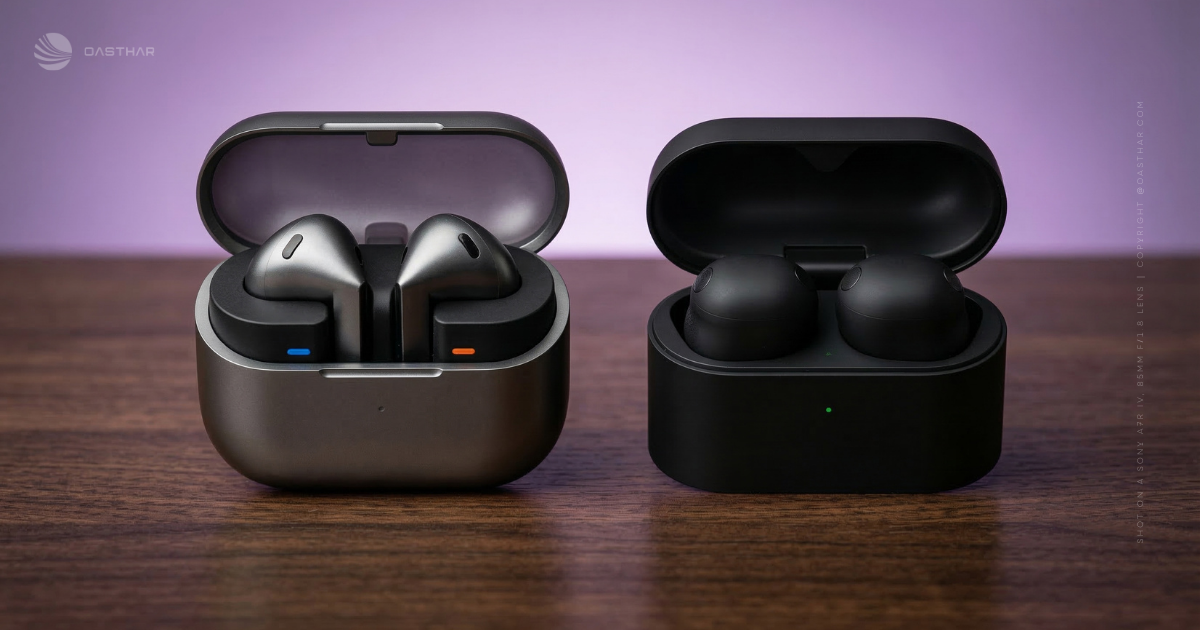
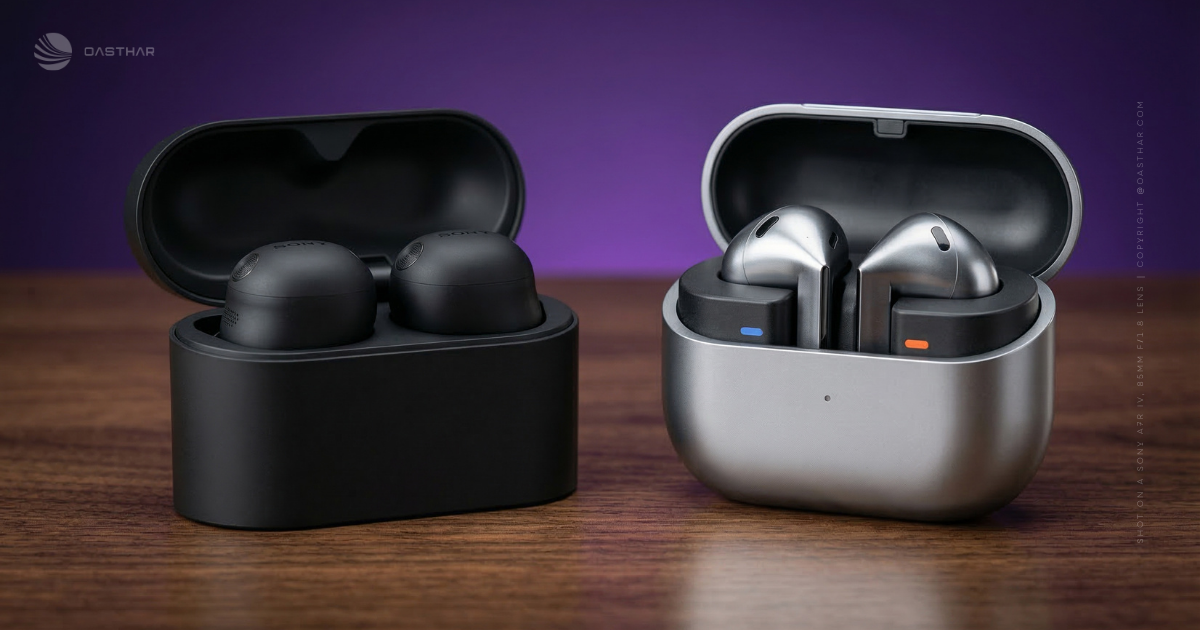
Samsung moved to a stem design, and yes, people may mistake them for AirPods at a glance. The buds can fit well when you get the right seal, but Samsung only includes three tip sizes, which can limit your chances of a perfect fit. The case charges via USB-C, but it can feel a bit plasticky in hand.
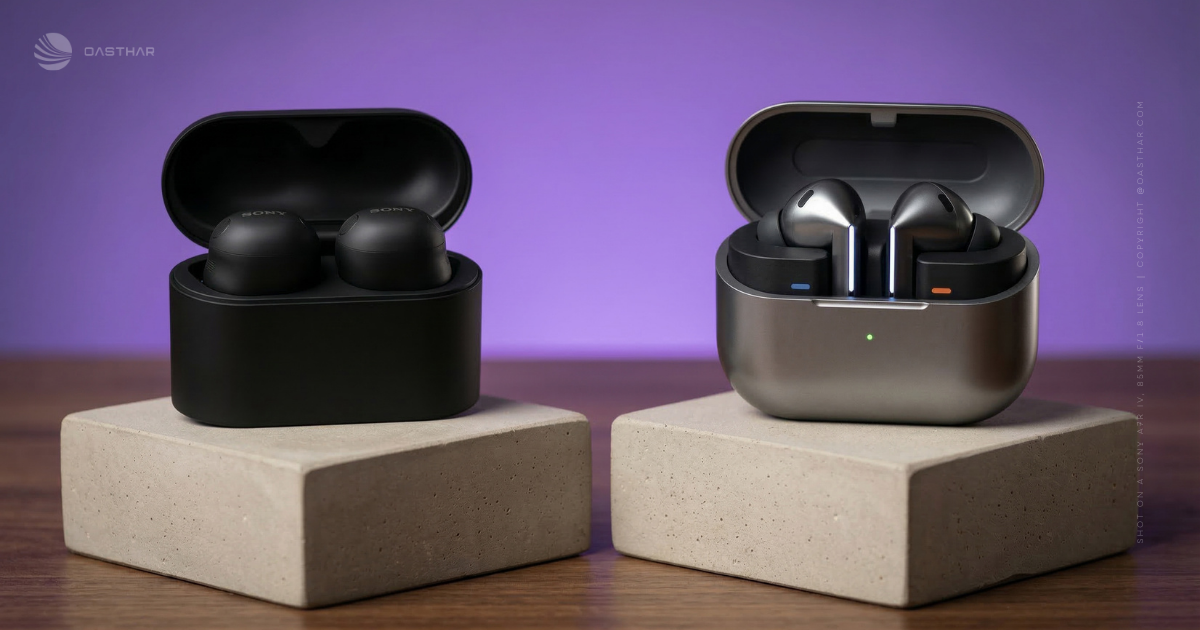
Sony’s WF-1000XM6 take a different approach. The buds are shaped to sit more ergonomically, and Sony built in a ventilation structure meant to reduce internal noise from things like footsteps and chewing. The case is bulkier than the previous generation, and some reviewers still wish it felt more premium.
Fit is the quiet deal-breaker for both. If your seal is slightly off, bass thins out and ANC drops fast.
If you try one thing before deciding, make it this: get the seal right, then re-test bass and noise canceling. A “good” earbud can sound average with the wrong tips.
If you want a broader look at top models across budgets, Oasthar’s Best True Wireless Earbuds 2025 guide can help you sanity-check your options.
Winner: Tie because both can be comfortable, but both limit tip choices and both cases draw build-quality complaints.
Sound Quality
Sony’s WF-1000XM6 are the safer bet if you listen to everything. Their sound is tuned to feel natural, with strong detail and dynamics. Bass hits deep but stays defined, rather than turning into a soft thump. Sony also gives you deep EQ control in the app, plus DSEE Extreme processing to help lower-quality files sound a bit cleaner.
Samsung’s Galaxy Buds 3 Pro go for excitement first. The sound comes across lively and fast, with lots of attack. You’ll hear good detail, and the presentation feels spacious, but the overall character can lean a bit lightweight. With some tracks, that “front-foot” tuning is addictive. With others, it can feel like the volume knob for presence is turned up too far.
Samsung also has a key advantage if you own a recent Galaxy phone: SSC UHQ can stream up to 24-bit/96kHz over Bluetooth (supported Galaxy devices required). That tends to be when the Buds 3 Pro sound their best.
Genre matching helps. Sony fits vocals, acoustic, and long listening sessions. Samsung can be awesome for fast, aggressive tracks when you want energy. For a non-Samsung-user take on the Buds 3 Pro, this Galaxy Buds 3 Pro review perspective is useful context.
Winner: Sony WF-1000XM6 because the tuning is more balanced, and you don’t need a specific phone brand to hear them at their best.
Noise Cancelling & Transparency
Sony’s ANC is built around a dedicated noise-canceling processor and a heavy mic setup (four mics per earbud are cited in reviews). In real use, the XM6 do an excellent job on trains and flights, especially in the midrange and higher frequencies where lesser earbuds let chatter leak through. Sony also uses adaptive optimization that adjusts based on fit and environment.
Samsung’s ANC is effective for the everyday “whoosh” of traffic and a busy office. It lowers the world’s general noise well. Still, it isn’t class-leading, and premium rivals can feel more complete in how they erase low-frequency rumble. Samsung adds an Adaptive mode that can shift behavior when it detects certain sounds, which can be handy when you bounce between quiet work and quick conversations.
Transparency is the other half of the story. Sony’s ambient mode lets in plenty of information, but voices can sound a bit processed. Samsung’s ambient approach is useful too, and its auto-switching behavior can feel quicker in social moments. Either way, your tip seal changes the “naturalness” you hear.
Winner: Sony WF-1000XM6 because the ANC performance is stronger and more consistent across tough environments.
Mic & Call Quality
Sony treats calls like a flagship feature. The XM6 combine AI beamforming with bone-conduction sensors, plus extra mic hardware, to keep your voice forward while pushing wind and background noise down. If you take calls outside, that mix matters more than you’d think.
Samsung’s Buds 3 Pro also handle calls well. In tests, voices come through clear and natural, and the buds hold up in typical work calls. The catch is control. To get the most out of Samsung’s call and feature set, you’ll want the Galaxy Wearable app on Android (and Samsung’s experience is clearly designed around Galaxy phones).
Two quick scenarios:
- Zoom call at home: both sound good, but Sony tends to capture more detail in your voice.
- Call on a windy sidewalk: Sony usually keeps the call cleaner with less noise intrusion.
Winner: Sony WF-1000XM6 because it’s the more dependable pick when wind and crowds show up.
Features & Apps
Sony’s Sound Connect app is one of the big reasons the XM6 work well across platforms. You get a 10-band EQ, guided sound setup, spatial-audio options, and DSEE Extreme. If you like to fine-tune, Sony gives you room to do it without making it a chore.
Samsung’s Galaxy Wearable app gives you the essentials and then some: a fit test, control customization, spatial audio with head tracking, and adaptive sound modes. The problem is iOS. Apple users don’t get the same app support, so you lose a lot of the “make it yours” experience. On Galaxy phones, Samsung also unlocks its SSC UHQ codec mode and other Galaxy-leaning perks.
This is the part where your phone matters most. If you’re on iPhone and don’t plan to switch, Samsung’s value drops because you’re buying features you can’t fully use. If you’re on a newer Galaxy device, the Buds 3 Pro make more sense overnight.
For a broader look at how Sony stacks up in the current premium class, this WF-1000XM6 comparison with AirPods Pro 3 helps frame what you’re paying for.
Winner: Sony WF-1000XM6 because you get full app control on more phones, with fewer “platform tax” compromises.
Connectivity & Controls
Bluetooth 5.4 on Samsung and 5.3 on Sony won’t change your life by itself. What matters is stability and switching. Sony claims a larger antenna than before, and real-world use tends to match that, especially in crowded places like airports and stations where wireless congestion is brutal.
Both earbuds support multipoint connections in current flagship expectations, so you can connect to two devices and switch without re-pairing. That’s a daily stress reducer if you bounce between a laptop and phone.
Controls are where the vibe differs. Sony uses touch controls that are responsive and customizable in the app. Samsung’s stem-style controls rely on pinches, squeezes, and swipes. They can work well, but there’s a learning curve, especially while walking or wearing gloves.
Winner: Sony WF-1000XM6 because the control scheme and connectivity feel more consistent, especially across different phone brands.
Battery Life & Charging
Compare ANC-on first, because that’s how most people use flagship earbuds. Sony rates the WF-1000XM6 at 8 hours with ANC on, plus 24 hours total with the case. That’s solid for travel days and long work sessions.
Samsung’s Buds 3 Pro trail on single-charge ANC-on time at about 6 hours, but the total with the case is about 26 hours. Turn ANC off and Samsung stretches further, up to 7 hours in the buds and 30 hours total.
Both models support wireless charging, so topping up on a pad is easy. In practice, the key choice is simple: do you care more about longer continuous listening (Sony), or longer total time if you recharge between sessions (Samsung)?
Winner: Sony WF-1000XM6 because the longer ANC-on single-charge runtime is the one you feel most during travel and long days.
Price & Value
Sony WF-1000XM6 list at $330, and early in a product cycle, big discounts usually take time. You’re paying for top-tier sound balance, strong ANC, and excellent call handling in one package.
Galaxy Buds 3 Pro launched at $249, and discounts are common over time. In February 2026, some listings and roundups put them under $200 in the US, though the exact price swings week to week. Value also depends on your phone. With a newer Galaxy device, you unlock SSC UHQ and Samsung’s deeper feature integration, so the “price-to-performance” ratio improves.
If you want a third-party take on what you get for the money at the top end, ZDNET’s listening notes in this WF-1000XM6 vs AirPods Pro 3 article help reinforce where Sony is strongest: sound and noise canceling.
Winner: Galaxy Buds 3 Pro because you can often pay a lot less in the US while still getting strong ANC, features, and fun sound.
Who Each Earbud is Really for?
Choose Sony WF-1000XM6 if…
- You want near-best ANC for flights, trains, and open offices.
- You care about a natural sound that works across genres.
- You take lots of calls and want clean voice pickup in wind and noise.
- You use iPhone or Android and still want full app control.
Choose Galaxy Buds 3 Pro if…
- You own a recent Galaxy phone and want Samsung’s best codec and features.
- You like a lively, forward sound that adds energy to fast music.
- You want strong performance but don’t want to pay flagship Sony pricing.
- You prefer stem controls and a lighter earbud feel.
Winner: Tie because your phone and your tuning preference decide this more than any single spec.
FAQs
Which sounds better for everyday music, Sony or Samsung?
Sony WF-1000XM6 sounds more natural and controlled, with stronger dynamics and cleaner bass. Galaxy Buds 3 Pro sound lively and detailed, but can feel forward.
Which has better noise cancelling for flights and commutes?
WF-1000XM6 cancels more noise overall, especially voices and midrange clutter, thanks to newer processing and more mics. Buds 3 Pro ANC is solid, just not top-tier.
Which earbuds are better for Samsung Galaxy phone owners?
Galaxy Buds 3 Pro make more sense on a recent Galaxy phone because you get Samsung’s SSC UHQ codec, Wearable app control, and features like spatial audio support.
Do Galaxy Buds 3 Pro work well with iPhone?
They’ll pair and play, but you lose app support on iOS, which limits control and updates. Sony works well across platforms, so you keep features on iPhone too.
Which is better for call quality in noisy places?
Sony WF-1000XM6 is the safer pick for calls, with strong background noise reduction and clear voice pickup. Buds 3 Pro call quality is good and sounds natural.
How do battery life numbers compare with ANC on?
Buds 3 Pro rate at about 6 hours with ANC on, 26 total with the case. WF-1000XM6 rate around 8 hours with ANC on, 24 total.
Which is more comfortable for long listening sessions?
Comfort depends on fit, but both have limited tip options. Buds 3 Pro fit well once you nail tips, while Sony is slimmer than XM5 but still tip-sensitive.
Which has better codec support for higher-quality Bluetooth audio?
Sony supports LDAC (plus AAC and SBC) across Android devices. Samsung offers SSC UHQ, but it’s mainly valuable if you use a recent Galaxy phone.
Are Galaxy Buds 3 Pro a better value than WF-1000XM6?
Often, yes. Buds 3 Pro pricing has dropped heavily in many markets, while XM6 launched at a premium price. Still, Sony earns it on sound and ANC.
Which should you buy if you want the best all-rounder?
Pick WF-1000XM6 if sound and ANC come first. Choose Buds 3 Pro if you’re on Galaxy, want long totals with the case, and like an energetic tuning.
Final Verdict
In the Sony WF-1000XM6 vs Galaxy Buds 3 Pro matchup, you’re mainly choosing between maximum performance (Sony) and better value with Galaxy bonuses (Samsung). Sony is the safer pick for frequent travel, top-level ANC, and clearer calls.
Samsung is easier to justify if you’re a Galaxy owner, you like an energetic sound, and you catch them on sale. Battery also splits: Sony lasts longer per charge with ANC on, while Samsung stretches farther overall with ANC off. Before you buy, prioritize fit and seal first, then judge ANC and bass with the same tips and the same tracks.