

You’ve got two obvious picks at the top of the earbud pile, Sony WF-1000XM6 vs Apple Airpods 3 Pro, and the better choice depends on what you value most. If you want the most complete all-rounder for music, calls, and noise canceling, Sony’s WF-1000XM6 is the safer bet. Apple’s AirPods Pro 3 still make sense if you live in the iPhone ecosystem and care most about transparency and day-to-day convenience.
In this guide, you’ll get a clean, buyer-focused breakdown across specs, design and comfort, sound tuning (bass, mids, treble), and ANC. You’ll also see how mic quality, features (codecs and app controls), and connection behavior stack up.
By the end, you’ll know which pair fits your use, your ears, and your budget, without guessing.
RELATED: Sony WF-1000XM6 vs Bose QuietComfort Ultra Earbuds: Which is Better?
Quick Summary
If you only read one section, read this.
- Price: WF-1000XM6 launched Feb 12, 2026 at $330; AirPods Pro 3 is widely listed at about $249.
- Bluetooth and codecs: Sony runs Bluetooth 5.3 and supports SBC, AAC, and LDAC; that LDAC option matters on compatible phones.
- Battery baseline: Sony rates 8 hours with ANC and 24 hours total with the case; AirPods Pro 3 is commonly rated around the same class for everyday use.
- ANC hardware: Sony uses the new QN3e processor, plus 4 mics per earbud and Adaptive NC Optimiser that adjusts for fit and environment.
- Sound customization: Sony gives you a 10-band EQ and guided EQ setup in its app.
- Durability and switching: Sony is IPX4 and supports multipoint (2 devices); AirPods usually feel simpler across Apple devices.
For another perspective on the trade-offs, this comparison from SoundGuys’ XM6 vs AirPods Pro 3 breakdown lines up with the same core question: control and codecs vs Apple-first convenience.
Winner: Tie because most people will prefer AirPods on iPhone, while mixed-device users usually get more freedom from Sony.
Specifications
Here’s the tight spec view that actually affects daily use.
| Spec | Sony WF-1000XM6 | Apple AirPods Pro 3 |
|---|---|---|
| Release | Feb 12, 2026 | Sept 2025 |
| US price | $330 | ~$249 |
| Type | True wireless earbuds | True wireless earbuds |
| Bluetooth | 5.3 | 5.3 |
| Codecs | SBC, AAC, LDAC | SBC, AAC, LDAC |
| Noise canceling | Yes | Yes |
| Battery (buds) | 8 hours (BT + ANC) | Up to 8 hours (ANC on) |
| Battery (total) | 24 hours with case | Up to 24 hours with case |
| Quick charge | (Not listed in provided sources) | 5 min for ~1 hour |
| Water resistance | IPX4 | (Not listed in provided sources) |
| Multipoint | Yes (2 devices) | (Not listed in provided sources) |
| Weight | 6.2g each, 47g case | (Not listed in provided sources) |
If you want a wider short list before you decide, this guide to the best true wireless earbuds 2025 helps you sanity-check what “good” looks like across price tiers.
Winner: Sony WF-1000XM6 because the spec sheet is stronger for audio-minded buyers (LDAC, multipoint, detailed app control), while AirPods wins on Apple-only feature depth.
Design, Comfort & Build Quality
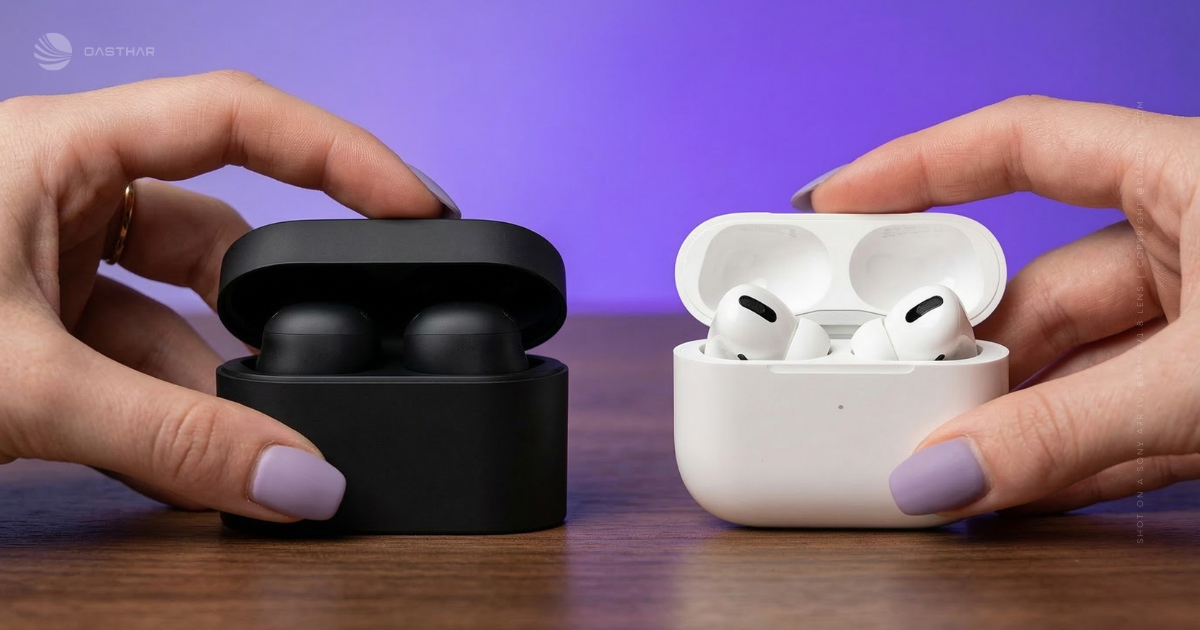
Sony changed the WF-1000XM6 shape and finish. The earbuds go matte (black or platinum silver), and the silver has a more textured feel. Sony also made the earbuds more ergonomic, and it says they’re slimmer than XM5, but the case got bulkier and taller. Some reviewers also say the case feels a bit cheap for the price.
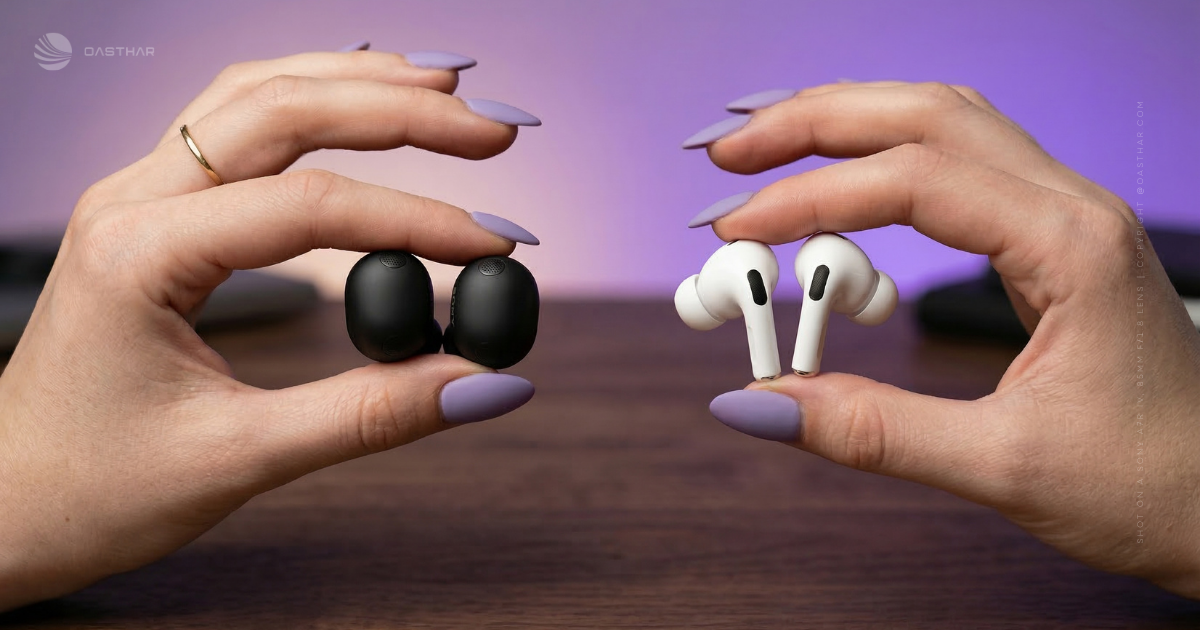
Tip choice is a real limitation. Sony includes XS to L only, so if you need XL, you might never get the perfect seal. Sony’s app tries to help with a fit test, which is useful because seal affects bass and ANC.
AirPods Pro 3 tends to be described as more secure in the ear, with a fit that suits active use, but comfort still depends on your ear shape. If you feel pressure after an hour, you’ll notice it fast.
Winner: Apple AirPods Pro 3 because a more secure fit is a big deal for most people, especially if you move a lot during the day.
Sound Quality
Sony’s WF-1000XM6 is tuned to sound more natural than the prior model, while still staying detailed. You get strong timing, expressive mids, bass that hits with weight but stays controlled, and highs that stay crisp without turning into a glare. Sony keeps the familiar 8.4mm driver size, but tweaks it with a “soft edge” surround for stronger bass. It also pairs the new QN3e noise-canceling processor with processing upgrades that improve the signal chain.
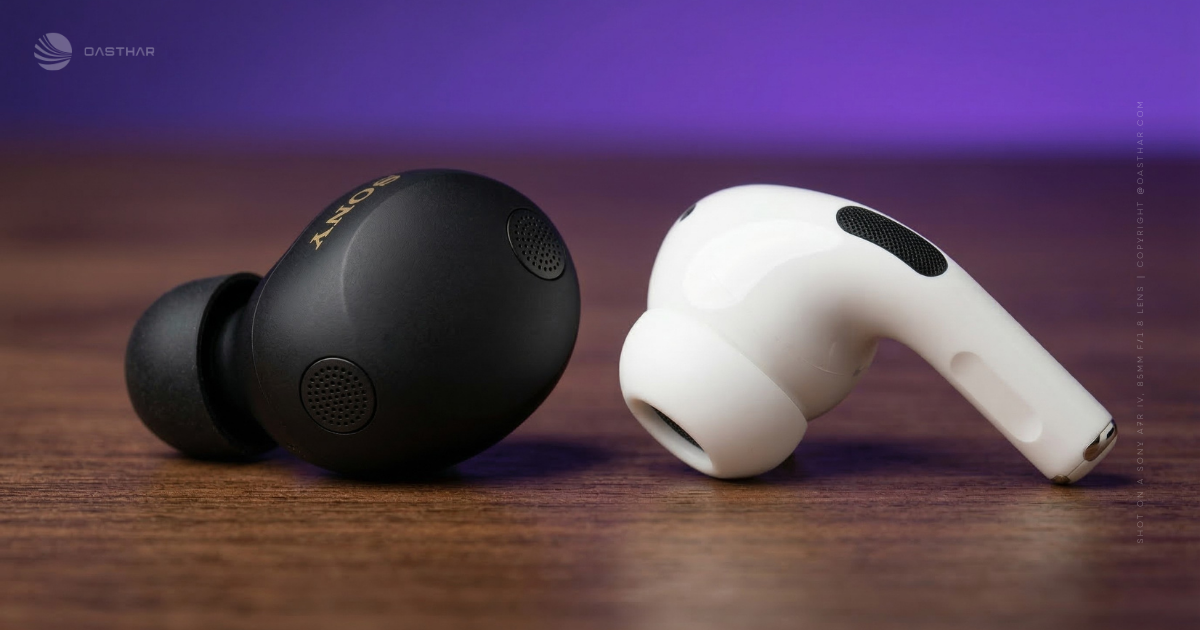
Sony also gives you tools that change your experience. LDAC can matter if you use a compatible Android phone and stream higher-quality audio. DSEE Extreme can also help make compressed tracks and podcasts sound cleaner.
AirPods Pro 3 sound is more polarizing in reviews. Some listeners describe a more V-shaped tuning, with bigger bass and brighter treble. That can feel fun at the gym or with pop, but some reviewers call out sharpness and sibilance on certain vocals. A detailed comparison like PCMag’s XM6 vs AirPods Pro 3 matchup captures that idea: both are premium, but they don’t aim at the same listener.
Winner: Sony WF-1000XM6 because it’s the safer “sounds great on everything” pick, plus you can actually reshape the tuning.
ANC
Sony treats ANC like a full system. You get the new QN3e processor, four mics per earbud, and Adaptive NC Optimiser that adjusts based on your fit and your environment. In listening tests described in early reviews, Sony’s cancellation stays consistent and handles mid and higher-frequency noise well (think café chatter, train squeal, and office HVAC). It’s also commonly placed close to the best in the class.
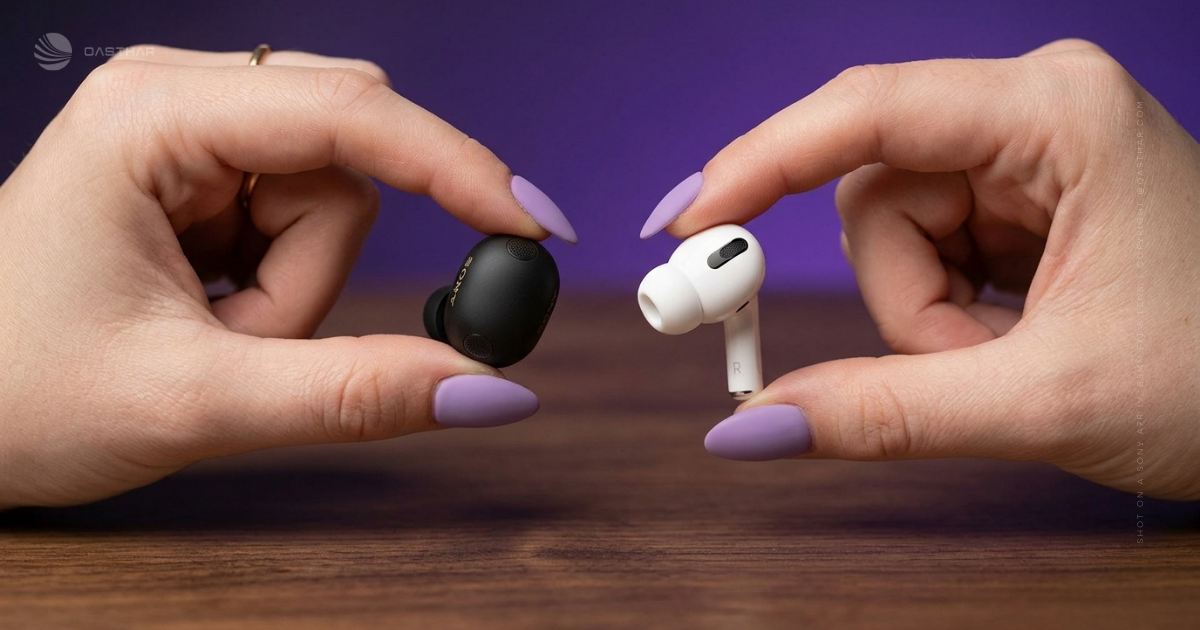
AirPods Pro 3 is the other side of this coin. A lot of coverage praises its ANC and, even more, its transparency mode. Some commentary highlights reduced occlusion, meaning your own voice and body noise can feel less boomy in transparency. That’s the difference between “I can wear these all day” and “I’m counting minutes until I pull them out.” If you want a quick read that focuses on daily experience, ZDNET’s AirPods Pro 3 vs WF-1000XM6 comparison is useful context.
Winner: Tie because AirPods often wins transparency feel, while Sony’s adaptive ANC and strong isolation can be better when fit is dialed in.
Mic & Call Quality
WF-1000XM6 puts real effort into calls. It uses AI beamforming plus bone conduction sensors, and reviewers note that voices stay clear while background noise drops. Wind handling is also a focus, helped by hardware design and mic control.
AirPods Pro 3 is also a strong calling tool, especially if you use iPhone features like Voice Isolation in supported apps. In practice, AirPods tends to “just work” for FaceTime, phone calls, and quick voice notes.
Your deciding factor is phone mix. If you take calls on Android, Windows, and iPhone, Sony’s broader pairing options can keep things predictable.
Winner: Sony WF-1000XM6 because its call features aren’t locked to one ecosystem, and its noise handling is built for tougher outdoor scenarios.
Features
Sony’s feature advantage is simple: you can shape the experience. The Sound Connect app includes a 10-band EQ, a guided “Find Your Equaliser” flow, touch control remapping, fit testing, and ambient sound level control. If you listen to a lot of compressed streams, DSEE Extreme can add a small but real polish.
AirPods Pro 3 wins on “smart” behavior. You get Apple-style modes like Adaptive Audio, Conversation Awareness, and Personalized Spatial Audio. Apple also emphasizes hearing-related tools in iOS, and AirPods Pro 3 is often discussed alongside those features. Some coverage also points to extra health hooks like heart rate tracking during workouts, depending on your Apple setup and supported apps.
If you want a straight feature comparison list from another outlet, Trusted Reviews’ XM6 vs AirPods Pro 3 page helps you see how reviewers weigh “sound tools” vs “smart modes.”
Winner: Tie because Sony gives you better audio control, while AirPods gives you better Apple-native automation.
Connectivity & Controls
Sony WF-1000XM6 uses Bluetooth 5.3, and Sony also increased antenna size versus the prior model, which can help in crowded places like airports. Multipoint for two devices is the practical perk. You can keep a laptop and phone connected without playing pairing ping-pong.
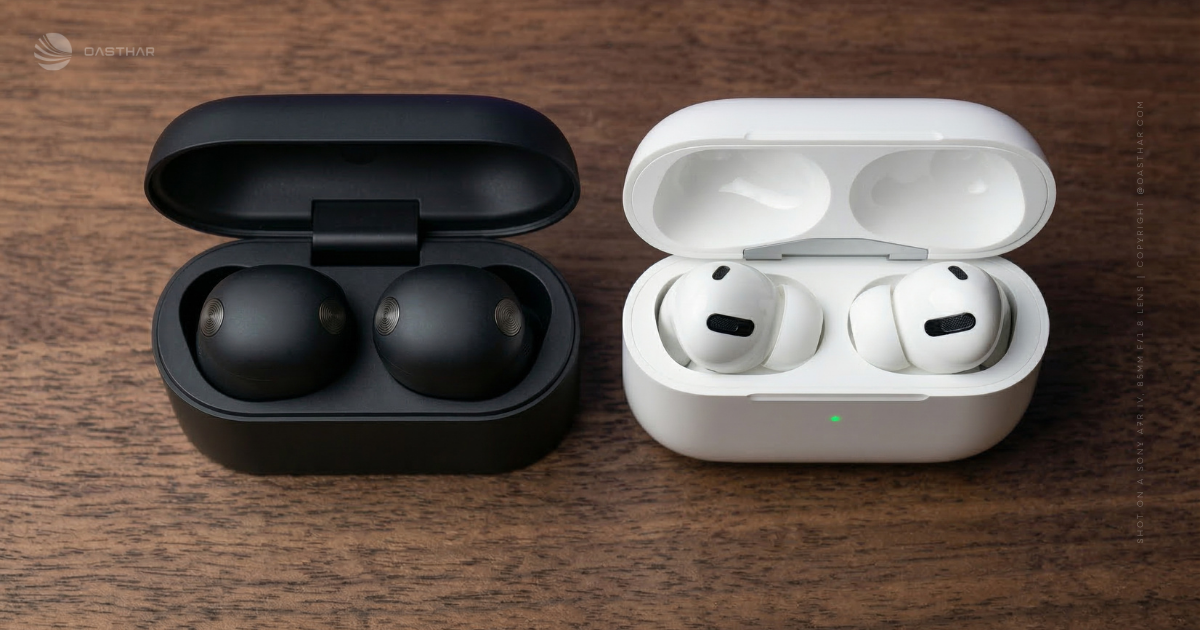
AirPods Pro 3 is the comfort pick if you’re all-in on Apple. Pairing is quick, switching feels automatic across Apple devices, and Siri control stays close at hand. The stem control setup also tends to reduce accidental touches, since you squeeze and swipe instead of tapping the earbud body.
So the choice is less about “best” and more about what you own. Mixed devices usually favor Sony, Apple stacks favor AirPods.
Winner: Apple AirPods Pro 3 because day-to-day switching is simpler when your devices are all Apple.
Battery Life & Charging
Sony rates the WF-1000XM6 at 8 hours with ANC on, with 24 hours total including the case. That’s solid for commuting and workdays, although some rivals stretch longer. The case supports wireless charging, which is nice if you already use a charging pad.
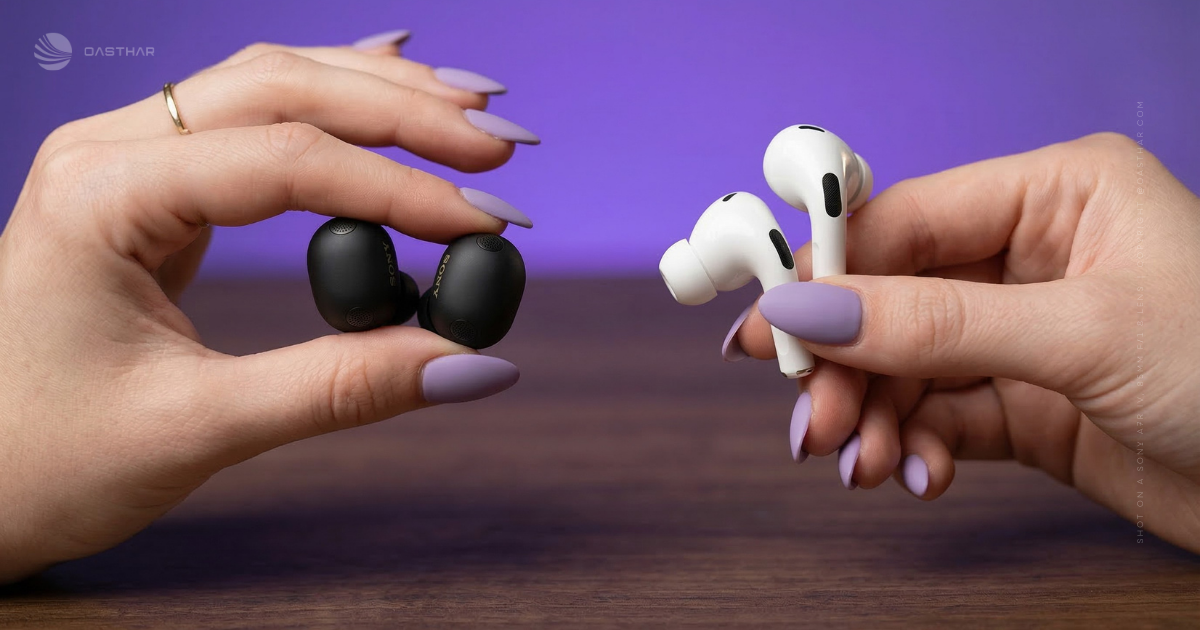
AirPods Pro 3 is commonly rated in the same neighborhood for daily battery, and it’s well-known for strong quick-charge behavior (often cited as about 5 minutes for about 1 hour). Still, heavy modes like spatial features can shorten your real-world runtime.
If you hate charging anxiety, plan around your worst day, long calls plus ANC plus a commute.
Winner: Tie because both last most people a full day, and your mode choices matter more than the spec line.
Price & Value
WF-1000XM6 costs $330 in the US, and it just launched in February 2026. That usually means fewer real discounts right away. What you’re paying for is sound quality, ANC hardware, codec flexibility (LDAC), and deeper tuning tools.
AirPods Pro 3 is typically listed at about $249, and it’s been out since late 2025. The value pitch is different: you pay less upfront, and you get Apple integration, excellent transparency, smart audio modes, and iOS-linked features.
If you care about sound tweaking and Android support, Sony earns its premium. If you want the best iPhone daily experience for less money, AirPods is hard to argue with.
Winner: Apple AirPods Pro 3 because it delivers a lot of premium behavior for less cash, as long as you’re in Apple’s world.
Who Each Pair is For?
You’ll make a better choice if you pick based on your habits, not the brand on the box.
Choose Sony WF-1000XM6 if…
- You want LDAC support and stronger control over sound quality.
- You like to tune audio with a 10-band EQ and detailed app settings.
- You use Android, Windows, and iPhone, and multipoint matters.
- You want adaptive ANC that responds to fit and environment.
Choose Apple AirPods Pro 3 if…
- You live on iPhone, iPad, and Mac, and want the simplest experience.
- You care most about transparency mode and smart modes like Adaptive Audio.
- You want iOS-linked extras like hearing tools and other Apple health features.
- You prefer stem squeeze and swipe controls over tap controls.
Fit and ear tips can change everything, especially bass and ANC, so don’t skip that part.
FAQs
Which sounds better for music, Sony XM6 or AirPods Pro 3?
If you care most about sound quality, you’ll likely prefer the WF-1000XM6. Reviews highlight a more natural, engaging tuning, plus LDAC support for compatible Android devices.
Which has better noise cancellation for flights and commutes?
AirPods Pro 3 usually edge it for overall ANC, while the WF-1000XM6 stays extremely close. Sony’s seal can help a lot, so your fit and tips matter.
Which is better if you use an iPhone every day?
AirPods Pro 3 make more sense if you live in Apple’s ecosystem. You get the smoothest pairing and switching, plus strong Transparency mode and Apple-first features.
Which earbuds last longer on a single charge with ANC?
WF-1000XM6 is the safer pick for per-charge battery. Sony rates them at about 8 hours with ANC on, while AirPods Pro 3 commonly land lower.
Which is more comfortable for long listening sessions?
AirPods Pro 3 tend to feel easier for long wear, especially if you dislike in-ear pressure. Sony improved ergonomics, but tip selection is limited and fit varies.
Which is better for calls in noisy places?
WF-1000XM6 is a strong choice for calls, with upgrades like multiple mics per earbud and AI-based voice pickup. AirPods Pro 3 also perform well, mainly on iPhone.
Do you get better controls on Sony XM6 or AirPods Pro 3?
AirPods Pro 3 usually feel quicker day-to-day because you can use stem gestures, including volume swipes. Sony relies on tap controls and app customization.
Are the Sony WF-1000XM6 worth the higher price?
If you want top-tier sound, strong ANC, and broad tuning options, the XM6 can justify the typical $330 price. AirPods Pro 3 often cost less.
Final Verdict
If you want the most consistently pleasing sound and the most control, pick Sony WF-1000XM6. You’re paying more, but you get LDAC, deeper EQ, and a tuning style that lands well across genres. If you want the easiest daily experience on iPhone, plus top-tier transparency and smart audio behavior, pick AirPods Pro 3. ANC is strong on both, but transparency and ecosystem features usually tilt toward Apple. Mixed-device owners and audio tweakers usually end up happier with Sony.
Decide your top two priorities before you buy. Then test fit with different tip sizes, because seal changes bass and noise canceling fast. Finally, try transparency and ANC where you actually live, your train, your office, your gym. Pick based on ecosystem and how the tuning hits your ears, not brand loyalty.
Winner: Tie because the “best” choice depends on whether you value sound control (Sony) or Apple-native features (AirPods).