

Is the Samsung S95H OLED worth it if you want one TV for movies, gaming, and everyday living room use? That’s the main question, because this set is trying to be two things at once, a flagship OLED and a design piece.
You get a lot to weigh here. The S95H brings higher brightness, wide color, strong glare control, and serious gaming support, but it also drops the included One Connect box and leans hard into a frame-style look.
If you’re trying to figure out whether that trade makes sense, keep reading.
RELATED: Philips OLED910 Review (2026): Bright OLED With Real Trade-Offs

Quick Summary
The Samsung S95H is one of those TVs that makes a fast first impression. It looks unusual, gets very bright for an OLED, and covers a lot of ground well.
In real use, that matters. You get deep OLED blacks in a dark room, rich QD-OLED color, a matte glare-free screen that helps in brighter spaces, and gaming features that feel built for people with both consoles and a PC. Samsung also adds Art Mode and a wall-friendly design, so this TV wants to stay visible even when you’re not watching it.
The tradeoffs are plain too. The frame-like styling won’t work for everyone, the wireless One Connect box is now optional instead of included, and the 83-inch version uses a different panel type than the 55, 65, and 77-inch models.
If you want one premium TV that can handle movies, games, daytime viewing, and decor duty, this is the kind of OLED you should pay attention to.
Specifications
Before the deeper breakdown, here are the key facts that matter most.
| Spec | Samsung S95H OLED |
|---|---|
| Release status | Released in the US |
| Sizes | 55, 65, 77, 83 inches |
| Panel type | QD-OLED on 55, 65, 77; 83-inch uses RGB tandem panel |
| Resolution | 4K |
| Refresh rate | Up to 165Hz |
| Processor | NQ4 AI Gen3 Processor |
| HDMI ports on TV | 4 x HDMI 2.1 |
| Optional port expansion | Wireless One Connect adds 4 more HDMI 2.1 ports |
| Smart platform | One UI Tizen |
| Key picture features | OLED HDR Pro, Glare Free, Real Black, Real Color |
| Lifestyle features | Art Mode, magnetic bezel design |
Samsung’s 83-inch S95H product page confirms the size range and the different panel used in that largest version. That one detail matters more than it might seem, because the smaller sizes are the QD-OLED models most buyers will be chasing.
Design & Build Quality
Most TVs try to disappear. The S95H does the opposite.
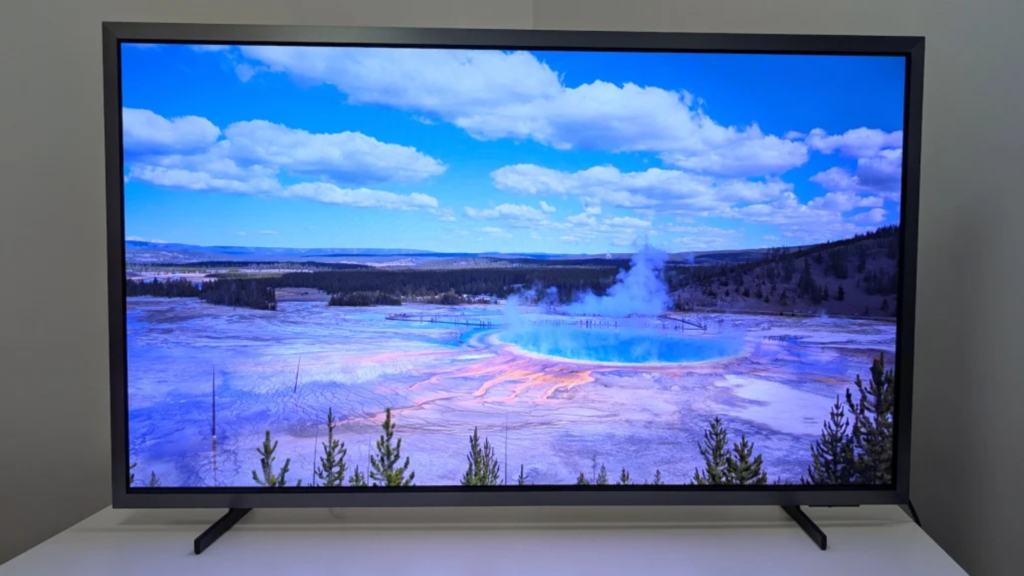
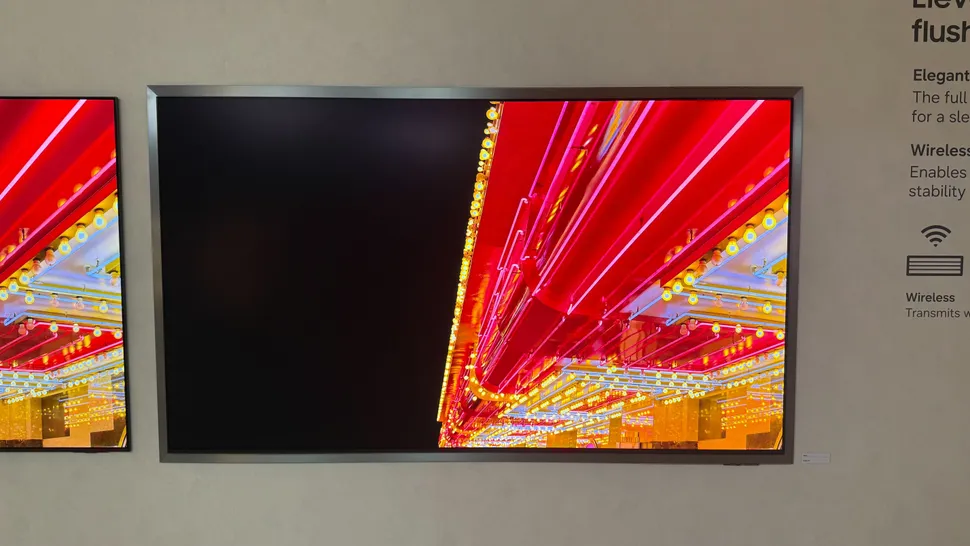
Samsung gives it a large metallic bezel and a frame-like shape that makes the screen look like it’s floating on a backing plate. On a wall, it looks sharp and intentional. It doesn’t look like a plain black rectangle, and that’s clearly the point.
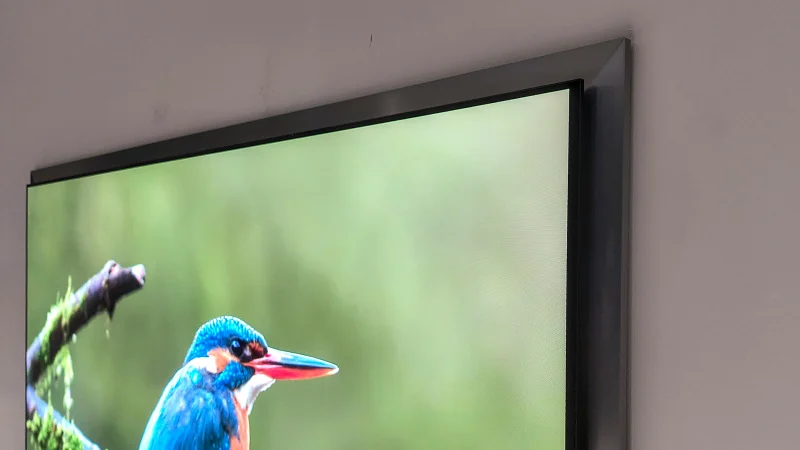
The matte display helps that effect. Pair it with Art Mode, and the TV can pass as wall decor better than most premium sets.
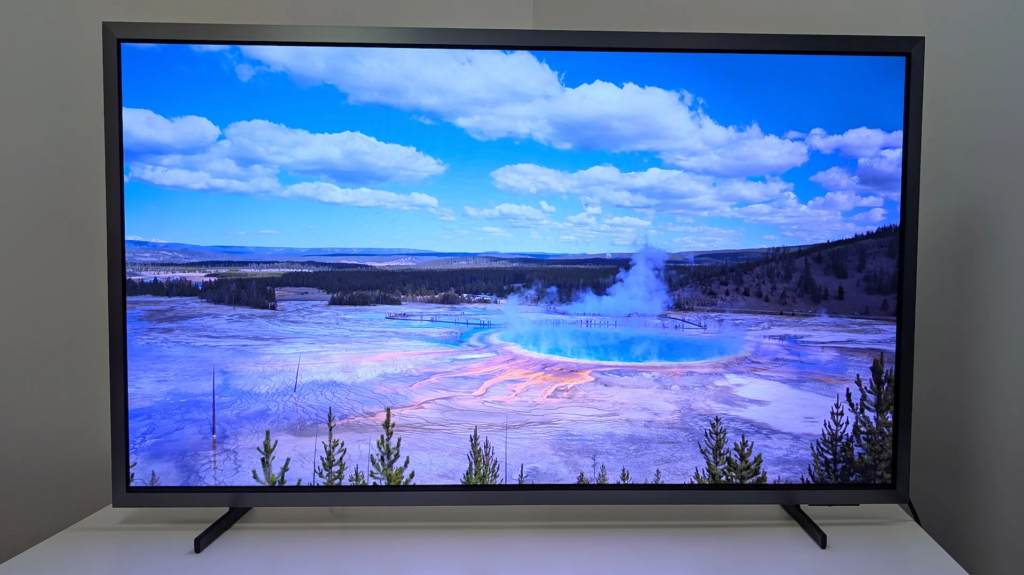
There is a catch. On its included feet, the design is less convincing. The frame reads more like a thick border than a clean art piece, and that look may feel awkward if you don’t plan to wall-mount it.
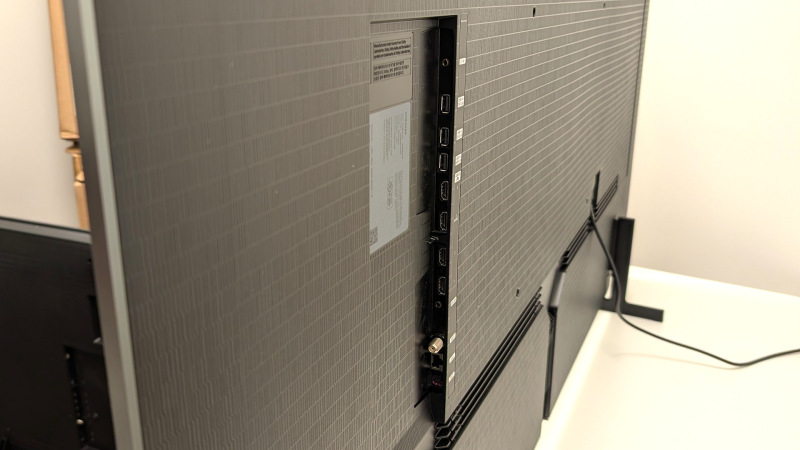
You also get a removable magnetic bezel, and Samsung plans optional frame accessories for different room styles. If you like TVs that disappear into the room, this won’t be your thing. If you want a TV with some personality, it absolutely has that.
Picture Quality
This is still an OLED first, and you see that right away in dark-room viewing. Blacks are deep, highlights stay clean, and there is no haloing around bright objects or subtitles because each pixel controls its own light.
That pixel-level control is half the story. The other half is QD-OLED color. On the 55, 65, and 77-inch models, you get the kind of rich, saturated color that makes HDR movies and games look more alive without turning cartoonish. Wide seating is no problem either, since image quality holds up well off-axis.
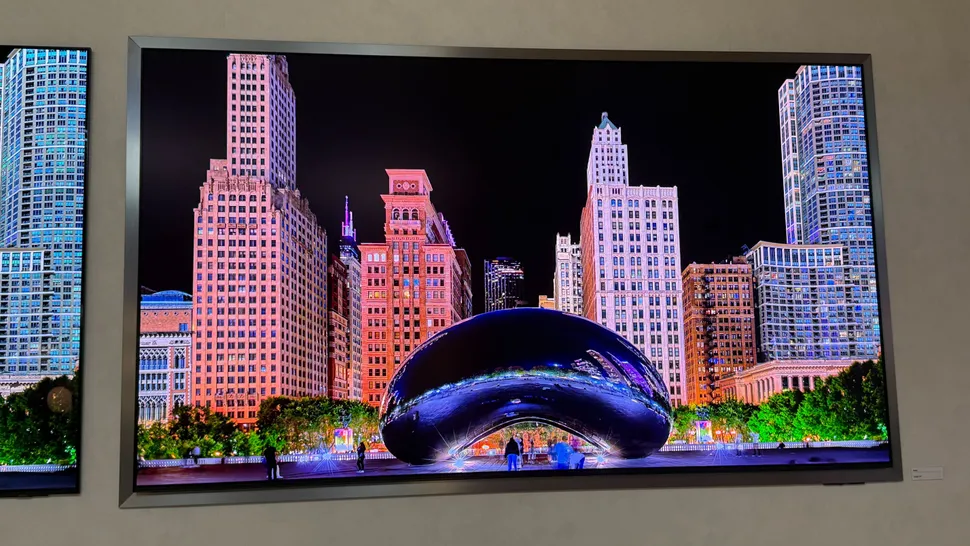
Samsung also seems to have done the boring part right, which is good news. Out-of-box color accuracy is strong, and Filmmaker Mode remains the setting to use if you want a picture that stays close to the source.
In brighter rooms, the picture still looks punchy. You don’t get the same perfect black floor as a dark room, because matte OLED screens can raise blacks a bit under heavy light, but the image doesn’t fall apart.
Brightness & HDR Performance
Brightness is a big part of why this model matters. Samsung says Movie Mode can hit about 2,700 nits in a 10 percent window, up from around 2,000 nits on the prior flagship.
That jump isn’t just for bragging rights. It gives bright HDR highlights more shape and intensity. Sunlight, fire, reflections on water, and glints on metal have more bite when the content asks for it.
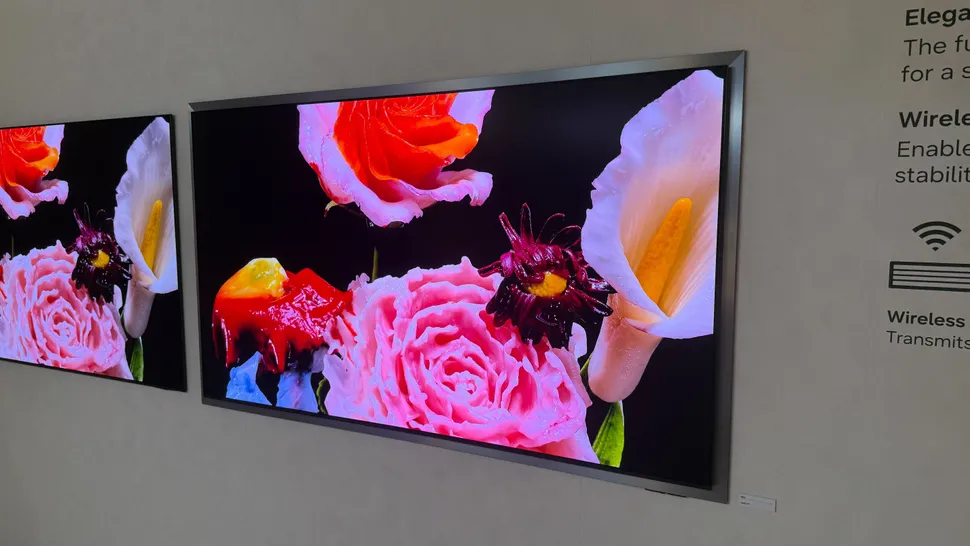
Samsung also says the color filter is more efficient and that HDR tone mapping now favors gradation over brute-force brightness with very bright material, including content mastered up to 4,000 nits. In plain English, you should see fewer harsh compromises in extreme HDR scenes.
That lines up with broader early testing too. PCMag’s S95H review also describes it as one of the brightest and most feature-packed OLEDs they’ve tested.
Motion & Upscaling
Fast motion matters more than spec sheets suggest. If you watch sports, action movies, or a lot of YouTube and streaming, poor motion can make a premium TV feel cheap.
The S95H is built well for that job. You get up to 165Hz refresh support, OLED-level response speed, and Samsung’s NQ4 AI Gen3 processor handling picture cleanup. Early demos showed sharper, more immediate-looking movement, especially in bright, high-contrast scenes.
Upscaling is also part of the everyday story. Not everything you watch is pristine 4K, and Samsung’s better TVs usually do a strong job cleaning up softer sources. Samsung also showed reduced color banding in lower-bitrate material on the S95H, which is useful if you stream a lot and hate seeing muddy gradients in dark scenes or skies.
Audio Quality
Samsung didn’t make audio a headline feature here, and that tells you a lot.
Hands-on previews focused on the picture, and demo clips were shown in silence. That means there isn’t solid proof yet of a major speaker leap, and buyers at this price shouldn’t plan around TV audio alone.
If you’re spending flagship money, a soundbar or receiver still makes sense. You’ll get better dialog weight, more scale, and less strain at higher volume. For casual viewing, the built-in speakers may be fine. For movie night, you’ll want more.
Smart Features
The S95H runs Samsung’s One UI Tizen platform with the NQ4 AI Gen3 processor behind it. In daily use, that means the usual streaming apps, Samsung’s menu system, and a growing pile of AI features.
Some of those features are practical. Vision AI includes content recognition that can identify actors and related content from what you’re watching. There are also accessibility tools and picture and sound remastering systems meant to clean up what you feed the TV.
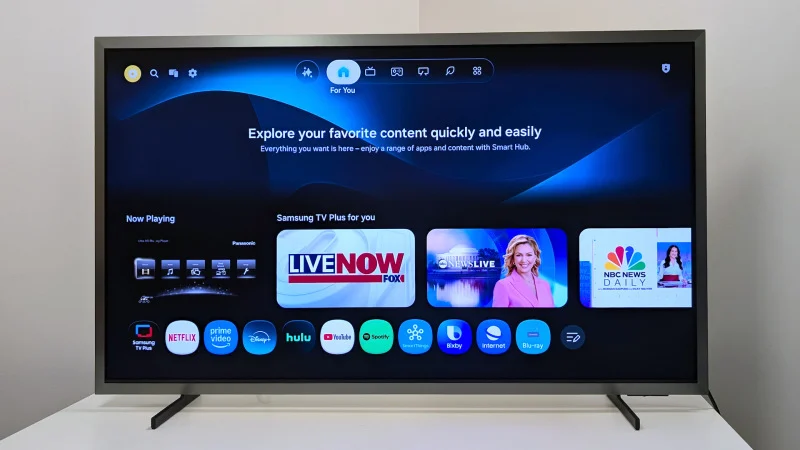
Some of it is more lifestyle-focused. Art Mode, AI-generated wallpaper, the matte screen, and the frame-inspired design all push the TV beyond plain entertainment. If you want a display that can sit on the wall without screaming “TV,” Samsung is clearly chasing that idea hard.
Gaming Features
Gaming is one of the S95H’s biggest strengths. You get four HDMI 2.1 ports on the TV itself, support for up to 4K at 165Hz, VRR, ALLM, FreeSync Premium Pro, and NVIDIA G-SYNC compatibility.
That mix covers almost every serious setup. A PS5, Xbox, gaming PC, and sound system can all fit without weird compromises. Low input lag and the fast response you expect from OLED also help games feel immediate, whether you’re playing a twitch shooter or a slow single-player title.
Samsung’s Game Bar is still useful too, since it puts gaming settings within easy reach instead of burying them in menus.
If you want another enthusiast angle on the set, the AVS Forum S95H review thread highlights the same appeal, lots of gaming headroom with premium OLED picture quality.
Connectivity & Ports
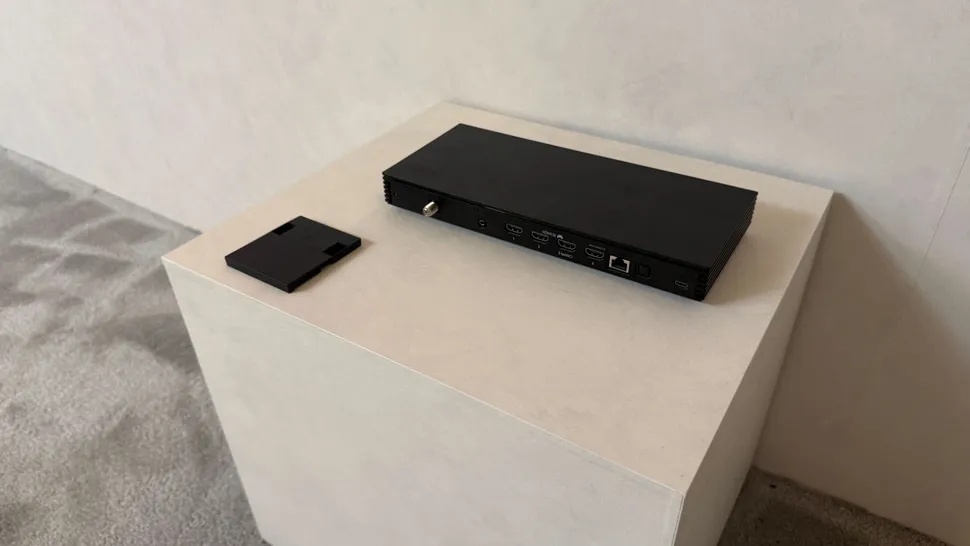
This is one of the biggest changes from the last flagship. Samsung dropped the included Slim One Connect Box.
You now get four HDMI 2.1 ports on the TV itself. If you want more, you can buy the Wireless One Connect box separately, which adds four more HDMI 2.1 ports for a total of eight. The receiver dongle plugs into a hidden slot on the TV.
In practical terms, that’s great for device-heavy setups. A console, gaming PC, Blu-ray player, streamer, and audio gear can all stay connected. The downside is simple, you now pay extra for the cleaner cable-management setup that used to come in the box.
Price & Value
Pricing looked uncertain in the earliest previews, but US listings are now live. The 65-inch model is listed at $3,399.99, and the 83-inch version is listed at $6,499.99.
That puts the S95H right where you’d expect a flagship OLED to land. So the value question isn’t whether it’s cheap. It isn’t. The real question is whether you will use what makes it different.
If you care about high OLED brightness, strong glare handling, top-tier gaming specs, and the art-forward design, the premium makes sense. If you mostly want a classic OLED without the frame styling, or you care a lot about Dolby Vision, you may want to compare alternatives. For a good benchmark, this Samsung S95F vs LG G6 comparison helps show where Samsung’s strengths and omissions matter most.
Who is the Samsung S95H OLED for?
This TV is easy to admire, but it isn’t for everyone.
Buy it if:
- You want a bright OLED that works well in mixed-use rooms, not only dark home theater spaces.
- You play on multiple systems and want premium gaming support without compromise.
- You like rich QD-OLED color and wide viewing angles.
- You want a TV that can double as a design piece with Art Mode and a frame-like look.
Don’t buy it if:
- You prefer a traditional TV design that disappears into the background.
- You dislike matte screens or you’re picky about raised blacks in bright rooms.
- You need Dolby Vision support.
- You expect the wireless One Connect box to be included at this price.
If you’re unsure whether you need the flagship at all, the more budget-aware choices in this LG C6 vs Samsung S90H comparison are worth a look.
FAQs
How bright is the Samsung S95H in real use?
You get one of Samsung’s brightest OLEDs here, with the set pushing up to 2700 nits in a 10% window in movie mode, plus strong HDR punch in bright scenes.
Is the Samsung S95H good for serious gaming?
You get a very strong gaming panel, with 4K at up to 165Hz, VRR, ALLM, and support for low-latency play. The response should feel quick and clean.
Does the matte screen reduce reflections enough for daytime viewing?
You get much better glare control than before, so reflections are far less distracting in daylight. That matte finish also makes Art Mode look closer to framed artwork.
Does the wireless One Connect box come included?
You don’t get the wireless One Connect box in the standard package. Samsung treats it as an optional extra, so the TV itself carries the core connections by default.
Does the Samsung S95H support Dolby Vision?
It doesn’t support Dolby Vision, which may matter if your streaming habits lean heavily on that format. Samsung sticks with HDR10, HDR10+, and its own picture tuning instead.
Final Verdict
The Samsung S95H OLED is a strong fit if you want one premium TV that can do almost everything well. You get excellent brightness for an OLED, standout gaming support, rich color, and glare control that makes daytime viewing easier.
The design is the wild card. On a wall, it looks sharp. On its feet, it can feel a little forced.
The missing included One Connect box also matters more than it should at this price. Still, if your priority is a versatile premium OLED for movies, games, and real-world living room use, the S95H is easy to recommend.