

Is the Roborock Saros 20 actually worth paying flagship money for, or are you just buying bragging rights? The Saros 20 sits at the top of Roborock’s lineup, and it’s priced like it.
In this review, you’ll get the practical stuff that decides whether you’ll love it or resent it: real vacuum and mop performance on hard floors and carpets, how well it avoids getting stuck, how much the dock removes from your daily routine, what maintenance can cost over time, and who it fits best.
You’ll also see the limits, because this robot isn’t magic. It’s a very capable machine that still has to obey physics (and your furniture).
RELATED: Motorola Moto Watch Review (2026): Best Big Battery, Polar Tradeoffs?
Quick Review
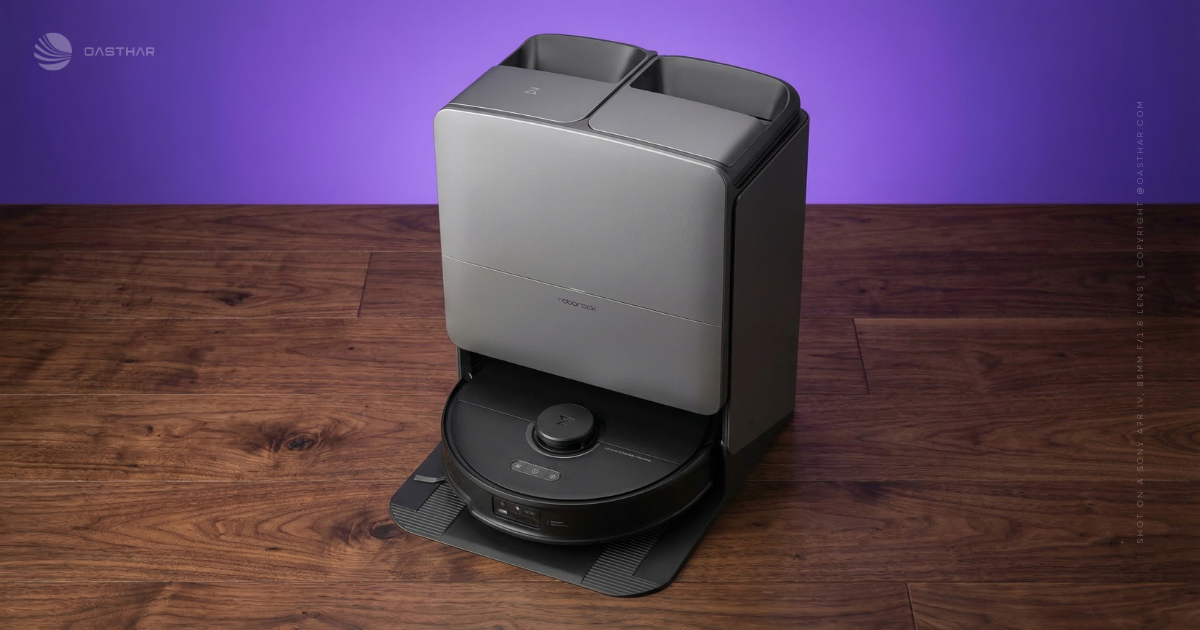
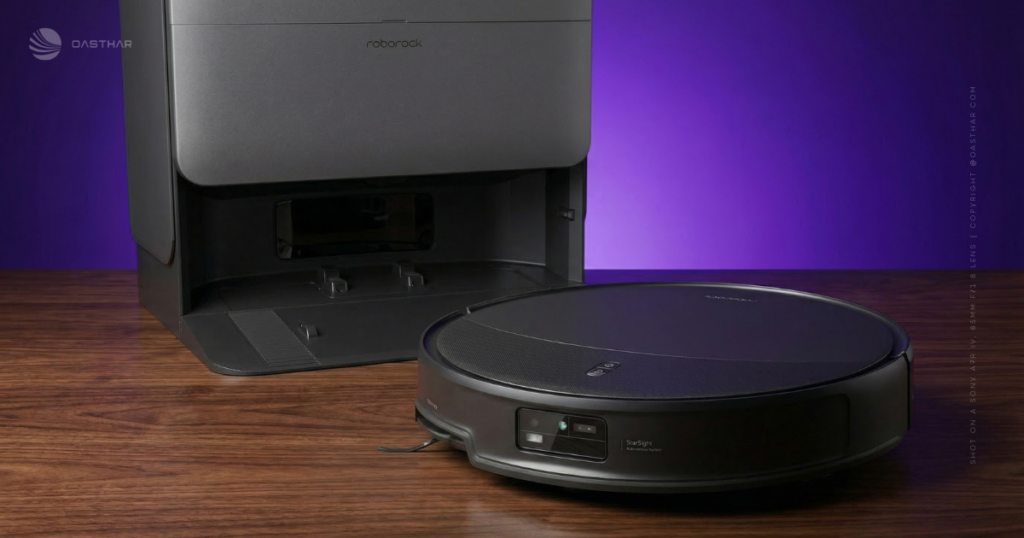
The Saros 20 feels like the next step after the Saros 10R, not a total reinvention. You’re getting 36,000 Pa max suction on paper, noticeably strong real-world cleaning on hard floors, and better carpet pickup than the 10R. The robot stays 79.8 mm tall, so it reaches under more furniture than turret-style bots, and its AdaptaLift 3.0 chassis lift (up to 3 cm) helps with thresholds and thicker carpet transitions. It also steps up obstacle recognition to 300+ objects, with a minimum avoidance target of 20 x 20 mm.
The dock matters, too: hot water mop washing (up to 100 C) and hot air drying (55 C) reduce the “wet mop smell” risk and cut hands-on cleanup.
Tradeoffs are real. It’s priced as a premium model (an AU RRP of $2,999), it uses dual rotating mops (not a roller mop), and the round body still leaves corner limits, especially on carpet edges. Mapping can also take longer than faster competitors. For another perspective on the climbing and “moderate upgrade” vibe, see this NotebookCheck Saros 20 review.
Specifications
Here are the specs that change day-to-day ownership more than marketing buzz.
| Spec | What you’re getting |
|---|---|
| Height | 79.8 mm |
| Weight | 5.05 kg |
| Suction (max) | 36,000 Pa |
| Battery | 6,400 mAh (Li-ion pouch) |
| Runtime (claimed) | Up to 200 minutes (varies by mode and floors) |
| Charge time | 2.5 hours claimed, about 182 minutes tested |
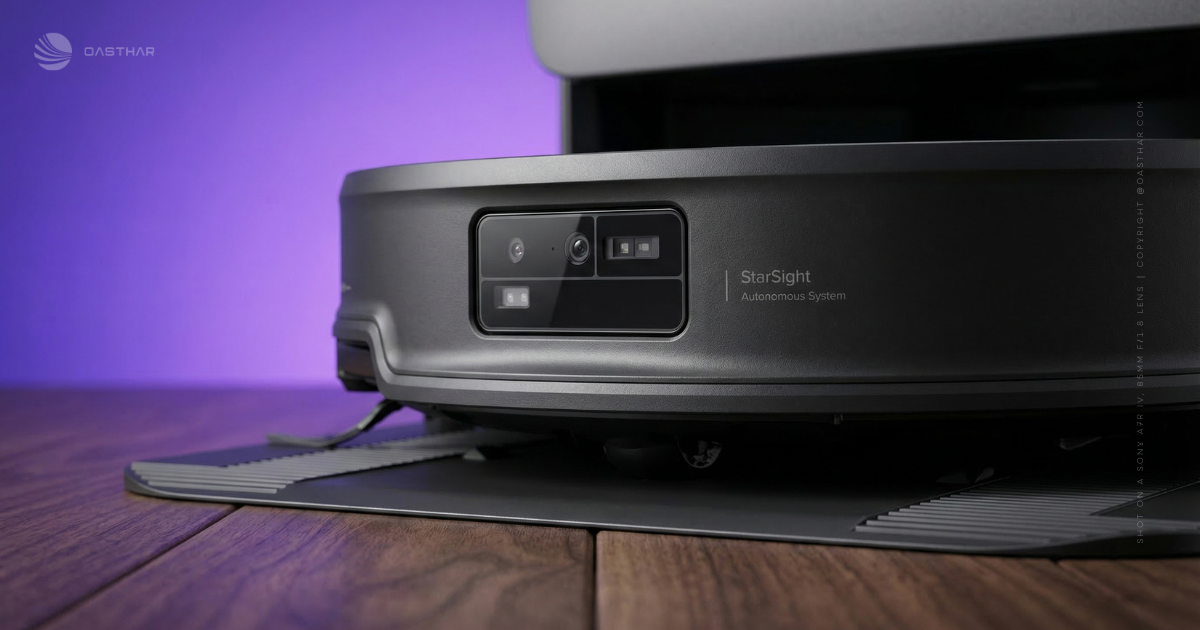
| Navigation | StarSight 2.0, dual front solid-state ToF, <120 degree FOV, LED headlight |
| Obstacle avoidance | 300+ objects, minimum size 20 x 20 mm |
| Mop system | Dual rotating mops (200 RPM), 3 cm mop lift, mop drop option |
| Dock tanks and bag | 4 L clean, 3 L dirty, 2.5 L dust bag |
| Dock wash and dry | Mop wash up to 100 C, hot air dry 55 C |
| Threshold handling | Up to 4.5 cm single, up to 8.8 cm double-layer (4.5 + 4.3) |
| Smart home | Matter supported |
| Warranty and security | 2-year AU warranty, security updates through 1 March 2028, UL Solutions “Diamond level” verification |
If you want more context on how Roborock positions the model, this NotebookCheck news write-up is a solid spec-focused read.
Design & Build
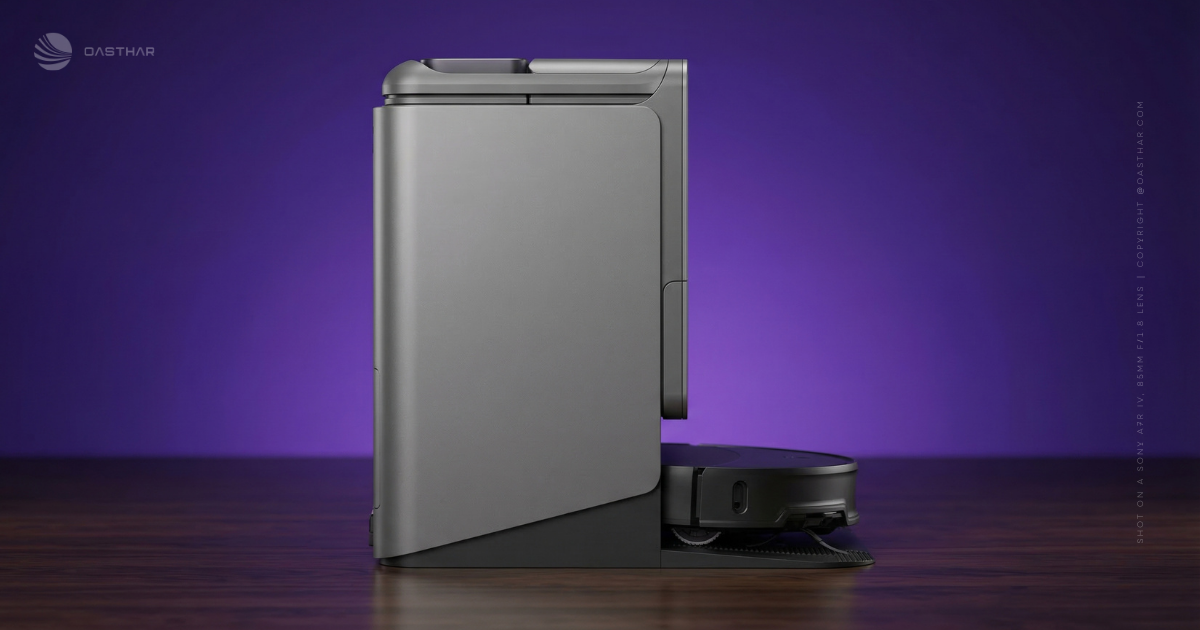
The Saros 20’s whole personality comes from one design choice: it stays under 8 cm tall. That low profile is why it can clean under more couches, cabinets, and toe-kicks, and it’s also why you don’t get a traditional top-mounted LiDAR turret.
In a normal home, this changes two things right away. First, you’ll see more “under furniture” coverage without rearranging the room. Second, you may notice it sometimes takes a bit longer to re-orient itself in tight, low spaces, because it’s working with a front-facing field of view rather than a full 360-degree turret scan.
Edge work is where the physical extras help. The right-side FlexiArm reaches about 50 mm, and the edge sensing system (including a Vertibeam-style floor and wall sensor) helps it understand where the boundary really is on hard floors and under low overhangs. Meanwhile, AdaptaLift 3.0 does more than climb, it can lift the chassis during turns to reduce mop swirl and smeared arcs.
Slim body, no turret: under-furniture cleaning without scraping everything
You’ll want to think in “clearance modes.” A safer under-furniture setting can stop it around 95 mm to avoid scratching the top, while a more aggressive mode pushes lower. That’s useful under beds and low cabinets where one bad scrape can turn a clean robot into a scuffed-up one.
Even though mapping can be slower, accuracy is the upside. In testing notes, quick mapping was described as tortoise-like, but it still landed close to 100 percent correct, then got even better over repeat runs.
AdaptaLift 3.0 and step handling: when “it can climb” matters, and when it does not
“Climbing” sounds like a party trick until you live with door thresholds. If your home has uneven transitions, double-layer sills, or a mix of rug thicknesses, the lift system can mean fewer stuck alerts and fewer rescues.
The published capability is up to 4.5 cm on a single obstacle and up to 8.8 cm as a two-step climb (4.5 plus 4.3). You’ll hear it working, though. Crab-walking and lifting can be noisy, and it’s not subtle when it commits to a climb.
Cleaning Performance
This is where the Saros 20 earns its flagship label, especially if your home is mostly hard floors with some carpet. On hard floors, measured pickup was about 90 to 93 percent in a one to two pass test, with only minor quirks around larger cereal-type pieces getting flicked.
Carpet performance is where the Saros 20 separates itself from the Saros 10R more clearly. On short-pile (6 mm) carpet, pickup was roughly 80 to 86 percent. On medium-pile (10 mm) it landed around 75 to 79 percent, and you can see the boost behavior kick in. On long-pile (20 mm) it dropped to about 50 to 60 percent, which is your signal to reset expectations. It can vacuum thicker carpet, but “can” and “should” are different things when pile density fights airflow.
Mopping is designed around real routines. The Saros 20 can default to carpet clean first, and it supports mop drop, meaning it can leave the mop pads at the dock before it commits to carpet. That sounds small, but it prevents the classic “wet mop dragged across rugs” problem. Add 3 cm mop lift, and the robot behaves more like it understands a mixed-floor house.
Edge and corners split by surface. Hard floors look excellent because the mop extends close to baseboards. Carpet edges are still a robot weakness because of brush placement and the round chassis. The notes call out about a 10 cm edge gap on carpet where the main brush can’t reach, although the right “whisker” helps pull debris inward.
For hard-floor shoppers who want a bigger view of alternatives, Oasthar’s Best Vacuums for Hardwood Floors 2025 guide helps you sanity-check whether you should buy a premium robot or a traditional vacuum instead.
Hard floors: where the Saros 20 looks like a flagship
On timber and tile, the Saros 20’s results come from consistency more than raw peak suction. It tends to pull fine dust from edges well, and the mopping looks clean and fast-drying. Part of that is the dual rotating mops at 200 RPM, and part is the listed 13 N downward pressure, which helps with dried residue.
The “mop swirl” problem also gets attention. By lifting the chassis during turns at the end of a mop run, it avoids leaving those crescent-shaped wet arcs you notice in daylight.
Carpets: strong pickup, but do not expect perfect edges on rugs
You’ll get a stronger carpet clean than the Saros 10R, mainly because suction ramps harder when needed and the robot adapts for carpet contact. That said, corner and edge cleaning on carpet still won’t match what you can do with a handheld or stick vacuum in five minutes.
A couple of real-world quirks remain. Static-charged lint can get left behind, and some larger particles can be missed or nudged aside. None of that is shocking, but it’s worth knowing before you pay premium pricing.
If you want a second test perspective, this SmartHomeAssistent Saros 20 test page adds more real-world impressions around navigation and maintenance (it’s in German, but the pros and cons are easy to scan).
Ease of Use
Setup and daily control live in the Roborock app, and the Saros 20 has a lot of tuning options. The best approach is simple: run one full clean, then adjust. After that, the robot starts feeling “hands-off,” because the maps and routines get smarter over time.
Quick mapping is about 14 minutes per 50 m2, which is slower than top speedsters. Accuracy is the payoff, with near 100 percent correctness reported, then minor refinements after more runs. The robot also supports at least three maps for multi-level homes.
Obstacle avoidance is the other half of ease-of-use. With 300+ recognized objects and a 20 x 20 mm minimum, it can avoid cables reliably in testing. You can also tune collision behavior, set no-go zones, and enable returns to blocked areas so it doesn’t give up after one failed attempt.
Mapping and navigation: slower “tortoise” mapping, but fewer surprises later
The front-facing sensor setup can mean extra “finding itself” moments under low beds and tight overhangs. That’s the trade for a low body and no turret. Still, once the map settles, the robot tends to clean without weird detours.
Obstacle avoidance and pet mess: good enough to trust, with a few caveats
Pet features land in the “good” category, not the best on the market. It can recognize pet obstacles, including feces, and it supports PetSnaps. Urine handling depends on whether the liquid has enough color or reflectivity to be detected, which is a real limitation.
If you have pets, bumping up dock empty strength (rather than leaving it on a gentle setting) can help keep hair from piling up between runs.
Filtration, Drying & Water Handling
The dock is the quiet hero here. It handles dust collection with a 2.5 L bag, and it manages water with a 4 L clean tank and 3 L dirty tank. For mops, it can wash with hot water up to 100 C, then dry with hot air at 55 C.
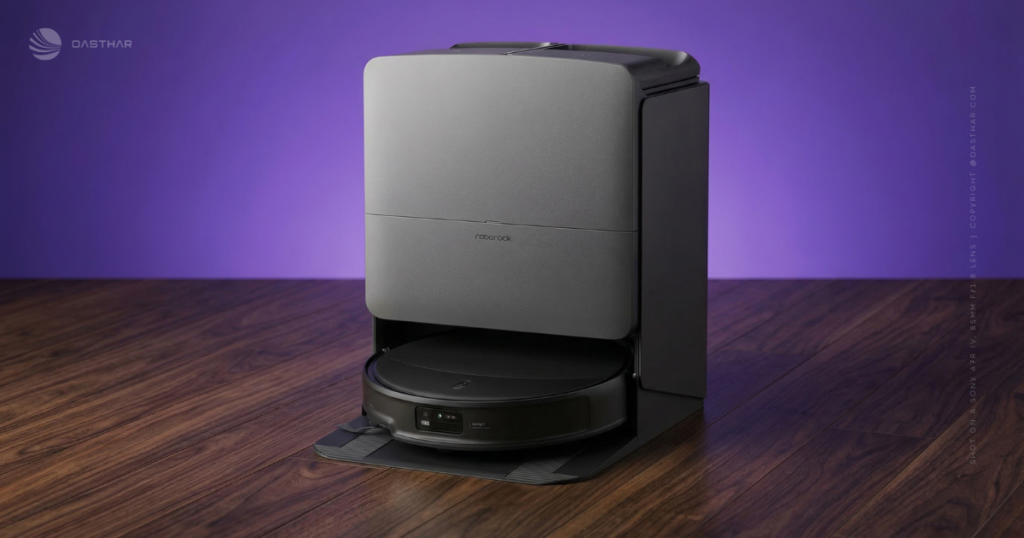
You still have chores. You’ll refill clean water, empty dirty water, and occasionally clean the dock tray. Still, the robot carries only about 60 ml onboard water, and rotating mops tend to use less water than some other mop styles, which helps the dock do most of the heavy lifting.
Mop washing defaults to about every 30 minutes. If your floors are genuinely dirty, changing that interval can reduce streaks and keep the pads from spreading grime.
Noise Level
Noise stays reasonable most of the time. Normal cleaning sits around 40 dB, while suction boost can reach about 60 dB. The dock’s dust empty is about 50 dB, and mop washing ranges 50 to 70 dB depending on what it’s doing.
Mop drying is the easiest to live with at about 25 to 30 dB. Scheduling helps a lot here. Let the dock do loud emptying and washing while you’re out, then keep quiet drying for overnight.
Maintenance & Ongoing Costs
Owning a premium robot means paying attention to consumables. The good news is maintenance isn’t exotic, it’s just recurring. A typical schedule calls for a main brush every 6 to 12 months, whiskers every 3 to 6 months, and mop pads every 1 to 3 months. Filters are washable, and there’s also a dock dustbin filter.
Prices vary by market, but the provided AU pricing shows the “premium tax” clearly. A genuine main brush is listed at $79.90, whiskers at $39.90, mop pads at $44.90, and a dust bag three-pack at $39.90. Cleaning solution is listed at $39.90 for 480 ml, with a 1:300 dilution ratio, so a bottle can last if you don’t overdo it.
Battery replacement is another long-term consideration. A genuine battery was cited around $150, with third-party options around $100, and it’s held by screws.
One more warning: grey market units can bring firmware and support headaches. If warranty matters, stick to officially supported channels for your region.
Smart & App Features
A few settings make a bigger difference than endless toggles. Carpet-first with mop drop is the one that keeps rugs from getting damp and musty. Obstacle avoidance modes and collision settings help if you have chair legs, cables, or tight layouts.
The Saros 20 also supports schedules, deep clean behaviors, return-to-blocked areas, multi-floor mapping, child lock, DND, and remote control options. Voice support includes Alexa and “Hey Rocky,” plus Matter support (some ecosystems still need a Matter hub).
On privacy and security, the model is listed as verified at UL Solutions’ highest Diamond level, and its security updates policy runs through 1 March 2028.
Energy & Water Use
You can’t get exact weekly energy cost without your schedule and floor plan, but the specs still tell you what drives usage. The robot’s charger is listed as 50 W, and the battery is 6,400 mAh, so longer runs and higher suction modes draw more.
The dock is where power spikes. Provided figures include 2 A for dust emptying, 5.7 A for mop cleaning, and about 0.75 A for drying. Water use also tracks your mop wash frequency, because more washes mean more tank turnover.
Price & Value
In Australia, the Saros 20 is positioned as a premium model with an RRP of $2,999, and it’s the kind of product that makes more sense during event discounts. Value depends on your floors. The notes from a Saros 10R owner summed it up well: hard floors can look very similar, while carpet cleaning improves more on the Saros 20.
For US buyers in March 2026, there’s a bigger issue: real-time availability reports say the Saros 20 is not yet for sale in the US, with US listings “coming soon.” Expected pricing has been cited around $1,499, based on European pricing and conversions.
If you want another opinion on how “almost perfect” it feels when it works, this GameStar Saros 20 test article adds more hands-on commentary (also in German).
Who is it for?
Buy it if…
- You have mixed floors, and you care most about hard-floor vacuuming plus rotary mopping.
- Your furniture is low, and you want that 79.8 mm body to reach under more places.
- You deal with thresholds, because the lift and climbing reduce stuck runs.
- You want dock automation, including hot wash and hot air drying.
Do not buy it if…
- You’re on a strict budget, because the model sits in premium pricing territory.
- You want a roller mop, since this uses dual rotating pads instead.
- Your home is packed with long-pile carpet, where results drop off.
- You want the most advanced pet program, since pet controls are solid but not best-in-class.
FAQs
Is the Roborock Saros 20 really better than Saros 10R?
You’ll get stronger carpet cleaning and smarter obstacle handling (300+ objects vs about 108). On hard floors, the gap is smaller, so 10R can feel like better value.
What real cleaning tradeoffs come with the Saros 20?
You gain top-tier vacuuming and excellent rotary mopping, but it’s still a dual-spinning pad system, not a roller mop. Heavy grime can need an extra pass.
How well does Saros 20 handle edges, corners, and low furniture?
On hard floors, you’ll see near-wall coverage thanks to the extending side brush and mop. Under furniture is a win too, at about 79.8 mm tall.
Does it avoid carpets while mopping, or drag wet pads?
It’s one of the few that can drop the mop pads at the dock before carpet vacuuming. By default, it tends to vacuum carpets first, which reduces damp carpet mistakes.
What should you know about price, warranty, and grey imports?
In Australia, the RRP is $2,999, and the warranty is 2 years (plus consumer law coverage). Buy from approved retailers, grey imports may miss local firmware and support.
Final Verdict
If you want a flagship robot that’s great on hard floors and meaningfully stronger on carpet than the Saros 10R, the Roborock Saros 20 fits the brief. The low body helps it clean where taller bots can’t, and the dock’s hot wash and hot drying reduce the daily “robot parenting” work. Mobility is also a real win if your home has awkward thresholds.
The decision point is price. On hard floors, the gap to the Saros 10R may feel smaller than the cost gap. If value matters, watch for sales, measure your clearances, and match the robot to your floor mix.
You’ll be happiest if you buy it for the automation and consistency, not for the peak suction number.