

You’re eyeing RedMagic 11 Air vs RedMagic 10 Air because you want more frames, better cooling, and longer battery life, without paying flagship money. The quick take: upgrading can make sense, but only if you actually push your phone hard with long gaming sessions and high refresh rates. Otherwise, the 10 Air still holds up well for most players.
In this breakdown, you’ll compare specs side by side, then weigh design choices that matter day to day, like the thinner build, the active fan setup, and the shoulder triggers. You’ll also see what the newer software version adds, and where RedMagic still cuts corners to hit the price.
Next, you’ll get a clean verdict across performance, battery and 80W charging, display smoothness, and the trade-offs you’ll feel most, like wireless charging still missing and cameras staying mid-pack (especially ultrawide). By the end, you’ll know if your upgrade money buys real wins, or just a newer name.
RELATED: RedMagic 11 Air vs Asus ROG Phone 9 Pro: Which is Better?
Quick summary
The RedMagic 11 Air is the newer option, and it’s built around a more powerful chip (Snapdragon 8 Elite) plus a bigger 7,000mAh battery. It also ships with newer software (Android 16 with RedMagic OS 11), which matters if you keep phones for years.
The RedMagic 10 Air still holds up, especially if you like a gaming phone that’s easier on your wallet. It runs Snapdragon 8 Gen 3, ships with Android 15 and RedMagic OS 10, and its feature set is well documented, including Wi-Fi 7 and Bluetooth 5.4 in review testing.
Charging is less of a gap than you’d expect. Both are commonly discussed around 80W wired charging, although the 11 Air is also mentioned with higher wired speeds in some regions (so you need to check your market).
Winner: RedMagic 11 Air. You get more forward-looking upgrades (chip, battery, newer Android) that you’ll feel over the next few years.
Specifications
If you want a second source to cross-check the basics, this RedMagic 11 Air vs RedMagic 10 Air spec comparison is a handy reference.
| Spec | RedMagic 11 Air | RedMagic 10 Air |
|---|---|---|
| Chip | Snapdragon 8 Elite | Snapdragon 8 Gen 3 |
| RAM and storage | 12GB/256GB, 16GB/512GB | 12GB/256GB, 16GB/512GB |
| Display size | 6.85-inch AMOLED | 6.8-inch AMOLED |
| Resolution | 1216 × 2688 | 2480 × 1116 |
| Refresh rate | 144Hz (confirmed) | 120Hz (confirmed) |
| Battery | 7,000mAh | 6,000mAh |
| Wired charging | 80W (global), higher in some regions | 80W |
| Wireless charging | No | No (confirmed in reviews) |
| Rear cameras | 50MP main (OIS) + 8MP ultrawide | 50MP main (OIS) + 50MP ultrawide |
| Front camera | 16MP under-display | 16MP under-display |
| Weight, thickness | 207g, 8.0mm | About 7.23oz, about 0.31in (reviewed) |
| Durability | IP54 (reported) | IP54 (confirmed in review) |
| Connectivity highlights | Dual SIM (reported) | Wi-Fi 7, BT 5.4, NFC, dual SIM, no eSIM |
A few specs matter more than the rest for gaming:
- Chip + cooling: you feel this in sustained FPS, not in marketing numbers.
- Display + refresh rate: it affects aiming, camera pans, and motion clarity.
- Battery + charging: it decides if you play plugged in, or play freely.
Winner: RedMagic 11 Air. The newer chip and bigger battery are the two upgrades you notice most often.
Design & Build Quality
Both phones chase the same idea: gaming power without the thick “brick” vibe. Still, “Air” is relative. These models feel lighter compared with bigger gaming flagships, not like a small mainstream phone.
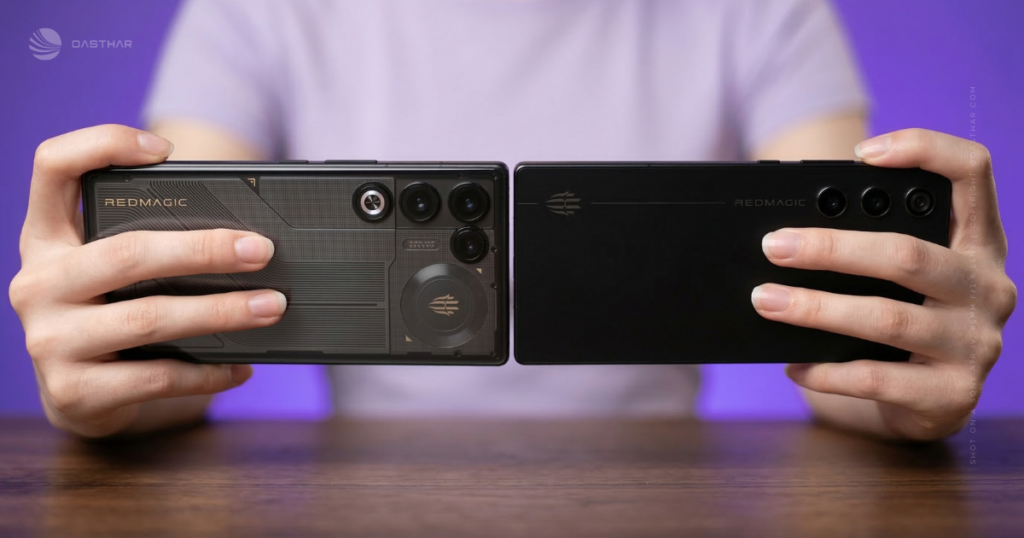
The 11 Air is confirmed at 207g and 8.0mm thick, and it keeps RedMagic’s industrial look with a cleaner, more subtle style. It also swaps the older slider-style approach for a side button behavior on this generation (with assignable options), plus it keeps capacitive shoulder triggers for games.
The 10 Air is also boxy, with an aluminum frame, Gorilla Glass 5 up front, and an IP54 rating in review coverage. That shape helps grip in landscape, but it can feel sharp during long one-handed scrolling.
If you’re sensitive to corners digging into your palm, the “Air” name won’t save you. These are still big-screen gaming phones.
Winner: Tie. You’re choosing between two boxy designs with similar priorities, and comfort depends more on your hands than the spec sheet.
Display Quality
The 11 Air’s display is a clear technical step up on paper. You get a 6.85-inch AMOLED at 1216 × 2688 with a confirmed 144Hz refresh rate. In testing, it hit about 1,819 nits at 20% APL and around 1,484 nits full-screen, which is strong for outdoor visibility.

The 10 Air’s AMOLED is 6.8 inches with a 2480 × 1116 resolution and up to 120Hz. It’s still smooth, and most games will look great on it, but the 11 Air gives you a little more clarity for fine UI text and distant targets.
Both use an under-display selfie camera. You get an uninterrupted screen, but selfies look softer and a bit hazy, especially indoors.
Winner: RedMagic 11 Air. The higher resolution, higher refresh ceiling, and proven brightness make it the better everyday gaming panel.
Performance
This is where the RedMagic 11 Air earns its name upgrade. Snapdragon 8 Elite gives you more headroom for heavier games and future updates. In benchmark talk, some reporting puts its multi-core performance near the 10K range, which matches the “fast in everything” feel in daily use.
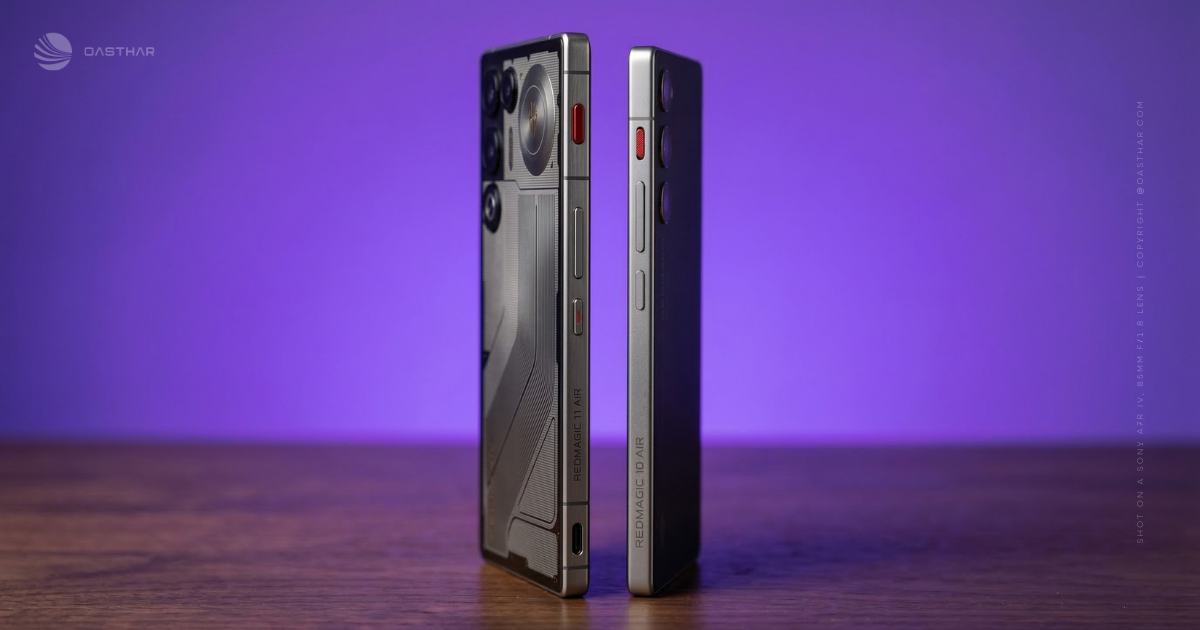
However, there’s a catch. In heavy load tests, the 11 Air can throttle more than you’d hope, and some reviewers point to the slimmer body and less elaborate cooling compared with thicker models.
The 10 Air, using Snapdragon 8 Gen 3, still performs well. In one published test set, it scored 2,242 single-core and 7,159 multi-core in Geekbench 6. It also leans on a multi-layer cooling approach that includes “liquid metal,” and in at least one real gaming test (Genshin Impact), it held a comfortable temperature after a 20-minute run.
For another perspective on whether the jump is worth it, see this upgrade-focused comparison.
Winner: RedMagic 11 Air. Even with throttling concerns, the faster chip gives you better long-term performance headroom.
Battery Life & Charging
Capacity favors the 11 Air. A 7,000mAh battery simply gives you more room to play without watching the percent drop. In one set of lab-style results, the 11 Air posted an 8h 7m overall estimate, with 18h 59m video, 11h 38m browsing, and 11h 14m gaming.
The 10 Air’s 6,000mAh battery is smaller, yet it tested well in a video rundown scenario: 14h 57m streaming a 1080p video over Wi-Fi at full brightness. That’s the kind of result you feel on travel days.
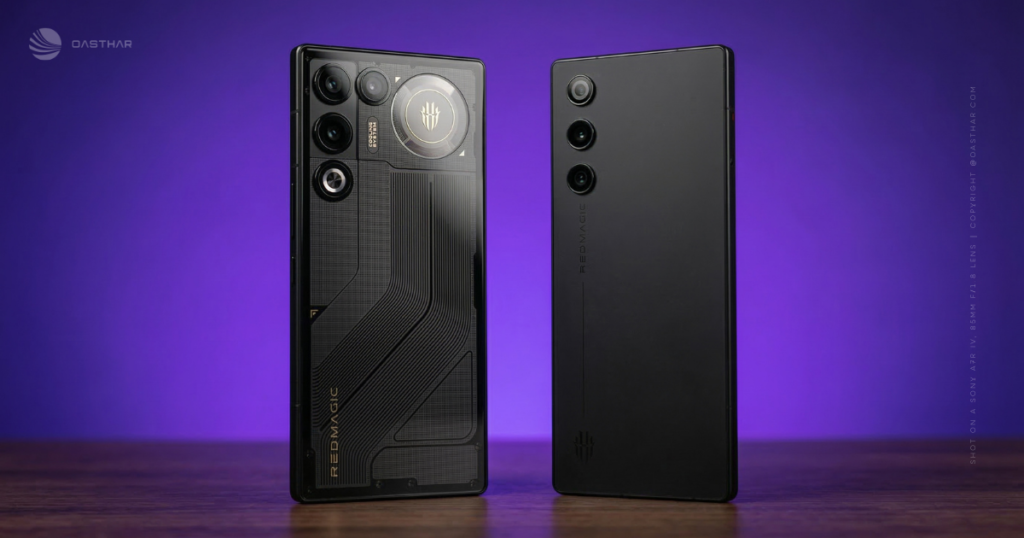
Wired charging is where it gets nuanced. The 10 Air supports 80W and, with its included charger, has been measured hitting 100% in 49 minutes. The 11 Air is commonly listed at 80W in global versions, with full charge around a bit over an hour, and higher wired charging in some regional versions. Neither is positioned as a wireless charging phone.
Bypass charging is confirmed on the 10 Air, and it’s useful if you play plugged in because it can reduce heat and battery wear.
Winner: Tie. Pick the 11 Air for raw capacity, but respect the 10 Air’s proven streaming endurance and bypass charging advantage.
Software & Ecosystem
Out of the box, the 11 Air runs Android 16 with RedMagic OS 11. The 10 Air runs Android 15 with RedMagic OS 10. That one-version gap matters more than it sounds, because it often lines up with app support and security cadence over time.
Both phones lean hard into gaming tools. You get a dedicated gaming space, an in-game overlay for performance modes, and quick access to recording and trigger mapping. The 10 Air’s Game Space flow is well described in review coverage, including a dashboard you can open mid-match without quitting.
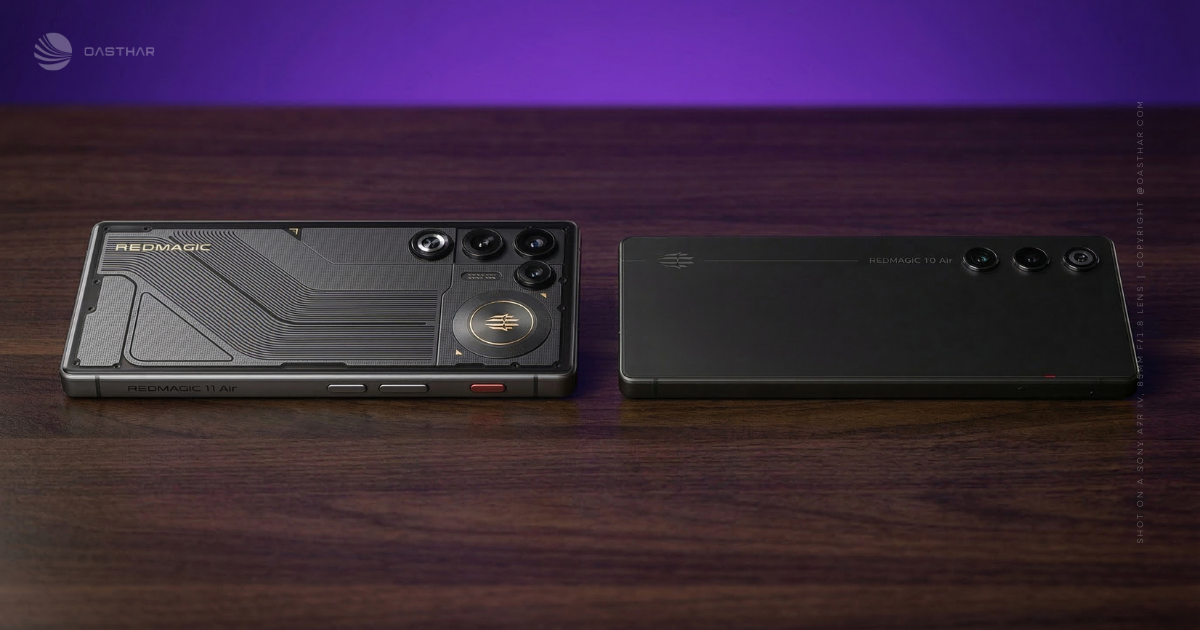
Update policy is also clearer than you might expect for gaming phones. The 11 Air is described as getting three major Android updates in most regions, plus longer support in Europe. The 10 Air is described with three years of OS and security updates.
AI features exist, but keep expectations grounded. You’re getting utility tools, not Pixel-style AI depth. For more on the 11 Air’s day-to-day software feel, you can reference this internal RedMagic 11 Air review.
Winner: RedMagic 11 Air. Newer Android plus a stronger long-term support story makes it the safer hold.
Connectivity
Connectivity is one area where the 10 Air is easier to “buy with confidence” because reviews confirm the details. It supports Wi-Fi 7, Bluetooth 5.4, NFC, and dual physical SIM cards, and it does not support eSIM. It also lacks mmWave 5G, which can matter if you rely on ultra-low latency in the few places mmWave actually works well.
In real-world testing on T-Mobile’s network in New York City, one report showed a 445Mbps peak download on 5G. Wi-Fi 6 testing was also reported, with solid peak results. Those numbers won’t be universal, but they show the phone can keep up for online play.
For the 11 Air, the safe move is sticking to what’s confirmed in coverage you’re reading, because connectivity can vary by region and SKU. Dual SIM support is commonly reported, but you should check carrier bands if you’re picky.
Winner: RedMagic 10 Air. Its Wi-Fi 7 and Bluetooth 5.4 support are clearly documented, which reduces buyer risk.
Cameras, Mic & Speakers
Neither phone is trying to be your next camera obsession. You can still take solid photos, but you’re paying for gaming first.
On the 11 Air, the main camera is a 50MP unit with OIS (using an OmniVision OV50E40 sensor) and it can look good in daylight. The weak link is the 8MP ultrawide, which tends to fall apart faster, especially in low light. There’s also no dedicated telephoto, so zoom is mostly digital crop. Up front, the 16MP under-display selfie camera keeps the screen clean, but it produces softer selfies because the sensor shoots through the display.
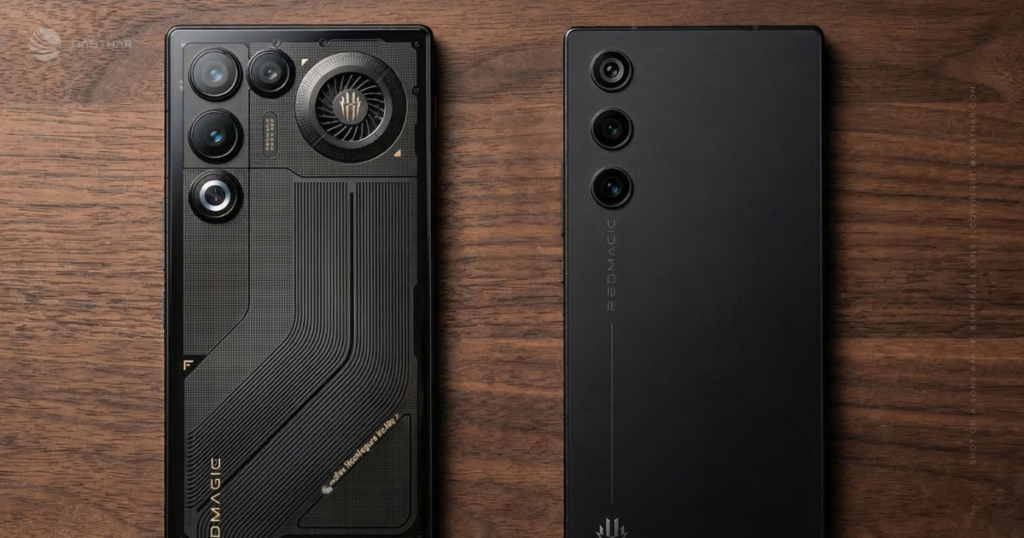
The 10 Air has dual 50MP rear cameras (main with OIS, plus a 50MP ultrawide). In review coverage, it captured good detail, but color consistency between lenses could vary. The 16MP under-display selfie camera can look hazy indoors, and selfie video tends to look soft. Video recording can reach 8K at 30fps, but 4K60 often looks better in practice.
Audio is stereo on both. The 11 Air is described as loud but thinner on bass at high volume. The 10 Air also lacks a 3.5mm headphone jack, so wired audio needs USB-C or you go Bluetooth.
Winner: RedMagic 10 Air. A 50MP ultrawide gives you more usable flexibility than the 11 Air’s 8MP ultrawide.
Extra Features
Both phones include capacitive shoulder triggers, and once you map them, they’re hard to give up. It’s like adding two extra fingers to your control scheme, especially for shooters and action games.
The 11 Air keeps an active fan approach, and it also includes a side button you can assign to gaming mode or other shortcuts. Biometric tech is kept practical, with an optical in-display fingerprint reader reported on this generation.
The 10 Air’s practical extras are clearer in reviews: bypass charging, an assignable “Magic Key,” and connectivity features that fit travel and dual-line users. It also ships with a charger in the box in at least one review context, which matters because fast charging is part of the promise.
Winner: RedMagic 10 Air. Bypass charging plus well-documented controls make it the more predictable “daily gamer” toolset.
Price & Value
In February 2026 pricing, the 11 Air is positioned as the value play in its own lineup. A base 12GB/256GB model has been listed at $499, and higher configurations have been described in the high-$500 range (with US pricing sometimes higher by region).
The 10 Air’s starting price has been described at $549 for 12GB/256GB, with a higher tier that can cost more. Street pricing shifts fast, especially with sales and imports, so you should treat MSRP as a starting point, not a promise.
Value depends on what annoys you. If you hate charging anxiety and want newer Android, the 11 Air looks like a better deal. If you care about a stronger ultrawide camera and confirmed Wi-Fi 7, the 10 Air can feel like the smarter buy even if it’s older.
For a broader feel of the 11 Air’s market pitch, this RedMagic 11 Air hands-on coverage adds helpful context.
Winner: RedMagic 11 Air. $499 entry pricing with a newer chip and bigger battery is tough to beat for most buyers.
Who is it for ?
You don’t need the “best” phone. You need the right one for how you play.
Choose RedMagic 11 Air if…
- You want more performance headroom, thanks to Snapdragon 8 Elite.
- You want the bigger battery, because 7,000mAh changes long gaming days.
- You want newer software now, with Android 16 and RedMagic OS 11 out of the box.
Choose RedMagic 10 Air if…
- You want a better ultrawide camera, since it’s 50MP instead of 8MP.
- You care about confirmed connectivity, including Wi-Fi 7 and Bluetooth 5.4 in reviews.
- You play plugged in a lot, because bypass charging is a real quality-of-life win.
Pick based on your top two priorities, like performance versus price, or battery versus cameras.
FAQs
Is the RedMagic 11 Air faster than the 10 Air?
Yes, you get a stronger chip class and snappier feel, especially in heavy games. Still, the 11 Air can throttle under sustained load in slim body.
Do you get better battery life on RedMagic 11 Air?
Yes, the 11 Air packs a larger 7,000mAh battery versus 6,000mAh on the 10 Air. That usually means longer gaming and more screen time.
Is charging meaningfully different between 11 Air and 10 Air?
Not dramatically for most people. Both support very fast wired charging (80W in common global configs), and neither gives you wireless charging for drop-and-go convenience.
Are the displays noticeably different for gaming and scrolling?
They’re close in size, but the 11 Air’s panel is sharper (1216 x 2688) and can run up to 144Hz. The 10 Air tops out lower (120Hz).
Did RedMagic fix the cameras with the 11 Air upgrade?
Not really. You still get a solid main camera, but the ultrawide remains the weak link. Also, the under-display selfie camera stays soft compared with flagships.
Is the RedMagic 11 Air thinner or easier to hold?
It’s slimmer and lighter than the Pro-style models, and it’s slightly trimmer than older gaming bricks. Still, it’s a big, boxy phone.
Do both phones keep gaming extras like shoulder triggers?
Yes. You still get capacitive shoulder triggers built for quick inputs, plus Game Space style controls. For many gamers, that matters more than camera upgrades.
Will you get longer software support on the 11 Air?
Usually, yes. The 11 Air ships on a newer Android version (Android 16 in reviews), while the 10 Air launched earlier (Android 15), so you’re starting later.
Is wireless charging or mmWave 5G included on either?
Wireless charging is missing on both, and some regions also miss mmWave 5G (reported on the 10 Air). If you rely on either, neither upgrade solves it.
When is upgrading from 10 Air to 11 Air worth it?
Upgrade if you want a sharper 144Hz screen, bigger battery, and newer software. Skip it if your 10 Air already runs your games smoothly.
Final verdict
If you want the simplest answer, it comes down to headroom and habits. The 11 Air gives you a faster chip, a bigger battery, and newer Android, so it’s the better long-term gaming pick. On the other hand, the 10 Air stays appealing with a stronger ultrawide camera, confirmed Wi-Fi 7, and bypass charging for desk gaming.
Competitive players should lean toward performance headroom, while battery-first buyers should focus on capacity and charging routine. Either way, set your camera expectations early, because neither is a camera-first phone in the RedMagic 11 Air vs RedMagic 10 Air matchup.