

If you’re stuck between a purpose-built gaming phone and a no-compromises flagship, RedMagic 11 Air vs Galaxy S25 Ultra is the comparison that actually matters. The quick answer is simple: pick the RedMagic 11 Air for raw gaming value (144Hz OLED, capacitive triggers, active cooling, 7,000 mAh), and pick the Galaxy S25 Ultra for the better all-around daily phone (cameras, polish, long-term fit).
You’ll see how the RedMagic’s Snapdragon 8 Elite and fan-backed cooling keep performance steady, even if the phone still feels hefty for an “Air” model. On the other hand, Samsung’s Snapdragon 8 Elite setup focuses on smooth everyday speed, premium build, and the extras that make a flagship feel finished.
Next, you’ll get a clean specs table, then a buyer-focused breakdown of design, display, performance, battery and charging, software, connectivity, cameras and speakers, extra features, price, and who each phone suits best.
RELATED: Galaxy Z TriFold vs Google Pixel 10 Pro Fold: Which is Better?
Quick Summary
- Gaming heat control: RedMagic uses an internal fan plus a vapor chamber, Samsung doesn’t use an exposed fan intake.
- Screen smoothness: RedMagic runs at 144Hz, Galaxy S25 Ultra targets 120Hz with LTPO behavior.
- Battery size: RedMagic packs 7,000mAh, Galaxy S25 Ultra has 5,000mAh.
- Charging: RedMagic hits 80W wired and commonly includes the brick, Galaxy tops out at 45W wired and supports 15W wireless.
- Camera ambitions: RedMagic is a simple dual rear setup, Galaxy is a flagship quad system with serious zoom options.
- Price gap: RedMagic starts at $529, Galaxy S25 Ultra starts at $1,299.99 for 256GB.
- Durability tradeoff: RedMagic is IP54 (partly because the fan needs airflow), Galaxy is IP68.
Winner: Tie It depends on whether you want gaming performance per dollar, or a premium phone that’s strong at almost everything.
Specifications
Here’s the spec snapshot that actually matters when you’re deciding.
| Spec | RedMagic 11 Air | Galaxy S25 Ultra |
|---|---|---|
| Release | January 2026 | February 2025 |
| Chipset | Snapdragon 8 Elite | Snapdragon 8 Elite (Galaxy-tuned variant) |
| RAM / storage | 12GB/256GB or 16GB/512GB | 12GB or 16GB, up to 1TB |
| Display | 6.85-inch OLED | 6.9-inch Dynamic AMOLED 2X |
| Resolution | 1216 × 2688 | 3120 × 1440 |
| Refresh rate | 144Hz | 120Hz (LTPO behavior) |
| Peak brightness (reported) | Peak around 1,800 nits | Up to 2,600 nits |
| Battery | 7,000mAh | 5,000mAh |
| Wired charging | 80W | 45W |
| Rear cameras | 50MP main + 8MP ultrawide | 200MP main + 50MP ultrawide + 50MP 5x + 10MP 3x |
| Selfie camera | 16MP under-display | 12MP (AF) |
| Water/dust rating | IP54 | IP68 |
| USB / key wireless | USB-C (USB 2.0 with DisplayPort reported) | Wi-Fi 7, Bluetooth 5.4, USB-C 3.2, UWB |
For gaming, the big levers are refresh rate, cooling approach, and battery size. For camera people, the Ultra’s sensor mix and zoom options matter more than almost any other row. For long-term daily use, IP rating and connectivity are quiet deal-breakers.
Winner: Tie The specs show two priorities, not one phone bullying the other across the board.
Design & Build Quality
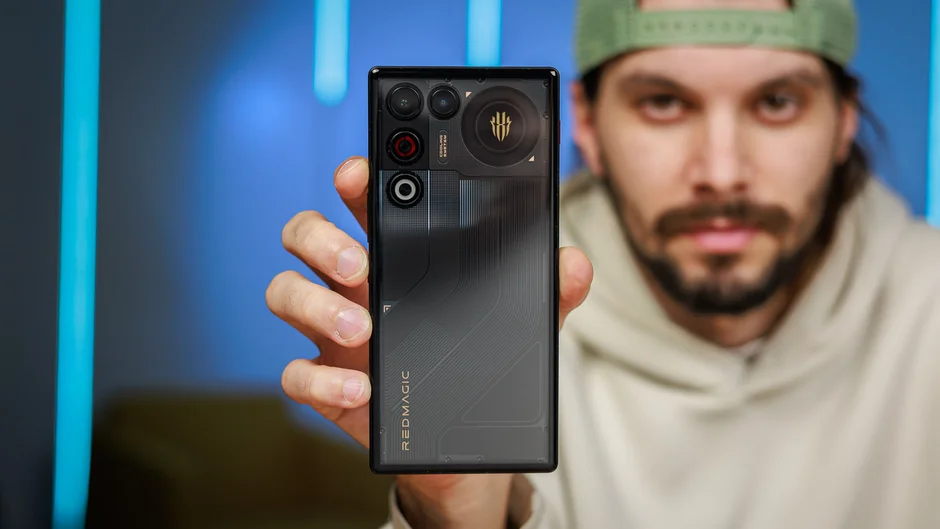
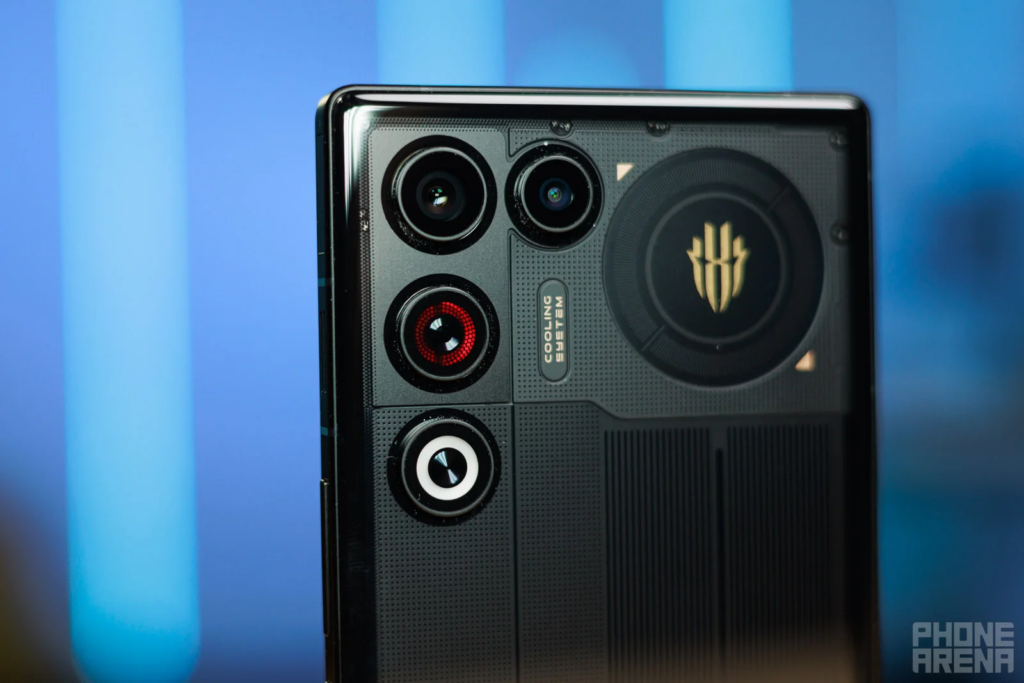
The RedMagic 11 Air is “slim for a gaming phone,” but it still feels big. It’s about 0.31 inches thick, and the styling leans bold with a transparent-look back and subtle RGB around the fan area. You also get an aluminum body, Gorilla Glass 7i on the front, and Gorilla Glass 5 on the back, plus IP54 protection. The catch is practical: it’s a fingerprint magnet, and that clean look gets smudgy fast. For more outside perspective on the “slim gaming phone” idea, see Tom’s Guide’s RedMagic 11 Air hands-on impressions.
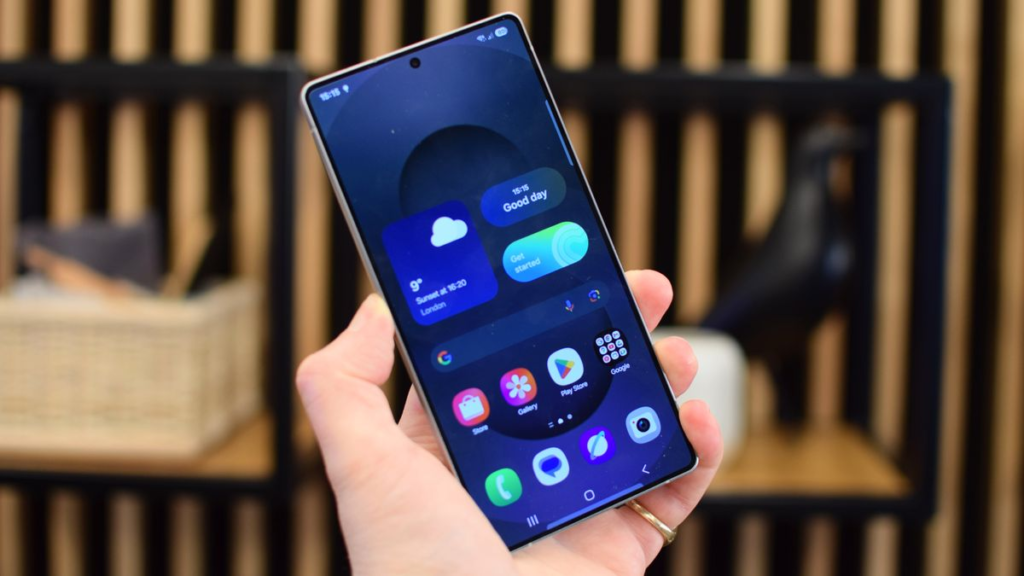
Galaxy S25 Ultra feels like the traditional premium choice. You get a more refined fit and finish, stronger water protection (IP68), and a screen treatment that’s designed to stay readable outdoors. Qi2-style charging convenience is also there, but magnetic snapping often works best with a compatible case.
Winner: Galaxy S25 Ultra You get higher-end durability and fewer daily annoyances, especially around water resistance and overall finish.
Gaming hardware changes the body
A fan needs an air path. That’s why the RedMagic has a vent, and why its water rating stops at IP54 instead of IP68. It also means dust and pocket lint matter more over time, even if the phone is built for it. Still, the payoff is real when you play hard for long sessions, because active cooling can help the chip hold performance longer. If gaming is your main use, that trade can feel totally reasonable.
Display Quality
RedMagic gives you a 6.85-inch OLED at 144Hz with an under-display selfie camera, so you get a true full-screen look. For games, that’s clean, no punch-hole hovering over your HUD. On paper, peak brightness is strong, but real outdoor play can still feel tougher than you’d expect, because peak numbers and comfortable daylight visibility aren’t the same thing.
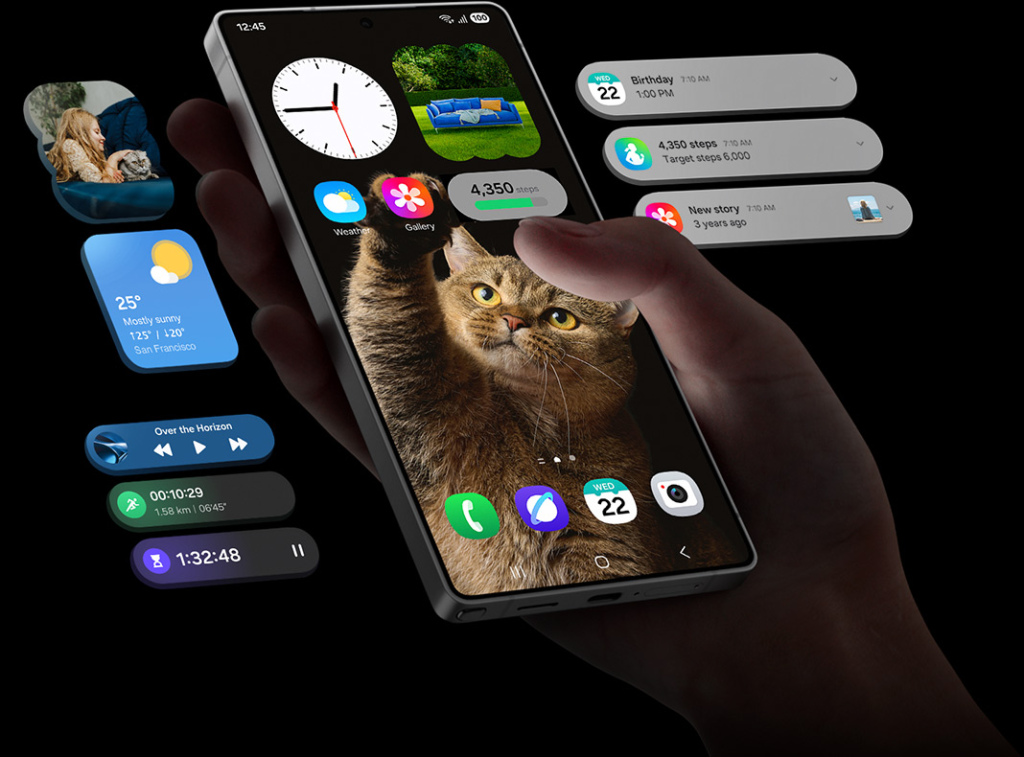
The Galaxy S25 Ultra’s 6.9-inch QHD+ Dynamic AMOLED 2X runs at 120Hz with LTPO behavior, and it’s widely praised for outdoor readability thanks to high brightness and an anti-glare approach. If you scroll a lot, watch HDR video, or read outside, Samsung’s panel usually feels easier.
Winner: Galaxy S25 Ultra It’s brighter in the moments that matter, and LTPO helps it stay efficient while looking premium.
144Hz vs 120Hz, when you will notice it and when you will not
You’ll feel 144Hz most in supported games and fast UI scrolling. You won’t feel it in apps that cap at 60Hz or 90Hz. Samsung’s LTPO-style behavior can drop refresh lower when you’re reading, which saves battery. In other words, RedMagic chases peak smoothness, while Samsung chases smoothness without waste.
Performance
Both phones are fast because both use Snapdragon 8 Elite class silicon. The difference is what happens 20 minutes into a heavy match. RedMagic pairs its chip with an internal cooling fan, a vapor chamber, and thermal layers (including graphene) to move heat around. It also adds gamer-first controls: capacitive shoulder triggers, Game Space profiles per game, and a side “Magic Key” that jumps you straight into the gaming interface.
Benchmarks back up the idea that it punches hard for the money. In published comparisons, it sits close to pricier siblings in CPU tests and can score extremely well in GPU-focused runs. The flip side is comfort: heat can still move to the back during long sessions, so your hands may notice it even when performance stays steady.
If you care about sustained frame rate, cooling design matters as much as the chip name.
Winner: RedMagic 11 Air Active cooling and built-in gaming controls make it the better long-session performer.
Cooling and controls
A fan plus a vapor chamber helps the phone dump heat faster, so performance drops later and less aggressively. That’s the difference between “smooth all match” and “why did my aim feel off.” Triggers also change how you play, especially in shooters, because you can map actions to shoulder taps instead of screen reaches. It feels like adding two extra fingers without learning claw grip.
Battery Life & Charging
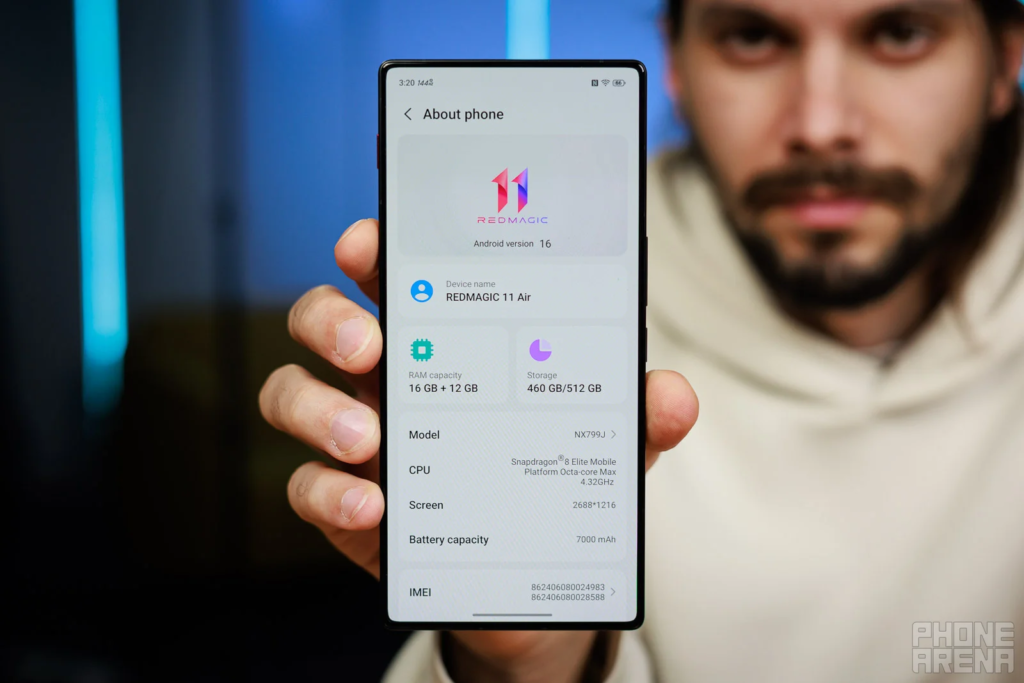
RedMagic’s 7,000mAh battery is the headline, and it plays out the way you want: less battery anxiety on travel days, and more time in-game before you hunt for a cable. It also supports 80W wired charging, and unlike most mainstream flagships, it’s often packaged with the charging brick.
In one published set of lab-style results, the phone landed around 8h 7m overall, with roughly 18h 59m browsing, 11h 14m gaming, and 11h 38m video. Your mileage will vary, but the pattern is clear.
Galaxy S25 Ultra’s 5,000mAh battery is still solid for a full heavy day, and it can stretch further with lighter use. Charging is 45W wired, plus 15W wireless for easy desk and nightstand top-ups.
Winner: RedMagic 11 Air The bigger battery and faster wired charging (with a bundled brick) wins on pure value and uptime.
Software & Ecosystem
RedMagic runs Android with REDMAGIC OS 11, and it treats gaming like a first-class job. Game Space is the center of gravity: you can launch titles, set performance modes per game, and tune the phone for play sessions. The hardware Magic Key makes that feel instant, not buried in menus.
Samsung’s One UI 7 is the more polished daily experience. Galaxy AI features can be genuinely useful, like call translation, summaries, and generative photo edits, but results can be hit or miss depending on the task. The bigger advantage is the ecosystem. Samsung’s accessories, payments, and PC-style features tend to be better supported and more consistent across apps. If you want a related Samsung flagship read, the Galaxy S25 Edge Review 2025 gives a good sense of One UI’s broader vibe.
Winner: Galaxy S25 Ultra One UI’s depth and ecosystem support make everyday productivity easier.
Connectivity
On the Galaxy S25 Ultra, the confirmed list is packed: Wi-Fi 7, Bluetooth 5.4, UWB, and USB-C 3.2. That mix matters when you move big files, use precise trackers, or rely on stable wireless peripherals.
RedMagic’s confirmed highlights are more “get the job done.” Reports list USB-C with USB 2.0 speeds plus DisplayPort, dual nano-SIM support, and an infrared sensor. It’s fine for most people, but power users should care about USB speed if you transfer footage or game captures by cable.
If you want a simple external spec cross-check, PhoneArena’s RedMagic 11 Air spec comparison page is a useful reference point for how RedMagic stacks up in the broader market.
Winner: Galaxy S25 Ultra More confirmed high-end connectivity features, plus faster USB support.
Cameras, mic & speakers
RedMagic keeps cameras simple: a 50MP main, an 8MP ultrawide, and a 16MP under-display front camera. You can get decent daylight shots from the main camera, but you’re not buying it for photography. The ultrawide is more of a “nice to have,” and the under-display selfie camera often looks softer than a standard front camera because it shoots through the display layer.
Galaxy S25 Ultra is the opposite. Its quad rear setup (200MP main with OIS, 50MP ultrawide, 50MP 5x, 10MP 3x) gives you flexibility you’ll actually use, kids running around, pets indoors, concerts from far back, and travel shots where zoom matters. Video features are also more creator-friendly, including 8K support and tools like Audio Eraser in certain modes.
Speakers are good on both. RedMagic gets loud stereo output for games. Samsung’s stereo tuning tends to sound cleaner at high volume, and Atmos options can widen the presentation.
Winner: Galaxy S25 Ultra Camera range and video tools are in a different league, and you’ll feel that every week.
Under-display selfie camera vs punch-hole
For gaming, the RedMagic approach is great because nothing interrupts the image. Your crosshair and UI never fight a black cutout. For selfies and video calls, the trade is quality, under-display cameras usually look less crisp than standard ones. Samsung’s front camera setup is more reliable when your face is the point.
Extra Features
Galaxy S25 Ultra gives you S Pen support, plus the broader Samsung accessory world. One change to note: recent Ultra generation S Pens removed Bluetooth features, so you can’t use the pen as a remote camera shutter the way older models allowed. Wireless charging support is also a daily convenience win, even if magnets may require a case.
RedMagic’s extras are gamer-first: capacitive triggers, high touch sampling behavior aimed at fast input, Game Space toggles, and the fan with optional lighting. Biometrics also differ. The Galaxy uses an ultrasonic in-screen fingerprint sensor, while RedMagic is typically listed with an in-display optical sensor.
Winner: Tie You get different “extras,” and you’ll only value the ones that match your habits.
Price & Value
RedMagic 11 Air pricing is straightforward: $529 (12GB/256GB) or $629 (16GB/512GB). For that money, you’re getting Snapdragon 8 Elite performance, active cooling, a big 144Hz OLED, and a 7,000mAh battery, plus fast wired charging and often the charger in the box. The compromises are also clear: IP54, cameras that won’t impress, and fewer premium convenience features.
Galaxy S25 Ultra starts at $1,299.99 for 256GB. That buys you the camera system, IP68 confidence, stronger connectivity, wireless charging, and a more mature software and accessory ecosystem.
Winner: RedMagic 11 Air If gaming matters, the performance-per-dollar gap is hard to ignore.
Who is it for?
Quick Summary
- Choose RedMagic 11 Air if…
- You want sustained gaming performance with an internal fan and Game Space controls.
- You care about battery life more than wireless charging convenience.
- You like physical-style gaming advantages, like shoulder triggers and a full-screen front.
- You’d rather spend $529 to $629 than cross the $1,000 line.
- Choose Galaxy S25 Ultra if…
- You take lots of photos and video, and you want real zoom options.
- You want premium durability, especially IP68 protection.
- You’ll use One UI features and Galaxy AI tools for daily work and organization.
- You care about UWB, faster USB, and broader accessory support, plus S Pen notes even without Bluetooth remote tricks.
FAQs
Which phone feels better for everyday carry and comfort?
You’ll notice the S25 Ultra feels more premium, but it’s still hefty. The 11 Air isn’t truly “Air” thin, yet it’s slimmer than most gaming phones.
Which is faster for gaming sessions that last hours?
Pick the RedMagic 11 Air if you play long, heavy matches. Its Snapdragon 8 Elite plus active fan cooling helps hold performance, although the back can feel warm.
Which phone’s screen is better for gaming and outdoor use?
The 11 Air gives you a 6.85-inch OLED at 144Hz with no punch-hole distraction. Still, its brightness can struggle outside, while Samsung’s anti-glare display stays clearer.
Which one takes better photos and more reliable video?
Go S25 Ultra if cameras matter. You get a more flexible, higher-end setup and stronger processing. The 11 Air’s 50MP main is fine, but it’s not the focus.
Which phone lasts longer, and which charges faster?
The RedMagic 11 Air wins on pure endurance with a 7,000 mAh battery and 80W wired charging (charger included). The S25 Ultra’s 5,000 mAh is solid.
Which phone has better durability and water resistance?
You’re safer with the S25 Ultra’s flagship-grade protection, including stronger water and dust resistance and tougher build materials. The 11 Air sits at IP54.
Do you get more useful extras on the gaming phone?
Yes, if you game. The 11 Air adds capacitive shoulder triggers, a Magic Key for Game Space, and aggressive cooling hardware. Samsung’s extras skew productivity instead.
Which phone makes more sense for long-term ownership?
Choose the S25 Ultra for a steadier daily experience, better cameras, and broader features like Qi2 wireless charging (magnets need a case). Also note, S Pen Bluetooth is gone.
Final Verdict
If your phone is basically a pocket console, the RedMagic 11 Air is the smarter buy. The fan, triggers, 144Hz panel, and 7,000mAh battery fit that life. If your phone needs to be your camera, your travel companion, and your work device, the Galaxy S25 Ultra earns its price with better cameras, stronger protection, and richer connectivity. The charging story splits too, Samsung wins on wireless convenience, RedMagic wins on wired speed and value. Spend more only if you’ll actually use the premium parts.
Winner: It depends Pick based on your top 2 priorities, gaming endurance or camera and all-around premium features.