

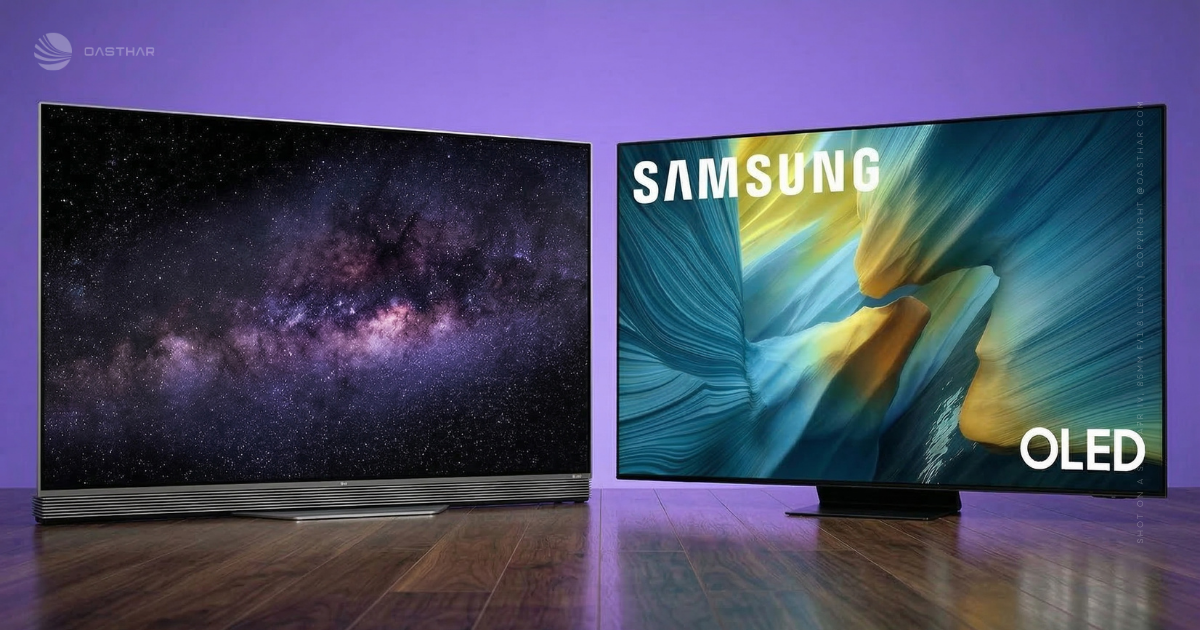
You’re not just picking an OLED, you’re picking a viewing style. LG G6 OLED vs Samsung S95F comes down to your room and your priorities, because both sit in the premium tier for televisions. If you watch with lights on a lot, the LG has the early edge thanks to its newer anti-reflection approach and a meaningful brightness jump over the previous G-series.
On the other hand, the S95F is built to wow with QD-OLED punch and a design that’s almost absurdly thin, helped by Samsung’s One Connect box setup. It’s also stacked for gamers, with four full-bandwidth HDMI 2.1 ports and support up to 4K at 165Hz.
For most people, the “better” TV is situational, LG looks stronger for bright-room watchability, while Samsung feels like the more feature-packed all-rounder if you care about gaming and that extra color pop. You’ll see how that plays out across specs, picture settings, HDR, motion, audio, smart TV software, and value.
RELATED: LG C6 OLED vs Sony BRAVIA 8 II OLED: Which is Better?
Quick Summary
If you just want the short version, these are the buyer-level differences that change the decision fast:
- Panel tech: LG G6 uses LG’s newer Primary RGB Tandem OLED approach (a multi-layer OLED stack aimed at higher brightness). Samsung S95F uses QD-OLED for stronger color volume, and its 83-inch version is listed as W-OLED in reviewed specs.
- HDR formats: LG supports Dolby Vision. Samsung still skips Dolby Vision, sticking to HDR10, HDR10+, and HLG.
- Brightness: Coverage around the G6 points to very high OLED peak brightness and a brighter year-over-year jump. The S95F also tests as very bright in reviews, but it leans on color punch as much as raw luminance.
- Glare philosophy: LG targets low reflectance with a “Reflection Free” coating on key sizes. Samsung uses a Glare Free matte finish that reduces mirror-like reflections, but can lift blacks in a bright room.
- Sizes: LG runs up to 97 inches. Samsung S95F tops out at 83 inches.
- Cable management: Samsung’s One Connect design keeps connections off the panel for cleaner installs.
If you’re still torn, a broader context check helps, so skim this best OLED TVs 2025 guide and then come back to this head-to-head.
Specifications
Here’s a tight side-by-side of confirmed, shopper-relevant specs from the provided sources.
| Spec | LG G6 OLED | Samsung S95F |
|---|---|---|
| Panel type | Primary RGB Tandem OLED (multi-layer stack) | QD-OLED (83-inch listed as W-OLED) |
| Sizes | 48, 55, 65, 77, 83, 97 inches | 55, 65, 77, 83 inches |
| Resolution | 4K | 4K |
| Max refresh rate | Up to 165Hz (97-inch is 120Hz) | Up to 165Hz |
| HDMI | 4x HDMI 2.1 | 4x HDMI 2.1 |
| VRR + ALLM | Yes | Yes |
| G-Sync + FreeSync | Nvidia G-Sync, AMD FreeSync Premium Pro | VRR gaming supported (reviewed as strong for gaming) |
| HDR formats | Dolby Vision, HDR10, HLG | HDR10, HDR10+, HLG (no Dolby Vision) |
| Smart OS | webOS (webOS 26 noted in source summary) | Tizen |
| Screen coating | “Reflection Free” on 55-83 inches (48 and 97 excluded in provided notes) | “Glare Free” matte anti-glare coating |
| Processor | Alpha 11 Gen 3 | NQ4 AI Gen 3 (noted as the same gen used in S95F era) |
| Audio | Not confirmed in provided sources | 70W 4.2.2-channel, Dolby Atmos supported |
| Pricing (US) | Not announced in provided sources (Feb 2026) | Reported 65-inch launch around $3,300, later seen around $2,800 in review pricing context |
Design & Build Quality
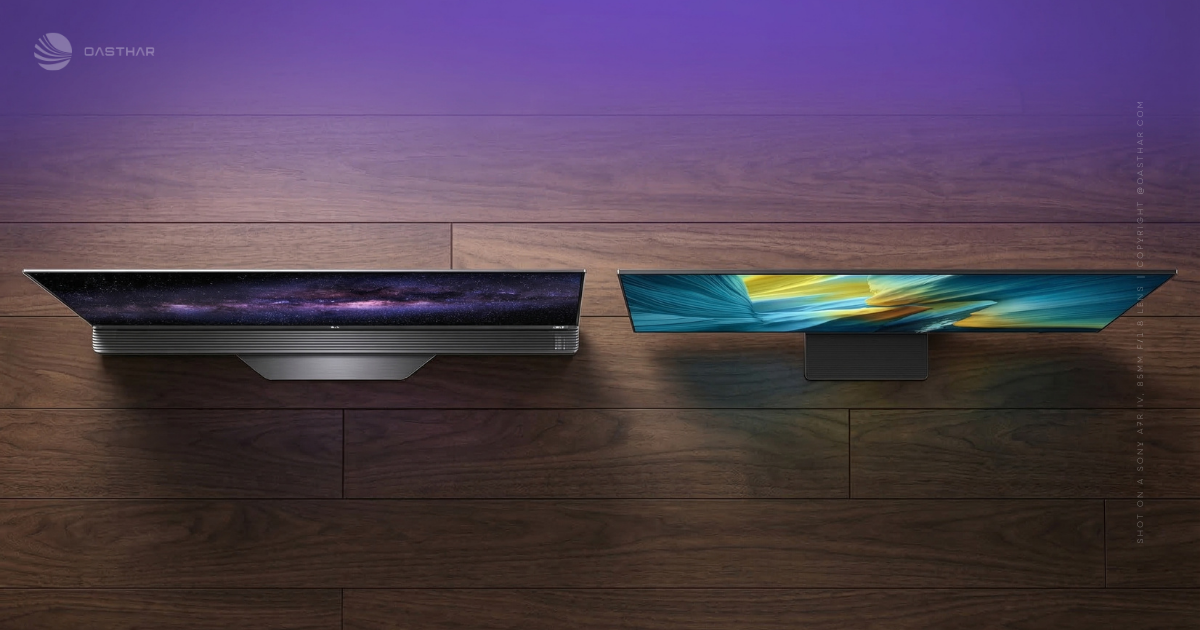
The S95F is built to look impossibly thin on a wall. The reason is practical, not magic. With One Connect, the TV panel can stay slim while the brains and ports sit in a separate box. For wall mounting, that’s a real quality-of-life win because you route one main cable instead of wrestling a bundle behind the screen.
LG’s G6 leans into the gallery vibe too, but in a more traditional LG way. It’s designed to sit flush and “disappear” when it’s off, then let the picture do all the talking when it’s on.
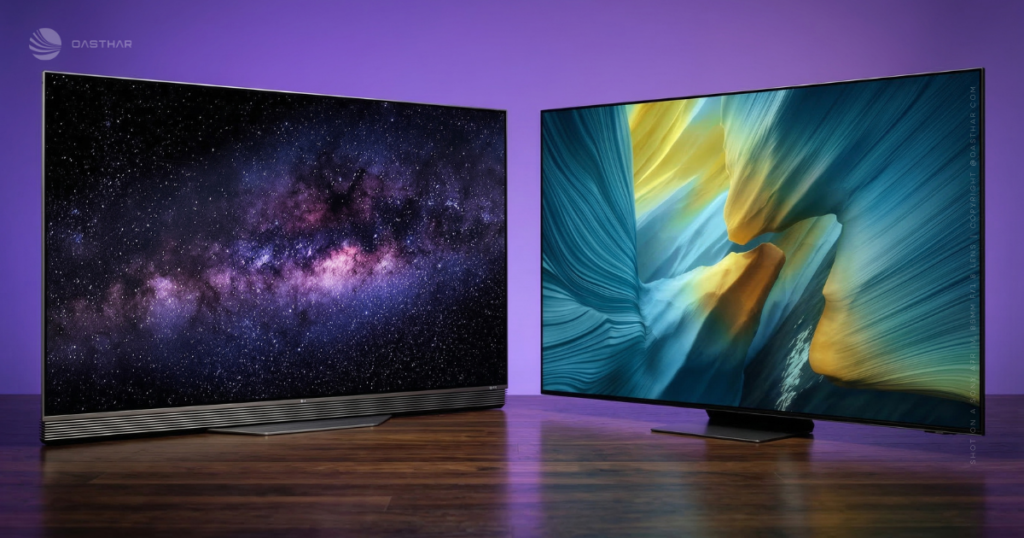
The finish choice also affects the vibe. Samsung’s matte Glare Free look reads more like a design object. LG’s approach prioritizes image clarity while reducing reflections.
For extra perspective on how Samsung’s flagship styling and LG’s gallery-style approach differ in person, TechRadar’s side-by-side testing is a useful read, even though it compares the S95F against LG’s G5: side-by-side S95F vs LG G5 impressions.
Winner: Samsung S95F. One Connect makes clean installs simpler, especially for wall setups.
Image Quality
This is where the “feel” of the two panels splits.
Samsung’s QD-OLED look tends to hit you first with color. Reds and greens can look more saturated, and bright animation or sports graphics can pop hard without looking washed out. Viewing angles also lean Samsung, which matters if your seating spreads wide.
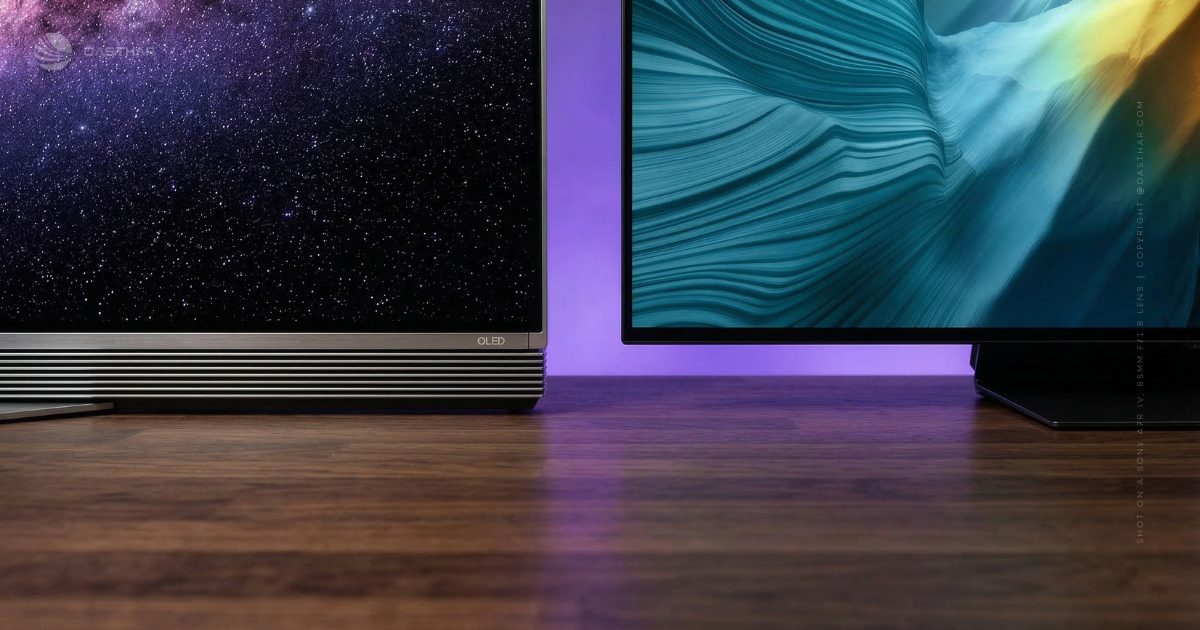
LG’s G6 takes a different route. The RGB Tandem OLED stack is built to push brightness higher while keeping OLED contrast and black levels. In normal watching, that often reads as stronger highlights and a more “sparkly” HDR look, especially in daylight scenes.
However, Samsung’s reviews also point out a real caveat: in some picture modes, reds can run a bit too strong, and the darkest shadow detail can get compressed compared with the very best at teasing out near-black texture. Filmmaker Mode is the easy fix if you want a more grounded look.
What this means by content:
- Sports: Samsung’s color and angles help a lot in bright rooms.
- Animation and games: Samsung’s QD-OLED punch is obvious.
- Movies: LG’s high brightness plus strong contrast can feel more “cinema” in HDR, but settings still matter on both.
For a second take on S95F picture behavior and its trade-offs, Tom’s Guide’s flagship comparison (again, versus LG’s G5) is good context: S95F vs LG G5 buyer breakdown.
Winner: Samsung S95F. QD-OLED color volume is the more visible advantage in everyday viewing.
Brightness & HDR Performance
Brightness is easy to misunderstand. Peak highlights are the flashlight flashes, sparks, and sun glints. Full-screen brightness is the overall punch of a bright scene. You feel both, but peak highlights usually grab your attention.
LG’s G6 is positioned as one of the brightest consumer OLEDs in its class this cycle, with coverage pointing to big gains over the prior generation. That extra headroom helps HDR highlights look more intense, and it can keep the image from feeling flat in a brighter room.
Samsung’s S95F also tests as very bright for OLED, and it delivers serious HDR impact. Still, the bigger HDR story is formats. LG supports Dolby Vision, which matters because a lot of premium streaming HDR is delivered in Dolby Vision. Samsung doesn’t support it, so you’ll watch those titles in HDR10 instead, even if the app and subscription tier are the same.
Samsung will counter with HDR10+, and that’s real, but Dolby Vision tends to show up more often on major services. If streaming is your main thing, this format gap isn’t a footnote, it’s a daily difference.
If you want broader OLED context, including how different OLED tiers behave in HDR for the money, this multi-TV testing piece can help calibrate expectations: affordable OLEDs tested side-by-side.
Winner: LG G6 OLED. Dolby Vision support plus very high brightness is the better real-world HDR combo.
Motion & Upscaling
Motion is where great TVs can still annoy you. Sports expose blur and stutter. Slow camera pans in movies expose judder. Older 1080p streams expose weak upscaling fast.
LG’s G6 brings the Alpha 11 Gen 3 processor, positioned as a real step up for upscaling and motion handling. If you watch lots of cable sports, YouTube, or older shows, better processing helps more than you’d think.
Samsung’s S95F also holds up well here. Reviews call out strong sharpness and clean detail in 4K, plus solid upscaling from 1080p without turning everything into a smeary mess. Motion tuning can be trickier than you’d like, though, because you can remove some judder but still risk the soap-opera look if you push smoothing too far.
If you want a quick outside read on OLED motion preferences and how reviewers tune settings, T3’s OLED testing write-up gives helpful framing: OLED TV motion and picture comparisons.
Winner: LG G6 OLED. Newer processing gives you more headroom for messy sources and motion control.
Audio Quality
Samsung gives you a clear spec advantage on paper: a 70W 4.2.2-channel speaker system with Dolby Atmos support. For casual TV watching, that can be enough, especially in apartments or smaller rooms.
Still, thin TVs hit physics limits. Reviews mention the S95F can distort when you push volume, which is exactly when you want big sound for action movies or sports crowds.
For the G6, the provided sources don’t confirm a wattage figure, so it’s smarter to treat it like every other premium OLED. Plan on a soundbar or AVR if you care about impact. eARC is the practical path for both, since it keeps your setup simple.
Quick reality check: if you watch a lot of movies, have a large room, or sit far away, external audio stops being optional.
Winner: Samsung S95F. Its published speaker system specs are stronger, even if you’ll still outgrow it.
Smart Features & OS
Both platforms are mature now, and you can expect the big streaming apps either way. The choice is more about layout, speed, and little annoyances.
LG’s webOS (webOS 26 is referenced in the provided notes) is positioned as faster this generation, and LG is leaning into AI features and voice options inside the TV interface. Samsung’s Tizen is also packed with apps and smart features, and it’s a familiar experience if you already own Samsung gear.
There’s one streaming catch you can’t “app” your way out of. Samsung’s lack of Dolby Vision means Dolby Vision titles won’t play back in that format, even if Netflix or Disney Plus is installed and updated.
Winner: LG G6 OLED. Dolby Vision support gives you the better streaming HDR experience on a lot of big titles.
Gaming Features
For gaming, both TVs are built to flex.
You get HDMI 2.1 support on both, plus the modern essentials like VRR and ALLM. Console gaming mostly tops out at 4K 120Hz today, so either set covers you. PC gamers benefit more from the higher refresh ceiling, and both are positioned as 165Hz-capable sets depending on size and signal.
LG adds a couple of gamer-friendly angles from the provided notes: built-in GeForce Now support and a push toward lower-latency wireless controller support. If you like the idea of cloud gaming without extra boxes, that’s a clean perk.
Samsung’s gaming reputation is also earned. The S95F line is reviewed as strong on motion clarity and VRR behavior, and you get four full-bandwidth HDMI 2.1 ports.
Winner: Tie. Pick LG if cloud gaming matters, pick Samsung if you want QD-OLED color punch in games.
Connectivity & Ports
Most living rooms hit the same limit fast: soundbar, console, maybe a second console, maybe a PC, then you’re out of HDMI.
Both TVs give you four HDMI 2.1 ports, which is the right number for a high-end set. eARC support is part of the normal premium package expectation here, so routing audio to a soundbar or AVR is straightforward.
Samsung’s edge is how it handles the mess. One Connect keeps your cables out of sight and makes wall mounting cleaner. If you hate cable clutter, that’s not a small thing.
Winner: Samsung S95F. One Connect makes a multi-device setup easier to live with.
Price & Value
As of February 2026, the provided sources don’t confirm LG G6 pricing, so you can’t run a clean price-per-inch comparison yet. You can, however, be clear about what you’re paying for: Dolby Vision support, very high brightness claims for OLED, and a size ladder that runs up to 97 inches.
Samsung S95F pricing is easier to anchor because review context includes launch and street pricing swings. One reviewed 65-inch price is listed around $3,300 at launch, with later pricing shown around $2,800 at the time of testing. That pattern also matches how Samsung and LG flagships tend to fall in price after release.
Value comes down to your non-negotiables:
- If you stream Dolby Vision content a lot, LG’s value is about format support, not bragging rights.
- If you want the QD-OLED look and a cleaner install, Samsung’s value is about color and convenience.
Winner: Tie (for now). Without confirmed G6 pricing in the provided sources, value depends on what discounts you can actually get.
Who is it for?
- Choose LG G6 if…
- You want Dolby Vision because you stream premium HDR a lot.
- You’re chasing very high OLED brightness for punchy HDR highlights.
- You want a screen bigger than 83 inches, including a 97-inch option.
- You care about the newest processing (Alpha 11 Gen 3) for motion and upscaling.
- You prefer LG’s reflection-reduction approach that aims to keep the image crisp.
- Choose Samsung S95F if…
- You want the QD-OLED color look, especially strong reds and greens.
- You like a matte, glare-reducing screen aesthetic for bright rooms.
- You want One Connect for a cleaner wall-mounted install.
- You want a proven gaming feature set with four HDMI 2.1 inputs.
- You care about stronger published built-in audio specs for casual listening.
FAQs
Which TV looks better for movies in a dark room?
If you watch in low light, you’ll likely prefer the LG G6. It pushes higher HDR brightness and aims for natural tone, without the matte-black lift some notice on S95F.
Which is better in a bright room with lots of windows?
If daylight and lamps are your problem, the Samsung S95F usually feels easier to live with. Its upgraded matte anti-glare cuts reflections hard, although blacks can look raised.
Is the LG G6 actually brighter than the Samsung S95F?
Yes, you’re getting more raw HDR punch from the G6. Early coverage ties it to LG’s Tandem OLED upgrades, and it’s positioned above older G-series brightness levels.
Do you lose OLED black levels on the Samsung S95F?
Sometimes, yes. The S95F’s matte coating can lift the black floor in bright rooms, and reviewers also mention some black crush, meaning the darkest details can disappear.
Which one is better for PS5, Xbox, and PC gaming?
For gaming features, the S95F is the safer bet on paper. You get four full-bandwidth HDMI 2.1 ports and up to 4K/165Hz support, plus VRR and ALLM.
Does either TV support Dolby Vision for streaming apps?
If Dolby Vision matters to you, Samsung’s S95F doesn’t support it. You’ll use HDR10, HDR10+, or HLG instead, while LG flagships typically cover broader HDR needs.
Is Samsung’s One Connect box a real advantage?
It can be, especially for clean setups. With the S95F, you run a single cable to the panel and keep HDMI gear in the One Connect box, easier for wall mounting.
Which TV is a smarter buy if you want value?
If you want a deal, the S95F tends to cost less now because it’s an older flagship. The G6 is newer, so you usually pay more early on.
Will either TV sound good without a soundbar?
You can get by, but don’t expect theater sound. The S95F’s audio can distort when you push volume, so you’ll be happier pairing either TV with a soundbar.
Do you need to change picture settings out of the box?
Yes, you should. On the S95F, Filmmaker Mode is the easy starting point because default Eco and Movie modes can look odd, with overly bright output or rough motion.
Final Verdict
If your viewing is mostly streaming, LG G6 OLED vs Samsung S95F can come down to one question: do you care about Dolby Vision? If you do, LG is the simpler pick. Add the 97-inch option and the G6 becomes the obvious choice for “go big” rooms.
On the other hand, if you crave QD-OLED color pop and want a cleaner wall install, Samsung’s S95F makes a strong case. One Connect is a daily convenience, not a spec-sheet trick.