

If you’re comparing LG G6 OLED vs LG G5 OLED, you’re really asking one thing, will the newer set look better in your room, or just look newer on paper. The early story is simple, the G6 pushes higher brightness than the G5 (LG talks about a roughly 20 percent jump), and it adds a stronger anti-reflection approach to make daytime viewing easier.
For most owners, that means the upgrade can be worth it, but mainly if glare and punchy HDR highlights bug you on the G5. In this guide, you’ll get a clear, spec-by-spec breakdown, then a real-world look at picture, gaming, and smart TV features.
You’ll also see where the G5 still holds its ground, because it already delivers a bright, crisp OLED image and a full HDMI 2.1 feature set. Expect practical calls on who should upgrade, who should stay put, and where your money actually goes.
RELATED: LG C6 OLED vs Sony BRAVIA 8 II OLED: Which is Better?
Quick Summary
If you put these TVs in the same room, you’ll notice a few changes fast.
First, the G6 is advertised as about 20% brighter than the G5 for small HDR highlights, which makes sparks, sun glints, and specular pops look stronger. Second, the G6 targets bright rooms with a “Reflection Free” approach, so windows and ceiling lights bother you less. Third, you get small image cleanups like better uniformity control and less obvious banding in tricky gradients (more of an enthusiast win than a casual one).
On the other hand, gaming features and port counts stay very close, and the wall-first “Gallery” vibe doesn’t change much.
For extra context on the early G6 coverage and feature claims, see this LG G6 vs G5 breakdown.
Winner: LG G6 OLED because brightness and reflection handling are the upgrades you’ll actually see daily.
Specifications
Here’s a side-by-side table using only details supported by the provided sources and cited coverage.
| Spec | LG G6 OLED | LG G5 OLED |
|---|---|---|
| Model year | 2026 | 2025 |
| Resolution | 4K | 4K |
| HDR formats | Dolby Vision, HDR10, HLG (no Dolby Vision 2 per coverage) | Dolby Vision, HDR10, HLG |
| HDMI ports | 4x HDMI 2.1 (as reported in early coverage) | 4x HDMI 2.1 (4x 48Gbps) |
| Max refresh support | Up to 165Hz on supported sizes (largest models may cap lower per coverage) | Up to 165Hz (largest models may cap at 120Hz per coverage) |
| VRR and ALLM | Yes | Yes |
| Smart TV OS | Latest webOS (2026) (version not confirmed in sources provided) | webOS 25 |
| Panel tech notes | Second-generation Tandem OLED improvements, color purity focus | Primary RGB Tandem OLED (Four-Stack) in core sizes |
| Peak brightness (highlights) | About 2,600 to 2,800 nits (about 20% brighter) | About 2,200 to 2,300 nits (example: ~2,296 cited in coverage) |
| Reflection handling | “Reflection Free” coating (reported), limited to 55, 65, 77, 83-inch sizes | No “Reflection Free” claim in sources provided |
A few spec lines matter more than the rest:
- Brightness and reflections decide how happy you’ll be in daylight.
- HDMI 2.1 and VRR/ALLM decide how easy multi-console gaming feels.
- OS speed and support decide whether the TV annoys you after six months.
For a broader look at LG’s 2026 TV lineup context, this LG 2026 lineup overview is a useful reference.
Winner: LG G6 OLED because brightness and reflection handling change real viewing more than spec trivia.
Design & Build Quality
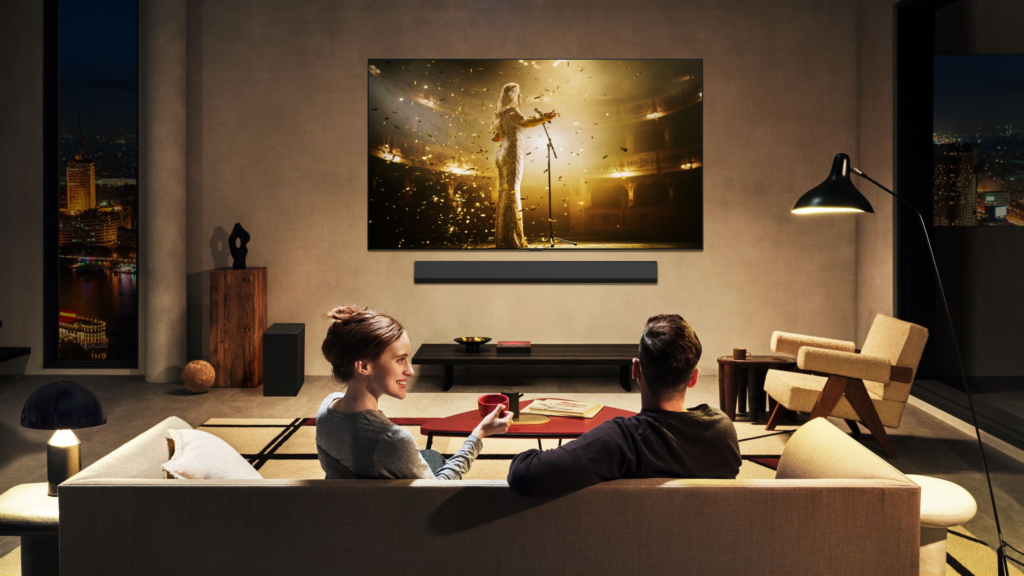
If you’re hoping for a new look, you won’t get it. Both TVs stick to LG’s gallery-style concept: very thin, premium, and clearly built to live on a wall. From your couch, most people won’t spot a difference.
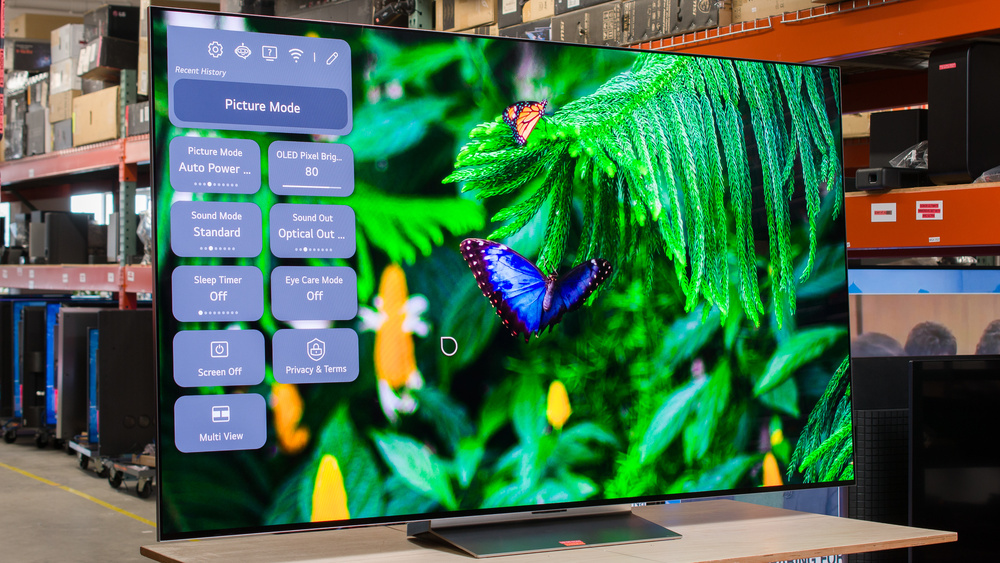
That’s why upgrading for design alone makes little sense. The better question is practical: are you wall-mounting, and do you care about how close the TV sits and how clean the cables look? Early G6 talk points mention subtle build and mounting refinements, plus tidier cable management. Still, it’s the same basic play.
One more practical note: panel and coating perks can vary by size, so always check the exact size you’re buying.
If you’re shopping broadly, it helps to sanity-check other top options too, starting with Oasthar’s OLED TV reviews and guide.
Winner: Tie because they’ll look nearly identical once mounted, and the upgrades aren’t about appearance.
Image Quality
You buy either of these for classic OLED strengths. You get perfect blacks, near-infinite contrast, and wide viewing angles. Dark scenes look inky without the gray haze you often see on LED sets.
The G6 pulls ahead in the subtle stuff. Coverage and CES 2026 messaging point to better control at high brightness, so bold colors stay punchy without looking blown out. You also get small gains in shadow detail and smoother large-screen uniformity, which can reduce the “dirty” look in big flat areas or skies.
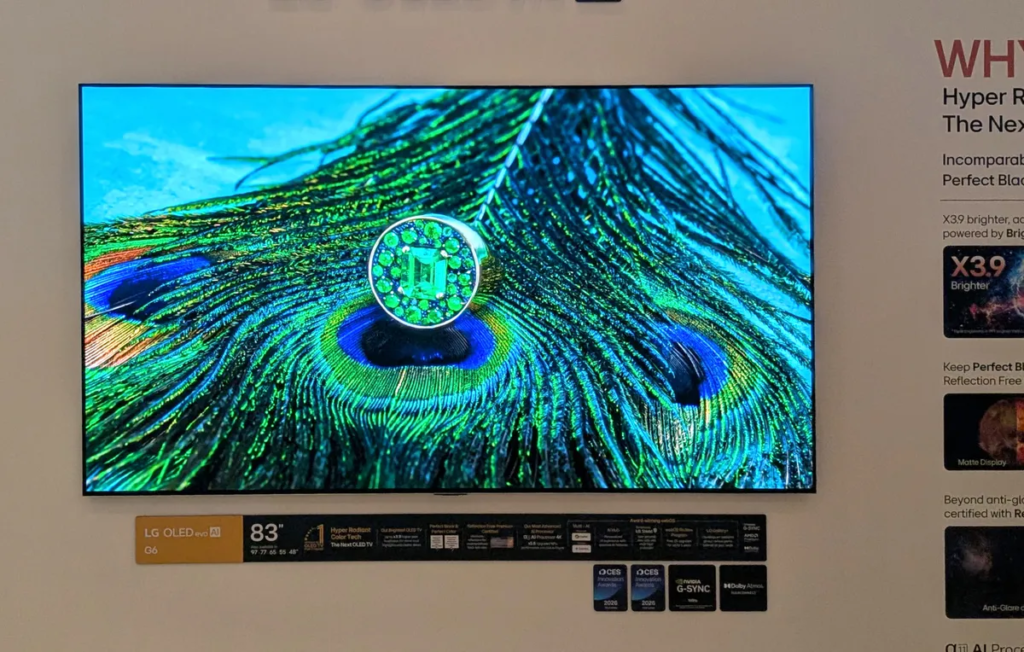
Think of it like a familiar song on better speakers. The track is the same, but little flaws stand out less.
If you watch movies at night in a controlled room, you’ll see less difference than you expect. If you watch mixed content in mixed lighting, the G6 improvements land harder.
Winner: LG G6 OLED because its refinements target the image issues enthusiasts complain about most.
Brightness & HDR Performance
HDR is simple in practice: bright highlights plus deep blacks, at the same time. The LG G5 is already unusually bright for an OLED class TV, and reported real-world highlight numbers around 2,200 to 2,300 nits explain why it has such strong HDR punch.
The LG G6 takes that and adds roughly 20% more highlight output, putting it around 2,600 to 2,800 nits in similar highlight scenarios. In real viewing, that’s not “the whole screen is blinding.” It’s the glint on metal, the firework burst, the sun reflection on water, and the sparkle in animated movies.
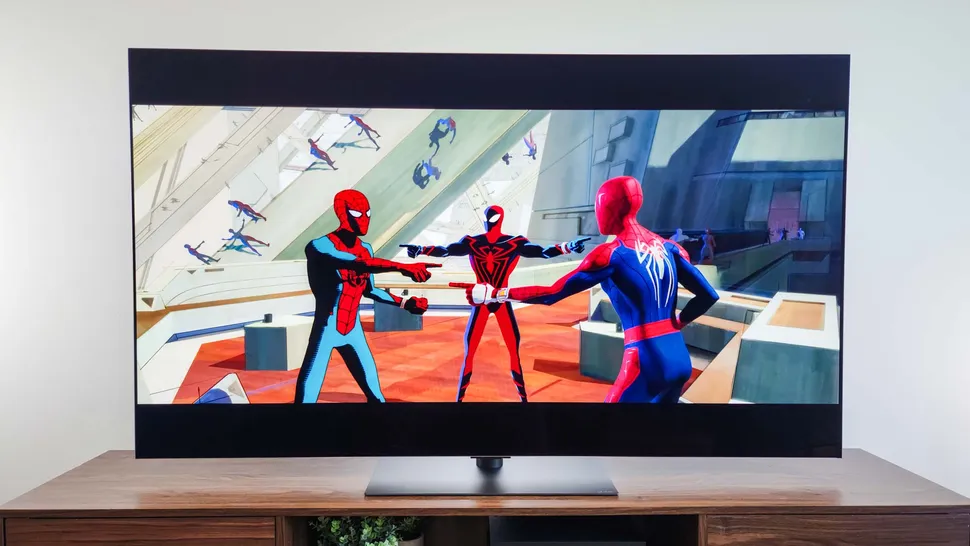
The other half of this story is glare. The G6’s “Reflection Free” approach aims to reduce distracting reflections in rooms with windows or overhead lights. There is a trade-off mentioned in coverage: in very bright conditions, black levels can look less absolute than you’d see in a dark room. Put plainly, you’re choosing fewer mirror-like reflections over the purest dark-room blacks.
For more on the G6 positioning and feature claims, see What Hi-Fi’s coverage: LG G6 vs G5 brightness and ambient-light claims.
Winner: LG G6 OLED because brighter highlights plus better reflection handling is the clearest upgrade.
Motion & Upscaling
Both TVs handle motion well, and LG’s motion controls give you room to tune it. If you watch sports, racing, or lots of YouTube, you’ll care about two things: clean motion and clean upscaling.
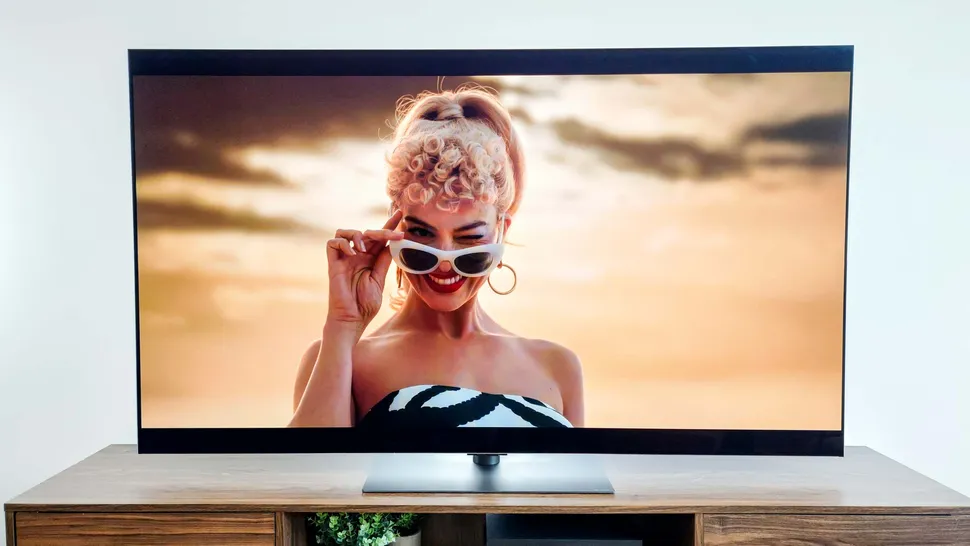
The G6’s advantage is refinement, not a new headline spec. Early details point to genre-aware motion processing (often described as AI genre TruMotion) and content-aware picture modes, so the TV can adjust behavior based on what you’re watching.
A quick sanity tip if you hate the soap-opera look: keep heavy motion smoothing off, then add only a light “cinematic movement” style setting if you need it.
Winner: LG G6 OLED because automatic, content-aware tweaks can save you time and reduce bad default motion choices.
Audio Quality
You can watch either TV using built-in speakers, but neither is a true home theater audio solution. The G5, in particular, gets called out in review coverage as only average for movies, with limited bass and a flatter sense of impact. Dialogue can be fine, yet action scenes feel smaller than the picture deserves.
The G6 is described as more polished here, with clearer dialogue and improved AI sound processing behavior that can adapt by content type. Dolby Atmos support remains part of the experience, but it’s still virtualization through small speakers.
If you care about movie sound, budget for a soundbar or an AVR and speakers. Your eyes will thank you, and so will your ears.
Winner: LG G6 OLED because clearer dialogue and smarter processing help, even if you still want external audio.
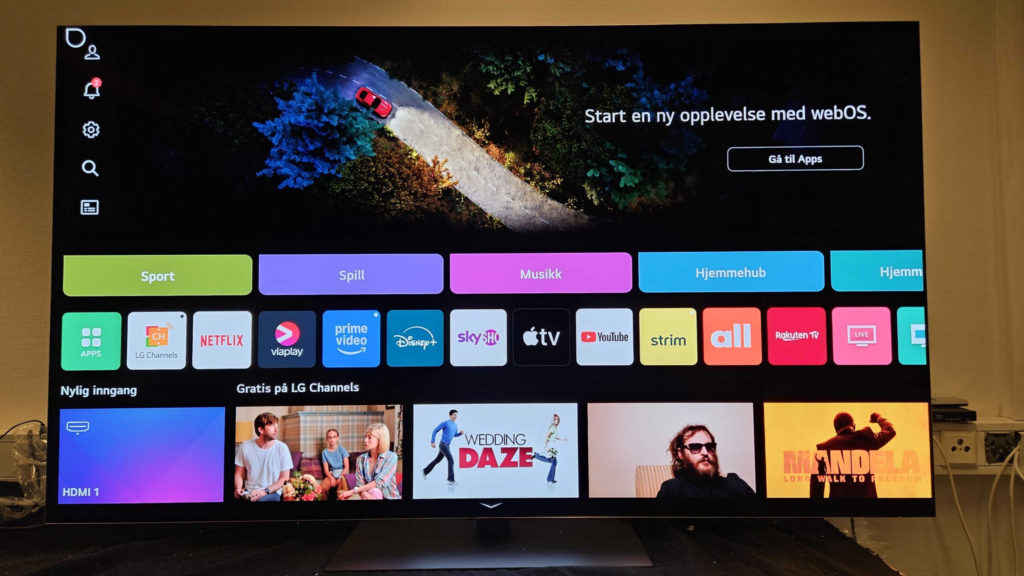
Smart Features & WebOS
Day to day, smart TV quality is about speed and annoyance level. App load times, menu lag, and how often you fight the UI matter more than whether the app list is one icon longer.
The G5 runs webOS 25, and it supports major streaming apps plus gaming apps like Xbox cloud streaming in supported regions. It also has a helpful “talk like a human” style approach to settings, where you can say something like “make it brighter” instead of hunting menus.
The G6’s story is responsiveness and smarter auto modes. Early coverage points to smoother navigation, faster switching, and more refined AI picture modes such as Ambient Filmmaker Mode, which tries to keep the image natural while reacting to room conditions.
If you want a bigger smart TV perspective beyond LG, Oasthar’s best smart TVs 2025 guide helps you compare platforms and priorities.
Winner: LG G6 OLED because small speed gains and better auto modes improve daily use more than a new icon row.
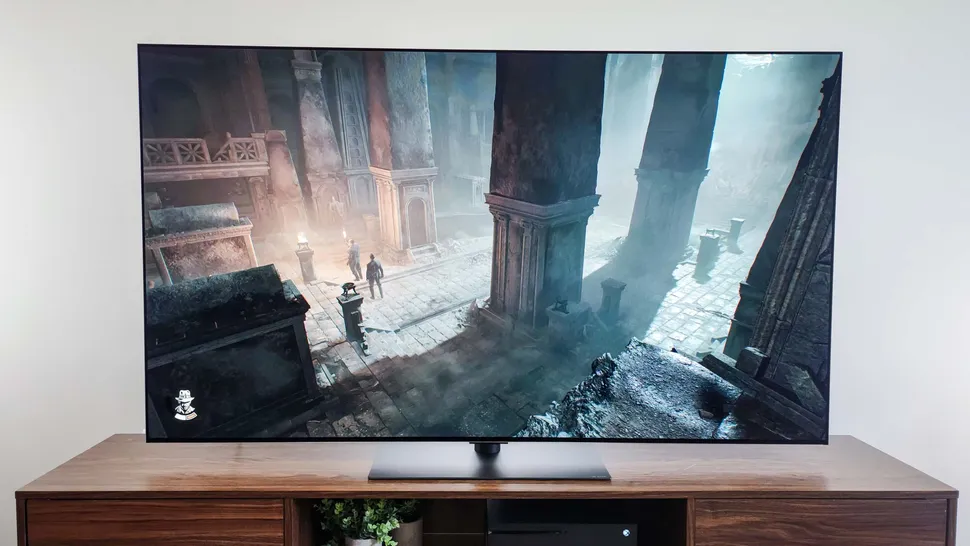
Gaming Features
You’re in good hands with either model for gaming. Both support HDMI 2.1 across four ports, 4K at 120Hz, VRR, and ALLM, and both target low-lag play. If you have multiple consoles plus a gaming PC, that port flexibility matters.
The G5 also supports up to 165Hz input in supported scenarios, which is great for PC players chasing high frame rates. The G6 keeps the same core capability but focuses on polish: steadier performance, better motion handling in fast action, and improved HDR calibration behavior for games, based on early reporting and CES positioning.
If you already own a G5 and love it, you’re not missing some new must-have gaming spec. You’re mostly missing incremental tuning.
Winner: Tie because the core gaming feature set is effectively the same, and the G6 gains are mostly refinement.
Connectivity & Ports
This category is mostly about how much gear you run at once. With four HDMI 2.1 ports on both sets, you can plug in a PS5, Xbox, gaming PC, and a streaming box without playing cable musical chairs. VRR and ALLM support across HDMI helps keep setup simple.
The LG G5’s published specs include full-bandwidth HDMI 2.1 (48Gbps) and eARC support for audio systems. For the G6, early coverage emphasizes the same HDMI 2.1 count, while deeper port-by-port spec sheets can vary by region and size.
Smart home control support is part of the general LG pitch, but connectivity is not the reason to upgrade.
Winner: Tie because four HDMI 2.1 ports on both makes them equally easy to build around.
Price & Value
As of February 2026, the pricing reality is simple: the G6 is the new flagship, so it sits higher at launch, while G5 pricing tends to soften as retailers clear stock. That creates two smart buying paths.
If you want the best bright-room OLED LG offers and you’re sensitive to glare, paying more for the G6 can make sense. You’re buying comfort, not bragging rights. If you watch mostly at night, the G5 delivers a lot of that flagship look for less money.
You can also use G5 launch pricing as a reference point for how premium the line runs (for example, US launch pricing listed in coverage included $2,500 for 55-inch and $3,400 for 65-inch). The lesson is not the exact number today, it’s the class of product.
A helpful outside take on early hands-on impressions is T3’s piece: hands-on LG OLED G6 impressions.
Winner: LG G5 OLED because value usually favors last year’s flagship once discounts hit.
Who is Each TV For?
Choose the LG G6 OLED if you watch in a bright room and reflections bug you, because the “Reflection Free” approach targets that exact pain. You should also pick it if you want the strongest HDR highlight pop LG is offering this generation, plus small image cleanups like better tone mapping behavior. Finally, it’s the right buy if you like “set it and forget it” features, since its newer AI picture modes aim to reduce constant tweaking.
Choose the LG G5 OLED if you want premium OLED performance but you’d rather spend less, especially once pricing drops. It also makes sense if you mostly watch at night, since the G5 already looks excellent in controlled lighting. Most importantly, if you already own a G5 and you’re happy with brightness and gaming, you don’t need to upgrade for the G6’s subtle refinements.
Winner: Tie because the right choice depends on your room lighting, glare tolerance, and budget.
FAQs
Is LG G6 noticeably brighter than LG G5 for HDR?
Yes. LG and early coverage point to roughly a 20% brightness jump over G5, so specular highlights pop more, especially in sunlit scenes and bright HDR grades.
Does the LG G6 anti-reflection coating really help in daylight?
If you watch with lamps or windows nearby, yes. G6’s “Reflection Free” approach targets lower reflectance than prior LG sets, so glare is less distracting.
Will LG G6 look better than G5 in a dark room?
Not always. G5 already looks excellent in controlled light, and heavy anti-glare treatments can slightly reduce perceived black depth in some conditions, depending on reflections.
Is LG G5’s Primary RGB Tandem OLED still high-end today?
Yes. G5 introduced Primary RGB Tandem (four-layer) OLED to raise brightness and color volume, and it reviews as a major OLED step up after its Dolby Vision fix.
Are there gaming upgrades on LG G6 over LG G5?
For most setups, it’s a small change. G5 already gives you four HDMI 2.1 ports, VRR, ALLM, and up to 4K/165Hz, so G6 mainly refines processing.
Did LG fix the LG G5 streamed Dolby Vision problem?
Yes. Review testing found ugly posterisation in streamed Dolby Vision early on, then LG pushed an update that corrected the issue, restoring normal Dolby Vision playback.
Will LG G6 cost more than LG G5 at launch?
Pricing for G6 wasn’t announced in the provided coverage, so you can’t lock it in yet. In practice, expect a premium, but watch for G5 discounts.
Which one is better if you watch lots of cable and streaming?
G6 has the edge if your feeds look rough. Reports point to improved upscaling and noise cleanup, so HD streams and older shows can look cleaner than on G5.
Should you upgrade from LG G5 to G6 for reflections alone?
If your room is bright, yes, you’ll notice it daily. If you mostly watch at night, the upgrade feels smaller, because G5 already delivers strong OLED contrast.
What sizes and mounting options should you expect with each?
G5 comes in many sizes, including a new 48-inch option, and offers Zero Gap wall-mount or stand variants. G6 keeps the Gallery-style wall-focused design.
Final Verdict
The LG G6 OLED vs LG G5 OLED choice comes down to two things: bright-room comfort and price. The G6 is about 20% brighter in HDR highlights and it aims to cut reflections, so daytime viewing feels easier. Meanwhile, the G5 still delivers a top-tier OLED image, strong gaming support, and a very similar design.
If your room has lots of windows, the G6 is the safer bet. If you want the smartest value, the G5 is hard to beat.
Winner: LG G6 OLED because the brightness and reflection upgrades improve the widest range of real viewing situations.