

You’re shopping mid-range OLEDs in 2026, and the choice is trickier than it looks. LG C6 OLED vs Samsung S90H OLED comes down to what you watch, where you watch, and how picky you are about reflections and HDR.
Samsung pushes a glare-free, matte-style screen into its S90H tier, which can seriously cut annoying light sources in bright rooms. LG fires back with a C6 built around strong contrast, a feature-rich webOS 25 setup, and HDMI 2.1 across all four ports.
In this guide, you’ll get a clean specs table, then real-world comparisons on design, picture, brightness and HDR formats, motion, audio, gaming, ports, price, and who each TV fits best.
Quick Summary
If your room has annoying reflections, the Samsung S90H OLED has one standout advantage that’s easy to understand: it brings Samsung’s glare-free, matte-style OLED screen to a mid-range model in 2026 (per CES 2026 coverage). That can make a bright living room feel less like a mirror, although matte screens can also make blacks look a bit lighter in some lighting.
On the HDR side, Samsung is also pushing HDR10+ Advanced on the S90H, which is positioned as an updated version of HDR10+ with added tools for creators and motion-focused processing features.
The LG C6 OLED story is different. In the provided February 2026 data and excerpts, the 2026 C6 is framed as a full-featured mid-range OLED with Dolby Vision support, high refresh rates (up to 144Hz on standard sizes and up to 165Hz on larger variants), and modern HDMI 2.1 connectivity. Just be careful: online searches can mix “LG C6” (2026) with the older “LG C6” naming from years ago.
If you want a broader look at how OLED models stack up, this best OLED TVs 2025 guide helps you sanity-check what matters most.
If you only remember one thing: pick Samsung for glare control and HDR10+ Advanced, pick LG for Dolby Vision and more fully confirmed next-gen specs.
Specifications
Here’s the side-by-side view of what’s actually confirmed in the provided sources.
| Spec | LG C6 OLED (2026) | Samsung S90H OLED (2026) |
|---|---|---|
| Release year | 2026 | 2026 (CES 2026 announcement coverage) |
| Size options | 42″, 48″, 55″, 65″, 77″, 83″ | Not confirmed in provided sources |
| Resolution | 4K | Not confirmed in provided sources |
| Panel notes | WOLED (42″ to 65″), brighter Primary Tandem RGB OLED 2.0 on 77″ and 83″ | Not confirmed in provided sources |
| Peak HDR brightness | About 1,180 nits (standard sizes), up to about 2,268 nits (77″/83″) | Not confirmed in provided sources |
| HDR formats | Dolby Vision, HDR10, HLG | HDR10+ Advanced confirmed, other formats not confirmed in provided sources |
| Smart TV OS | webOS 25 or 26 (varies by source) | Not confirmed in provided sources |
| HDMI ports | 4 | Not confirmed in provided sources |
| HDMI version | HDMI 2.1 (all 4) | Not confirmed in provided sources |
| Max gaming refresh | 4K/144Hz (standard), up to 4K/165Hz (77″/83″) | Not confirmed in provided sources |
| VRR and ALLM | Confirmed | Not confirmed in provided sources |
| Screen finish | Not confirmed in provided sources | Glare-free, matte-style finish confirmed |
Design & Build Quality
Samsung’s S90H is the rare TV where the finish can matter as much as the panel. The glare-free matte surface is designed to scatter reflections, so a lamp or window glare doesn’t sit on top of the image the same way it can on glossy OLEDs. That’s a practical perk if your couch faces a bright window.
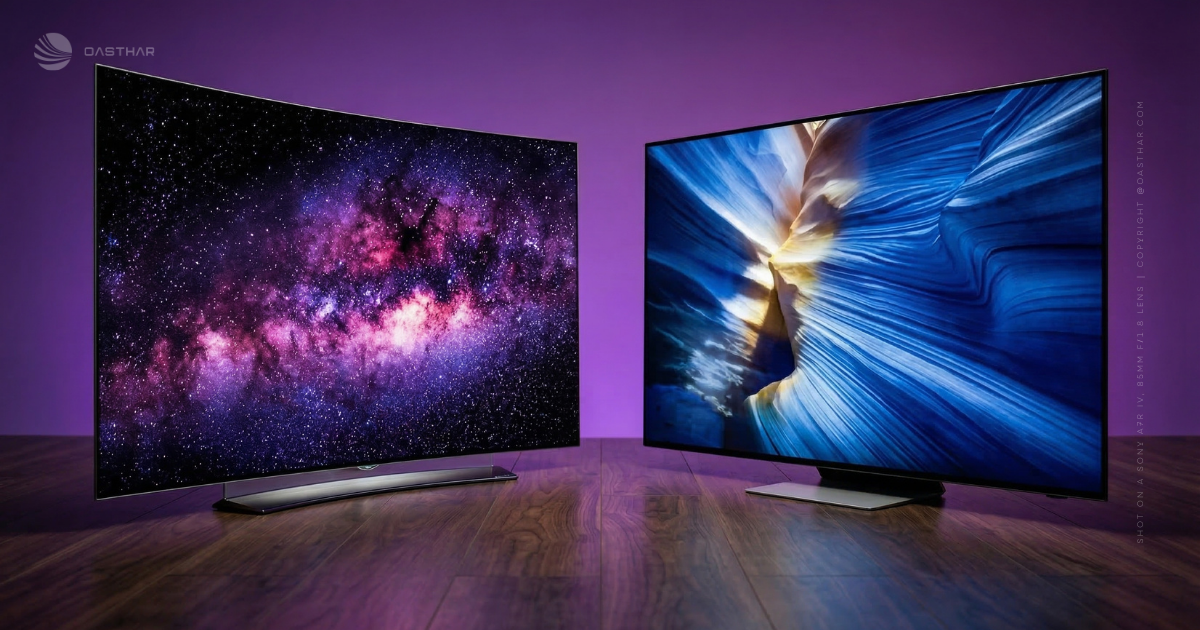
There’s a catch, though. The same CES 2026 coverage also points out a real tradeoff: in an average-lit room, a matte OLED can make perfect blacks look more like dark gray, because ambient light gets diffused across the screen.
If reflections drive you crazy, matte can feel like relief. If you watch in dim light, you might prefer a traditional glossy look.
LG’s 2026 C6 is positioned as a sleek, premium OLED with broad size coverage, including smaller options that work for desks and bedrooms. For a wider CES 2026 framing of LG and Samsung’s mid-range OLED direction, see TechRadar’s 2026 mid-range OLED coverage.
Winner: Samsung S90H OLED because the glare-free finish can solve a daily annoyance that settings can’t fix.
Image Quality
Both TVs are OLED, so you’re already starting from a strong baseline. You get per-pixel lighting control, excellent viewing angles, and the kind of contrast that makes letterbox bars disappear in a dark room.
LG’s 2026 C6 is described as pushing color and processing improvements through its newer panel options (standard WOLED versus brighter Tandem RGB OLED 2.0 on the biggest sizes) and an updated processor platform (Alpha 11 AI Gen 3 is cited in the provided February 2026 data). In plain terms, that usually means cleaner upscaling and smarter tone mapping, especially with streamed content.
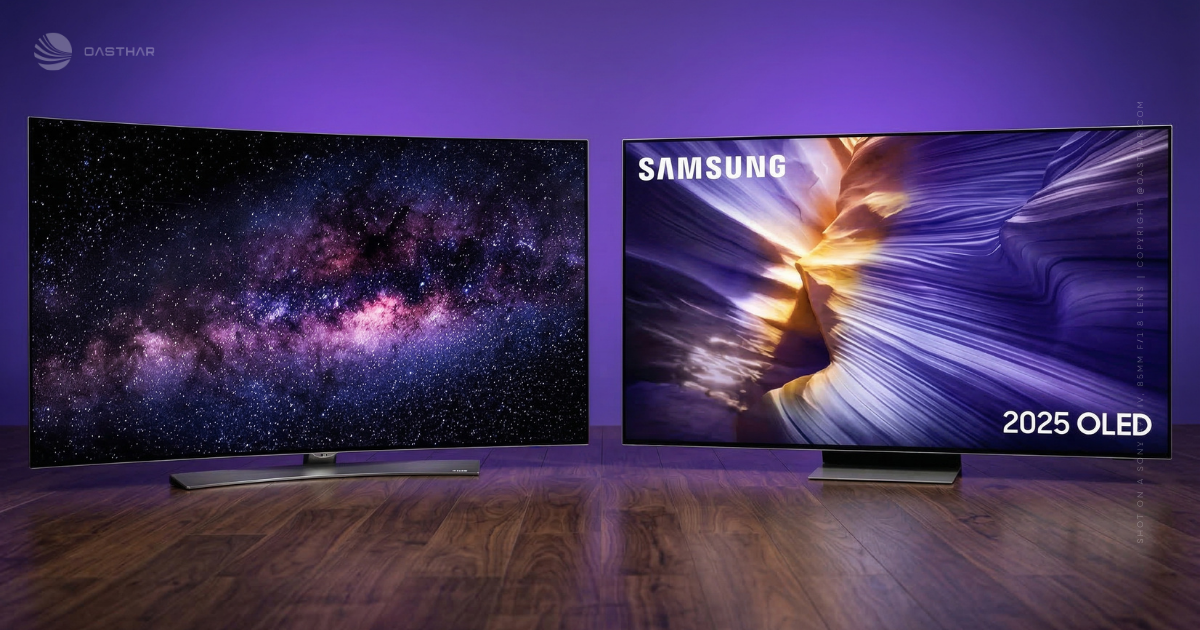
With Samsung’s S90H, the provided sources don’t confirm panel type details or color gamut figures, so you shouldn’t buy it expecting a specific color performance claim. What you can say, confidently, is that the matte finish changes perceived contrast in brighter rooms. Blacks can look lifted when room light hits the panel, even if the underlying OLED is capable of true black.
Winner: Tie because both should look excellent as OLEDs, and the deciding factor is more about room lighting than raw contrast.
Brightness & HDR Performance
HDR is where these two TVs split on philosophy.
LG’s 2026 C6, based on the provided February 2026 data and excerpts, supports Dolby Vision, HDR10, and HLG. It also posts meaningful HDR brightness numbers depending on size tier (about 1,180 nits for standard models, up to about 2,268 nits for 77″ and 83″). That matters for daytime sports, snowy scenes, and bright specular highlights.
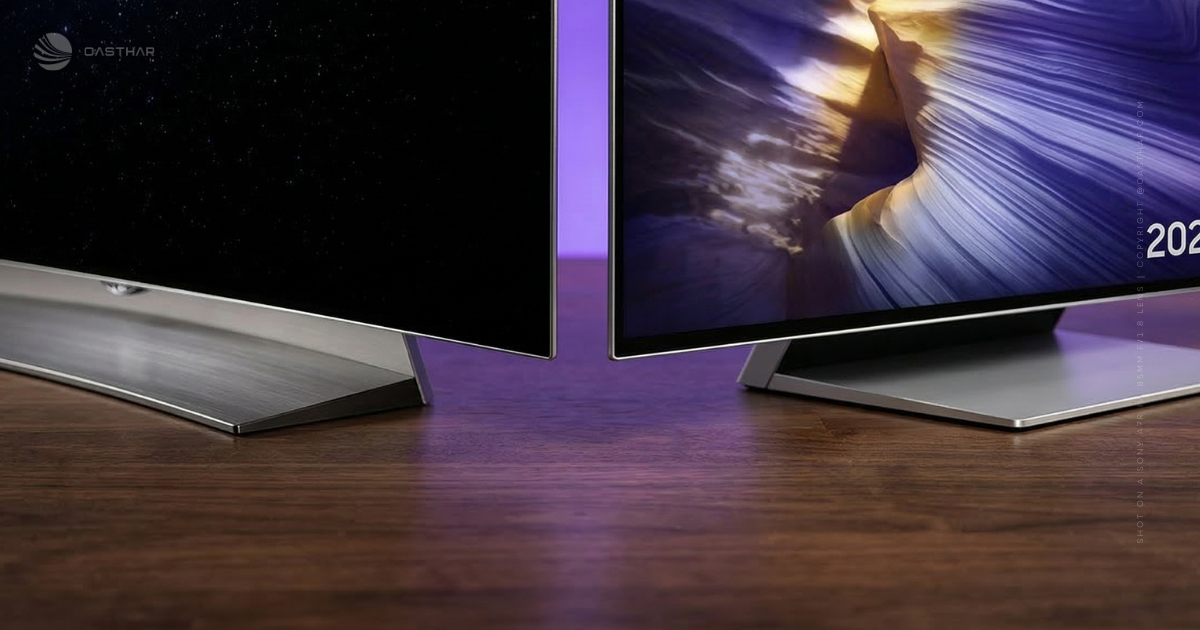
Samsung’s S90H is confirmed to support HDR10+ Advanced, and the CES 2026 coverage frames it as an open, royalty-free counterweight to the next Dolby Vision iteration. The same coverage also describes HDR10+ Advanced as adding creator controls and using an “Intelligent FRC” feature aimed at better motion conversion in HDR content. What’s missing in the provided sources is a confirmed brightness figure for the S90H, so you can’t weigh its HDR punch directly against LG’s numbers.
If you want more context on what LG is changing across its 2026 OLED tiers, this overview is helpful: LG C6 G6 W6 CES 2026 deep dive.
Winner: LG C6 OLED because Dolby Vision support plus confirmed brightness ranges make HDR performance easier to predict.
Motion & Upscaling
Motion is half panel, half processing, and your eyes notice mistakes fast during sports.
LG’s 2026 C6 has confirmed high refresh support, with the standard line reaching 4K/144Hz and the larger models reaching up to 4K/165Hz. VRR and ALLM are also confirmed, which helps prevent tearing and reduces lag spikes when frame rates move around.
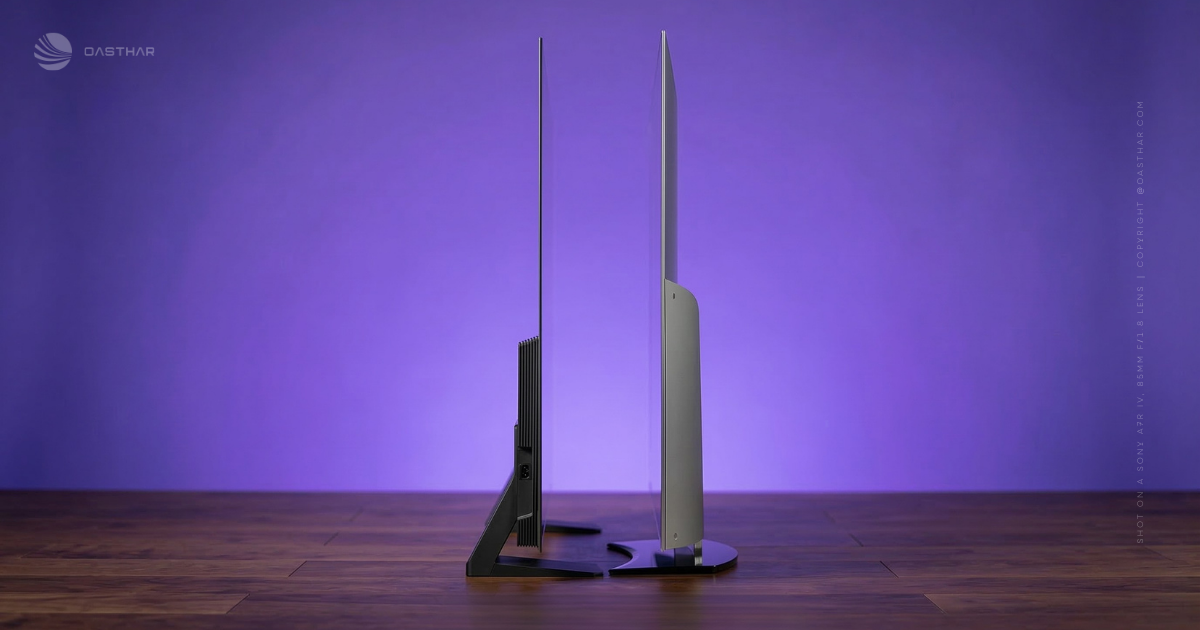
Samsung’s S90H has something interesting on paper, even with limited confirmed specs: HDR10+ Advanced is described as improving motion handling through that Intelligent FRC frame-rate conversion feature. That could help with lower frame-rate content, depending on how studios master HDR10+ Advanced and how Samsung applies processing.
Still, without confirmed refresh rate specs for S90H in the provided sources, you can’t treat it as a known quantity for motion-heavy gaming or PC use.
Winner: LG C6 OLED because its high refresh ceiling is explicitly confirmed.
Audio Quality
If you care about sound, you probably already know the truth: TV speakers are rarely the star.
The LG C6 excerpts describe a 40W 4.0-channel system tuned with harman/kardon, plus dialogue-focused features like Clear Voice III. That’s the kind of built-in audio that can sound clean at moderate volume, especially for news and sitcoms, even if it won’t shake your couch.
For the Samsung S90H, the provided sources here do not confirm speaker power, channel count, or branded formats, so you shouldn’t buy it assuming specific audio features.
A quick rule: if you watch action movies at night, or you struggle with dialogue clarity, a simple soundbar can matter more than small speaker differences between these two TVs.
Winner: LG C6 OLED because its built-in audio setup is actually described in the provided sources.
Smart Features & OS/App Support
This is the part you use every day, even if you don’t think about it.
LG’s C6 is tied, in the provided February 2026 data and excerpts, to webOS 25 or 26 depending on the source. Either way, the point is clear: you’re buying into LG’s current smart platform, not an older legacy interface.
For Samsung S90H, the provided sources included here focus on hardware choices (glare-free finish) and HDR format strategy (HDR10+ Advanced), not its OS version or app ecosystem. So you can’t fairly compare app coverage or interface speed from the confirmed info alone.
If you want a more general buyer-friendly look at how LG and Samsung position mid-range OLEDs in 2026, this perspective piece is a useful read: Samsung vs LG OLED TVs 2026 overview.
Winner: LG C6 OLED because webOS generation details are actually present in the provided sources.
Gaming Features
Gaming is where “future-proof” can become real, fast.
LG’s 2026 C6 has a strong set of confirmed gaming hooks: four HDMI 2.1 ports, VRR, ALLM, 0.1 ms response time, and 4K/144Hz to 4K/165Hz support depending on size tier. If you plan on a PS5, Xbox Series X, and a gaming PC, those ports and refresh rates make life easier.
Samsung’s S90H is positioned as a mid-range OLED that should attract savvy buyers, but the provided sources here do not confirm HDMI 2.1 port count, max refresh, or VRR behavior. The safest approach is to treat the S90H as “promising but not fully specified” from this dataset.
Winner: LG C6 OLED because its gaming specs are explicitly stated.
Connectivity & Ports
Count your HDMI devices before you buy. It saves headaches later.
LG’s 2026 C6 is confirmed to ship with 4 HDMI 2.1 ports, which is ideal if you run a soundbar, two consoles, and a streaming box at the same time. With eARC setups, extra ports help because one HDMI can get locked into audio return duties.
Samsung’s S90H connectivity is not laid out in the provided sources included here, so you can’t assume it matches Samsung’s other OLED tiers.
Winner: LG C6 OLED because four HDMI 2.1 ports are confirmed.
Price & Value
With TVs, value is rarely about the cheapest sticker. It’s about paying for the features you’ll actually use.
For LG C6 (2026), the provided February 2026 data does not include firm US pricing, but it does frame the C6 as a mid-range model and the C6H (77″ and 83″) as the brighter, higher-performing tier. That makes the value argument straightforward: if you want very high HDR brightness in a bright room, you may end up chasing the larger models.
For Samsung S90H, pricing is also not confirmed in the provided sources here. What you can say is that Samsung is bringing premium-style features (glare-free finish, HDR10+ Advanced) into a mid-range slot, which often signals aggressive pricing, but you should verify at retail.
When you’re comparing value, don’t ignore content formats. If your favorite streaming shows lean Dolby Vision, LG can be the cleaner fit. If you prefer HDR10+ strategy and hate reflections, Samsung’s pitch is easy to understand.
For general benchmarking on how OLEDs tend to compare across brands, RTINGS’ comparison tools are helpful even when model years differ, like this example: LG vs Samsung OLED comparison methodology.
Winner: Tie because neither TV’s US price is confirmed here, so “value” depends on what you personally need.
Who is it for?
- Choose LG C6 OLED if…
- You want Dolby Vision support for movies and streaming.
- You care about confirmed gaming readiness, including 4 HDMI 2.1 ports and up to 144Hz or 165Hz (size-dependent).
- You’re shopping specific sizes, including 42″ and 48″, not just living room giants.
- You want a TV with confirmed brightness ranges depending on model tier.
- Choose Samsung S90H OLED if…
- You watch in a room with strong light sources and want Samsung’s glare-free, matte-style OLED.
- You like the idea of HDR10+ Advanced as an updated, royalty-free HDR path.
- You’re comfortable waiting for full spec sheets and reviews before you commit, since several details aren’t confirmed in the provided sources here.
FAQs
Which TV looks better in a bright living room?
If your room has lots of windows or lamps, the Samsung S90H usually looks cleaner because its glare-free matte coating cuts reflections that can distract on glossy OLED screens.
Which TV is better for HDR movies at night?
In a darker room, the LG C6 is the safer bet for a classic OLED look because its glossy panel keeps blacks looking deeper, which can make HDR feel richer.
Does Samsung’s glare-free screen reduce OLED black levels?
It can. Matte coatings scatter light well, but in mixed lighting they may make blacks look more dark gray than in a glossy OLED, depending on your room.
Which TV supports Dolby Vision, and does it matter?
The LG C6 supports Dolby Vision (plus HDR10 and HLG), which matters if you watch a lot of Dolby Vision movies and shows. Samsung focuses on HDR10+ formats.
What’s the big HDR difference: HDR10+ Advanced vs Dolby Vision?
The Samsung S90H supports HDR10+ Advanced, a newer version of HDR10+ that adds smarter, scene-based tuning. The LG C6 counters with Dolby Vision support.
Which is the better pick for PS5, Xbox, and PC gaming?
The LG C6 is built for serious gaming, with four HDMI 2.1 ports and support for 4K up to 165Hz, plus VRR and ALLM for smoother play.
Which smart TV platform feels faster and easier day-to-day?
The LG C6 runs webOS 25, with quick app access and LG’s Magic Remote style navigation. Samsung’s interface varies by region, so you’ll want to test it.
Do you need a soundbar, or is built-in audio enough?
The LG C6 includes a 40W 4.0-channel system tuned with harman/kardon, so dialogue and TV audio can sound fuller, but a soundbar still wins for bass.
Which TV should you buy if you hate screen reflections?
Pick the Samsung S90H if reflections drive you nuts. Its glare-free finish is the headline feature, and it’s designed to stay watchable with strong ambient light.
Which one’s the better value for a mid-range OLED buyer?
It depends on your room. If glare is your problem, S90H can feel like the smarter spend. If formats and gaming ports matter, LG C6 looks stronger.
Final Verdict
If you’re choosing based on confirmed specs, the LG C6 OLED is the safer pick in 2026. You get Dolby Vision, a clear gaming feature set, four HDMI 2.1 ports, and brightness figures that help you match the TV to your room.
The Samsung S90H OLED has a very specific appeal: glare control plus HDR10+ Advanced, packaged as a mid-range model. If reflections are your main problem, that matte finish might outweigh everything else.
Your best move is simple: match the TV to your lighting first, then match it to your devices.