

If you’re stuck between LG C6 OLED vs Panasonic Z85A OLED, you’re not alone, these two target the same sweet spot: premium OLED picture without flagship pricing. Here’s the quick take: pick LG C6 if you want the strongest all-around feature set and a more future-proof spec sheet, pick Panasonic Z85A if you care most about film-like color and clean motion.
Panasonic’s Z85A plays the cinephile card hard, with very accurate color (good enough to measure close to reference) and motion handling that stays smooth without messy artifacts. The trade-off is brightness, its peak output sits around the 800-nit mark, so it won’t hit the same HDR punch as the brightest OLED flagships.
In this comparison, you’ll see exactly where each TV wins, from specs and design to image quality, HDR brightness, motion and upscaling, audio, smart OS support, gaming features (including low input lag and 4K120 on the Z85A), ports, price, and who each model actually fits.
RELATED: LG C6 OLED vs Sony BRAVIA 8 II OLED: Which is Better?
Quick Summary
You can get a great OLED experience with either TV, but the trade-offs are pretty clear.
- Brightness and HDR in bright rooms: LG C6 puts more focus on HDR impact, while Panasonic Z85A tops out around 809 nits in testing, which is solid but not “sunlit room” aggressive.
- Motion and upscaling: Panasonic leans into clean, controlled processing, especially on rough streaming and older content.
- Gaming readiness: LG C6 targets high refresh gaming (up to 4K 165Hz) and keeps four HDMI 2.1 ports. Panasonic supports 4K 120Hz, VRR, and measured low input lag around 13.2 ms at 4K60 HDR.
- Smart TV platform: LG uses webOS 25. Panasonic uses Fire TV, which is great if you live in Alexa, and pushy if you don’t.
- Size options: LG C6 spans 42 to 83 inches. Panasonic Z85A is mainly seen in 55 and 65 inches.
If you want the simplest “do it all” OLED for mixed use, start with LG. If you want a natural-looking picture and strong motion cleanup, Panasonic is the tempting pick. For more context on where these sit in the wider market, skim this best OLED TVs 2025 guide.
Specifications
Here’s the quickest way to see what’s different, using only sourced details.
| Spec | LG C6 OLED | Panasonic Z85A OLED |
|---|---|---|
| Panel type (as described) | OLED (larger sizes described with an upgraded panel) | OLED (same panel class as LG’s C-series, per testing context) |
| Available sizes (noted) | 42″, 48″, 55″, 65″, 77″, 83″ | 55″ and 65″ (common model references: TV-55Z85A, TV-65Z85A) |
| Max gaming refresh (stated) | Up to 4K 165Hz | Up to 4K 120Hz |
| Processor (stated) | Alpha 11 AI Processor Gen 3 | HCX Pro AI Processor MK II |
| HDR formats (stated) | Dolby Vision, HDR10, HLG | HLG, HDR10, HDR10+, Dolby Vision |
| HDMI ports (stated) | 4x HDMI 2.1 | 4x HDMI 2.1 (one with eARC) |
| VRR and ALLM (stated) | VRR, ALLM | VRR, ALLM (plus FreeSync Premium and G-Sync compatible support noted) |
| USB ports (stated) | 3x USB | 2x USB-A, 1x USB-C |
| Smart TV OS (stated) | webOS 25 | Fire TV |
| Audio notes (stated) | 40W 4.0-channel, harman/kardon tuned | Dolby Atmos passthrough supported, DTS formats converted to multichannel PCM in testing |
These specs matter most when you connect multiple gaming devices, watch HDR in a bright room, or rely on the built-in smart platform. For deeper measured performance context on Panasonic, you can cross-check with the Panasonic Z85A OLED review on RTINGS.
Winner: Tie, because both cover the core OLED checklist, but the “right” spec depends on whether you prioritize high refresh gaming (LG) or HDR10+ support (Panasonic).
Design & Build Quality
Both TVs give you that thin OLED profile from the front, so they look clean on a stand or wall. The practical differences show up when you place a soundbar, route cables, and deal with a bright room.
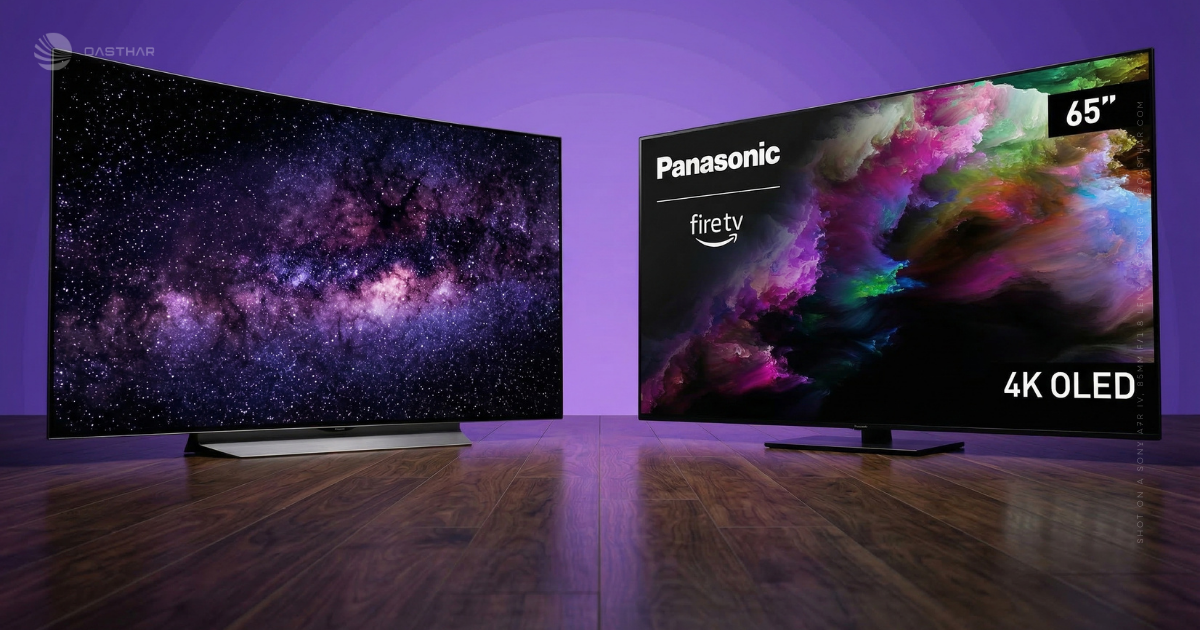
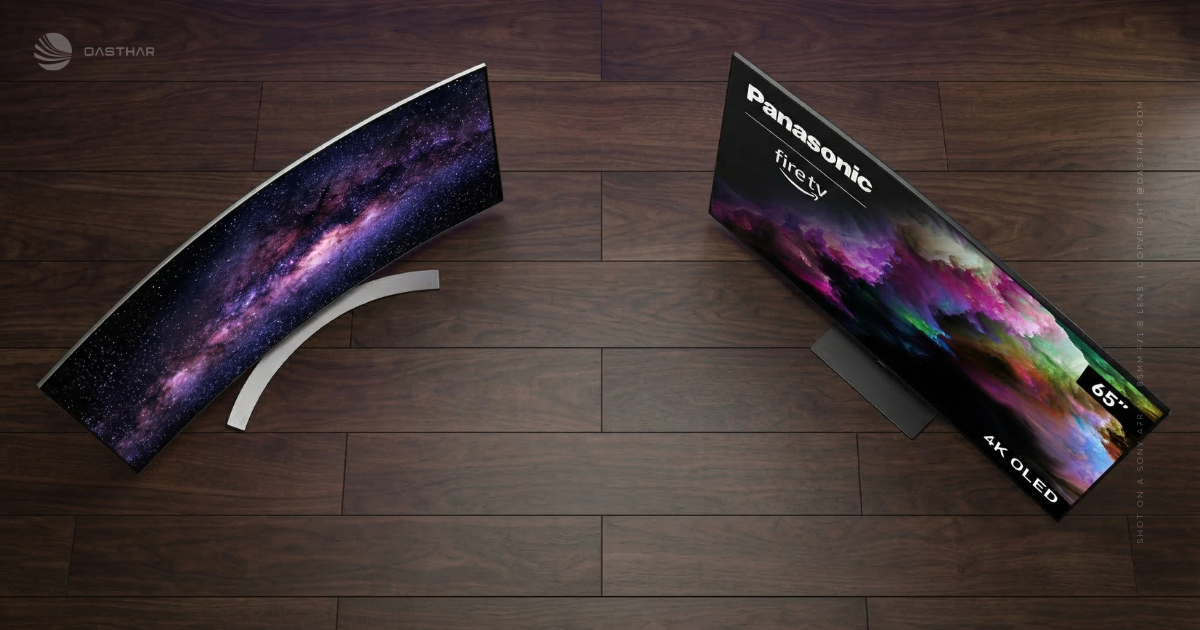
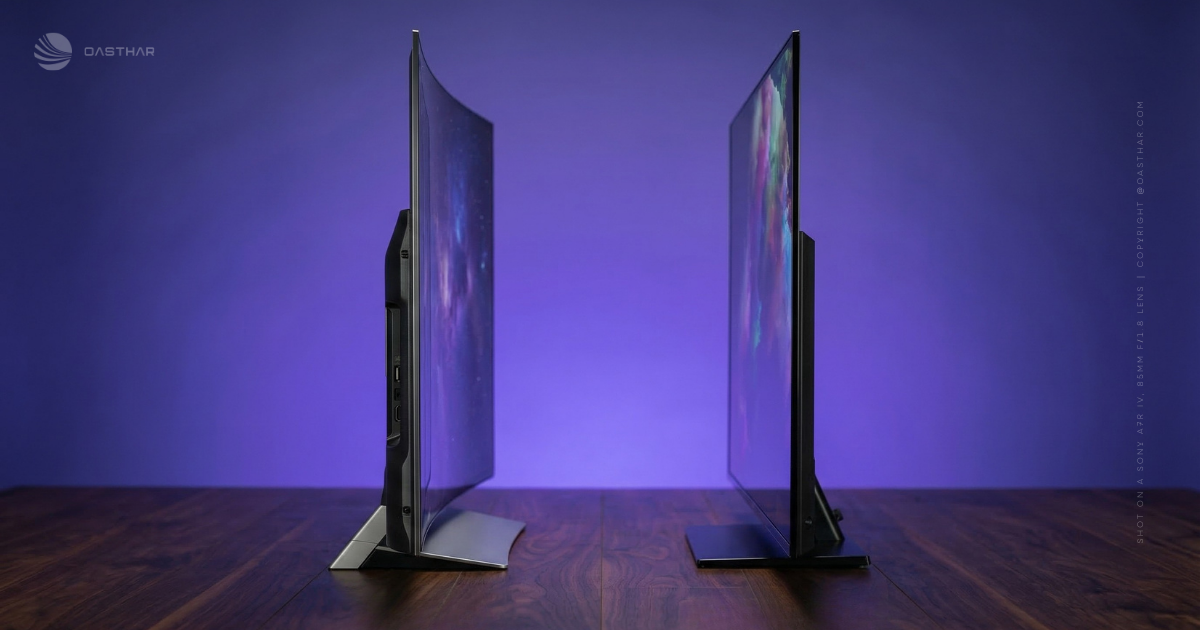
LG C6 is described as sleek and premium, with a low-reflective surface meant to keep glare in check. Panasonic Z85A is ultra-thin in spots (about half a centimeter at its thinnest measured area), but it gets thicker at the bottom where the hardware sits (around five centimeters). That can make a wall mount look less “flush” than some gallery-style designs.
Room fit and placement
Panasonic’s stand and low clearance can be a real annoyance. In a documented setup, the bottom edge sat so low that a typical soundbar could block the TV’s IR sensor, depending on your furniture and bar height. Wall mounting also needs the right bracket (VESA 300×300 referenced).
Reflections are a mixed bag on OLED in general. Panasonic tested well at dimming visible reflections compared with some competitors, although Samsung’s S95D class is still the reflection king in that same testing context.
Winner: LG C6 OLED, because it’s easier to fit into more setups without soundbar clearance drama.
Image Quality
This is where OLED earns its reputation. Both sets can shut off pixels for perfect blacks, so contrast looks “inked in” during night scenes. You also get wide viewing angles, so the picture holds up off-center on a sectional.
Panasonic’s Z85A leans hard into accuracy. In testing, it hit 100% Rec.709, about 95% DCI-P3, and showed strong overall color balance. Its measured color error (DeltaE around 3.14 in one test context) lands in the “looks right to normal humans” zone, even if flagships can measure tighter.
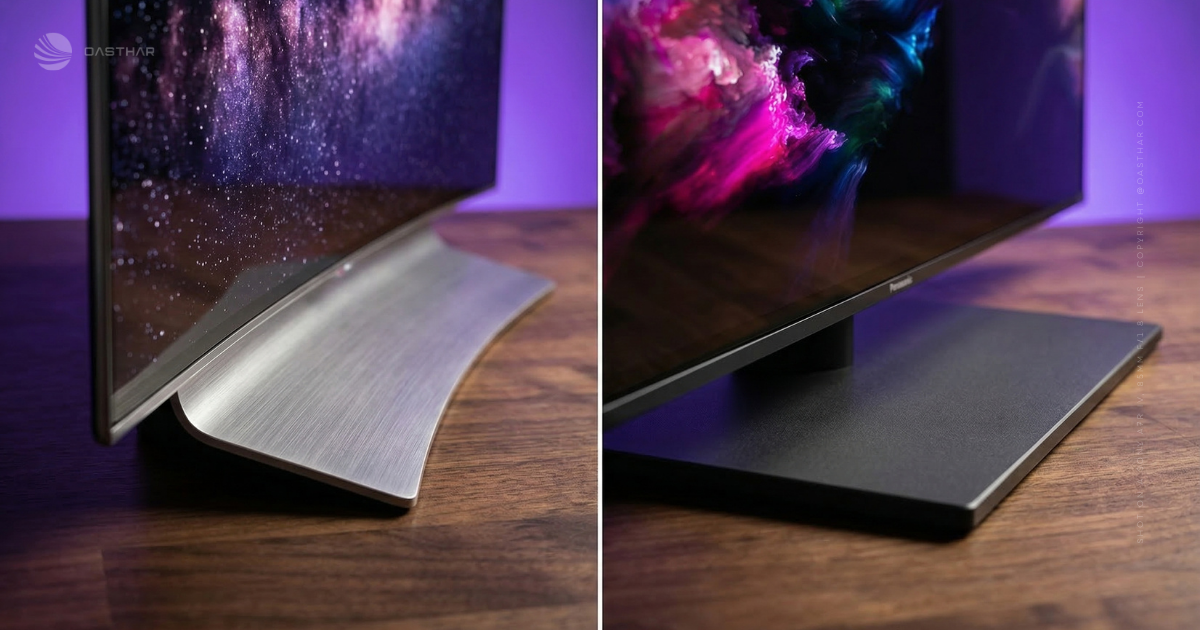
LG C6, as described, aims for that rich OLED color and strong HDR tone mapping through the Alpha 11 processor. Larger C6 sizes are also described as using a brighter, upgraded panel approach, which can add punch to highlights and keep color lively in demanding HDR scenes.
Color accuracy and the ‘natural vs punchy’ look
If you like skin tones that read as lifelike and not overly warmed or cooled, Panasonic’s “natural” approach is easy to enjoy. LG tends to chase a bit more pop, especially when you feed it high-quality HDR.
Either way, your picture mode matters. Filmmaker or Cinema modes usually get you closer to intent, while Game Mode trades some processing for speed.
Winner: Panasonic Z85A OLED, because its measured color balance and accuracy focus show up as a more natural default look.
Brightness & HDR Performance
Brightness is where this comparison stops being polite. Panasonic Z85A’s measured peak sits around 809 nits in a small HDR window test, which is fine for an upper mid-range OLED, but it trails the “bright OLED” crowd. In a dim room, you’ll still get great HDR mood and strong contrast. In a sunny room, the TV has less headroom to make highlights jump.
LG C6’s story is simpler: it’s positioned as the more “HDR punch” option, and the larger 77-inch and 83-inch variants are described as getting a brighter panel approach than smaller sizes. For a current take on how LG frames its 2026 C-series updates, see Tom’s Guide’s LG C5 vs C6 breakdown.
Bright room viewing, reflections and why peak brightness changes HDR ‘pop’
Higher peak brightness helps in two ways. First, small highlights (sun glints, sparks, specular reflections) look more real. Second, your picture fights ambient light better, so the image doesn’t feel “muted” at noon.
Panasonic does handle reflections respectably in real viewing, and the picture can mask them once content is playing, but raw peak brightness still favors LG’s direction.
Winner: LG C6 OLED, because the C6 line’s brightness emphasis (especially in bigger sizes) translates to stronger HDR impact in real rooms.
Motion & Upscaling
Motion is where great TVs quietly separate themselves. Slow camera pans can stutter, sports can smear, and low-bitrate streams can turn into a noisy mess if processing isn’t careful.
Panasonic’s HCX Pro AI Processor MK II earned praise for motion handling and judder control when you tune its frame interpolation settings (for example, setting motion smoothing to a medium level instead of leaving it off). It also showed very clean handling of noisy sources, keeping compression artifacts from taking over.
LG’s Alpha 11 AI Gen 3 is positioned as a top-tier chip for upscaling and HDR tone mapping. In practice, that usually means crisp edges and strong detail recovery without making faces look waxy.
Sports and panning shots
If you watch lots of sports, Panasonic’s “smooth when you need it” processing stands out, as long as you avoid cranking smoothing so high that movies start to look like daytime TV.
Winner: Panasonic Z85A OLED, because the sourced motion and low-noise processing praise is more concrete and more directly tied to real scenes.
Audio Quality
Built-in TV sound is usually a placeholder, but you still want it to be tolerable on day one.
LG C6 is described with a 40W 4.0-channel system tuned with harman/kardon, which should give you clearer dialogue and a bit more punch than the average thin TV.
Panasonic Z85A supports Dolby Atmos passthrough from external devices. However, DTS:X and DTS Master Audio were converted to multichannel PCM in a documented setup, and the tester had to change a digital audio setting to “passthrough” to avoid getting only stereo.
Soundbar and AVR friendliness
If you own a big disc library heavy on DTS, Panasonic’s behavior is the one to double-check with your receiver and player. If you want better sound without buying anything else right away, LG’s built-in system has the clearer advantage on paper.
Winner: LG C6 OLED, because its built-in speaker package is positioned as stronger, while Panasonic has a real DTS-related caveat.
Smart Features & OS/App Support
You’ll use the smart platform every day, even if you swear you won’t.
LG C6 runs webOS 25, described as quick and easy, with broad streaming app support and LG’s usual remote-driven navigation style. Panasonic Z85A runs Fire TV, which works best when you already use Alexa and other Amazon services. The trade-off is that Fire TV can feel Amazon-first, and setup can push you toward using an Amazon account.
Everyday ease, remotes, voice control, and account friction
If your home is already Alexa-driven, Panasonic feels like a natural fit. If you want a more neutral TV interface, LG tends to feel calmer and less salesy.
Winner: LG C6 OLED, because webOS is the less pushy default for most households.
Gaming Features
This is the section that decides a lot of buys.
LG C6 is built like a modern gaming hub: four HDMI 2.1 ports and support up to 4K at 165Hz, plus VRR and ALLM. If you game on a high-end PC, that refresh ceiling can matter. For console players, it still helps with responsiveness and future-proofing, even if your PS5 or Xbox often tops out at 120Hz.
Panasonic Z85A is no slouch. It supports 4K 120Hz, VRR, ALLM, and both FreeSync Premium and G-Sync compatible style support (as cited). Input lag measured around 13.2 ms at 4K60 with HDR enabled, which lands comfortably in “feels fast” territory.
Refresh rate and smoothness for console and PC players
Console gaming is mostly a 60Hz to 120Hz world, so Panasonic already covers the important ground. PC gaming can push higher, and that’s where LG’s 165Hz support becomes a cleaner win.
Ports and features that prevent tearing and lag
More HDMI 2.1 ports means fewer compromises. You can keep a console, a gaming PC, and an eARC soundbar connected, without playing cable-swapping games. For a broader baseline on what makes an OLED great for gaming, RTINGS keeps a rolling list in its best OLED TVs guide.
Winner: LG C6 OLED, because 165Hz support plus four HDMI 2.1 ports is the more flexible gaming setup.
Connectivity & Ports
LG’s port story is clean: four HDMI 2.1 ports and three USB ports, which is the kind of layout that stays painless as your gear pile grows.
Panasonic gives you a wider mix of physical connections: four HDMI 2.1 (with one eARC), 2x USB-A plus USB-C, LAN, optical out, Bluetooth, and Wi-Fi. That USB-C port is a nice quality-of-life touch if you rotate devices.
Best setup examples
If you run a PS5, an Xbox, and a PC, LG keeps everything on HDMI 2.1 without trade-offs. If you run one next-gen console and use eARC to a soundbar, Panasonic is still a clean fit.
Winner: LG C6 OLED, because four HDMI 2.1 ports plus high refresh support makes multi-device ownership simpler.
Price & Value
You can’t judge value by brand or by “premium” vibes. You judge it by what you’ll notice every day.
LG C6 reads like a “flagship-feel” mid-range option: strong processing claims, high refresh gaming support, and lots of sizes. Panasonic Z85A is positioned as a mid-range OLED that prioritizes accuracy, motion, and clean processing, while accepting that peak brightness is not its headline feature.
If you want extra context on how LG split its 2026 lineup and what changes are real versus marketing, this LG C6, G6, W6 CES 2026 lineup deep dive is a useful sanity check.
Winner: Tie, because value depends on your room brightness and your device stack, not a single spec.
Who is it for?
Choose the LG C6 OLED if…
- You want more HDR pop and a stronger bright-room experience, especially in the larger sizes.
- You game on PC and care about up to 4K 165Hz support.
- You want four HDMI 2.1 ports for multiple consoles and eARC audio.
- You need more size options, from 42 inches up to 83 inches.
Choose the Panasonic Z85A OLED if…
- You like a natural, balanced picture and care about measured accuracy.
- You watch lots of sports or mixed-quality streams and want strong motion and low-noise processing.
- You want HDR10+ in addition to Dolby Vision support.
- Your home already runs on Fire TV and Alexa.
FAQs
Which TV looks better for movies in a dark room?
In a dim room, both look excellent because OLED blacks are perfect. Z85A tends to look very natural and well balanced, while C6 usually adds more HDR punch.
Which one gets brighter for HDR highlights and daytime viewing?
Panasonic Z85A tops out around 809 nits in a small HDR window, so it’s solid but not a brightness monster. LG C6, especially 77 to 83-inch variants, can push far higher.
Which handles screen reflections better in a bright living room?
Z85A does a surprisingly good job muting reflections for its class, and it stays watchable even in darker scenes. Still, if your room is very bright, you’ll usually prefer the brighter set.
Is LG C6 or Panasonic Z85A better for PS5 and Xbox gaming?
Z85A is strong for console play with 4K120, VRR support, and low input lag (about 13.2 ms at 4K 60Hz HDR). LG C6 pulls ahead for PC style high-refresh gaming.
Do both TVs support Dolby Vision, HDR10+, and Atmos passthrough?
Z85A supports HLG, HDR10, HDR10+, and Dolby Vision on its HDMI inputs, and it passes Dolby Atmos from external devices. Check LG C6 regional specs, but LG typically supports Dolby Vision and Atmos.
How different is color accuracy and wide color support?
Z85A measures well for HDR color, with about 95% DCI-P3 coverage and decent accuracy (around DeltaE 3.14). BT.2020 coverage is lower (about 71%), which is normal for WOLED.
What smart TV experience will you like more day-to-day?
Z85A uses Fire TV with Alexa, which feels best if you live in Amazon’s world. LG C6 runs webOS, which many people find cleaner if you split time across apps.
Final Verdict
If you’re deciding between the LG C6 OLED vs Panasonic Z85A OLED, the clean split is this: LG better fits bright rooms and serious gaming setups, while Panasonic better fits you if you want a natural look and strong motion cleanup. LG also makes life easier with size choice and high refresh support.
Panasonic fights back with color accuracy, solid processing, and HDR format breadth that includes HDR10+. Pick based on your room light, your connected devices, and which smart TV OS you’ll tolerate every day. Before you buy, check your soundbar height, your HDMI count, and whether you’re fine living inside Fire TV or webOS.