

If you’re wondering how to clean electric grill plates without wrecking the coating, you’re not alone. Old grease has a way of haunting good food, turning premium steaks, salmon, and plant-based patties bitter, smoky, or just “off” the next time you cook.
Cleaning also ties straight to safety and lifespan. Built-up fat can spike smoke, trigger grease flare-ups on some outdoor models, and stress parts you paid for, like temp probes, fans, and smart controllers.
The 2026 twist is that grills are easier to clean if you use their design. Removable plates, better nonstick layers, dishwasher-safe trays (sometimes), and even one-button auto-clean on a few models can save you time, if you treat them right.
RELATED: The 7 Best Electric Grills for 2026, Tested and Reviewed
Before you start, your safety checklist and the simple cleaning kit that works
Before you touch anything, treat your grill like a small appliance with serious wattage. Switching the unit to Off isn’t the same as making it safe. In 2026, many electric grills keep indicators lit, run cool-down fans, or store heat in heavy plates. So you want power disconnected and surfaces cooled.
This matters even more for high-wattage patio units (some built-ins run far hotter than countertop grills). Indoor “smokeless” grills add another layer because a fan and intake vents can trap greasy dust. That trapped film is a big reason a clean smokeless grill starts acting not-so-smokeless over time.
Also, don’t sabotage your own nonstick. Skip wire brushes that can shed bristles, skip steel wool that scratches, and skip harsh oven cleaners that can haze coatings and stain plastics. If you want a brand-agnostic walkthrough of parts people usually miss, this electric grill components cleaning guide is a helpful cross-check.
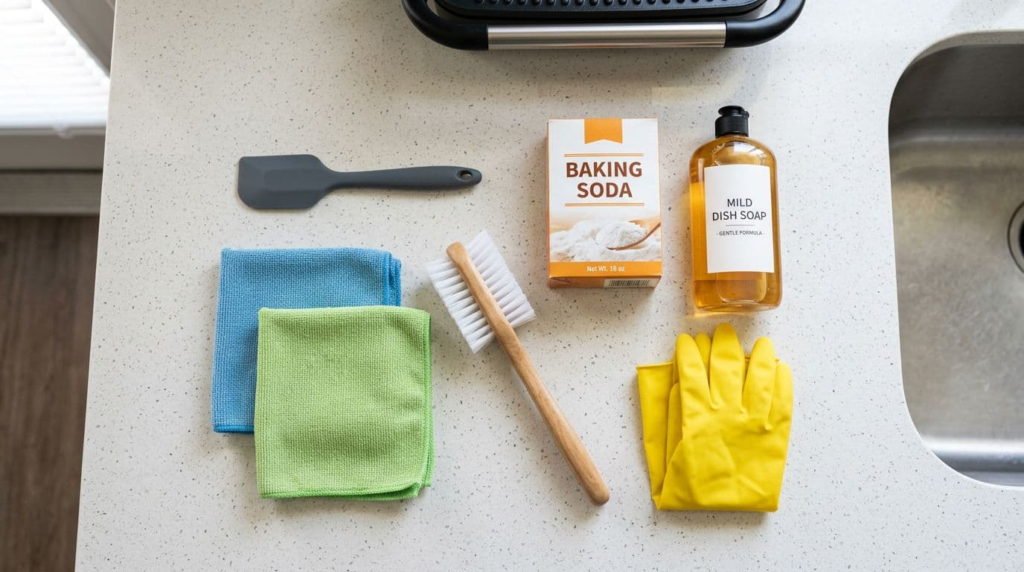
Your simple kit:
- Silicone scraper: Lifts softened grease without gouging plates.
- Microfiber cloths: One for washing, one for drying and buffing.
- Soft nylon brush: Good for ridges and corners, gentle on coatings.
- Mild dish soap: Works for most messes, even on “fancy” grills.
- Baking soda: Turns into a controlled scrub when you need extra bite.
- Gloves: Keeps your hands clean and protects from warm surfaces.
Eco-friendly add-ons that work:
- Vinegar spray (diluted): Best for deodorizing and breaking light film.
- Food-safe degreaser: Best when the drip tray smells rancid or sticky.
Last step before you start: check your manual for dishwasher-safe parts and any coating rules. “Dishwasher-safe” often means “it won’t melt,” not “it’ll look new forever.”
The unplugging and cooling protocol
Use this routine every time, even for quick wipe-downs:
- Turn the grill off, then unplug it from the wall.
- Confirm all lights are off and any fan noise stops.
- Let it cool to warm, not hot. If you can’t comfortably rest your palm near the plate, wait longer.
- Remove detachable parts (plates, drip tray, water tray, splatter shield) once they’re warm.
Never dunk the controller, cord, base, or heating element in water. Wipe those parts with a barely damp cloth only.
Your 2026 toolbelt, what to use and what to skip
Tools that protect nonstick and porcelain-coated parts:
- Silicone scrapers and soft nylon brushes: Safe contact, fewer scratches.
- Non-abrasive sponges: Better than “scrub” pads that rough up coatings.
- Microfiber: Picks up grease instead of smearing it.
Tools that backfire over time:
- Wire brushes: Bristles can shed and become a food hazard.
- Steel wool and abrasive pads: Micro-scratches make sticking worse later.
- Oven cleaner: Can damage coatings and discolor plastic housings.
The after-use 5-minute routine that prevents stuck-on mess later
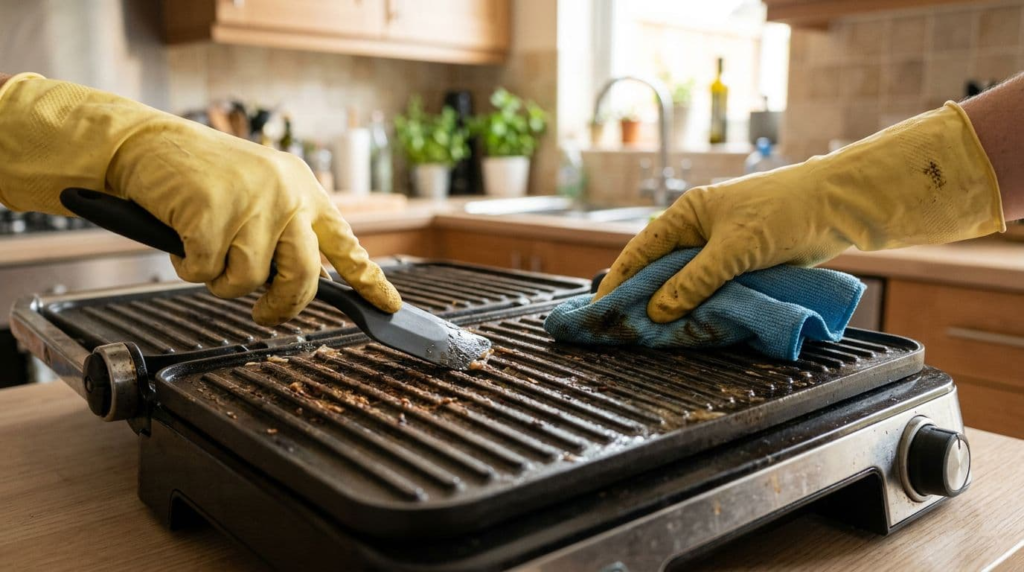
Deep cleaning is fine. Still, the real time-saver is what you do right after cooking. Think of it like rinsing a coffee mug before the ring forms. Residual heat softens fats before they harden into a varnish.
This quick routine also supports electric grill maintenance because it keeps grease from migrating into seams, vents, and fan intakes. For indoor units, that’s how you keep a clean smokeless grill from developing that “old bacon fog” smell.
Here’s the five-minute flow that works on most models:
- Scrape first while the plates are warm. Push grease toward the drip channel.
- Wipe with a damp cloth to pick up the loosened film.
- Do a gentle soapy pass if the cloth comes back brown or sticky.
- Empty the drip tray every time. Old grease is the #1 smoke booster.
- Dry everything so you don’t get residue spots or trapped odor.
If you like the foil-lining trick for drip trays, use it only if your manual allows it and only where foil can’t block airflow or a drain path. Some indoor smokeless grills warn against foil near the fan path. PowerXL, for example, calls out removable parts and care details in its smokeless grill FAQ, which is a good reminder that “easy clean” still has rules.
Can’t clean right away? Don’t leave the grill open with sauce drying on it. Instead, let it cool, do a quick scrape, and close the lid or cover the plates so residue doesn’t turn into cement.
Warm wipe, quick scrape, then a gentle soapy pass
Timing matters. You want warm, not hot.
Start with a silicone scraper to lift bits and move grease toward the tray. Next, use a microfiber cloth with warm water and a drop of dish soap. Finally, wipe again with a clean damp cloth, then dry. That last dry step is small, but it keeps odors down.
Steam lift for marinades and sugars that bake on fast
Sugar is the messy friend who overstays. Teriyaki, BBQ sauce, honey glazes, and some plant-based marinades can bake on fast.
Use a safe steam trick: add a small splash of water to the warm plate (not the base), close the lid for 30 to 60 seconds, then wipe. The steam loosens the glaze so you don’t have to scrub.
Keep water away from electrical parts. If the plate isn’t removable, don’t pour water. Use a damp cloth instead.
Deep clean step-by-step for indoor smokeless grills and outdoor electric grills
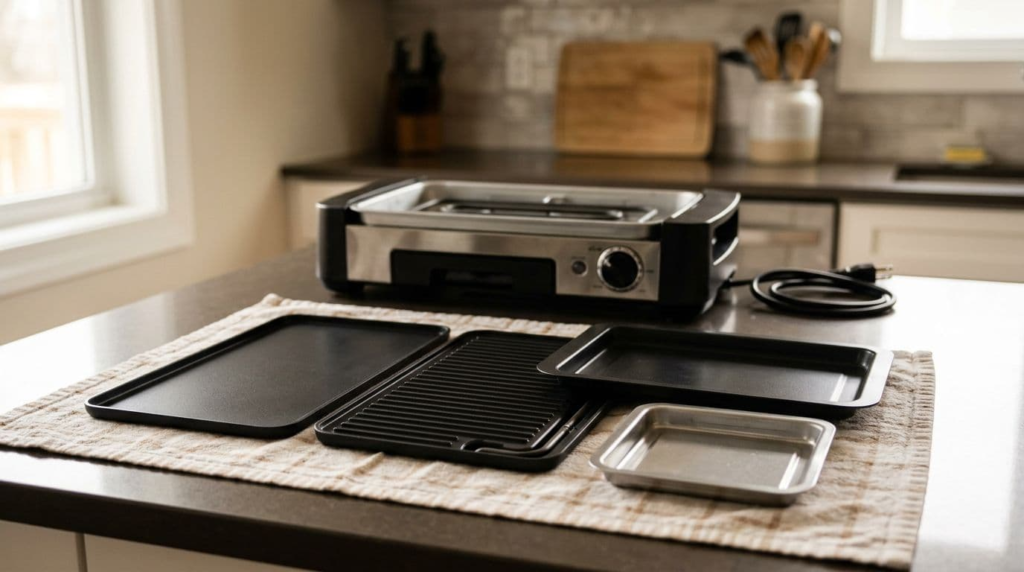
When your grill starts smoking more, heating unevenly, or tasting “last week-ish,” it’s time for a deep clean. For most models, the sequence is the same. You’re just changing your caution level around fans (indoor) and cookboxes and elements (outdoor).
A reliable deep-clean order:
- Unplug and cool (warm, not hot).
- Disassemble removable parts: plates or grates, drip tray, water tray, splatter shield, lid.
- Dump solids and grease into the trash. Don’t send grease down the sink.
- Wash removable parts with warm soapy water (or top-rack dishwasher if allowed).
- Clean the base and fixed areas with a barely damp cloth, then dry.
- Reassemble only when fully dry.
- Finish with a light oil buff on plates or grates to reduce sticking.
If you’re on an outdoor electric griddle instead of a grill, the process is similar, but grease handling and plate protection matter more. Current Backyard has a solid reference on the “don’t over-scrub it” approach in this electric griddle care guide.
Now, the model split.
Indoor smokeless grills: plates, water trays, glass lids, and fan areas
Indoor units (think Ninja Foodi-style grills and similar “smokeless” boxes) work because grease management and airflow stay clean. Once grease coats the intake and interior vents, the fan can move odor and smoke instead of preventing it.
A careful routine:
- Remove plates and trays first. Let grease cool a bit so it doesn’t slosh.
- Wash plates and trays. Use a soft brush on ridges, then rinse and dry.
- Clean the lid and splatter shield. Glass lids hate abrasive pads, so stick to soap and microfiber.
- Wipe the base only. Use a damp cloth with mild soap, then a dry cloth.
- Detail the vents. Use a dry nylon brush or a dry cotton swab to lift dust and greasy lint.
If you want a quick brand perspective on why grease flow and airflow matter more than “looking clean,” GrillnPepper explains it well in its grill cleaning and safety overview. The concept translates perfectly to indoor electric units.
Outdoor electric grills: grates, cookbox, lid and the heating element rules
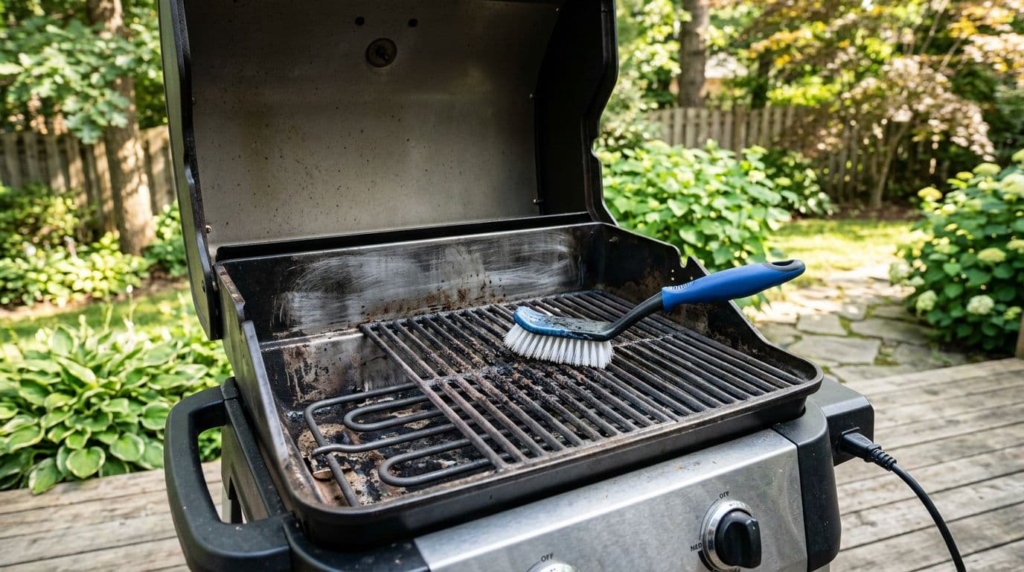
Outdoor electric grills (like the Weber Lumin, Weber Q electric line, and similar patio models) build up carbon in the lid and cookbox. That carbon flakes, then lands on food like black confetti. You want it gone.
Do this:
- Brush the grates with a nylon brush while they’re warm.
- Wash grates in warm soapy water if the manual allows it, then dry fully.
- Scrape the lid interior gently so flakes don’t drop later.
- Wipe the cookbox with a damp cloth, then dry. Focus on corners where grease pools.
- Respect the heating element. Don’t soak it, don’t spray it, don’t submerge it. Wipe nearby areas instead.
Some 2026 models add auto-clean modes (Char-Broil and similar lines). When you use auto-clean, remove grease trays first, open windows or grill outside, let the cycle finish, then wait for full cool-down. Brush out any dry ash, then wipe. Char-Broil’s own notes on electric grill care are a decent reference point in this electric grill cleaning guide.
Fix common messes, then lock in long-term electric grill maintenance
Most “problems” aren’t failures. They’re residue problems pretending to be hardware issues. So fix the mess first, then keep it from coming back.
Residue rescue: baked-on sauces, sticky plates and smoke smells
Baked-on sauce spots (dark, hard patches): Make a baking soda paste (baking soda plus a few drops of water). Spread it on the cooled plate, wait 10 minutes, then wipe with microfiber. Skip abrasive pads on nonstick.
Sticky plates: Try a warm soapy wash, then a quick vinegar wipe (diluted). If plates are removable and the manual allows soaking, a short soak in warm water helps. Don’t soak base units.
Smoke smell indoors after “cleaning”: Clean the drip tray again, then check the fan intake area for greasy lint. Old grease in a tray can smell like smoke even when the plates look perfect.
If food starts sticking more each month, it’s often micro-scratches plus old oil film. Gentler tools and better drying usually fix it.
Your upkeep schedule, cord checks, seasoning and smart storage
Use this simple schedule to keep electric grill maintenance easy instead of annoying.
| When | What you do | Why it matters |
|---|---|---|
| After every cook | Scrape, warm wipe, empty and wash drip tray, dry | Prevents stuck-on carbon and extra smoke |
| Weekly (or every 3 to 5 uses) | Wash plates or grates thoroughly, wipe lid, check vents | Keeps airflow clean and odors down |
| Monthly | Deep clean base area (damp cloth), inspect cord and plugs | Avoids corrosion, spotting, and heat issues |
| Seasonally (outdoor) | Clean cookbox and lid interior, check for rust, dry storage | Stops flakes, rust, and weird flavors |
A few brand-style reminders that match what’s popular in 2026:
- Ninja Woodfire-style grills: Treat the pellet smoke box area like its own zone. Ash and oily residue can mix, so empty and wipe it once cool.
- Weber Pulse or Q-style electrics: Keep the controller area dry, and wipe around probe ports with a barely damp cloth.
- Hamilton Beach and George Foreman fixed-plate grills: Use a damp cloth and patience, not water poured onto the unit.
- Char-Broil auto-clean models: Run the cycle only after you remove trays and improve ventilation.
For storage, dry beats shiny. Let everything dry completely before you close the lid or put on a cover. Use a breathable cover outdoors so moisture doesn’t sit on metal. If your grill stores upright, make sure plates and trays are locked in place so they don’t flex or stress the heating area.
How to Clean an Electric Grill and Maintain It FAQs
Can you put electric grill plates in the dishwasher?
Sometimes, yes, if your manual says so. Hand-washing is usually kinder to coatings.
How often should you deep clean?
Every month for heavy use, or when smoke and smells increase.
Can you use vinegar to clean an electric grill?
Yes, diluted vinegar works for deodorizing and light film, but don’t soak electrical parts.
Can you use a wire brush on electric grill grates?
Don’t. Bristles can shed and many coatings scratch easily.
My grill still smokes after cleaning, now what?
Recheck the drip tray, lid interior and vents or fan intake. Hidden grease is the usual culprit.
Conclusion
A clean electric grill isn’t about showroom looks. It’s about better taste, less smoke, and fewer “why won’t it heat right?” moments. Start with safety (unplug and cool), stick to the 5-minute after-use routine, then deep clean when buildup shows up. Finish with smart storage and gentle tools, and your electric grill maintenance becomes routine instead of a weekend project.