

You’re not choosing between two foldables anymore, you’re choosing between two different ideas of a phone. Galaxy Z TriFold vs Huawei Mate XT Ultimate comes down to what you value most, Samsung’s Android build with Snapdragon power and Galaxy tools, or Huawei’s ultra-thin tri-fold hardware that turns into a true 10.2-inch tablet. For most people, the Galaxy Z TriFold is the better buy because the software and ecosystem fit more lives out of the box.
Still, the Mate XT hits hard on design, with a 3.6mm unfolded body and a flexible 16:11 screen that feels made for multitasking. It also brings a 5600 mAh battery with 66W wired and 50W wireless charging, so you can push that big OLED without living on a cable.
Next, you’ll get a clean, section-by-section breakdown, including a specs table, design and display quality, performance, battery and charging, software, connectivity, cameras, extra features, price and value, who each phone is for, then a final verdict.
RELATED: RedMagic 11 Air vs OnePlus 15: Which is Better?
Quick Summary
- Screen smoothness: Galaxy Z TriFold runs up to 120Hz, Mate XT tops out at 90Hz.
- Main camera style: Samsung pushes a 200MP main sensor, Huawei goes with 50MP but adds a 5.5x periscope.
- Charging speeds: Mate XT supports 66W wired and 50W wireless, Samsung lists 45W wired and Qi wireless.
- Software feel: Samsung ships Android 16 with One UI 8, plus Galaxy AI and DeX; Huawei’s software is fast, but Google services can be complicated.
- Durability rating: Z TriFold lists IP48 (dust and water resistance); Mate XT’s IP rating is not confirmed in the provided sources.
- Pocket feel: Both are thick when closed, Samsung is about 12.9mm and 309g, Huawei about 12.8mm and 298g.
- Storage starting point: Samsung starts at 512GB, Huawei’s base storage is often lower (region dependent).
Winner: Galaxy Z TriFold, because the smoother screen and cleaner US app experience hit you every hour you use it.
Specifications
Here’s the fast spec check for the stuff you’ll actually compare in a store.
| Spec | Samsung Galaxy Z TriFold | Huawei Mate XT Ultimate Design |
|---|---|---|
| Cover display | 6.5-inch AMOLED, 2520×1080, 1-120Hz | 6.4-inch, 1008×2232 |
| Main display (fully open) | 10-inch AMOLED, 2160×1584, 1-120Hz | 10.2-inch tri-fold, 2232×3184, 90Hz |
| Chipset | Snapdragon 8 Elite for Galaxy | Kirin 9010 (7nm) |
| RAM and storage | 16GB, 512GB or 1TB | Not confirmed (RAM), storage not confirmed in provided sources |
| Battery | 5600 mAh | 5600 mAh |
| Wired charging | 45W | 66W |
| Wireless charging | Qi wireless charging | 50W wireless charging |
| Rear cameras | 200MP main, 12MP ultrawide, 10MP telephoto | 50MP main, 12MP ultrawide, 12MP 5.5x periscope |
| Selfie cameras | 10MP cover, 10MP inner | Not confirmed in provided sources |
| Water and dust rating | IP48 | Not confirmed |
| Weight | 309g | 298g |
| OS | Android 16 with One UI 8 | EMUI 14.2 (Google services not native in many regions) |
| US starting price (listed) | $2,899 (512GB) | Not confirmed (US), pricing varies by region |
Winner: Galaxy Z TriFold, because the table shows clearer US-ready software, confirmed IP48, and a top tier chip.
Design & Build Quality
The biggest design split is simple: Samsung folds inward, Huawei folds in a Z-style that gives you more “in between” shapes. In plain terms, Samsung keeps the big screen protected when it’s closed. That usually means fewer worries about keys, grit, and random scratches.
The Mate XT’s tri-fold idea is all about modes. You can use it like a phone, then a mid-size mini-tablet, then a full 10.2-inch tablet. That flexibility feels great when you’re switching from texts to a spreadsheet, but it also means you’ll handle the device in more ways, and you’ll care more about where the exposed parts go.
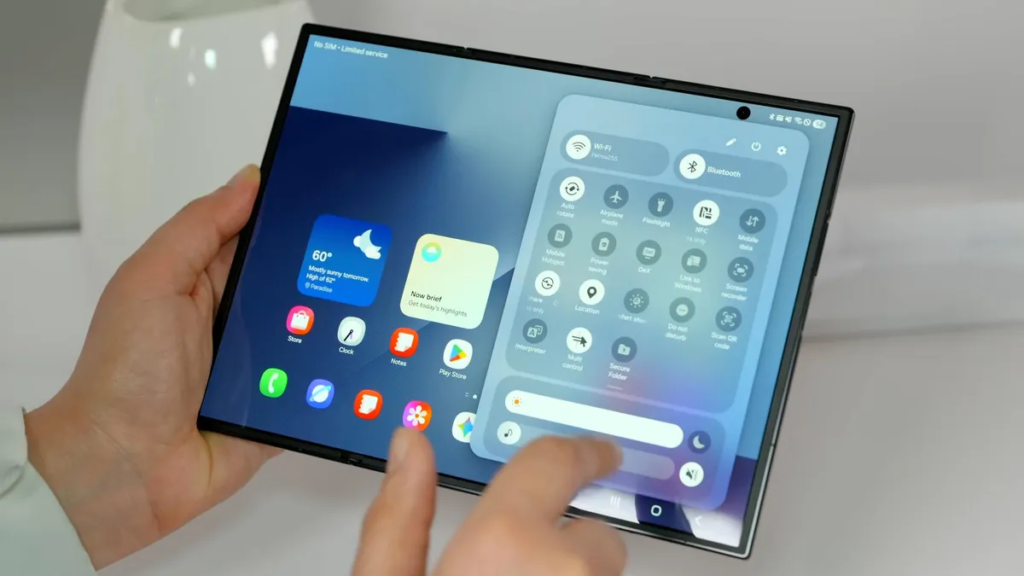
On size, they’re closer than you’d expect. Samsung is about 12.9mm closed and 309g, while Huawei is about 12.8mm folded and 298g. Open them and they both feel almost unreal for the screen size, Samsung hits around 3.9mm at its thinnest point, Huawei goes to about 3.6mm.
Samsung also has a real learning curve: you’re supposed to close the left panel first, and the phone can warn you with haptics if you do it wrong. For more on how the two designs differ in daily use, CNET’s hands-on framing is helpful in this Galaxy Z TriFold vs. Huawei Mate XT comparison.
Winner: Galaxy Z TriFold, because the inward fold plus IP48 gives you more everyday peace of mind.
Pocket comfort and one hand use
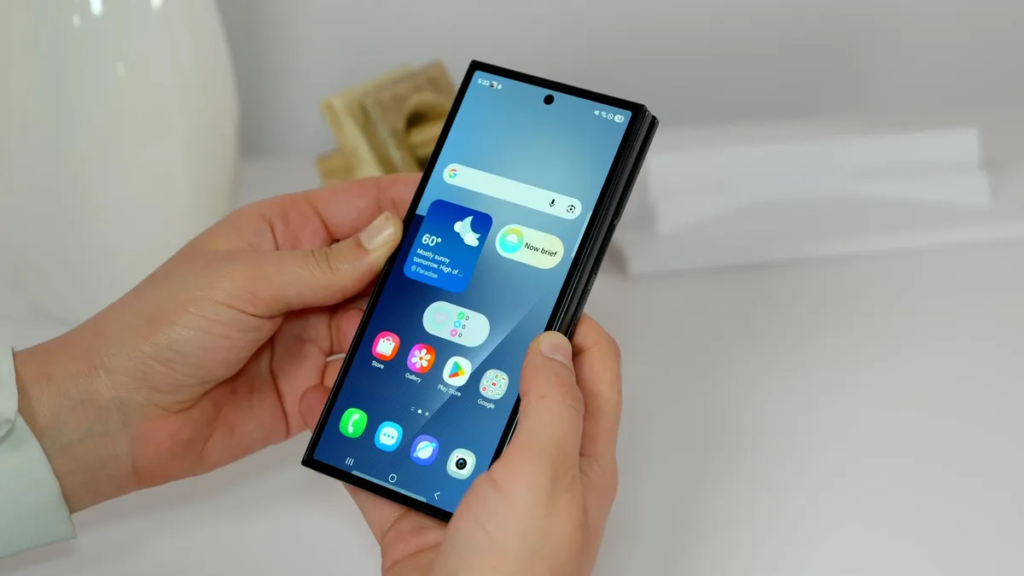
Samsung’s 6.5-inch cover screen is the more “normal phone” experience for quick replies and email checks. You can do more without unfolding, and that’s a big deal when you’re standing in line.
Huawei’s cover screen is 6.4 inches, and the phone is slightly lighter. Still, both are thick when folded, and both feel like you’re carrying a small brick at first. After a week, it gets easier, but you won’t forget it’s there.
Durability and peace of mind
Samsung lists IP48, which is rare for foldables because it includes dust resistance. That matters if you use your phone outdoors, or you toss it into a bag.
Two hinges also mean two crease lines. Early impressions say Samsung’s creases are not overly distracting even compared with recent book-style folds, but you’ll still see them in harsh light.
Display Quality
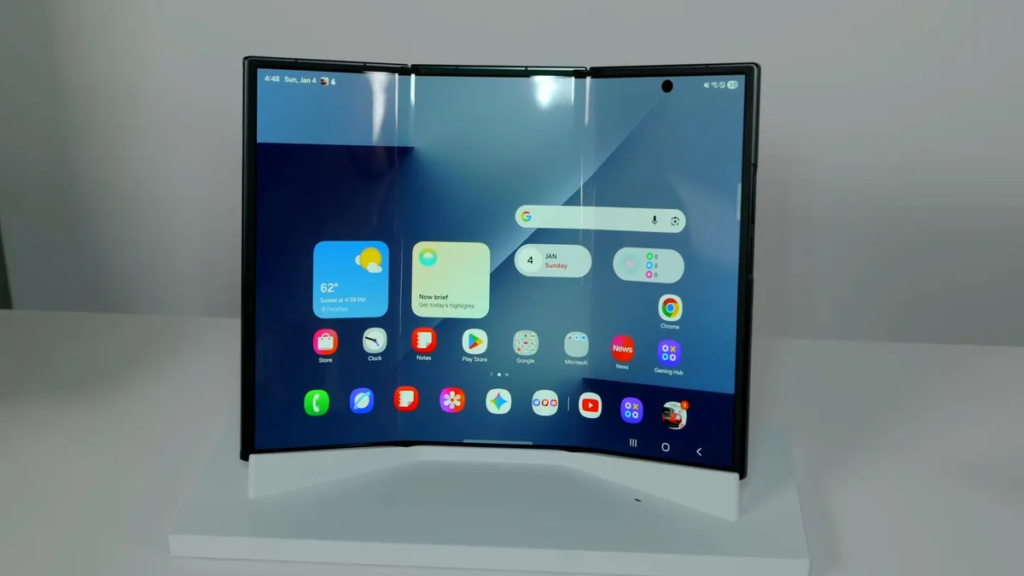
If you buy a tri-fold, you’re buying the screen. So the refresh rate gap matters. Samsung’s internal display goes 1-120Hz, while Huawei tops out at 90Hz. In real use, 120Hz makes scrolling feel cleaner, and it helps your eyes when you’re flipping through long pages.
Huawei fights back with shape. Its 16:11 style aspect ratio is wider than many foldables, which can look better for video and some games. It also gives you room for two apps side by side without each one feeling squeezed into a narrow column.
Brightness is another split. In lab-style measurements reported in reviews, Mate XT’s brightness numbers are much lower than some competing foldables. Meanwhile, Samsung’s display is described as bright and smooth in early coverage, and Samsung lists HDR support in its spec sheet.
If you want to compare listed specs across both models in one place, this GSMArena compare page is a handy reference point.
Winner: Galaxy Z TriFold, because 120Hz and stronger brightness reporting usually matter more than a slightly wider aspect ratio.
Multitasking and getting work done on a big screen
Both phones let you run multiple apps at once, and both make it feel more natural than a book-style fold. The difference is what happens next.
Samsung has DeX, which can make the phone act more like a small computer when you connect to a display or use desktop-style workflows. On a tri-fold, that extra canvas makes DeX feel less like a trick and more like a real option.
Creases and viewing comfort
You’re going to see crease lines on either phone. Samsung has two hinges, so you’ll notice two crease areas, but early hands-on notes suggest they’re not the first thing you stare at.
Huawei also has folds and crease lines, and you’ll notice them most on bright white pages. After a few days, your eyes tend to tune them out.
Performance
Samsung runs the Snapdragon 8 Elite for Galaxy, and that shows up everywhere: app launches, heavy multitasking, and high-end games. It also matters for on-device AI features, because fast chips keep those tools from feeling like a pause button.
Huawei uses the Kirin 9010 (7nm) with a Maleoon GPU. In reviews, the Mate XT still feels quick for everyday use, productivity apps, and most games. The limit shows up when you push heavy 3D titles or try to keep frame rates high for long sessions. You can see frame drops sooner, especially at high settings.
This is the most “buy once, feel it daily” part of the comparison. If you keep phones for years, a stronger chip usually ages better.
Winner: Galaxy Z TriFold, because the Snapdragon 8 Elite class chip is in a different performance tier.
Battery Life & Charging
Both phones pack a 5600 mAh battery. That sounds equal, but tri-folds can swing wildly depending on how often you use the big screen.
Huawei has one clear advantage: charging. It supports 66W wired and 50W wireless, which is excellent for a battery this size. In testing reported in reviews, the Mate XT charged to full in about 1 hour 15 minutes, and a 30-minute top-up got it to around 74%.
Battery life is harder to call without matching tests. One reported estimate for Mate XT landed around 7 hours 24 minutes in a semi-open testing mode, and it did especially well in lighter tasks like browsing and video. Gaming can drain it faster than you’d guess, likely because the GPU works harder.
Samsung lists 45W wired charging and Qi wireless charging. Without a shared benchmark, the safe call is that Huawei wins on refill speed.
Winner: Huawei Mate XT Ultimate, because 66W wired plus 50W wireless beats Samsung’s listed 45W, and charging is a daily quality of life feature.
Software & Ecosystem
This is where the decision can get brutally simple in the US.
Samsung runs Android 16 with One UI 8, and you get the usual Google app experience without workarounds. You also get Galaxy AI features and DeX, which fits the whole “phone that becomes a work machine” idea.
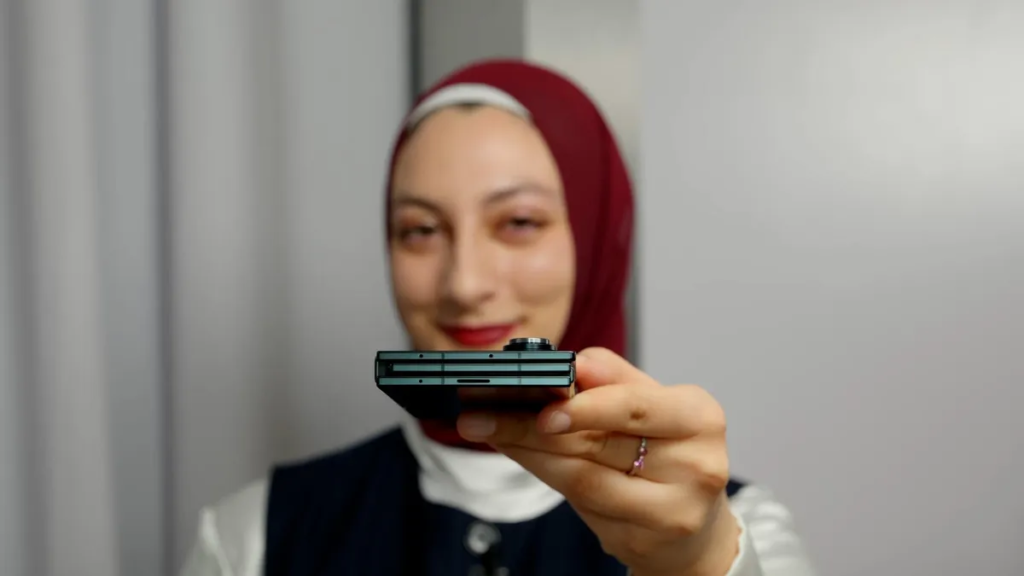
Huawei runs EMUI 14.2 in the reviewed configuration, and depending on region you’re also dealing with Huawei’s HarmonyOS ecosystem. The big issue for many US buyers is no native Google Mobile Services in many Huawei markets. If you use a personal Google account, you can often get many Google apps working through solutions like microG. Still, if you depend on Google Workspace for work, setup can be harder, and some accounts do not play nicely with that path.
If you want a broader read on how the two ecosystems feel for tri-fold life, Android Central lays out the trade-offs in this Samsung Galaxy Z TriFold vs. Huawei Mate XTs comparison.
If your phone is your wallet, your work login, and your calendar, software compatibility matters more than a cool hinge.
Winner: Galaxy Z TriFold, because full Google support in the US is the difference between “fun” and “frustrating.”
Connectivity
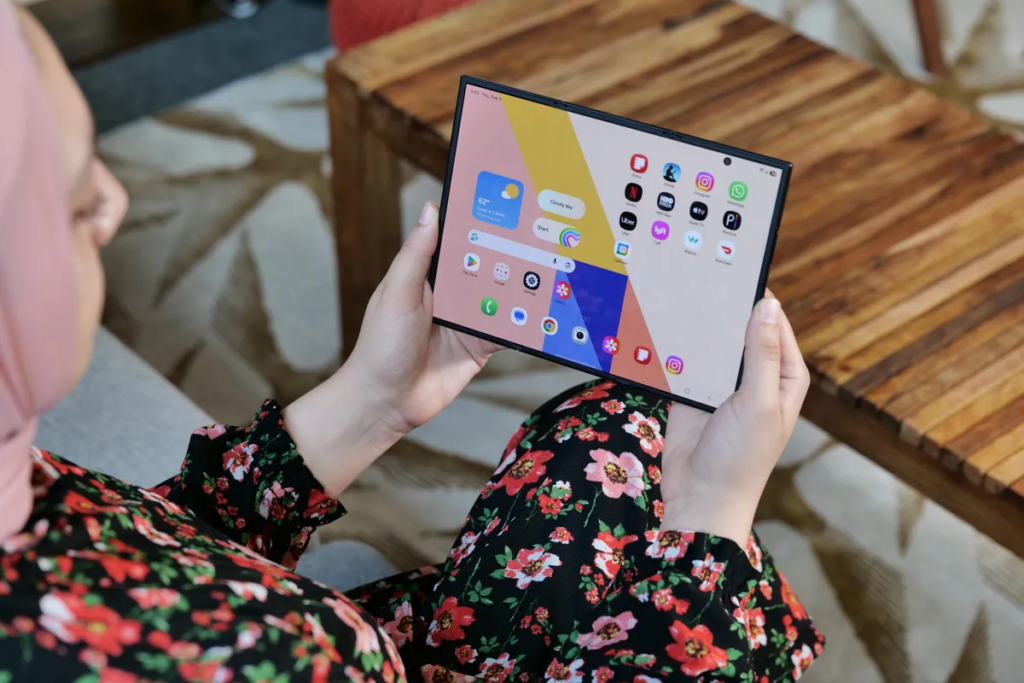
Samsung’s spec list includes Wi-Fi 7 and Bluetooth 5.4, plus the usual modern NFC and USB-C. That helps with faster local transfers on newer routers and better performance in crowded networks.
Huawei’s connectivity details vary by region, and not every listing is consistent. In general, Mate XT is commonly listed with modern 5G support, but the exact Wi-Fi and Bluetooth versions are not confirmed in the provided source excerpts you’re using here.
In daily use, this won’t change your Instagram feed. However, if you care about future-proof networking at home, Samsung’s Wi-Fi 7 callout is a real point.
Winner: Galaxy Z TriFold, because Wi-Fi 7 and Bluetooth 5.4 are clearly listed, and the Huawei details are less consistent across sources.
Cameras, Mics & Speakers
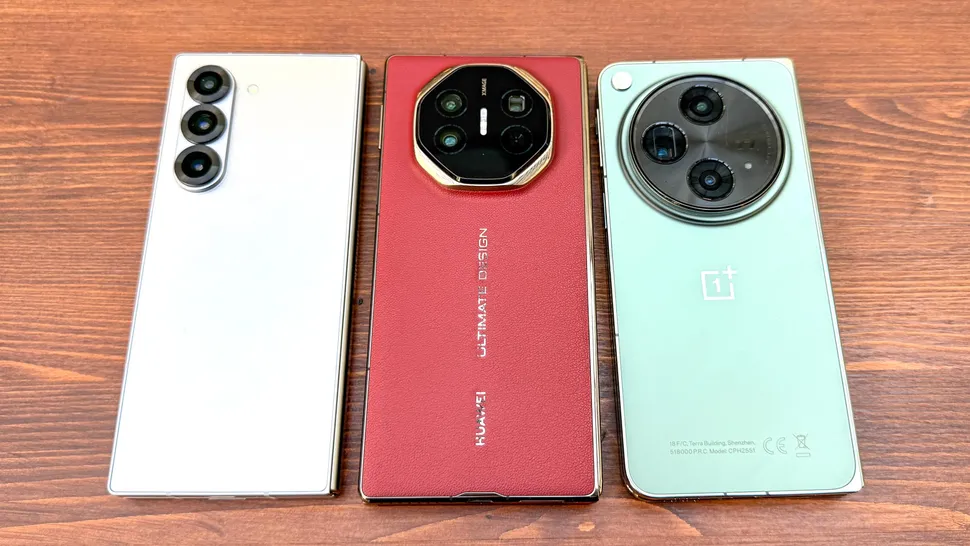
Samsung’s rear camera stack is built around a 200MP main camera, plus a 12MP ultrawide and a 10MP telephoto. It also has two 10MP selfie cameras, one for the cover screen and one inside.
Huawei goes a different direction: 50MP main, 12MP ultrawide, and a 12MP 5.5x periscope. That 5.5x reach is the headline, because it’s the kind of zoom you’ll use at a concert or on vacation without walking closer.
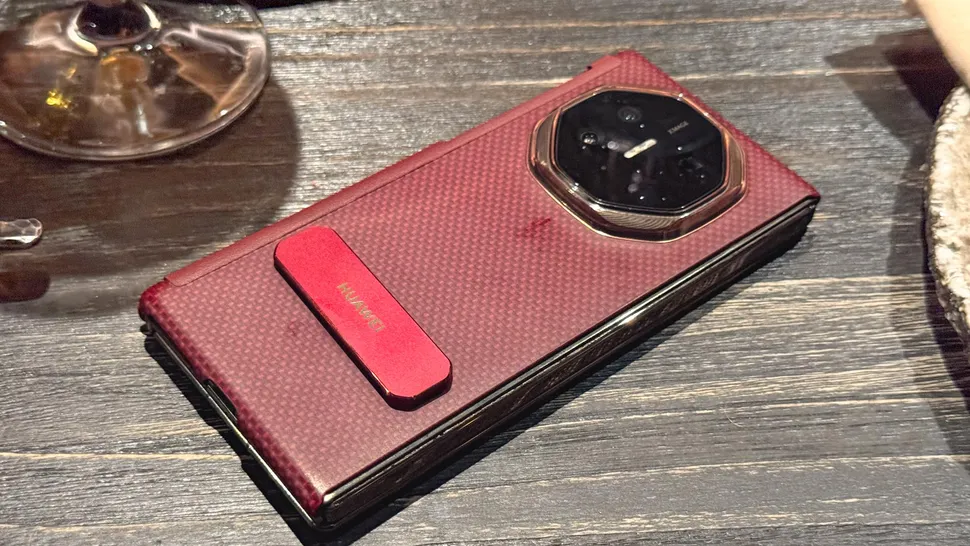
In real life, the trade is clear. Samsung should win more of your everyday “point and shoot” moments with a high detail main sensor and a very modern processing pipeline. Huawei can win the specific shots where zoom matters more than raw megapixels.
Also, both phones let you use the rear cameras for selfies, which can beat any tiny front camera. Huawei reviews also noted its video quality holds up well across the rear lenses, even if the recorded audio is not class-leading.
Winner: Tie, because Samsung wins for main camera power, while Huawei wins for optical zoom reach.
Extra Features
Small details matter more on a $2,800-plus phone.
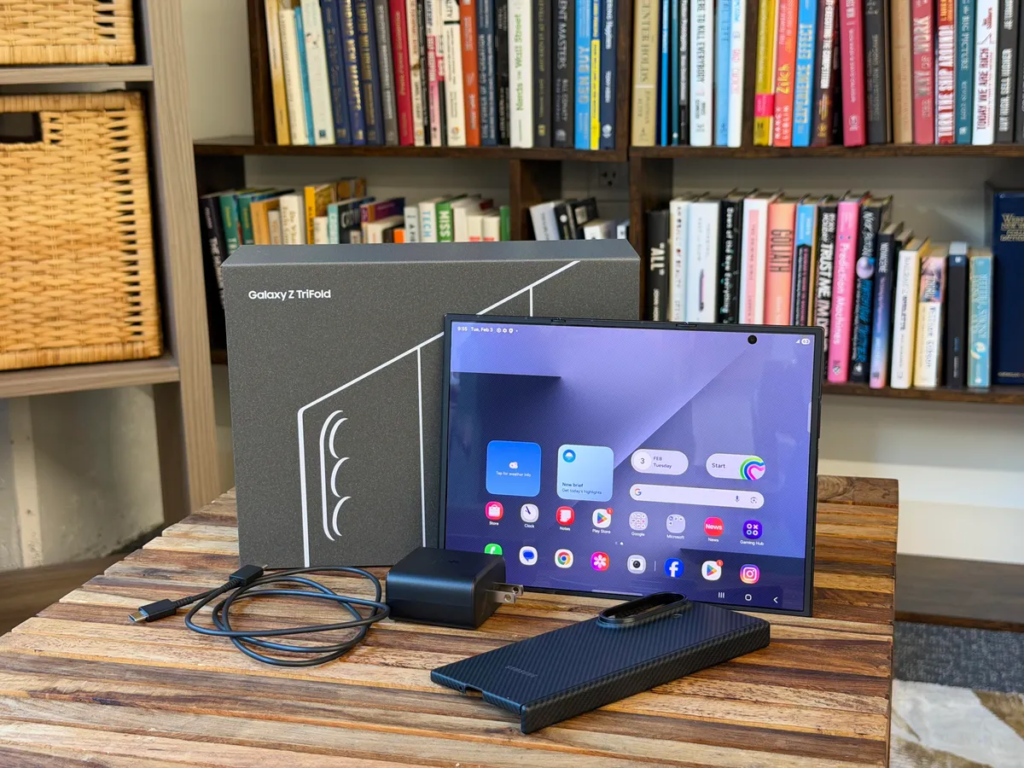
Samsung lists IP48, and that’s a rare comfort blanket if you use your phone outside. It also includes a fingerprint sensor, and it supports modern extras like NFC and Wi-Fi 7. Samsung even mentioned the phone ships with a charging cable and a charging brick in the box in early coverage, which is almost shocking in 2026.
Huawei’s extra story is more about the hardware build and the charging setup. You get fast wired and wireless charging, plus a form factor that can shift between multiple screen sizes without feeling like you’re always all-or-nothing.
If you’re also cross-shopping foldables that feel more pocketable, this Motorola Razr 2025 foldable flip phone review can help you sanity check whether you want a tri-fold tablet phone at all.
Winner: Galaxy Z TriFold, because IP48 and the included charger add real everyday value.
Price & Value
In the US, Samsung is the easier one to price. The Galaxy Z TriFold lists a US starting price of $2,899 for the 512GB model. Availability is also more straightforward, since Samsung sells broadly through US retail and carrier channels, and it runs full Google services.
Huawei pricing is trickier because it varies hard by region and channel. In review coverage, the Mate XT has been framed as an ultra-premium device, and current market pricing can land around €2,550 (about $2,700) depending on region and stock. At other times, it has been cited even higher at launch in Europe. In the US, availability tends to be limited, and you’re also buying into the app situation described earlier.
For a snapshot view of pricing and listed specs across regions, this Gadgets360 comparison page can be a useful cross-check.
Winner: Galaxy Z TriFold, because US pricing is clear, and US buying and support paths are much easier.
Who is it for?
Choose Galaxy Z TriFold if:
- You want Android with full Google support in the US.
- You care about 120Hz smoothness and a bright, modern display feel.
- You want DeX for real productivity workflows.
- You value IP48 dust and water resistance.
- You prefer a 200MP main camera approach.
Choose Huawei Mate XT Ultimate if:
- You want the thinnest feel when open (about 3.6mm).
- You’ll use 5.5x optical zoom often.
- You care about faster wired and wireless charging.
- You’re fine living in the HarmonyOS and EMUI ecosystem with Google workarounds.
- You like the multiple size modes (6.4-inch, 7.9-inch, 10.2-inch).
FAQs
Which phone feels better to carry every day?
If you care about pocket feel, the Mate XT is lighter (298g) and a hair thinner folded (12.8mm). The Z TriFold is 309g and 12.9mm.
Which one has the better big-screen experience?
The Z TriFold wins for smoothness and outdoor punch, with a 10-inch AMOLED at 120Hz and higher peak brightness. Mate XT gives you a slightly larger 10.2-inch panel.
Is the Mate XT’s 90Hz display a deal-breaker?
Not for most use. Scrolling stays smooth, but side-by-side, Samsung’s 120Hz looks cleaner, especially in fast UI moves and gaming. Brightness also favors Samsung.
Which one is faster for games and heavy multitasking?
Galaxy Z TriFold, easily. Snapdragon 8 Elite and Samsung’s tuning give you stronger CPU and GPU headroom. Mate XT’s Kirin 9010 is fine, but trails in graphics.
Which camera setup is better for real-world shooting?
If you want zoom, Mate XT’s 5.5x periscope gives you more reach. If you want flexibility and selfies, Z TriFold offers a 200MP main and two 10MP selfie cameras.
How do battery life and charging compare?
Both pack 5,600mAh. Mate XT supports up to 66W wired and 50W wireless charging, and tested full charge lands around 1 hour 15 minutes. Samsung lists 45W wired.
Which phone is easier if you rely on Google apps?
Z TriFold is the safer pick because it runs Android with One UI. Mate XT can work with Google apps using workarounds, but Google Workspace setups can get tricky.
Which one’s better for productivity, like email and docs?
Z TriFold has the edge if you want DeX and strong app support on Android. Mate XT’s 16:11 tablet-like screen feels great, but software limits matter.
Which is more available, and which is easier to buy?
Z TriFold is already sold in multiple regions and is slated for a US launch timeline (per current reporting). Mate XT availability is more limited outside China.
Which one should you pick if you just want the “best”?
Pick Z TriFold if you want speed, bright 120Hz screens, and fewer app hassles. Pick Mate XT if you want lighter hardware, strong charging, and longer zoom reach.
Final Verdict
If you live in the US and rely on Google apps, the Galaxy Z TriFold is the safer buy. You get Android 16, DeX, IP48, and a faster chip, and all of it fits the tri-fold idea well. If charging speed and optical zoom are your top priorities, the Mate XT is still a compelling piece of hardware, and it feels impressively thin when open. Before you buy, match the phone to your top two needs, apps first, then screen smoothness, then camera style. Winner: Galaxy Z TriFold, because software compatibility and performance matter more often than charging speed.
You’re not really buying a fold, you’re buying the life you’ll live on that big screen. Pick your top two priorities (apps, screen, camera, charging, durability), then choose the phone that supports those without workarounds.
Winner: Galaxy Z TriFold, if you want the most predictable tri-fold experience in the US.