

You’re not just picking a foldable, you’re picking a daily setup that either feels like a phone that can open up, or a mini tablet you can pocket. In Galaxy Z TriFold vs Google Pixel 10 Pro Fold, the quick answer is this: choose the TriFold if you want the biggest screen and get work done across more space, choose the Pixel if you care more about durability and stress-free carry.
Samsung’s three-panel design opens into a huge 10-inch display, and it’s built for multitasking and media in a way book-style folds still can’t match. Google goes the other direction with an 8-inch inner screen, a practical 6.4-inch cover screen, and a rare IP68 dust and water rating that makes beach days feel less risky.
Next, you’ll compare specs, design, displays, performance, battery and charging, software, and cameras, then we’ll land on price, value, and who each phone fits best.
RELATED: RedMagic 11 Air vs OnePlus 15: Which is Better?
Quick Summary
The Galaxy Z TriFold is the bigger swing. You get a 10-inch inner display and a folding design with two hinges, so it opens more like a small tablet than a typical book-style foldable. In return, you carry more mass: 309g and 12.9mm thick when closed.
The Pixel 10 Pro Fold is the safer daily pick. Its inner screen is 8 inches, it’s 258g, and it’s 10.8mm thick when closed. It also has a big durability flex with IP68 dust and water protection, which is rare in foldables.
Other decision-changers are straightforward: TriFold charges faster at 45W wired (Pixel hits 30W wired), TriFold supports three apps side by side (Pixel is limited to two), and pricing is miles apart ($2,899 vs $1,799 starting). If you want a fast way to cross-check raw specs, a public comparison page like this TriFold vs Pixel 10 Pro Fold spec comparison can help.
Winner: Google Pixel 10 Pro Fold, because most people will feel the lower price and IP68 protection every single day.
Specifications
Here are the key confirmed specs side by side.
| Spec | Samsung Galaxy Z TriFold | Google Pixel 10 Pro Fold |
|---|---|---|
| Cover display | 6.5-inch AMOLED, 2,520×1,080 | 6.4-inch OLED, 2,364×1,080 |
| Inner display | 10-inch AMOLED, 2,160×1,584 | 8-inch OLED, 2,152×2,076 |
| Refresh rate | 1 to 120Hz (cover and inner) | 1 to 120Hz (cover and inner) |
| Chipset | Snapdragon 8 Elite for Galaxy | Google Tensor G5 |
| RAM | 16GB | 16GB |
| Storage options | 512GB, 1TB | 256GB, 512GB, 1TB |
| Battery | 5,600mAh | 5,015mAh |
| Wired charging | 45W | 30W |
| Wireless charging | Qi | Qi, Qi2-certified |
| Rear cameras | 200MP wide, 12MP ultrawide, 10MP telephoto | 48MP wide, 10.5MP ultrawide, 10.8MP telephoto |
| IP rating | IP48 | IP68 |
| Weight | 309g | 258g |
| Thickness (closed) | 12.9mm | 10.8mm |
| Software | Android 16 with One UI 8 | Android 16 |
| Starting US price | $2,899 (512GB) | $1,799 (256GB) |
In real life, the table says this: TriFold is built around screen size and multitasking, while Pixel is built around durability and cost control. Both are powerful on paper, but they prioritize different pain points.
Winner: Tie, because the “better” specs depend on whether you value a 10-inch canvas or IP68 protection more.
Design & Build Quality
The TriFold feels like two devices in one. Closed, 12.9mm can feel chunky, even if the 6.5-inch cover screen is roomy enough to use like a normal phone. Open it up and it gets surprisingly thin, down to 3.9mm at its thinnest point. You also deal with trifold quirks: two hinges means two crease lines, and there’s a real learning curve to closing it correctly (you close the left panel first, and the phone warns you if you do it wrong).
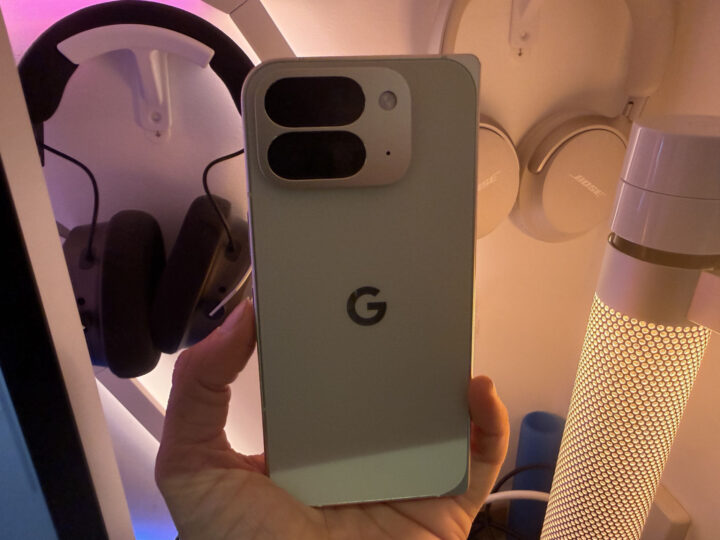
Pixel’s approach is calmer. It’s lighter at 258g, and the closed shape is closer to what your hand expects. The bigger story is durability: IP68 dust and water protection plus a redesigned “gearless” hinge meant to improve long-term confidence. If you want broader foldable context, this foldable face-off coverage captures why many buyers still rank comfort and reliability above “thinnest possible.”
Winner: Google Pixel 10 Pro Fold, because IP68 and lower weight matter more often than ultra-thin “when open” numbers.
Display Quality
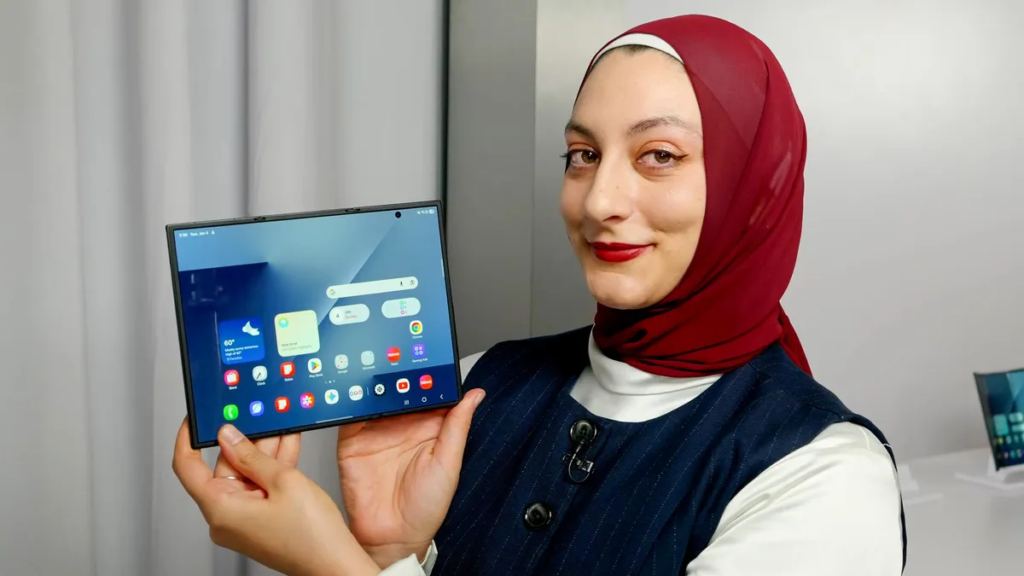
TriFold’s display is the whole point. You get a 6.5-inch cover AMOLED and a 10-inch inner AMOLED, both with 1 to 120Hz refresh rates. That 10-inch panel changes how you work: typing with space, viewing spreadsheets without constant zooming, or watching a movie without feeling like you’re peeking through a mailbox slot.
Pixel’s screens are smaller but more traditional: 6.4-inch outside, 8-inch inside, up to 120Hz. Pixel also claims up to 3,000 nits peak brightness on both displays, which helps when you’re outside.
Creases are part of foldable life. Pixel’s inner crease is visible, but it fades once you scroll or watch video. TriFold has two creases, yet they’re described as less visible than Samsung’s Z Fold 7 crease, which is already fairly subdued.
Winner: Samsung Galaxy Z TriFold, because the 10-inch inner screen is a real upgrade for movies, typing, and multiwindow work.
Performance
TriFold runs the Snapdragon 8 Elite for Galaxy, while Pixel uses Tensor G5. Put simply, Snapdragon usually favors raw speed and sustained heavy lifting, while Tensor tends to focus on Google’s AI features and smooth everyday behavior.
RAM is simple: 16GB on both. Storage is where your buying math changes. Pixel starts at 256GB, TriFold starts at 512GB, so you may not need to micromanage downloads on Samsung’s base model.
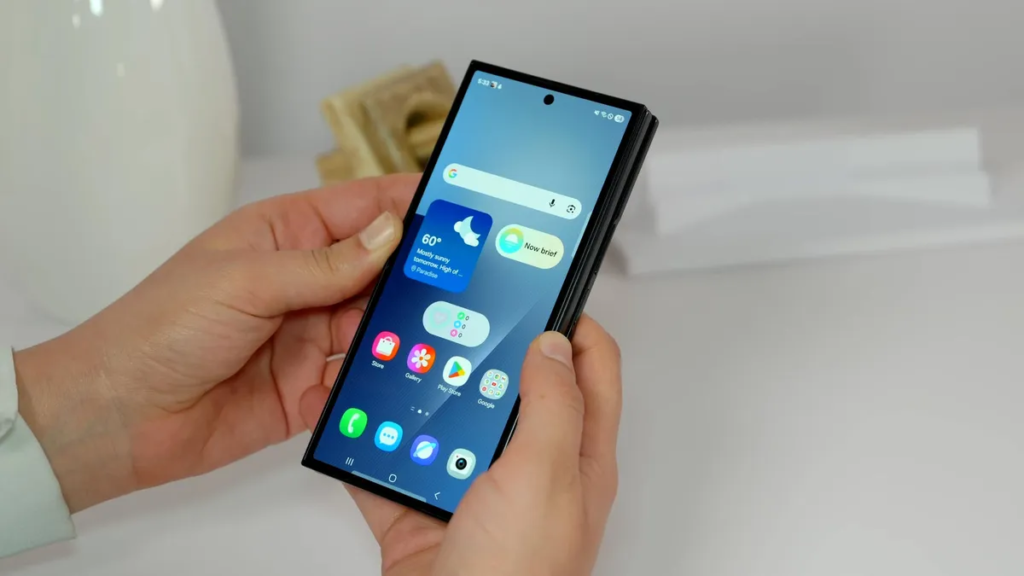
Multitasking is the most practical performance difference. TriFold lets you run three apps simultaneously, and the bigger screen makes that feel less cramped. Pixel is limited to two apps at once, even though Split Screen got more flexible sizing controls.
Winner: Samsung Galaxy Z TriFold, because three-app multitasking on a larger display is a direct day-to-day advantage.
Battery Life & Charging
TriFold has a larger 5,600mAh battery, while Pixel has 5,015mAh. Still, size alone does not guarantee endurance, since screens, chips, and software all affect results.
Pixel has real-world testing context: it can last a full day with battery left, dropped to 96% after a 45-minute mixed endurance run, and fell from 100% to 78% in a three-hour Wi-Fi streaming test at full brightness on the inner display. Charging is also clear: 0% to 51% in 30 minutes, and a full charge in under 1.5 hours.
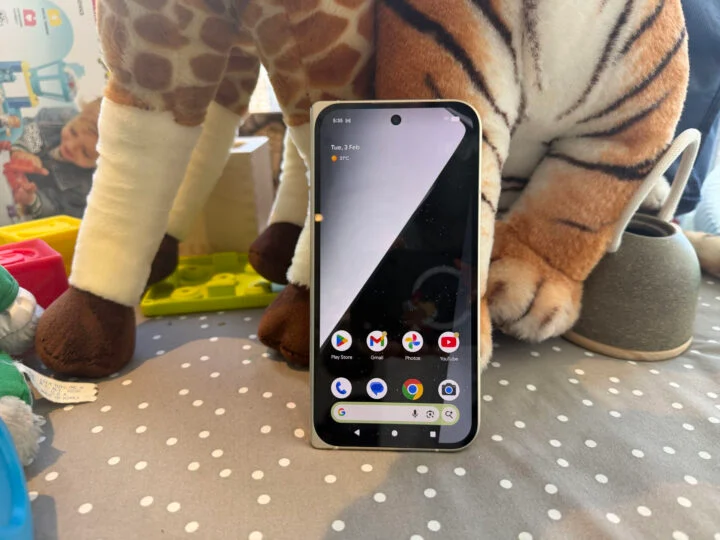
TriFold’s charging story is strong on convenience: 45W wired, Qi wireless, and Samsung includes a charging brick in the box, along with a case when ordered in the US.
If you hate buying chargers separately, TriFold’s box contents are a quiet win.
Winner: Google Pixel 10 Pro Fold, because it has documented test results, while TriFold battery expectations are still more “should” than “proven.”
Software & Ecosystem
Both phones run Android 16, but they feel different fast. TriFold uses One UI 8 with Galaxy AI, and it’s built to stretch into laptop-like behavior using Samsung DeX. On a 10-inch inner screen, that concept makes more sense, since you have room to treat the phone like a mini workstation.
Pixel sticks closer to Google’s version of Android 16, and it piles on practical assistants: Magic Cue can surface relevant info as you do things (like showing flight details when you call an airline), Drag & Drop helps move photos or files between apps in Split Screen, and camera helpers like Camera Coach, Add Me, and Instant View try to reduce missed shots.
Long-term ownership favors Pixel too, since it promises seven years of OS and security updates.
Winner: Google Pixel 10 Pro Fold, because seven years of updates plus genuinely useful assist features usually age better than UI extras.
Connectivity
Confirmed wireless basics are strong on both. TriFold lists Wi-Fi 7, Bluetooth 5.4, NFC, and USB-C. Pixel also supports Wi-Fi 7, and it includes an ultra-wideband (UWB) chip, which can help with precise nearby interactions and tracking features (when you use compatible gear).
Some connectivity details you might care about are not consistently stated across sources, so it’s smart to double-check the exact SKU you’re buying.
Winner: Samsung Galaxy Z TriFold, because its Bluetooth version and NFC are explicitly listed in the confirmed specs.
Cameras
TriFold’s camera hardware reads like a flagship checklist: 200MP wide, 12MP ultrawide, 10MP telephoto, plus two 10MP selfie cameras (cover and inner). It also supports 8K video capture, which is useful if you crop heavily in edits or want maximum detail.
Pixel’s hardware is more modest on paper: 48MP wide, 10.5MP ultrawide, 10.8MP telephoto, and 10MP selfie cameras. The real story is processing and features. Pixel’s Super Res Zoom can sharpen digital zoom up to 20x, and the phone adds tools like Camera Coach and Add Me for tricky people shots.
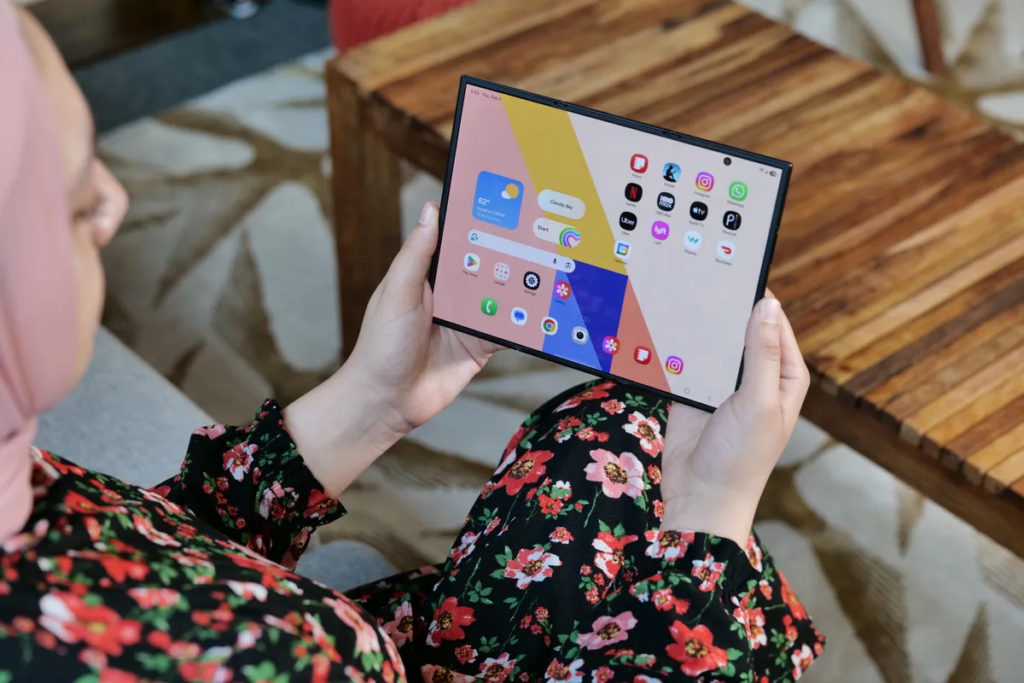
Photo character matters too. Pixel images are described as balanced in exposure with a slight softness, and it handles low light well in tough mixed lighting. Zoom can look impressively clean for digital, but it still does not match optical reach.
For a broader size and feature rundown from another comparison source, this TriFold vs Pixel 10 Pro Fold overview can be a quick reference point.
Winner: Samsung Galaxy Z TriFold, because its camera hardware and 8K video support give you more ceiling, even before software steps in.
Extra Features
Both phones support a fingerprint sensor, so unlocking is simple and familiar.
Pixel’s extras lean practical: Satellite SOS for emergencies, plus Qi2 certification and built-in magnets (Pixelsnap) for easier alignment with magnetic chargers, wallets, and stands. It also includes a free Google VPN.
TriFold leans into “productivity kit” vibes. You get Samsung DeX, IP48 protection, and in the US Samsung includes a 45W power adapter in the box. Recent US orders also list a case included, which helps, since a trifold feels expensive before you even add accessories.
If you like foldables that go the other direction (compact first), you can also compare this style against a flip in the Motorola Razr 2025 review to sanity-check what kind of foldable you actually enjoy carrying.
Winner: Google Pixel 10 Pro Fold, because Qi2 magnets plus IP68 and Satellite SOS are the kind of perks you keep using.
Price & Value
This comparison gets blunt at checkout. TriFold starts at $2,899 (512GB) in the US, and current US availability has been direct from Samsung, not carriers. It also sold out quickly after launch, with restocks expected in February 2026. Samsung is also running bundle discounts on accessories when purchased with the phone.
Pixel 10 Pro Fold starts at $1,799 (256GB). Even if you upgrade storage, you begin from a much lower floor. Pixel is also the safer bet if you want wide retail availability and more chances for standard promotions over time (without assuming any specific discount).
Winner: Google Pixel 10 Pro Fold, because $1,100 is a huge gap, and IP68 plus seven years of updates strengthens the value case.
Who is it for?
Choose Galaxy Z TriFold if:
- You want the biggest pocketable screen, and you’ll actually use the 10-inch inner display.
- You rely on three-app multitasking for work, research, or content planning.
- You plan to use Samsung DeX and like the idea of a phone that can act like a mini computer.
- You’re fine with more weight and thickness in exchange for that tablet-like feel.
Choose Pixel 10 Pro Fold if:
- You want IP68 dust and water protection, so you worry less at the beach or in the rain.
- You prefer a foldable that feels more normal when closed, with lower weight in hand.
- You want a lower entry price but still want a premium foldable experience.
- You care about seven years of updates and Google’s helpful AI features.
- You want Qi2 magnets for easier charging and accessory use.
The right choice depends on how often you’ll open the inner display, not how cool it looks once.
FAQs
Which phone gives you the most screen for work?
If you want a pocket tablet, you pick the Galaxy Z TriFold, it opens to a 10-inch display. The Pixel 10 Pro Fold tops out at 8 inches.
Which foldable is easier to use like a normal phone?
You’ll likely find the TriFold’s 6.5-inch cover screen more phone-like, while the Pixel’s 6.4-inch cover display is still comfortable and practical for quick texts.
Which one’s tougher for dust, sand, and water?
You choose the Pixel 10 Pro Fold if durability matters, it’s IP68 for dust and water. The Galaxy Z TriFold is IP48, so dust protection is limited.
Which foldable has the better battery and charging setup?
You get a bigger 5,600 mAh battery and 45W charging on the TriFold. The Pixel has 5,015 mAh, plus 23W wired and 15W wireless charging.
Which phone’s camera hardware is more impressive on paper?
If specs drive your choice, the TriFold wins with a 200MP main camera. The Pixel 10 Pro Fold uses a 48MP main sensor, plus ultrawide and telephoto.
Which is better for zoom shots, concerts, and far subjects?
You’ll prefer the Pixel if you care about reach, it includes a 5x telephoto. The TriFold pairs its 200MP main with a 10MP telephoto for closer zoom.
Which foldable is better for multitasking and productivity?
You pick the TriFold for pure productivity, the 10-inch canvas helps, and Samsung DeX can mimic a desktop setup. The Pixel still limits you to two apps.
Which one’s brighter and easier to see outside?
You get higher peak brightness on the Pixel, up to 3,000 nits on both screens. The TriFold lists 1,600 nits on the main screen and 2,600 on the cover.
Which phone’s software experience feels more helpful day-to-day?
You’ll like the Pixel if you want Google-style smarts, it ships with Android 16 and features like Magic Cue. The TriFold runs Android 16 with One UI 8.
Which is the better buy if you care about price?
You go Pixel for value, it starts at $1,799. The Galaxy Z TriFold starts at $2,899 for 512GB, so you pay a lot more for that giant screen.
Final Verdict
If your work and entertainment routinely outgrow an 8-inch inner screen, TriFold’s 10 inches and three-app multitasking are hard to replace. You’re paying for that space, and you’ll also carry 309g and 12.9mm thickness when closed.
Pixel takes the opposite path: it’s cheaper, lighter, and its IP68 rating reduces real-world stress. Charging and battery tilt different ways too, with Pixel showing tested endurance and TriFold offering a larger cell and a 45W charger included. Pick TriFold for “work anywhere” screen real estate, pick Pixel for durability and value.
Winner: Google Pixel 10 Pro Fold, because the price gap plus IP68 and seven years of updates make it the better Which phone gives you the most screen for work?default buy.