

Should you buy the DJI Osmo Pocket 4 vs DJI Osmo Pocket 3 instead? That is the whole question, because both are compact gimbal cameras with strong video quality, but they don’t feel the same once you live with them.
If you shoot travel clips, walking vlogs, workouts, or quick B-roll, the differences that matter are not only on a spec sheet. You care about image quality, tracking, battery life, storage, controls, audio, and whether the price jump pays you back.
This comparison keeps it practical, because both cameras are good. The better one depends on how you shoot and how much you’re willing to spend.
RELATED: Xreal 1S vs Viture Beast: Which is Better?
Quick Summary
Pocket 4 is the more complete camera. You get a newer 1-inch sensor, up to 14 stops of dynamic range, stronger low-light results, ActiveTrack 7.0, 107GB of built-in storage, USB 3.1 transfers, a brighter 1000-nit screen, longer battery life, 4K/240fps slow motion, gesture control, exposure lock, and more physical controls.
Pocket 3 still holds up well. Core video quality is already excellent for the size, the body is lighter, the price is lower, and microSD-only storage will suit plenty of people. If you mainly shoot in good light and want a simple pocket camera, it still makes sense. For another side-by-side take, Heliguy’s comparison lands in a similar place.
If you’re cross-shopping with other compact options, Oasthar’s guide to the best budget digital cameras for 2026 gives good context for where the Pocket 3 still fits.
Winner: Pocket 4. You get more headroom almost everywhere, even if the gap isn’t huge in bright daylight.
Specifications
Here are the specs that matter most when you’re deciding between them.
| Spec | DJI Osmo Pocket 4 | DJI Osmo Pocket 3 |
|---|---|---|
| Sensor | New 1-inch CMOS | 1-inch CMOS |
| Lens | 20mm, f/2.0 | 20mm, f/2.0 |
| Standard video | Up to 4K/60 | Up to 4K/60 |
| Slow motion | Up to 4K/240fps | Up to 4K/120fps |
| Dynamic range | 14 stops | 12 stops |
| Photo resolution | 37MP | 9.4MP |
| Screen | 2-inch rotating OLED, 1000 nits | 2-inch rotating OLED, 700 nits |
| Tracking | ActiveTrack 7.0 | ActiveTrack 6.0 |
| Storage | 107GB built-in, plus reports note microSD support | microSD only |
| Transfer | USB 3.1, up to 800MB/s | USB 2.0 |
| Battery life | Up to 240 min, 1080p/24 | Up to 166 min, 1080p |
| Weight | 190.5g | 179g |
| US price | Around $649 standard | Around $499 to $519 standard |
The standouts are simple. Pocket 4 lasts longer, transfers files much faster, and gives you more room in hard lighting. Pocket 3 fights back on price and weight, which still matters if you carry it all day.
Winner: Pocket 4. The spec sheet lines up with the real-world gains, not fluff.
Design & Build Quality
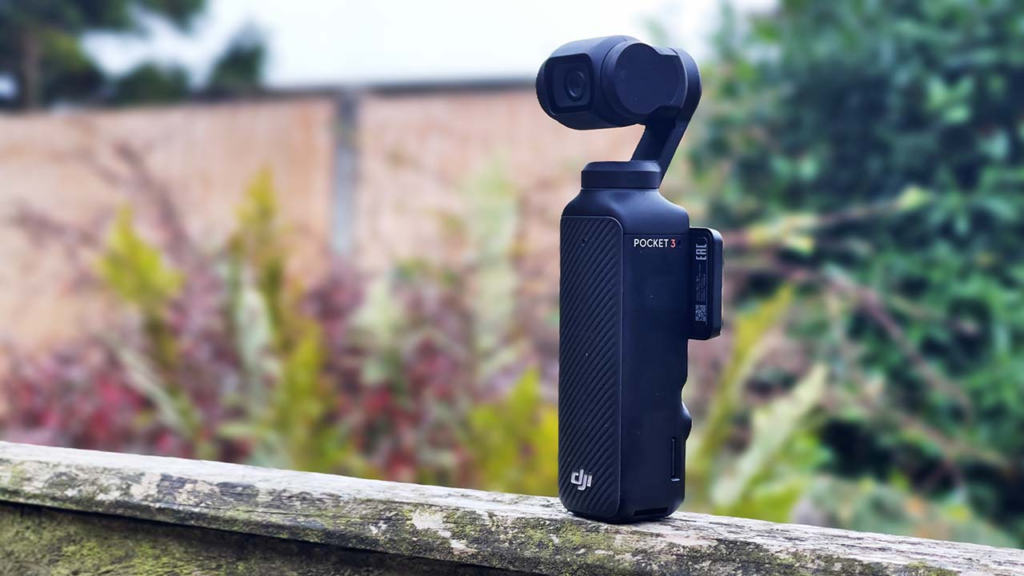
Pocket 4 is slightly larger and heavier, at 190.5g versus 179g for Pocket 3. That extra weight mostly comes from the bigger battery, so it isn’t dead weight. You feel it, but not by much.
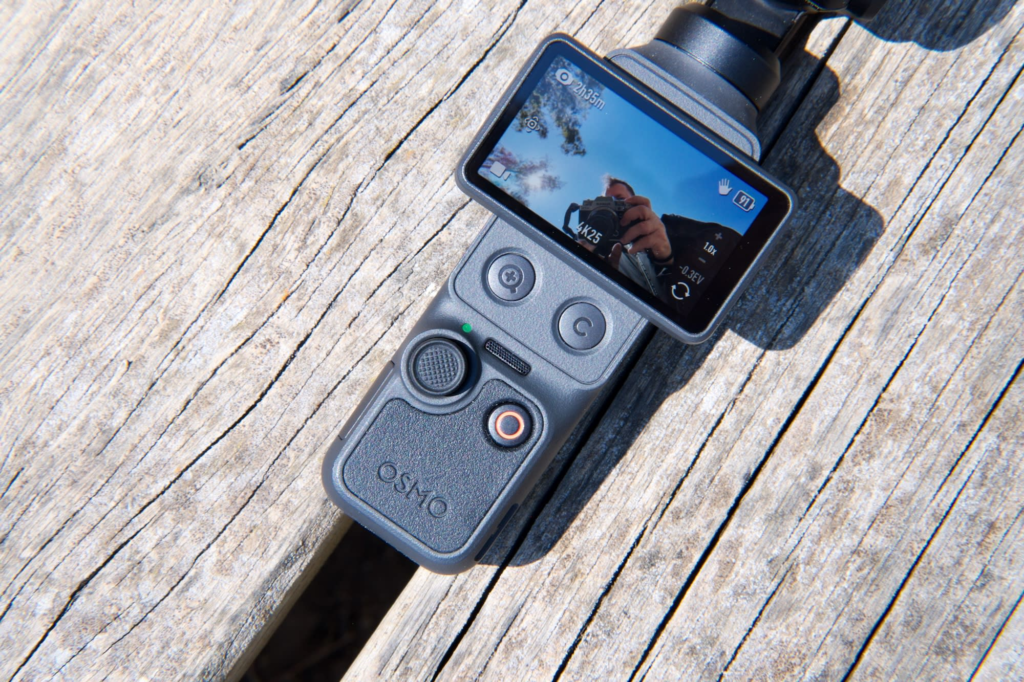
What you do notice faster is control. Pocket 4 adds a 5D joystick, a dedicated zoom button, and a custom button. It also uses a separate gimbal clamp, and source material notes better transport protection plus a covered card area on some units. Pocket 3 is simpler, lighter, and a bit more throw-it-in-your-bag friendly, though earlier Pocket models never felt like rough-use cameras. Trusted Reviews’ launch comparison also points to the newer model feeling more mature in daily handling.
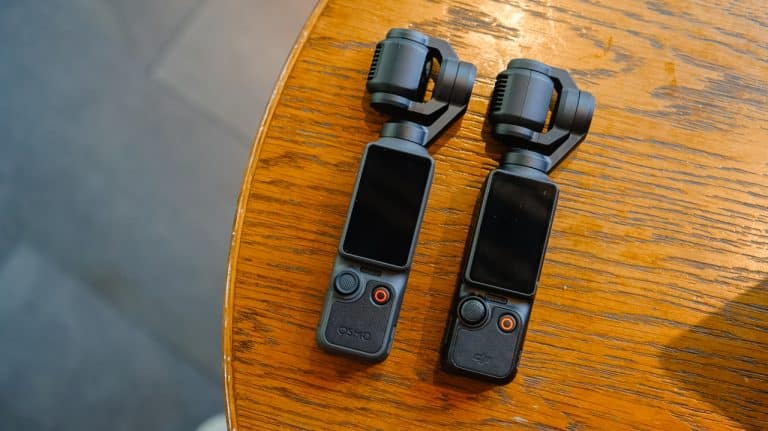
Pocket 4 inspires more confidence when packed away, especially with the clamp and “Gimbal Protected” behavior noted in hands-on testing. Still, if you need something for rain, crashes, or mountain bike abuse, you want an action camera instead.
Winner: Tie. Pocket 4 feels better built and better controlled, but Pocket 3 is lighter and easier to live with.
Image & Video Quality
This is where the comparison gets tricky. In bright daytime scenes, the difference is smaller than you may expect. Both use a 1-inch class sensor and the same 20mm f/2 lens, so Pocket 3 still looks great for its size.
Pocket 4 earns its lead when light gets messy. Sunrise, sunset, interiors with bright windows, night streets, neon signs, and shaded faces against bright skies are where it starts to separate. The newer sensor brings 14 stops of dynamic range, shadows look brighter, highlights clip less harshly, and 10-bit recording in standard mode gives you smoother skies and more editing room.
How much better is Pocket 4 in daylight and high-contrast scenes?
In plain daylight, you may need a side-by-side clip to spot the change. Detail is close. The wider gap shows up once you mix bright skies with dark shadows. Pocket 3 already punches above its size class, so this is not a must-upgrade jump for every buyer.
What the photo upgrade means for thumbnails and social posts
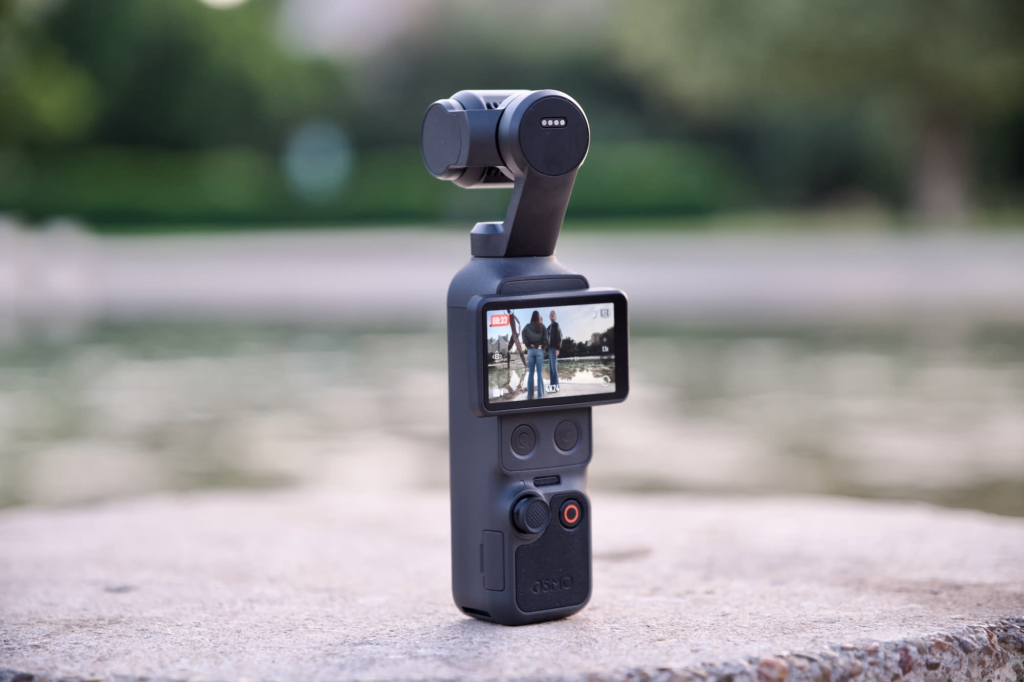
Pocket 4 jumps from 9.4MP to 37MP. That gives you more crop room, sharper stills, and better flexibility for thumbnails or vertical social posts. If video is your whole reason for buying one, this isn’t the main event, but it is useful. A recent spec recap from HowToTechInfo highlights the same leap in resolution and dynamic range.
If you edit your footage, travel often, or shoot yourself in mixed light, Pocket 4 is easier to like. If you mostly post quick clips from daytime trips, Pocket 3 still looks strong.
Winner: Pocket 4. The gains are not dramatic in full sun, but they are real when the scene gets harder.
Stabilization
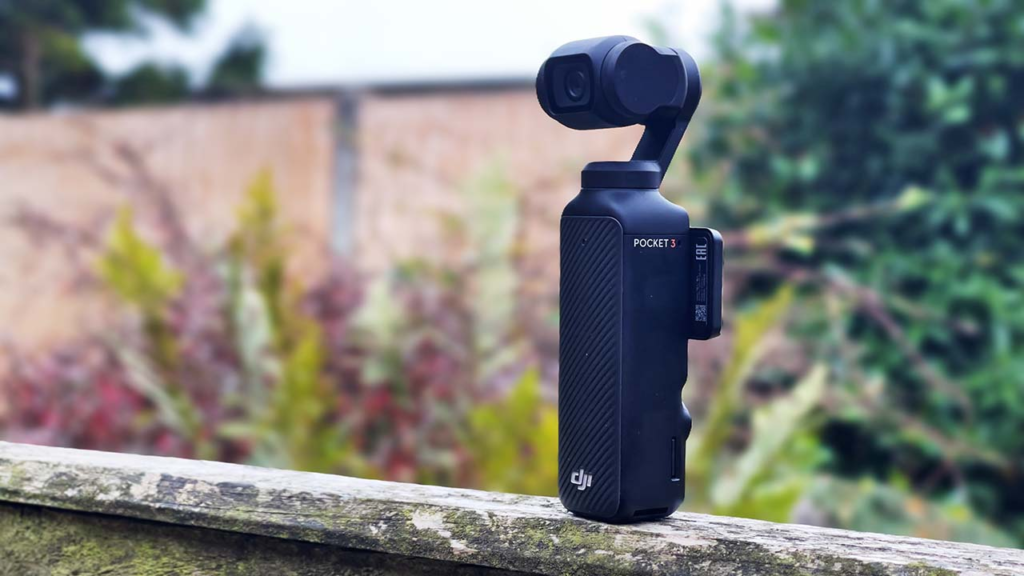
Both cameras sit on a 3-axis gimbal, and both are good for one-person shooting. Pocket 4 gives you more help. ActiveTrack 7.0 holds subjects better behind obstacles, stays locked from farther away, and now works with the 2x lossless zoom. You also get subject lock, face priority, dynamic framing, and gesture start or stop.
Why ActiveTrack 7.0 matters more than it sounds
This matters when you set the camera on a tripod and step away. It matters in workouts, walk-and-talk clips, event coverage, and any shoot where you are both the subject and the crew. A simple mini tripod can help framing more than the wide-angle lens alone, because extra reach changes the composition faster than a small focal length shift.
Winner: Pocket 4. Both are easy, but the newer tracking gives you fewer ruined takes.
Low-Light Performance
Pocket 3 was already better than most action cameras in dim scenes. Pocket 4 still improves on it. Low-light mode pushes the max ISO higher, from 16,000 to 25,600 in the provided source material, and night footage looks a bit brighter with less noise and better highlight control.
That matters most when street lamps, signs, and windows sit next to dark faces or shadowy backgrounds. Pocket 4 also supports a magnetic fill light with three brightness levels and adjustable color temperature, which is handy if you vlog after dark. Yahoo’s Pocket 4 upgrade rundown calls out many of these real-use improvements.
Winner: Pocket 4. This is one of the clearer upgrade areas, even if Pocket 3 is still solid.
Audio & Mic Support
Both are strong for a pocket camera, and both give you built-in mics that work well for quick vlogs. Pocket 3 also has a helpful backup audio option when you use an external mic.
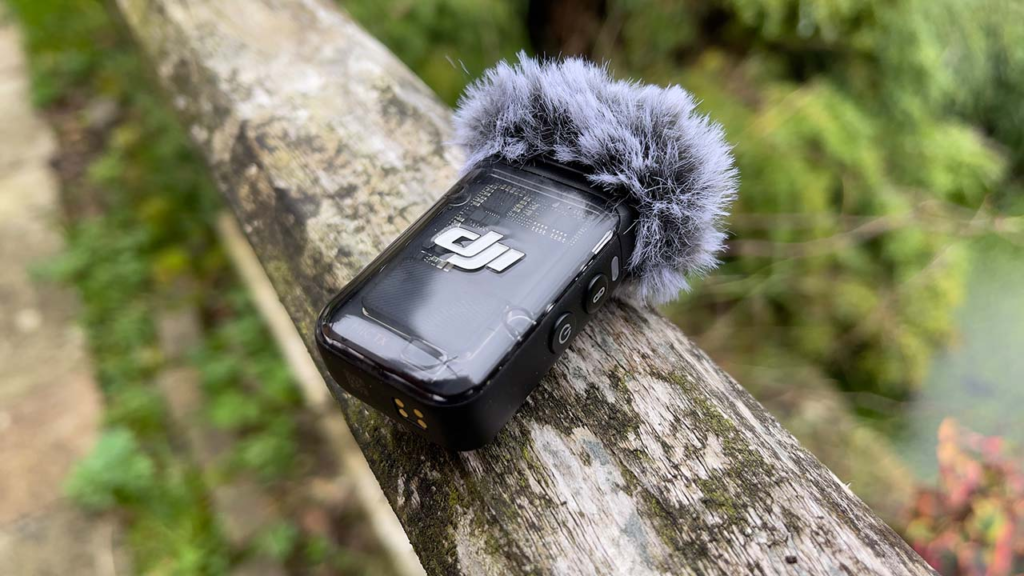
Pocket 4 goes further. It supports OsmoAudio, can connect up to two DJI mic transmitters at once, and adds 4-channel output. If you shoot walking videos, interviews, or event clips, that gives you cleaner voice capture and more flexibility.
Winner: Pocket 4. The audio setup is more useful once you go beyond casual clips.
Battery Life & Charging
Battery life is a real upgrade. Pocket 3 is rated up to about 166 minutes at 1080p. Pocket 4 stretches to 240 minutes at 1080p/24, with around 135 minutes at 4K/60 in the source notes.
Charging is fast on both, but Pocket 4 reaches 80 percent in 18 minutes. For travel days and long events, that means less battery anxiety and fewer power-bank checks.
Winner: Pocket 4. Longer runtime is one of the easiest upgrades to appreciate.
Storage & File Options
This is one of the biggest buying differences. Pocket 4 adds 107GB of internal storage, which saves you when you forget a card. It also moves files much faster over USB 3.1. If you shoot often and dump footage every day, that feels like a quality-of-life upgrade, not a lab test result.
Pocket 3 sticks to microSD, and there is still a good argument for that. Removable cards are cheap, easy to swap, and simple to archive. Workflow also changes a bit. Pocket 3 offers D-Log M and HLG. Pocket 4 adds D-Log and built-in film looks, but source material notes D-Log M is gone. So this is partly about preference, not only storage.
Winner: Tie. Pocket 4 is better for convenience and speed, while Pocket 3 is better for cheap, flexible expansion.
App, Controls & Connectivity
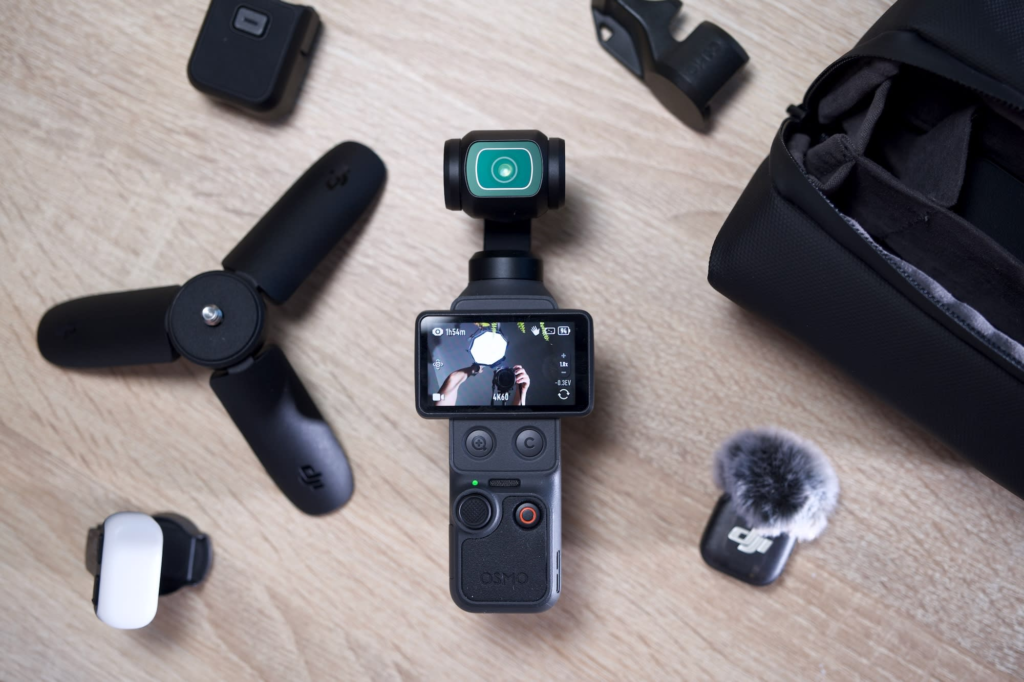
Both use a 2-inch rotating touchscreen and both are beginner-friendly. Pocket 4 feels faster because it layers on small fixes that add up, a brighter 1000-nit display, a 2-second startup, exposure lock by long press, gesture control, zoom while recording, and more physical buttons. Pocket 3 is already intuitive, but it can feel a bit more screen-dependent.
Connectivity is also better on Pocket 4. USB 3.1 is a big step over USB 2.0, and source notes also point to faster wireless transfers and DisplayPort support for 4K/60 streaming. That matters if you edit often or build a small creator kit. For regional pricing snapshots and bundle differences, Daily Camera News’ April 2026 overview is useful.
Winner: Pocket 4. It is the easier camera to control and the quicker one to live with.
Price & Value
Pocket 3 still wins the value argument for a lot of buyers. Standard pricing is commonly around $499 to $519, and the Creator Combo sits around $629. Pocket 4 is around $649 for the standard bundle, with creator bundles costing more.
So the question is simple. Do you need the better tracking, longer battery, built-in storage, faster transfers, and cleaner results in low light or high-contrast scenes? If yes, Pocket 4 earns its price. If not, Pocket 3 gives you a lot of the same experience for less.
Winner: Pocket 3. It gives you the stronger price-to-performance deal.
Who is Each Camera Really for?
Choose the Pocket 4 if you want the newest tools and fewer limits
- You shoot in mixed light, at night, or in scenes with bright skies and dark shadows.
- You film yourself solo and want stronger tracking, gesture control, and more direct controls.
- You move a lot of footage and will benefit from built-in storage and faster transfers.
Choose the Pocket 3 if you want strong value and already enough camera for most trips
- You want excellent stabilized video without paying for every new feature.
- You prefer microSD cards for cheap storage and simple swapping.
- You mostly shoot in good light, and the Pocket 4 upgrade feels too small for the price.
FAQs
Is the Osmo Pocket 4 a big upgrade over Pocket 3?
It depends on how you shoot. You get better dynamic range, stronger tracking, 37MP photos, built-in 107GB storage, and much longer battery life, but basic daytime video isn’t massively different.
Does Pocket 4 improve video quality enough to justify upgrading?
In tricky light, yes. Pocket 4 handles highlights and shadows better with its 14-stop dynamic range, and low-light footage looks cleaner, but bright daytime clips are still pretty close.
Is the DJI Osmo Pocket 4 better for vlogging?
For solo shooting, definitely. ActiveTrack 7.0 locks on more reliably, gesture control helps at a distance, and the brighter 2-inch screen plus extra controls make quick framing easier.
If you mostly vlog alone, tracking and battery life are the upgrades you’ll notice first.
Should you upgrade if you already own Osmo Pocket 3?
Usually only if you want more than incremental gains. Pocket 4 makes more sense for creators who need better low-light, longer runtime, internal storage, or 4K/240fps slow motion.
What are the biggest new features on Osmo Pocket 4?
The headline additions are 107GB internal storage, 37MP photos, ActiveTrack 7.0, 4K/240fps slow motion, a brighter 1000-nit screen, true 10-bit D-Log, and a 240-minute battery rating.
Is the Osmo Pocket 3 still worth buying in 2026?
Absolutely, if value matters more than having every upgrade. It’s lighter, cheaper, still shoots excellent stabilized video, and remains one of the easiest compact cameras to carry every day.
Does Pocket 4 have better battery life and charging?
Battery life is clearly better. Pocket 4 is rated up to 240 minutes, versus roughly 166 minutes on Pocket 3, though Pocket 3 can hit 80% slightly faster.
Which camera is better for low-light and sunset footage?
Pocket 4 has the edge here. It keeps more highlight detail, lifts shadows more cleanly, and pushes ISO higher in low-light mode, so night scenes look brighter and less noisy.
Is the Creator Combo worth getting with Osmo Pocket 4?
If you shoot regularly, yes. The mic transmitter, fill light, mini tripod, and wide-angle lens make the camera much more flexible, especially for vlogs, interviews, and solo travel content.
Pocket 3 is still the smarter buy for casual users. Pocket 4 is the better tool if you push your camera hard.
Final Verdict
Pocket 4 is the better camera. It tracks better, lasts longer, handles harder light with more grace, and removes small annoyances that add up over time. If you shoot solo a lot, edit your footage, or want the best version of this tiny gimbal-camera idea, it is the one to buy.
Pocket 3 is still the smarter buy for many people. You save money, lose little in bright daylight, and still get one of the easiest travel video cameras around. If you already own Pocket 3, the upgrade only makes sense if low light, dynamic range, storage, battery life, and tracking are real pain points for you.