

Is the Denon Home 400 worth buying in 2026? If you’re looking at a $599 wireless speaker, that’s the only question that matters.
This speaker promises Dolby Atmos music, HEOS multi-room audio, and enough output to handle more than a small room. That sounds good on a product page. It matters a lot more in real use.
This is the practical version. You’ll get the sound, design, features, connectivity, room fit, price, and the kind of buyer who should walk away.
RELATED: Philips OLED910 Review (2026): Bright OLED With Real Trade-Offs
Quick Summary
The short version, the Denon Home 400 is easy to like if sound comes first. It throws a bigger, taller presentation than most one-box speakers in this price range, and its bass stays controlled instead of turning into mush when you push the volume.
It also gives you more ways to play music than many rivals. You get Wi-Fi, Bluetooth, AirPlay 2, HEOS, USB-C, and AUX. If you already live on Spotify, TIDAL, Qobuz, or Amazon Music, it fits in without much drama.
The trade-offs are real, though. The HEOS app is useful, but it isn’t the smoothest app in the category. This isn’t a portable speaker either. It needs wall power, and it makes the most sense as a stay-at-home system.
If you want one speaker that sounds larger than it looks, this is where the Home 400 earns its price.
If you need the cleanest app experience or a grab-and-go speaker, you can stop here. If you want strong spatial sound in a single box, keep going.
Specifications
Here are the specs that matter most before you spend the money.
| Spec | Denon Home 400 |
|---|---|
| Type | Wireless smart speaker |
| Audio layout | 2.0.2-channel |
| Drivers | 6 total |
| Amplification | 6 Class-D amps |
| Power | 90 watts total |
| Frequency response | 44Hz to 20kHz |
| Dimensions | 11.8 x 5.9 x 8.6 inches |
| Weight | 9.26 pounds |
| Wireless | Wi-Fi, Bluetooth, AirPlay 2 |
| Physical inputs | USB-C, 3.5mm AUX |
| Streaming support | Spotify, TIDAL, Qobuz, Amazon Music, HEOS |
| Colors and price | Stone or Charcoal, $599 |
As of June 2026, the U.S. price is $599, and the speaker has been on sale since March 24, 2026.
Design, Build & Everyday Use
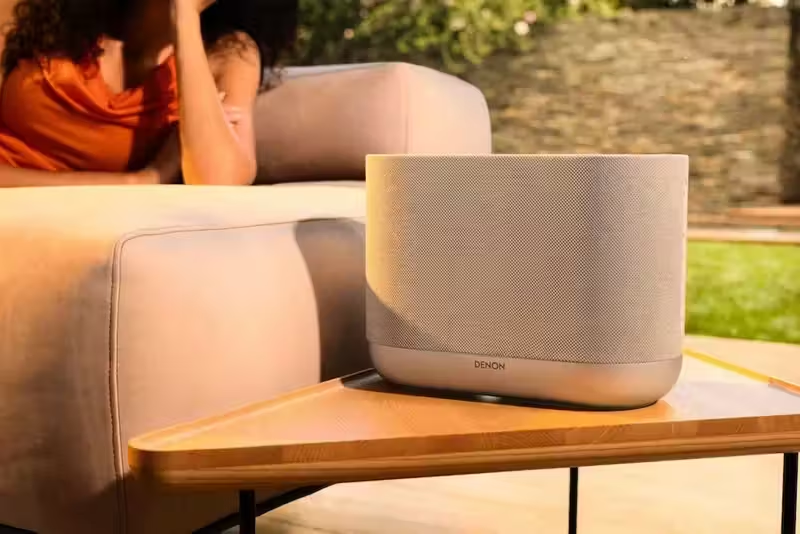
The Denon Home 400 doesn’t try too hard to look futuristic. That’s a good call. Its horizontal shape, fabric wrap, and soft edges make it look like something that belongs on a credenza, not a prop from a sci-fi set.
You can get it in Stone or Charcoal. In practice, that means neutral finishes that blend into a living room without asking for attention every time you walk in. Denon clearly wanted this speaker to disappear until you hit play.
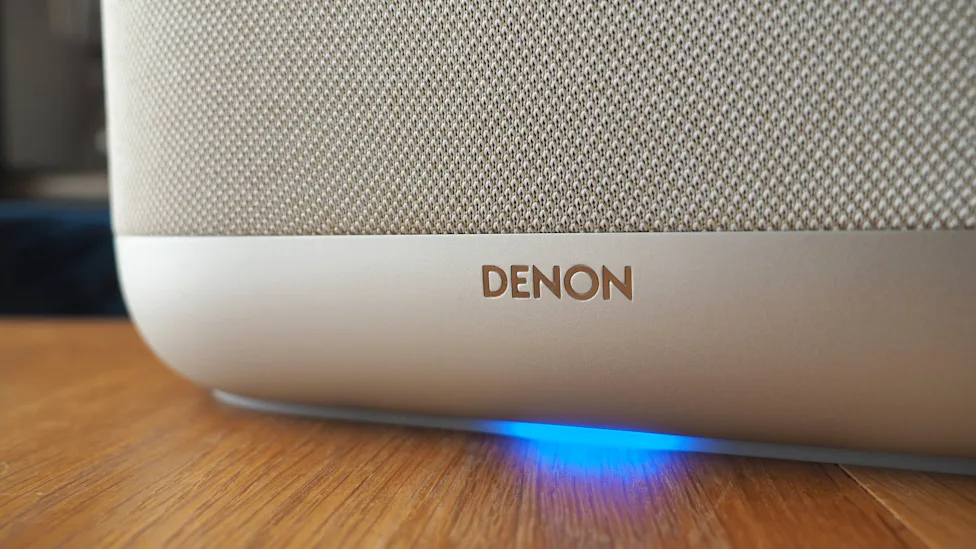
Build quality looks strong, and the size lands in a useful middle ground. It’s bigger than a bedroom speaker, but it doesn’t eat furniture the way some premium wireless models do. For more launch context and feature details, GearBrain’s review of the Home 400 lines up with that impression.
How the controls and app fit into daily use
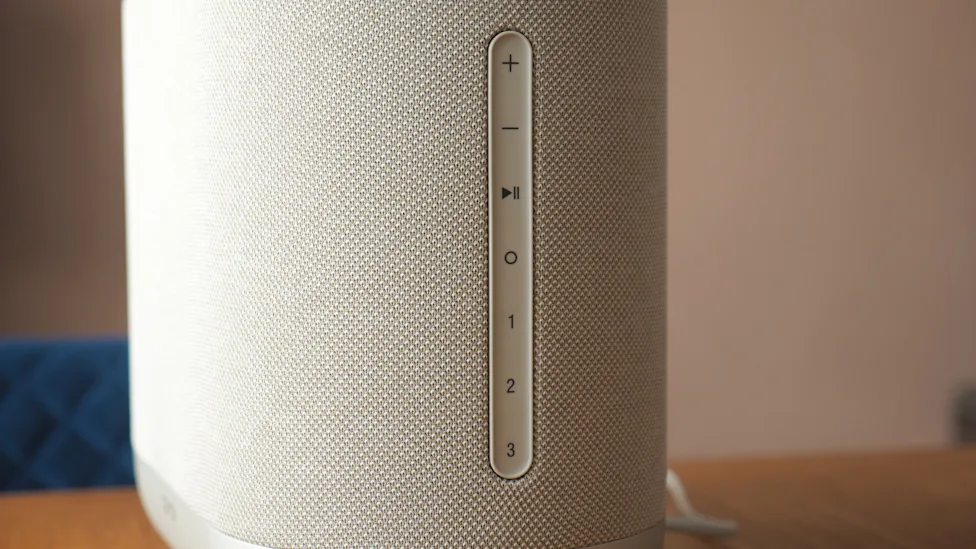
Denon kept the physical controls simple. You get proper buttons for volume, play/pause, and voice assistant access, plus three shortcut buttons you can assign in the app. Those presets are handy if you bounce between a favorite playlist, radio station, and streaming input.
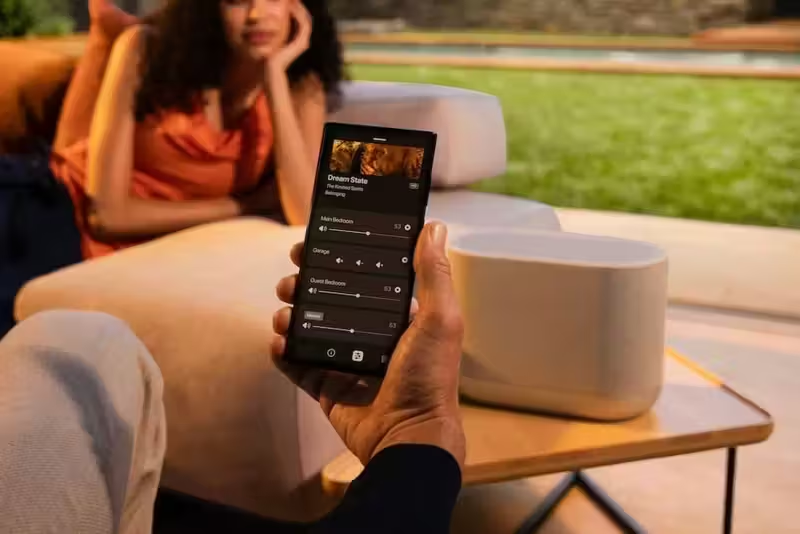
Around the back, you also get the mic toggle, pairing controls, and the physical connections. Setup goes through the HEOS app, and that app handles source selection, speaker grouping, presets, and EQ.
The catch, the app isn’t always polished. It does the job, but it can be slow to respond and less tidy than the best rivals. You can live with it. You probably won’t love it.
Sound Quality
This is the part that makes the Home 400 interesting. Denon built it around a six-driver, six-amplifier layout, with two tweeters, two 4.5-inch woofers, and two up-firing drivers for height. On paper, that sounds like a lot for one cabinet. In use, it pays off.
Bass is the first thing you notice. It has weight, but it doesn’t flop around. Kick drums hit with proper shape, bass lines stay easy to follow, and the speaker keeps its grip when the mix gets busy. You get force without the woolly low end that ruins so many big wireless speakers.
The midrange is strong too. Vocals cut through cleanly, guitars have texture, and dense tracks don’t collapse into a blur. That’s important, because a speaker can have huge bass and still sound hollow in the middle. This one doesn’t.
Treble is mostly clean, though it can lean a bit bright on some material. That’s not a deal-breaker, but it is something you’ll hear on sharper vocals or thin mixes. In “Pure” mode, the Home 400 sounds the most balanced and coherent with regular stereo music.
The best thing about its sound is scale. The cabinet looks modest. The presentation doesn’t.
What Dolby Atmos adds to music and movies
With Dolby Atmos tracks, the Denon Home 400 opens up in a way stereo playback can’t match. The soundstage gets wider and taller, and the speaker seems to push beyond its own size. That’s the trick here. It doesn’t sound trapped in a box.
Well-mixed Atmos music benefits the most. You get more air around instruments, a better sense of placement, and a presentation that feels less flat. Movies also gain some lift, especially with effects and ambient detail.

The width and height sliders in the HEOS app need a careful hand, though. Some tracks improve when you nudge them up. Others get vague fast. Start conservative, then adjust only if the mix asks for it.
Connectivity, Streaming & Smart Features
The Home 400 is flexible in ways that matter. Wi-Fi support covers 2.4, 5, and 6 GHz bands, and you also get Bluetooth, AirPlay 2, USB-C, and a 3.5mm AUX input. That gives you enough options for streaming, local playback, and older gear.
Service support is solid. Spotify, TIDAL, Qobuz, and Amazon Music are all in the mix, and HEOS ties them together inside one control system. If you’re an Apple user, Siri control through AirPlay 2 adds another layer of convenience.
Bluetooth is there, but Wi-Fi is the better path if you want the full point of this speaker. That’s where HEOS, higher-quality streaming, and multi-room features start to matter. The microphone also has an on/off toggle, which is the sort of small detail you appreciate more over time.
How the Denon Home 400 works in a multi-room setup
HEOS is a big part of the appeal. You can group speakers, play different music in different rooms, or sync everything across the house. Stereo pairing is supported too, and the Home 400 can join a larger home theater setup.
Denon says HEOS can scale to 64 devices across 32 zones, so this isn’t a one-room idea. If room size and speaker matching are your main questions, Audio Advice’s guide to the Home 200, 400, and 600 gives a useful size-by-size breakdown.
Room Performance & Placement Tips
The Denon Home 400 makes the most sense in a medium or large room. A living room, family room, or open-plan space is where its scale and bass control pay off. In a tiny room, it can be more speaker than you need.
Placement matters because of the up-firing drivers. You want some space above it, and you don’t want to bury it in a tight shelf if you’re chasing the Atmos effect. Give it room to breathe, and the soundstage has more space to spread.
The nice part is that you don’t need a giant cabinet to fill the room. The footprint is manageable, but the output feels bigger than the size suggests. That’s one of the Home 400’s strongest everyday advantages.
Price & Value
At $599, the Home 400 sits squarely in premium smart-speaker territory. That means value depends on what you care about most. If you’re paying for immersive sound, broad connectivity, and multi-room flexibility, the price makes sense.
If you only want background music in a small room, it won’t. There are cheaper ways to get that done. The Denon earns its keep when you want a single speaker that can sound spacious, handle multiple services, and become part of a larger HEOS setup later.
There’s also the bigger-system question. If you already own passive speakers, you may get more mileage from one of the best stereo amplifiers for home audio instead of buying an all-in-one wireless speaker. But if you want one-box convenience without giving up too much sonic ambition, the Home 400 is a strong buy.
Who Is It Best For, and Who Should Skip It?
This is where the decision gets simple. The Denon Home 400 is good at a few clear things, and less convincing at a few others.
Buy it if you want a premium home audio hub
- You want room-filling sound from one speaker, not a full separates stack.
- You care about Dolby Atmos music and want real height drivers, not only virtual processing.
- You plan to use HEOS for multi-room playback, stereo pairing, or a wider home system.
- You switch between Wi-Fi streaming, AirPlay 2, Bluetooth, and physical inputs.
- You want a speaker that looks clean in a living room and doesn’t scream for attention.
Skip it if portability or low cost matters more
- You want a battery-powered speaker you can move around the house or take outside.
- You need the lowest price, because $599 is still a serious ask for one speaker.
- You want the slickest control app in the category, because HEOS is useful but not class-leading.
- You mostly listen over basic Bluetooth, where this speaker’s best features matter less.
- You have a very small room and don’t need this much output.
FAQs
Is the Denon Home 400 worth the $599 price tag?
You get a serious speaker for the money, but not a cheap one. The Home 400 earns its price with Atmos hardware, HEOS, and premium build.
How convincing is the Home 400’s Dolby Atmos sound?
Pretty convincing. The six-driver layout, including two up-firing drivers, gives you real height and width, not just a processed effect. Medium rooms suit it best.
Which voice assistants does the Home 400 actually support?
Apple users get the cleanest path here. You can use AirPlay 2 and Siri, but there’s no built-in Alexa, Google Assistant, or Chromecast support.
What devices and services can you connect to it?
You’ve got plenty of options, including Wi-Fi, Bluetooth, USB-C, and AUX. HEOS also opens up multi-room playback and access to services like Spotify, TIDAL, Qobuz, and Amazon Music.
Is the Home 400 better than Sonos Era 300?
If you want room-filling sound and real Atmos, it’s a stronger pick. Sonos may have the slicker app, but Denon sounds bigger and more physical.
Final Verdict
The Denon Home 400 gets the important stuff right. You get spacious sound, strong bass control, useful connectivity, and a design that fits into a real home.
Its weak spots are clear too. The HEOS app can feel rough around the edges, the tuning controls need restraint, and the price keeps it out of impulse-buy territory.
Still, if you want a premium home speaker that sounds bigger than it looks, this one makes a strong case. If you care more about portability, price, or the cleanest app experience, you should keep shopping.