

A bad backpack can wreck a good hike. The best hiking backpacks fix the stuff that usually goes wrong, straps that bite, weight that pulls you backward, and fabric that gives up when the weather turns.
Disclosure: As an independent reviewer, we may receive an affiliate commission on qualifying purchases made through our links. This helps support our research and testing team at OASTHAR. Learn more about our testing process.
In 2026, you’ve got more solid options than ever. Still, fit issues and messy storage are common, especially if you’re buying your first real pack.
This guide breaks down eight standout packs, from budget-friendly starters to load-hauling workhorses, so you can match the right bag to your trips.
RELATED: The 7 Best Motorcycle Dash Cams for 2026, Tested and Reviewd
Best hiking backpacks at a glance
- Best Overall: Osprey Atmos AG LT
- Best Versatile: Osprey Talon
- Best Lightweight: Granite Gear Blaze
- Best Heavy-Load: Osprey Aether
- Best for Organized: Deuter Aircontact Core 65+10
- Best for Women: Rab Exion ND55L
- Best Comfort: Rab Protium
- Best Budget: Teton Sports Scout
Learn more about how we test hiking backpacks
In our assessment, you get a better “best of” list when you combine hands-on criteria with real buyer feedback at scale. During testing, we found comfort claims often fall apart under load, especially on long climbs.
Fit and sizing range
A backpack can have great materials and still feel awful if it doesn’t match your torso and hips. You look for adjustable torso length, a hip belt that tightens smoothly, and shoulder straps that don’t pinch. We also pay attention to how the pack sits when you move, because bounce and sway get worse on rocky trails.
Load transfer and support
Support is what makes 30 pounds feel manageable instead of miserable. We focus on frames (when included), how well the hip belt carries weight, and whether the pack stays close to your center of gravity. A stable pack helps most on rough terrain, where a “sloppy” carry can throw you off balance.
Ventilation and sweat management
Back panels matter more than most beginners think. We check whether the pack design allows airflow, uses foam channels, or relies on tension mesh. The goal is simple, less sweat buildup on your back on long days, without making the pack feel unstable.
Organization and access
A huge main compartment is fine, until you need one item and everything comes out. We test pocket layouts, front access zippers, sleeping-bag compartments, and hip belt pockets. You’re looking for storage that matches your habits, quick-grab snacks, layers, and water, plus easy access to the stuff you only need at camp.
Weather protection and durability
Trail packs take abrasion, dirt, and sudden rain. We consider fabric feel and overall build, plus whether a rain cover is included. A rain cover doesn’t replace smart packing, but it can save your day when the forecast flips fast.
Price and customer reviews
We select best hiking backpacks by researching major online shopping platforms such as Amazon, Walmart, Target, and Currys, then we pressure-test the short list with consistent in-house criteria. We also analyze hundreds of real customer reviews to compare real use against marketing claims. That way, you’re not relying on one opinion.
Star rating: 5.0 out of 5
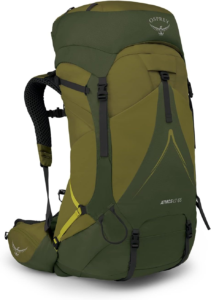
If you want one pack that does almost everything well, this is the one. The Atmos AG LT’s superpower is comfort that stays consistent over hours, the kind of carry that makes a long day feel shorter.
The headline feature is the Anti-Gravity suspension. In plain terms, it helps your load feel lighter by spreading weight and shifting it toward your hips. The tension-mesh back panel also helps keep your back cooler and drier, which matters when you’re climbing with a full pack.
It hits a sweet spot on capacity and weight for multi-day trips. You get 65 L of space and a pack weight just over 4 lb, and it’s rated to carry up to 40 lb. Storage is straightforward but effective, with stretch side pockets, a big front pocket, and compression straps that keep long items secured. An integrated rain cover is included, so you’re not scrambling when clouds roll in.
Capacity: 65 L | Pack weight: just over 4 lb | Load rating: up to 40 lb | Suspension: Anti-Gravity | Rain cover: included
Reasons to Buy:
- Anti-Gravity comfort under load
- Cool, breathable back panel
- 65 L fits real multi-day kits
- Fit adjusts across layers
- Integrated rain cover
Reasons to Avoid:
- Not the lightest option
- Bigger than you need for day hikes
Who should buy it: If you’re planning two-plus-day trips and want comfort as your top priority, this fits the job. It also works well when your clothing changes by season, because the fit system adapts without fuss. For official details and the full series, start at the Osprey Atmos AG line overview.
Star rating: 4.8 out of 5
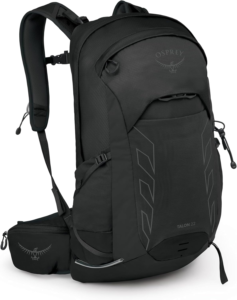
The Talon is the pack you grab when you want to move fast and not think about your gear. Its superpower is mobility, it stays stable, feels light, and works across activities.
At about 2.4 lb, it’s easy on your back, and the 22 L capacity hits the day-hike sweet spot. The AirScape back panel helps with airflow and comfort, but it also hugs your body so the pack doesn’t slosh around when you pick up pace. Fit is dialed through the sliding yoke and the BioStretch hip belt, which is handy if your layers change mid-hike.
Organization is trail-practical. You get side mesh pockets for bottles, dual zip hip belt pockets for snacks or small essentials, and a top pocket for quick-access items like sunglasses or a phone. It also brings multi-sport extras, a trekking pole stash, a LidLock-style helmet carry, and a tuck-away ice axe loop.
Capacity: 22 L | Pack weight: about 2.4 lb | Back panel: AirScape | Hydration: reservoir compatible | Best use: day hikes and mixed sports
Reasons to Buy:
- Light feel, stable carry
- Great pocket layout for snacks
- Adjustable fit system
- Works for hiking and biking
- Hydration compatible
Reasons to Avoid:
- Not enough space for bulky overnight kits
- Less support for very heavy loads
Who should buy it: This fits you best if you mostly do day hikes, weekend exploring, and occasional bike days. If you like a snug, athletic fit instead of a loose sack-on-your-back feel, this is your style. You can see the whole lineup at the Osprey Talon and Tempest collection.
Star rating: 4.6 out of 5
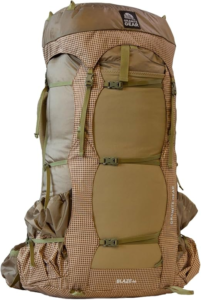
Some packs go light by giving up support. The Blaze doesn’t play that game. Its superpower is staying light but still capable when you carry real weight.
It’s built around an Air Current frame and is designed to support up to 50 lb, which is impressive for a pack positioned as lightweight. The harness details matter here, two layers of shoulder padding, load lifter straps, and a removable sternum strap with a whistle for safety.
Storage is flexible, which helps when your kit changes trip to trip. The cinch and roll-top closure makes it easy to compress your load. The removable lid compartment can double as a chest pack, which is useful when you want essentials up front. You also get an internal hydration sleeve with a hose port, plus a stretch front panel for stuffing layers or food without playing zipper Tetris.
Load rating: up to 50 lb | Closure: cinch and roll-top | Lid: removable, doubles as chest pack | Hydration: internal sleeve and port | Front panel: stretch stash
Reasons to Buy:
- Supports heavy loads for its class
- Roll-top compresses easily
- Smart removable lid design
- Stretch front stash saves space
- Built-in safety whistle
Reasons to Avoid:
- Specs vary by model and size
- Minimalist vibe may not suit organizers
Who should buy it: If you want to cut pack weight but still carry a serious kit, this is a strong fit. It’s also a good match if you like simple, adaptable storage instead of lots of fixed pockets. For a broader look at what experienced hikers like in 2026, compare notes with The Trek’s backpacking pack picks.
Star rating: 4.5 out of 5
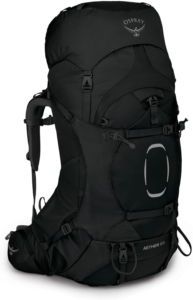
When your gear list gets long, stability becomes the whole point. The Aether’s superpower is control under heavy loads, it keeps weight close so it doesn’t yank you backward on steep or rough trail.
Fit is one of the big selling points. You get Fit-on-the-Fly shoulder straps, a Fit-on-the-Fly hip belt, and adjustable torso length. That combination matters because it lets the pack match your body instead of forcing you into one shape. The AirScape back panel also adds airflow, which you’ll appreciate when the pack is full.
Storage stays practical. It’s a top loader, but you also get a zippered sleeping-bag compartment with a removable divider. Add hip belt pockets, side pockets for bottles, and compression straps to lock everything down. A rain cover is included, which is especially useful when you’re carrying gear that can’t get soaked.
Pack weight: under 5 lb | Access: top load plus sleeping-bag zip | Fit: adjustable torso, Fit-on-the-Fly | Back panel: AirScape | Rain cover: included
Reasons to Buy:
- Stable carry with heavy kits
- Excellent adjustability
- Useful sleeping-bag compartment
- Solid pocket setup
- Rain cover included
Reasons to Avoid:
- Overkill for short day hikes
- Heavier than minimalist packs
Who should buy it: This makes sense if you pack heavier or you’re doing longer trips where comfort under load matters more than shaving ounces. It’s also a smart pick when you want a secure, close-to-body carry on uneven terrain. You can check the official product page at Osprey Aether 65 details.
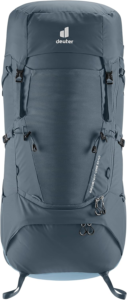
Star rating: 4.4 out of 5
If your gear ends up in a chaotic pile by mile three, you’re not alone. The Aircontact Core 65+10’s superpower is organization that stays easy, even when your pack is stuffed.
You get 65 L of space plus an extra 10 L of expansion, which is helpful when you’re carrying bulkier beginner gear or extra food. Access is a major win here, thanks to a J-shaped front zipper that helps you reach the main compartment without unpacking everything. Pocket and attachment options are extensive, side pockets, hip belt pockets, internal and external storage, plus modular straps for items like a tent or sleeping pad.
Comfort is built for longer trips. The Aircontact back system keeps weight close to your body for better balance. A sliding back-length adjustment helps you match your torso, and the hip fins wrap around to handle heavier loads without feeling loose. Tightening is quick with the pull-forward waist belt system. Weight is just over 5 lb, which tracks with the added structure.
Capacity: 65 L plus 10 L expansion | Pack weight: just over 5 lb | Access: J-shaped front zip | Hydration: up to 3 L reservoir compatible | Straps: modular exterior attachment
Reasons to Buy:
- Excellent access and pockets
- Expansion adds flexibility
- Supportive carry system
- Great for bulky gear kits
- Hydration ready (up to 3 L)
Reasons to Avoid:
- Heavier due to added structure
- More features to manage
Who should buy it: If you like having a “home” for every item, this pack will feel natural. It’s also a strong match for long trips where fast access and smart separation save time and frustration. For official specs, see the Deuter Aircontact Core 65+10 product page. If you want a third-party deep dive, start with the OutdoorGearLab Aircontact Core 65+10 review.
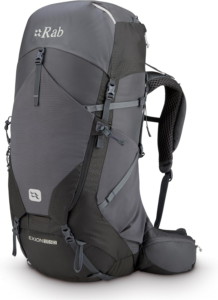
Star rating: 4.2 out of 5
A women-focused pack should do two things well, carry weight comfortably and match your proportions without weird pressure points. The Exion ND55L’s superpower is a supportive fit that stays balanced.
This is a 55 L pack built on Rab’s VR back system, including a stable aluminum frame and a wraparound harness. Padding sits comfortably around your back and hips, so the load feels centered instead of dragging you down. You also get adjustable back length, which is key if you’re between sizes or want a more precise fit.
On-trail usability is strong. The forward-pull hip belt makes tightening quick, even when the pack is full. Shoulder straps adjust smoothly, so you can keep tweaking as your layers or load changes. Access is another highlight, a top lid with inside and outside zip pockets, plus a U-shaped front zipper to reach into the main compartment without dumping everything. It includes a rain cover, and trekking pole attachments stay secure without bouncing.
Capacity: 55 L | Pack weight: about 4 lb 5 oz | Frame: stable aluminum | Access: U-shaped front zip | Rain cover: included
Reasons to Buy:
- Balanced carry and support
- Adjustable back length
- Easy hip belt tightening
- Useful front access zipper
- Secure pole attachments
Reasons to Avoid:
- Heavier than small daypacks
- Feature set may be more than you need
Who should buy it: This is a strong fit when you want a supportive multi-day pack built with women’s fit in mind. It also works well if you care about easy access, because that front opening saves time at camp. You can explore the brand’s pack lineup at the Rab official site.
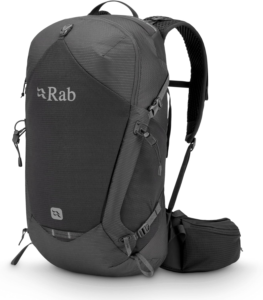
Star rating: 4.1 out of 5
Comfort isn’t just padding, it’s how the pack moves with you. The Protium’s superpower is a close-to-body carry that stays comfortable on uneven ground.
This 27 L daypack is built for all-mountain hiking, so it avoids that loose, swinging feel you get from casual packs. Rab’s Air Contour suspension supports your back while still moving naturally as you step over rocks and tight switchbacks. It isn’t stiff or bulky, and small cutouts help airflow so your back doesn’t feel soaked halfway through a hike. Back length is adjustable too, which makes dialing in fit easier.
Storage is simple but smart. You get a large stretch front pocket, two stretch side pockets for bottles or layers, and zip pockets on the hip belt for snacks or gels. Inside, there’s a zip pocket for valuables like keys and a phone. It also includes a rain cover, which is a big perk on a daypack. Weight is about 2 lb 5 oz, light enough to forget about, without feeling flimsy.
Capacity: 27 L | Pack weight: about 2 lb 5 oz | Suspension: Air Contour | Fit: adjustable back length | Rain cover: included
Reasons to Buy:
- Very comfortable on rough trails
- Breathable back design
- Hip belt snack pockets
- Good stretch storage
- Rain cover included
Reasons to Avoid:
- Limited space for overnights
- Fewer compartments than “organizer” packs
Who should buy it: If you do day hikes on tougher terrain and want a pack that stays glued to you, this makes sense. It’s also a good choice when you prefer smart stretch pockets over lots of zippers.
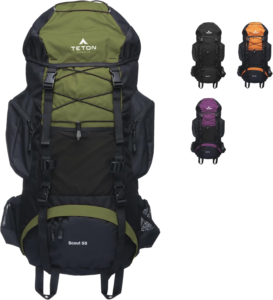
Star rating: 3.9 out of 5
Budget packs often feel like budget packs. The Scout’s superpower is covering the basics well, without feeling fragile or poorly thought out.
You get 55 L of space, which is helpful if you’re starting out with bulkier gear. Fit is flexible, with an adjustable torso aimed at medium to tall hikers. The hip belt helps shift weight off your shoulders, which is the difference between “fine for an hour” and “fine all day.” On the back panel, open-cell foam with air channels helps reduce sweat buildup.
Storage is surprisingly complete for the price. There’s a sleeping-bag compartment at the bottom, and you can zip it off or run it as one large space. Up top, you get a lid pocket and another pocket underneath for quick access. Side pockets, compression straps, and bottom straps let you carry extra gear outside when needed. It’s hydration-bladder compatible and includes a rain cover, which is not a given at entry-level prices. Materials are described as thick and tough, built to take some abuse.
Capacity: 55 L | Fit: adjustable torso | Back panel: open-cell foam with air channels | Storage: sleeping-bag compartment | Rain cover: included
Reasons to Buy:
- Low-cost entry to backpacking
- Adjustable torso fit
- Useful external straps
- Includes rain cover
- Tough-feeling materials
Reasons to Avoid:
- Bulkier than premium gear
- Not as refined as higher-end packs
Who should buy it: This is a good first multi-day pack when you’re not ready to spend big. It also makes sense if your gear is larger and you need extra volume to make it all fit.
All recommended packs compared at a glance
Here’s a quick side-by-side to help you match the pack to your trips.
| Product | Capacity | Weight (as discussed) | Best for | Standout feature |
|---|---|---|---|---|
| Osprey Atmos AG LT | 65 L | just over 4 lb | Multi-day comfort | Anti-Gravity suspension |
| Osprey Talon | 22 L | about 2.4 lb | Day hikes, mixed sports | Stable, close fit |
| Granite Gear Blaze | Varies by model | Varies by model | Lightweight with load support | Supports up to 50 lb |
| Osprey Aether | Varies by model | under 5 lb | Heavy loads | Fit-on-the-Fly adjustability |
| Deuter Aircontact Core 65+10 | 65 L + 10 L | just over 5 lb | Organization for long trips | J-zip front access |
| Rab Exion ND55L | 55 L | about 4 lb 5 oz | Women-focused fit | U-shaped front zipper access |
| Rab Protium | 27 L | about 2 lb 5 oz | Comfort day hikes | Air Contour suspension |
| Teton Sports Scout | 55 L | Varies by model | Budget backpacking | Included rain cover |
Big takeaway: pick capacity and support first, then fine-tune based on access and pocket layout. Most regret comes from buying the wrong size or the wrong fit system, not from missing one extra pocket.
What to look for in a hiking backpack
Capacity: match the pack to the trip
Capacity is the fastest way to narrow the field. Daypacks like the Talon (22 L) and Protium (27 L) are built for water, snacks, a shell, and a few layers. Multi-day packs like the Atmos AG LT (65 L), Deuter Aircontact Core 65+10, and the 55 L options are for sleep systems, cooking kits, and food.
If you’re a beginner, bigger can feel safer, but it can also tempt you to overpack. A simple rule helps: choose the smallest pack that fits your kit comfortably, because extra space often turns into extra weight.
Fit: torso length matters more than height
Two hikers can be the same height and still need different torso sizing. That’s why adjustable back length and adjustable torso systems matter. Packs like the Teton Scout, Rab Exion ND55L, and the Osprey Aether focus heavily on adjustability.
Pay attention to the hip belt, too. It should sit on your hips and tighten smoothly. A forward-pull design, like the Rab Exion ND55L’s, makes micro-adjustments easier on the move.
Suspension and load transfer: pick the right kind of support
If you carry heavier loads, you want a frame and a harness that transfer weight to your hips. That’s where packs like the Aether and Atmos AG LT shine. If you go lighter, a simpler carry system can still feel great, but only if the pack stays stable when you step, twist, and climb.
For extra context on pack categories, you can browse the broader Osprey backpack catalog.
Access and organization: zippers are not the enemy
Top loaders work, but they can slow you down. Front access zippers, like the Deuter’s J-zip or the Rab Exion ND55L’s U-shaped opening, make it much easier to reach mid-pack items without unpacking everything.
Pocket strategy matters even more on day hikes. Hip belt pockets can be the difference between steady energy and constant stops, because snacks stay within reach.
Weather protection: rain covers and fabric durability
A built-in rain cover is a big plus, especially on packs that carry extra gear. Several picks here include one (Atmos AG LT, Aether, Protium, Exion ND55L, and Scout). Still, a rain cover is only part of the solution. You’ll also want to think about how you pack inside, because wet layers and soaked food can ruin a trip fast.
Hydration and external carry: make “grab and go” easy
Hydration compatibility is common now, but details matter. Look for a dedicated hydration sleeve and an easy hose port. External straps and stretch pockets also help you stash layers, poles, or pads without playing pack-Jenga.
If your hikes double as tech time (photos, GPS, emergency charging), pairing your kit with a compact power source can help. For car camping or basecamp trips, consider something like the options in OASTHAR’s best portable power stations buying guide. If you like music at camp, keep it simple with one of the picks in the best portable speakers for outdoor adventures.
Why Trust OASTHAR?
I’m Shashini Fernando, an associate editor who specializes in consumer tech gear and accessories, especially wearables, portable power, and travel-friendly audio. For this 2026 hiking backpack list, you benefit from a process built around comparison shopping, consistent testing criteria, and reading hundreds of real customer reviews to spot patterns that specs alone never show.
Best Hiking Backpacks FAQs
What is the best hiking backpack overall?
The Osprey Atmos AG LT is the best overall pick here because it balances comfort, carry support, ventilation, and multi-day capacity without feeling overly complicated.
What size hiking backpack do you need for a weekend trip?
Many weekend kits fit well in the 55 L to 65 L range, especially if your gear is not ultralight. If your sleep system and clothing pack small, you may be fine with less.
Is a heavier backpack always worse?
Not always. Heavier packs often include stronger frames and more support. If you carry bigger loads, that structure can make the hike feel easier even if the pack itself weighs more.
Should you prioritize ventilation or support?
If you carry heavy, prioritize support and load transfer first. If your loads are light and you hike in heat, ventilation becomes a bigger deal because sweat buildup affects comfort fast.
Are rain covers worth it?
Yes, especially when weather changes quickly. A rain cover also keeps mud and trail grime off your pack, which helps over time.
Final verdict
If you want one pack to build around for years, choose the Osprey Atmos AG LT for its comfort and steady load carry. If your hikes are mostly day trips and you want a lighter, more athletic feel, the Osprey Talon is the easy pick. For heavier loads, go with the Osprey Aether, and if you want pocket-heavy organization on long trips, the Deuter Aircontact Core 65+10 makes packing simpler.
On a tighter budget, the Teton Sports Scout covers the basics without feeling disposable. If you’re still deciding, start with your trip length and your typical carry weight, then choose the pack that fits your body first, because the best features don’t matter if the fit is wrong.