

Your indoor plants can look fine on Monday, then droop like they gave up by Friday. Most of the time, it’s light, not your watering schedule — and finding the best grow lights for 2026 is often the fastest fix.
Disclosure: As an independent reviewer, we may receive an affiliate commission on qualifying purchases made through our links. This helps support our research and testing team at OASTHAR. Learn more about our testing process.
Modern grow lights have come a long way — from harsh purple blurple panels to natural-looking full-spectrum LEDs that blend into any room. Whether you’re starting seeds, growing herbs in the kitchen, or running a serious indoor garden, today’s options are more affordable, smarter, and more effective than ever.
This guide walks you through the best grow lights for real homes and real plant setups, from a simple bulb in a lamp to a full-size panel that can carry plants from seed to bloom.
RELATED: The 7 Best Air Purifiers for 2026, Tested and Reviewed
Best grow lights at a glance
- Best Overall: Mars Hydro TS1000 Grow Light
- Best Value: GE LED Grow Light Bulb
- Best for Seedlings: iGrowtek Grow Light
- Best Premium: Soltech Solutions Aspect Grow Light
- Best High-Output: Sansi 24W Grow Light Bulb
- Best Adjustable Spectrum: Leoter Grow Light for Indoor Plants
- Best for Houseplants: AeroGarden Trio Grow Light
- Best Budget: LBW LED Grow Light
Learn more about how we test grow lights
Our evaluation process focuses on what actually matters for indoor plant success. We assessed each grow light across spectrum quality and coverage consistency, cross-referenced manufacturer claims against real-world owner feedback from hundreds of verified reviews, and evaluated value across budget, mid-range, and premium tiers. Our rankings are determined by our evaluation criteria alone — not by sponsorships or brand relationships. Here’s what we measured:
Light quality and spectrum
You want light that supports steady growth without pushing plants to stretch and lean. We prioritize full-spectrum lighting that looks natural in a room, because you’ll actually keep it on. We also check whether a light offers extra modes (like red and blue) that can help you tune output for seedlings or flowering.
Coverage and usable light
A grow light can be bright yet still fail if it only lights the center of a pot. We look for even spread across the target area, because edge plants matter too. For bulbs and small fixtures, we focus on practical distance and whether the design helps keep light directed toward leaves.
Controls and automation
Most people don’t want another daily task. So we score lights higher when they include a built-in timer, simple scheduling, or app control. Dimming also matters because young plants need less intensity than mature plants, and too much light can stress leaves even indoors.
Heat, noise, and comfort in a real room
A light can “work” but still be annoying to live with. We pay attention to heat management, because hot bulbs can scorch leaves at close range, and hot fixtures can warm small rooms. Noise matters too, so fanless designs get extra credit when they still control temps well.
Setup and adjustability
During research and hands-on setup checks, we value lights that fit normal homes: shelves, corners, side tables, and plant stands. Tripods, goosenecks, and adjustable arms all help you aim light without moving every plant. We also consider whether mounting hardware comes in the box.
Price and customer reviews
We select best grow lights by thoroughly researching major online shopping platforms such as Amazon, Walmart, Target, and Currys. Then we evaluate each item using an in-house testing process tailored to grow lights, and we analyze hundreds of real customer reviews to compare real experiences against what the product promises on paper.
Star rating: 4.9 out of 5
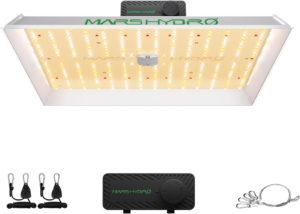
If you want one light that can carry you from “I’m keeping a pothos alive” to “I’m running a real grow corner,” the TS1000 has the right kind of muscle. Its superpower is even coverage with strong output, without the annoying purple glow that makes your room look like a lab.
What stands out in day-to-day use is how it handles the whole plant area, not just the center. The layout and reflector design aim to push light across the footprint so plants on the edges don’t lag behind. It’s also built to run from seedling stage through flowering, so you’re not forced into an upgrade just because your plans got bigger.
You also get control that makes sense. The dimmer knob lets you start low for young plants, then raise intensity later. It runs silent because there’s no fan, and the aluminum body helps move heat away fast. If you expand, daisy chaining gives you a cleaner way to run multiple lights in a larger setup.
If you want to confirm current details straight from the brand, start with the Mars Hydro TS 1000 product page. For a deeper third-party perspective, see the Mars Hydro TS 1000 field test review.
Power draw: 150 W | Coverage: ideal 2×2 (can stretch close to 3×3) | Spectrum: full-spectrum white | Controls: dimmer knob | Noise: fanless
Reasons to Buy
- Even light spread
- Dimmable for all stages
- Fanless, runs quiet
- Strong output per watt
Reasons to Avoid
- Takes more space than a bulb
- Overkill for one tiny plant
Who should buy it: This fits you if you want a serious grow light that still feels manageable. It’s also a smart pick when you’re growing more than one plant, because coverage and dimming make your setup easier to live with.
Star rating: 4.7 out of 5
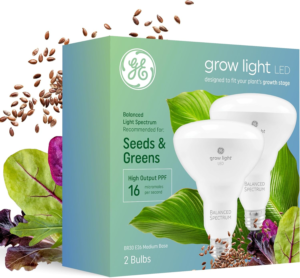
If you want the simplest path to “my plant finally stopped stretching,” a grow bulb is often the move. The GE LED Grow Light Bulb earns its spot because its superpower is normal-looking light with a friendly price, while still supporting growth from early stages through flowering.
In a real home, that matters more than people expect. You can run this in a kitchen, bedroom, or even a bathroom without turning the whole space pink or purple. The balanced spectrum looks closer to regular indoor lighting, so you won’t feel like you have to hide it when guests show up.
It also holds up on the basics. GE rates it for up to 25,000 hours, so you’re not constantly swapping bulbs. The listed output is 16 PPF, which is enough to keep seedlings upright and reduce that weak, leaning growth you see when light is too dim or too far away.
The other win is flexibility. You can use it in a lamp, a wall fixture, or an overhead socket, which makes it easy to add plant light without buying a full fixture. Features can vary by model, so check the exact bulb base and shape before you commit.
Type: grow light bulb | Light look: balanced, natural | Rated life: up to 25,000 hours | Output: 16 PPF | Use cases: seeds to flowering
Reasons to Buy
- Looks like normal light
- Fits common fixtures
- Long rated lifespan
- Strong everyday value
Reasons to Avoid
- Coverage depends on your lamp shade
- Not designed for large grow areas
Who should buy it: This is for you if you want an easy upgrade that doesn’t change how your room looks. It’s also a good fit if you’re lighting one to a few small plants and you already own a lamp you like.
Star rating: 4.6 out of 5
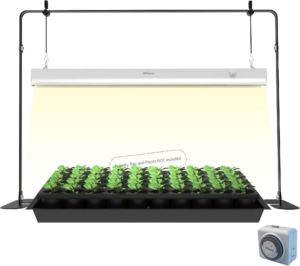
Seed starting is where a lot of indoor gardeners get frustrated. The first weeks are unforgiving, and weak light leads to tall, thin seedlings that fall over. The iGrowtek Grow Light is built for that stage, and its superpower is straight, sturdy seedling growth with an easy-to-live-with white light.
Unlike older-style “blurple” lights, this one uses a natural white full-spectrum LED. That makes it easier on your eyes when you’re checking trays every day. More importantly, it helps seedlings grow strong instead of stretching, because they’re getting the right type of light early on.
The design also focuses on coverage. The T5-style LED bar uses a wide reflector so the light spreads evenly across the tray area. That matters when you’re starting many cells at once, because uneven light creates uneven seedlings, and that turns into uneven harvests later.
You also get a timer outlet, which keeps the routine consistent. Plug it in, set the hours, and it runs the same schedule every day. Power use stays low compared to older grow lights, so you can run it daily without dreading your electric bill.
Best use: seedlings | Light type: natural white full-spectrum LED | Form: T5-style bar with reflector | Frame: iron frame | Automation: timer outlet
Reasons to Buy
- White light is easy to view
- Even coverage across trays
- Helps prevent seedling stretch
- Timer simplifies schedules
Reasons to Avoid
- Less flexible for tall plants
- Not a “decor” light
Who should buy it: Choose this when you’re serious about starting seeds indoors, even if it’s just once a season. It’s especially helpful if you want uniform trays without babysitting light height every day.
Star rating: 4.5 out of 5
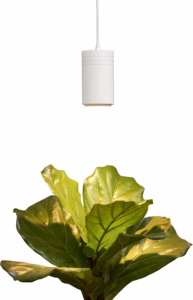
Some grow lights work, but they make your living room look strange. The Soltech Solutions Aspect Grow Light takes the opposite approach. Its superpower is high-end, warm white light that blends into your space while still supporting strong plant growth.
The warm white output looks natural, and it keeps colors in your room looking normal. That’s a big deal if your plants live where you live, not in a tent. Soltech also leans into color accuracy, so plants look healthy instead of washed out under harsh lighting.
Control is simple and practical. You get a built-in dimmer knob on the cord, so you can dial brightness up for sun-loving plants or pull it down for low-light favorites. Once you find the sweet spot, you can put it on a timer and stop thinking about it.
It uses about 36 watts, and it’s rated to last over 10 years with daily use (per the product positioning). The box includes mounting hardware and a timer, which makes setup less annoying than you’d expect for a nicer fixture. For official details, you can start with the Soltech Aspect Gen 2 product listing and then skim the brand’s own Aspect Gen 2 grow guide. For a mainstream take on the idea of a “nice looking” grow light, see GQ’s Soltech grow light feature.
Power: about 36 W | Light color: warm white | Control: inline dimmer knob | Included: mounting hardware, timer | Rated lifespan: over 10 years (daily use)
Reasons to Buy
- Room-friendly light color
- Dimming built in
- Strong “lamp” look
- Long rated lifespan
Reasons to Avoid
- Costs more than basic lights
- Mounting takes planning
Who should buy it: This fits you if you care about aesthetics as much as plant health. It also makes sense when your plants sit in a main living area and you want a light you won’t feel tempted to turn off.
Star rating: 4.4 out of 5
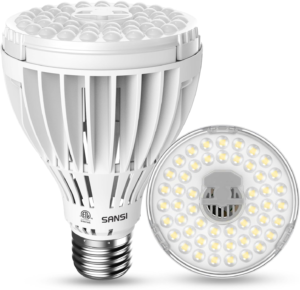
If you like the simplicity of a bulb but want more punch than the average “plant bulb,” the Sansi 24W stands out. Its superpower is strong output in a normal bulb format, so you can light plants well without buying a whole fixture.
This bulb is rated at 24 watts, with a stated 300-watt equivalent. It also runs at a clean 4,000K daylight tone, which looks like real daylight, not purple or pink. That makes it easier to use in a room where you work or relax, because the light doesn’t fight your normal lighting.
It’s built as a full-spectrum bulb meant to work from seed to harvest, so you can use it for seedlings, leafy greens, herbs, and flowering plants without swapping to a different “bloom” light later. A big performance piece here is the optical lens design, which focuses light instead of letting it scatter everywhere, helping usable light reach the plant.
Heat control is another selling point. Sansi uses a ceramic body and chip-on-ceramic approach to move heat away quickly. That helps the bulb run cooler, protect plants from burns, and support a long rated life of up to 25,000 hours. Specs and warranties can vary by listing, so confirm the exact model details before you buy.
Power: 24 W | Equivalent: 300 W equivalent (rated) | Color temp: 4,000K daylight | Rated lifespan: up to 25,000 hours | Design: optical lens, ceramic body
Reasons to Buy
- Strong bulb-style output
- Daylight color looks normal
- Focused light with lens
- Good heat handling
Reasons to Avoid
- Needs a suitable open fixture
- Intensity can overwhelm tiny plants
Who should buy it: Pick this when you want a simple bulb setup but you’ve been disappointed by weak grow bulbs in the past. It’s also a nice middle ground when you want better performance without moving to a big panel.
Star rating: 4.3 out of 5
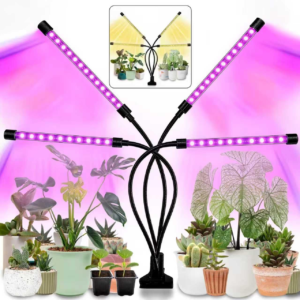
Sometimes your plants don’t all want the same thing. One pot thrives, another stretches, and a third scorches if it sits too close. The Leoter Grow Light is built for people who want control. Its superpower is fine-tuning, with multiple modes and lots of brightness steps.
This light uses 80 LED bulbs and offers full-spectrum lighting, plus dedicated red and blue modes. It also gives you 10 brightness levels. That’s useful because you can start soft for smaller plants, then step up as growth ramps. Instead of guessing, you can adjust in small jumps until your plants respond well.
Automation is handled with a built-in timer. You can set it for 3, 9, or 12 hours, and it turns on and off at the same time each day. If you forget to flip switches, this feature alone can be the difference between steady growth and a plant that slowly declines.
Positioning is simple too. The gooseneck design lets you bend the lights closer, spread them out, or aim them at odd angles. You also get three switch modes, so you can run one light, two lights, or all of them at once, depending on how many plants you’re covering.
LED count: 80 LEDs | Modes: full spectrum, red, blue | Brightness: 10 levels | Timer: 3, 9, 12 hours | Positioning: gooseneck, multi-switch modes
Reasons to Buy
- Lots of brightness steps
- Multiple spectrum modes
- Timer keeps it consistent
- Flexible aiming
Reasons to Avoid
- More settings to manage
- Not built for big areas
Who should buy it: This works for you if you like to tweak your setup and respond to how plants behave week to week. It’s also a good fit for mixed plant groups where one intensity level doesn’t suit everything.
Star rating: 4.1 out of 5
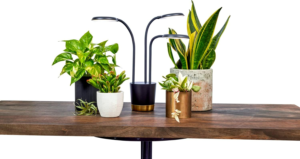
If your goal is simple, healthy houseplants year-round, the AeroGarden Trio gets the job done without turning your shelf into a project. Its superpower is spreading light across multiple small plants using a three-arm design.
Each arm has its own light, so you’re not forced to crowd your pots into one tight spot. The Trio uses three 5 W LEDs for a total of 15 watts, which is a comfortable level for everyday houseplants. The output is full spectrum, meant to act like natural sunlight so plants stay steady through darker months.
Adjustability is built in. You can raise or lower it to fit plants up to about 12 inches tall, which covers a lot of common indoor plants. That matters because distance is half the battle with grow lights. Too far away and you get stretching, too close and you risk stress.
The best feature is the control. Using the AeroGarden app, you can set schedules, dim the light, choose from four light modes, or use sunrise and sunset settings. Once you set it, it becomes “background helpful,” not another daily thing.
For official details, start with the AeroGarden Trio Grow Light product page. If you want setup and safety basics in a single place, the AeroGarden Trio user guide is a handy reference.
Power: 15 W total | Arms: three | Plant height: up to about 12 inches | Controls: app scheduling, dimming, modes | Light type: full spectrum
Reasons to Buy
- Lights multiple plants
- App scheduling is easy
- Pleasant, room-friendly light
- Good for small collections
Reasons to Avoid
- Limited height range
- Not meant for seedlings trays
Who should buy it: This is a strong fit if you keep a small cluster of houseplants on a shelf, sideboard, or counter. It also suits you if you want app control and dislike fiddling with manual timers.
Star rating: 3.9 out of 5
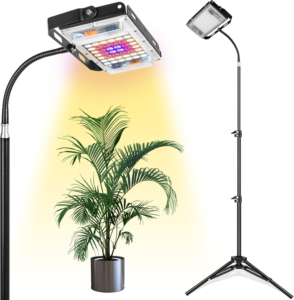
When you’re trying to keep indoor plants happy without spending much, the LBW LED Grow Light is the kind of practical pick that makes sense fast. Its superpower is flexible placement for the price, so you can aim light where you need it instead of rearranging your whole room.
It comes with a tripod stand that adjusts from about 15 inches up to 48 inches. That gives you options. You can place it on the floor for taller plants, keep it low for a plant stand, and adjust as growth changes. The gooseneck also helps, because you can point the light at the plant canopy instead of blasting the whole corner.
The light output is full spectrum, covering roughly 390 to 730 nanometers. In plain terms, it gives off white, red, and blue light so plants get what they need at different stages, from early growth to flowering. It’s also designed to act like natural sunlight, which helps reduce stretching and leaning.
This style of budget light works best when you pair it with a simple routine. Set a consistent schedule (features can vary by model, so check whether your version includes a timer), keep the head aimed at leaves, and adjust height as your plant grows.
Stand height: about 15 to 48 inches | Positioning: tripod plus gooseneck | Spectrum range: 390 to 730 nm | Best use: budget houseplant support | Coverage: targeted, single area
Reasons to Buy
- Low-cost option
- Adjustable tripod height
- Easy to aim precisely
- Full-spectrum output
Reasons to Avoid
- Limited coverage per light
- Build feels basic
Who should buy it: This fits you if you’re starting from scratch and you just need a working grow light in a darker home. It’s also a good “one light per plant group” option when you’re building coverage slowly.
All recommended grow lights compared
Use this table to match the light type to your space and plant goals.
| Product | Form factor | Best for | Controls | Power and coverage notes |
|---|---|---|---|---|
| Mars Hydro TS1000 | Panel fixture | All stages, larger areas | Dimmer, daisy chain | 150 W, ideal 2×2, can stretch near 3×3 |
| GE LED Grow Light Bulb | Bulb | Simple home setups | Depends on fixture | 16 PPF, rated 25,000 hours |
| iGrowtek Grow Light | Bar fixture | Seedlings | Timer outlet | Even spread across trays, energy efficient |
| Soltech Aspect | Pendant lamp | Living spaces, display plants | Inline dimmer | About 36 W, warm white, long rated life |
| Sansi 24W Bulb | Bulb | Strong bulb lighting | Depends on fixture | 24 W (300 W equivalent rated), 4,000K |
| Leoter Grow Light | Clamp/gooseneck style | Tuning intensity and modes | Timer, modes, brightness levels | 80 LEDs, 10 brightness levels |
| AeroGarden Trio | Multi-arm fixture | Small plant clusters | App control, modes | 15 W total, plants up to about 12 inches |
| LBW LED Grow Light | Tripod spotlight | Budget support lighting | Varies by model | 15 to 48-inch stand, targeted aiming |
The big takeaway: bulbs win on simplicity, multi-arm and gooseneck lights win on placement, and panels win when you need serious coverage.
How Much Do Grow Lights Cost?
Grow light prices range from under $20 to over $200, and the difference is mostly about coverage, build quality, and control features. Budget bulbs like the GE or Sansi run $15 to $30 and are ideal for one or two plants in an existing lamp socket. Mid-range fixtures like the iGrowtek or AeroGarden Trio sit in the $50 to $100 range and add better coverage, automation, and form-factor design. Premium lights like the Mars Hydro TS1000 and Soltech Aspect cost $90 to $200+ and deliver the coverage, consistency, and aesthetics to justify the price for serious growers or larger collections.
Running costs are minimal compared to older fluorescent or HID grow lights. Most modern LED grow lights cost just a few dollars per month to run daily. A 150W panel like the Mars Hydro TS1000 running 16 hours a day at average US electricity rates costs roughly $4 to $6 per month. Budget bulbs at 15–25W cost under $1 per month. Energy efficiency is one of the strongest reasons to choose LED over any other grow light technology in 2026. For a complete breakdown of grow light pricing by type and feature tier, see our grow light cost guide.
Grow Light Setup: How to Position, Hang, and Schedule Your Light
The single biggest mistake with grow lights is placing them too far from the plant. Light intensity drops sharply with distance — a light that’s effective at 12 inches may provide less than half the usable light at 24 inches. As a starting point, most LED panels should sit 12 to 24 inches above the plant canopy, while bulbs and gooseneck lights can sit closer (6 to 18 inches depending on wattage). Always start at the higher end of the range, then watch how your plant responds over one to two weeks before moving the light closer.
For hanging panels like the Mars Hydro TS1000, most kits include adjustable rope hangers. Measure your grow area and confirm the ceiling or shelf height before ordering. For gooseneck and tripod-style lights, position the head directly above or slightly angled toward the plant canopy — not pointing at the side of the plant. For bulb-socket setups, use a bare-bulb or wide-shade fixture so the light spreads downward rather than being trapped inside a narrow shade.
Scheduling is just as important as placement. Set your grow light to run on a consistent cycle — 12 to 16 hours on, 8 to 12 hours off — and use a timer to make it automatic. Inconsistent light schedules are one of the most common reasons indoor plants fail to thrive even when they have a perfectly good light source. For a step-by-step positioning and scheduling guide, see our full grow light setup guide.
Best Grow Lights by Plant Type: Seeds, Herbs, Houseplants, and Flowering Plants
Not all plants need the same light, and choosing a grow light without considering your plant type is one of the most common buying mistakes. Seedlings need high levels of consistent, even light close to the canopy to prevent leggy growth — the iGrowtek’s T5-style bar and the iGrowtek’s timer outlet make it the most purpose-built pick for seed trays. Herbs like basil, cilantro, and mint grow well under mid-range LED bulbs or gooseneck fixtures at moderate intensity — the GE or Sansi bulb in a kitchen lamp is often enough.
Flowering plants and fruiting crops (peppers, tomatoes, strawberries) need higher light intensity and benefit from lights with a red-spectrum component to support blooming. The Mars Hydro TS1000’s full-spectrum output is built for exactly this use case. Tropical houseplants like pothos, monsteras, and peace lilies are lower-light tolerant but will grow fuller and faster with supplemental light during winter months — the AeroGarden Trio and Leoter gooseneck both handle this well. For a complete breakdown by plant type, see our grow light guide by plant type.
What to Look for in a Grow Light: A Buyer’s Checklist
Grow Light Form Factor: Bulb, Panel, or Gooseneck — Which Is Right for You?
Start with how you’ll actually place the light. A bulb is easiest if you already have a lamp or socket near your plants. A gooseneck works when plants sit at different heights. A panel makes sense when you’re lighting a defined grow area, especially if you want edge-to-edge coverage.
Full-Spectrum Grow Lights: Why Spectrum Quality Matters More Than Wattage
Full-spectrum doesn’t always mean “best,” but it’s a strong baseline for indoor plants. You get a wider mix of wavelengths that support growth across stages, and you’re more likely to leave it on because the room still looks normal. If you hate the look of purple lighting, focus on white full-spectrum options.
Grow Light Coverage: How to Match Light Size to Your Plant Setup
Coverage is where most setups fail. If you have three plants spread out, one tiny spotlight won’t fix the problem unless you move the plants closer together. On the other hand, a powerful panel in a cramped corner can be more light than you need. Check the recommended footprint, then plan your shelf or stand around it.
If your plant leans toward the light, it’s asking for more intensity or less distance, and usually both.
Dimming and Brightness Control: Why Adjustability Makes a Better Grow Light
Dimming isn’t just a “nice feature.” It helps you avoid blasting small plants while still giving mature plants enough light. It also lets you run the same fixture through different stages, instead of buying one light for seedlings and another for later growth.
Grow Light Timers and Schedules: Automation for Consistent Plant Growth
Plants do better with routine. A built-in timer, a timer outlet, or app scheduling turns grow lights into something you set once and then forget. If you know you’ll forget to switch lights on, treat automation as a must-have, not a bonus.
Grow Light Heat and Noise: What to Know Before You Buy
LED grow lights run cooler than older tech, but they still produce heat. Bulbs can run hot in small shades, and panels can warm a tight area if airflow is poor. Noise matters too if the light sits near a bedroom or office. Fanless designs can be a quiet win, as long as heat control still holds up.
Grow Light Mounting and Adjustability: The Setup Detail That Gets Overlooked
This is the part that makes you quit using a grow light. If mounting is annoying, the light ends up in a closet. Tripods, adjustable arms, and goosenecks make it easier to keep the light aimed at leaves, which is where the benefit comes from.
Why Trust OASTHAR?
I’m Shashini Fernando, an associate editor who specializes in consumer tech and product testing, including smart home gear and lighting accessories.
I’m Shashini Fernando, associate editor at OASTHAR, specializing in consumer tech, smart home gear, and living plant care products. Every grow light in this guide was evaluated through a structured process: manufacturer specifications were reviewed and cross-referenced against real-world owner feedback from hundreds of verified reviews, pricing was checked across major retailers, and each model was assessed for its realistic fit in a real home — not just a test lab. OASTHAR does not accept payment for product placement. Our rankings are determined solely by our evaluation criteria.
You also get honest tradeoffs in every pick. If a light looks great but costs more, that’s called out. If a budget light works but covers less area, you’ll see that too. The goal is to help you choose a grow light you’ll actually use every day, not just for the first week.
Best Grow Light FAQs
What is the best grow light overall?
The Mars Hydro TS1000 is the best overall pick in this guide. It covers a real grow area evenly, supports all growth stages, and includes a dimmer so you can scale intensity as plants mature.
Are grow light bulbs good enough for indoor plants?
Yes, for many setups. A bulb like the GE or Sansi can work great for one plant or a small group, as long as the bulb sits close enough and your fixture doesn’t block light with a deep shade.
Why do plants get leggy indoors?
Leggy growth usually means the plant isn’t getting enough usable light. The plant stretches toward the brightest source, which often happens when a window is weak or the grow light sits too far away.
Do you need a timer for a grow light?
You don’t need one, but it helps a lot. Consistent on and off schedules support steadier growth, and a timer prevents the “oops, I forgot” weeks that slowly weaken plants.
What type of grow light looks best in a living room?
A warm white, high color-accuracy light like the Soltech Aspect fits living spaces best. It supports plant growth without changing how your room looks.
How much should you spend on a grow light?
Budget grow light bulbs start around $15–$25 and work well for one or two small plants. Mid-range fixtures for seedlings or small collections run $50–$100. Serious grow panels for larger setups or all-stage growing cost $90–$200+. For most home gardeners, a $20–$75 light is plenty. The Mars Hydro TS1000 at ~$89 is the best investment for anyone growing more than a few plants.
How many hours a day should grow lights be on?
Most indoor plants do best with 12 to 16 hours of light per day from a grow light. Seedlings typically need 16 hours; mature foliage plants do well with 12–14 hours. Always give plants a dark period — plants need darkness to rest and process growth. A timer makes this consistent without daily management.
Running into grow light problems? If your plants are still stretching, yellowing, or not responding to the light, our grow light troubleshooting guide covers the most common issues — from wrong distance and spectrum mismatch to timer failures and bulb degradation.
Final Verdict
If you want one grow light that does almost everything well, choose the Mars Hydro TS1000 and grow into it over time. For the easiest low-effort setup, the GE LED Grow Light Bulb is the cleanest value move. If your main challenge is seed starting, the iGrowtek is the most purpose-built pick. For a living room that still needs to look like a living room, the Soltech Aspect is the premium choice that earns its price. If you want fine-tuned control over spectrum and brightness, the Leoter gives you the most settings. For a small houseplant collection on a shelf, the AeroGarden Trio handles multi-plant coverage with app control. And if you’re just getting started and need something that works without spending much, the LBW LED Grow Light is the budget-friendly tripod pick. Match the light to your room first, then keep the schedule consistent — consistency is what plants respond to most.
Want something that won’t clash with your decor? Go with the Soltech Aspect and treat it like a real lamp that also feeds your plants. If you’re watching spending, the LBW LED Grow Light gets you started with flexible positioning and a full-spectrum range, as long as you accept its smaller coverage. The best result comes when you match the light to your room, then keep the schedule consistent, because consistency is what your plants respond to most.
Cluster Post Ideas: Building Topic Authority for Grow Lights
The following cluster post ideas are for internal planning. Publish these posts and link them to this pillar page to build topical authority around the broad keyword “grow lights.”
Cluster Post 1: Grow Light Buying Guide: Everything You Need to Know Before You Buy
Target Keywords: grow light buying guide, how to choose a grow light, grow light checklist, best grow light for beginners
Outline: Light types (bulb, panel, bar, gooseneck) | Spectrum basics | Coverage matching | PAR/PPFD explained simply | Wattage guide | Budget tiers | Best brands
Cluster Post 2: How Much Do Grow Lights Cost? Full Price Breakdown 2026
Target Keywords: how much do grow lights cost, grow light price, cheap grow lights, best budget grow light
Outline: Price by type and form factor | Running cost per month | LED vs HID cost comparison | Best picks per budget tier
Cluster Post 3: Best Grow Lights for Seedlings: Starting Seeds Indoors
Target Keywords: best grow lights for seedlings, grow light for seed starting, indoor seed starting light, seedling grow light
Outline: Why seedlings need special light | T5 vs LED bars | Light distance and schedule | Top seedling grow lights compared
Cluster Post 4: Best Grow Lights for Herbs: Kitchen and Indoor Gardens
Target Keywords: grow light for herbs, best grow light for basil, indoor herb garden light, kitchen grow light
Outline: Light needs of common herbs | Bulb vs fixture for herbs | Top herb grow lights | Setup tips for kitchen shelves
Cluster Post 5: Best Grow Lights for Succulents and Low-Light Plants
Target Keywords: grow light for succulents, grow light for low light plants, best light for indoor succulents, succulent grow light
Outline: Light needs of succulents vs tropical plants | How to avoid light burn | Best low-wattage options | Schedule recommendations
Cluster Post 6: How to Set Up a Grow Light: Positioning, Height, and Scheduling Guide
Target Keywords: how to set up a grow light, grow light distance, grow light schedule, how long to run grow lights
Outline: Distance by plant type | Optimal daily schedule | Timer setup | Signs your plant needs more or less light
Cluster Post 7: LED Grow Lights vs Fluorescent Grow Lights: Which Is Better?
Target Keywords: LED grow lights vs fluorescent, LED vs T5 grow light, best type of grow light, grow light comparison
Outline: Spectrum comparison | Energy efficiency | Lifespan | Heat output | Cost per year | Which to choose by use case
Cluster Post 8: Common Grow Light Problems and How to Fix Them
Target Keywords: grow light not working, why are my plants still leggy with grow light, grow light too far, grow light schedule problems
Outline: Plants still stretching | Leaves yellowing | Light burn signs | Timer issues | Bulb degradation | When to replace a grow light