

A bad espresso machine can flatten great beans fast. The best espresso machines fix that by giving you cleaner extraction, better milk texture, and a routine you’ll actually enjoy every morning.
Disclosure: As an independent reviewer, we may receive an affiliate commission on qualifying purchases made through our links. This helps support our research and testing team at OASTHAR. Learn more about our testing process.
For 2026, you’ve got more choice than ever. Some machines do nearly everything for you. Others give you deep control, but they ask more from your hands and your time. That trade-off matters more than price alone.
The OASTHAR Product Research & Testing Team narrowed the field to seven strong picks. If you want a quick cross-check with last year’s market, our 2025 espresso machine guide is a useful companion. For this list, the focus is simple: help you find the right machine for your kitchen, your skill level, and the kind of coffee you actually drink.
RELATED: The 7 Best Budget Coffee Grinders for 2026, Tested and Reviewed
Best espresso machines at a glance
- Best Overall: Breville Barista Express
- Best Budget: De’Longhi Stilosa
- Best Premium: Breville Dual Boiler
- Best for Home: Breville Bambino Plus
- Best Smart: Terra Kaffe TK-02 Super
- Best for Pros: Diletta Mio
- Best Fully Automatic: KitchenAid KF7
Learn More About How We Test Espresso Machines
In our assessment, the best espresso machines balance flavor, control, ease, and long-term value. We research major retailers, test key features in-house, and compare that with real owner feedback.
Brewing Performance
First, you care about the cup. So we look at shot quality, crema, flavor balance, and repeatability over multiple pulls. A good machine should make it easier to get sweet, even extraction without wild swings from shot to shot. If a machine tastes good once but not twice, it drops fast.
Temperature and Pressure Control
Heat and pressure shape espresso more than flashy extras. We check for features like PID control, pre-infusion, stable heating systems, and pressure management. Machines with stronger control usually give you more balanced shots and fewer harsh or sour results. That matters even more when you switch between beans or roast styles.
Milk Frothing and Drink Range
Many buyers want more than straight espresso, so milk performance matters. We test how easy it is to make latte-ready microfoam, how quickly steam is available, and whether the result feels beginner-friendly or skill-heavy. Automatic milk systems get points for convenience, while manual steam wands get points for control when they respond well.
Ease of Use and Daily Workflow
A machine can brew great coffee and still be annoying to live with. That’s why we test setup time, warm-up speed, interface clarity, refill access, and how smoothly the full routine works. Grinder, tamping, steaming, and cleaning all affect whether you’ll use the machine daily or let it collect dust.
Build Quality and Maintenance
Espresso machines take heat, water, pressure, and frequent handling. So we check materials, fit and finish, removable parts, cleaning systems, and how easy it is to maintain the machine over time. Metal-heavy builds, accessible tanks, and smart self-cleaning features often make a big difference once the honeymoon period ends.
Price and Customer Reviews
Price only tells part of the story. We research major shopping platforms such as Amazon, Walmart, Target, and Currys, then compare specs with what buyers actually report after weeks or months of use. We also analyze hundreds of customer reviews to spot repeat issues, hidden strengths, and whether a machine lives up to its promise in real kitchens.
Star Rating: 4.8/5
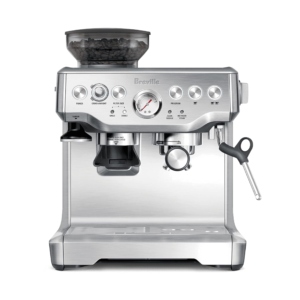
The Breville Barista Express wins because it hits the sweet spot. You get a built-in grinder, strong espresso basics, and enough manual control to make the process feel rewarding without turning breakfast into a side job. For many homes, that balance is hard to beat.
In day-to-day use, the built-in conical burr grinder is the big advantage. You can grind straight into the portafilter, adjust grind size as needed, and move from whole beans to a fresh shot in under a minute. That cuts steps, saves counter space, and keeps your coffee fresher than pre-ground options.
Breville also gives you features that help your shots taste better, not just sound better on paper. Low-pressure pre-infusion helps wet the puck evenly, while PID temperature control keeps brewing steadier. The manual steam wand adds a hands-on feel without becoming too tricky. If you want one machine that teaches you good habits and still fits real life, this is the one to start with. For wider market context, Tom’s Guide also includes it in its best espresso machines roundup.
“The Breville Barista Express has been fantastic for me. It works flawlessly right out of the box and feels very well built. Once you get the hang of it, it’s extremely rewarding.” — Anton
Type: Semi-automatic with built-in grinder | Grinder: Conical burr, grind-on-demand | Portafilter: 54 mm | Water Tank: 67 oz | Milk System: Manual steam wand
Reasons to Buy
- Built-in grinder saves space
- Great balance of control
- Fast beans-to-shot workflow
- Consistent temperature management
- Rewarding manual milk frothing
Reasons to Avoid
- Learning curve at first
- Not the smallest footprint
- Fully manual milk steaming
Who should buy it: This fits you best if you want to learn espresso without buying separate gear right away. It’s also a strong match if you drink both straight shots and milk drinks, and you want a machine that can grow with your skills instead of boxing you in after a few weeks.
Star Rating: 4.6/5
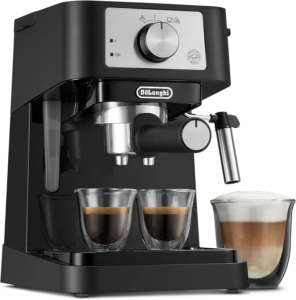
The De’Longhi Stilosa does the hard part well. It gives you a low-cost way into real espresso, and it doesn’t bury you in settings or force you to buy extra accessories on day one. For beginners, that simplicity is its whole appeal.
Right out of the box, you get the basics you need, including the portafilter, tamper, and baskets for single and double shots. That lowers the barrier fast. Instead of hunting for add-ons, you can focus on learning dose, tamp, and timing. The 15-bar pump and stainless steel boiler give the machine a more serious backbone than its modest price suggests.
You do give up some refinement. The Stilosa won’t match the temperature stability, speed, or polish of pricier machines. Still, it covers the essentials, and the manual steam wand lets you practice milk texturing instead of locking you into a preset result. If you’re deciding between a true entry-level machine and a jump to Breville money, this Stilosa versus Breville comparison helps show where the extra cash goes.
Type: Manual espresso machine | Pump Pressure: 15 bar | Boiler: Stainless steel | Included Tools: Portafilter, tamper, single and double filters | Milk System: Manual steam wand
Reasons to Buy
- Very approachable for beginners
- Good starter accessory set
- Compact for small kitchens
- Manual wand builds skill
- Strong value for the price
Reasons to Avoid
- Limited shot control
- Fewer premium materials
- Less consistent than pricier picks
Who should buy it: This works best if you want to spend less and still learn real espresso technique. It also makes sense for a first apartment, a dorm-adjacent kitchen setup, or a second machine where size and price matter more than max precision.
Star Rating: 4.5/5
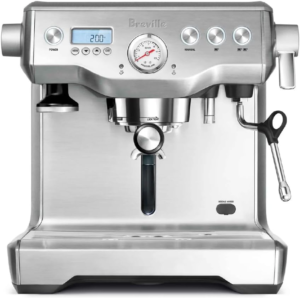
The Breville Dual Boiler is the pick for buyers who want a serious jump in performance. Its standout trick is simple but powerful: one boiler handles brewing, and another handles steam. That means you can pull a shot and steam milk at the same time without waiting or compromising temperature.
That dual-boiler layout changes the whole feel of your workflow. The machine feels closer to a café setup, especially when you’re making back-to-back drinks. Digital PID control keeps brew temperature stable, low-pressure pre-infusion helps with even extraction, and the over-pressure valve helps avoid harsh, bitter shots. Those are the kinds of tools you notice most once your palate improves.
The 58 mm portafilter also matters. It supports a fuller dose, around 19 to 22 grams, which helps produce richer shots with more body. Then the manual steam wand gives you enough control for glossy milk and latte art once you’ve got the basics down. This is not the easiest machine here, but if you care about workflow, consistency, and stronger espresso fundamentals, it gives you room to push further.
Type: Semi-automatic dual boiler | Boilers: Separate brew and steam boilers | Portafilter: 58 mm | Dose Range: 19 to 22 g | Water Tank: 84 oz
Reasons to Buy
- Brew and steam together
- Strong temperature stability
- Full-size 58 mm portafilter
- Excellent shot tracking tools
- Great for milk drink fans
Reasons to Avoid
- Larger and heavier
- Higher learning curve
- Bigger investment
Who should buy it: This makes the most sense if you already know you enjoy the process, not just the drink. If you pull multiple drinks in a row, care about temperature control, or want a more pro-style home setup, this machine gives you that next step without going full commercial.
Star Rating: 4.4/5
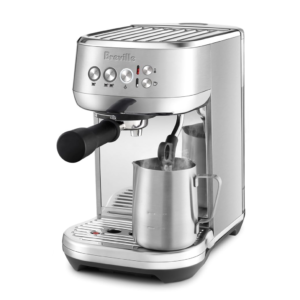
The Breville Bambino Plus is the easiest recommendation for most homes. It heats in about three seconds, stays compact on the counter, and removes a lot of the friction that keeps people from making espresso before work. If speed matters to you, this machine feels instantly practical.
The shot-making side is stronger than its size suggests. Low-pressure pre-infusion helps keep extraction even, while PID temperature control helps hold consistency. You still need to bring your own grinder or use pre-ground coffee, but the machine itself stays focused on doing a few important things well instead of trying to do everything.
Milk drinks are where the Bambino Plus gets especially friendly. The automatic steam wand lets you adjust temperature and texture, so lattes and cappuccinos feel much less intimidating. That’s a big reason it remains a favorite in smaller kitchens, and it lines up with recent small-space Bambino Plus coverage from Tom’s Guide.
“I love this espresso machine. You really can taste the difference in quality when it’s paired with good coffee beans.” — Jessica
Type: Compact semi-automatic | Heating System: ThermoJet | Heat-Up Time: About 3 seconds | Temperature Control: PID | Milk System: Automatic steam wand
Reasons to Buy
- Very fast heat-up
- Small counter footprint
- Easy milk texturing
- Friendly for daily use
- Strong shot consistency
Reasons to Avoid
- No built-in grinder
- Less room to tinker
- Smaller overall machine
Who should buy it: This is ideal if your mornings move fast and your kitchen runs tight on space. It’s also a smart fit if you want espresso and milk drinks at home, but you don’t want a bulky machine or a long warm-up routine getting in the way.
Star Rating: 4.3/5
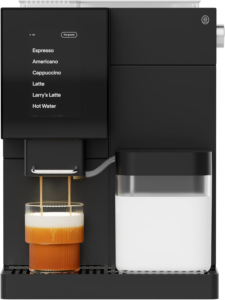
The Terra Kaffe TK-02 Super is for the buyer who wants espresso to feel modern. Its big edge is customization. You can adjust strength, milk, and drink ratios in far more combinations than most machines in this class, then save those settings so your favorite drink stays consistent.
The smart features go beyond simple presets. With the app, you can set wake and sleep times, manage the machine remotely, and get your setup ready before you even walk into the kitchen. That makes a bigger difference than it sounds, especially if your morning routine already runs on timers and habits.
The machine also stands out for flexibility. It can brew espresso or drip coffee, use whole beans or pre-ground coffee, and support a range of milk types, including plant-based options. The QR system adds another layer by adjusting settings around compatible roaster guidance. If you like convenience but still want your drink tuned to your taste, this machine feels way more personal than a basic one-touch box.
Type: Smart automatic espresso machine | Drink Customization: Over 100,000 combinations | Connectivity: Wi-Fi and app control | Coffee Input: Whole beans or pre-ground | Water Tank: 75 oz
Reasons to Buy
- Deep drink customization
- App features feel useful
- Supports drip and espresso
- Works with plant-based milk
- Saves your drink profiles
Reasons to Avoid
- App-first design isn’t for everyone
- Less hands-on espresso feel
- Smart features add complexity
Who should buy it: This is the right choice if you like connected appliances and want convenience without settling for generic presets. It also suits homes where more than one person uses the machine, because saved drink profiles keep arguments over strength and milk ratio to a minimum.
Star Rating: 4.2/5
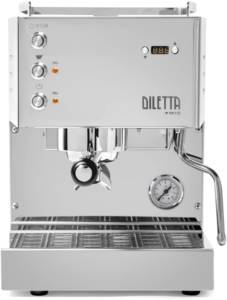
The Diletta Mio is the enthusiast’s pick. It gives you the kind of control that matters once you start paying attention to small changes in taste, texture, and shot timing. From the start, this machine feels built for people who want to tune their espresso, not just make it.
A PID-controlled brew boiler helps keep extraction steady, and that matters when you’re adjusting grind size, dose, or shot time. The 58 mm group and portafilter fit standard pro tools, which opens the door to a more café-like workflow at home. Add in the built-in shot timer and the brew pressure gauge, and you get useful feedback while you work, not just after the cup is done.
Steam performance also supports that more serious use case. The thermoblock steam system gives you steam on demand, so the handoff from brewing to milk stays quick. Hand-built Italian construction adds to the premium feel, but the bigger story is control. If you like measuring, dialing in, and chasing a better shot next time, the Mio gives you the platform to do it.
Type: Prosumer semi-automatic | Brew Control: PID-controlled boiler | Portafilter: 58 mm | Shot Monitoring: Built-in shot timer and brew pressure gauge | Steam System: Thermoblock steam on demand
Reasons to Buy
- Serious control for enthusiasts
- Standard 58 mm setup
- Pressure gauge helps tuning
- Steam ready on demand
- Strong Italian build quality
Reasons to Avoid
- Less beginner-friendly
- More manual effort required
- Premium learning commitment
Who should buy it: This is best if you already know you enjoy dialing in espresso and want a more serious machine to match. It fits hobbyists, former café workers, and home baristas who want standard-size tools, deeper feedback, and more room to refine technique.
Star Rating: 4.0/5
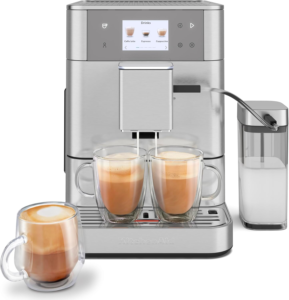
The KitchenAid KF7 is the easiest path to low-effort espresso on this list. If you want to press a button and get a balanced drink without thinking about grind settings or manual dosing, it does that better than most machines built for home use.
Its automatic smart dosing system takes a lot of friction out of the process. Pair that with the integrated grinder, and each brew starts with fresh coffee without asking much from you. The removable bean hopper is another smart touch. If you like switching between regular and decaf, or trying different beans through the week, that part feels more flexible than many bean-to-cup machines.
Milk drinks stay simple too. You place the hose in your milk container, and the KF7 froths, heats, and dispenses automatically. The metal-clad construction gives it a premium feel, while features like auto-clean, auto shut-off, and a 2.2 L removable water tank keep the routine light. If you care more about speed and consistency than hands-on craft, this is the safest fully automatic pick here. If you’re comparing espresso machines with broader coffee setups, this barista-tested coffee maker guide can help frame the trade-offs.
Type: Fully automatic bean-to-cup | Dosing: Automatic smart dosing system | Grinder: Integrated grinder | Water Tank: 2.2 L removable tank | Milk System: Automatic hose-based frothing
Reasons to Buy
- Very easy daily workflow
- Fresh grinding every brew
- Automatic milk drink prep
- Removable bean hopper
- Helpful self-cleaning features
Reasons to Avoid
- Less manual shot control
- Bigger machine for small counters
- Fewer learning opportunities
Who should buy it: This fits you best if coffee needs to be easy, fast, and repeatable. It’s also a good match for shared kitchens where different people want espresso drinks, but nobody wants to manage the full barista process every morning.
All Recommended Products in Comparison
This quick table narrows the main trade-offs.
| Machine | Automation | Shot Control | Milk Drinks | Best Fit |
|---|---|---|---|---|
| Breville Barista Express | Medium | Strong | Manual steam wand | Best all-around choice |
| De’Longhi Stilosa | Low | Basic | Manual steam wand | Budget beginners |
| Breville Dual Boiler | Medium | Excellent | Manual steam wand | Premium home enthusiasts |
| Breville Bambino Plus | Medium | Good | Automatic steam wand | Fast home use |
| Terra Kaffe TK-02 Super | High | Moderate | Automatic milk system | Smart-home buyers |
| Diletta Mio | Low | Excellent | Manual steam system | Pros and hobbyists |
| KitchenAid KF7 | Very high | Limited | Automatic milk system | One-touch convenience |
The pattern is clear. If you want the best balance, go Breville Barista Express. If you want easier mornings, look at the Bambino Plus or KF7. If control is the whole point, the Dual Boiler and Diletta Mio pull ahead.
What to Look for in an Espresso Machine
Choose Between Convenience and Control
This is the first fork in the road. A fully automatic machine gives you fast, repeatable drinks with very little work. A manual or semi-automatic machine asks more from you, but it also gives you more say over grind, extraction, and milk texture. If you enjoy process, buy for control. If you want speed, buy for automation.
Pay Attention to the Heating System
Fast heat-up feels great, but steady heat matters more once the shot starts. Machines with PID control, dual boilers, or well-managed thermoblock systems usually produce more even results. If you mostly drink milk-based drinks, steam readiness also matters because waiting between brewing and frothing gets old fast.
Decide If You Need a Built-In Grinder
A built-in grinder saves space and shortens your routine. That’s a big win for many kitchens. Still, separate grinders often give you more flexibility down the line. If you’re a beginner, an all-in-one machine can make life easier. If you already own a good burr grinder, you may not need one built in.
Think About Milk Drinks Early
If you mostly drink lattes or cappuccinos, don’t treat the steam system as an afterthought. Automatic milk systems are easier and faster, while manual steam wands let you control texture better. That trade-off shows up every day, not once in a while. Buy for your real habits, not your ideal version of yourself.
Check Size, Water Tank, and Daily Workflow
Some machines look fine online and feel huge in person. Measure your counter space, and think about side clearance for tanks, bean hoppers, and drip trays. Then consider workflow. Small irritations, like awkward refills or messy purging, can make a machine feel worse over time than a spec sheet suggests.
Look at Cleaning and Maintenance
Espresso machines need regular care. Some make that easy with auto-clean cycles, removable parts, and accessible drip trays. Others demand more manual cleanup. If you know you won’t keep up with a fussy machine, buy one that keeps maintenance light. A simpler machine you clean is better than a complex one you avoid.
Build Quality and Warranty Still Matter
Heat, steam, and daily use wear machines down. Metal-heavy bodies, better fit and finish, and solid controls usually hold up better than light plastic builds. Warranty coverage also tells you something about brand confidence. If two machines look close on paper, durability and service support can be the tie-breaker.
Why Trust OASTHAR?
I’m Shashini Fernando, an associate editor who specializes in kitchen tech, coffee makers, and other countertop appliances. I test each product in-house and analyze hundreds of customer reviews from real users across the espresso machine market to build lists of the best products you can buy in 2026.
That means you’re not getting a spec-sheet rewrite. You’re getting a shortlist built around real trade-offs, daily usability, and the kind of details that matter after the first week. We compare features, look at long-term owner feedback, and keep asking the same question: which machine still makes sense once the novelty wears off?
Best Espresso Machines FAQs
What is the best espresso machine overall?
The best espresso machine overall is the Breville Barista Express. It gives you the best mix of fresh grinding, shot control, milk frothing, and everyday usability for the widest range of buyers.
Is a budget espresso machine worth it?
Yes, if your expectations are right. A budget model like the De’Longhi Stilosa can teach you the basics and make solid drinks, but it won’t match the consistency or convenience of a pricier machine.
Are fully automatic espresso machines better for beginners?
They can be. If you want one-touch drinks with minimal effort, a fully automatic option like the KitchenAid KF7 makes starting easy. If you want to learn technique, a semi-automatic machine is the better teacher.
Do you need a built-in grinder?
Not always. A built-in grinder makes the routine faster and cleaner, but a separate burr grinder can give you more flexibility. If you want an all-in-one setup, the Barista Express is a strong pick.
What matters most for consistent espresso?
Temperature stability, fresh coffee, and even extraction matter most. Features like PID control, pre-infusion, and a reliable grinder usually have a bigger effect on your cup than flashy extras.
Final Verdict
If you want the safest all-around choice, pick the Breville Barista Express. If your budget is tight, the De’Longhi Stilosa gets you into real espresso for less. For faster home use, go with the Breville Bambino Plus. If you want serious control, the Breville Dual Boiler or Diletta Mio make more sense. And if your goal is simple, low-effort coffee every day, the KitchenAid KF7 or Terra Kaffe TK-02 Super will fit your routine better. The best pick is the one that matches how you actually make coffee, not the one with the longest feature list.