

Best circular saws don’t simply cut faster. They help you stay on line, reduce fatigue, and make rough work feel cleaner and more controlled.
Disclosure: As an independent reviewer, we may receive an affiliate commission on qualifying purchases made through our links. This helps support our research and testing team at OASTHAR. Learn more about our testing process.
If your current saw feels weak, heavy, or twitchy, the problem often isn’t your technique. It’s the tool. Some saws hit hard but wear you out. Others feel light in hand but bog down when the cut gets serious.
This guide sorts through seven standout picks for 2026, including one blade upgrade that can transform the saw you already own. Start with the quick list, then get into the details that matter on real jobs.
RELATED: The Best Power Harrows for 2026, Tested and Reviewed
Best circular saws at a glance
- Best Overall: Makita HS0600
- Best Value: DEWALT DWE575
- Best for Accuracy: Bosch CS10
- Best for 4x: SKILSAW SPT70WM-01
- Best Premium: Big Foot Tools SC-1025SU
- Best Combination: CMT Xtreme Combination
- Best Budget: Metabo HPT C7SB3
That mix matters because not every buyer needs the same thing. If you cut beams, your shortlist looks different from someone trimming plywood on weekends. Also, one pick here is a blade, not a full saw, because sometimes the smartest upgrade is better teeth, not a new motor.
Learn more about how we test circular saws
In our assessment, strong circular saws win on more than raw power. Shortlisting starts with major retailers like Amazon, Walmart, Target, and Currys, then moves into in-house checks and hundreds of real user reviews.
Motor strength and cutting speed
A circular saw has to hold speed under load. During testing, the motor rating and stated RPM matter, but so does how usable that power feels in common materials like plywood, OSB, framing lumber, and engineered stock. A fast saw isn’t enough on its own. Smooth, steady cutting matters more when your line has to stay clean.
Cut depth and bevel range
Cut capacity tells you what a saw can finish in one pass, and that changes how fast you work. The review process looks closely at 90-degree depth, 45-degree depth, and bevel range, because those numbers decide whether you can handle 2x, 4x, or angled cuts without flipping the workpiece.
Weight, balance and comfort
Heavy saws can feel planted, but they also wear you down. Lighter models move faster, yet they can feel less settled if the design is poor. Each saw gets judged on weight, handle layout, and balance, because those details shape how confident you feel after ten cuts, not one.
Base plate, sight line and dust control
A powerful saw still frustrates you if the cut line disappears. That’s why the testing process checks foot plate design, scale readability, visibility from the handle, and features like dust blowers. A flat, durable base and a clear sight line often matter as much as motor size for day-to-day accuracy.
Build quality and guard action
Good jobsite tools need to stay square and move cleanly. Build materials like magnesium or aluminum, lower guard behavior, and the feel of depth and bevel adjustments all get close attention. Guards that snag on small offcuts or bases that flex under pressure can slow you down and spoil otherwise solid cuts.
Price and customer reviews
Price only makes sense next to performance. A budget saw can still be a smart buy if it cuts well and holds up over time. Hundreds of customer reviews help fill in the long-term picture, especially around reliability, comfort, and repeat issues that don’t always show up in a short test window.
Star Rating: 4.9/5
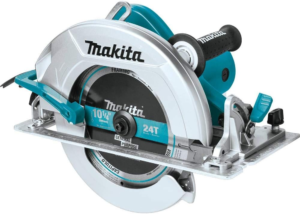
The Makita HS0600 wins on one big strength, serious capacity without sloppy handling. If you need to cut 4x material in one pass, this is the saw in the group that feels built for that job from the start. It has the size and muscle you expect from a 10-1/4-inch class tool, but it still stays composed in the cut.
A 15-amp motor pushes 4,300 RPM, and the saw is built to move through beams and engineered lumber with steady force. Its 3-13/16-inch cutting depth at 90 degrees is the headline feature. You also get 2-11/16 inches at 45 degrees, which opens up more angled work without asking for multiple passes.
At 15.2 pounds, it isn’t light. Still, the balance is better than that number suggests, and the front and top auxiliary handles give you extra control when the blade bites deep. Independent coverage in this Makita HS0600 review points to the same strengths, strong capacity, solid control, and job-ready durability.
Motor: 15-amp | Speed: 4,300 RPM | Weight: 15.2 lbs. | Cut depth at 90°: 3-13/16 in. | Cut depth at 45°: 2-11/16 in.
Reasons to Buy
- Cuts 4x in one pass
- Strong beam-cutting power
- Stable two-handle control
- Great for engineered lumber
- Solid overall balance
Reasons to Avoid
- Heavy for overhead work
- More saw than casual users need
Who should buy it: If your projects involve beams, headers, thick framing stock, or repeated 4x cuts, this is the strongest all-around pick here. It also fits you well if you’d rather buy one large-capacity saw than keep working around a smaller saw’s limits.
Star Rating: 4.8/5
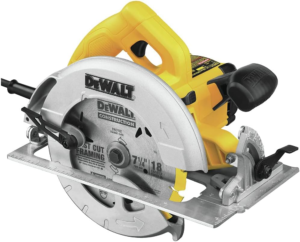
The DEWALT DWE575 nails the sweet spot, low weight, full-strength motor, and easy control. That’s the formula that makes it the best value pick in this group. It gives you the kind of everyday performance that suits both jobsite work and home projects without feeling bulky or stripped down.
At only 8.8 pounds, it’s one of the lightest saws in its class. That pays off fast when you’re making repeated cuts, moving across a stack of sheet goods, or working at awkward angles. A lighter tool is easier to start, stop, and guide, and that usually means cleaner results when you’re tired.
You still get a 15-amp motor, 2-9/16 inches of cutting depth, and a 53-degree bevel range with stops at 45 and 22.5 degrees. Add the integrated dust blower and aluminum base, and it starts feeling like a saw made for busy, practical use. Coverage of the related brake-equipped variant in this DWE575SB review lines up with that same lightweight, easy-to-live-with character.
Motor: 15-amp | Weight: 8.8 lbs. | Cut depth: 2-9/16 in. | Bevel range: 53° | Extras: dust blower, aluminum base
Reasons to Buy
- Very light in hand
- Strong everyday cutting power
- Good bevel stop setup
- Clear sight line
- Comfortable for long sessions
Reasons to Avoid
- Not built for beam work
- Less capacity than 10-1/4-inch saws
Who should buy it: This fits you if you want one corded saw that does most jobs well without beating up your arms. It’s also a smart pick when comfort matters as much as power, especially for overhead cuts, remodeling work, or long days on sheet goods.
Star Rating: 4.7/5
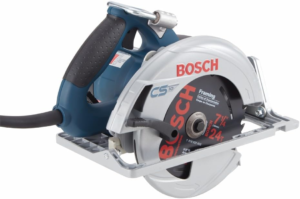
The Bosch CS10 stands out for one reason, it helps you stay on the line. Accuracy isn’t only about the blade. It’s also about how well you can see, how flat the base stays, and how easy the adjustments feel. Bosch gets those details right, which is why this model lands so well for cleaner, more repeatable cuts.
The saw uses a 15-amp motor and offers a 2-7/16-inch cut capacity at 90 degrees, enough for common framing and panel work. More importantly, it pairs that power with optimized sight lines and a built-in dust blower. When sawdust isn’t hiding the mark, you’re less likely to drift, pause, or second-guess the cut.
The die-cast magnesium foot plate helps keep the base flat and durable, while the high-contrast bevel and depth scales make setup quicker. It also has an anti-snag lower guard and a 56-degree bevel range, so angled cuts feel less fiddly. A separate Bosch CS10 review also points to its strong mix of power and control.
Motor: 15-amp | Cut depth at 90°: 2-7/16 in. | Bevel range: 56° | Base: die-cast magnesium foot plate | Visibility: optimized sight lines with dust blower
Reasons to Buy
- Excellent cut-line visibility
- Stable, flat foot plate
- Easy-to-read scales
- Strong bevel flexibility
- Smooth lower guard action
Reasons to Avoid
- Not the lightest option
- No single-pass 4x ability
Who should buy it: If straight, clean cuts matter more to you than chasing the highest capacity, this is your kind of saw. It makes sense for trim-heavy framing, precise sheet work, and anyone still building confidence with circular saw control.
Star Rating: 4.6/5
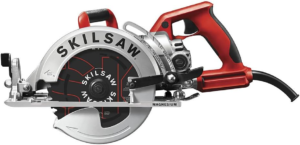
The SKILSAW SPT70WM-01 is all about speed on thick stock. Its big trick is simple, it cuts 4x material in one pass. That saves time, reduces setup hassle, and cuts down on alignment mistakes. If you work with posts, beams, or heavy framing stock, that feature alone can change how fast a day moves.
Power comes from a 15-amp dual-field motor designed for saw work, and the saw feels strong and steady on tougher material. It also uses a magnesium build, which helps keep weight in check compared with what you’d expect from a saw with this kind of reach. So while it isn’t small, it doesn’t feel clumsy either.
The anti-snag lower guard helps the saw move through smaller offcuts without hanging up, and the 51-degree bevel capacity gives you more angle room than basic models. This is a work-focused saw. It doesn’t try to be everything. It simply does one hard job well, and that alone makes it easy to recommend.
Motor: 15-amp dual-field | Main strength: cuts 4x in one pass | Construction: magnesium | Guard: anti-snag lower guard | Bevel range: 51°
Reasons to Buy
- Fast single-pass 4x cuts
- Strong saw-specific motor
- Durable magnesium build
- Smooth lower guard
- Good angle range
Reasons to Avoid
- Bulkier than light sidewinders
- Overkill for small DIY jobs
Who should buy it: This suits you if thicker framing stock shows up often and you want to cut it once, not twice. It’s also a good fit when you like worm-drive-style seriousness but still want a saw that stays manageable.
Star Rating: 4.4/5
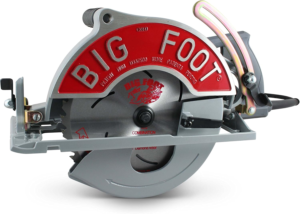
The Big Foot Tools SC-1025SU is the brute-force option, huge cutting ability with the torque to back it up. If your work centers on heavy framing, large headers, or beam cuts, this saw plays in a different lane from the typical 7-1/4-inch models. It is built for big stock and big one-pass results.
Its worm-drive setup gives you the kind of pull that shows up fast in thick material. You can cut two 2x headers or a full 4x header in one pass, which means less repositioning and fewer chances to wander off the mark. That can save a surprising amount of time when cuts stack up.
The impressive part is that it still aims for precision. The thin-kerf blade and low blade flex help it track straight, while the magnesium construction keeps the body strong without turning it into a total anchor.
“It’s a beast of a saw… I cut many Hemlock 3x6s with precision and little effort.”
That owner reaction sums it up well. Powerful, intimidating at first, then highly effective once you settle in.
Drive style: worm drive | Main strength: cuts two 2x headers or one 4x header in one pass | Blade behavior: thin-kerf, low flex | Construction: magnesium | Use case: beam and heavy framing cuts
Reasons to Buy
- Massive one-pass capacity
- Strong torque delivery
- Tracks straight in thick stock
- Tough magnesium body
Reasons to Avoid
- Intimidating for beginners
- Too much for light jobs
- Larger footprint in use
Who should buy it: If your saw spends more time on headers and beams than plywood, this pick makes sense. It suits you best when raw capacity and torque matter more than compact size or beginner-friendly handling.
Star Rating: 4.1/5
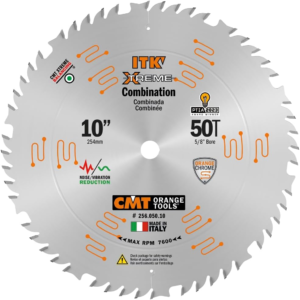
This pick is different, because the CMT Xtreme Combination isn’t a saw. It’s a blade upgrade for the saw you already own, and for some buyers that’s the smarter move. If your current saw still runs well but leaves rough cuts or forces constant blade changes, this can clean up your workflow for less money.
Its 50-tooth design uses a combination pattern aimed at both rip cuts and crosscuts. That matters because it lets you keep moving between tasks without swapping blades every few minutes. The result is a setup that feels more flexible in a mixed-use shop, especially when you’re working across softwood, plywood, laminate, and chipboard.
Micro-grain carbide helps the edge stay sharp longer, and the laser-cut plate with expansion slots is meant to reduce vibration and noise. It also fits table saws, miter saws, and radial arm saws. One owner kept it simple:
“Great blade, makes clean cross cuts, and stays sharp.”
Type: combination blade | Tooth count: 50T | Grind pattern: 4 ATB plus 1 flat grind | Material: micro-grain carbide | Compatible tools: table, miter, and radial arm saws
Reasons to Buy
- Handles rip and crosscuts
- Cleaner finish quality
- Stays sharp longer
- Less blade swapping
- Broad saw compatibility
Reasons to Avoid
- Not a full saw
- Performance depends on your saw
- Best for wood-based materials
Who should buy it: This is for you if the saw itself is fine but the stock blade is holding it back. It also makes sense when your work jumps between rip cuts and crosscuts and you want one blade that can cover both without much fuss.
Star Rating: 3.9/5
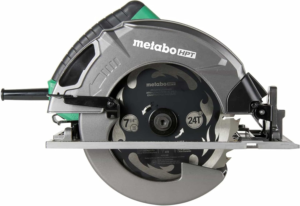
The Metabo HPT C7SB3 is the low-cost pick that still feels properly job-ready. Budget saws often force a bad trade, low price in exchange for weak performance or sloppy handling. This model avoids most of that. It gives you real motor strength, useful capacity, and a manageable body at a price tier that usually comes with more compromise.
Its 15-amp motor spins at 6,000 RPM, so the cut feels quick and smooth in common materials. You get 2-7/16 inches of cut capacity at 90 degrees and 1-7/8 inches at 45 degrees, which covers plywood, OSB, LVL, and standard 2x stock. For framing and general construction, that range is enough for a lot of daily work.
At 9.5 pounds, it stays light enough for longer sessions, and the dust blower helps keep the line visible. The aluminum base with built-in scales adds a bit more control than you’d expect at this level. One owner called it “strong and reliable” and praised the smooth motor, clear cut line, and clean results from the included 24T blade.
Motor: 15-amp | Speed: 6,000 RPM | Weight: 9.5 lbs. | Cut depth at 90°: 2-7/16 in. | Cut depth at 45°: 1-7/8 in.
Reasons to Buy
- Budget-friendly price tier
- Fast, smooth cutting feel
- Easy to handle
- Useful dust blower
- Good basic capacity
Reasons to Avoid
- Less refined than top picks
- Not made for large beam cuts
Who should buy it: If price matters but you still want a real work saw, this is the entry point that makes the most sense. It fits beginners, occasional builders, and anyone stocking a truck or garage without spending premium money.
All Recommended Products Compared
This quick table makes the trade-offs easier to see.
| Product | Power or Blade Setup | Capacity or Cut Role | Weight and Handling | Best Fit |
|---|---|---|---|---|
| Makita HS0600 | 15-amp, 4,300 RPM | 3-13/16 in at 90°, 4x material in one pass | Heavy, but balanced with two auxiliary handles | Best overall for thick stock and serious framing |
| DEWALT DWE575 | 15-amp motor | 2-9/16 in depth, 53° bevel | Very light at 8.8 lb, easy all-day control | Best for comfort, speed, and general use |
| Bosch CS10 | 15-amp motor | 2 in at 90°, 56° bevel | Stable footplate, accuracy-first feel | Best for clean, precise cuts |
| SKILSAW SPT70WM-01 | 15-amp dual-field motor | 4x material in one pass | Durable, moderate-heavy feel | Best for thick stock without flipping |
| Big Foot Tools SC-1025SU | Worm drive with Skil motor | Two 2x headers or full 4x header in one pass | Specialty feel, more intimidating | Best premium beam saw |
| CMT Xtreme Combination | 52T combo blade | Rip cuts and crosscuts across several saw types | Handling depends on your saw | Best blade upgrade for mixed work |
| Metabo HPT C7SB3 | 15-amp, 6,000 RPM | 2-7/16 in at 90° | Manageable at 9.5 lb | Best budget-friendly choice |
The split is clear. If you need depth, Makita, SKILSAW, and Big Foot lead. If comfort matters most, DEWALT wins. For accuracy, Bosch stands out. And if your current saw body still works, the CMT blade can be the cheapest way to improve results.
What to look for in a circular saw
Match blade size to your real work
The wrong size saw can turn easy work into a chore. A common 7-1/4-inch model handles most sheet goods, framing lumber, and general repair jobs well. If you cut thick beams or 4x stock often, a larger saw makes more sense because it saves time and avoids extra passes. Bigger isn’t always better, though. A larger blade usually means more weight and a bulkier feel. If most of your work is plywood, trim framing, or small renovation jobs, a lighter 7-1/4-inch saw often feels better day to day.
Don’t chase power alone
A high-amp motor looks good on paper, but the way that power reaches the blade matters too. Sidewinder saws tend to be lighter and easier to maneuver, while worm-drive styles usually bring more torque and a planted feel in thick material. If you cut dense lumber or headers, torque matters more. If you move around a lot and want speed with less fatigue, a lighter direct-drive design may suit you better.
Weight changes everything after the tenth cut
A saw can feel fine in the store and tiring an hour later. That’s why weight matters more than many buyers expect. Lighter saws are easier for overhead cuts, quick layout work, and repeated starts and stops. Heavier models often feel steadier, especially in deep cuts. Still, balance matters as much as total pounds. A well-balanced 15-pound saw can feel better than a nose-heavy 10-pound one. Handle position, front grip support, and how clearly you can see the blade path all shape that feel.
Look at the base and sight line
A flat, sturdy base helps the saw track straight. Magnesium and aluminum bases tend to do better than flimsy stamped designs because they resist flex and hold alignment longer. You should also care about how easy it is to see the line from your normal cutting position. Dust blowers help more than you might think, especially on dry lumber and sheet goods. If the mark disappears under dust, your accuracy drops fast.
Check cut depth and bevel range
Cut depth tells you whether the saw can handle your material without flipping it. That’s a big deal with 4x stock, headers, or stacked material. Bevel range matters if you cut angles often, and clear stops make repeat work quicker. A saw with easy-to-read depth and bevel scales saves time because you spend less time fiddling with settings and more time cutting. Small convenience features often pay off the most on busy days.
Safety and guard behavior matter
A lower guard that catches on the workpiece can ruin a cut and rattle your confidence. Good guard action should feel smooth and predictable, especially when you start a cut on narrow pieces or partial offcuts. Handle grip, trigger control, and saw stability matter here too. While many shoppers focus on speed and depth, safety features shape how comfortable you feel using the tool. A saw that feels easier to control is usually the one you’ll use better.
Why Trust OASTHAR?
Shashini Fernando is an associate editor who specializes in power tools, workshop gear, and adjacent home-improvement categories. This list is built for shoppers who want clear answers, not spec overload.
Each product is reviewed through OASTHAR’s in-house process, which looks at published specs, design choices, use-case fit, and long-term owner feedback. Hundreds of customer reviews help test the paper claims against real-life ownership, so the final list reflects both performance and day-to-day usability in the 2026 circular saw market.
Best Circular Saws FAQs
What is the best circular saw overall?
The Makita HS0600 is the best overall pick here. It combines big one-pass capacity, strong power, and better control than you might expect from a saw this large.
What’s the best circular saw for beginners?
The Metabo HPT C7SB3 is the easiest beginner recommendation if budget matters. It stays light enough to manage, has enough power for common jobs, and includes useful features like a dust blower and clear base scales.
Is a lighter circular saw always better?
No. A light saw is easier to carry and control for long sessions, but a heavier saw can feel more stable in deep or demanding cuts. The right balance depends on whether you cut sheet goods most often or thicker framing stock.
Can a circular saw cut 4x material in one pass?
Some can, and some can’t. In this guide, the Makita HS0600 and SKILSAW SPT70WM-01 are the clear standouts for single-pass 4x work, while the Big Foot Tools SC-1025SU goes even harder into beam-cutting duty.
Should you replace the saw or upgrade the blade first?
If your current saw still runs well but leaves rough cuts, a better blade may solve the problem faster and cheaper. That’s where the CMT Xtreme Combination makes sense, because it covers both rip cuts and crosscuts and can improve finish quality without replacing the whole tool.
Final Verdict
If you want the strongest all-around answer, go with the Makita HS0600. If you want the smartest mix of comfort, power, and price, the DEWALT DWE575 is the better value play.
For clean, controlled accuracy, the Bosch CS10 stands out. For thick stock, the SKILSAW SPT70WM-01 and Big Foot Tools SC-1025SU are the heavy hitters. If your budget is tighter, the Metabo HPT C7SB3 gets you into a dependable saw without a painful spend.
The right pick comes down to the cuts you make most. Buy for that job first, and the tool will make sense every time you pull the trigger.