

Finding the best budget cameras in 2026 is trickier than it looks. Cheap cameras are everywhere, but good cheap cameras are not. Some are old models with dated screens and weak video. Others look like bargains until you compare autofocus, lens options, and real-world image quality.
Disclosure: As an independent reviewer, we may receive an affiliate commission on qualifying purchases made through our links. This helps support our research and testing team at OASTHAR. Learn more about our testing process.
That’s why this guide keeps the list tight. You’re getting seven budget-friendly cameras that still make sense in 2026, each picked for a clear reason. Some are mirrorless bodies with room to grow. Others are simple, fixed-lens cameras that do one job really well.
From the OASTHAR Product Research & Testing Team, this is a practical buying guide for shoppers who want better photos without overspending. If you also want to compare newer interchangeable-lens options, our roundup of the best value mirrorless cameras for beginners is a useful next read.
RELATED: The 7 Best Budget Action Cameras for 2026, Tested and Reviewed
Best budget cameras at a glance
- Best Overall: Canon EOS R100
- Best Value : Olympus OM-D E-M10 Mark IV
- Best Travel: Panasonic Lumix TZ99
- Best Affordable: Fujifilm Instax Mini 12
- Best Pocket: Camp Snap Pro
- Best Full-Frame: Canon EOS RP
- Best Compact: Kodak PIXPRO WPZ2
Learn More About How We Test Budget Cameras
In our assessment, a budget camera has to do more than hit a low price. It has to be easy to live with, reliable in daily use, and clearly better than just using your phone.
Price and Customer Reviews
Price matters first, but price alone doesn’t make a camera worth buying. We research major retailers and compare current listings across large shopping platforms to see where each model sits in the market. Then we read through large volumes of verified buyer feedback to spot common patterns, including setup issues, reliability complaints, and praise that shows up again and again.
Image Quality
A budget camera still needs to deliver clean, pleasing photos. We compare sensor size, resolution, lens quality, color, low-light results, and how much editing room you get from JPEG and RAW files where supported. We also weigh an important question: does it beat a good smartphone often enough to justify carrying one more device?
Ease of Use
A great beginner camera should help you shoot more, not frustrate you. So we look at menus, grip comfort, button layout, touchscreen behavior, viewfinder quality, and how easy it is to change key settings. Cameras with simple controls and a short learning curve score better here, especially for first-time buyers.
Autofocus and Speed
Budget models usually cut corners here, so this area separates the solid picks from the forgettable ones. We check subject detection, face and eye focus where available, burst shooting speed, startup time, and how confidently a camera locks focus in mixed light. For travel, family, and street shooting, that speed matters a lot.
Video and Connectivity
Not every budget camera needs strong video, but weak video should be a known trade-off. We look at maximum resolution, frame rates, recording limits, stabilization, screen movement, mic support, and wireless transfer options. This matters most if you plan to shoot short clips, social content, or casual travel video.
Build, Portability and System Value
Finally, we judge how practical the camera feels over time. That includes body size, battery life, charging method, durability, lens ecosystem for interchangeable models, and long-term value. We want recommendations that still make sense six months later, not just on day one. If rugged action shooting is part of your plan, our guide to the best budget action cameras 2025 covers stronger picks for that niche.
Star Rating: 4.8/5
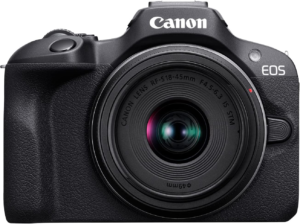
The Canon EOS R100 wins this list because it gets the basics right, and that matters more than flashy extras at this price. Its big strength is simple, dependable image quality from a 24MP APS-C sensor in a compact body that doesn’t feel intimidating. For a first real camera, that mix is hard to beat.
In daily use, the R100 feels like a sensible step up from a phone. You get an electronic viewfinder, interchangeable lenses, and Canon’s familiar color tuning, which tends to make everyday photos look pleasing right away. It isn’t packed with modern luxuries. The rear screen is fixed, and it doesn’t support touch input. Video is also basic by current standards. Still, if your focus is learning photography, taking family photos, travel shots, and casual portraits, those trade-offs are easier to accept.
It also helps that the EOS R100 sits in Canon’s RF system, so you can grow into better glass over time. That long-term value gives it an edge over many cheap fixed-lens cameras. Expert coverage has stayed positive because the camera is simple but capable, as shown in this TechRadar EOS R100 review and broader 2026 budget roundups like Engadget’s best budget cameras guide.
Sensor: APS-C CMOS | Resolution: 24MP | Video: 4K | Burst Speed: 6.5fps | Lens Mount: Canon RF
Reasons to Buy
- Great starter image quality
- Interchangeable RF lenses
- Small, light body
- Comfortable grip
- Very good value
Reasons to Avoid
- No touchscreen
- Fixed rear screen
- Weak video features
Who should buy it: This fits you best if you want your first interchangeable-lens camera and care more about photos than creator features. It also makes sense if you want an affordable entry into Canon’s mirrorless system and plan to add lenses later.
Star Rating: 4.7/5
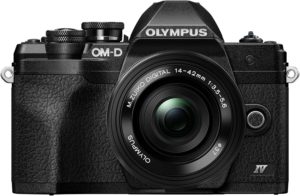
The Olympus OM-D E-M10 Mark IV is the value pick for shoppers who want a small camera that feels more special than its price suggests. Its superpower is balance. You get a compact body, in-body image stabilization, a tilting screen, and better-than-expected stills performance in a camera that’s fun to carry.
That portability matters more than spec-sheet bragging. A lot of budget cameras are cheap because they feel stripped down. The E-M10 Mark IV doesn’t. It feels like a real enthusiast camera, just in a smaller package. The Micro Four Thirds sensor is smaller than APS-C, so it won’t match larger-sensor models in every low-light test. Even so, it holds up well for travel, everyday photography, and learning manual control. The built-in stabilization is a real advantage when you’re hand-holding in poor light.
Another big plus is lens choice. Micro Four Thirds has a deep catalog of compact lenses, and that keeps the total system affordable. TechRadar has long rated it as an easy camera to overlook but a very smart buy, especially for stills-focused users, in this OM-D E-M10 Mark IV review. If you want a camera that stays small after you add a lens, this one stands out.
Sensor: Micro Four Thirds | Resolution: 20MP | Stabilization: In-body image stabilization | Screen: Tilting touchscreen | Video: 4K
Reasons to Buy
- Small and stylish
- Built-in stabilization
- Good beginner controls
- Strong lens ecosystem
- Better stills value
Reasons to Avoid
- Smaller sensor limits
- Modest grip size
- Video is secondary
Who should buy it: This makes the most sense if you care about portability but still want room to learn photography. It also suits you if a light camera and small lenses matter more than chasing the biggest sensor for the money.
Star Rating: 4.5/5
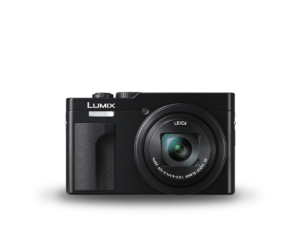
The Panasonic Lumix TZ99 is the practical travel pick because phones still can’t replace a long optical zoom. Its standout feature is a 30x zoom lens in a compact body, and that changes what you can shoot on vacation, at sporting events, or when you just can’t get close.
That zoom range is the whole point. You can frame wide street scenes one minute and then zoom in on distant buildings, wildlife, or stage performances the next. Panasonic also keeps the camera useful with 4K video, RAW capture, image stabilization, and a flip-up screen for selfies. The trade-off is predictable. The sensor is small, so image quality won’t match the mirrorless cameras above, especially in low light.
Still, budget buying is about picking the right compromise. For travel, versatility often matters more than absolute image quality. The TZ99 is a better fit than a starter mirrorless kit if you don’t want to carry extra lenses. The current market for compact zoom cameras is thin, which makes this one more relevant in 2026 than it might look at first glance. PCMag’s compact camera coverage also shows why small zoom cameras still have a place, especially when you want reach a phone can’t offer, in its best point-and-shoot cameras guide.
Type: Compact travel zoom | Sensor: Small-format sensor | Zoom: 30x optical | Video: 4K | Screen: Flip-up touchscreen
Reasons to Buy
- Huge optical zoom
- Pocket-friendly design
- RAW photo support
- Useful travel features
- Easy USB-C charging
Reasons to Avoid
- Small sensor quality
- Older internal tech
- Low-light limits
Who should buy it: This works best if you travel light and want one camera that covers wide shots and distant subjects. It’s also a better match for you if swapping lenses sounds annoying and zoom range matters more than shallow depth of field.
Star Rating: 4.4/5
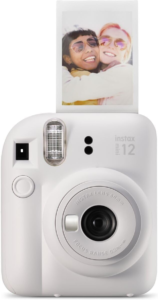
The Fujifilm Instax Mini 12 earns its spot because budget photography isn’t always about megapixels. Sometimes the best camera is the one that makes you shoot more, print more, and have more fun. This one does exactly that.
Its strength is simplicity. The Mini 12 is easy to use, quick to understand, and built for casual moments. Turn it on, frame your shot, and get a physical print in seconds. That instant result is still a huge part of the appeal. It also helps that Fujifilm has refined the formula enough that exposure feels less random than older instant cameras. Close-up shooting is friendlier, and the whole thing feels beginner-proof.
Of course, film cost is part of the real budget story. The camera itself is affordable, but instant film adds up. So this isn’t the cheapest long-term option on the list. Still, if you want a fun camera for parties, gifts, scrapbooks, or family memories, it delivers something your phone and a standard digital camera don’t. It’s less about precision and more about the experience.
Type: Instant camera | Film Format: Instax Mini | Lens: Fixed | Power: Battery-powered | Use Case: Instant printed photos
Reasons to Buy
- Very easy to use
- Instant printed photos
- Fun party camera
- Compact and light
- Friendly close-up mode
Reasons to Avoid
- Film costs add up
- Limited creative control
- Print quality varies
Who should buy it: This is a strong fit if you want a fun, low-pressure camera for events and everyday moments. It’s also ideal if a printed photo in your hand matters more to you than editing files later.
Star Rating: 4.2/5
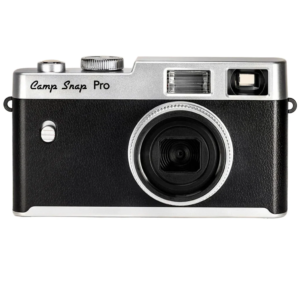
The Camp Snap Pro is the wildcard of this list, and that’s exactly why it belongs here. It isn’t trying to beat a mirrorless camera or replace a high-end phone. Instead, it gives you a tiny, distraction-free digital camera that brings back the appeal of simple point-and-shoot photography.
That basic approach is the draw. You don’t spend time buried in settings or staring at a screen. You just carry it, press the shutter, and move on. In a market full of cameras trying to do everything, the Camp Snap Pro does less on purpose. That makes it useful for casual everyday shooting, for kids, and for anyone who wants a pocket camera that feels different from using a phone all day.
You do need to keep expectations realistic. This is not the pick for low-light quality, advanced autofocus, or serious video. It’s here because budget camera buying also includes ultra-simple cameras with personality, and current compact camera coverage has noted renewed interest in this kind of stripped-back model. If you want a cheap digital camera that feels playful and intentional, this one makes sense.
Type: Pocket digital camera | Design: Screen-light/simple-use concept | Lens: Fixed | Portability: Very compact | Use Case: Casual snapshots
Reasons to Buy
- Very easy to carry
- Simple shooting experience
- Fun everyday camera
- Good for kids
- Phone-free feel
Reasons to Avoid
- Basic image quality
- Few advanced controls
- Not for low light
Who should buy it: This suits you if you want a tiny camera for casual snapshots and don’t want the distraction of your phone. It also works well for younger users or for anyone who values fun and portability over specs.
Star Rating: 4.1/5
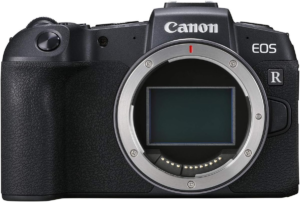
The Canon EOS RP remains one of the cheapest ways to get into full-frame photography, and that alone keeps it relevant in 2026. Its superpower is sensor size. Compared with most budget models here, it gives you stronger background blur, better low-light potential, and a more advanced starting point for portraits and full-frame lens use.
The reason it doesn’t rank higher is simple. It’s older, slower, and more limited than newer mirrorless cameras in a few key areas. Burst speed is modest, battery life isn’t great, and video feels dated. But if your main goal is photography, especially portraits, indoor shots, or general stills work, the EOS RP still has value. It gives you a full-frame look without pushing you into far more expensive bodies.
This is the classic buy-smart option. You’re not paying for the newest autofocus tricks or the strongest video setup. You’re paying for a full-frame sensor in a small body. If that’s the feature you care about most, it stays competitive. For shoppers comparing entry-level full-frame options, you may also want to read our Nikon Z5 II budget full-frame review for a more modern step-up path.
Sensor: Full-frame CMOS | Resolution: 26MP class | Lens Mount: Canon RF | Video: 4K available | Body Style: Compact mirrorless
Reasons to Buy
- Affordable full-frame sensor
- Compact body size
- Good still photo quality
- Nice portrait potential
Reasons to Avoid
- Weak battery life
- Limited burst speed
- Dated video performance
Who should buy it: This is a smart match if you want affordable full-frame photography and mostly shoot stills. It also makes sense if portraits and background blur matter more to you than action shooting or strong 4K video.
Star Rating: 4.0/5
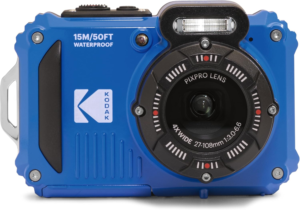
The Kodak PIXPRO WPZ2 rounds out the list because sometimes the right budget camera is the one you won’t worry about. It’s a simple rugged compact that stays relevant thanks to its low cost, waterproofing, and easy operation. In that sense, it’s less about image quality and more about usefulness.
That usefulness is easy to understand. You can toss it in a beach bag, hand it to a kid, bring it on a hike, or use it near water without babying it. Your phone might take better photos in ideal light, but your phone also costs a lot more and isn’t always something you want near sand, rain, or a pool. The WPZ2 trades image quality for toughness and simplicity.
There are real compromises. Reviews have pointed out that performance and picture quality lag behind better modern cameras, and even strong phones can beat it in many conditions. But under $200, rugged choices are rare. If you want a cheap camera that can survive rough handling and still capture decent daylight shots, it earns a place here. Tom’s Guide has also treated it as a notable ultra-budget option in 2026 coverage of low-cost cameras.
Type: Rugged compact | Resolution: 16MP class | Video: 1080p | Waterproofing: Yes | Shock Resistance: Yes
Reasons to Buy
- Very affordable
- Waterproof body
- Easy to use
- Good for rough trips
- Lightweight and compact
Reasons to Avoid
- Basic photo quality
- Limited video features
- Outclassed by phones
Who should buy it: This is the practical pick if you need a cheap camera for the beach, pool, camping, or kids. It fits best when durability matters more than image quality and you’d rather protect your phone.
All Recommended Products in Comparison
Here’s the fast decision view if you’re choosing between these seven cameras.
| Camera | Best For | Biggest Strength | Main Trade-Off | Camera Type |
|---|---|---|---|---|
| Canon EOS R100 | First real camera | APS-C image quality and lens upgrades | Weak screen and video | Mirrorless |
| Olympus OM-D E-M10 Mark IV | Best value all-arounder | Small body with stabilization | Smaller sensor | Mirrorless |
| Panasonic Lumix TZ99 | Travel and sightseeing | 30x optical zoom | Small-sensor low-light limits | Compact zoom |
| Fujifilm Instax Mini 12 | Fun instant prints | Immediate physical photos | Film costs | Instant camera |
| Camp Snap Pro | Pocket casual use | Ultra-simple, phone-free shooting | Basic image quality | Pocket digital |
| Canon EOS RP | Cheap full-frame entry | Full-frame sensor look | Older performance | Mirrorless |
| Kodak PIXPRO WPZ2 | Rough trips and water | Rugged body at low cost | Weak overall quality | Rugged compact |
What to Look for in a Budget Camera
Sensor Size
Sensor size shapes image quality more than most marketing claims. APS-C and full-frame sensors usually beat tiny compact-camera sensors, especially in low light. If photo quality comes first, start there.
Lens Type and Upgrade Path
A fixed-lens camera is simple, but it locks you into one setup. An interchangeable-lens camera gives you room to grow. If you want to learn portraits, wildlife, or wide-angle photography later, that flexibility matters.
Portability
A camera only helps if you carry it. Small mirrorless models, travel zooms, and pocket cameras often get used more because they fit real life better. Bigger isn’t always better on a budget.
Autofocus
Fast autofocus saves shots. This matters most for kids, pets, travel, and street scenes. Budget cameras vary a lot here, so don’t assume every mirrorless model is equally strong.
Video Features
If you shoot clips as often as photos, check screen movement, stabilization, 4K support, and mic options. Many cheap cameras still treat video as an afterthought, so this is a real separation point.
Battery and Charging
Battery life gets overlooked until a trip starts. USB-C charging is especially useful because it lets you travel lighter. Older cameras often need dedicated chargers and spare batteries sooner.
Durability
If you plan to use your camera outdoors, near water, or with kids, toughness may matter more than pure quality. That’s why rugged compacts still have a place in 2026.
Value Over Raw Price
The cheapest camera isn’t always the best deal. A low-cost model with poor autofocus, no upgrade path, and weak output can feel obsolete fast. Spending a bit more on the right fit usually pays off.
Why Trust OASTHAR?
I’m Shashini Fernando, an associate editor who specializes in consumer tech, cameras, and mobile imaging. I test each product in-house where possible and pair that hands-on work with deep market research. I also analyze hundreds of customer reviews from real users across the budget camera market, so this list reflects both testing insight and broad owner experience.
For this 2026 guide, the OASTHAR team focused on cameras that still make sense for shoppers right now. That means weighing specs, use cases, trade-offs, and long-term value, then cutting anything that looks cheap on paper but disappointing in practice.
Best Budget Cameras FAQs
What is the best budget camera overall?
The Canon EOS R100 is the best budget camera overall in this guide. It offers strong image quality, interchangeable lenses, and a low entry price without feeling like a toy.
Is a budget camera better than a smartphone?
Sometimes, yes. Budget mirrorless cameras usually win on sensor size, lens options, and creative control. Compact budget cameras don’t always beat a phone on pure quality, but they can still win on zoom, toughness, or ease of use.
Which budget camera is best for beginners?
The Canon EOS R100 is the easiest recommendation for most beginners. The Olympus OM-D E-M10 Mark IV is also a great fit if you want a smaller body and better in-body stabilization.
What’s the best cheap camera for travel?
The Panasonic Lumix TZ99 is the best travel pick here because of its 30x optical zoom and compact body. It gives you far more reach than a phone without forcing you to carry lenses.
Is full-frame worth it on a budget?
It can be, if you mainly shoot stills and care about portraits or low-light performance. The Canon EOS RP is the best budget full-frame option on this list, but you give up speed and newer features.
Final Verdict
If you want the safest all-around buy, pick the Canon EOS R100. It’s the most complete answer for first-time buyers who want a real camera without spending big.
If value matters most, go for the Olympus OM-D E-M10 Mark IV. It’s small, capable, and easier to enjoy every day. If travel flexibility is the priority, the Panasonic Lumix TZ99 makes the strongest case because its long zoom changes what you can capture.
For fun and instant prints, the Fujifilm Instax Mini 12 is the easy choice. For an ultra-simple pocket camera, the Camp Snap Pro stands out. If full-frame is your goal, the Canon EOS RP remains the budget route in. And if you need a cheap rugged camera for water and rough use, the Kodak PIXPRO WPZ2 still fills that role.
That’s the real shape of the best budget cameras in 2026. Not one winner for everyone, but seven smart picks for seven different kinds of buyers.