

Budget action cams got a lot better, which is why finding the best budget action cameras in 2026 is mostly about picking the right tradeoffs, not settling for junk. You can get sharp 4K, strong stabilization, and real waterproofing without paying flagship money.
Disclosure: As an independent reviewer, we may receive an affiliate commission on qualifying purchases made through our links. This helps support our research and testing team at OASTHAR. Learn more about our testing process.
At the same time, “budget” means different things now. For some people, it’s under $200 with a big accessory bundle. For others, it’s last year’s premium model at a discount, with fewer compromises.
Below, you’ll get seven picks that make sense for real life, biking, travel, family trips, snorkeling, and casual content. Each one earns its spot for a clear reason.
RELATED: The 8 Best Hearing Protections for 2026, Tested and Reviewed
Best dudget action cameras at a glance
- Best Overall: DJI Osmo Action 4
- Best for Beginners: Akaso Brave 8 Lite
- Best Value: GoPro Hero 12 Black
- Best Entry Level: GoPro Hero (2024)
- Best Cameras 360: Insta360 X3
- Best Tiny Wearable: Insta360 Go 3S
- Best for Versatility: Insta360 One RS
Learn more about how we test action cameras
In our assessment, budget action cameras only matter if they stay reliable outside, shoot stable footage, and don’t make sharing a pain. During testing, we found that specs alone rarely match real results, so we rate cameras based on use, not hype.
Price and Customer Reviews
We start by checking pricing across major retailers and deal cycles, then weigh that against what you actually get in the box. Next, we analyze hundreds of customer reviews to spot repeat problems like weak batteries, fogging, bad apps, and mounts that snap. That way, the pick reflects real user patterns, not a single lucky unit.
Video Quality and Frame Rates
We prioritize clean 4K because it holds up on modern TVs and lets you crop for social posts. We also look for high frame rates because smooth action and usable slow motion depend on them. If a camera claims 4K but looks soft, noisy, or over-processed, it drops fast.
Stabilization in Real Motion
Stabilization gets tested while walking, running, biking, and handheld panning. The goal is simple: footage that doesn’t make you dizzy. We also pay attention to how much cropping happens, because aggressive stabilization can make wide shots feel tight.
Low-Light and Indoor Performance
Most action cams struggle after sunset, so we test indoors and at dusk to see which ones stay usable. We look for detail retention, noise control, and whether highlights blow out. A “night mode” only counts if it produces footage you’d actually keep.
Durability, Waterproofing and Controls
We check how the body feels in hand, button placement, touchscreen response, and how easy it is to start recording fast. Waterproof ratings matter, but so does real-world sealing, door latches, and how the camera behaves when wet. Cold and heat tolerance also count, especially for long clips.
App, Export and Sharing Workflow
A budget camera can still waste your time if the app is buggy. We test pairing, file transfers, basic edits, and export speed. We also factor in how easy it is to grab a quick vertical clip for social without learning a whole editing system.
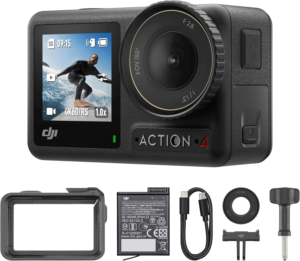
Star Rating: 4.8/5
You get the “shoot after sunset” superpower at a price that still fits a budget list. The Osmo Action 4 has a well-earned rep for cleaner low-light video than most action cams, so indoor family moments and evening street shots look less crunchy and noisy.
In daylight, it’s the kind of camera that makes you stop thinking about the camera. Stabilization stays steady in real movement, colors look pleasing, and clips come out ready to share with minimal fuss. It’s also a strong choice for water use, because action cams are at their best when you don’t baby them.
The tradeoff is simple: if you chase the highest resolutions on paper, other cameras go higher. Still, for most people, clean 4K with strong stabilization beats a spec-sheet flex you don’t use.
Max video: varies by mode (commonly 4K class) | Stabilization: built-in electronic stabilization | Waterproofing: check current rating by package | Audio: internal mics, external options vary | Storage: microSD (varies by model)
Reasons to Buy
- Stronger low-light video
- Reliable stabilization in motion
- Simple, fast controls
- Solid value versus flagships
Reasons to Avoid
- Top resolution not class-leading
- App experience varies by phone
Who should buy it: Night rides, indoor sports, dusk travel, and anyone who hates noisy footage fit this camera well. It also works when you want a simple setup that still looks polished. Links you may want: the official product page is here, DJI Osmo Action 4 product details, and the testing-focused breakdown is here, TechRadar Osmo Action 4 review.
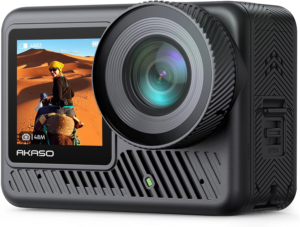
Star Rating: 4.6/5
This one’s all about easy wins. The Brave 8 Lite gives you a straightforward camera, a budget-friendly price, and the kind of included accessories that make it feel like a full starter kit instead of a bare camera body.
When you’re learning, consistency matters more than perfection. In good light, you can get sharp, fun footage for biking, playground chaos, and vacation clips. It also keeps the pressure low, which is a big deal when the camera might take a tumble.
The honest downside is that stabilization and low-light performance usually won’t match the bigger brands. That’s the gap between entry-level and premium, and you feel it most at night and in heavy motion.
Max video: varies by mode (commonly 4K class) | Stabilization: electronic stabilization (varies by mode) | Waterproofing: check current rating and whether a case is required | Screens: front and rear (varies by model) | Accessories: bundles vary widely
Reasons to Buy
- Friendly for first-time users
- Usually comes with mounts
- Good value for casual use
- Simple setup and menus
Reasons to Avoid
- Stabilization can struggle
- Low-light quality drops fast
Who should buy it: This fits family buyers, students, and anyone who wants a low-stress camera for casual action. It’s also a solid “backup cam” for risky angles where you don’t want to risk a pricier model. For a deeper look at how it performs, use TechRadar Brave 8 Lite review.
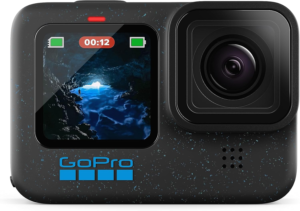
Star Rating: 4.7/5
Hero 12 Black is the classic “buy last year’s flagship” move, and it still makes a ton of sense. You get the GoPro feel, strong stabilization, sharp video, and a deep accessory ecosystem, usually at a better price than the newest top model.
In real use, this is the camera that just works. Mounts are everywhere, settings are familiar, and footage stays smooth even when you move fast. It’s also a strong pick if you shoot wide and want to crop later, because higher-resolution capture gives you that flexibility.
The main compromise is that low light remains a weak spot for most GoPros in this class. You can still shoot at night, but it won’t be the cleanest option on this list.
Max video: varies by mode (commonly up to 5.3K class) | Stabilization: HyperSmooth class | Waterproofing: check current rating | Photos: high-resolution stills (varies) | Mounts: wide accessory support
Reasons to Buy
- Strong stabilization and sharp video
- Great accessory ecosystem
- Often discounted versus new models
- Easy to use and mount
Reasons to Avoid
- Low-light performance is limited
- Some upgrades live on newer models
Who should buy it: This fits you if you want GoPro quality without paying for the newest release. It’s also a strong “one camera for everything” pick for travel and sports in normal light. Useful links: GoPro HERO12 Black official listing and a broader market comparison at PCMag action camera picks for 2026.
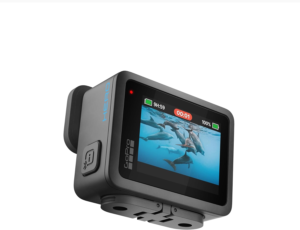
Star Rating: 4.3/5
The Hero (2024) makes sense when you want the GoPro experience with fewer knobs to turn. It aims for simple capture, quick clips, and less decision fatigue, which is often what beginners actually want.
You still get the rugged, mountable shape and the familiar GoPro workflow. That makes it easy to build a kit over time, especially if you already have GoPro mounts in the house. It also works well as a second angle camera.
The downside is predictable: you’ll give up some of the higher-end features and modes that make the Black series so flexible. For many buyers, that’s fine, because they never use those modes anyway.
Max video: varies by model | Stabilization: GoPro electronic stabilization class | Waterproofing: check current rating | Controls: simplified interface | Mounting: broad GoPro support
Reasons to Buy
- Simple GoPro-style shooting
- Easy mount compatibility
- Good for basic action clips
- Lower cost than Black models
Reasons to Avoid
- Fewer pro-style modes
- Less flexibility for advanced edits
Who should buy it: This fits you if you want a basic action cam from a known brand and you don’t care about advanced color profiles or specialty modes. It also suits quick family travel clips where ease matters most. For brand context and current lineup, use GoPro official store.
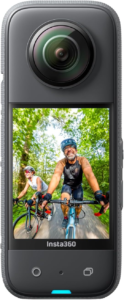
Star Rating: 4.4/5
X3 is the affordable way into “shoot everything, aim later” filming. A 360 camera changes how you capture trips and sports, because framing becomes an editing decision, not a shooting decision.
In good light, it’s a blast. You can pull normal flat clips from 360 footage, reframe for vertical social posts, and create dynamic follow-cam angles without a second person filming you. That’s why 360 can feel like cheating, in a good way.
The tradeoff is workflow. 360 video usually needs more processing and storage than standard clips, so you’ll spend more time exporting and you’ll want a decent phone or computer.
Capture type: 360 video and reframing | Max video: varies by mode (commonly 5.7K 360 class) | Stabilization: FlowState class | Waterproofing: check current rating | Editing: app-driven reframing
Reasons to Buy
- Reframe after shooting
- Great for travel and POV
- Creative angles without re-shoots
- Strong stabilization for 360
Reasons to Avoid
- Larger files and more editing
- Low light still isn’t magic
Who should buy it: This fits you if you want more creative control after the fact, or you hate missing the shot because the camera wasn’t aimed right. It’s also great for skiing, biking, and vacations where you want both you and the scenery. If you want extra context on 360 options, use OASTHAR best 360 cameras guide, plus a broader roundup view at Digital Camera World action camera guide.
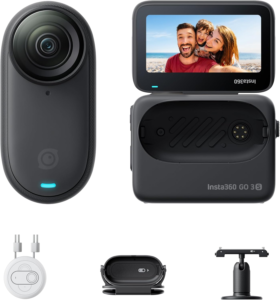
Star Rating: 4.2/5
Go 3S wins on one thing no other camera can copy, you’ll actually use it because it’s tiny. Wearable size means you can stick it in places bigger action cams don’t fit, then capture natural POV clips without the “big camera” vibe.
For quick trips, behind-the-scenes moments, and creative angles, it’s an easy add to your kit. You can grab clips while cooking, walking, riding, or just playing with kids, and the camera doesn’t feel like a brick on your body.
The compromise is image quality in tough conditions. Tiny cameras typically don’t match larger ones in low light or detail, even when specs look decent. Think of it as the best “always with you” camera, not the best “cinema” camera.
Design: tiny wearable camera | Max video: varies by mode (commonly 4K class) | Stabilization: FlowState class | Water handling: check current rating and dock limits | Charging: dock-based workflow
Reasons to Buy
- Extremely small and light
- Easy to mount creatively
- Great for casual POV
- Fast, fun capture style
Reasons to Avoid
- Low light is limited
- Some setups aren’t fully waterproof
Who should buy it: This fits you if you want natural, low-effort clips all day, especially for travel and family moments. It also works when you want a second camera angle that’s easy to hide. For a quick reality check on how tiny cameras fit into the wider market, TechRadar best action camera roundup helps frame the tradeoffs.
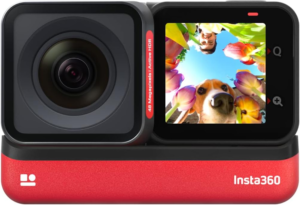
Star Rating: 4.0/5
One RS is the “mix and match” pick. A modular camera lets you adapt your setup to the day, which is handy when you don’t want to own two separate cameras for different looks.
That flexibility is the point. One day you want a standard action view, another day you want a different lens style. The system approach also makes the camera feel like a small toolkit instead of one fixed device.
Still, modular cameras can feel fiddlier than a single-piece GoPro-style body. Setup time goes up, and the parts add complexity when you just want to hit record.
Design: modular system | Video modes: vary by lens module | Stabilization: FlowState class | Water handling: check current sealing by configuration | Use case: multi-style shooting
Reasons to Buy
- Flexible modular design
- Multiple looks in one system
- Strong stabilization for the class
- Good value when discounted
Reasons to Avoid
- More parts to manage
- Not as simple as one-piece cams
Who should buy it: This fits you if you like experimenting and you want one camera that can change roles. It’s also a good match if you don’t mind a little setup time to get more shooting options.
All recommended products in comparison
| Camera | Best for | Video and detail | Stabilization | Low light and indoors | Water and travel toughness |
|---|---|---|---|---|---|
| DJI Osmo Action 4 | low-light budget pick | Strong 4K class output | Very steady in motion | Best of this list | Great for water use (check rating) |
| Akaso Brave 8 Lite | beginners | Good in daylight | OK, can struggle | Weakest area | Fine for casual use (check case) |
| GoPro Hero 12 Black | value and accessories | Sharp, flexible capture | Class-leading feel | Limited versus DJI | Rugged and easy to mount |
| GoPro Hero (2024) | entry-level GoPro | Solid basics | Solid basics | Limited | Rugged body, simple kit |
| Insta360 X3 | affordable 360 | Great in good light | Excellent for 360 | Just average | Great travel tool, extra editing |
| Insta360 Go 3S | tiny wearable | Good for its size | Smooth for casual POV | Limited | Depends on configuration |
| Insta360 One RS | versatility | Varies by module | Strong for class | Varies by module | More parts, still travel-friendly |
For extra context on how different brands stack up in the wider market, The Independent action camera roundup gives another angle on budget-to-premium positioning.
What to look for in a budget action camera
Real 4K that looks good
“4K” can mean clean detail or mushy detail. In practice, you want footage that stays sharp when you pause, zoom, or crop. Also watch for overly aggressive sharpening, because it can make grass, water, and hair look weird.
Stabilization that matches your sport
Walking footage is easy. Biking, skiing, and handheld running are harder. Strong stabilization often crops the image, so the best cameras balance steadiness with keeping a wide view.
Waterproofing you can trust
Many action cams handle casual water without a case, but depth ratings vary. You’ll also want to think about battery doors and USB doors, because that’s where leaks happen. If your plan involves snorkeling or surf, the waterproof rating matters more than most specs.
Battery life that fits your day
Some cameras die fast at high settings. Others last longer but sacrifice resolution or heat management. Your best experience usually comes from carrying a spare battery or planning settings that don’t overheat during long clips.
Audio you can actually use
Wind noise ruins great video. Built-in mics can work, but results vary a lot outdoors. If voice matters, check whether your camera supports external mic options, even if you don’t buy one right away.
App and editing workflow
A smooth workflow matters, especially on budget models. Look for fast file transfer, stable pairing, and easy exports. If the camera is 360, expect bigger files and more processing time.
If you also shoot travel content, you may like how action cams fit into a simple kit alongside compact cameras, covered in OASTHAR travel camera guide.
Why Trust OASTHAR?
I’m Shashini Fernando, an associate editor who specializes in consumer tech, cameras, and everyday creator gear (including action cameras, earbuds, and smartwatches). You get this list because each pick goes through in-house testing, plus we analyze hundreds of customer reviews from real users in the action camera market. That mix helps you avoid hype picks and focus on what holds up in 2026.
For added 360 context from our team’s coverage, you can also check our Insta360 X5 review.
Best Budget Action Cameras FAQs
What is the best budget action camera overall?
For most people, DJI Osmo Action 4 lands as the best overall budget-friendly pick because it stays strong indoors and at night while still delivering clean, stable action footage.
Are budget action cameras good enough for YouTube and TikTok?
Yes, in good light. Most budget-friendly models can produce sharp 4K-class footage that looks great on phones. Your results depend more on light, stability, and audio than on headline specs.
Which budget camera is best for snorkeling?
Models with dependable waterproof ratings and solid sealing work best. DJI and GoPro-style rugged bodies tend to feel more confidence-inspiring, but depth ratings vary, so the exact use matters.
Is a 360 camera worth it on a budget?
It’s worth it if you like reframing and you don’t mind extra editing time. Insta360 X3 is a strong budget entry point because it lets you shoot first and choose angles later.
Should you pay extra for a last-gen flagship?
If you want better stabilization, better mounts, and a more mature app, last-gen flagships often feel nicer day to day. That’s why Hero 12 Black remains a value standout when pricing drops.
Final Verdict
If low-light and indoor clips are a big part of your life, DJI Osmo Action 4 is the cleanest budget-friendly win. If you want the easiest starter kit for daylight action, Akaso Brave 8 Lite keeps it simple and cheap. If you want a polished, all-around camera with a deep accessory world, GoPro Hero 12 Black is the value sweet spot.
For creators who want more creative angles, Insta360 X3 gives you affordable 360 reframing, while Insta360 Go 3S wins when you want a tiny wearable you’ll actually carry. If flexibility matters most and you like modular gear, Insta360 One RS stays the most adaptable pick on this list.