

If you’re shopping for the best budget acoustic guitars in 2026, you’ve got better options than people did a few years ago. Prices climbed, but quality also moved up, especially in the $150 to $500 range where “cheap” can still mean “real instrument,” not a toy.
Disclosure: As an independent reviewer, we may receive an affiliate commission on qualifying purchases made through our links. This helps support our research and testing team at OASTHAR. Learn more about our testing process.
The hard part now isn’t finding something playable. It’s choosing the right body size, tone, and features for how you’ll actually play. Some models win on comfort, others on big strumming sound, and a few are built for small hands or younger players.
Below, you’ll get seven picks that cover the most common needs, plus a simple buying guide, comparison section, and quick FAQs.
RELATED: The 7 Best Air Purifiers for 2026, Tested and Reviewed
Best budget acoustic guitars at a glance
- Best Overall: Yamaha Storia III
- Best Strumming Tone: Epiphone J-200 Studio
- Best for Beginners: Fender CD-60S
- Best Value: Yamaha FG800
- Best for Kids: Gretsch G9500 Jim Dandy
- Best with Cutaway: Cort Core-OC Mahogany
- Best for Small Hands: Martin LX1E Little Martin
For extra context on what’s competitive right now, see Guitar World’s roundup of best cheap acoustic guitars 2026.
Learn more about how we test budget acoustic guitars
In our assessment, the best budget acoustic guitars don’t win on hype. They win on playability, consistent build, and tone that holds together when you strum hard or pick lightly. We shortlist models by researching major retailers (Amazon, Walmart, Target, and Currys), then we score them with an in-house process and cross-check against hundreds of customer reviews to see what owners live with day to day.
Playability and setup feel
First, you care about how it feels in your hands. We focus on neck comfort, fret feel, and whether chords feel like work. Budget acoustics vary a lot here. A good one feels friendly even before a pro setup, while a weak one fights you with stiff action or rough fret ends.
Tone and projection
Next, we judge tone with simple playing, open chords, barre chords, and basic fingerpicking. Big bodies usually push more bass and volume, while smaller bodies tighten the low end and bring the mids forward. We also listen for harsh highs, boxy mids, and whether the guitar stays clear when you strum fast.
Build quality and consistency
Then we inspect the basics that show long-term value. We check neck joint feel, tuner smoothness, bridge and saddle fit, and finish quality. A budget guitar doesn’t need to look fancy, but it should feel solid, with clean joins and no obvious weak points.
Electronics
If a guitar includes onboard electronics, we evaluate usefulness, not promises. You want a pickup system that sounds close to the acoustic tone, with controls you can actually access quickly. Some budget systems are totally fine for open mics, while others sound thin or quacky and need extra EQ.
Comfort, size and ergonomics
After that, we score how easy it is to live with. Body size matters, especially if you’re smaller, younger, or you play on the couch a lot. We also consider travel use, because compact guitars can be the difference between playing every day and leaving it in the case.
Price and customer reviews
Finally, we compare value against the real market. We track typical pricing swings and weigh owner feedback for recurring issues like tuning drift, warped neck reports, or electronics failures. That way, the list reflects broad user experience, not a single lucky unit.
Rating: 5.0 out of 5
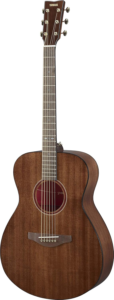
The Storia III’s superpower is simple, it feels like a “nice” guitar the moment you pick it up. You get a comfortable, player-first body size, a friendly neck, and a tone that leans warm and balanced instead of thin. For a lot of shoppers, that’s the difference between practicing daily and giving up.
This model stands out because it doesn’t look or feel like a generic beginner acoustic. It’s built to be approachable, with a vibe that fits living-room playing, small jam sessions, and early-stage songwriting. In many budget lines, you pay extra for a guitar that feels personal. Here, that personality is part of the point.
It’s also one of the more practical “one guitar” picks in this price tier. Depending on the exact configuration you find in stock (features can vary by model and year), you may see onboard pickup options that make it easier to plug in for a basic gig. Just keep expectations realistic, budget electronics usually need some EQ love.
Body style: Concert size | Top wood: Mahogany (varies by model) | Electronics: Some versions include pickup | Scale length: Around 25 inches (varies) | Best for: All-around home and light gig use
Reasons to Buy
- Comfortable, modern feel
- Warm, balanced voice
- Looks more premium
- Great daily-practice guitar
Reasons to Avoid
- Not the loudest unplugged
- Features vary by version
Who should buy it: This fits you if you want one budget acoustic that feels “done,” not like a placeholder. It’s also a strong match if comfort matters more than maximum volume.
Rating: 4.8 out of 5
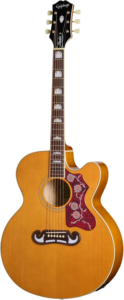
The J-200 Studio’s superpower is big-body attitude. It’s built to sound confident when you strum open chords, with a wide, room-filling voice that makes simple playing feel larger than it is. If your style is mostly rhythm, singer-songwriter work, or church-style strumming, this kind of jumbo outline can be instantly rewarding.
You’re also getting a classic look in a price tier that usually plays it safe. That visual confidence matters for some players, especially if you want an acoustic that looks stage-ready even before you’ve leveled up your skills. And because this is a “Studio” style take, the whole idea is that you get the vibe without the premium bill.
The trade-off is comfort and control. Big bodies can feel bulky if you’re smaller, and they can push a lot of low end if you already sing in a lower range. Still, when your goal is bold strumming tone, this style tends to deliver more easily than small-body guitars.
Body style: Jumbo-inspired | Top wood: Varies by model | Electronics: Often included on stage-ready versions | Best for: Strumming and accompaniment | Feel: Large body, bigger presence
Reasons to Buy
- Full, bold strum sound
- Big visual presence
- Great for rhythm work
- Often gig-friendly options
Reasons to Avoid
- Bulky for smaller players
- Can overpower light picking
Who should buy it: This suits you if you want your chords to sound wide and strong without chasing a high-end jumbo price. It also makes sense if you play with a heavier right hand. For more under-$500 context, Guitar Player has a helpful overview of acoustic guitars under $500.
Rating: 4.7 out of 5
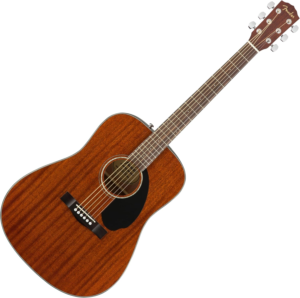
The CD-60S is the “get started the right way” pick. Its superpower is predictability, you can hand it to a new player and get a solid, familiar acoustic feel right away. It’s a dreadnought-style platform that supports the basics, open chords, simple strumming patterns, and early fingerpicking without feeling fragile.
For beginners, comfort problems often look like motivation problems. A guitar that stays in tune reasonably well, doesn’t feel sharp at the frets, and has a neck that doesn’t fight you makes practice feel simpler. That’s where the CD-60S earns its place. It’s not flashy, it’s functional.
You also get a tone profile that most people recognize as “acoustic guitar.” That matters when you’re learning because you’re training your ear. If you play along with lessons or recordings, a familiar dreadnought voice helps you hear whether you’re clean or muted.
Body style: Dreadnought | Top wood: Often spruce (varies) | Electronics: Usually none on this model family | Best for: First-time players | Sound: Classic bright strum
Reasons to Buy
- Beginner-friendly feel
- Familiar dreadnought tone
- Easy to find and service
- Strong value for learning
Reasons to Avoid
- Full-size body feels big
- Not designed for gigging
Who should buy it: This matches you if you want a straightforward first acoustic that doesn’t distract you with quirks. It’s also a safe choice when you’re buying a gift for a new player.
Rating: 4.6 out of 5
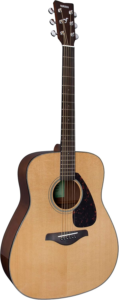
The FG800’s superpower is how much “real acoustic” you get for the money. In the budget tier, the difference-maker is often the top, because a solid top tends to open up more over time and respond better to dynamics. This is why the FG800 family keeps showing up in budget shortlists.
It’s also a strong pick if you want an acoustic that can take a little abuse. Budget buyers often need a guitar that survives travel, changing seasons, or being left on a stand in a busy house. Yamaha’s reputation in this price tier comes from consistency and quality control, which helps when you can’t try five examples in person.
The FG800 leans toward a punchy, lively feel that supports strumming and basic accompaniment. If you’re mostly a fingerstyle player, you may prefer a smaller body. Still, as a value dreadnought, it’s hard to argue against.
Body style: Dreadnought | Top wood: Often solid spruce (varies) | Electronics: Usually none | Best for: Value-focused shoppers | Tone: Punchy, vibrant
Reasons to Buy
- Strong value for money
- Consistent build quality
- Loud, clear strumming
- Great “first dreadnought”
Reasons to Avoid
- No pickup on many versions
- Big body isn’t for everyone
Who should buy it: This is for you if you want a traditional dreadnought sound on a tight budget. It’s also a smart pick if you want one acoustic for practice, lessons, and casual jams. For broader 2026 market perspective, this guide to best acoustic guitars for all budgets shows how budget models stack up next to premium icons.
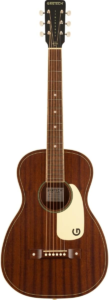
Rating: 4.4 out of 5
The Jim Dandy’s superpower is instant fun. It’s small, light, and built around an old-school vibe that makes you want to pick it up even when you only have ten minutes. For kids, that matters more than “perfect tone,” because the win is making the guitar feel approachable.
Despite the compact feel, you still get a voice that can cut through a room. It won’t sound like a high-end instrument, and it doesn’t try to. Instead, it leans into a boxy, rootsy character that works well for simple songs, folk shapes, and early blues patterns.
This pick also fits adults who want a second guitar for the couch, travel, or quick practice. Smaller bodies can be a relief if a full dreadnought feels like too much guitar for relaxed playing.
Body style: Small-body parlor-style | Top wood: Varies by model | Electronics: Typically none | Best for: Kids and casual play | Feel: Light, compact
Reasons to Buy
- Compact and easy to hold
- Fun, vintage-style tone
- Great couch guitar
- Encourages frequent practice
Reasons to Avoid
- Not a deep low end
- Not built for loud strumming
Who should buy it: This fits you if you’re shopping for a child, a smaller player, or a grab-and-go acoustic that doesn’t demand a big case and a big commitment.
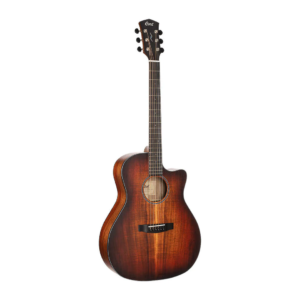
Rating: 4.2 out of 5
The Core-OC Mahogany’s superpower is access and control. The cutaway makes higher frets easier to reach, which is a real perk once you start playing lead lines, melodic fills, or higher-position chord shapes. In a budget list, a cutaway that doesn’t feel awkward is a real advantage.
Mahogany-topped or mahogany-voiced acoustics also tend to emphasize mids in a pleasing way. That can make your playing feel direct and “present,” especially for fingerstyle or lighter strumming. You may not get the same bright sparkle you’d hear from spruce, but you often get a warmer push that records nicely.
This model line also shows why budget acoustics are better than they used to be. Brands like Cort have built a reputation for packing serious value into affordable builds, especially when you want features that usually cost more.
Body style: OM/Orchestra-style with cutaway | Top wood: Mahogany (varies) | Electronics: Some versions include pickups | Best for: Fingerstyle and lead-friendly playing | Feel: Comfortable waist, easier upper access
Reasons to Buy
- Cutaway helps lead playing
- Warm, mid-forward tone
- Comfortable body size
- Strong value features
Reasons to Avoid
- Not the loudest dreadnought punch
- Electronics vary by version
Who should buy it: This is a match if you want an affordable acoustic that supports growth beyond basic chords. It also fits you if you prefer a smaller body that still sounds full. If you want another angle on affordable picks across categories, this 2026 roundup of best affordable guitars provides a wide market snapshot.
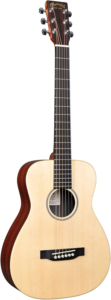
Rating: 3.9 out of 5
The LX1E’s superpower is portability without giving up a serious brand identity. Smaller guitars often feel like compromises, but the Little Martin concept is to make compact size feel intentional. It’s easier to hold, easier to travel with, and less intimidating for smaller players.
This model is also popular because it’s built for real life. Travel-friendly materials and compact dimensions can handle day-to-day movement better than some delicate full-size acoustics. That matters if your guitar lives in a dorm, moves between homes, or goes along on trips.
You’re still trading away some “big body” spread and low-end depth. That’s normal at this size. The upside is comfort, especially for long practice sessions where a large dreadnought can wear you down.
Body style: Compact travel size | Top wood: Varies by version | Electronics: Common on “E” models | Best for: Small hands, travel, and comfort | Feel: Shorter reach, easier hold
Reasons to Buy
- Easy to hold and carry
- Great for small hands
- Travel-friendly build concept
- Often includes electronics
Reasons to Avoid
- Less low-end depth
- Smaller sound footprint
Who should buy it: This fits you if a full-size acoustic feels too big, or if you want a guitar you’ll actually take places. It’s also a smart choice when comfort is the top priority. For another 2026-focused look at value tiers, this guide to best acoustic guitars under $500 helps show where compact models fit in.
All recommended products in comparison
Here’s the plain-language comparison that helps you choose fast, based on how you’ll use the guitar.
Sound profile
- Biggest, boldest strum: Epiphone J-200 Studio
- Classic dreadnought punch: Yamaha FG800, Fender CD-60S
- Warm and balanced: Yamaha Storia III
- Roots-style, boxy charm: Gretsch Jim Dandy
- Warm mids, controlled voice: Cort Core-OC Mahogany
- Compact, focused tone: Martin LX1E Little Martin
Comfort and size
- Most comfortable full-time: Yamaha Storia III
- Best for small hands: Martin LX1E Little Martin
- Best for kids and smaller bodies: Gretsch Jim Dandy
- Biggest body feel: Epiphone J-200 Studio
- Balanced, mid-size comfort: Cort Core-OC Mahogany
- Full-size learning platform: Fender CD-60S, Yamaha FG800
Features for growth
- Upper fret access (cutaway): Cort Core-OC Mahogany
- Gig-leaning options (electronics vary): Yamaha Storia III, Epiphone J-200 Studio, Martin LX1E
- Simple and focused (no distractions): Fender CD-60S, Yamaha FG800, Gretsch Jim Dandy
Best match by use case
- One-and-done budget pick: Yamaha Storia III
- Rhythm-heavy player: Epiphone J-200 Studio
- True beginner: Fender CD-60S
- Value dreadnought shopper: Yamaha FG800
- Kid’s first guitar, or couch guitar: Gretsch Jim Dandy
- Want cutaway for leads: Cort Core-OC Mahogany
- Small hands, travel, dorm: Martin LX1E Little Martin
What to look for in a budget acoustic guitar
Pick the right body size first
Body size shapes both tone and comfort. Dreadnoughts usually sound louder and bassier, which helps with strumming. Concert and OM sizes often feel easier to hold and can sound more balanced for mixed playing. Parlor-style bodies feel small and fun, but they won’t push the same low end.
Solid top vs laminate top
In budget acoustics, the top matters most. Solid tops usually respond better and can “open up” with playing. Laminates can still sound good, and they can be tough, but they often feel less dynamic. In the budget tier, a solid top is a strong value signal, but it isn’t the only one.
Neck feel and fret comfort
A budget guitar can look great and still feel rough in your left hand. Pay attention to how the neck shape fits your grip and whether frets feel smooth. If the guitar feels hard to press, it can slow your learning fast.
Electronics
If you’ll never plug in, skip paying for electronics. If you will play open mics, look for a system that sounds natural and gives you basic control. Budget pickups can work well enough, but they’re not all equal, and specs can change by year.
Tuning stability and hardware
A “good” budget guitar stays in tune reasonably well. Tuners should feel smooth, not gritty. Also, check for rattles, buzzing, or loose parts, because those issues can turn practice into troubleshooting.
Realistic price expectations
Budget doesn’t mean bottom-dollar. Many reviewers and testers group “cheap but legit” acoustics roughly in the $150 to $500 range. Below that, you risk getting something that feels like a toy and holds you back.
If you want a long list of budget-friendly models and how reviewers frame the trade-offs, see this guide to cheap acoustic guitars tested and reviewed.
Why Trust OASTHAR?
I’m Shashini Fernando, an associate editor who specializes in consumer tech and product testing across headphones, wearables, and buying guides, plus adjacent lifestyle gear where fit and comfort matter. When you’re shopping for budget acoustic guitars, you face the same problem you see in tech, lots of choices, uneven quality, and marketing that hides the trade-offs. That’s why you get an in-house scoring process, plus analysis of hundreds of real customer reviews, so this list reflects what people actually experience in 2026.
Best Budget Acoustic Guitar FAQs
What is the best budget acoustic guitar overall?
The Yamaha Storia III is the best overall pick here because it balances comfort, tone, and everyday usability, without feeling like a temporary starter guitar.
Is a dreadnought always best for beginners?
No. Dreadnoughts (like the FG800 and CD-60S) are great, but smaller bodies can be more comfortable, which can lead to more practice time.
Do you need onboard electronics on a budget acoustic?
Only if you plan to plug in. Otherwise, you’re often paying for a feature you won’t use, and that money could go toward better build quality.
Are small guitars only for kids?
No. Small guitars are great for adults who want comfort, travel convenience, or a couch guitar that’s easy to grab.
What price range counts as “budget” in 2026?
Many strong budget acoustics land roughly between $150 and $500, depending on features, brand, and whether electronics are included.
Final Verdict
If you want one guitar that feels easy, sounds balanced, and fits most players, pick the Yamaha Storia III. If your playing is mostly big, confident chords, the Epiphone J-200 Studio brings the most strumming energy. For a simple first guitar that keeps you focused on learning, the Fender CD-60S stays a safe choice. If value is the whole mission, the Yamaha FG800 is the dreadnought deal to beat.
For kids or a fun second guitar, the Gretsch Jim Dandy keeps things light and inviting. If you want a budget acoustic that supports lead work, the Cort Core-OC Mahogany stands out with its cutaway comfort. If full-size guitars feel too big, the Martin LX1E Little Martin makes daily playing easier, especially for small hands and travel.