

If you still picture electric grilling as a squished-panini George Foreman era thing, you’re not alone. But the question you’re really asking is, are electric grills worth it now that outdoor-capable electrics and “smoke-ish” features exist?
You’ll get a straight comparison here, real pros and cons of electric grills, how much they cost to run, what happens to flavor, and which cooks should skip them.
By the end, you’ll know what to buy for your space, your rules, and your budget, without guessing.
RELATED: The 7 Best Electric Grills for 2026, Tested and Reviewed
The “Worth It” scorecard: decide in 60 seconds
Use this quick scorecard like a gut check. If you keep nodding, an electric grill probably fits.
| What you care about | Electric grill verdict | Best for | Not ideal for |
|---|---|---|---|
| Flavor | Good, not classic BBQ | Weeknight grilling | Smoke-chasers |
| Searing heat | Mixed by model | Thin cuts, burgers | Thick steaks |
| Apartment-friendly | Usually yes | Balconies, patios | Rural backyards with no limits |
| Ease of use | Very easy | New grillers | Tinkerers who want a “fire” feel |
| Clean-up | Usually easy | Busy households | People who never clean |
| Operating cost | Predictable | Budget tracking | High-rate electricity areas |
| Year-round use | Strong | Cold weather grilling | Tailgaters |
| Safety | Strong | Families, shared spaces | Anyone who ignores manuals |
If you want a deeper take on the category tradeoffs, this updated guide on electric grill pros and cons lines up with what most buyers run into: convenience wins, searing and smoke are the usual complaints.
What “worth it” really means for you
“Worth it” isn’t about peak temperature on a spec sheet. It’s about whether the grill fits your life.
Start with where you live. Many apartments and condos ban open flames on balconies. Electric often slips through because there’s no propane tank and no charcoal. Still, building rules vary, so you’ll want to check your lease and HOA notes before you buy.
Next, be honest about how you cook. If you grill twice a month, the easiest setup usually wins. If you grill four nights a week, repeatable results and easy cleanup matter more than “authentic” anything.
Also think about volume. Cooking for one to three people is where electric shines. Feeding eight gets cramped fast unless you buy a larger cart-style unit.
Most importantly, don’t shop for “max heat” if what you really need is “easy weeknight dinners.” The best grill is the one you’ll actually use.
The new era of electric grilling: what’s actually changed since the old countertop days
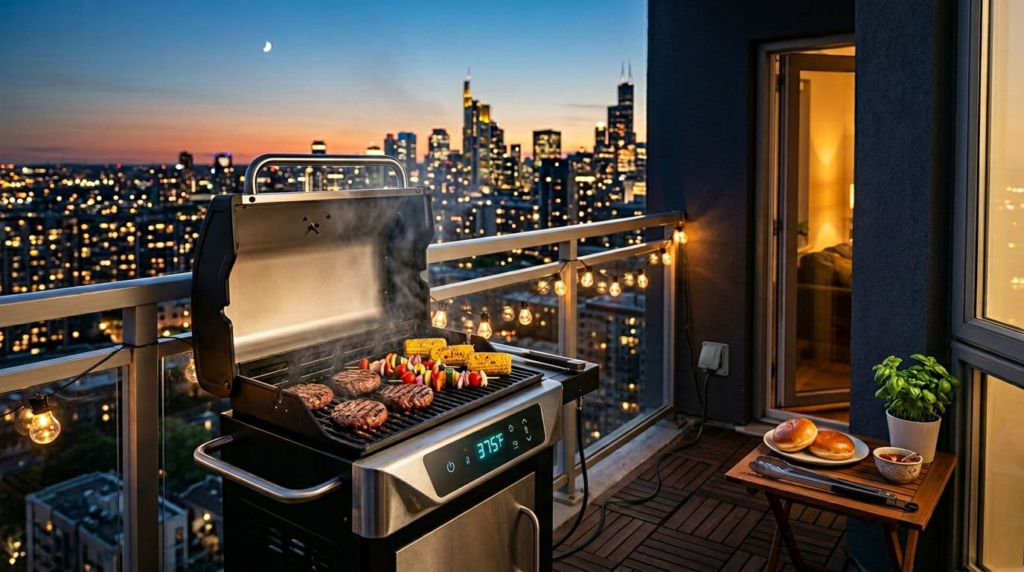
Modern electric grills in 2026 look a lot less like a countertop gadget and more like a real grill category.
First, you’ve got more outdoor-ready options. Many come as stand-up carts with lids that hold heat better, which matters for roasting chicken pieces or thick chops. A lid also helps reduce splatter and keeps cooking more even.
Second, heating elements have improved. Better element design and grate materials can spread heat more evenly, so you get fewer hot spots and less “pale middle, burnt edge” frustration.
Third, temperature control got smarter. Digital thermostats, step-based settings, and probe support make electrics feel closer to an indoor oven, but with grill grates. That’s the real shift: less guesswork, more repeatability.
You’ll also see more “multi-cook” positioning in reviews, especially for outdoor electrics that try to grill and smoke with add-ons. If you’re browsing roundups, lists like best electric grills for indoor and outdoor use are helpful for seeing the range, from compact indoor units to larger balcony-friendly carts.
Flavor upgrades that try to mimic charcoal
Electric grills used to taste clean, sometimes too clean. Newer designs try to add back some “grill personality.”
Some outdoor electrics use small wood pellet systems or dedicated smoke modes. Others use a simple trick: drippings hit a hot surface (often near the heating element), vaporize, then rise back into the food. That gives you more roasted, savory notes than older electrics.
You should keep expectations realistic, though. You can get deeper browning and a light smoky vibe, but you won’t get the same charcoal bark, heavy smoke punch, or smoke ring you’d chase in true barbecue.
Think of it like audio: electric can sound really good, but it’s not a live concert.
Precision cooking is the real superpower
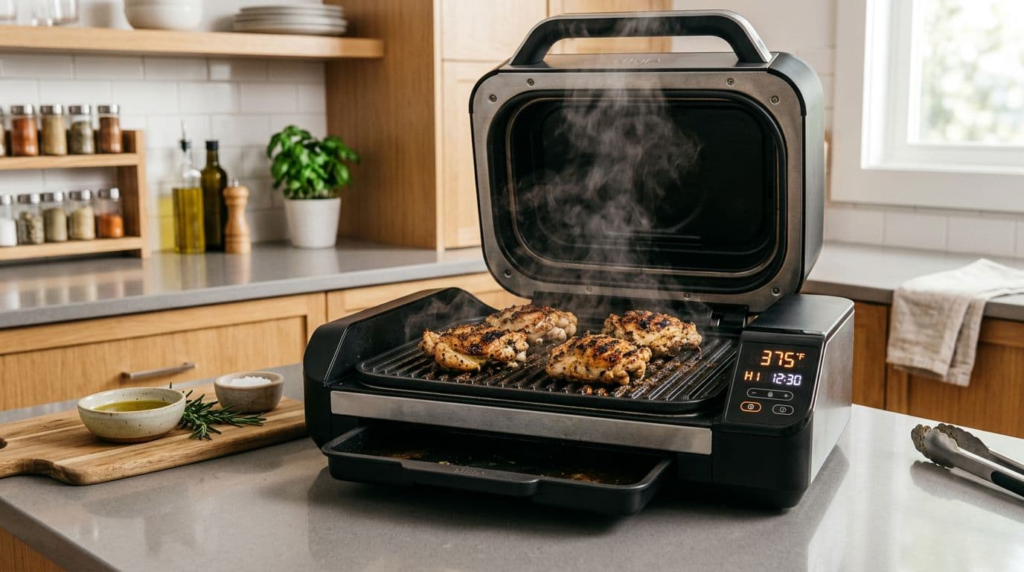
Electric grills behave like appliances, and that’s a compliment. Once the system stabilizes, heat tends to stay steady.
That helps when you’re cooking foods that punish sloppy heat control. Chicken thighs are the classic example. On a hot gas grill, you can char the outside before the inside is safe. On an electric grill with stable heat and a lid, you can brown the skin, then finish without panic flipping.
Built-in probes and alarms (on some models) also help you stop cooking at the right moment. If you like medium burgers every time, electric makes that routine instead of luck.
If you hate “hover grilling,” electric is the calmest option. You set the temp, then you cook.
The major pros of electric grills
Electric grilling isn’t about romance. It’s about friction, how many steps stand between you and dinner. When you cut those steps, you grill more.
The upside shows up in three places: where you’re allowed to cook, how fast you can start, and how messy shutdown feels. If you’ve ever skipped grilling because propane was empty or the charcoal felt like a project, electric fixes that mood.
For a broad look at how electric stacks up against other types, this explainer on major grill types and tradeoffs is a useful way to sanity-check what you’re giving up, and what you’re gaining.
Apartment and condo friendly: often the only legal way to grill
In a lot of US buildings, “no open flame” rules kill gas and charcoal on balconies. Electric often stays on the table because there’s no live fire and typically less smoke.
You also get fewer flare-ups, since you’re not cooking over open burners. That matters in shared spaces where a grease flare can turn into a neighbor problem quickly.
Still, don’t assume. Check your building policy, confirm you’ve got a safe outlet nearby, and follow the manufacturer’s guidance on outdoor use.
Year-round convenience: you never run out of propane at the worst time
Electric is the grill you can use on a random Tuesday.
You plug it in, preheat, and cook. No tank swaps, no last-minute charcoal run. That convenience is why a lot of people who “aren’t grill people” suddenly become grill people.
Some models can move between indoor and outdoor use, but only if the manual says so. If it’s rated for outdoor patios, treat it like any outdoor appliance: keep cords tidy, keep it stable, and avoid wet conditions.
If you want a consumer-friendly comparison between electric and gas in plain language, this electric grill vs gas breakdown highlights the same core theme: gas wins for sear and capacity, electric wins for simplicity and rules.
Cleaner, safer cooking: fewer flare-ups, easier cleanup, less mess
Charcoal leaves ash. Gas leaves greasy burner zones. Electric usually leaves a drip tray and a grate.
That’s not “no cleanup,” but it’s a shorter job. Many grates are coated or designed to lift out, and drip trays catch most of the mess before it bakes on.
Safety is also simpler. There’s no fuel storage, no carbon monoxide risk from charcoal, and shutdown is straightforward. You turn it off, then you unplug once it cools.
The honest cons: where electric grills still fall short
Electric grills have limits, and you’ll feel them most if you’re chasing steakhouse sear, cooking for a crowd, or grilling far from an outlet.
The category has improved, but physics still runs the show. A standard household circuit can only feed so much power, and that caps how much heat an electric grill can create and hold.
You’ll find plenty of happy owners, but you’ll also see the same complaints repeated in long-term use notes. This updated overview of whether electric grills are worth buying captures that split: strong convenience, weaker “BBQ theater.”
You’re tethered to an outlet
Placement can get annoying. Many grills ship with short cords, and patios don’t always have outlets where you want the grill.
Power draw matters too. A lot of electrics run around 1,500 to 2,000 watts. On a 120V circuit, that can be a hefty load, especially if you share the circuit with other outdoor gear. If the breaker trips mid-cook, dinner goes sideways fast.
A simple rule: avoid cheap extension cords, and only use an outdoor-rated cord if the manufacturer allows it. Also check your circuit rating before you plan a full cookout.
Searing and texture can disappoint
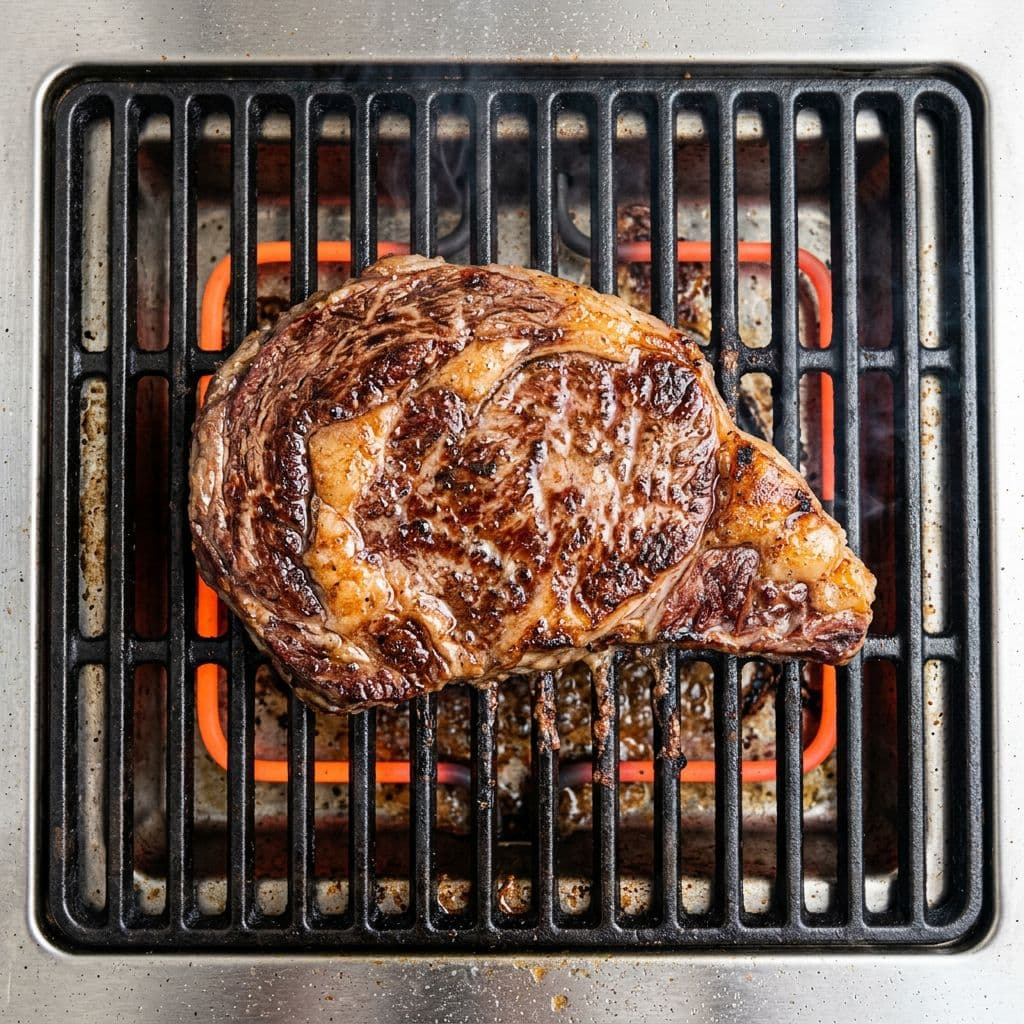
Searing isn’t just “get hot once.” It’s also about heat recovery after you slap cold meat onto the grate.
Some electric grills hit a nice peak temp, then sag when you load thick steaks. The result is decent browning, but less of that deep crust you get from strong gas burners or charcoal.
You’ll usually get better results with thinner cuts, burgers, sausages, vegetables, kebabs, and fish. Thick ribeyes and big tomahawks are where electric shows its ceiling.
Operating cost and capacity: electricity adds up, and many grills cook small batches
Electricity isn’t free, and the cost depends on your rate. The math is simple:
- Convert watts to kilowatts: 1,500W = 1.5kW
- Multiply by hours used: 1.5kW × 1 hour = 1.5kWh
- Multiply by your electricity rate: 1.5kWh × your $/kWh = cost per cook
If your rate is $0.20/kWh, that 1-hour cook costs about $0.30 in energy. That’s usually reasonable, but longer cooks and higher-watt grills add up.
Capacity is the other constraint. Many electric grills comfortably feed 2 to 4 people. You can cook for more, but you’ll do it in batches, and batch cooking can soften the sear.
Electric vs gas vs charcoal: the head-to-head that makes the decision easier

Here’s the cleanest way to decide: match the grill type to your top priority.
Before you buy, compare the boring stuff. That’s where regret hides. Upfront cost, heat-up time, cleanup, and whether your building even allows the grill matter more than one extra cooking mode.
This quick comparison is table-ready if you want to screenshot it:
- Upfront cost range: Electric often lands lower to mid, gas spans low to premium, charcoal can be low but accessories add cost.
- Heat-up time: Electric is quick and consistent, gas is quick, charcoal takes the longest.
- Max heat and sear: Charcoal usually wins, gas close behind, electric depends on model and circuit.
- Flavor: Charcoal wins, gas is solid, electric is clean with some newer “smoke assist” options.
- Learning curve: Electric is easiest, gas is easy, charcoal takes practice.
- Cleanup: Electric often wins, gas is medium, charcoal is the messiest.
- Portability: Small charcoal can travel well, small gas can too, electric needs power access.
- Apartment rules: Electric is most likely allowed, gas and charcoal are often banned.
- Ongoing cost per cook: All vary, but electric is predictable if you know your rate.
Takeaway: electric is the appliance pick, gas is the crowd pick, charcoal is the flavor hobby.
Which grill wins for your cooking style
If you’re a weeknight convenience cook, electric fits because it removes friction. You’ll preheat fast, cook clean, and stop thinking about fuel.
If you’re a weekend host, gas usually makes more sense. You get more space, faster recovery, and better high-heat searing across a bigger grate.
If you’re a BBQ purist chasing smoke and bark, charcoal stays the move. You’re buying flavor, ritual, and control over live fire, even if it takes longer.
Are Electric Grills Worth It FAQs
Do electric grills taste as good as gas or charcoal?
They can taste great, but they won’t match charcoal smoke. You’ll get better browning than older electrics, though.
Are electric grills allowed on apartment balconies?
Often yes, because there’s no open flame. Still, you should check your building rules and your grill’s manual.
Can you sear steak on an electric grill?
You can, especially with thinner steaks. Thick cuts are tougher because some electrics lose heat when food hits the grate.
How much does it cost to run an electric grill?
Use this formula: (watts ÷ 1,000) × hours × your $/kWh rate. Many cooks land under a dollar, depending on time and local rates.
Can you use an electric grill indoors?
Only if the manufacturer rates it for indoor use. Outdoor-only units can create smoke, grease issues, and safety risks indoors.
Conclusion
Electric grills are worth it when you need rule-friendly cooking, low mess, and repeatable results. The trade is clear: you give up some sear power and that classic smoky depth.
If you want clean, predictable grilling, pick electric. If you want strong sear and bigger capacity, pick gas. If you want maximum flavor and the full ritual, go charcoal. Choose your top priority (flavor, speed, rules, or budget), then buy the grill that matches it.