

Should you buy the Samsung Galaxy Z Fold 8, or pay more for the Ultra model? If you want a foldable that feels less like a tiny laptop and more like a phone you’ll happily use every day, this is the Samsung to look at.
The shorter, wider design changes the experience fast. You get easier typing, better video playback, a bright inner screen, strong speed, longer battery life, and useful AI tools. You also lose the telephoto camera, S Pen support, and the flexible hinge behavior some power users expect.
This is a content-first foldable, and that trade-off shapes almost every part of the review.
RELATED: Samsung Galaxy Z Fold 7 Review (2026): Best Fold That Finally Feels Normal
Quick Summary
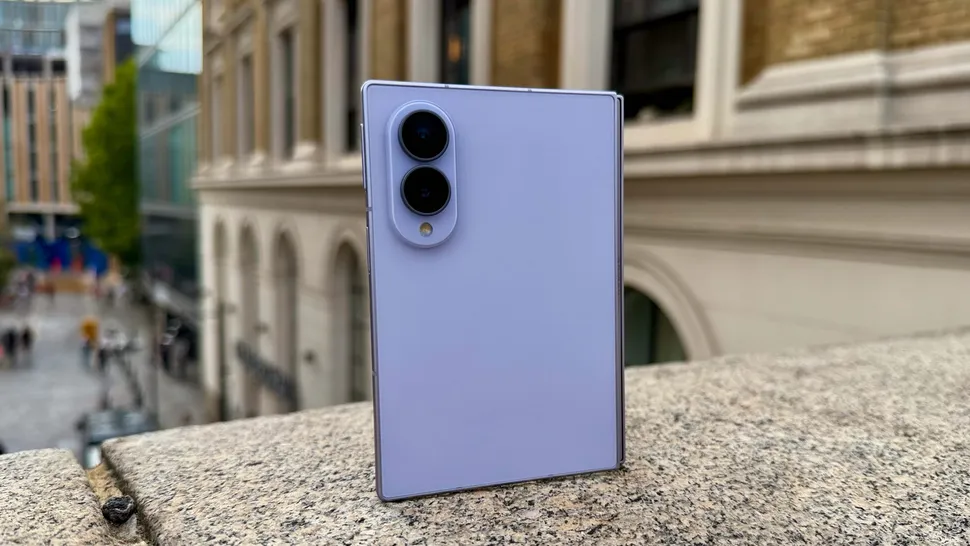
The Samsung Galaxy Z Fold 8 is the more practical foldable in Samsung’s 2026 lineup. At 201g, it is light enough to carry without constantly noticing it. The 5.5-inch cover screen is wide, useful, and no longer feels like an emergency display.
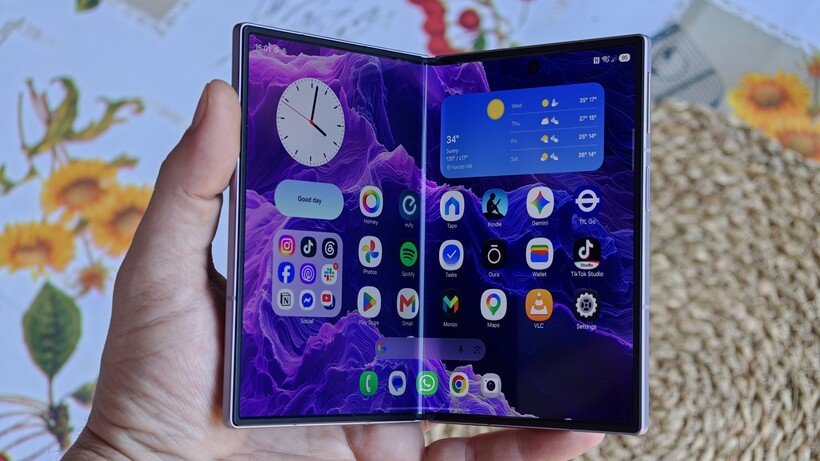
Open it up and the 7.8-inch inner screen is excellent for reading, streaming, browsing, and games. The crease is far less distracting, while the anti-reflective layer makes outdoor use much easier.
There are catches. The dual-camera system is weak for a $1,899 phone, the IP48 rating does not give you full dust protection, and there is no S Pen. Long gaming sessions and heavy multitasking can also make it warm and less consistent.
This Fold is built for watching, reading, scrolling, and gaming. It can multitask, but it is not Samsung’s best tool for constant work across several apps.
Specifications
Here are the numbers that matter before you get into the details.
| Feature | Samsung Galaxy Z Fold 8 |
|---|---|
| Cover display | 5.5-inch Dynamic AMOLED 2X |
| Inner display | 7.8-inch Dynamic AMOLED 2X |
| Refresh rate | 120Hz |
| Processor | Snapdragon 8 Elite Gen 5 for Galaxy |
| RAM | 12GB or 16GB |
| Storage | 256GB, 512GB, or 1TB |
| Rear cameras | 50MP main, 50MP ultrawide |
| Battery | 4,800mAh silicon-carbon |
| Charging | 45W wired, 20W wireless |
| Weight | 201g |
| Durability rating | IP48 |
| Software | Android 17 with One UI 9 |
| Starting price | $1,899 / £1,699 |
The headline is simple, this is a lighter Fold with flagship hardware, but not flagship camera hardware.
Design & Build Quality
The Fold 8 has a passport-style shape. It is shorter and wider than the tall, narrow Samsung folds that came before it. That sounds minor on paper, but it changes how you use the phone at a coffee shop, on a train, or while walking with maps open.
At 201g, it is easier on your hand than most book-style foldables. The wider cover display gives your thumbs more room too. Typing messages feels normal, and you can check social apps or watch a quick YouTube clip without unfolding the phone.
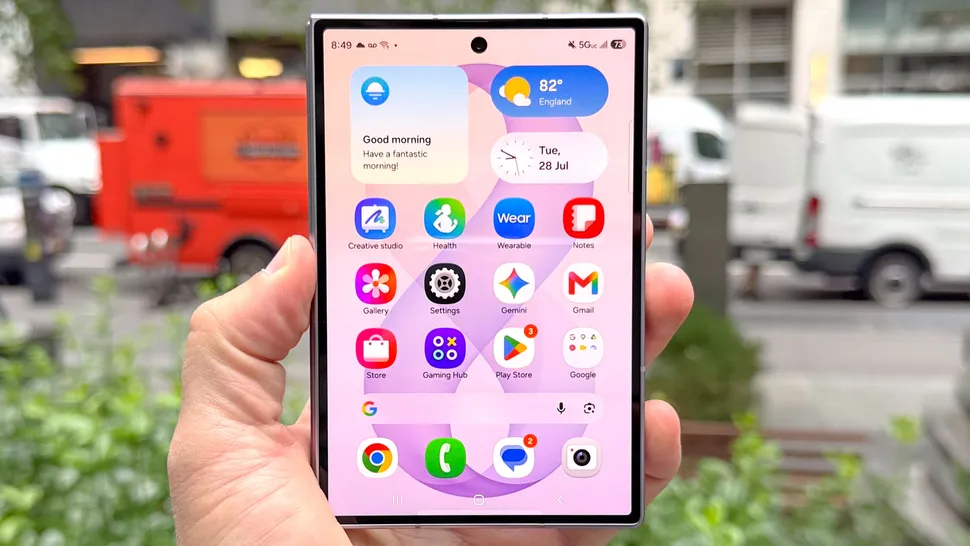
Graphite, Cream, and Lavender are the standard colors, while Pistachio is an online-exclusive option in some markets. The hinge opens with little effort and the phone sits almost flat when unfolded.
The IP48 rating means it has water protection, but don’t treat it like a beach phone. It can handle water exposure, yet fine dust and sand are still a real risk. Samsung’s own Galaxy Z Fold8 feature page also positions the lighter body as one of its main selling points.
The hinge also does not hold a laptop-style position as easily as the Fold 8 Ultra. If you use Flex View constantly, that matters.
Display Quality
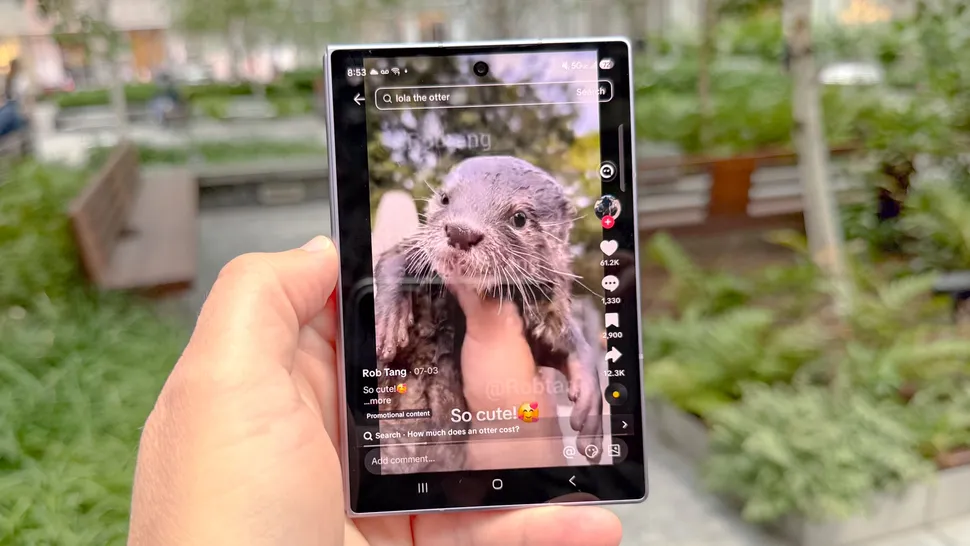
The 5.5-inch, 16:10 cover display is the Fold 8’s secret weapon. It is smaller diagonally than older Fold screens, but it is wider where it counts. Messages, Maps, Instagram, mobile games, and video all feel more comfortable.
You do not need to unfold the phone for basic jobs anymore. That is a massive win. The old tall cover screens often felt like you were using a backup phone. This one feels like the real thing.
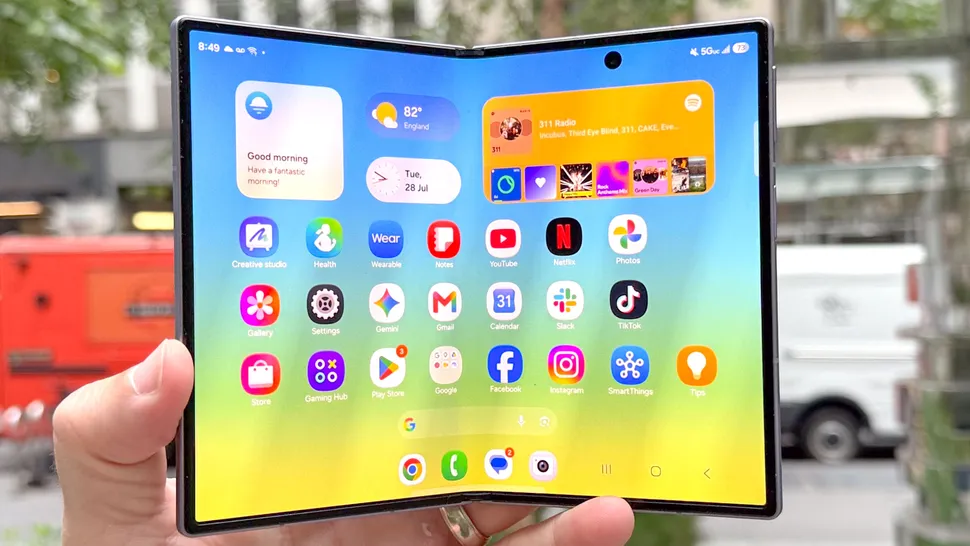
Inside, the 7.8-inch Dynamic AMOLED 2X panel has a 4:3 shape and a 120Hz refresh rate. It works well for ebooks, web pages, large app views, vertical video, and 16:9 movies. The anti-reflective coating cuts glare hard, especially outdoors.
The crease has not vanished. You can feel it under a finger and spot it from certain angles. Still, it is much less visible when you are watching a movie or scrolling a long page.
Some apps remain stretched phone apps. Gmail, TikTok, Spotify, and a few others use the extra space well. Slack, Reddit, and similar apps still need more thoughtful wide-screen layouts.
Performance
The Snapdragon 8 Elite Gen 5 for Galaxy and 12GB or 16GB of RAM make the Fold 8 fast in normal use. Apps open quickly. Browsing stays fluid. Switching between video, messages, and maps feels effortless.
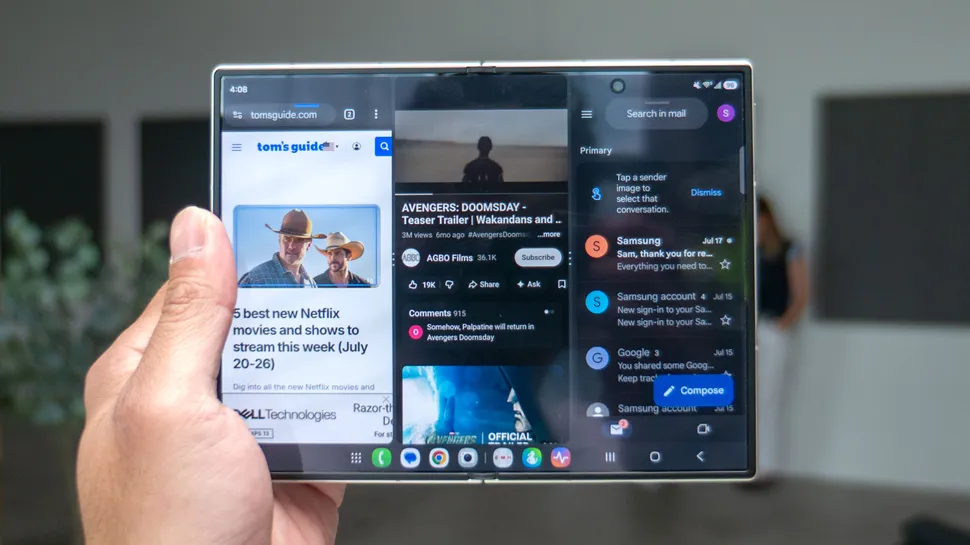
You can run up to three apps at once, use floating windows, and play demanding games without a problem at first. For casual split-screen work, it has more room than any regular phone.
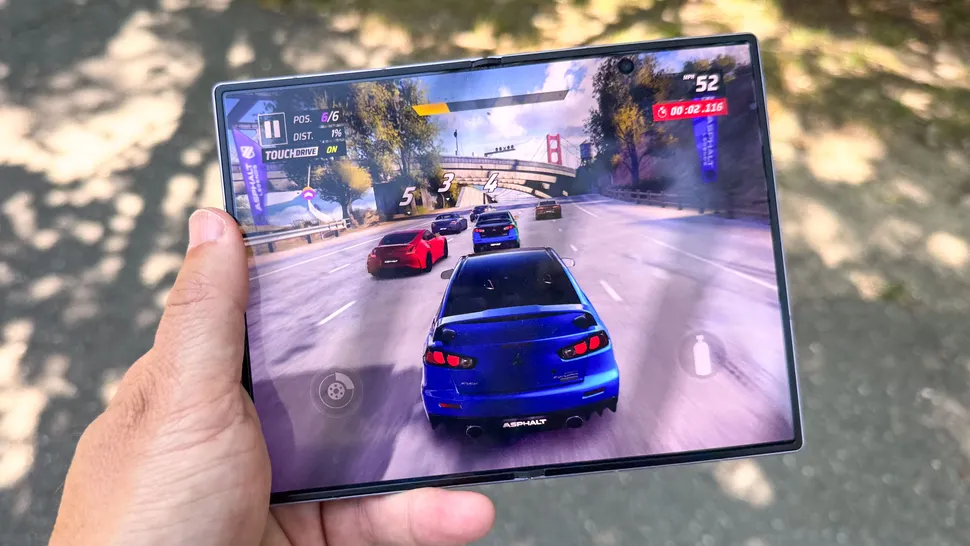
Push it for a long time, however, and the limits show. Extended gaming, repeated video exports, or heavy multitasking can build heat. Performance may throttle and the interface can stutter.
The regular Fold 8 is still plenty quick for almost everyone. If your phone is also your daily workstation, the Ultra has better cooling and is the safer choice. For a close look at how the new model differs from the previous Samsung design, see our Samsung Galaxy Z Fold 7 review.
Battery Life & Charging
Samsung uses a 4,800mAh silicon-carbon battery here, up from the 4,400mAh cell in the Fold 7. That helps the Fold 8 last a full day with moderate use.
With around six hours of mixed screen time, you may finish the day with only 5% to 10% remaining. Heavy users who game, stream, shoot video, and use the inner screen often may need a late-afternoon top-up.
Charging is one of the better upgrades. A 45W wired charger reached about 35% in 15 minutes and 67% in 30 minutes in testing. A full charge took roughly 68 minutes. It also supports 20W wireless charging.
The charger is not included in the box. At this price, that is still annoying.
Software & Ecosystem
The phone runs Android 17 with One UI 9, plus seven years of operating system and security updates. Samsung’s software is still one of the strongest reasons to buy a Fold.
You get the taskbar, app tray, split-screen mode, floating windows, DeX, and wireless DeX. The tools are there when you need them, even if the phone is not positioned as Samsung’s productivity-first model.
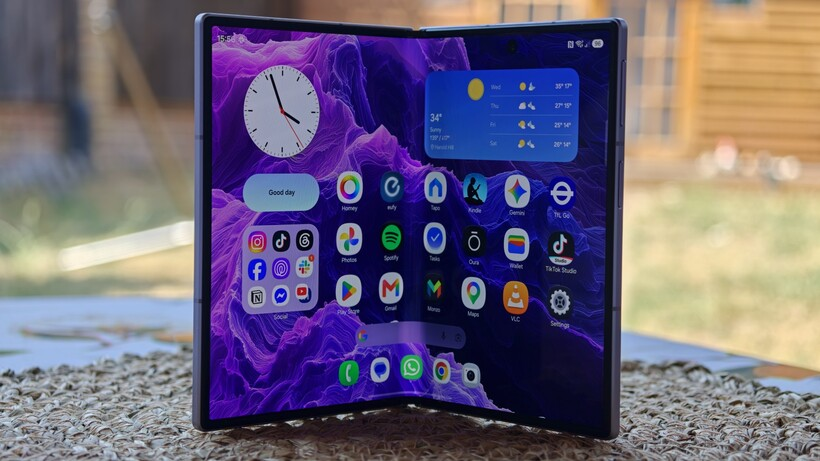
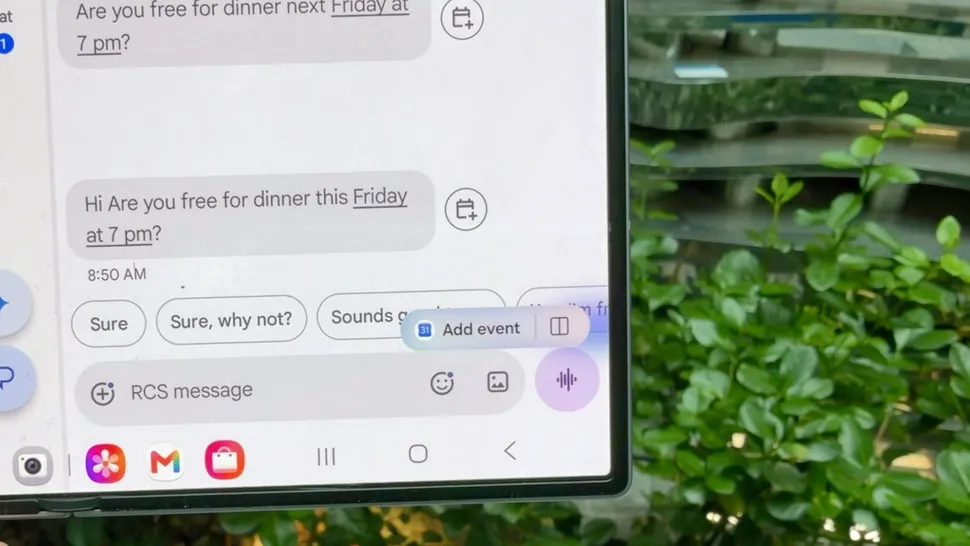
Galaxy AI adds some useful extras. Now Nudge can suggest a related app in split-screen, such as opening Calendar after you receive a dinner invitation. Photo Assist helps with image edits, while Now Brief builds personalized daily cards.
My FanCam is the more unusual feature. You choose one person in a video, then the phone crops and tracks them through the clip. It is handy for sports, concerts, and family videos, though it only tracks one human subject at a time.
Connectivity
The Fold 8 supports 5G, Wi-Fi 7, Bluetooth, NFC, GPS, USB-C, and wireless charging. In real use, that means fast downloads on compatible networks, solid wireless accessory support, tap-to-pay, reliable navigation, and easy hotspot use.
Wi-Fi 7 is useful if you already have a compatible router. Otherwise, it is simply ready for your next upgrade.
Cameras, Microphones & Speakers
The dual 50MP rear cameras include a main lens and ultrawide. In good light, you get sharp everyday photos, bold Samsung color, and a usable 2x crop. Low-light shots are improved too, with brighter results than earlier Folds.
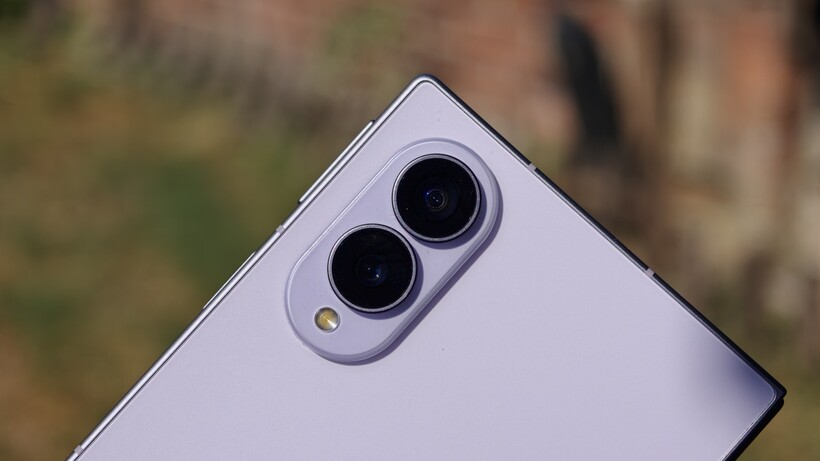
The missing telephoto lens is the big problem. Digital zoom beyond roughly 2x gets soft fast. At $1,899, that is a hard compromise, especially when cheaper phones offer optical zoom.
Both the cover and inner selfie cameras are 10MP. The cover camera is the better pick for quick selfies, while the main 50MP rear camera is your best option when you can use the cover screen as a preview.
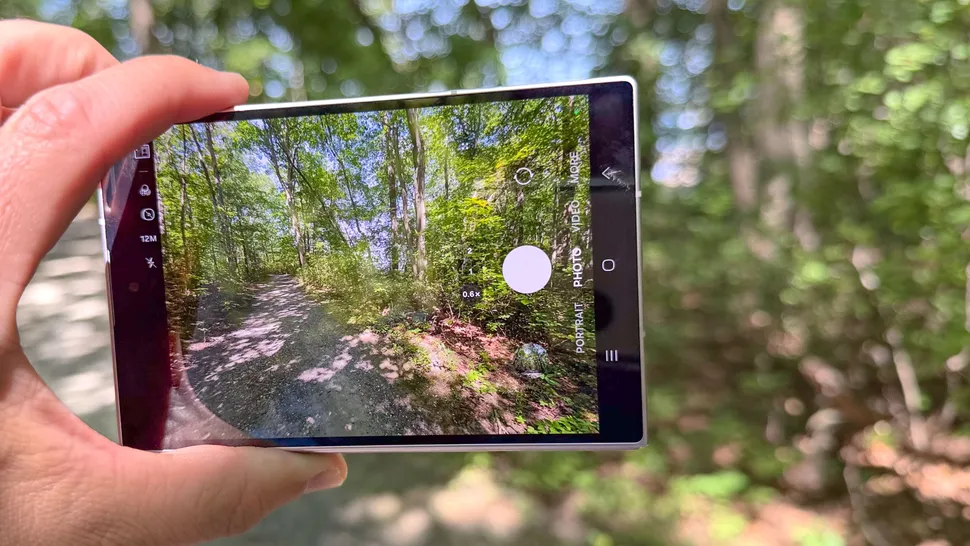
Microphone quality is good for calls and video. The speakers are only average. They sound fine when folded, but stereo separation weakens when the phone is open because both speakers sit on the same half.
Extra Features
The Fold 8 supports multitasking, wireless DeX, reverse wireless charging, and Samsung’s current AI suite. The reduced crease and anti-reflective screen treatment are also real hardware improvements, not small footnotes.
What it lacks matters just as much. There is no S Pen support, so handwritten notes, sketches, and detailed photo edits are less appealing on that large inner display. You also do not get the Ultra model’s Flex View experience.
If you want an even larger canvas for work, compare this with the Galaxy Z TriFold and Fold 7. The Fold 8 is easier to carry, but the TriFold makes more sense when workspace is your priority.
Price & Value
The Galaxy Z Fold 8 starts at $1,899, £1,699, or AU$2,699 for 12GB of RAM and 256GB of storage. The 512GB model costs $2,099 in the US, while the 1TB version with 16GB of RAM reaches $2,499.
That is serious money. You are paying for a lighter design, a genuinely useful cover display, an excellent inner panel, fast everyday performance, and long software support.
You are not paying for Samsung’s best camera package or its most flexible productivity hardware. Fold 7 owners should wait unless a trade-in offer makes the jump cheap.
Who Is It For?
Buy if you want a lighter foldable for daily use
Buy it if you want a 201g foldable that slips into a pocket and feels easier to manage one-handed. The wide cover display is great for messaging, maps, and quick video.
It is also a strong pick if you read, browse, game, or watch shows often. The bright, anti-reflective 7.8-inch display gives you more room without turning the phone into a brick.
Seven years of updates, helpful AI features, and fast daily performance make it an easy long-term device.
Do not buy if you need the best cameras or productivity tools
Skip it if zoom photography matters. The missing telephoto lens is a clear downgrade for distant subjects, travel shots, and concert photos.
Do not buy it if you need S Pen input, frequent laptop-style use, or full dust resistance. The hinge is not built around Flex View, and IP48 is not enough for sand-heavy environments.
The Fold 8 Ultra is the better choice if you need advanced cameras and maximum productivity. You can also watch this three-day Fold 8 video review for another look at its real-world trade-offs.
FAQs
Is the Samsung Galaxy Z Fold 8 worth buying in 2026?
For you, it’s worth buying at $1,899.99 if you want a lighter, wider foldable for media and everyday use, but camera-focused buyers should consider the Fold 8 Ultra.
What changed most from the Galaxy Z Fold 7 to Fold 8?
You get a shorter, wider passport-style body, a 5.5-inch cover screen, a less visible crease, 4,800mAh battery, and 45W wired charging.
How good are the Galaxy Z Fold 8 cameras without telephoto zoom?
The dual 50MP setup takes solid main and ultrawide photos, but zoom becomes soft beyond 2x because there’s no dedicated telephoto lens.
Does the Galaxy Z Fold 8 offer strong battery life and charging?
Its 4,800mAh battery can cover a full day for moderate use, while 45W charging reaches about 70% in 30 minutes, without a charger included.
Should you choose the Galaxy Z Fold 8 or Fold 8 Ultra?
Choose the Fold 8 for lighter handling, wider content-friendly screens, and lower cost; choose the Ultra for stronger cameras, bigger battery, Flex View, and heavier multitasking.
Final Verdict
The Samsung Galaxy Z Fold 8 is a major usability shift because it feels natural as an everyday phone. Its cover display is practical, its inner screen is excellent, and its battery, software, and daily speed are all strong.
You give up a telephoto camera, S Pen support, full dust protection, and some sustained performance. Buy it if content, gaming, reading, and a lighter foldable body matter most. Buy the Ultra instead if camera quality and heavy productivity are your non-negotiables.