

Should you spend this much on the Garmin Fenix 8? That’s the whole question, because this is a premium multisport watch, and plenty of people don’t need what it can do.
If you want one watch for training, hiking, maps, health data, golf, and daily wear, the Fenix 8 makes a strong case. If you mostly want steps, notifications, and the occasional run, it probably doesn’t.
This review cuts through that fast. You’ll get the important stuff, design, display, performance, battery life, software, and whether the price makes sense for the way you use a watch.
RELATED: Amazfit T-Rex Ultra 2 Review (2026): Big Battery, Big Screen
Quick Summary
The Garmin Fenix 8 is one of those watches that feels like too much, right up until you start using all of it. You get a sharp AMOLED option, excellent maps, multi-band GPS, strong battery life, a speaker and mic, dive support to 40 meters, and Garmin’s deep training tools in one rugged case.
That’s the good part.
The catch is simple. This watch is expensive, big on the wrist, and packed with features many buyers won’t touch. If you only want basic fitness tracking, or you mainly want a golf watch, there are cheaper Garmin models that make more sense.
If you won’t use maps, training metrics, recovery data, or long battery life, the price gets hard to defend.
Specifications
Here are the specs that matter most in daily use.
| Spec | Garmin Fenix 8 |
|---|---|
| Release date | August 2024 |
| Case sizes | 43 mm, 47 mm, 51 mm |
| Display options | AMOLED or solar MIP |
| Controls | Touchscreen plus 5 buttons |
| GPS | Multi-band, dual-frequency GNSS with SatIQ |
| Heart-rate sensor | Garmin Elevate Gen 5 |
| Battery life | Up to 38 days smartwatch, up to 157 hours GPS, model dependent |
| Smart tools | Speaker, microphone, offline music, Garmin Pay, notifications |
| Outdoor tools | Offline maps, ClimbPro, backtrack, round-trip routing |
| Dive support | Depth gauge and dive features to 40 meters |
| Flashlight | Built-in LED flashlight |
That table tells the story. The Fenix 8 isn’t trying to do one thing well. It’s trying to replace several devices at once.
Design & Build Quality
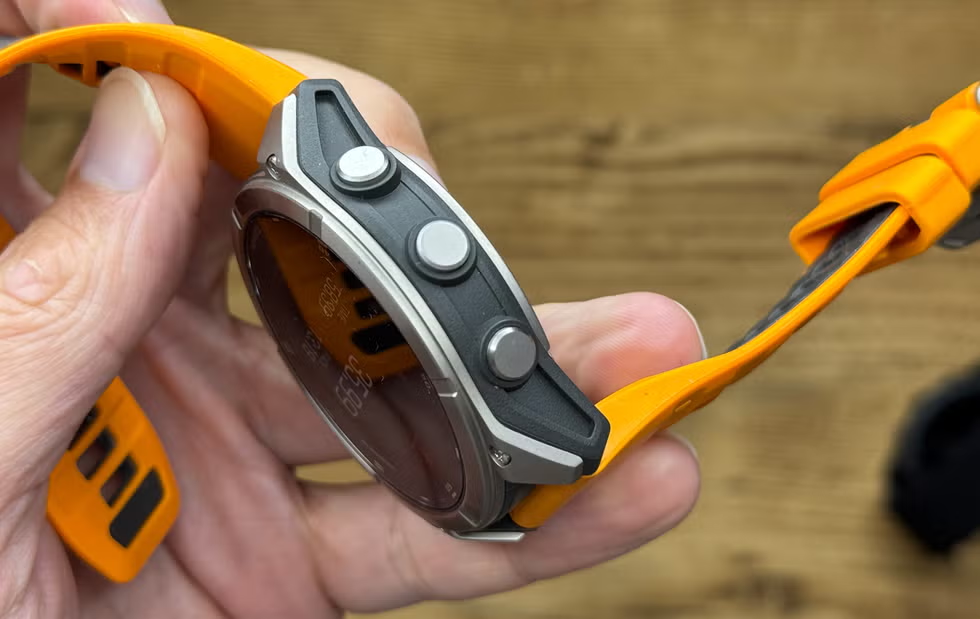
The Fenix 8 feels serious the second you put it on. The case is rugged, the materials are premium, and it still looks good enough for daily wear instead of screaming “expedition gear” at your wrist.
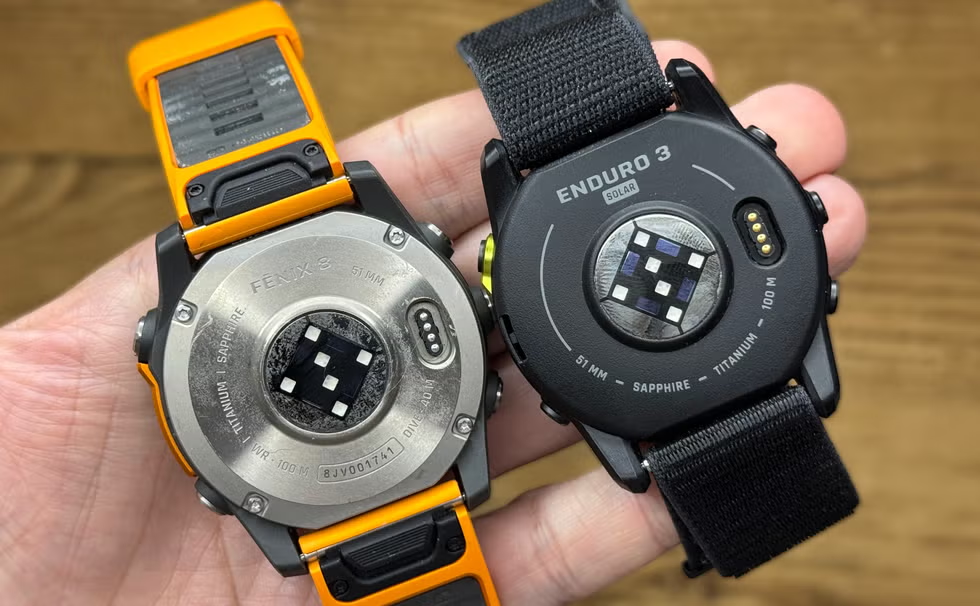
You get sapphire glass on many versions, plus titanium and DLC finishes on higher-end models. The case still wears big, but the slimmer bezel and cleaner styling help. If you want a closer look at the updated case, button design, and water changes, Hodinky-365’s review lines up with what stands out in day-to-day use.
How the materials and button layout affect daily use
This is where the Fenix earns part of its price. Sapphire helps with scratches. Titanium keeps weight down. The case has that dense, confidence-inspiring feel that cheaper watches rarely fake well.
The five-button layout matters more than you might think. During workouts, in rain, or with sweaty hands, physical buttons beat poking at a touchscreen. Garmin also changed the buttons here. They’re stiffer, more water resistant, and feel more solid than older models.
Which size feels right on the wrist?
The 43 mm model is the easy pick if you have smaller wrists or want something you can wear all day without thinking about it. The 47 mm is the middle ground, enough screen and battery without turning your wrist into a dinner plate. The 51 mm is the endurance option. You buy that one for max runtime and a bigger view of maps.
Display Quality
The screen choice is one of the biggest decisions with the Fenix 8. You’re either buying the richer, more modern AMOLED experience, or you’re buying the Solar model for longer endurance.
Why the AMOLED screen feels like a big upgrade
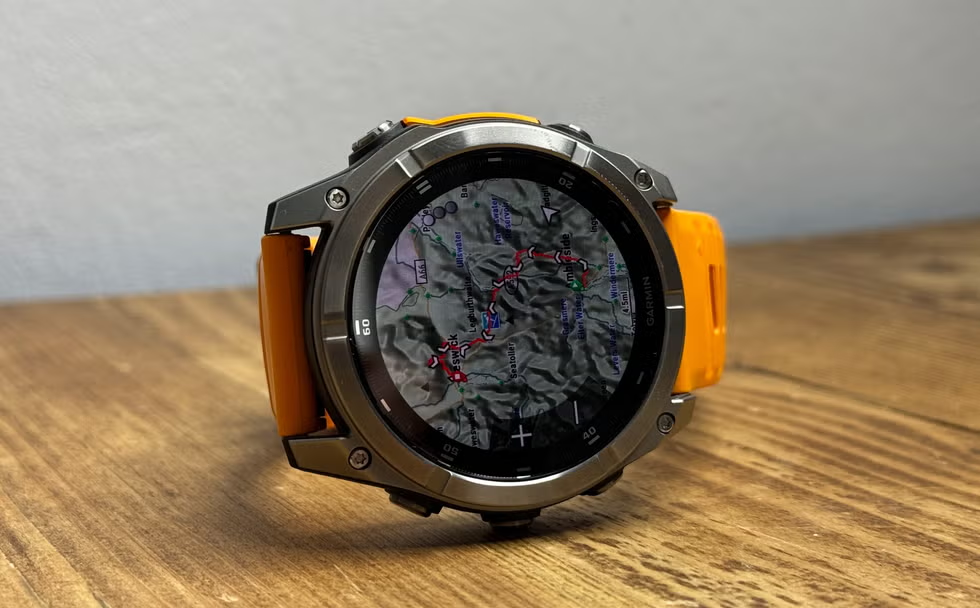
The AMOLED display is bright, sharp, and much more fun to live with. Maps pop. Stats are easier to read at a glance. Watch faces look less like tools and more like something you’d want to wear.
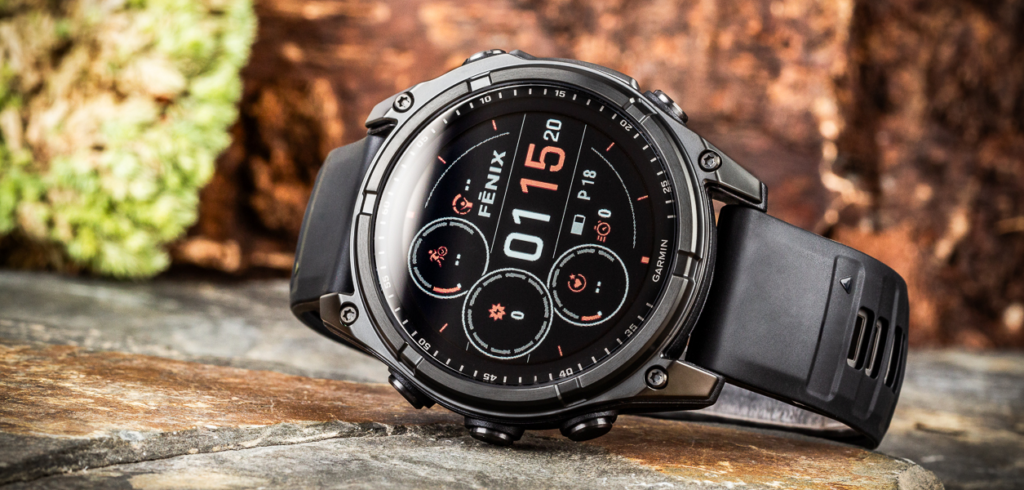
It also makes the watch feel newer than older Fenix models. The wake gesture is dependable, and Always On mode makes workouts feel natural. If you’ve used an older MIP Garmin, this is the jump that changes the whole vibe.
When the Solar model makes more sense
The Solar version is for the buyer who cares more about runtime than eye candy. You lose that vivid look, but you gain a watch that makes more sense for long trips, heavy GPS use, and fewer charges.
If your weekends involve trails, camping, or long races, the tradeoff is easy to understand. You don’t buy Solar because it looks better. You buy it because it keeps going.
Performance
In regular use, the Fenix 8 is fast and stable. Menus move quickly, workouts start without fuss, and the watch generally stays out of your way, which is exactly what you want from something this feature-rich.
GPS, heart rate, and workout tracking in real life
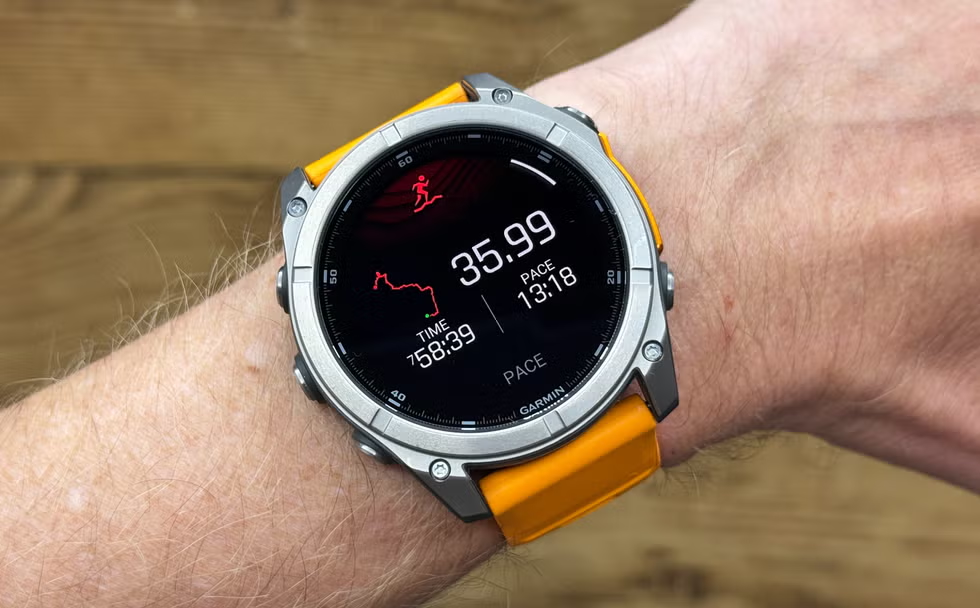
Garmin uses multi-band GPS here, plus SatIQ to balance accuracy and battery life. In practice, distance and pace are strong, route lock is quick, and performance stays solid even when you move between open sky and tougher conditions. Under dense tree cover, it’s still not perfect, but it tracks as well as any top-tier sports watch.
Heart-rate performance is good, and the newer sensor is more responsive, but early-run readings can still lag a bit. For easy runs and everyday training, you’ll probably be happy. If you’re doing hard intervals or you care about exact heart-rate zones, a chest strap still wins. For trail and endurance use, Hiking Guy’s trail-tested review also backs up the Fenix 8’s strong outdoor performance.
Training tools that go beyond basic stats
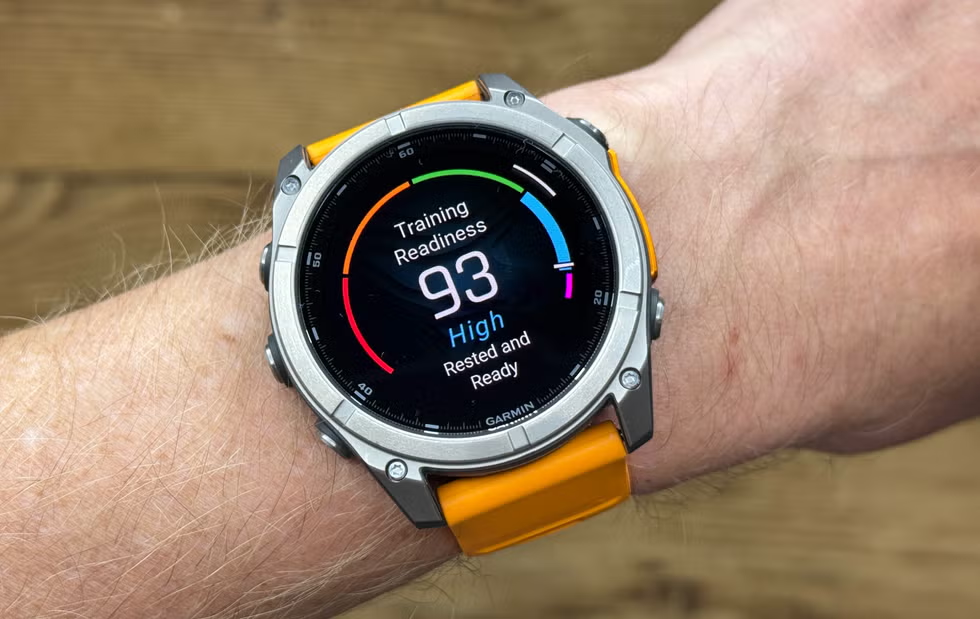
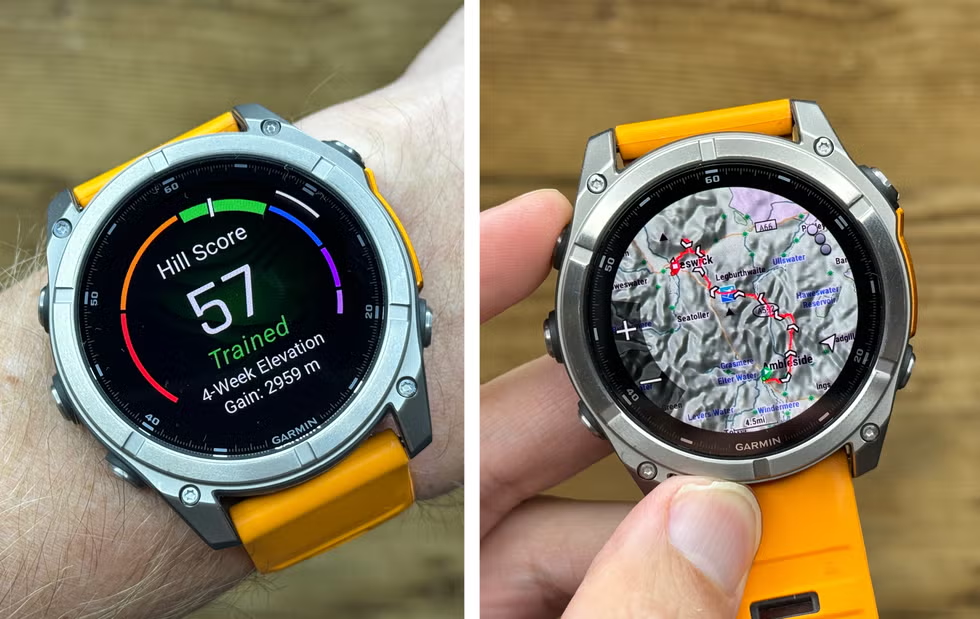
This is where Garmin still separates itself. You get Training Readiness, Body Battery, recovery time, HRV status, training load, endurance score, hill score, and suggested workouts, all working together.
That can sound like a lot. In real life, it means your watch stops being a scoreboard and starts acting more like a coach. You train with more context, not more noise.
Battery Life & Charging
Battery life varies a lot by size, display, and settings, but the short version is simple. The Fenix 8 lasts long enough that charging stops being part of your daily routine.
What battery life looks like in normal use
The AMOLED models already do well. Review testing has shown around eight days with daily workouts, sleep tracking, and regular use on a single charge. The 51 mm model stretches much farther, while the 43 mm gives up some endurance for size.
Use Always On, max GPS accuracy, and lots of maps, and you’ll drain it faster. Stick with gesture wake or SatIQ, and it becomes one of the easiest premium wearables to live with.
Charging habits and who benefits most
If you’re coming from an Apple Watch, the battery life alone feels like a quality-of-life upgrade. You stop thinking about bedtime charges. You stop packing a cable for every short trip.
The biggest winners are runners, hikers, travelers, and anyone who uses GPS often. Bigger models help most, but even the smaller AMOLED versions hold up better than many smartwatches.
Software & Ecosystem
Garmin cleaned up the Fenix 8 interface, and that matters. Older Garmin watches could feel like a maze. This one feels more polished and easier to learn.
The new interface feels easier to live with
Activity access is better, settings are easier to reach, and watch faces are more customizable. You can still use touch, buttons, or both, which helps when conditions change.
The result is less friction. You spend less time hunting through menus and more time using the thing.
Smartwatch features you will actually notice
Notifications, Garmin Pay, offline music, and everyday health tracking are the features you’ll feel most. The Fenix 8 also fits well into Garmin’s broader ecosystem if you already use Garmin Connect and other Garmin devices.
For buyers still deciding across the lineup, this Garmin wearable buying guide is a useful reality check on what you can save by stepping down.
Connectivity & Phone Features
The new speaker and microphone are real upgrades, not fluff. They don’t turn the Fenix 8 into a full phone replacement, but they do make it more convenient.
Calls, voice commands, and voice notes
With your phone nearby, you can take calls from the watch, trigger your phone’s voice assistant, and record voice notes. Those features are handy when your hands are full, when you’re walking, or when you don’t want to pull out your phone mid-workout.
They’re also part of what makes the Fenix 8 feel closer to a smartwatch than older Fenix models did.
What connectivity does well, and what it does not
Keep your expectations in check. This is still a sports watch first. Calls depend on your phone being near you, and it doesn’t match the app depth or life-management tricks of an Apple Watch.
Still, the convenience is real. If you want a deeper breakdown of the mic, speaker, and software changes, DC Rainmaker’s in-depth review is a good companion read.
Extra Features
The Fenix 8 separates itself with a bunch of extras that cheaper Garmin watches either skip or simplify. Some are niche. Some end up mattering more than you’d expect.
Navigation and mapping for serious outdoor use
Offline maps are excellent here. You also get backtrack, dynamic round-trip routing, customizable map layers, next-fork guidance, and ClimbPro. On a hike or trail run, that stuff is gold. If you golf, you also get full-color course maps and PlaysLike distances, which is impressive, even if a cheaper Approach watch is the smarter golf-only buy.
Health and recovery tools that help you train smarter
Sleep tracking, Sleep Coach, stress tracking, Body Battery, HRV, recovery time, and ECG support in supported regions make the watch useful between workouts too. The built-in flashlight is another one of those features that sounds small and ends up being weirdly helpful all the time.
Price & Value
The Fenix 8 starts around $999 and climbs from there. That’s a lot of money for a watch, even one this capable.
When the price is justified
The value clicks if you want one device for training, navigation, golf, health tracking, and daily wear. If you’re the kind of person who uses maps, studies recovery, takes long trips, and wears the same watch every day, the cost makes more sense.
When a cheaper watch is the smarter choice
If you run a few times a week, want simple smartwatch features, or only care about golf yardages, this is more watch than you need. Garmin has cheaper options that cover the basics without asking you to pay for dive tools, advanced mapping, or a premium case.
Who Is It for?
The buy or skip call is pretty clean here.
Buy it if you want one watch for everything
- You want serious training tools, strong battery life, and some of the best mapping in a wrist device.
- You hike, run, cycle, swim, or golf enough to use more than one of its specialty modes.
- You want a rugged daily watch that still feels modern, polished, and smart.
Skip it if you only need the basics
- You mostly want steps, sleep, notifications, and a few casual workouts.
- You mainly want a golf watch, because Garmin’s Approach line gets you there for less.
- You’re price-sensitive and won’t use the premium materials, dive features, or advanced recovery tools.
FAQs
Is the Garmin Fenix 8 worth the premium price?
If you want one watch that does golf, fitness, mapping, and smartwatch duties well, yes. If you only want yardages and scorekeeping, you’re paying for a lot you won’t use.
How does the Fenix 8 compare with the Approach S70?
The S70 is the better golf-first buy, plain and simple. The Fenix 8 matches it on golf features, then adds stronger fitness tracking, better buttons, and more everyday versatility.
Can you actually use the Fenix 8 for golf?
Absolutely. You get full-color maps, spot-on GPS distances, PlaysLike yardages, shot-tracking, club suggestions, and Garmin ecosystem extras like CT10 and Z30 support. It feels polished on the course.
How good is the battery life in daily use?
It’s excellent, and that’s one of the big reasons to buy it. Depending on your display and settings, you can get days of heavy use, and often more than a week comfortably.
What smart features make the Fenix 8 feel premium?
You get a microphone, speaker, phone calls, voice commands, voice memos, notifications, Garmin Pay, and built-in safety tools. That’s the stuff that makes it feel like more than a golf watch.
Final Verdict
The Garmin Fenix 8 is easy to like once you use it. The display is excellent, the battery life is strong, the maps are top-tier, and the all-in-one feature set is hard to match.
The price is the problem, not the watch.
If you want deep fitness data, rugged build quality, and one device that can cover training, travel, and outdoor use, it’s worth the money. If your needs are simpler, the smarter move is saving cash and buying less watch.