

If you’re wondering whether the Philips OLED910 is worth the money, the short answer is yes, with a couple of catches. You get a seriously bright OLED picture, better built-in sound than most TVs, and Ambilight, which still feels a bit gimmicky until you live with it.
That doesn’t make it flawless. The full-speed HDMI count is stingy, motion needs a little setup, and if you’re in the US, buying one is the first hurdle because Philips doesn’t officially sell this OLED there.
You want the real story, not brochure talk. So here’s the part that matters: picture quality, brightness, sound, gaming, smart features, design, and value.
RELATED: TCL X11L TV Review (2026): Best 4K QD-Mini LED Smart TV?
Quick Summary
The OLED910 is the kind of TV that grabs you fast. You get a Tandem RGB OLED panel, four-sided Ambilight, strong built-in Bowers & Wilkins audio, and support for both Dolby Vision and HDR10+, which many rivals still split between brands.
In day-to-day use, that means movies look rich, games feel fast, and you may not need to budget for a soundbar right away. The weak spots are clear, too. Only two HDMI ports are full HDMI 2.1 bandwidth, and one may be taken by eARC. Motion is good, but not “set it and forget it” good. You may need five minutes in the menus before it fully clicks.
Specifications
Here are the core specs that matter most before you get into the details.
| Spec | Philips OLED910 |
|---|---|
| Screen sizes | 65 and 77 inches, 55 inches in some regions |
| Panel type | Primary RGB Tandem OLED |
| Resolution | 4K |
| Refresh rate | 144Hz |
| HDR formats | Dolby Vision, HDR10+, HDR10, HLG |
| Smart TV platform | Google TV |
| HDMI ports | 4 total |
| HDMI 2.1 ports | 2 |
| Gaming features | 4K/144Hz, VRR, ALLM, FreeSync Premium Pro, G-Sync, HGiG, Dolby Vision gaming |
| Audio system | 3.1-channel Bowers & Wilkins speaker system |
| Ambilight | Four-sided |
| Audio return | eARC, plus optical output |
On paper, that’s premium TV stuff. The only spec that feels light for this class is the HDMI 2.1 count.
Design & Build Quality
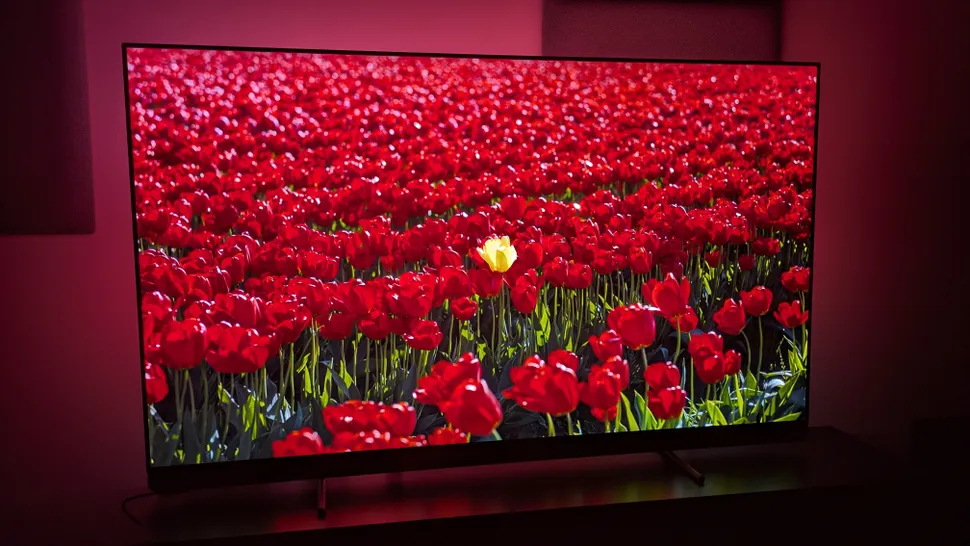
The OLED910 looks expensive in the right way. You get a slim screen, clean bezels, and a fabric-covered speaker bar that softens the front instead of making it look like a slab with parts bolted on.
It is thicker than some rival flagship OLEDs, but you can see where that depth goes. It houses the speaker system, the rear subwoofer setup, and the Ambilight hardware. If you care more about function than razor-thin side profiles, that trade makes sense.
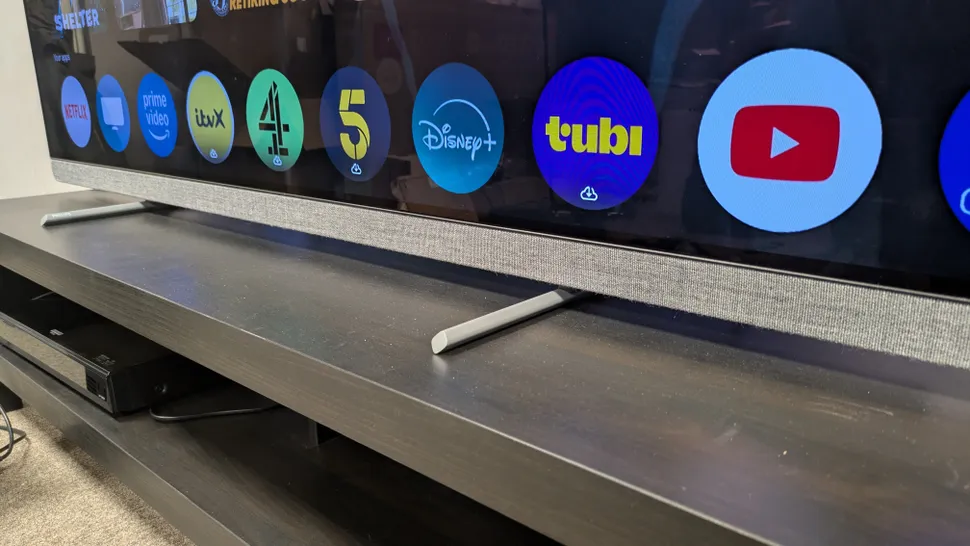
The feet are sturdy, though they stretch out enough that soundbar placement can get awkward. That matters less here because the built-in sound is one of the TV’s strengths, but it’s still worth knowing before you buy a bench or cabinet.
Wall-mounting is the move if you can do it. Ambilight looks more dramatic there, because the light spreads evenly across the wall instead of bouncing around furniture. The remote is also unusually good, with backlit buttons, a weighty metal feel, and USB-C charging. Little things, sure, but they’re the kind of little things you notice every night.
Image Quality, Brightness & HDR Performance
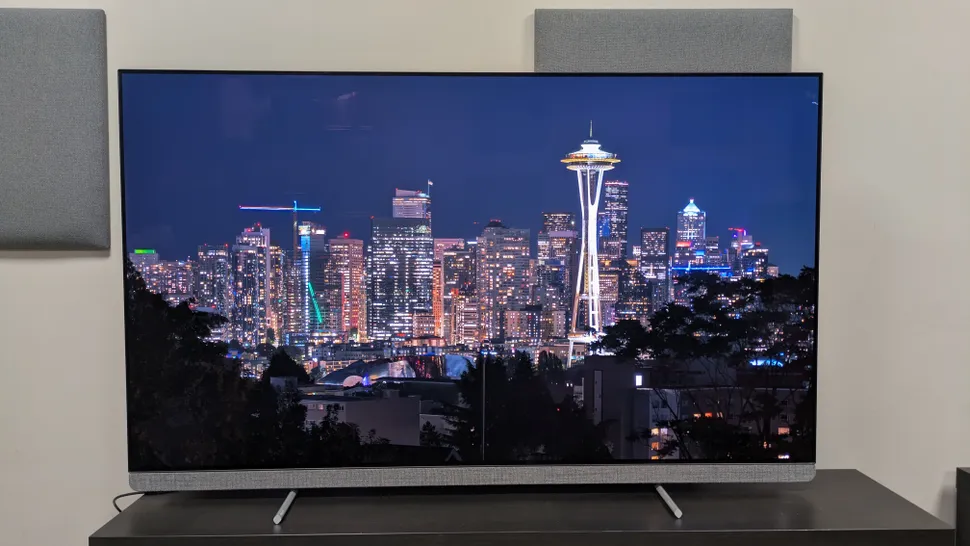
This is where the OLED910 earns its price. You get the deep blacks OLED buyers want, but you also get a level of brightness that makes bright scenes hit harder than you’d expect from an OLED. Recent measurements reported by TechRadar’s OLED910 review put it at 2,329 nits in Filmmaker Mode and 406 nits full screen, which is serious output for this panel type.
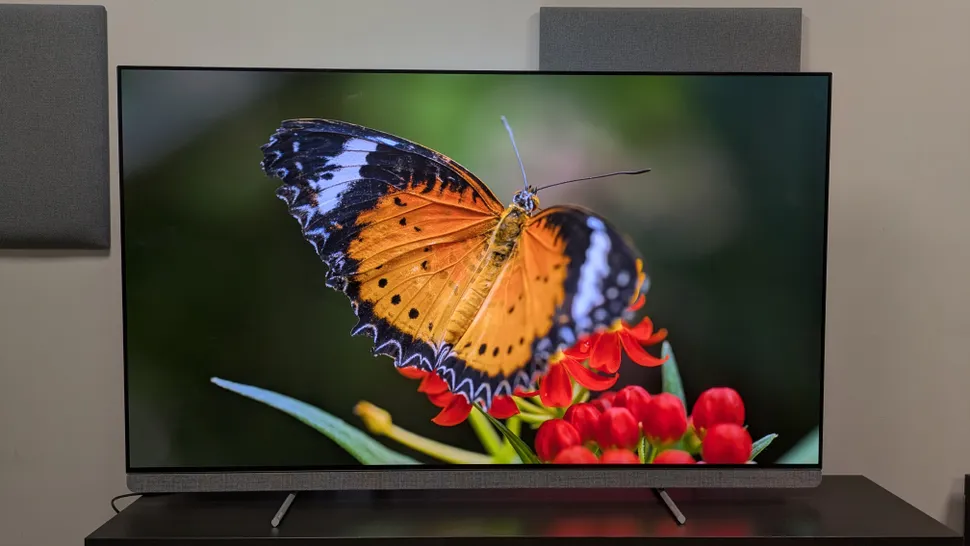
In real use, that brightness helps in two ways. HDR highlights pop, and daytime viewing feels less compromised. Sun glints, fire, reflections, neon signs, snow, chrome, all the shiny stuff, it has more punch than many OLEDs without turning the whole image harsh.
Color is another strong point. The set can look bold and saturated, but it usually stays believable. Skin tones, fabric, foliage, and fine textures all come through with a crisp, controlled look. Dark scenes are strong, too. Black levels stay deep, and shadow detail is better than on some rivals that crush darker textures into mush.
Ambilight helps more than you’d think. It doesn’t change the panel, of course, but it boosts the sense of contrast and scale. In a dark room, it can make movies feel bigger than the screen.
There are caveats. Some modes push SDR too brightly, and certain HDR scenes can show a slight red push. Dolby Vision is also not perfect. Compared with the best movie-first rivals, blacks can lift a touch in some scenes. If you’re cross-shopping Sony’s cleaner approach, the full Sony Bravia 8 II review is a useful reference point.
The easy advice is simple: start with Filmmaker Mode for movies. That gets you closest to what this TV does best.
Motion & Upscaling
The OLED910 handles motion well once you stop relying on the defaults. That’s the short version.
Some presets leave a bit of judder in slow pans. Others smooth too hard and give you that waxy, soap-opera look nobody asked for. With a tuned Personal setting, motion becomes much more natural, and sports look clean without the ball leaving a weird trail behind it.
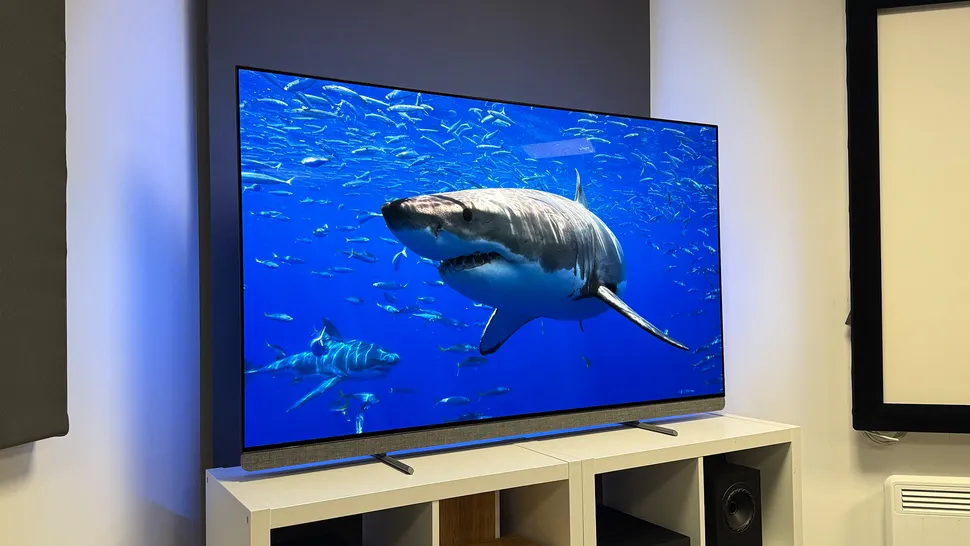
Upscaling is good, too. HD broadcasts and older discs look sharper and cleaner than they have any right to. Edges stay tidy, noise is kept under control, and colors don’t fall apart. It doesn’t quite beat the best processors in the class, but in everyday viewing you won’t feel short-changed. You only start nitpicking when a top Sony or LG is in the room beside it.
Audio Quality
Most TVs treat sound like an afterthought. The OLED910 doesn’t. Its 3.1-channel Bowers & Wilkins system gives you clear dialogue, real front-facing presence, and better bass control than you’re used to from a flat panel.
That shows up fast with movies. Voices stay locked in place. Action scenes have weight. Off-screen effects track across the soundstage with decent precision. You also get a sense of width that many TVs simply fake. What Hi-Fi’s review of the 65OLED910 came away impressed for the same reason: this thing sounds like somebody cared.
You still need to keep expectations in line. Dolby Atmos effects are present, but they don’t rise and wrap around the room like a dedicated soundbar and surround package. If you want ceiling-height drama, buy external speakers. If you want a TV that doesn’t embarrass itself the second an action scene starts, this one is unusually convincing.
Smart Features
Google TV runs the show here, which means the interface will feel familiar if you’ve used recent Sony or Chromecast-based hardware. App support is broad, with the major streaming services covered, and some regional versions also include UK-focused services and Freely.
The downside is visual clutter. The home screen can feel busy, with big banners and recommendation rows fighting for attention. Menu performance is fine most of the time, but not the fastest in the class. You can get where you need to go without a map, though sometimes it takes a beat longer than it should.
App support also varies by region. Some coverage noted missing BBC iPlayer support on certain versions, so local app checks still matter before you buy.
Gaming Features
If you game, the OLED910 gives you most of what you want. It supports 4K at up to 144Hz, VRR, ALLM, FreeSync Premium Pro, G-Sync, HGiG, and Dolby Vision gaming. Input lag has been measured at 12.6ms, which is quick enough that the TV feels responsive with shooters, racers, and sports titles.
That low lag matters because it keeps your actions feeling direct. You press, it reacts. No mush, no second-guessing, no sense that the TV is catching up.
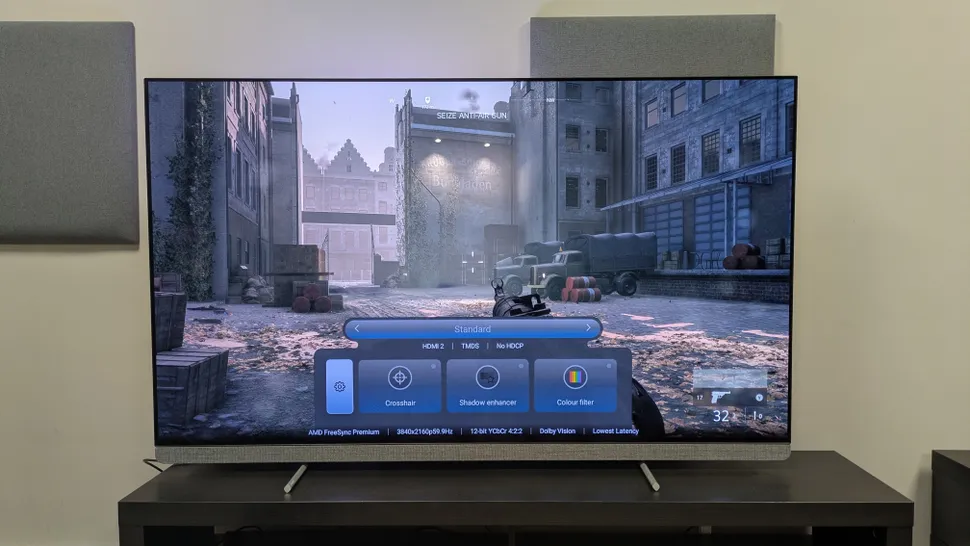
The image quality helps, too. OLED contrast makes dark scenes easy to read, highlights stay punchy, and textures look sharp. Philips also gives you a dedicated game menu with tweaks like shadow controls, which is handy if you like to fine-tune.
The catch is the same one that keeps showing up in this review. Two HDMI 2.1 ports on a premium gaming TV feels mean.
Connectivity & Ports
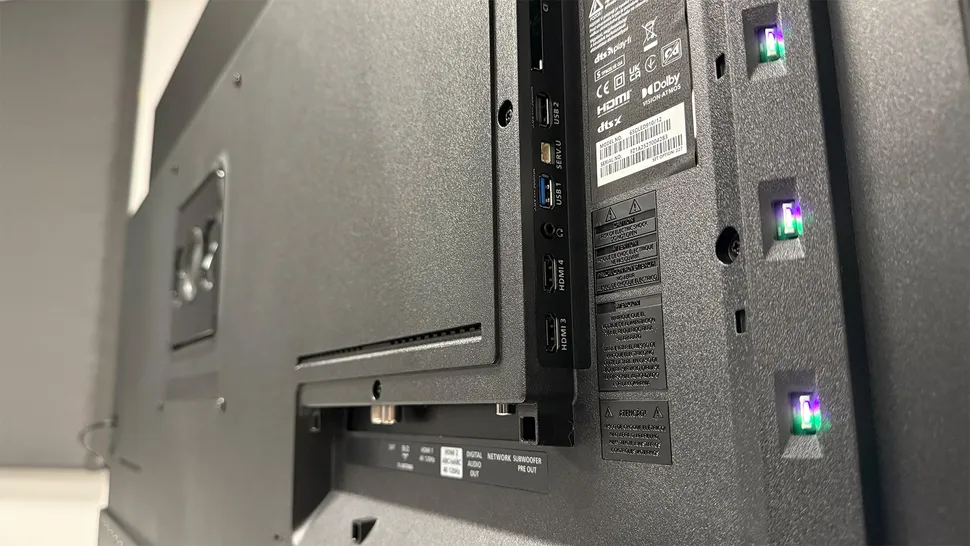
You get four HDMI ports in total, but only two are full-fat HDMI 2.1. You also get eARC and an optical output, which is useful if you’re plugging into older audio gear.
One HDMI 2.1 port doubles as eARC, so a soundbar can leave you with only one spare full-speed input.
That setup is fine if you run one console and nothing else. It gets tight fast if you have a PlayStation 5, Xbox Series X, gaming PC, and an external audio system. A broader feature summary at Stereoindex’s OLED910 review reaches the same conclusion: the TV is premium, the port flexibility is not.
Price & Value
This is where the OLED910 gets dangerous for pricier rivals. In the UK, the 65-inch model launched at £2,199 and later dropped to around £1,799. At that level, it undercuts flagship OLED competitors while still delivering flagship-grade picture quality, excellent built-in sound, and Ambilight.
That’s a strong value pitch. You are not buying a stripped-back set with one standout trick. You are buying a premium OLED that gets a lot right at once, and in a few areas, mainly sound and perceived immersion, it punches above better-known brands.
For US readers, value is harder to cash in on because Philips doesn’t officially sell this OLED there. If you can buy it locally, though, the case is simple: this feels closer to an expensive flagship than its street price suggests.
Who is it for?
If your priorities line up with its strengths, the OLED910 is easy to like.
Buy it if…
- You want a bright OLED that still looks cinematic.
- You love Ambilight and plan to wall-mount the TV.
- You’d rather skip buying a soundbar on day one.
- You want both Dolby Vision and HDR10+ support in one set.
Don’t buy if…
- You need more than two full HDMI 2.1 inputs.
- You want the cleanest, fastest smart TV interface.
- You hate ambient lighting effects and prefer a plainer design.
- You live in the US and want normal local retail support.
FAQs
How bright is the Philips OLED910 in real use?
You get one of the brightest OLED images around. In testing, Filmmaker Mode reached 2,329 nits peak HDR brightness, with strong fullscreen brightness too.
Is the OLED910 good for gaming?
It is, with 4K 144Hz, VRR, FreeSync Premium Pro, G-Sync, HGiG, Dolby Vision gaming, and 12.6ms input lag. The trade-off is only two HDMI 2.1 ports.
Does the OLED910 need a soundbar?
Not really. The Bowers & Wilkins-tuned 3.1, 80W speaker system sounds clear, weighty, and spacious enough that you can hold off on a soundbar.
What are the biggest drawbacks of the OLED910?
The main limits are the two full-bandwidth HDMI 2.1 ports, motion that can need tweaking, and some picture modes that brighten SDR more than you may want.
Is Ambilight actually worth it on this TV?
If you like immersion, yes. The four-sided Ambilight adds a coloured glow around the screen, and it can make movies and games feel bigger and more involving.
Is the OLED910 better value than rival flagship OLEDs?
It usually is. At a 65-inch price of £1,799 in current UK pricing, it undercuts rivals like the LG G5, Samsung S95F, Sony Bravia 8 II, and Panasonic Z95B.
Final Verdict
The Philips OLED910 gets the big things right. You get excellent picture quality, standout brightness for an OLED, built-in sound that beats most TVs, and Ambilight that adds real atmosphere when you’re watching at night.
The weak spots are clear, too. HDMI 2.1 is limited, and motion needs a little tuning before it looks its best.
If you can buy one in your market and those trade-offs don’t bother you, this is a smart pick. For movie fans, mixed-use buyers, and anyone tired of thin TV speakers, it’s one of the more satisfying OLEDs in its class.