

Is the DJI Osmo Pocket 4 finally the pocket camera that makes your phone feel a little ordinary? If you shoot alone, travel often, or want smoother video without lugging a bigger setup, this review gives you the practical stuff that matters: image quality, handling, battery life, audio, storage, app control, and value.
The big story here is simple. You get a tiny camera with a real gimbal, stronger low-light performance, built-in storage, and controls that make solo shooting less annoying. You also get a few tradeoffs, and the biggest one is that this still isn’t a rugged action cam or a full mirrorless replacement.
If you are comparing it with other compact options, keep this close by: best pocket cameras 2025 buying guide
RELATED: Sonos Era 100 Review: Best Big Sound, Small Speaker
Quick Summary
The DJI Osmo Pocket 4 is easy to like if you care about video first. It gives you a 1-inch sensor, 4K at 240fps, 10-bit D-Log, 107GB of built-in storage, and better controls than the last model. That is a strong list for a camera that still fits in a pocket.
The limits are easy to spot too. Zoom is still crop-based, the gimbal head sticks out, and Pocket 3 owners may not feel a massive leap unless they really care about the new sensor, storage, and handling changes. If you want a simple verdict, this is a serious creator tool, not a casual toy.
Specifications
Here’s the short version before you get lost in the details.
| Spec | DJI Osmo Pocket 4 |
|---|---|
| Sensor | 1-inch CMOS |
| Max video | 6K/30fps, 4K/240fps |
| Photo resolution | 37MP |
| Color profile | 10-bit D-Log |
| Zoom | 2x lossless zoom |
| Battery | 1545mAh |
| Claimed runtime | Up to 240 minutes |
| Built-in storage | 107GB |
| Expansion | microSD support |
| Screen | 2-inch rotating touchscreen |
| Weight | 190.5g |
| Release date | April 16, 2026, shipping April 22, 2026 |
The table tells the story fast. This is still a pocket camera, but the spec sheet has moved closer to a real production tool.
Design & Build Quality
The Pocket 4 looks familiar at first glance, but the body is a little taller and the controls are better thought out. The rotating 2-inch touchscreen still anchors the design, but now you also get physical buttons under the display and a 5D joystick for more precise movement. That matters more than it sounds like it should.
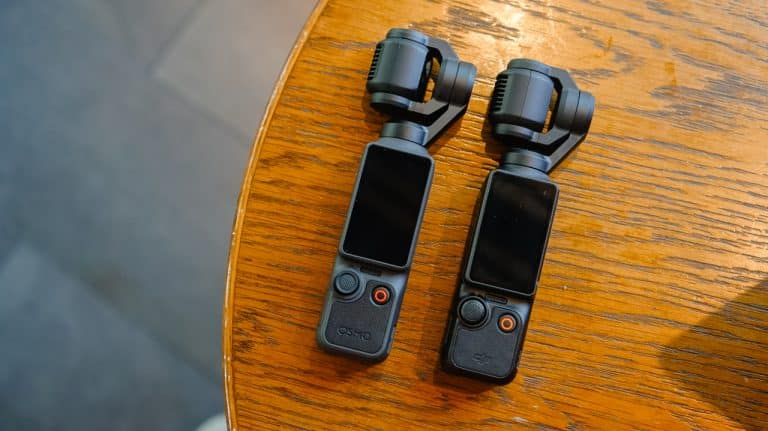
The camera also drops the old “grab it and hope” feeling a bit. You get a simple clip-on cover, built-in storage, and a removable grip setup that makes the camera feel more flexible in everyday use. It is still a tiny device, though, so the camera head remains the part you need to baby.
How the new controls change everyday use
The new zoom buttons and custom button make the Pocket 4 faster to use when you are moving. You can switch framing without fumbling through menus as often, and the joystick gives you more control over pans than touchscreen-only shooting. Once you learn the layout, the camera feels more direct.
That said, the menu system can still get a little deep. You can tell DJI wants the Pocket 4 to do a lot, and sometimes that means more taps than you want in the middle of a shoot.
What the Pocket 4 feels like to carry and protect
For travel, the Pocket 4 is still the kind of camera you can toss in a small bag and forget about until you need it. The new gimbal clamp helps keep it from waking up by accident, which is useful if you are active or clumsy. The camera even gives you a “Gimbal Protected” warning if it takes a harder knock.
It is more confidence-inspiring than older Pocket models, but you should still treat the moving camera head with respect. Compact does not mean invincible.
Image & Video Quality
This is the part that matters most, and it is where the Pocket 4 earns its keep. The 1-inch sensor, 37MP stills, 10-bit D-Log, and 14-stop dynamic range give you more room to work with than a phone usually does. Skin tones look cleaner, shadows hold together better, and the footage has more depth without needing heavy correction.
You also get real creative headroom. The camera shoots up to 4K/240fps for slow motion and supports 2x lossless zoom, which is much more useful than the digital zoom on many tiny cameras. Even when you crop, the sensor gives you enough resolution to stay usable in 4K.
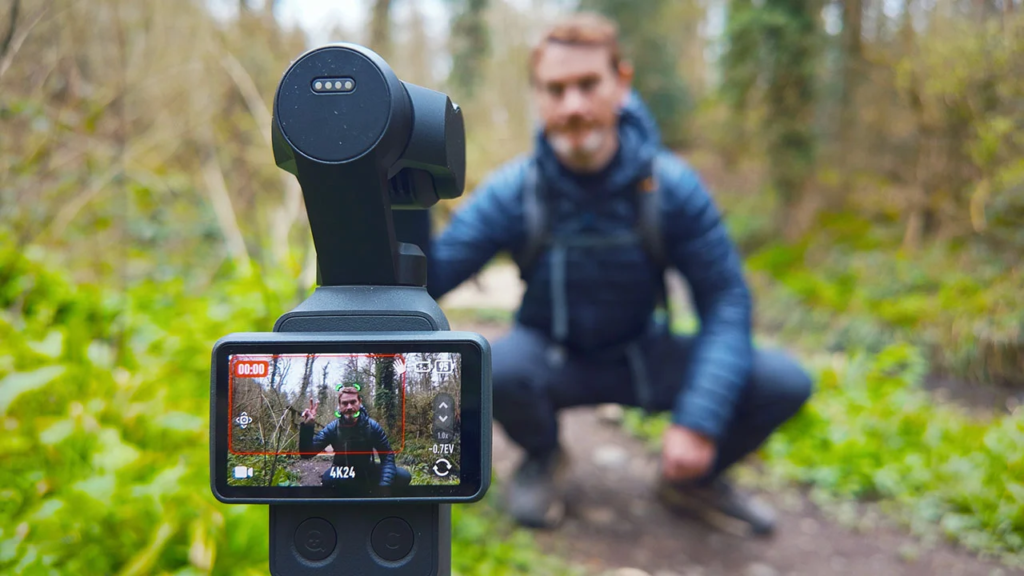
If you want a deeper look at the low-light and motion side of it, this Pocket 4 testing write-up lines up with what you see in real footage, cleaner detail and more confidence in dim scenes.
Why the Pocket 4 looks better than a phone in many scenes
You see the difference fastest in portraits and mixed light. Faces look brighter and more flattering, background blur feels more natural, and the image avoids some of the over-sharpened, overly processed look you get from phone cameras. Street scenes also benefit because the Pocket 4 keeps movement smoother and tones less harsh.
In indoor spaces, that matters even more. A cafe, a hotel room, or a hallway with ugly lighting can still look decent here. That is the kind of problem this camera is built to fix.
Where image quality still has limits
This is not a miracle box. The zoom is still a crop, even if DJI makes it useful enough to lean on. Slow motion can also bring a bit of crop, so you lose a little framing flexibility when you push the frame rate.
You also do not get the same manual control or lens range you would from a mirrorless setup. If you want the most precise stills workflow, this is not that camera.
Stabilization & Handling
The built-in gimbal is the whole reason the Pocket line exists, and it still matters here. Walking shots look calmer, pans feel smoother, and self-filming stops feeling like a wrestling match with your phone. If you shoot while moving, this is where the Pocket 4 starts to pull away from standard phone stabilization.
ActiveTrack 7.0 helps a lot, too. It can lock onto your face, keep you centered, and follow you more confidently when you are alone. Dynamic Framing adds a more polished look, and the FPV-style mode gives you more playful motion when you want it.
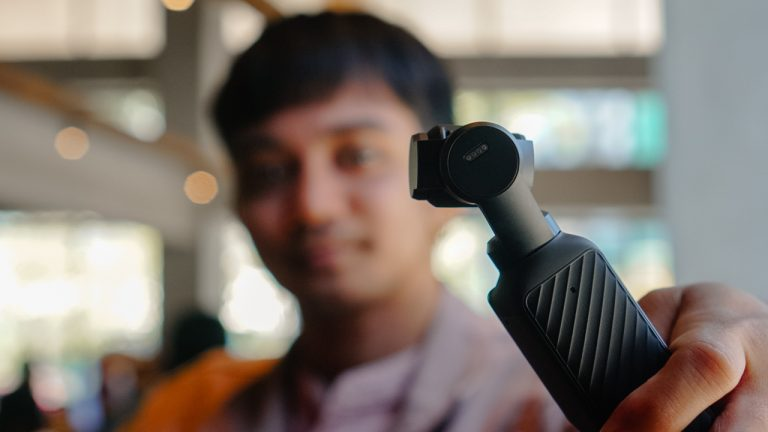
If you mostly shoot solo, the tracking tools are not a gimmick. They save time, and they save takes.
For a broader look at how it compares with other compact camera picks, you can also check the best action cameras 2025 if ruggedness matters more to you than a gimbal.
Why the gimbal still matters for solo creators
You feel the difference most when you are walking, talking, or filming yourself without help. The camera stays smoother than a phone, and that means fewer shots ruined by tiny bumps and hand shake. It also makes the Pocket 4 easier to trust when you need clean footage fast.
That is a big deal if you film travel clips, event highlights, or daily content on your own.
How tracking and framing tools help you stay in the shot
The tracking system is one of the smartest parts of the camera. Face auto-detect, subject locking, and gesture control all cut down the amount of babysitting you need to do. When you are trying to keep moving and stay on script, that matters.
You can also use framing aids like rule-of-thirds placement or the golden spiral to make solo shots look more deliberate. It is the kind of help that feels small until you stop getting clipped out of frame.
Low-Light Performance
Low light is where the Pocket 4 feels like a real step up. The 1-inch sensor helps keep noise down, and the camera handles tricky indoor scenes with more detail in both highlights and shadows. Faces stay cleaner, and the image does not fall apart as quickly when the light gets ugly.
Night streets and dark cafes are still not the same as shooting with a larger camera, but the Pocket 4 gets much closer than you might expect from something this small. The image looks usable instead of merely acceptable.
Audio & Mic Support
Video cameras live or die on audio, and the Pocket 4 gives you more options than most pocket devices. It supports 4-channel audio output and Audio Zoom, so the sound can follow your framing in a more natural way. That helps more than you think when you are shooting interviews, street clips, or anything with movement.
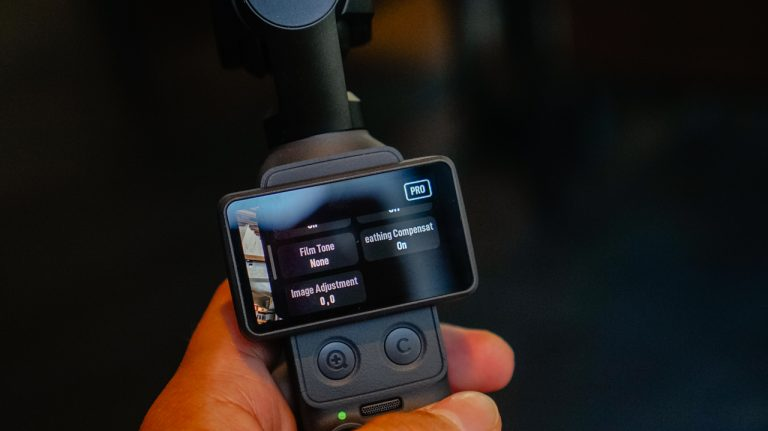
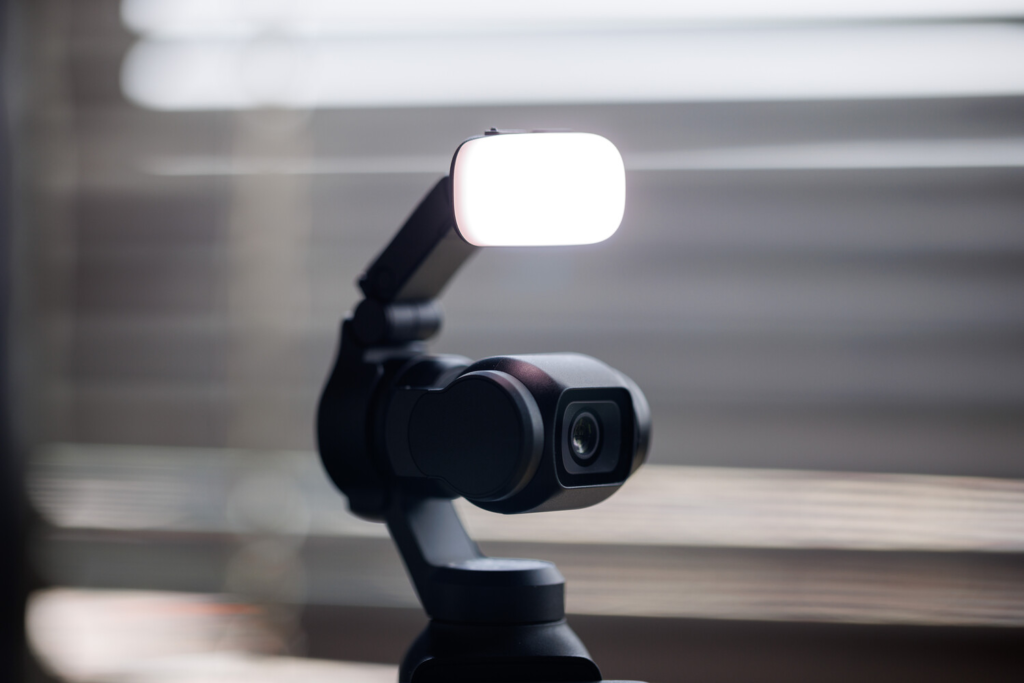
The Creator Combo also adds the DJI Mic 3 transmitter, plus the fill light and other extras. If you care about clean voice capture, that bundle starts to make sense fast.
Battery Life & Charging
The 1545mAh battery is another welcome upgrade. DJI says you can get up to 240 minutes, which is the kind of number that makes a long day of shooting feel less stressful. You are less likely to reach for a power bank halfway through a trip or event.
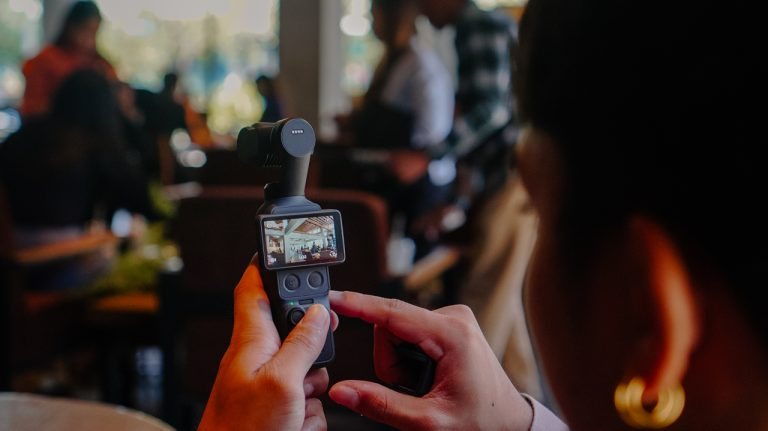
One launch report also says the camera can hit 80% in about 18 minutes, which is the kind of charging speed that keeps downtime short. That is handy when you shoot in bursts and need the camera ready again quickly.
Storage & File Options
The built-in 107GB of internal storage is one of the nicest practical changes here. You can shoot without a memory card if you need to, and that makes the camera feel less fussy. microSD is still there if you want more headroom.
File transfers are faster, too. DJI moved to USB 3.1, and the camera also supports Wi-Fi 6, so moving clips to your phone or computer is less of a wait. For creators who shoot often, that kind of convenience adds up fast.
If you want a breakdown of the storage and tracking angle, this launch summary covers why the built-in memory matters so much in practice.
App, Controls & Ease of Use
The Pocket 4 is still simple at heart. You can use the touchscreen, swipe from the sides, and move through settings without feeling like you need a manual open beside you. The new physical buttons make the experience feel less fiddly, which is a win.
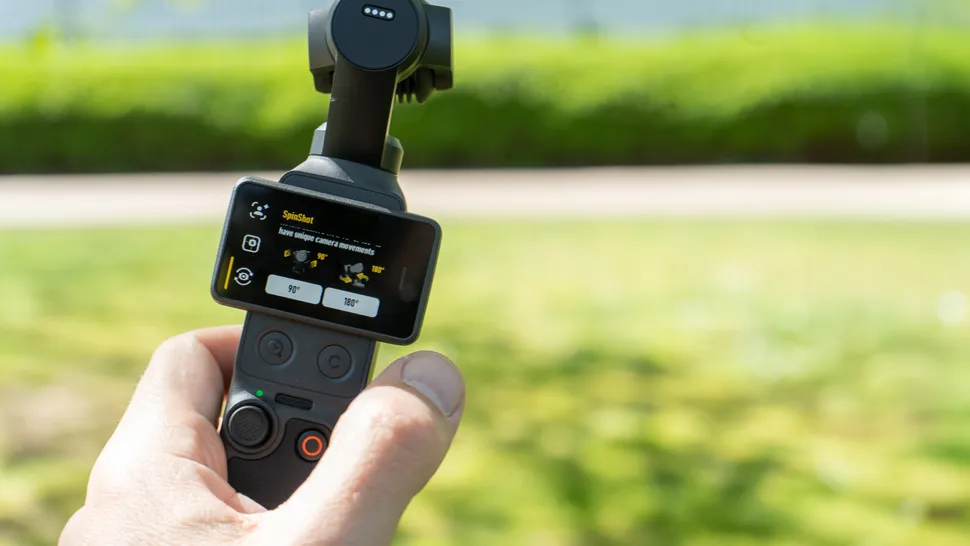
The DJI Mimo app adds remote control and lets you view or download footage from your phone. That is useful when you want to frame a shot from a distance or grab clips without pulling the camera apart on the spot. It is not perfect, but it makes the camera easier to live with.
Connectivity & Ports
USB-C is the main connection here, and the camera’s wired transfer speed is fast enough to matter. You also get Wi-Fi 6, which helps when you want to move clips quickly without plugging everything in.
That may sound like a small thing, but it is part of what makes the Pocket 4 feel modern. You spend less time waiting and more time shooting.
Price & Value
In the launch material I found, UK pricing sits at £445 for the Standard Combo and £549 for the Creator Combo. One report also lists an Essential Combo at £429. For a closer look at bundle pricing, this launch pricing breakdown is useful context.
It is not cheap, and you should not pretend it is. But if you will use the gimbal, tracking, storage, audio support, and low-light improvements often, the value starts to look better than the sticker price suggests.
Who Is It For?
Buy the DJI Osmo Pocket 4 if:
- You want a pocketable camera for vlogging, travel, and solo filming.
- You care about smoother video than a phone can give you.
- You want better skin tones, stronger low light, and more editing room.
- You like shooting fast and moving on.
Do not buy it if:
- You need rugged, abuse-proof hardware.
- You want true optical zoom and full lens flexibility.
- You already own a Pocket 3 and only shoot casually.
- You want the control and depth of a mirrorless camera.
If rugged gear is more your pace, the best action cameras 2025 guide makes more sense than forcing the Pocket 4 into the wrong job.
FAQs
Is the DJI Osmo Pocket 4 worth it for solo creators?
Yes, if you shoot alone a lot. You get strong stabilization, reliable ActiveTrack 7.0, built-in storage, and a setup that feels made for self-filming without extra crew.
How does the Pocket 4 handle low-light shooting?
It handles dim scenes better than earlier Pocket models. The 1-inch sensor, f/2.0 lens, and improved dynamic range keep shadows cleaner and colors more natural in tougher light.
Do you still need a microSD card with the Pocket 4?
You don’t need one right away. The camera includes 107GB of internal storage, so you can start shooting immediately, then add microSD if you want extra space.
Is the Creator Combo worth the higher price?
It is, if you care about audio and framing. The Mic 3 transmitter, fill light, and wide-angle lens make solo shooting easier, especially for vlogs and travel clips.
What makes the Pocket 4 better than the Pocket 3?
The Pocket 4 adds 4K/240fps, 37MP stills, built-in storage, faster USB 3.1 transfers, improved low-light performance, and more direct physical controls for easier shooting.
Final Verdict
The DJI Osmo Pocket 4 is one of those cameras that makes a lot of sense once you actually use it. The stabilization, image quality, low-light gains, built-in storage, and better controls make it far more useful than a normal pocket camera usually is.
It is not a dramatic reinvention, and Pocket 3 owners may not feel pushed to upgrade. But if you shoot solo and want a camera that gets out of your way, this one is easy to recommend.
It is fair value, not bargain-bin value. If your content lives on movement, quick framing, and cleaner video without extra bulk, this is the kind of camera that earns its spot.