

Finding the best budget chef knives in 2026 is trickier than it should be. Cheap knives are everywhere, prices jump around fast, and a lot of blades look better online than they feel on a cutting board. If you want one knife that can chop onions, slice chicken, mince herbs, and not fall apart after a few months, the field gets narrow pretty quickly.
Disclosure: As an independent reviewer, we may receive an affiliate commission on qualifying purchases made through our links. This helps support our research and testing team at OASTHAR. Learn more about our testing process.
That is where this list helps. Our OASTHAR Product Research & Testing Team focused on the knives that make sense for shoppers, beginners, and anyone who wants solid performance without paying luxury-knife money. The goal was simple, find the picks that still feel good in the hand, still cut cleanly, and still make sense for the price.
Some of these are true budget buys. Some stretch a little higher but give you better long-term value because they feel more comfortable, hold up better, or need less replacing. Either way, these are the chef knives worth your time in 2026.
RELATED: The 7 Best Budget Cordless Vacuums for 2026, Tested and Reviewed
If you are upgrading your kitchen on a budget, you may also like our guide to the best budget kitchen tools for beginners.
Best Budget Chef Knives at a Glance
- Best Overall: Mercer Culinary Renaissance 8-Inch
- Best Everyday Cooking: Victorinox Fibrox Pro 8-Inch Chef’s Knife
- Best Under $30: Mercer Culinary Millennia 8-Inch Chef’s Knife
- Best Under $50: Mercer Culinary Genesis 8-Inch Chef’s Knife
- Best Lightweight: Victorinox Wood 8-Inch Chef’s Knife
- Best for Simple Prep: Kiwi Brand Chef’s Knife
- Best for Small Hands: Global G-55 7-Inch Chef’s Knife
How We Tested the Best Budget Chef Knives
In our assessment, a good budget chef’s knife has to do more than feel sharp for five minutes. It should feel safe in the hand, cut cleanly through common ingredients, and still make sense after you compare price, comfort, construction, and long-term owner feedback. We research major retailers, study current market pricing, check long-term owner feedback, and judge each knife by the things that matter when you’re actually cooking.
Sharpness out of the box
A budget chef’s knife shouldn’t need immediate rescue from a sharpener. We look at how cleanly a blade handles common prep jobs right away, including onion, tomato, herbs, and dense produce. A knife can be affordable and still feel ready to work on day one. If it drags, tears, or wedges too much, it drops fast.
Edge retention
Initial sharpness is easy. Staying useful is harder. We pay attention to how well a knife keeps its edge through normal kitchen tasks, not just a few beauty cuts. That includes repetitive vegetable prep, slicing proteins, and checking whether the blade still feels controlled after extended use. Softer steels can be easier to sharpen, but they also tend to need that help sooner.
Comfort and grip
Handle shape matters more than most shoppers think. We judge how each knife feels in a pinch grip, a full grip, and during longer prep sessions. Weight balance, handle texture, and overall control all count here. Some knives look plain but feel excellent. Others look polished and get slippery or awkward once your hands are wet.
Build quality and materials
We compare forged and stamped construction, steel type, fit and finish, tang design, and how sturdy the knife feels under pressure. Budget knives don’t need fancy patterns or premium wood to make the list. They do need solid fundamentals. Loose-feeling handles, poor balance, or cheap transitions between blade and handle are red flags.
Real kitchen versatility
A chef’s knife should be your most-used kitchen tool, so it has to cover a lot of ground. We rate how well each pick handles rocking cuts, push cuts, fine work near the tip, and heavier chopping through firm vegetables. A knife that only excels at one kind of task doesn’t rank as high, even if it’s cheap.
Price and customer reviews
Price matters, but value matters more. We research listings across major online stores and compare current US pricing with what the knife actually delivers. We also analyze large batches of customer reviews to see whether real users report the same strengths and weaknesses we found. That helps us avoid one-sided picks and build a list that reflects long-term use, not first impressions.
Star Rating: 4.9/5
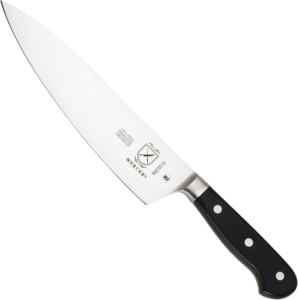
This is the easy top pick for most home cooks. The Mercer Culinary Renaissance has the right mix of price, comfort, balance, and day-to-day performance, and that mix is what wins this category. It feels more expensive than it is. That’s rare.
In use, the Renaissance behaves like a knife that understands the job. Its forged full-tang build gives it a planted, confident feel, but it doesn’t come off clumsy or heavy-handed. The German steel and 15-degree edge help it cut cleanly through onions, herbs, meat, and firmer vegetables without making you fight the blade. The handle is not flashy, though it is comfortable and secure, which is exactly what matters more.
The other thing that keeps this knife at the top is how broad its appeal is. Beginners can pick it up and feel in control fast. More experienced cooks won’t outgrow it quickly. Current US pricing usually lands around the mid-$30s to mid-$50s, which keeps it squarely in the sweet spot for value. You can check the official Mercer Renaissance product page for current details and construction specs.
Blade length: 8 inches | Steel: High-carbon German steel | Construction: Precision-forged, full tang | Blade angle: 15 degrees | Price range: About $35 to $56 in the US
Reasons to Buy
- Excellent all-around value
- Forged full-tang build
- Comfortable secure handle
- Sharp out of box
- Strong balance for prep
Reasons to Avoid
- Plain-looking handle
- Edge needs upkeep
Who should buy it: This fits most home cooks. If you want one knife that does nearly everything well and doesn’t push you into premium pricing, this is the one that makes the most sense. It is also a strong first “real” chef’s knife because it feels stable and easy to trust.
Star Rating: 4.8/5
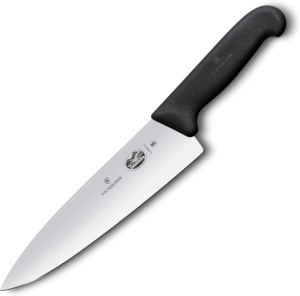
The Fibrox Pro is the no-nonsense pick. It doesn’t win on looks, but it keeps winning in real kitchens because it cuts well, feels light on the hand, and asks for very little in return. This is the knife you grab without thinking.
Its main strength is usability. The stamped blade keeps weight down, and the textured Fibrox handle gives you a lot of control for the money. That matters during longer prep sessions and for beginners who want a knife that feels safe and predictable. It also sharpens well, which has helped this model build a long reputation as a budget staple. The official Victorinox Fibrox Chef’s Knife page covers the brand’s current blade and handle details.
The tradeoff is obvious. It looks utilitarian, and some cooks may want a heavier, more premium-feeling knife. But if you care more about practical performance than style, that hardly matters. Independent review coverage has kept this knife in the budget conversation for years, and a recent Fibrox Pro review from ProvenKitchenTools lands in the same place we do: strong value, strong comfort, and very few real complaints for the price.
Blade length: 8 inches | Construction: Stamped | Handle: Fibrox non-slip synthetic | Care: Dishwasher-safe by brand guidance, hand-washing still makes more sense | Price range: About $30 to $50 in the US
Reasons to Buy
- Great grip in hand
- Lightweight for long prep
- Easy to maintain
- Trusted budget classic
- Strong daily versatility
Reasons to Avoid
- Looks pretty basic
- Less premium feel
Who should buy it: This is a smart fit if you cook often and want a cheap knife you won’t baby. It also works well if more than one person uses the kitchen, because the grip is friendly, the balance is familiar, and the replacement cost won’t scare you.
Star Rating: 4.6/5
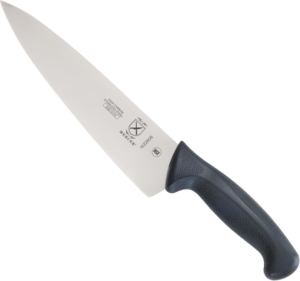
If price is your first filter and you still want something useful, the Millennia earns its spot fast. It is one of the few ultra-cheap chef knives that doesn’t feel like a throwaway. That’s the whole pitch.
This knife uses a stamped blade and lighter construction, so you should not expect the planted feel of the Renaissance or Genesis. But for simple chopping, slicing vegetables, and handling everyday prep, it does a lot right. The lower weight can actually help newer cooks who find heavy knives tiring or harder to steer. It also comes with Mercer’s kitchen-first approach, which is why the brand keeps showing up in culinary programs and entry-level kits.
There are limits. The blade steel and overall construction are more basic, and the knife won’t give you the same long-term polish as the better models above it. But at roughly $20 to $30 in the US, it is still one of the better answers when your budget is very tight. Broad market roundups like this 2026 home-cook knife guide keep Mercer in the value conversation for the same reason: functional design and honest pricing.
Blade length: 8 inches | Steel: High-carbon stainless steel | Construction: Stamped | Handle: Textured synthetic | Price range: About $20 to $30 in the US
Reasons to Buy
- Very low price
- Easy for beginners
- Light in hand
- Good starter performance
Reasons to Avoid
- Less premium build
- Edge fades faster
- Wide blade feel
Who should buy it: This makes sense for first apartments, dorm kitchens, occasional cooks, or anyone replacing a truly awful knife on a tight budget. It also works as a backup knife for rougher jobs where you don’t want to risk a better blade.
Star Rating: 4.5/5
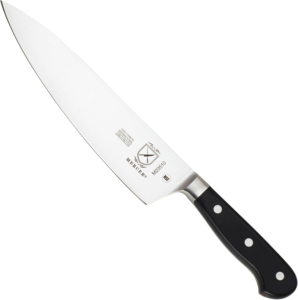
The Genesis is the budget forged knife that keeps making a case for itself. It brings more heft and a more substantial hand feel than the Millennia, and that alone will appeal to a lot of shoppers. If you want a knife under $50 that feels closer to a traditional Western chef’s knife, this is the move.
The forged high-carbon German steel, full-tang construction, and contoured handle give it a solid, planted character. It is a good knife for heavier prep, larger vegetables, and users who like a bit more weight behind the blade. That weight is a plus for some cuts and a minus for others. Fine work is a little less nimble than with lighter rivals, but the Genesis stays dependable across a wide range of kitchen tasks. Brand information and current lineup details are available through Mercer Culinary’s official site.
What pushes it below the top two is simple. The Genesis is good, but the Renaissance feels more refined and the Fibrox often feels easier to live with. Still, if your budget ceiling is firm and you want a forged knife, the Genesis stays one of the cleanest answers. Other budget roundups, including Recipe by Liza’s 2026 chef knife picks, also call it out as a strong low-cost forged option.
Blade length: 8 inches | Steel: High-carbon German steel | Construction: Forged, full tang | Handle: Santoprene-style ergonomic grip | Price range: Around $50 in the US
Reasons to Buy
- Forged feel for less
- Good power on produce
- Secure contoured handle
- Durable everyday option
Reasons to Avoid
- Heavier than rivals
- Less agile at tip
Who should buy it: This is a better fit if you prefer a more traditional, weight-forward chef’s knife. It suits home cooks who chop a lot of root vegetables, prep larger ingredients, and want the feel of a forged blade without stepping into premium pricing.

Star Rating: 4.4/5
The Victorinox Wood 8-inch gives you a different version of the Victorinox formula. The core appeal is still familiar, practical cutting performance, but the wood handle adds a warmer feel and a slightly more classic look. If the Fibrox seems too plain, this is the more attractive sibling.
Performance is still grounded in smart basics. You get good balance, a usable edge, and a shape that works for general prep. It stays lighter and more maneuverable than many German-style knives, and that helps if you care about control more than brute force. The catch is the handle itself. Wood looks better to many people, but it needs more care, and it can be less forgiving when wet than a synthetic grip. For a broader look at the brand’s lineup, the Victorinox cutlery section is the right place to compare styles.
This one lands in a narrower lane than the Fibrox Pro, which is why it ranks lower. But there is a real audience for it. If you want a budget chef’s knife that still feels a little more classic in the hand, the Wood model makes more emotional sense without abandoning value completely.
Blade length: 8 inches | Steel: Stainless steel | Construction: Stamped | Handle: Wood | Price range: About $40 to $60 in the US
Reasons to Buy
- More classic look
- Comfortable lighter handling
- Good general control
- Better feel than plastic
Reasons to Avoid
- Wood needs care
- Grip can get slick
Who should buy it: This is for the shopper who likes Victorinox performance but wants a less industrial look. It also fits smaller kitchens and lighter prep routines where comfort and feel matter more than all-out durability.
Star Rating: 4.1/5
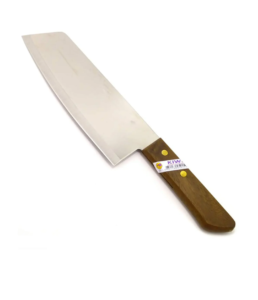
The Kiwi is the stripped-down budget pick. It is cheap, light, surprisingly usable, and very easy to understand. You’re not paying for prestige, premium steel, or a polished finish. You’re paying for a blade that can cut, and often cut better than the price suggests.
That is why Kiwi has stuck around as a cult budget option. It tends to come sharp enough to impress first-time buyers, and the light build can make fast slicing feel easy. But there is no mystery to the downside. The edge retention is weaker, the balance is less confident, and long-term durability is not in the same class as Mercer or Victorinox. It is a value play, not a forever knife.
Still, that does not make it a bad recommendation. It makes it a very specific one. If you want the cheapest usable chef’s knife on this list, Kiwi earns the spot. It just asks you to keep expectations in line. More than anything, it proves that a basic knife can still be worth owning if the price is right and the task list is realistic.
Blade length: Often around 8 inches, features vary by model | Steel: Basic stainless steel | Construction: Stamped | Handle: Basic wood or synthetic, varies by model | Price range: About $15 to $25 in the US
Reasons to Buy
- Very cheap entry point
- Light and easy
- Sharp for the price
Reasons to Avoid
- Weak edge retention
- Lower durability
- Basic overall balance
Who should buy it: This fits the absolute lowest-budget shopper, the occasional cook, or the person who wants a rough-use spare knife. It also works for anyone curious about a simple, lightweight blade and willing to sharpen more often.
Star Rating: 4.0/5
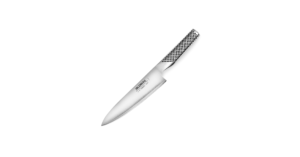
The Global G-55 is the outlier here, and that is exactly why it belongs. It costs more than the classic budget picks, but if you have small hands or prefer a shorter, lighter, more precise knife, it fills a real gap that cheaper options often miss.
This knife brings Global’s familiar all-metal construction, slim Japanese-style profile, and precise cutting feel. The 7-inch size makes it easier to manage for users who find standard 8-inch Western chef’s knives bulky. It is excellent for detail work, small-to-medium prep, and cooks who like nimble movement over heavy chopping force. Global’s brand page at GLOBAL Knives UK shows the company’s broader design philosophy and current lineup.
The tradeoffs are also very Global. The metal handle can be divisive, especially when wet, and the knife asks for better habits than the cheap workhorses above. It is not the best pure budget value. It is the best fit for a specific buyer. If your hand size or preferred cutting style has made larger budget knives feel awkward, this one can make more sense than its price suggests.
Blade length: 7 inches | Construction: One-piece stainless steel | Handle: Hollow stainless handle | Style: Japanese-inspired | Price range: About $100 to $150 in the US
Reasons to Buy
- Great for small hands
- Precise nimble cutting
- Lightweight overall feel
- Distinct Japanese profile
Reasons to Avoid
- Price is much higher
- Handle can be slippery
- Less ideal for abuse
Who should buy it: This is the best pick here if standard 8-inch knives feel oversized or tiring. It also fits cooks who want more precision, prefer lighter Japanese-style handling, and are willing to pay extra for fit and feel instead of pure budget value.
Best Budget Chef Knives Compared
| Product | Best For | Build Style | Weight Feel | Main Strength |
|---|---|---|---|---|
| Mercer Culinary Renaissance 8-Inch | Overall value | Forged, full tang | Medium, balanced | Best blend of comfort, price, and performance |
| Victorinox Fibrox Pro 8-Inch | Everyday use | Stamped | Light to medium | Practical grip and reliable daily cutting |
| Mercer Culinary Millennia 8-Inch | Lowest serious budget | Stamped | Light | Strong starter knife for very little money |
| Mercer Culinary Genesis 8-Inch | Under $50 forged feel | Forged, full tang | Medium to heavy | More power and heft for tougher prep |
| Victorinox Wood 8-Inch | Lighter classic feel | Stamped | Light to medium | Familiar Victorinox performance with wood handle appeal |
| Kiwi Brand Chef’s Knife | Cheapest usable option | Stamped | Very light | Very low cost and decent short-term sharpness |
| Global G-55 7-Inch | Small hands and precision | One-piece stainless | Light | Better control and agility in a shorter blade |
Cheap vs Expensive Chef Knives: What Do You Actually Give Up?
A cheap chef knife can still be very good. The main difference is usually not whether it can cut food. The real difference is how refined it feels, how long the edge stays sharp, and how comfortable it feels after a long prep session.
More expensive knives often use better steel, cleaner finishing, stronger edge retention, and more premium handles. They can also feel more balanced in the hand. But that does not mean every home cook needs to spend $150 or more. For everyday onions, herbs, chicken, carrots, potatoes, and meal prep, a good budget chef knife can still do the job very well.
The tradeoff is maintenance. A budget knife may need more frequent honing or sharpening. It may also have a simpler handle or a less polished blade finish. But if the knife feels safe, sharp, and comfortable, it can still be a smart buy.
That is why this list focuses on value, not just low price. The best budget chef knives are not the cheapest knives online. They are the knives that still feel useful after the excitement of a low price wears off.
What to Look for in a Budget Chef Knife
Blade length
For most people, 8 inches is the sweet spot. It is long enough for onions, herbs, meat, and larger vegetables without feeling like a specialty tool. If your hands are small or you want more control, a 7-inch knife can be a better fit. That is where the Global G-55 makes sense.
Weight and balance
Heavier knives can power through dense produce more easily, but they can also feel slower and less friendly for beginners. Lighter knives are easier to maneuver and often reduce hand fatigue. Balance matters just as much as weight. A well-balanced knife feels steady and predictable, not tip-heavy or awkward.
Forged vs stamped construction
Forged knives usually feel sturdier, thicker, and more premium. They often cost more. Stamped knives are lighter, cheaper, and often easier for beginners to handle. Neither build style is automatically better for every cook. The right one depends on whether you want power and heft or speed and simplicity.
Handle comfort and grip
A chef’s knife lives or dies by how it feels in your hand. Synthetic handles usually win on grip and easy care. Wood handles look nicer to many people but need more maintenance. Metal handles can feel sleek, but they are not for everyone. If a handle gets slippery or feels cramped, the knife becomes harder to trust.
Steel and edge maintenance
Budget knives often use softer stainless steels than premium knives. That is not always bad. Softer steel can be easier to sharpen and less prone to chipping. The tradeoff is faster edge wear. If you buy in this category, expect to hone and sharpen more often than you would with a high-end Japanese blade.
Maintenance and cleaning
Hand-washing is still the smart move, even if a brand says dishwasher-safe. Heat, detergent, and blade contact can shorten the life of the edge and the handle. Wood handles need the most care. Synthetic handles are easier to live with. Proper storage matters too. Tossing a chef’s knife loose in a drawer is a fast way to dull it.
Safety and control
A safe knife is not a dull knife. It is a knife you can control. Look for a handle that feels secure, a blade length that fits your hand size, and enough balance that the knife tracks where you want it to go. If a knife feels unstable, too slick, or too heavy, that is not a bargain.
How to Maintain a Budget Chef Knife So It Lasts Longer
A budget chef knife will last much longer if you treat it properly. The biggest rule is simple. Wash it by hand, dry it right away, and never leave it sitting wet in the sink. Even stainless steel can stain or lose its clean finish if it is ignored.
You should also use the right cutting board. Wood and plastic boards are much kinder to the edge than glass, marble, or ceramic boards. A hard board can make even a good knife feel dull faster. That means more sharpening, more frustration, and worse cuts.
Honing also helps. A honing steel does not replace sharpening, but it can realign the edge and keep the knife feeling better between proper sharpenings. If the knife starts slipping on tomato skin or crushing herbs instead of slicing them, it is probably time for sharpening.
Storage matters too. Do not throw your chef knife loose into a drawer with spoons and other tools. Use a blade guard, knife block, magnetic strip, or drawer insert. It protects the edge and also makes your kitchen safer.
Budget Chef Knife Mistakes to Avoid
The biggest mistake is buying the cheapest knife only because it has a high star rating. A low price can be tempting, but a knife still needs to feel safe, sharp, and controlled. If the handle is slippery, the blade feels too flexible, or the edge dulls quickly, it is not really a good deal.
Another mistake is buying a full knife set before choosing one good chef knife. Most home cooks use a chef knife far more than the other knives in a big block set. One solid chef knife, one paring knife, and one bread knife can often cover more real cooking than a cheap 15-piece set.
You should also avoid knives that look premium but give very little detail about the steel, handle, or construction. Fancy patterns and dramatic product photos do not always mean better performance. Comfort, balance, and edge quality matter more.
Finally, do not ignore size. An 8-inch chef knife works for most people, but it is not perfect for everyone. If you have smaller hands or want more control, a 7-inch knife may feel better. The best knife is not always the biggest one. It is the one you can use confidently.
Why Trust OASTHAR’s Budget Chef Knife Reviews?
I’m Shashini Fernando, an associate editor who specializes in consumer tech, home gadgets, and kitchen tools. I test each product in-house, study how it performs in real use, and analyze hundreds of customer reviews from real users across the chef knife market to build lists like this one.
For this guide, the focus was simple. Find the best of the best budget chef knives people can actually buy in 2026, not just the knives that look good in product photos. That means balancing performance, comfort, durability, and price, then cutting through the marketing.
If a knife made this list, it did so because it still makes sense after the comparisons, not before them.
Best Budget Chef Knives FAQs
What is the best chef knife overall?
The best overall pick is the Mercer Culinary Renaissance 8-Inch Chef’s Knife. It gives you the strongest mix of build quality, comfort, and price.
What is the best budget chef knife for beginners?
The Victorinox Fibrox Pro 8-Inch Chef’s Knife is the easiest beginner recommendation. It is comfortable, practical, and very forgiving in daily use.
Are cheap chef knives worth buying?
Yes, some are. The good ones cut well, sharpen easily, and handle everyday prep without wasting your money. The bad ones feel dull, flimsy, or uncomfortable fast.
Is a forged knife better than a stamped knife?
Not always. Forged knives usually feel heavier and more premium. Stamped knives are often lighter and easier for beginners. The better choice depends on what feels right in your hand.
How much should you spend on a budget chef knife in 2026?
The strongest value range is about $30 to $60. That is where you start finding knives with better steel, better balance, and more dependable long-term use.
Which Budget Chef Knife Should You Choose?
If you want the safest all-around choice, start with the Mercer Culinary Renaissance. It gives you the best balance of price, comfort, and build quality. It feels like the right pick for most home cooks who want one dependable knife.
If you want something lighter and more practical, the Victorinox Fibrox Pro makes more sense. It is not fancy, but it is easy to use, easy to maintain, and very forgiving. That is why it works so well in busy kitchens.
If your budget is very tight, the Mercer Millennia is the better starter choice. It will not feel as premium as the Renaissance or Genesis, but it is still a real upgrade from weak drawer knives. If you want a shorter knife for better control, the Global G-55 is the better fit.
The simple answer is this. Choose the knife that matches your hand, your budget, and your cooking style. A knife that feels comfortable will get used more often, and that matters more than buying the one with the flashiest product photo.
Final Verdict: The Best Budget Chef Knife for Most People
If you want the best all-around pick, get the Mercer Culinary Renaissance 8-Inch Chef’s Knife. It is the most complete knife here, and it hits the sweet spot better than anything else on the list.
If you want the easiest daily recommendation, the Victorinox Fibrox Pro stays hard to beat. It is plain, practical, and consistently good. If your budget is tighter, the Mercer Millennia gives you a real step up from junk-drawer knives without asking for much money. If you want a forged knife under $50, the Genesis is the better fit. If style and a lighter hand matter more, look at the Victorinox Wood. If you need the cheapest workable option, Kiwi gets the job done. And if most chef knives feel too big, the Global G-55 is the one that actually solves that problem.
That is the real split. Buy for fit first, then price, because a comfortable budget chef knife is the one you will actually keep using. The right knife is the one you keep reaching for.