
Finding the best budget drones in 2026 is a lot easier than it was a few years ago. You no longer have to settle for a shaky toy with weak range and a bad camera. The right low-cost drone can now give you stable flight, clean 4K video, smart return-to-home features, and a design that fits in a small bag.
Disclosure: As an independent reviewer, we may receive an affiliate commission on qualifying purchases made through our links. This helps support our research and testing team at OASTHAR. Learn more about our testing process.
That said, budget still means trade-offs. Some drones skip obstacle avoidance. Others keep the price low with shorter flight times, weaker wind resistance, or more basic tracking. So the key is simple, pick the model that gets the important stuff right for the way you fly.
Our OASTHAR Product Research & Testing Team focused on drones that still make sense for shoppers in the US right now. We looked at real-world ease of use, camera value, safety features, portability, and what owners keep saying after weeks or months of use.
RELATED: The 7 Best Budget Digital Cameras for 2026, Tested and Reviewed
Best budget drones at a glance
- Best Overall: DJI Mini 4K
- Best Alternative: Potensic Atom 2
- Best Cheap Novice: Ryze Tello
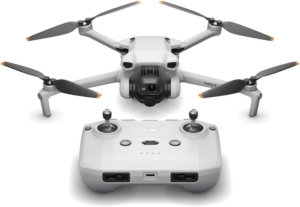
- Best for Vertical Video: DJI Mini 3
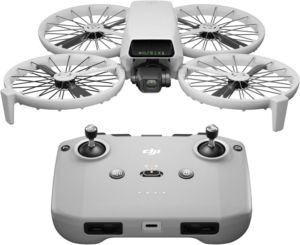
- Best Entry Cinema: DJI Flip
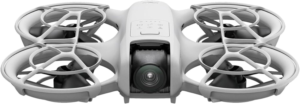
- Best Selfie: DJI Neo
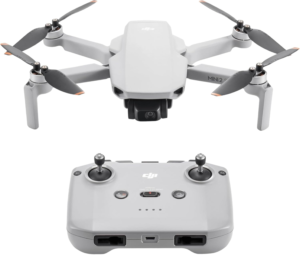
- Best True Option: DJI Mini 2 SE
If you want more low-cost options, you can also check our earlier roundup of top affordable drones reviewed and our guide to beginner-friendly drones reviewed.
Learn more about how we test drones
In our assessment, a good budget drone has to do more than look strong on paper. It has to fly safely, shoot usable footage, and make sense for the money after you compare specs, brand support, and real owner feedback.
Flight stability
We start with basic flight behavior because that affects everything else. A budget drone can have nice specs, but if it drifts, struggles in light wind, or feels delayed on the controls, it won’t stay on this list. We look for stable hovering, predictable steering, and smooth takeoff and landing behavior.
Camera quality
Next, we judge the camera the way most people will use it. That means bright daylight clips, short travel shots, social video, and basic photos. We pay close attention to stabilization, sharpness, exposure control, and whether the drone produces footage you’d actually want to keep. A 4K label alone doesn’t mean much.
Ease of use for beginners
Because many shoppers in this category are first-time pilots, setup matters a lot. We check app quality, controller layout, automatic flight tools, and how quickly you can start flying with confidence. A good budget drone should feel inviting, not frustrating, especially during the first few flights.
Battery life and range
Manufacturers often quote ideal flight times, so we compare those claims with broader hands-on reporting and owner feedback. We also look at transmission range, signal reliability, and return-to-home performance. For budget drones, consistency matters more than bragging-rights numbers that only show up in perfect conditions.
Portability and build
Most of the best budget drones now fold down small, and that matters if you plan to travel or just keep one in a backpack. We weigh size, prop protection, overall durability, and how practical the drone feels after repeated use. Some low-cost models save money with lighter plastics, so build quality matters.
Price and customer reviews
We select the best drones by researching major shopping platforms and brand stores, then comparing them with hands-on reviews from trusted tech publications. We also analyze large numbers of customer reviews to spot repeat strengths and repeat complaints. That gives you a more rounded list, not just one opinion.
Star Rating: 4.8/5
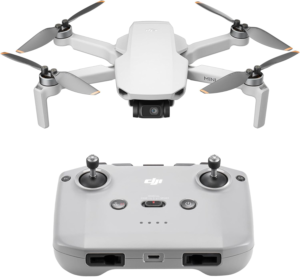
The DJI Mini 4K gets the top spot because it nails the basics better than anything else near this price tier. Its superpower is balance. You get a sub-249g body, a proper 3-axis gimbal, solid 4K video, stable GPS-assisted flight, and the kind of polished app experience that still sets DJI apart. For most people, this is the easiest recommendation.
In day-to-day use, the Mini 4K feels calm and dependable. That matters more than flashy extras. It launches fast, holds position well, and gives you footage that looks much cleaner than the price suggests. It also has strong wind resistance for a small drone, so it doesn’t feel as nervous outdoors as many cheaper options. DJI rates it at up to 31 minutes per battery, and while real flight time depends on conditions, the overall endurance is still very good for this class.
The trade-off is clear. You don’t get collision avoidance or advanced tracking like pricier drones. Still, for a beginner or value-focused buyer, that’s easier to live with than weak stabilization or poor control. The official DJI Mini 4K product page gives you the current package options, and broader market roundups such as this guide to drones under $500 in 2026 show why this model keeps rising to the top.
Weight 249g or less | Video 4K up to 30fps | Flight time up to 31 minutes | Transmission up to 10km | Stabilization 3-axis mechanical gimbal
Reasons to Buy
- Great 4K for the money
- Very stable flight
- Strong battery life
- Light, foldable body
- Excellent beginner app
Reasons to Avoid
- No obstacle avoidance
- No true subject tracking
- Basic feature set
Who should buy it: This fits you best if you want one drone that covers travel, family trips, scenic footage, and first-time flying without drama. It’s also the safest pick if you care more about smooth results than extra tricks.
Star Rating: 4.6/5
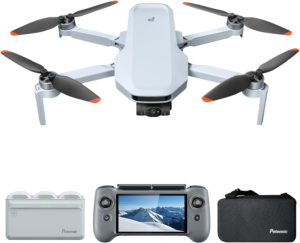
The Potensic Atom 2 is the strongest non-DJI option in this group, and that makes it important. Its superpower is value. You get a compact folding design, sub-250g weight, a 3-axis gimbal, and stronger overall features than many low-cost rivals. If you want an alternative to DJI without dropping into toy-grade territory, this is the one to look at first.
In use, the Atom 2 feels surprisingly capable. Reports from trusted reviewers point to solid flight behavior, good subject tracking for the class, and a camera system that holds up well for casual 4K capture. It doesn’t feel as polished as DJI in every small detail, but it’s much closer than most rivals. That’s why it earns a high rank here. It’s also beginner-friendly, which matters if you’re buying your first real camera drone.
You still need realistic expectations. Obstacle avoidance isn’t the draw here, and the image pipeline isn’t as refined as DJI’s better models. Even so, the package is easy to like. The Potensic Atom 2 official page lays out current features, while TechRadar’s Potensic Atom 2 review helps show where it stands as a serious budget pick.
Weight 249g | Video 4K up to 30fps | Photos 12MP or 48MP modes | Flight time up to 32 minutes | Stabilization 3-axis mechanical gimbal
Reasons to Buy
- Great DJI alternative
- Good value for features
- Foldable sub-250g design
- Stabilized 4K video
- Useful subject tracking
Reasons to Avoid
- No collision avoidance
- Less polished software
- JPEG limits on some modes
Who should buy it: This works well if you want a compact starter drone with real camera chops but don’t want to default to DJI. It also suits you if value matters more than brand prestige and you still want something that feels like a proper drone, not a disposable gadget.
Star Rating: 4.3/5
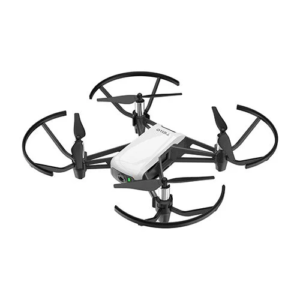
The Ryze Tello is the simplest way into drone flying without spending much. Its superpower is approachability. It’s tiny, light, cheap, and very easy to understand, which makes it one of the few low-cost drones that still makes sense for pure learning. If your goal is to practice basic control and have fun indoors or on calm days, the Tello still earns its place.
You need to see it for what it is. This isn’t a serious camera drone, and it doesn’t try to be one. The camera is weak by today’s standards, with 720p video that often looks compressed. Range is limited, wind handling is poor, and you’re not getting long-distance exploration or polished travel footage. But that’s also why it stays affordable and less intimidating.
As a first trainer, though, it’s still useful. The controls are responsive, the app is simple, and the lightweight build makes it less stressful than flying a more expensive craft. The Tello official site remains the best place to check current support, and TechRadar’s roundup of cheap drones under $100 reflects how far entry pricing can stretch if you just want the basics.
Weight 80g | Camera 5MP | Video 720p | Flight time up to 13 minutes | Control app-based, controller optional
Reasons to Buy
- Very affordable
- Easy to learn
- Light and portable
- Responsive controls
- Fun indoor flying
Reasons to Avoid
- Weak video quality
- Poor wind handling
- Very short range
Who should buy it: This makes the most sense if you’re buying for a child, a total beginner, or anyone who wants a low-risk first drone. It’s also a good fit when you care more about learning the sticks than recording polished footage.
Star Rating: 4.5/5
The DJI Mini 3 stands out because it gives you one feature that many cheaper drones still miss, true vertical shooting. Its superpower is social-ready video. If you post to TikTok, Instagram Reels, or Shorts, the Mini 3 saves you from heavy cropping and makes a small drone feel a lot more practical.
Beyond the vertical camera trick, it’s also just a very good lightweight drone. It records nice-looking 4K footage, stays under 249g with the standard battery, and offers longer battery life than many rivals. The camera quality still holds up well, especially for travel content, scenic clips, and casual creator work. It isn’t the newest model in DJI’s compact range, but that can work in your favor if you find it at a better price.
Where it falls short is safety automation. You don’t get the broader obstacle sensing found on more expensive DJI models, and that matters if you fly aggressively. Still, if vertical content is your priority, the Mini 3 remains one of the smartest buys. TechRadar’s DJI Mini 3 review is still useful for seeing why this model keeps showing up in budget-focused conversations.
Weight 249g | Video 4K up to 30fps | Photos 12MP with Raw support | Flight time up to 38 minutes | Camera movement vertical shooting support
Reasons to Buy
- Native vertical video
- Strong battery life
- Good 4K image quality
- Very travel-friendly
- Easy DJI controls
Reasons to Avoid
- Limited obstacle sensing
- Older platform
- Can cost more than expected
Who should buy it: This is the right fit if your drone clips mostly end up on social platforms. It also suits you if you want a compact drone with better battery life and a more flexible camera than the usual cheap options.
Star Rating: 4.4/5
The DJI Flip is the most interesting pick here because it aims higher than the usual budget drone. Its superpower is giving you a more cinematic starter package without getting huge or hard to carry. You get 4K60 HDR recording, 10-bit color support, a folding design, and guarded props that make it feel more approachable around people and tighter spaces.
In real use, the Flip looks like a bridge between beginner-friendly and creator-friendly. The 3-axis stabilization helps it deliver smoother footage than cheap selfie drones, while its feature set gives you more room to grow. It also carries forward and downward sensors, which is a nice bump in safety compared with basic low-cost models. At 249g, it still stays in the easy-to-carry class that many shoppers want.
The limits are easy to spot. Storage is small, and it lacks some broader pro-grade extras. It also may stretch what some people call “budget,” depending on current pricing. Still, if you want something with more creative headroom, the Flip earns its place. TechRadar’s DJI Flip review gives a good look at why it works so well as an entry point for cleaner video.
Weight 249g | Video 4K up to 60fps HDR | Photos 48MP | Flight time up to 31 minutes | Color 10-bit with log option
Reasons to Buy
- Better video specs
- Stable 3-axis footage
- Prop guards included
- Good beginner safety
- Foldable travel build
Reasons to Avoid
- Small built-in storage
- Pricier than basic picks
- Not fully pro-ready
Who should buy it: This suits you if you want a compact drone that feels like a step toward serious video work without jumping to a much larger price tier. It’s also a good match if smooth footage matters more than raw speed or stunt flying.
Star Rating: 4.2/5
The DJI Neo is the easiest drone here to carry and the fastest to launch. Its superpower is convenience. You can use it for quick selfie videos, short follow shots, and automated clips without treating it like a full traditional drone setup. That makes it great for casual use, travel clips, and social content where speed matters more than manual control.
This isn’t the drone for long scenic flights or the best camera quality in the group. Instead, the Neo wins on simplicity. It’s tiny, it can launch from your hand, and it includes automated flight paths that make casual filming feel easy. For everyday users, that can be a bigger deal than having the deepest camera controls. It’s built around getting short clips fast.
The downside is flexibility. The Neo isn’t the best fit if you want a classic controller-first camera drone, and it lacks some compliance features that matter to certain pilots. But as a fun and very portable selfie drone, it’s easy to recommend. TechRadar’s DJI Neo review shows why it stands out in this smaller niche.
Weight about 135g | Video 4K | Storage built-in storage available | Flight time short-form casual use focus | Launch palm takeoff support
Reasons to Buy
- Ultra-small and light
- Fast hand launch
- Great for selfies
- Easy automated shots
- Very travel-friendly
Reasons to Avoid
- Limited advanced control
- Shorter serious use
- Not for traditional pilots
Who should buy it: This is the one for you if you want a drone mostly for solo travel clips, biking footage, hikes, and fast social posts. It also makes sense when carrying a controller sounds like a hassle and you’d rather get the shot quickly.
Star Rating: 4.0/5
The DJI Mini 2 SE is the pick for buyers who want a real camera drone from a proven brand while spending as little as possible. Its superpower is staying sensible. It cuts back in the right places, keeps the strong DJI flight experience, and gives you a cleaner upgrade path than many off-brand budget drones.
In practice, the Mini 2 SE is about simple, dependable flying. You get the lightweight foldable body that made the Mini line popular, solid hovering, good range for the class, and useful beginner features like return-to-home and stable control. The camera is more limited than the Mini 4K, though, and that difference matters. If image quality is your first priority, the newer model is the better buy.
Still, there’s a reason this drone keeps showing up in value discussions. It’s often easier to find at a lower price, and it feels far more refined than many random cheap alternatives. If your budget is tight and you still want DJI reliability, this is the floor where the category still feels worthwhile.
Weight under 249g | Video up to 2.7K | Flight time around 31 minutes | Transmission long-range DJI system | Stabilization 3-axis mechanical gimbal
Reasons to Buy
- Lower DJI entry price
- Stable, reliable flight
- Compact folding body
- Good beginner features
- Better than toy drones
Reasons to Avoid
- Weaker camera than Mini 4K
- Older model
- No obstacle avoidance
Who should buy it: This fits you if price is the main limit but you still want a proper lightweight GPS drone from a known brand. It’s also a smart fallback if the Mini 4K is out of stock or priced too close to more advanced models.
All recommended drones in comparison
| Drone | Best for | Camera value | Flight ease | Portability |
|---|---|---|---|---|
| DJI Mini 4K | Most buyers | Very strong for the price, true 4K, 3-axis gimbal | Excellent, polished and stable | Excellent, foldable and under 249g |
| Potensic Atom 2 | Best DJI alternative | Strong 4K value, very competitive | Very good, beginner-friendly | Excellent, foldable and light |
| Ryze Tello | First-time learners | Basic only, more for practice than capture | Very easy in calm conditions | Outstanding, tiny and light |
| DJI Mini 3 | Social creators | Better flexibility thanks to vertical shooting | Very easy, though less safety help | Excellent, compact travel drone |
| DJI Flip | Starter video creators | Better video specs, HDR and 10-bit support | Very good, with extra safety help | Very good, compact but feature-rich |
| DJI Neo | Selfie and travel clips | Good for quick social shots, not the best all-round camera | Extremely easy for casual use | Outstanding, ultra-portable |
| DJI Mini 2 SE | Lowest-cost real camera drone | Decent, but behind Mini 4K | Very good, strong DJI basics | Excellent, foldable and light |
What to look for in a budget drone
Weight and US rules
Weight matters right away. Many of the best budget drones stay below 250g because that keeps them easier to own and carry. In the US, drones can still fall under FAA rules depending on use, but sub-250g designs are generally simpler for casual buyers. They’re also easier to pack for day trips.
Camera and stabilization
A 4K sticker means less than proper stabilization. If a drone has a 3-axis mechanical gimbal, your footage will usually look much better than a cheaper model using only digital correction. For social clips, 1080p or 2.7K can still be fine, but for travel video and scenic shots, 4K with a gimbal is worth paying for.
Flight time
Most budget drones advertise 25 to 32 minutes, but real use is lower once you add wind, movement, and safety margin for the trip home. That’s normal. What matters is whether one battery gives you enough time to set up, get your shots, and land without feeling rushed. Longer flight time is a real quality-of-life feature.
Safety features
At this end of the market, obstacle avoidance is still limited. So you should pay more attention to GPS, return-to-home, stable hover performance, and app warnings. Those features matter every flight. If you’re new, they matter even more. Budget drones don’t need every premium sensor, but they do need to feel predictable.
Range and signal strength
Most people won’t use the full claimed range, and that’s fine. Still, stronger transmission systems help because they give you a more stable live view and better control confidence. That’s one reason DJI still does so well here. Clean signal behavior is better than giant marketing numbers you’ll never approach.
Portability and build quality
A good budget drone should be easy to carry, quick to deploy, and durable enough for regular use. Folding arms, secure props, and a sturdy case or bag all help. Some models use lighter-grade plastics to hit lower prices, so look for designs with a good reputation for everyday handling.
Support and long-term value
Cheap drones are only a bargain if they stay usable. Brand app support, replacement parts, firmware updates, and extra batteries all matter. This is where established brands still have an edge. If two drones cost close to the same amount, the one with better support is usually the smarter buy.
Why Trust OASTHAR?
I’m Shashini Fernando, an associate editor who specializes in consumer tech, smart home gear, and mobile accessories. I test each product category in-house and analyze hundreds of customer reviews from real users across the drone market to build lists like this one with the best options people can buy in 2026.
For this guide, our OASTHAR Product Research & Testing Team compared trusted review coverage, official product details, broad customer feedback, and category trends that matter to US shoppers. We also kept a close eye on what’s still practical to buy in the current US market, since drone availability has shifted. For more context on where premium DJI models sit above this tier, you can see our DJI Mavic 4 Pro review and our Mavic 4 Pro vs Air 3S comparison.
Best Budget Drones FAQs
What is the best budget drone overall?
The DJI Mini 4K is the best overall pick for most people. It gives you the best mix of price, stable flight, camera quality, portability, and ease of use.
What is the best budget drone for beginners?
The easiest beginner choices are the DJI Mini 4K and Ryze Tello. Pick the Mini 4K if you want a real camera drone, and pick the Tello if you want the cheapest low-risk way to learn.
Is a budget drone good enough for 4K video?
Yes, some are. The DJI Mini 4K, Potensic Atom 2, DJI Mini 3, and DJI Flip all offer much stronger video value than old low-cost drones did. The catch is that premium features still stay limited.
Which budget drone is best for selfies and social media?
The DJI Neo is the best budget selfie drone, while the DJI Mini 3 is better if vertical video is your main focus. The Neo wins on convenience, and the Mini 3 wins on camera flexibility.
Are cheap drones worth it in 2026?
They can be, if you buy the right kind. A true budget drone from a known brand or a strong value model like the Atom 2 can be a smart buy. Random ultra-cheap drones still tend to cut too many corners.
Final verdict
If you want the safest all-around choice, go with the DJI Mini 4K. It’s the budget drone that gets the most right for the most people.
If you want the strongest alternative to DJI, pick the Potensic Atom 2. If you’re shopping at the lowest end and mainly want to learn, the Ryze Tello still does that job well. For vertical social clips, the DJI Mini 3 is the standout. For better video specs in a compact package, the DJI Flip is the more ambitious option. If fast selfie footage is the goal, the DJI Neo makes the most sense. And if you just want the cheapest real DJI camera drone that still feels worthwhile, the DJI Mini 2 SE remains a sensible fallback.