

Finding the best budget digital cameras in 2026 is trickier than it looks. Cheap cameras aren’t all built for the same job. Some are better for travel, some fit first-time photographers, and some make more sense for video than stills.
Disclosure: As an independent reviewer, we may receive an affiliate commission on qualifying purchases made through our links. This helps support our research and testing team at OASTHAR. Learn more about our testing process.
That’s why this guide keeps the list tight and practical. You get seven cameras that cover the main needs most shoppers actually have, from a first mirrorless body to a pocket travel zoom, a rugged compact, and a no-fuss camera for unplugged shooting.
Our OASTHAR Product Research & Testing Team focused on value first. That means image quality, ease of use, portability, and real-world usefulness matter more than flashy spec sheets. If you want a simple shortlist that helps you buy smarter, this is it.
RELATED: The 7 Best Budget Cameras for 2026, Tested and Reviewed
Best budget digital cameras at a glance
- Best Overall: Canon EOS R100
- Best Travel: Panasonic Lumix ZS99
- Best Value : Olympus OM-D E-M10 Mark IV
- Best Vlogging: DJI Osmo Pocket 3
- Best Affordable Pocket: Camp Snap Pro
- Best Rugged Pocket: OM System Tough TG-7
- Best Compact: Camp Snap Screen-Free Digital Camera
Learn More About How We Test Digital Cameras
During testing, we found that budget cameras only make sense when they fit real use, not just spec sheets. So we compare them with a repeatable process built around how beginners and everyday shoppers actually shoot.
Research and shortlist process
We start by researching major retailers and brand listings across big shopping platforms, including Amazon, Walmart, Target, and Currys. Then we narrow the field based on current availability, price range, product age, and category fit. This keeps the list focused on cameras you can realistically buy, not old favorites that are impossible to find.
Image and video quality
We judge each camera by what it can actually produce in daylight, indoor light, and mixed scenes. That means checking sharpness, dynamic range, color, autofocus hit rate, and basic low-light results. If a camera is sold as a hybrid or vlogging pick, we also weigh video quality, stabilization, mic support, and ease of framing.
Ease of use for beginners
A budget camera should help you shoot more, not fight you every step. So we look at menu logic, grip comfort, touchscreen use, guided modes, auto performance, and how quickly you can go from unboxing to taking usable photos. Complicated controls can make a good camera feel like a bad value.
Portability and real-life fit
Small size matters, but only if the camera still feels good in your hand. We compare body weight, pocketability, battery setup, charging method, and how easy each model is to carry every day. A camera can have strong specs, but if you leave it at home, it isn’t the right buy.
Build quality and long-term value
We check materials, weather resistance where offered, flap and port design, button feel, and lens durability. Budget doesn’t mean disposable. We also consider the bigger system value, especially for mirrorless cameras, because lens choices, accessories, and upgrade paths can change how smart a purchase feels after six months.
Price and customer reviews
Price matters, but value matters more. We compare what each model gives you against current market pricing, then analyze large batches of customer reviews to spot patterns. That helps us separate one-off complaints from repeat issues like weak battery life, confusing menus, slow apps, or unreliable autofocus. The result is a more rounded list built from both testing and real user experience.
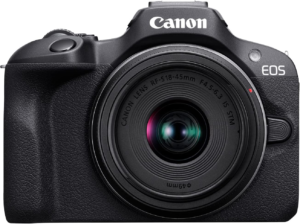
Star rating: 4.7/5
The Canon EOS R100 wins on one thing that matters a lot at this price, it gets you into a modern mirrorless system without making the whole process feel intimidating. It gives you an APS-C sensor, interchangeable lenses, 4K video, and Canon’s familiar color, all in a body that stays small and light. For a first “real” camera, that’s a strong start.
In everyday use, the R100 is straightforward. It has a comfortable grip, solid image quality, and autofocus that feels dependable for family photos, travel, pets, and casual portraits. It doesn’t try to wow you with premium touches, and that’s part of why it works. The camera keeps the basics clear and usable. Based on hands-on impressions from budget camera roundups and reviews like PCMag’s Canon EOS R100 review and TechRadar’s cheap camera guide, that simple approach is exactly why it remains a budget favorite.
Its trade-offs are obvious. The screen doesn’t tilt, touch support is limited or absent depending on the function, and video features feel basic beside newer creator-focused bodies. Still, if your main goal is better still photos than your phone and a clean path into Canon RF lenses, the R100 makes more sense than many slightly cheaper throwaway compacts. You can also compare it with other entry models in our guide to the best mirrorless cameras 2025.
Type Mirrorless | Sensor APS-C CMOS | Resolution 24MP class | Video 4K | Lens Mount Canon RF
Reasons to Buy
- Great starter image quality
- Compact, light body
- Easy to learn
- Access to RF lenses
- Good value entry point
Reasons to Avoid
- Weak video feature set
- Fixed rear screen
- Limited touchscreen use
Who should buy it: This fits you best if you’re moving up from a phone and want your first interchangeable-lens camera without spending a lot. It also makes sense if you want to learn photography slowly and grow into the Canon RF system over time.
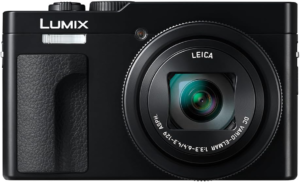
Star rating: 4.5/5
The Panasonic Lumix ZS99 is the pocket superzoom pick in this group, and that alone makes it useful. Its big draw is simple, a 30x optical zoom in a compact body you can actually carry. For trips, sightseeing, zoos, sports from the stands, and daytime travel shots, that zoom range gives you something your phone usually can’t.
This camera isn’t built to beat larger-sensor models on pure image quality. Instead, it wins on versatility. From available 2026 coverage, the ZS99 uses a 20.3MP sensor and a Leica-branded 24mm to 720mm equivalent zoom, which is exactly why it keeps showing up in compact camera conversations. Reviews such as PCMag’s Lumix ZS99 review, TechRadar’s ZS99 review, and CNET’s pocket zoom review all point to the same story, it trades low-light quality for zoom reach and portability.
That trade makes sense for the right buyer. If you shoot mainly in good light and want one camera that covers wide shots, portraits, and faraway subjects without changing lenses, the ZS99 is easy to like. It’s also one of the clearest travel-specific picks here. If travel is your main use case, you can pair this with our breakdown of the best travel cameras 2025.
Type Compact superzoom | Sensor 20.3MP sensor | Lens 24mm to 720mm equivalent | Zoom 30x optical | Video 4K
Reasons to Buy
- Huge zoom range
- Truly pocket-friendly
- Good travel flexibility
- RAW and 4K support
- Easy all-in-one camera
Reasons to Avoid
- Small sensor limits quality
- Modest low-light results
- Older processing tech
Who should buy it: This is a strong match if you travel light and care more about zoom range than creamy background blur or night performance. It also suits you if you don’t want to manage extra lenses but still want more reach than your phone offers.
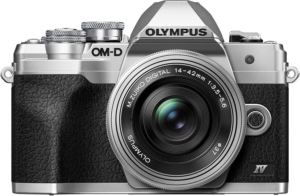
Star rating: 4.8/5
The OM-D E-M10 Mark IV is the smartest all-around buy for most people on this list. It nails the balance that budget shoppers usually want but rarely get, small body, solid stills quality, in-body stabilization, approachable controls, and a lens system with lots of good options. It feels like a camera you can grow with, not just a starter body you’ll replace right away.
Its 20.3MP Micro Four Thirds sensor isn’t the biggest here, but the package matters more than one spec. The built-in stabilization is a real advantage for handheld shooting, especially indoors or at night. The flip-down touchscreen helps with selfies and simple content creation. More importantly, it handles like a camera made for learning. Reviews and market coverage keep backing that up, including Digital Camera World’s take on the E-M10 Mark IV as a smart beginner buy.
The camera isn’t a video-first machine, and autofocus tracking isn’t the class leader for fast action. But as a budget stills camera, it’s one of the most complete picks you can make. It beats many cheap compacts on image quality, and it feels more polished than the least expensive entry mirrorless bodies. If you want a balance of size, control, and room to grow, this is the strongest overall choice in this roundup.
Type Mirrorless | Sensor 20.3MP Micro Four Thirds | Stabilization In-body image stabilization | Video 4K/30p | Screen Flip-down touchscreen
Reasons to Buy
- Excellent value balance
- Very good stabilization
- Small, easy to carry
- Strong lens ecosystem
- Great for still photography
Reasons to Avoid
- Basic video setup
- AF tracking can miss
- Smaller sensor than APS-C
Who should buy it: This works best if you want one budget camera that can handle everyday photography, travel, family use, and hobby shooting without feeling too basic. It’s especially good if you want manual control and system flexibility in a body that still feels compact.
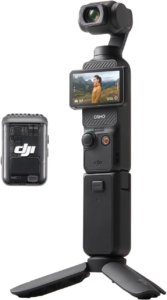
Star rating: 4.6/5
The DJI Osmo Pocket 3 has one superpower, it makes video easy. For solo creators, travel clips, walking shots, and casual daily recording, the built-in gimbal changes the experience. Instead of fighting shaky footage, you get stable video in a tiny body that slips into a jacket pocket.
It also gets help from a 1-inch sensor, which is a big reason the Pocket 3 stands out from cheaper vlog cameras and action cams. You get better low-light performance than many tiny cameras, a rotating touchscreen, subject tracking, and 4K up to 120fps. That mix makes it one of the simplest tools for anyone who cares more about video than stills. TechRadar’s budget camera guide places it among the strongest low-cost vlogging choices, and the broader market keeps rewarding it for ease of use.
The catch is simple. This isn’t your best still-photo camera, and it isn’t rugged like an action cam. If you want a hybrid camera for serious photos and lenses, look elsewhere. But if your main goal is smooth, sharp, good-looking video with almost no learning curve, few cameras in this price band do it better.
Type Gimbal camera | Sensor 1-inch CMOS | Screen Rotating touchscreen | Video Up to 4K/120fps | Best Use Vlogging and travel video
Reasons to Buy
- Superb stabilized video
- Large sensor for class
- Great for solo creators
- Very portable
- Easy tracking tools
Reasons to Avoid
- Limited stills appeal
- Not rugged
- Less flexible than mirrorless
Who should buy it: This suits you if you make travel videos, family clips, or social content and want smooth footage with almost no setup. It’s also a smart fit if a full mirrorless kit feels too big, too slow, or too expensive for the way you actually shoot.
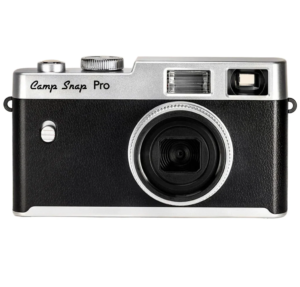
Star rating: 4.2/5
The Camp Snap Pro is the oddball pick here, and that is the point. It strips photography back to the basics and gives you a distraction-free experience that a phone can’t match. If you want a pocket camera that feels fun, light, and low-pressure, this kind of product has real charm.
The biggest appeal is the simple shooting style. Rather than pushing menus, apps, and endless editing, it leans into quick snapshots and everyday moments. That makes it less about specs and more about use. In a market where many cheap cameras are poor value next to phones, a minimal camera can still win because it changes how you shoot. PCMag’s 2026 compact camera roundup also points to renewed interest in small, simple cameras for people trying to spend less time on their phones, and that helps explain why cameras like this still matter. For a wider look at the category, PCMag’s best point-and-shoot cameras for 2026 is a useful reference.
You do need realistic expectations. Image quality won’t compete with a strong phone or a budget mirrorless body. Features and current specs can vary by version, so you should check the latest listing before you buy. Even so, if you want a fun pocket camera that encourages casual shooting instead of endless screen time, the Camp Snap Pro has a clear lane.
Type Pocket digital camera | Lens Fixed lens | Display Minimal or none, depending on version | Focus Simple point-and-shoot operation | Best Use Casual everyday snapshots
Reasons to Buy
- Fun, simple shooting
- Very easy to carry
- Low-distraction design
- Beginner-friendly concept
Reasons to Avoid
- Modest image quality
- Limited manual control
- Specs vary by version
Who should buy it: This makes the most sense if you want photography to feel casual again. It’s a better fit for simple memory-making, family outings, and screen-light shooting than for someone chasing image quality or advanced controls.
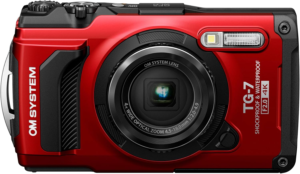
Star rating: 4.4/5
The OM System Tough TG-7 is the camera on this list you buy for conditions, not for bragging rights. If your shots happen near water, mud, sand, snow, or rough trails, this compact does a job your phone and most cheap cameras really shouldn’t be trusted with.
Its rugged design is the whole value story. The TG-7 is made to survive drops, splashes, and underwater use. That alone gives it a practical edge for travel, hiking, family vacations, and outdoor hobbies. It also has a bright lens at the wide end and unusually strong close-up ability for a compact, which adds more range than you might expect from a tough camera. The trade-off is that sensor size and image quality still sit behind larger-sensor mirrorless options.
This is one of those cameras that becomes a smart buy when your environment is hard on gear. If you need something you can toss in a bag, clip to outdoor gear, or bring to the beach without stress, it earns its place fast. It’s less exciting as a pure value camera for everyday indoor shooting, but as a rugged compact, it stays one of the easiest recommendations.
Type Rugged compact | Lens Bright wide-angle zoom | Durability Waterproof and shock-resistant design | Best Use Outdoor and underwater shooting | Extras Strong macro-style close focus
Reasons to Buy
- Tough, travel-ready body
- Waterproof use
- Great for outdoor trips
- Strong close-up shooting
- Simple to use
Reasons to Avoid
- Smaller sensor quality
- Price higher than basics
- Not ideal for low light
Who should buy it: This fits you best if your camera sees rough weather, water, or active travel. It’s also a strong choice for family vacations where durability matters more than chasing the best image quality per dollar.
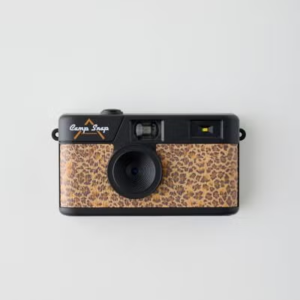
Star rating: 3.9/5
The Camp Snap Screen-Free Digital Camera is the cheapest and simplest option here, and it succeeds because it doesn’t pretend to be more than that. It removes the rear screen and pushes you toward quick, spontaneous photos. That makes it less a tech buy and more a habit-changing camera.
That stripped-back design is what gives it a place in a 2026 budget guide. As noted in recent compact camera coverage, the low-end point-and-shoot market is weak because smartphones are better at pure image quality. A screen-free camera sidesteps that fight. It offers a different experience, not a better sensor. PCMag highlighted strengths such as one-button shooting, no rear display, flash support, good battery life, and included storage, while also being honest that image quality trails a phone.
So this isn’t the best budget digital camera for most people. It is, however, one of the cheapest ways to get a dedicated camera that feels distinct from your phone. That makes it interesting for kids, casual memory-making, events, and anyone who wants fewer distractions and lower stakes.
Type Screen-free compact | Operation One-button style shooting | Display No rear screen | Storage Included memory on some bundles | Best Use Simple everyday snapshots
Reasons to Buy
- Very low cost
- No-screen simplicity
- Encourages candid shooting
- Light and pocketable
Reasons to Avoid
- Weak image quality
- Basic framing experience
- Few advanced features
Who should buy it: This works for you if price is the main factor and you want a fun, low-pressure camera for casual moments. It also makes sense for kids, parties, and unplugged use where convenience matters more than technical quality.
All Recommended Products in Comparison
Here is the fastest way to separate these seven cameras by what matters most.
| Camera | Image Quality | Video Strength | Portability | Best Fit |
|---|---|---|---|---|
| Canon EOS R100 | Very good for the price | Basic 4K, limited creator tools | Light body, small kit | First mirrorless camera |
| Panasonic Lumix ZS99 | Good in daylight, weaker in low light | Solid casual 4K | Pocket-friendly | Travel zoom and vacations |
| Olympus OM-D E-M10 Mark IV | Strong stills, excellent value | Fine for casual 4K | Compact for a system camera | Best all-around budget pick |
| DJI Osmo Pocket 3 | Good for video-first use | Excellent stabilized 4K | Tiny and ultra-easy to carry | Vlogging and social video |
| Camp Snap Pro | Modest, casual snapshot quality | Not the focus | Very easy to pocket | Fun everyday shooting |
| OM System Tough TG-7 | Decent outdoors, built for rough use | Good for travel clips | Compact and rugged | Outdoor and underwater use |
| Camp Snap Screen-Free | Basic | Very limited | Extremely portable | Lowest-cost simple camera |
Best for image quality
The OM-D E-M10 Mark IV and Canon EOS R100 lead here. Both give you larger sensors and a better base for still photography than the compact models. The Olympus feels more rounded, while the Canon is the cheaper path into interchangeable lenses.
Best for video
The DJI Osmo Pocket 3 is the easy winner. It offers the smoothest footage, the easiest framing, and the least hassle for beginners. The Canon and Olympus can record 4K, but they don’t feel as video-focused in day-to-day use.
Best for travel
The Panasonic Lumix ZS99 wins if zoom matters. The OM System Tough TG-7 wins if your trip includes water, hikes, or rough handling. The Pocket 3 is the better pick if the trip is mostly about video clips and social sharing.
Best for pure low cost
The Camp Snap Screen-Free Digital Camera sits at the bottom of the price ladder. The Camp Snap Pro gives you a similar spirit with a little more polish, depending on the current version and price.
What to Look for in a Budget Digital Camera
Sensor size and image quality
This is where many budget buys split fast. Larger sensors, like APS-C and Micro Four Thirds, usually give you better detail, better low-light performance, and more natural background blur than tiny-sensor compacts. If photos matter most, start here. That’s also why broader roundups like PCMag’s best digital cameras of 2026 still favor mirrorless models when image quality is the goal.
Lens flexibility
A fixed-lens compact is simple, but an interchangeable-lens camera gives you room to grow. That matters if you think you’ll want portraits, sports, or better low-light options later. On the other hand, if you just want one travel camera, a built-in zoom like the ZS99 may be more useful.
Size and carry comfort
The best camera is the one you bring. Pocket cameras beat system cameras on convenience, but small mirrorless models often strike a better balance than people expect. If you hate carrying gear, don’t overbuy. A slightly worse camera that fits your routine is usually the smarter choice.
Video needs
A lot of budget cameras say they shoot 4K, but that doesn’t mean they feel good for video. Stabilization, autofocus, a flip screen, mic support, and easy handling matter just as much. If video is your main use, the Pocket 3 makes more sense than many stills-first cameras with a better photo spec sheet.
Build quality and toughness
If your camera will see beach sand, rain, or drops, durability matters more than raw image quality. Most budget models aren’t built for abuse. The TG-7 is the exception here. For everyone else, careful use and a case go a long way.
Battery life and charging
This gets overlooked until your first trip. USB-C charging is convenient. Swap batteries are useful. Tiny cameras often have shorter endurance. If you shoot all day, you’ll care more about this than you think.
System value and future upgrades
A cheap camera body can become expensive if the lens system is weak or costly. Canon’s RF path is appealing, while Micro Four Thirds still offers a wide range of compact lenses. By contrast, simple compacts are mostly self-contained buys. They do one job, and that’s it.
Why Trust OASTHAR?
I’m Shashini Fernando, an associate editor who specializes in consumer tech, cameras, and personal audio gear. I test each product in-house when possible and analyze hundreds of customer reviews from real users across the best products in this digital camera market to build lists that are practical, current, and easy to use.
For this guide, our team focused on the cameras most shoppers actually consider in 2026, not fantasy picks that sit far above a budget range. We compared entry mirrorless models, travel compacts, rugged cameras, simple pocket models, and vlogging-first options. That matters because a good budget camera isn’t one thing. It depends on how you shoot.
You also get a buyer-first approach. We look at trade-offs, not just highlights. So if a camera has weak video, dated controls, or image quality that falls behind a phone, we say it clearly. That way, you can choose the right kind of compromise instead of getting surprised after you buy.
Best Budget Digital Cameras FAQs
What is the best budget digital camera overall?
The Olympus OM-D E-M10 Mark IV is the best overall pick in this guide. It offers the best balance of image quality, portability, stabilization, and long-term value for most beginners.
What is the best cheap mirrorless camera in 2026?
The Canon EOS R100 is the best cheap mirrorless camera for most shoppers. It keeps the price low while still giving you an APS-C sensor and access to Canon’s RF lens system.
Are budget digital cameras better than smartphones?
Some are, and some aren’t. Budget mirrorless cameras usually beat phones on image quality and lens flexibility. Cheap compacts often don’t, unless they offer something your phone can’t, like long zoom, rugged build, or a screen-free shooting style.
Which budget camera is best for travel?
The Panasonic Lumix ZS99 is the best travel pick if you want a pocket camera with real zoom range. If your trip is rough or water-heavy, the OM System Tough TG-7 is the safer travel buy.
Which budget camera is best for video and vlogging?
The DJI Osmo Pocket 3 is the best budget vlogging camera here. Its built-in stabilization, 1-inch sensor, and easy subject tracking make it the strongest option for smooth handheld video.
Final Verdict
If you want the safest all-around choice, get the Olympus OM-D E-M10 Mark IV. It does the most things well, and it gives you room to improve without pushing you into a more expensive tier too fast.
If you want the cheapest solid mirrorless entry, go with the Canon EOS R100. If travel zoom is the main goal, the Panasonic Lumix ZS99 is the obvious fit. If video matters most, the DJI Osmo Pocket 3 is the one to beat. For rough trips, grab the OM System Tough TG-7. And if your main goal is simple, low-pressure shooting on a very small budget, the Camp Snap Pro or Camp Snap Screen-Free Digital Camera can still make sense, as long as you keep your expectations in check.