

The best running watches do more than count miles. They tell you if your pace is drifting, if your recovery is slipping, and if your training is moving in the right direction.
Disclosure: As an independent reviewer, we may receive an affiliate commission on qualifying purchases made through our links. This helps support our research and testing team at OASTHAR. Learn more about our testing process.
That matters because two runners can log the same distance and get very different results. The right watch helps you train with more control, whether you’re building toward a 5K, stacking marathon miles, or trying to make easy runs stay easy.
This guide from the OASTHAR Product Research & Testing Team cuts through the noise and shows you which watch fits your training style, budget, and phone. First, here’s the short version so you can narrow your list fast.
RELATED: The 7 Best Oil Filters for 2026, Tested and Reviewed
Best running watches at a glance
- Best Overall: Garmin Forerunner 970
- Best Premium: Apple Watch Ultra 3
- Best for iPhone Users: Apple Watch Series 11
- Best Lifestyle: Garmin Venu X1
- Best Value: Garmin Forerunner 265
- Best for Beginners: Garmin Forerunner 165
- Best for Maps: Suunto Race 2 GPS
- Best Budget: Coros Pace 4
If you want one watch that can handle daily training, race build-ups, mapping, and long-term use, the Garmin Forerunner 970 is the easiest recommendation.
Learn more about how we test running watches
In our assessment, a good running watch has to do three things well: track clean data, stay comfortable for hours, and make training easier, not more confusing.
Fit and comfort on the wrist
A running watch can be packed with features and still fail if it feels annoying after an hour. So, we focus on weight, case feel, strap comfort, button layout, and how the watch sits during easy runs, workouts, sleep, and all-day wear. A good model disappears on your wrist and stays stable when you sweat.
GPS accuracy and pace stability
For runners, bad GPS is a deal-breaker. We look at how fast a watch locks onto signal, how steady pace data feels, and how reliable route tracking appears in common running conditions. That includes open roads, neighborhood blocks, tree cover, and places where tall buildings can throw off weaker watches.
Battery life and charging habits
Battery life changes how you use a watch. A model that lasts many days can cover training weeks, long runs, and sleep tracking without constant charging. We compare brand claims with real-world expectations and pay close attention to GPS endurance, smartwatch runtime, and whether the charging setup is easy to live with.
Training tools and app experience
Good software matters almost as much as good hardware. We look at workout suggestions, race planning, recovery tools, heart rate trends, HRV, sleep insights, and how cleanly all that data appears in the app. The best watches help you act on your data instead of burying you in charts.
Smart features and daily use
Not every runner wants the same level of smartwatch features. Some want music, calls, notifications, and contactless payments. Others want a simple training tool. So, we judge each watch by how well it balances run tracking with daily convenience, including maps, voice tools, safety features, and phone integration.
Price and customer reviews
Price only means something when you match it with real use. We research major retailer sites such as Walmart, Target, and Currys, along with brand stores and tech outlets. We also analyze hundreds of customer reviews to compare long-term owner feedback with what the product promises on paper.
Star Rating: 4.9/5
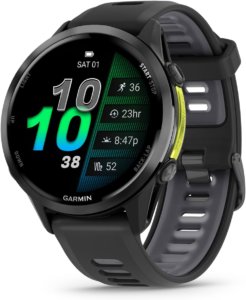
This is the do-it-all pick. The Garmin Forerunner 970 gives you the kind of depth that can carry you from casual race prep to serious training blocks without feeling like a stopgap purchase. If you want one watch that can cover maps, metrics, recovery, and daily wear for years, this is the one that stands out.
The hardware is strong right away. You get a bright AMOLED display that stays easy to read outside, a titanium case, sapphire glass, and an LED flashlight that sounds small until you use it on early runs or dark winter evenings. Battery life is also strong, with up to 15 days in smartwatch mode and around 26 hours with GPS on. That means you can train hard without falling into the nightly charging habit that some rivals demand.
Training is where this watch earns its price. You get full-color maps, multi-band GPS, race planning, Garmin Coach support, running power, cadence, stride length, and training impact data. It also handles triathlon use with automatic switching between swim, bike, and run. On the health side, it packs ECG, heart rate, HRV, sleep, and training readiness into one place. If you want extra reading before you decide, see TechRadar’s Garmin Forerunner 970 review and Tom’s Guide’s long-term take on the Forerunner 970.
Display AMOLED | Battery up to 15 days, 26 hours GPS | Navigation full-color maps, multi-band GPS | Build titanium, sapphire glass | Extras LED flashlight, calls with phone nearby
Reasons to Buy
- Deep training metrics
- Strong battery life
- Bright outdoor screen
- Full-color maps
- Triathlon-ready tools
Reasons to Avoid
- High price
- More watch than some need
- Apple features are weaker
Who should buy it: This fits you best if running is the main event and you want a watch that can grow with your training. It also makes sense if you want Garmin’s richest mix of endurance tools, mapping, and recovery data in one package.
Star Rating: 4.8/5
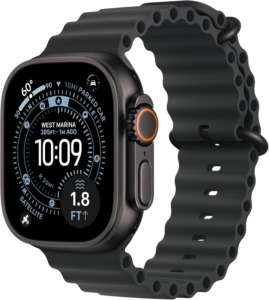
If you live in Apple’s world and want the biggest, toughest, longest-lasting option, this is the clear upgrade. The Apple Watch Ultra 3 takes the usual Apple experience and stretches it into something better suited for long runs, trail days, and people who hate carrying a phone.
Its build is a big part of the appeal. You get a titanium case, sapphire display, 100-meter water resistance, and a large, bright screen that works well outdoors. It also doubles as a flashlight, which is genuinely useful before sunrise or after dark. Battery life is far better than the standard Apple Watch line, with up to 42 hours of normal use and up to 72 hours in low power mode.
For running, it covers the important stuff well. Dual-frequency GPS helps with route accuracy, and you also get heart rate zones, running power, training load, custom workouts, and broad support for cycling, swimming, and other sports. Safety is another strength. Fall detection, crash detection, and satellite emergency texting all add peace of mind when you’re far from home. At the same time, you still keep the Apple basics, including calls, texts, music, apps, and cellular freedom without your phone.
Display large bright screen | Battery up to 42 hours, 72 hours low power | GPS dual-frequency | Durability titanium, sapphire, 100 m water resistance | Smart Features 5G cellular, apps, music
Reasons to Buy
- Best Apple battery
- Tough premium build
- Strong outdoor display
- Great safety tools
- Phone-free flexibility
Reasons to Avoid
- Expensive
- Big on small wrists
- Overkill for casual runners
Who should buy it: This is for you if you use an iPhone and want your running watch to feel like a full outdoor tool, not a slim companion screen. It also fits well if you want Apple’s ecosystem but need better battery and sturdier hardware than the standard Series model offers.
Star Rating: 4.7/5
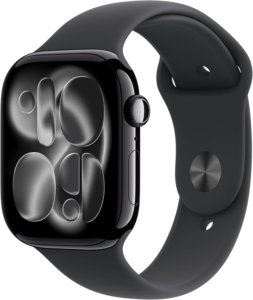
The Apple Watch Series 11 is the easiest answer if you want a running watch that blends into the rest of your day. It’s thinner and lighter than the Ultra, more comfortable to sleep in, and much easier to wear from workouts to work to dinner.
The screen stays bright and clear thanks to the always-on display, so glancing at stats outside feels easy. Health tracking is a big strength here. You get heart rate alerts, ECG, blood oxygen readings, sleep apnea tracking, and hypertension notifications. There’s also a sleep score, which makes nightly data quicker to read. If you don’t want to sort through dense recovery dashboards, that simplicity matters.
For training, it gives you more than enough if you mainly run, cross-train, and stay inside Apple’s app world. Heart rate zones, training load, pacing help, and smart coaching with your iPhone cover the basics well. It’s also water resistant to 50 meters, so pool sessions are on the table. Battery life lands at up to 24 hours, and fast charging gives you about 8 hours of use from 15 minutes, which helps if you wear it to bed and train daily.
Display always-on screen | Battery up to 24 hours | Health ECG, blood oxygen, sleep apnea, sleep score | Workout Tools pacing help, heart rate zones, training load | Connectivity 5G cellular
Reasons to Buy
- Best iPhone integration
- Light, comfortable design
- Strong health features
- Fast charging
- Great app support
Reasons to Avoid
- Battery trails Garmin
- Less rugged than Ultra
- Best features need iPhone
Who should buy it: This works best if you want a daily smartwatch first and a strong running watch second. It’s also a smart pick if comfort, health alerts, and Apple integration matter more to you than ultra-long battery life.
Star Rating: 4.6/5
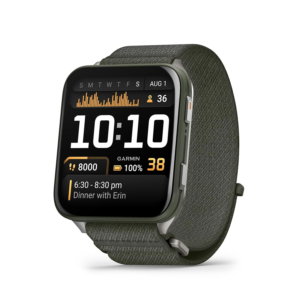
The Garmin Venu X1 is the model for people who want a running watch that still feels like a stylish smartwatch. It’s thin, light, and built around a huge 2-inch AMOLED display, so it looks modern on the wrist and keeps stats easy to read when you’re moving.
This watch leans hard into daily health and everyday wear. It tracks heart rate, sleep, stress, HRV, Body Battery, and Pulse Ox in the background, which gives you a broad picture of how your body is doing without much effort. Battery life is solid for a watch with such a big bright display, with around 8 days in smartwatch mode and up to 16 hours with GPS.
You also get a wide sports range, with support for more than 100 activities. That includes running and strength work, but also golf, with more than 43,000 courses loaded in. Full maps and GPS add substance beyond the lifestyle look, and the built-in speaker and mic let you take calls, use voice commands, or record notes without digging out your phone. If you’re looking at Garmin’s more everyday lineup too, our Garmin Vivoactive 6 review gives you another useful point of reference.
Display 2-inch AMOLED | Battery around 8 days, 16 hours GPS | Health Tracking heart rate, sleep, stress, HRV, Body Battery, Pulse Ox | Sports Modes 100+ | Smart Features speaker, mic, maps, Spotify
Reasons to Buy
- Huge easy-to-read display
- Strong everyday health tracking
- Sleek thin design
- Calls and voice tools
- Wide sports coverage
Reasons to Avoid
- GPS battery is modest
- Not as runner-focused
- Large screen won’t suit everyone
Who should buy it: This is a good match if you want one watch for fitness, work, and daily life, with less of the rugged training-watch look. It also suits you if on-watch calling and a big screen matter as much as running metrics.
Star Rating: 4.5/5
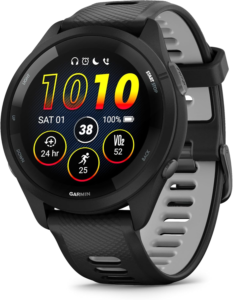
This is the sweet-spot Garmin for a lot of runners. The Forerunner 265 gives you the training features that matter, skips a few luxury extras, and lands in a price range that feels easier to justify than Garmin’s top-end models.
The setup is strong. You get an AMOLED display that stays bright outdoors, plus physical buttons that still matter when your hands are sweaty or the weather gets cold. Battery life is solid too, with up to 13 days in smartwatch mode and about 20 hours with GPS. That gives you enough headroom for regular training and weekend long runs without charger anxiety.
What makes this watch easy to recommend is how well it guides training. The morning report gives you a quick read on sleep, recovery, and how ready your body feels. Daily suggested workouts shift based on your current condition, not a rigid calendar. If you’ve got a race ahead, you can add it in the app and let the watch shape the plan. You also get multi-band GPS, more than 30 sport modes, heart rate, HRV, sleep tracking, safety alerts, Garmin Pay, and smart notifications. If you’re comparing Garmin’s broader midrange options, this Garmin fitness watches comparison helps show where the lifestyle models differ.
Display AMOLED with buttons | Battery up to 13 days, 20 hours GPS | GPS multi-band | Training morning report, adaptive workouts, race planning | Extras Garmin Pay, notifications, safety alerts
Reasons to Buy
- Excellent value
- Smart training guidance
- Multi-band GPS
- Buttons plus touchscreen
- Good battery balance
Reasons to Avoid
- Fewer extras than 970
- Not the cheapest Garmin
- Less lifestyle flair
Who should buy it: This is the pick for you if you’re taking running more seriously but don’t need every premium feature Garmin sells. It makes a lot of sense for half-marathon and marathon prep, especially when you want coaching help without moving into the highest price tier.
Star Rating: 4.3/5
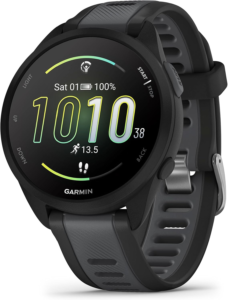
The Forerunner 165 gets the basics right, and that’s why it’s such a smart beginner pick. It feels simple on the wrist, clear on the screen, and helpful in the app, without shoving too much data at you too early.
The watch is light and not bulky, so it’s easy to wear through school, work, and sleep. Its AMOLED screen is bright and colorful, which makes pace and distance quick to read outdoors. Core tracking is exactly what most new runners need, including GPS for pace and distance plus wrist-based heart rate. Battery life is also strong enough to stay low-stress, with up to 11 days in smartwatch mode or around 19 hours with GPS on.
The guidance tools are what set it apart from a plain starter watch. Daily suggested workouts adjust based on how you sleep and recover, which gives you direction without a fixed, intimidating plan. Garmin Coach can help with a 5K or another race goal step by step. You also get more than 25 sports modes, smart notifications, Garmin Pay, safety alerts, and the Garmin Connect app for deeper stats when you’re ready to learn more.
Display AMOLED | Battery up to 11 days, 19 hours GPS | Core Tracking GPS, wrist heart rate | Guidance Garmin Coach, daily suggested workouts | Extras Garmin Pay, safety alerts, 25+ sports modes
Reasons to Buy
- Beginner-friendly setup
- Bright easy screen
- Helpful coaching tools
- Light comfortable fit
- Strong app support
Reasons to Avoid
- Less advanced metrics
- Fewer premium materials
- Smaller ceiling for serious racers
Who should buy it: This fits you if you’re new to running and want a watch that teaches without overwhelming you. It’s also a safe choice if your main goals are consistency, pace awareness, and simple race guidance.
Star Rating: 4.1/5
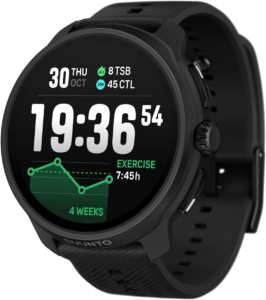
If wrong turns ruin your runs, this watch solves that problem better than most. The Suunto Race 2 GPS puts full offline maps on your wrist, and that changes how confident you feel on trails, travel runs, and long routes in unfamiliar places.
Navigation is the headline feature. You get detailed global offline maps, not basic line guidance, plus 32GB of storage and dual-band GPS for stronger tracking without your phone. The digital crown and touchscreen also make a difference during movement. Zooming, scrolling, and checking your route feels smoother than on many watches that lean too hard on swipe control alone.
The rest of the package is strong too. A large 1.5-inch AMOLED display stays bright outdoors, and battery life is impressive for a mapping-focused model, with 16 days of daily use and around 55 hours in GPS mode. It supports more than 115 sports and tracks heart rate, sleep, recovery, and training load. Climb guidance is a nice touch on hilly routes, because it gives you a better read on effort when the terrain turns against you. For more detail, Tom’s Guide has a useful Suunto Race 2 review, and DC Rainmaker offers a deeper Suunto Race 2 in-depth review.
Display 1.5-inch AMOLED | Battery 16 days, 55 hours GPS | Maps full offline global maps | GPS dual-band | Sports Modes 115+
Reasons to Buy
- Best mapping tools here
- Excellent GPS endurance
- Bright large display
- Strong route confidence
- Climb guidance helps
Reasons to Avoid
- Less polished smart features
- Bigger than some runners want
- App ecosystem is smaller
Who should buy it: This makes the most sense if you run trails, travel often, or like exploring new routes without a phone. It’s also a strong fit if maps matter more to you than app support or smartwatch extras.
Star Rating: 3.9/5
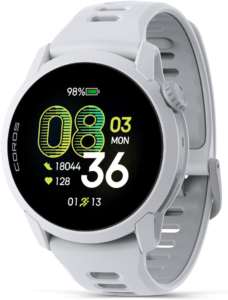
This is the low-cost pick that still feels serious. The Coros Pace 4 skips fluff, keeps the core training pieces intact, and lands at a price that’s much easier to swallow than most flagship running watches.
Its biggest strength is how light it feels. With the nylon band, it weighs about 32 grams, which is light enough that you can wear it all day and sleep in it without much notice. The 1.22-inch AMOLED display is bright, colorful, and easy to read outside thanks to auto brightness. Battery life is also strong for the class, with up to 19 days for daily use and around 41 hours of GPS.
Coros didn’t strip out the useful stuff. You still get tracking for running, biking, swimming, skiing, gym workouts, and more. It covers heart rate, sleep, recovery, HRV, training load, running power, and stride length. Dual-band GPS helps with accuracy, breadcrumb navigation keeps you on course, and the microphone lets you record short voice notes that sync to the app. One owner summed up the vibe well: “Great, straightforward endurance watch. No frills… gives one all the info they need to review the work they put in and its effect on recovery and adaptation.” For more outside perspectives, check TechRadar’s Coros Pace 4 review and Trusted Reviews on the Coros Pace 4.
Weight about 32 g with nylon band | Display 1.22-inch AMOLED | Battery up to 19 days, 41 hours GPS | GPS dual-band with breadcrumb navigation | Tracking HRV, training load, running power
Reasons to Buy
- Great budget value
- Extremely light feel
- Strong battery life
- Useful run metrics
- Simple focused experience
Reasons to Avoid
- Fewer premium extras
- Basic navigation only
- Less polished lifestyle features
Who should buy it: This is a smart buy if you care more about run data than smartwatch bells and whistles. It also fits well if you want a lightweight training watch and need to keep your budget under control.
All recommended running watches compared
This side-by-side view makes the trade-offs easier to spot.
| Watch | Battery and GPS | Training Depth | Smart Features | Best Fit |
|---|---|---|---|---|
| Garmin Forerunner 970 | Up to 15 days, 26 hours GPS, multi-band GPS | Excellent, with race planning, power, cadence, stride, readiness | Good, with calls via phone and voice assistant | Serious runners, triathletes |
| Apple Watch Ultra 3 | Up to 42 hours, 72 low power, dual-frequency GPS | Strong, with zones, power, load, custom workouts | Excellent, with cellular, apps, music, safety | Apple users who want premium freedom |
| Apple Watch Series 11 | Up to 24 hours, strong everyday GPS | Good, with pacing, zones, coaching | Excellent, with Apple ecosystem perks | iPhone users, daily smartwatch fans |
| Garmin Venu X1 | Up to 8 days, 16 hours GPS | Good, but less run-focused than Forerunner | Very good, with speaker, mic, Spotify, maps | Lifestyle-first users |
| Garmin Forerunner 265 | Up to 13 days, 20 hours GPS, multi-band GPS | Very strong, with adaptive training and race prep | Good, with Garmin Pay and notifications | Value-focused runners |
| Garmin Forerunner 165 | Up to 11 days, 19 hours GPS | Good for beginners, with coach tools | Good basic smartwatch tools | New runners |
| Suunto Race 2 GPS | Up to 16 days, 55 hours GPS, dual-band GPS | Strong, with training load and climb guidance | Fair, more fitness-focused | Trail runners, map-heavy users |
| Coros Pace 4 | Up to 19 days, 41 hours GPS, dual-band GPS | Strong for the price, with power and stride data | Fair, simple and focused | Budget buyers, lightweight fans |
The simple takeaway is this: Garmin still leads for pure training depth, Apple leads for smartwatch polish, Suunto leads for maps, and Coros wins on budget efficiency.
What to look for in a running watch
GPS that stays trustworthy
If your pace jumps around or your distance comes up short, the rest of the watch matters less. So, start with GPS quality. Multi-band or dual-band tracking is worth paying for if you run near tall buildings, dense trees, or mixed terrain. If you mostly run open roads, standard GPS can still be enough.
Battery that matches your routine
Think about how you train, not just the number on the box. Daily runners can live with shorter battery life if charging is easy. Marathoners, trail runners, and people who track sleep will usually want several days of battery, plus long GPS runtime. If you hate charging, Garmin, Suunto, and Coros still have the edge.
A screen and controls you can trust while moving
A bright AMOLED screen looks great, and it’s easier to read at a glance. Still, buttons matter too. When your hands are wet, cold, or sweaty, a touchscreen alone can get annoying. The best balance for many runners is a watch that gives you both.
Training tools that help, not distract
Some watches pile on metrics that sound useful but don’t change how you train. Focus on the tools you’ll use often: daily workout suggestions, heart rate zones, sleep tracking, HRV, recovery guidance, race planning, and run metrics like cadence or power. If you want a simpler recovery-first wearable, our Whoop 5.0 review shows how a screenless tracker compares.
Maps, safety, and phone features
Trail runners should care more about offline maps, route guidance, and climb tools. City runners may care more about calls, music, notifications, and payments. There’s no single right answer here. The right mix depends on whether you want a training tool, a smartwatch, or something that sits in the middle.
Comfort and build quality
A running watch spends hours on your wrist every week, so weight and fit matter. Lighter watches often feel better for sleep and long runs. Premium materials like titanium and sapphire add durability, but they also raise the price. If comfort matters most, don’t ignore the simple joy of a lighter case and soft band.
Why Trust OASTHAR?
I’m Shashini Fernando, an associate editor who specializes in smartwatches, fitness trackers, and wearable tech. To build this list, I test products in-house, compare their real training features side by side, and analyze hundreds of customer reviews from real users across the running watch market.
That process matters because spec sheets only tell part of the story. A watch can look great on paper and still miss the mark in daily use. This guide focuses on the best options people can buy in 2026, based on a mix of hands-on evaluation, category knowledge, and broad user feedback.
Best Running Watches FAQs
What is the best running watch overall?
The Garmin Forerunner 970 is the best overall pick. It offers the strongest mix of battery life, advanced training tools, maps, health tracking, and long-term value.
Is an Apple Watch good enough for serious running?
Yes, especially the Apple Watch Ultra 3. The Series 11 works well for many runners too, but Garmin still gives you deeper training tools and longer battery life.
Do beginners need multi-band GPS?
Not always. If you’re new to running and mostly train in open areas, a watch like the Garmin Forerunner 165 can do the job well. Multi-band GPS matters more in cities, wooded routes, and race-focused training.
Which running watch has the best battery life here?
For everyday battery among the picks here, the Coros Pace 4 and Suunto Race 2 GPS stand out. For Apple users, the Ultra 3 is the clear battery winner.
Should you choose a running watch or a smartwatch first?
Pick a running watch first if training data and battery life matter most. Pick a smartwatch first if you care more about apps, calling, music, and daily phone features.
Final verdict
If you want the safest long-term pick, go with the Garmin Forerunner 970. It’s the most complete watch here, and it gives you enough headroom that you probably won’t outgrow it soon.
If you use an iPhone, the choice is simpler. Pick the Apple Watch Ultra 3 for the best battery and durability, or the Apple Watch Series 11 if you want a lighter, more everyday-friendly option.
For tighter budgets, the Garmin Forerunner 265 is the value play, the Forerunner 165 is the beginner-friendly pick, and the Coros Pace 4 is the budget buy that still feels built for real runners. The right watch isn’t the one with the longest feature list. It’s the one you’ll trust every time you head out the door.