

Picking from the best air compressors gets tricky fast. One model can run a nailer all afternoon, while another is only useful for topping off a tire. If you buy the wrong one, you end up waiting on pressure, dealing with noise, or carrying a tool that doesn’t fit your job.
Disclosure: As an independent reviewer, we may receive an affiliate commission on qualifying purchases made through our links. This helps support our research and testing team at OASTHAR. Learn more about our testing process.
That gets even harder because this category now includes two very different tools, full-size compressors for air tools and compact inflators for cars, bikes, and emergency kits. The right choice depends on how you work, where you store it, and how much air you need.
The OASTHAR Product Research & Testing Team narrowed the field to seven standout picks for 2026. Start with the quick list below, then use the full reviews to find the one that fits you best.]
RELATED: The 8 Best Cordless Hedge Trimmers for 2026: Expert-Reviewed, Compared, and Ranked
Best air compressors at a glance
- Best Overall: Makita MAC2400
- Best Professional: DEWALT Tire Inflator Portable
- Best DIY: Craftsman Air Compressor
- Best Compact: Airmoto Tire Inflator Portable
- Best Budget: AstroAI Tire Inflator
- Best High-Pressure: DEWALT Pancake
- Best Quiet: California Air Tools 8010
Learn More About How We Test Air Compressors
In our assessment, the best picks only stand out after you compare specs, day-to-day use, and real owner feedback. So we research major retailers, study brand materials, and apply the same in-house review standards to every product.
Power and Air Delivery
First, we look at how much usable air a compressor gives you. For full-size models, that means checking CFM and how well the machine supports common tools like nailers, sprayers, and grinders. For inflators, we focus on how quickly and steadily they reach target pressure. Paper specs matter, but real-world pace matters more.
Pressure and Recovery Time
Next, we compare max PSI and how fast the unit gets back to work after pressure drops. A high PSI number looks great on the box, but it doesn’t always mean smooth tool use. We rate recovery higher when a compressor keeps your work moving instead of forcing you to stop and wait.
Noise and Daily Comfort
Noise can make or break the experience, especially in a home garage, apartment, or shared workspace. We compare sound levels, vibration, and how stable the machine feels when running. Quiet models get extra credit when they stay calm without giving up too much output, because comfort matters more than many shoppers expect.
Portability and Storage
Some models live in a workshop. Others need to ride in your trunk or move around a job site. Because of that, we check weight, handles, wheels, cord length, hose reach, and overall footprint. A tool that performs well but is awkward to store or carry loses ground fast.
Build Quality and Maintenance
During testing, we found that the small details often tell you how long a machine will last. We compare pump design, tank construction, protective framing, couplers, controls, and whether the system is oil-free or oil-lubricated. We also note how easy routine care feels, because low hassle matters if you use it often.
Price and Customer Reviews
We don’t pick products from specs alone. We research major stores such as Amazon, Walmart, Target, and Currys, then compare those findings with our own review process. We also read hundreds of customer reviews to see how each model holds up over time, how often issues repeat, and whether the real-world experience matches the promise.
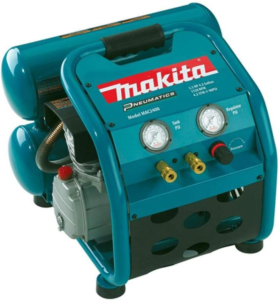
Star rating: 4.9/5
The Makita MAC2400 wins on one thing that matters most, balanced strength. It gives you real airflow for harder shop jobs, yet it still feels more controlled and refined than many heavy-duty compressors. If you need one machine that can handle demanding tools without acting temperamental, this is the one that stands out.
Its 2.5-horsepower motor produces 4.2 CFM at 90 PSI, which puts it in a much more serious class than light-duty home units. The big-bore cylinder and piston help it recover faster, so your work doesn’t stall every few minutes. Makita also uses a cast iron pump and a roll-cage frame, which gives the whole machine a tougher, jobsite-ready feel. You can check the official specs on the Makita MAC2400 product page.
The lower 1,730 RPM motor speed helps with noise, vibration, and long-term wear. That matters if you use air tools often, especially impact tools, grinders, and sprayers. This isn’t the smallest or cheapest option here, but it does the broadest range of work with the fewest compromises.
“I’ve been using the Makita MAC2400 for a few years in my home garage, mainly for automotive work… this compressor never let me down.”
Motor: 2.5 HP | Airflow: 4.2 CFM at 90 PSI | Pump: Oil-lubricated cast iron | Motor Speed: 1,730 RPM | Build: Roll-cage frame
Reasons to Buy
- Strong airflow output
- Fast recovery time
- Durable cast iron pump
- Smoother low-RPM operation
- Built for heavy use
Reasons to Avoid
- Heavier than compact picks
- Oil pump needs upkeep
- More than casual users need
Who should buy it: This fits you best if your garage work goes beyond quick tire fills and trim jobs. If you use impact tools, grinders, or sprayers and want one machine that can keep up, this is the safest long-term pick.
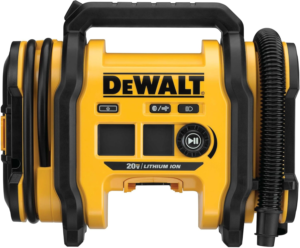
Star rating: 4.8/5
This DEWALT inflator gets its edge from flexibility. You can run it with a 20V battery, a 12V DC vehicle plug, or 110V AC power, which makes it one of the easiest models here to use anywhere. That range matters when you move between your home, your garage, and the side of the road.
The high-pressure mode with auto shut-off keeps things simple. You set the target pressure, start the inflator, and let it stop on its own. That feels more professional than cheap inflators that need constant watching. DEWALT also adds heavy-duty rubber feet for stability, a threaded chuck for a more secure fit, and onboard storage for accessories so small parts don’t disappear.
This model also does more than tires. High-volume inflation and deflation modes make it useful for larger inflatables and air mattresses, which gives you more value if you want one portable tool for many tasks. It won’t replace a full-size shop compressor, but for mobile inflation work, it’s the most complete pick here.
Power Options: 20V battery, 12V DC, 110V AC | Auto Shut-Off: Yes | Modes: High-pressure and high-volume | Chuck: Threaded | Extras: LED light, onboard storage
Reasons to Buy
- Three power choices
- Accurate auto shut-off
- Stable during use
- Secure threaded chuck
- Handles inflatables too
Reasons to Avoid
- Not for air tools
- Battery sold separately sometimes
- Bulkier than micro inflators
Who should buy it: This is a smart fit if you want one inflator that can live in the garage but still travel with you. It also makes sense if you value setup options, because you won’t be stuck with one power source when you need air fast.
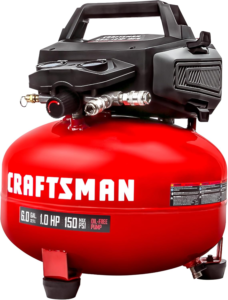
Star rating: 4.7/5
The Craftsman Air Compressor hits a sweet spot for home projects and light tool work. It has enough output for common pneumatic jobs, but it stays light and simple enough for beginners. If you want a no-drama compressor for weekend work, this one makes a strong case.
It reaches 150 PSI and delivers 2.6 SCFM at 90 PSI, which is enough for jobs like nailing, sanding, spraying, woodworking, framing, and basic tire inflation. The pancake tank keeps the unit planted while you work, and the oil-free pump cuts maintenance. You also get dual quick couplers, which help when you’re switching tools or working with a second user.
At 30.8 pounds, it’s manageable to carry around a garage or driveway. That’s a big plus if you don’t want a large shop compressor taking over your space. Its output still limits what you can do with more air-hungry tools, but for most DIY users, this is the easy recommendation because it covers a lot without asking much from you.
Max Pressure: 150 PSI | Airflow: 2.6 SCFM at 90 PSI | Weight: 30.8 lbs | Pump: Oil-free | Couplers: Dual quick couplers
Reasons to Buy
- Great DIY balance
- Easy to carry
- Stable pancake tank
- Low-maintenance pump
- Runs two tools
Reasons to Avoid
- Limited for heavy tools
- Basic feature set
- Louder than quiet picks
Who should buy it: If your projects include trim work, framing, hobby woodworking, and basic garage jobs, this model fits well. It also suits first-time buyers who want solid tool performance without stepping up to a larger compressor.
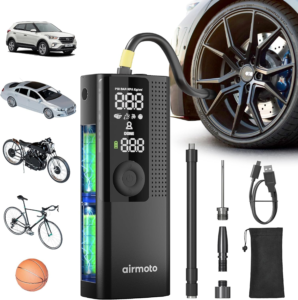
Star rating: 4.5/5
The Airmoto Tire Inflator Portable is all about grab-and-go convenience. It skips cords during use, fits in tight storage spaces, and feels built for the kind of moments when you need air now, not after digging through a garage shelf.
Its cordless design is the main draw, but the ease of use matters just as much. You set your target pressure, start the inflator, and let the auto shut-off handle the rest. It supports up to 120 PSI, and the large LCD screen is easy to read in a hurry. The built-in LED light helps during night use, while the 2,000 mAh battery gives you enough charge for multiple top-offs before you need to recharge.
This is not the fastest or most powerful inflator on the market. However, it nails the small-size, always-ready job better than bigger units. If you want a second opinion on its real-world appeal, Popular Mechanics took a close look in this Airmoto portable air compressor review.
Power: Rechargeable battery | Max Pressure: 120 PSI | Battery: 2,000 mAh | Display: Large LCD | Extras: LED light, multiple attachments
Reasons to Buy
- True cordless use
- Tiny storage footprint
- Simple preset controls
- Auto shut-off included
- Works on sports gear
Reasons to Avoid
- Less power than larger inflators
- Battery needs recharging
- Better for top-offs
Who should buy it: This one works best if trunk space is tight and convenience comes first. It’s also a good match for bikes, motorcycles, sports balls, and routine tire checks when you don’t want to drag out a bigger machine.
Star rating: 4.4/5
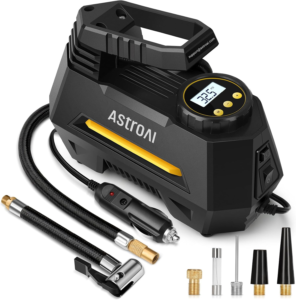
The AstroAI Tire Inflator earns its spot by being simple, compact, and dependable for car owners. It doesn’t try to be a shop tool. Instead, it focuses on the job most people need, putting air in tires without hassle.
Because it runs from a 12V DC car outlet, you can plug it into your vehicle and use it almost anywhere. The smart preset function lets you choose your target pressure, and the unit shuts off once it gets there. That makes it much easier to use than old-school inflators that force you to watch the gauge the whole time. The digital display is clear, the controls are easy to learn, and the 9.8-foot cord gives you enough reach around most vehicles.
AstroAI also adds a built-in LED light and its Tough Ultra internal design for better durability. Tom’s Guide had a similar take in its AstroAI air compressor review, praising the portable design and easy interface. If you want an affordable inflator to keep in the trunk, this is the budget pick that still feels polished.
“This little pump’s great… the best feature is that you can set the pressure you want and it goes to that pressure and shuts off so I don’t have to babysit the pump.”
Power: 12V DC car outlet | Cord Length: 9.8 ft | Display: Digital with backlight | Auto Shut-Off: Yes | Extras: LED light, Tough Ultra design
Reasons to Buy
- Easy car plug-in
- Preset pressure control
- Compact trunk size
- Clear digital display
- Strong value
Reasons to Avoid
- Corded use only
- Best for cars
- Slower than pro units
Who should buy it: If you want a low-cost inflator for regular car care, this is the practical choice. It suits drivers who care more about compact storage and easy presets than high-end build or multi-power options.
Star rating: 4.3/5
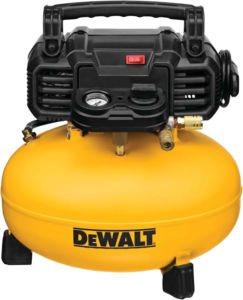
The DEWALT Pancake stands out for strong pressure and easy day-to-day use. Its headline number, 165 PSI max pressure, gives it longer run time and makes it feel ready for steady, repeated tasks. That higher pressure is its main advantage over many similar pancake models.
It also delivers 2.6 SCFM at 90 PSI, which helps recovery stay quick enough for many common tools. The motor is designed for easier starts in colder weather or when you’re using an extension cord, and that’s one of those features you appreciate the first time a cheap compressor fails to kick on. Dual couplers let you run two tools, while the high-flow regulator and couplers help tools feel more responsive.
The 6-gallon pancake tank keeps it stable, and the 30-pound build makes transport easy. Small details matter here too, including a ball drain valve and protected controls. If your focus is higher pressure from a portable compressor, this DEWALT has a clear edge. Still, it’s louder than the quietest pick and less refined than the Makita overall.
Max Pressure: 165 PSI | Airflow: 2.6 SCFM at 90 PSI | Tank Size: 6 gallons | Weight: 30 lbs | Couplers: Dual
Reasons to Buy
- High 165 PSI cap
- Good recovery speed
- Easy cold starts
- Dual tool hookups
- Portable pancake build
Reasons to Avoid
- Louder than quiet models
- Basic for pro shops
- No wheels included
Who should buy it: This makes sense if you want a small compressor with a little more pressure on tap. It’s a good fit for trim work, punch-list jobs, and users who want proven portability without jumping to a larger tank compressor.
Star rating: 4.2/5
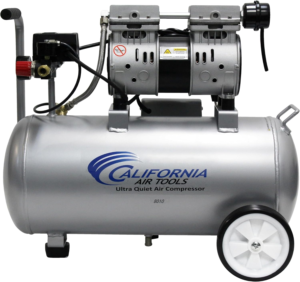
The California Air Tools 8010 is the pick for one clear reason, it keeps the noise down. If loud compressors drive you crazy, this one feels like relief. At 60 dB, it’s much easier to live with in a garage, apartment setting, or shared workspace.
That quiet operation doesn’t come at the cost of basic usefulness. You get a 1.0 HP motor, a dual-piston pump, 3.10 CFM at 40 PSI, and 2.20 CFM at 90 PSI. Those numbers work well for lighter nailing and similar tasks. The lower 1,680 RPM motor speed also helps reduce vibration and wear, so the machine runs smoother over time. It uses an oil-free design, which cuts maintenance and keeps ownership simple. If you want another look at how it handles daily use, this California Air Tools 8010 review covers the quiet, low-hassle appeal well.
The 8-gallon steel tank fills quickly, and the unit rolls on wheels despite weighing 48 pounds. That said, this isn’t the right choice if you need higher airflow for tougher tools. It works best when quiet comfort ranks ahead of maximum output.
Noise Level: 60 dB | Motor: 1.0 HP | Airflow: 3.10 CFM at 40 PSI, 2.20 CFM at 90 PSI | Tank Size: 8 gallons | Weight: 48 lbs
Reasons to Buy
- Very quiet running
- Low-vibration feel
- Oil-free pump
- Wheels for transport
- Good indoor fit
Reasons to Avoid
- Limited heavy-tool output
- Heavier than expected
- Slower than top performers
Who should buy it: This is the right match if noise control shapes your buying decision. It works well for home users, hobby spaces, and anyone who wants a calmer compressor for lighter tool use.
All Recommended Products in Comparison
This side-by-side view makes the differences easier to spot before you buy.
| Product | Type | Pressure / Output | Portability / Noise | Best Fit |
|---|---|---|---|---|
| Makita MAC2400 | Full-size compressor | 2.5 HP, 4.2 CFM at 90 PSI | Heavy-duty build, lower 1,730 RPM | Serious garage and shop work |
| DEWALT Tire Inflator Portable | Portable inflator | Multi-power inflator with auto shut-off | Battery, AC, or car power, easy to move | Pro-style tire and inflatable use |
| Craftsman Air Compressor | Pancake compressor | 150 PSI, 2.6 SCFM at 90 PSI | 30.8 lbs, easy carry | DIY tools and home projects |
| Airmoto Tire Inflator Portable | Cordless inflator | Up to 120 PSI | Very compact, battery-powered | Glove box convenience |
| AstroAI Tire Inflator | 12V inflator | Car-powered preset inflation | Small, corded, trunk-friendly | Budget car tire care |
| DEWALT Pancake | Pancake compressor | 165 PSI, 2.6 SCFM at 90 PSI | 30 lbs, portable but louder | High-pressure portable work |
| California Air Tools 8010 | Quiet compressor | 1 HP, 2.20 CFM at 90 PSI | 60 dB, wheeled, 48 lbs | Quiet indoor or shared spaces |
The fast takeaway is simple. Choose a tank compressor if you run tools, and choose a portable inflator if you mainly handle tires and inflatables. From there, your best match depends on whether you value power, noise control, or portability more.
What to Look for in an Air Compressor
Match the Tool to the Job
Start with the work you do most. If you run nailers, staplers, or light trim tools, a smaller pancake compressor often works fine. If you use grinders, impact tools, or paint sprayers, step up to a model with stronger airflow. If you only need tire care, a dedicated inflator makes more sense than a shop compressor.
Know the Difference Between PSI and CFM
PSI tells you pressure. CFM tells you how much air the tool can keep supplying. For tool users, CFM usually matters more. A compressor can have a high PSI rating and still struggle if its airflow is too low. That is why many buyers get disappointed. They shop by the big number and miss the one that affects real work.
Think About Noise Before You Buy
A loud compressor gets old fast, especially in small spaces. If you work indoors, in a townhouse garage, or near other people, pay close attention to noise ratings. Quiet models can change the whole experience. Roundups like This Old House’s air compressor guide show how much noise and footprint affect daily usability.
Consider Tank Size and Portability
Bigger tanks help when you need longer tool run time, but they also add weight and take up room. Pancake compressors usually balance storage and output well for home users. Inflators flip that equation completely. They give up tank capacity in exchange for light weight and easy storage. For many drivers, that trade makes sense.
Pick the Right Power Setup
Full-size compressors usually plug into wall power. Inflators can run from a car outlet, a battery, or both. That choice matters more than it seems. If your inflator lives in the trunk, 12V power is easy. If you want more freedom around the house, a battery or AC option helps. Guides like Tom’s Guide’s best tire inflators roundup and MotorTrend’s tested portable tire inflators show why this feature changes everyday use.
Check Maintenance and Build Quality
Oil-free pumps are easier for beginners because they need less upkeep. Oil-lubricated systems often suit heavier, long-term use better, but they ask more from you. Also look at frames, handles, wheels, control protection, and drain valve design. These small parts often separate a tool you enjoy using from one you avoid.
Don’t Ignore Storage and Reach
This part gets overlooked. A compact inflator with a short cord or awkward hose can still be annoying. A compressor with a good handle, solid wheels, and an easy drain feels better every time you move it. Before you buy, think about where the unit will live and how often you need to carry or stash it.
Why Trust OASTHAR?
I’m Shashini Fernando, an associate editor who specializes in consumer tech, smart home gear, and everyday accessories that people rely on at home and on the go. For guides like this, I test products in-house, compare the core specs that matter, and analyze hundreds of customer reviews from real users across the air compressor market.
That mix helps you get a list built on more than a single afternoon of use. The goal is simple, show you the best of the best products people can buy in 2026, while also being honest about trade-offs, weak spots, and who each pick is really for.
Best Air Compressors FAQs
What is the best air compressor overall?
The Makita MAC2400 is the best overall pick in this guide. It offers the strongest mix of airflow, recovery speed, durability, and long-term usability.
What size air compressor do you need for home use?
For most home users, a small pancake compressor works well for nailers, trim jobs, and light garage tasks. If you only fill tires, a portable inflator is usually the better and cheaper choice.
What’s more important, PSI or CFM?
If you use air tools, CFM matters more in most cases. PSI tells you peak pressure, but CFM tells you whether the compressor can keep feeding the tool without slowing down.
Are quiet air compressors less powerful?
Sometimes, yes. Quiet models often trade some raw output for comfort and lower motor speed. That said, they can still work great for lighter jobs, especially in shared spaces or home garages.
Is a portable tire inflator enough for air tools?
No. A tire inflator is built for tires, sports gear, and inflatables. Air tools need a true compressor with enough airflow and a tank that can support repeated use.
Final Verdict
If you want the best mix of power, durability, and long-term value, go with the Makita MAC2400. It’s the safest pick when your jobs are varied and your tools demand more than light-duty output.
If your needs are simpler, narrow the field fast. Choose the Craftsman Air Compressor for DIY work, the DEWALT Tire Inflator Portable for the most flexible inflator, the AstroAI Tire Inflator for budget car care, and the California Air Tools 8010 if quiet operation matters most.
The right pick saves you from the exact problems that make this category frustrating, weak airflow, slow recovery, and too much noise. Buy for the job you do most, and you’ll feel the difference every time you plug in or air up.