

If you’re searching for the best shoes for plantar fasciitis in 2026, you’re probably tired of that sharp heel pain that hits with your first steps in the morning. The right pair can’t erase the condition on its own, but it can make walking, standing, and getting through the day feel a lot more manageable.
Disclosure: As an independent reviewer, we may receive an affiliate commission on qualifying purchases made through our links. This helps support our research and testing team at OASTHAR. Learn more about our testing process.
This guide keeps things simple. You’ll see the shoes that stood out for stability, cushioning, walking, workouts, long shifts, and budget-friendly value. Just as important, you’ll see where each one falls short, because the wrong kind of support can make a bad foot day even worse.
The list below is built for real shopping decisions, not guesswork. If your heel hurts after long hours on your feet, or your arch feels strained by the end of the day, these picks give you clear places to start. The best plantar fasciitis shoes usually do three things well, they cushion the heel, support the arch, and keep your stride from wobbling.
RELATED: The 8 Best Hiking Backpacks for 2026, Tested and Reviewed
Best shoes at a glance
- Best Overall: Brooks Adrenaline GTS 24
- Best for Stability: ASICS GEL-KAYANO 32
- Best Clogs for Women: Dansko XP 2.0 Clogs
- Best for Walking: WalkHero Arch Support Sneakers
- Best for Workouts: Kuru Men’s TRIPLE MAX Ion
- Best Slip-On Shoes: Dr. Scholl’s Feel Well
- Best Premium Cushioning: HOKA Bondi 9
- Best Budget: ASICS Gel-Excite 11
Learn More About How We Test Plantar Fasciitis Shoes
In our assessment, you need more than soft foam to call a shoe plantar fasciitis-friendly. We research major stores, compare brand claims, and study hundreds of user reports to see how each pair holds up in real life.
Fit and Foot Shape
First, we look at fit because even a supportive shoe fails if it pinches your toes or lets your heel slide around. We check toe-box room, collar padding, heel hold, width options, and whether the shoe tends to fit true to size. That matters more than flashy foam names when your foot is already irritated.
Heel Cushioning and Shock Control
Next, we focus on heel pain relief. That means checking how much protection sits under the heel, how the foam compresses, and whether the shoe adds extra heel cushioning or a shaped heel cup. For plantar fasciitis, soft isn’t enough on its own. The shoe also needs to keep impact from feeling harsh step after step.
Arch Support and Stability
Then we test how well a shoe supports the arch and controls inward rolling. Some people need strong guidance, while others do better in a neutral shoe with a broad, stable base. We look for features like firm sidewalls, structured heel counters, supportive insoles, and platforms that don’t twist too easily under pressure.
Upper Comfort and Long-Shift Wear
A shoe can feel great for ten minutes and annoying by lunch. So we pay close attention to upper comfort, breathability, tongue padding, and how the shoe behaves during long walks or long shifts. If a pair rubs the Achilles, traps too much heat, or feels sloppy on the foot, it loses ground fast.
Outsole Grip and Daily Durability
Traction matters more than many buyers expect. We check outsole patterns, grip on smooth floors, and whether the bottom feels stable on pavement, tile, or slightly wet ground. We also look at how durable the materials appear, because plantar fasciitis shoes often become daily-wear shoes, not occasional pairs.
Price and Customer Reviews
Finally, we compare value. We research major platforms such as Amazon, Walmart, Target, and Currys, then read large sets of customer reviews to spot patterns. We also compare what users say with broader wear-test coverage, including guides like RunRepeat’s plantar fasciitis sneaker roundup. That gives you a more rounded view than one tester’s opinion alone.
Star Rating: 5.0/5
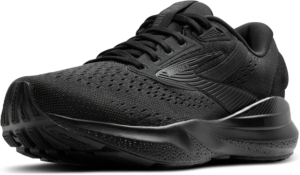
This is the easy top pick because it gets the balance right. The Brooks Adrenaline GTS 24 gives you stability, cushioning, and daily comfort without feeling mushy or overly stiff. If your plantar fasciitis tends to flare when your foot rolls inward, this pair does a very good job of calming things down.
The midsole uses nitrogen-infused DNA Loft v3 foam, so each step feels soft but still a bit lively. That matters when you’re trying to reduce heel strain without sinking into the shoe. Brooks also adds its GuideRails Holistic Support System, which acts like gentle side barriers that help keep your gait aligned. Instead of forcing your foot into an awkward motion, it nudges things back into line.
Up top, the air mesh upper gives you stretch and breathability, while the padded heel counter supports the ankle and keeps the Achilles from feeling rubbed raw. The outsole uses durable rubber in the spots that take the most abuse, and the flex grooves at the forefoot help the shoe move naturally. If you want current fit details, colors, and width options, Brooks lists them on the Adrenaline GTS 24 product page.
Support: GuideRails stability system | Midsole: DNA Loft v3 foam | Upper: Air mesh | Outsole: Durable rubber with flex grooves | Best use: Walking, daily wear, easy runs
Reasons to Buy
- Balanced stability feel
- Cushioned, not squishy
- Strong heel support
- Breathable upper
- Great daily versatility
Reasons to Avoid
- Not a max-cushion feel
- Structured ride may surprise
Who should buy it: This fits you best if your heel pain comes with overpronation, long walks, or daily standing. It also makes sense if you want one pair that can handle errands, workdays, and light runs without feeling specialized or fussy.
Star Rating: 4.9/5
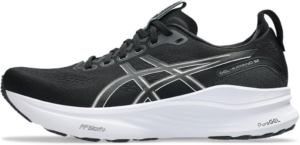
If your foot tends to collapse inward and your arch feels tired fast, this shoe gives you more control than most. The ASICS GEL-KAYANO 32 is built for steady movement, and that makes it a strong match for plantar fasciitis when instability is part of the problem.
The shoe uses FF Blast Plus foam in the midsole, which gives you a softer ride than older, firmer stability shoes. ASICS also adds rearfoot Pure GEL, described as about 65 percent softer than standard GEL, so heel strikes feel less harsh. The big story, though, is the 4D Guidance System. It adapts under pressure and helps your stride stay centered instead of wobbling side to side.
The engineered mesh upper feels lighter than older support shoes, and the padded heel and tongue make entry easy. A knit heel tab helps with pull-on convenience. Underfoot, ASICS Grip Rubber gives dependable traction on concrete, asphalt, and slightly wet ground. If you want the latest model details from the brand, the ASICS GEL-KAYANO line page is the best place to check.
Support: 4D Guidance System | Midsole: FF Blast Plus foam | Heel tech: Rearfoot Pure GEL | Upper: Engineered mesh | Best use: Stability walking and running
Reasons to Buy
- Excellent gait control
- Soft heel landing
- Good wet-surface grip
- Comfortable upper
- Easy on and off
Reasons to Avoid
- Support can feel strong
- Neutral runners may prefer less
Who should buy it: This works well if you feel your ankle roll inward while walking or running. It’s also a smart choice when you want strong arch support without giving up modern cushioning.
Star Rating: 4.7/5
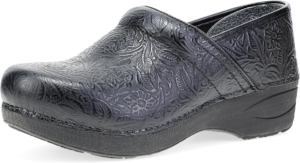
This is the work-shift specialist of the group. The Dansko XP 2.0 is built for hours on hard floors, and that makes it especially appealing if your heel pain gets worse during long days in healthcare, hospitality, or service work.
Compared with older Dansko styles, this version feels lighter and easier to wear. You still get the brand’s trademark structured support, but the shoe is less clunky than you might expect. The toe box is roomy, so your toes aren’t jammed together, and the padded instep collar helps prevent pressure across the top of your foot. A TPU heel counter adds more stability at the back, which is helpful when your plantar fascia is already irritated.
Inside, the EVA midsole absorbs shock, while the dual-density PU footbed combines Natural Arch Technology with memory foam. That mix gives you firmer support underneath and a softer surface on top. If you use custom orthotics, you can remove the footbed and drop your own in. The outsole is slip-resistant on dry, wet, and oily floors, and the 1.75-inch heel gives you a bit of lift without feeling shaky.
Midsole: EVA | Footbed: Dual-density PU with memory foam | Support: Natural Arch Technology | Outsole: Slip-resistant | Best use: Long standing shifts
Reasons to Buy
- Built for long shifts
- Strong arch support
- Roomy toe box
- Slip-resistant outsole
- Orthotic-friendly footbed
Reasons to Avoid
- Clog style is specific
- Less sneaker-like feel
Who should buy it: This pair suits you if your day means hours of standing and very little sitting. It makes the most sense for nurses, clinic staff, and anyone who wants work-first support instead of a sporty sneaker feel.
Star Rating: 4.5/5
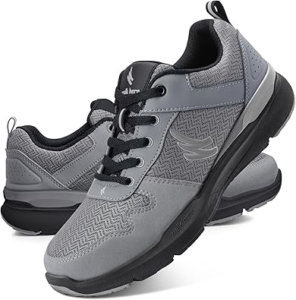
These are the practical walkers of the list. The WalkHero Arch Support Sneakers focus on alignment, pressure spread, and comfort over long hours, which is exactly what many people with plantar fasciitis need most.
The removable insole is designed to support the arch and help keep your foot in a more stable position. That can reduce the strain that builds when you spend the day moving from sidewalk to store to kitchen floor. The rounded, roomy toe box also helps, because your toes get space to spread naturally instead of fighting for room. Around the heel, the padding feels protective and steady, and that extra security can also help if your Achilles gets irritated.
The midsole uses durable EVA to soften impact, while the rubber outsole adds grip on pavement and smoother indoor surfaces. Up top, the breathable mesh lining helps keep the shoe from feeling stuffy during long wear. The insole removes easily for cleaning, and some bundles include an extra set of arch-support inserts. If you want a walking shoe that stays simple and doesn’t chase premium pricing, this one makes sense.
Insole: Removable arch-support insert | Midsole: EVA | Upper: Breathable mesh | Outsole: Rubber traction pattern | Best use: Walking and all-day standing
Reasons to Buy
- Strong walking support
- Roomy toe shape
- Easy-clean insole
- Good everyday grip
- Good value feel
Reasons to Avoid
- Less premium materials
- Styling is basic
Who should buy it: This is a good fit if most of your pain shows up during long walks, errands, or hours on your feet at home or work. It’s also a sensible option when you want arch support first and brand prestige second.
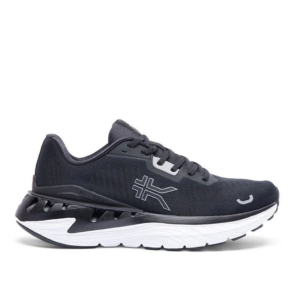
Star Rating: 4.4/5
This shoe stands out because it stays firm where many pain-relief shoes get too soft. The Kuru Men’s TRIPLE MAX Ion is the workout pick for people who still want to train, lift, or stay active without aggravating the heel.
The bottom is intentionally stiff through the middle, and that matters. A firmer platform can help with shock handling and stop the foot from folding too much during gym movements, quick walks, and long work shifts. The heel counter is high and structured, which adds support at the back of the foot and can also feel helpful if tight calves or Achilles tension tend to tag along with your plantar fasciitis.
In front, the toe box is soft and non-restrictive, so you’re less likely to feel squeezed if you deal with bunions or hammer toes. The insole provides solid arch support, but you can remove it if you wear custom orthotics. An anti-slip outsole adds confidence on slick floors, which makes this shoe useful for gym sessions, hospital settings, and other hard-surface environments.
Platform: Stiff underfoot design | Heel support: Structured heel counter | Insole: Removable arch-support insert | Traction: Anti-slip outsole | Best use: Gym days and long shifts
Reasons to Buy
- Stable for training
- Firm supportive base
- Orthotic-friendly design
- Soft toe box
- Good slip resistance
Reasons to Avoid
- Firmer ride feel
- Less flexible midfoot
Who should buy it: This shoe makes sense if you still want to work out while managing heel pain. It also fits well if your job mixes standing, quick movement, and slippery floors, where a soft running shoe may feel too loose or unstable.
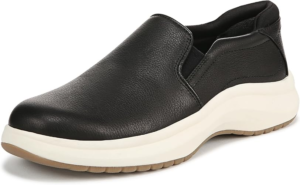
Star Rating: 4.3/5
This is the convenience pick that still takes support seriously. The Dr. Scholl’s Feel Well gives you easy on and off, but it doesn’t rely on softness alone. If tying laces feels annoying and your heel still needs real help, this pair is worth a look.
The insole uses Shock Guard technology plus a deep cushioning heel cup, a combination aimed at taking pressure off the part of the foot that usually hurts most. The arch support is firm enough to help limit overstretching, which can give your foot a calmer, more controlled feel through the day. Inside, you also get soft memory foam and a layer of Bloom foam made with 20 percent plant-based materials.
Dual stretch side panels make entry fast, while the padded collar keeps the ankle area comfortable. Flex grooves help the shoe bend with your step, and the EVA midsole keeps weight down. A rubber outsole adds daily traction, and the 1.5-inch sport sole gives a bit of lift without feeling too tippy. For errands, commuting, and casual wear, this is a lot of support in a very easy package.
Insole: Shock Guard with heel cup | Foam layers: Memory foam plus Bloom foam | Upper: Slip-on with stretch panels | Midsole: EVA | Best use: Casual daily wear
Reasons to Buy
- Easy slip-on entry
- Supportive heel cup
- Firm arch feel
- Lightweight build
- Good casual comfort
Reasons to Avoid
- Less locked-in fit
- Not ideal for runs
Who should buy it: This works best if convenience matters as much as support. It’s a strong match for casual daily wear, travel days, and anyone who wants relief without dealing with laces every time they head out.
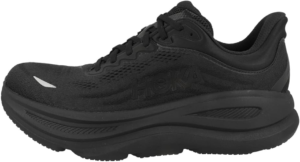
Star Rating: 4.1/5
If your heel screams on hard floors, this shoe goes big on protection. The HOKA Bondi 9 is the max-cushion pick here, and it puts a thick layer between your foot and the ground to soften repeated impact.
The key update is the super critical EVA midsole, which replaces the older, stiffer foam with something smoother underfoot. You also get a very high 43 mm stack height and a 5 mm drop. That much cushioning can help reduce pressure under the heel, especially if those first steps in the morning feel brutal. There’s no plate inside, so the ride stays more natural than some stacked shoes.
The engineered mesh upper feels soft and secure, and the heel flare helps support the rearfoot while keeping the Achilles more comfortable. Although it’s a neutral shoe, the wide base gives it a stable feel, which is part of why it works for all-day standing. It also comes in regular, wide, and extra wide sizes, which is a big plus if cramped shoes tend to trigger more foot pain.
Midsole: Super critical EVA | Stack height: 43 mm | Drop: 5 mm | Fit options: Regular, wide, extra wide | Best use: Max-cushion walking and standing
Reasons to Buy
- Massive heel cushioning
- Smooth underfoot feel
- Wide stable base
- Wide size options
- Soft upper comfort
Reasons to Avoid
- High stack feel
- Neutral support only
Who should buy it: This pair makes sense if heel impact is your biggest complaint and you want the most cushioning in this roundup. It’s also a nice fit if you’re on your feet for long stretches and want a softer ride than a classic stability shoe gives you.
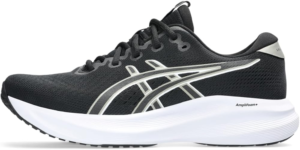
Star Rating: 3.9/5
This is the value pick that doesn’t feel cheap. The ASICS Gel-Excite 11 gives you more comfort and support than you’d expect at the lower end of the price range, which is why it stands out for budget-conscious shoppers.
The midsole uses AmpliFoam Plus, and ASICS makes it 2 to 3 mm thicker here. There’s also Pure GEL in the heel to absorb shock, which helps if you tend to land heel-first. Add in the thick, soft insole, and the step-in feel comes across plush for a budget trainer. It compresses nicely and gives a little bounce back, which is enough to keep easy runs and daily walks feeling smooth.
The jacquard mesh upper is thicker and more padded than before, with extra cushioning around the collar, heel, and tongue. That helps comfort and lockdown, and the slightly roomier toe box makes the fit more forgiving. The tradeoff is that the shoe runs a bit less breathable and a bit heavier, at around 323 g. Still, the more aggressive outsole pattern and improved midfoot support make it a smart low-cost option.
Midsole: AmpliFoam Plus | Heel tech: Pure GEL | Upper: Padded jacquard mesh | Weight: About 323 g | Best use: Budget daily wear
Reasons to Buy
- Strong value pick
- Soft heel feel
- Better midfoot support
- Roomier toe box
- Solid daily traction
Reasons to Avoid
- Less breathable upper
- Heavier than some rivals
Who should buy it: This shoe fits you best if you want plantar fasciitis-friendly comfort without spending premium money. It’s especially useful as an everyday pair for walking, commuting, and occasional easy runs.
All Recommended Products in Comparison
This side-by-side view helps you narrow the field fast.
| Product | Support Focus | Cushioning Feel | Best For | Main Tradeoff |
|---|---|---|---|---|
| Brooks Adrenaline GTS 24 | Stability with guided motion | Soft, responsive | Best all-around use | Not ultra-plush |
| ASICS GEL-KAYANO 32 | Strong arch and gait support | Soft with controlled feel | Overpronation, stability | Support may feel strong |
| Dansko XP 2.0 Clogs | Firm arch and heel structure | Moderate, work-ready | Long shifts, healthcare | Clog style isn’t for all |
| WalkHero Arch Support Sneakers | Arch support and alignment | Moderate | Walking, standing | Basic materials |
| Kuru Men’s TRIPLE MAX Ion | Firm platform and heel control | Firmer feel | Workouts, slick floors | Less flexible midfoot |
| Dr. Scholl’s Feel Well | Heel cup and casual support | Soft-casual feel | Slip-on daily wear | Less locked-in fit |
| HOKA Bondi 9 | Wide-base neutral support | Max cushion | Hard floors, heel impact | High stack feel |
| ASICS Gel-Excite 11 | Budget support and heel gel | Plush for the price | Daily wear on a budget | Heavier, less breathable |
The big takeaway is simple. If you want the safest all-around choice, Brooks leads. If you need stronger control, ASICS GEL-KAYANO 32 moves ahead. For shift work, Dansko earns its place fast.
What to Look for in Plantar Fasciitis Shoes
Heel Cushioning That Feels Protective
Start with the heel, because that’s where plantar fasciitis usually gets loud first. You want enough padding to soften impact, but not so much that your foot sinks and loses support. Shoes with heel GEL, shaped heel cups, or thicker rear cushioning tend to feel better than flat, hard, or worn-out midsoles.
Arch Support That Matches Your Stride
Some people need firm arch support. Others do better with milder support and a broad, stable platform. The right answer depends on how your foot moves. If you overpronate, a support shoe can take strain off the arch. If your gait is neutral, too much correction can feel awkward. Guides like Health’s podiatrist-backed shoe roundup and Balance Foot & Ankle’s clinical overview both point to that same balance.
A Stable Base Underfoot
A stable shoe keeps the foot from twisting too much. That can matter as much as cushioning. Look for a broad base, a supportive heel counter, and a midsole that doesn’t fold in half when you press through the middle. In other words, the shoe should guide your foot, not fight it or wobble under it.
Toe-Box Room and Heel Hold
Fit matters a lot. A cramped toe box can change the way you walk, and a loose heel can make the foot work harder than it should. Try to find a pair that keeps the heel secure while leaving the front of the shoe roomy enough for natural toe spread. That mix often feels better over long days.
Outsole Grip for Real Floors
Plantar fasciitis can make every bad step memorable. So outsole grip matters, especially if you work on tile, polished concrete, or wet floors. A grippy rubber outsole helps you move with more confidence and less guarding. That’s one reason clogs and anti-slip trainers show up so often in footwear discussions for healthcare and shift work.
Removable Insoles and Width Options
If you use orthotics, removable insoles make life easier. Width choices matter too, because extra squeeze can turn a supportive shoe into an annoying one fast. When you’re comparing pairs, look beyond brand hype and check whether the shoe gives you enough room and enough flexibility to personalize the fit.
A good plantar fasciitis shoe should feel calm underfoot. If it feels unstable, cramped, or harsh in the heel, keep moving.
Why Trust OASTHAR?
I’m Shashini Fernando, an associate editor who specializes in buyer’s guides for wearables, headphones, and everyday gear that people use for hours at a time. For lists like this, each product goes through in-house evaluation for fit, support, comfort, and daily usability, then gets checked against hundreds of customer reviews from real users.
That mix matters because you need more than first impressions. A shoe can feel great for five minutes and frustrating by day three. So this list focuses on what actually affects your feet, heel cushioning, arch support, stability, traction, and long-wear comfort. If you want a broader look at how plantar fasciitis footwear is being discussed across the market, Business Insider’s comfort shoe guide is also a useful point of comparison.
Best Shoes FAQs
What is the best shoe for plantar fasciitis overall?
The Brooks Adrenaline GTS 24 is the best overall pick in this guide. It blends support, cushioning, and day-to-day comfort better than the rest.
Are stability shoes better for plantar fasciitis?
They can be, especially if your foot rolls inward. If overpronation is part of your pain pattern, stability shoes like the ASICS GEL-KAYANO 32 or Brooks Adrenaline GTS 24 usually make more sense than a soft neutral shoe.
Is max cushioning always better for heel pain?
Not always. A thick midsole can help with heel impact, but too much softness without enough support can feel sloppy. That’s why the HOKA Bondi 9 works best for some people, while others feel better in a more guided shoe.
Can you wear slip-ons with plantar fasciitis?
Yes, if they still support the heel and arch. The Dr. Scholl’s Feel Well is a good example because it pairs easy entry with a deep heel cup and firmer arch support.
Should you use custom orthotics with these shoes?
If your podiatrist recommends them, removable-insoles models make that easier. In this list, the Kuru TRIPLE MAX Ion and Dansko XP 2.0 are especially friendly to orthotic users.
Final Verdict
If you want the safest pick for most people, go with the Brooks Adrenaline GTS 24. If your pain comes with heavy inward rolling, the ASICS GEL-KAYANO 32 is the stronger stability choice. For long shifts, the Dansko XP 2.0 stands out, while the ASICS Gel-Excite 11 is the right budget answer if you need relief without spending big. The best pair is the one that matches how you move, how long you stand, and how much structure your foot actually needs.