

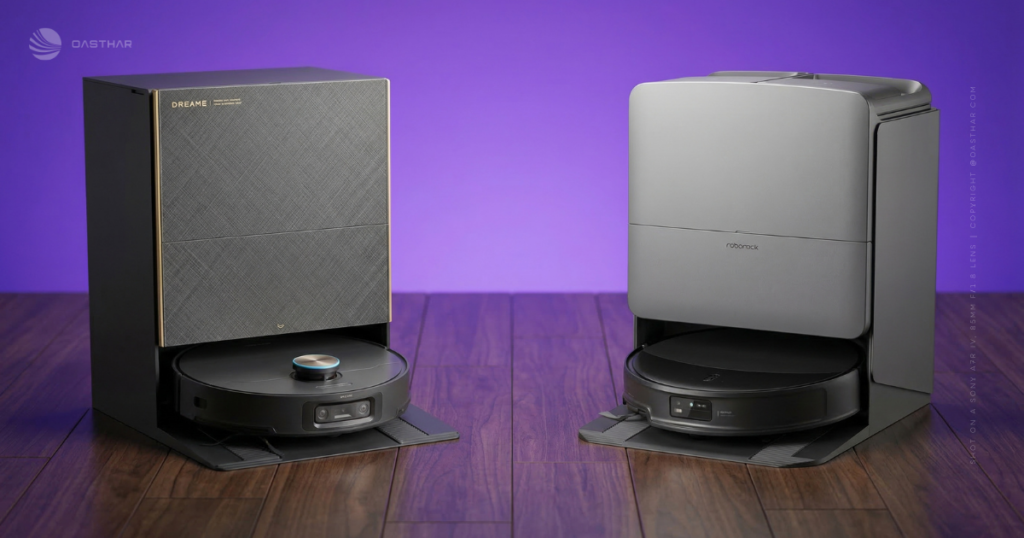
You don’t need more robot vacuum hype, you need a clear winner. In Dreame X60 Max Ultra Complete vs Roborock Saros 20, the short answer is this: for most homes, Roborock looks like the safer buy, while Dreame feels more hit-or-miss.
The X60 packs in clever hardware, a low body, and strong cleaning when its settings cooperate. However, it can also get noisy, waste water, drag wet pads over carpet, and lose time with messy app controls.
So, if you’re trying to buy once and buy smart, this comparison breaks down what matters. You’ll get specs, cleaning, navigation, noise, upkeep, app features, price, and who each model fits best.
RELATED: Best Vacuum Cleaners 2025
Quick Summary
Here’s the day-to-day stuff that changes how you live with each robot.
- Dreame X60 Max Ultra Complete focuses on hardware tricks: a slim 3.13-inch body with retracting LiDAR, plus a long feature list built around getting under furniture and scrubbing harder.
- Dreame’s raw numbers and heat are clearly stated: 35,000 Pa suction, mops that spin at 230 RPM with 15 N pressure, 104°F heated floor water, and 212°F hot mop washing at the dock. Full recharge is stated as 80 minutes, and MSRP is $1,699.99 (discounts have been reported).
- Dreame’s real-world complaints are also loud and clear: reviewers report a cluttered app, settings that can backfire (like chassis lift hurting pickup on low rugs), wet pads dragging on some carpets, higher-than-expected water use, and occasional navigation weirdness in tight rooms.
- Roborock Saros 20 Series specs are not fully present in the provided sources: beyond a review excerpt that mentions step-climbing aspirations, most of the detailed Saros 20 spec claims you may see online are not confirmed here, and pricing is not confirmed in the provided sources.
For more third-party testing context on the Dreame, see the Vacuum Wars X60 Max Ultra Complete review.
Winner: Dreame X60 Max Ultra Complete, because far more of its key performance and dock details are actually stated in the provided sources.
Specifications
This table sticks to what’s explicitly stated in the provided sources.
| Spec | Dreame X60 Max Ultra Complete | Roborock Saros 20 |
|---|---|---|
| Height | 3.13 inches | Not stated in sources |
| Suction | 35,000 Pa | Not stated in sources |
| Navigation hardware | Retracting LiDAR (LDS) plus dual cameras and light | Not stated in sources |
| Object recognition | Over 280 object types (claimed) | Not stated in sources |
| Obstacle or threshold crossing | Up to 8.8 cm (3.47 inches) | Review excerpt mentions step-climbing concept, no height stated |
| Mopping motion | Dual spinning pads, 230 RPM | Not stated in sources |
| Mopping pressure | Up to 15 N | Not stated in sources |
| Heated floor water | 104°F | Not stated in sources |
| Dock mop washing | 212°F hot wash | Not stated in sources |
| Dock water tanks | 4 L clean, 3 L dirty | Not stated in sources |
| Full recharge | 80 minutes (0 to 100%) | Not stated in sources |
| MSRP (US) | $1,699.99 | Not stated in sources |
You can compare confidently on Dreame’s published numbers, while Saros 20 details remain incomplete in the sources provided here.
Winner: Dreame X60 Max Ultra Complete, because its specs are clearly documented, while Saros 20 specs are mostly “not stated.”
Design & Build Quality
The Dreame X60’s headline design choice is its retracting LiDAR. In plain terms, it can drop its sensor into the body so the robot stays at about 3.13 inches tall. That matters if you’ve got low sofas, dressers, or that one awkward chair that becomes a robot trap. In one set of impressions, the X60 handled low-clearance furniture that had caused other robots to wedge themselves.
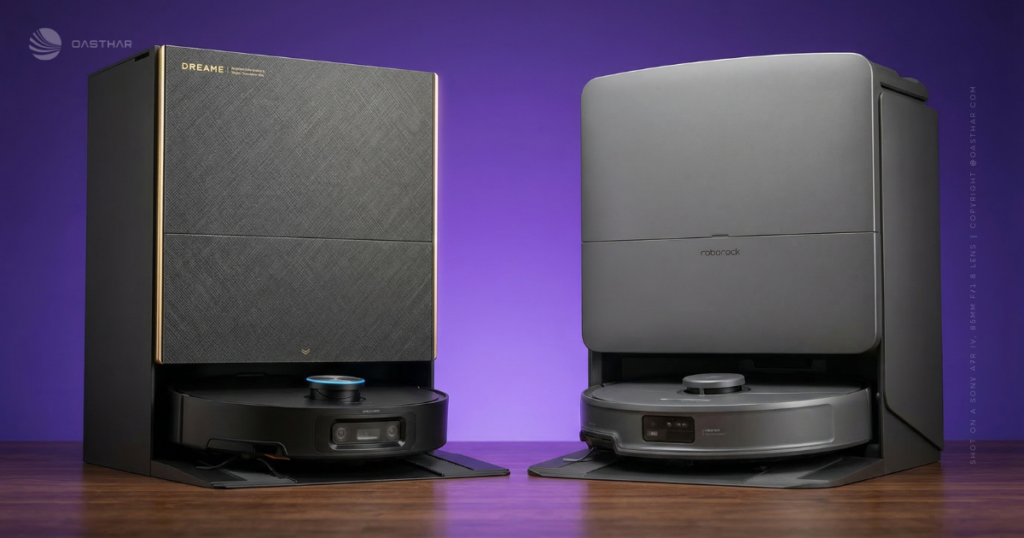
Hardware around the edges also tries to solve real messes. Dreame includes an extending side brush for corners, plus dual mop pads where one pad can swing outward to reach along baseboards. Underneath, it uses dual rubber rollers marketed as tangle-resistant. In at-home testing notes, hair and string did not wrap, but a single sock jam still happened. That’s normal robot life.
Obstacle crossing is a mixed story. The X60 is stated to handle up to 8.8 cm. Review observations also mention it “waddling” over transitions, but it can also misread furniture bases, repeatedly bumping in one room.
For broader context on where robot vac design is going in 2026, TechRadar’s CES take is a useful backdrop: TechRadar’s 2026 robot vacuum preview.
Winner: Dreame X60 Max Ultra Complete, because its low-clearance design and edge hardware are clearly documented, while Saros 20 build details are not stated in the provided sources.
Cleaning Performance
On paper, Dreame gives you 35,000 Pa and a carpet-focused trick: a pressure plate that drops to help seal against carpet. In real-home notes, the X60 picked up a broad mix of debris (rice, sugar, leaves, paper scraps, mud chunks) and did well when conditions and settings were right. It also left floors looking clean and glossy after mopping in many runs.
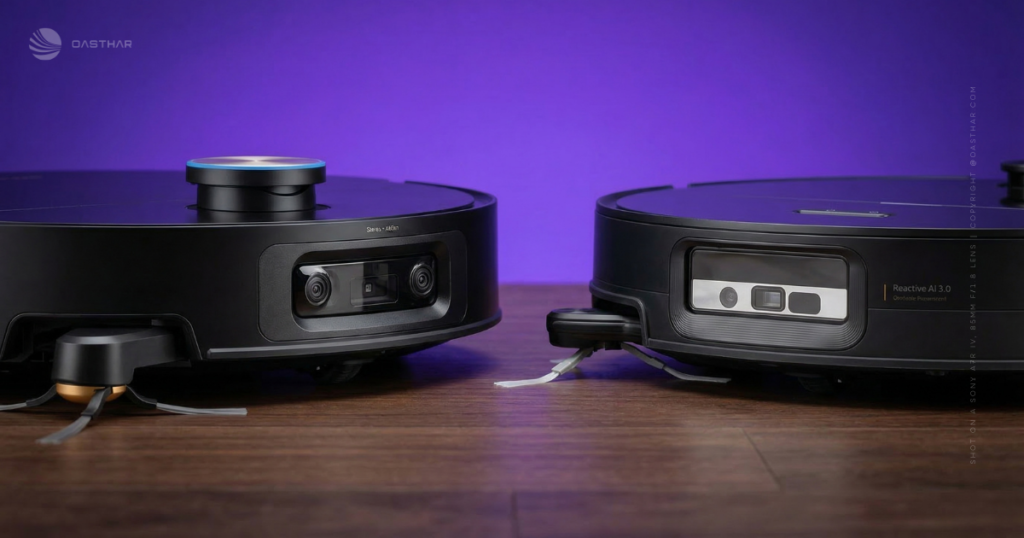
The catch is that some of Dreame’s “smart” features can create dumb outcomes. Reviewers report that enabling chassis lift to avoid dragging wet pads can reduce vacuum effectiveness on low rugs, because the robot sits higher and loses that tight seal. There are also reports of wet mop pads dragging across thick carpet, even when you’d expect the robot to protect the rug.
For mopping, Dreame’s stated numbers are strong: 230 RPM, 15 N pressure, and 104°F heated floor water. Still, one messy test (ketchup) ended with smearing, which is a good reminder that robot mops scrub, but they don’t think like you.
If you want a bigger picture view of which bots are performing well this year, Mashable’s running list offers more comparisons: Mashable’s best robot vacuums in 2026.
Winner: Dreame X60 Max Ultra Complete, because its cleaning system and real-world results are documented, while Saros 20 performance claims are not stated in the provided sources.
Ease of Use
Dreame’s day-to-day experience looks like two different robots depending on your home and settings. When scheduled cleans behave, it can run long sessions, return to charge, then resume. Review notes also say the dock behavior is fairly civilized and the robot can manage overnight routines.
However, the same reviews describe navigation oddities in tight layouts. Think repeated bumps in one spot, getting confused around chair bases, and even getting stranded at night in a cramped home. The app includes useful tools like a Wi-Fi signal map and even a manual drive mode, yet the overall feel is often described as quantity over quality. You can also toggle settings that sound good but cause side effects, including poor vacuuming, wasted water, or carpet dampness.
For the Roborock Saros 20 Series, the provided sources do not include enough app or mapping detail to judge day-to-day friction. One review excerpt mentions firmware updates arriving right before testing, which hints at fast iteration, but it doesn’t confirm the core experience.
Winner: Dreame X60 Max Ultra Complete, because you can judge both the good and the bad from documented use, while Saros 20 ease-of-use details are not stated.
Filtration, Drying & Water Handling
If you’re buying at this tier, the dock is half the product. Dreame’s dock details are well stated: 212°F hot mop washing, hot air drying, and separate tanks with 4 L clean water and 3 L dirty water. It also includes two detergent compartments (standard and pet-friendly) and mixes solution automatically based on where it’s cleaning, at least as described.
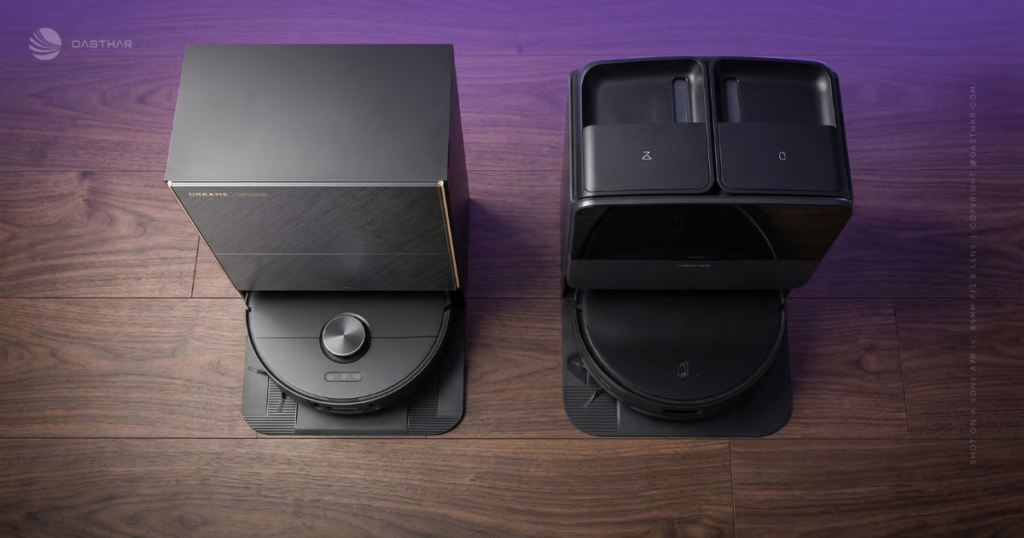
There are two practical caveats. First, Dreame only approves its own cleaning solution, which can turn into an ongoing cost or availability concern. Second, one test reported that “water-saving mode” did not seem to use less water than deep cleaning, which can feel wasteful if you mop often.
For Saros 20, dock wash temperatures, drying method, tank sizes, and detergent handling are not stated in the provided sources, so you can’t fairly compare dock ownership costs here.
Winner: Dreame X60 Max Ultra Complete, because its dock system and water handling are documented, including the complaints.
Noise Level
Exact decibel levels are not provided in the sources for either robot, so you can’t do a clean numbers comparison.
What you do have is a qualitative note for the Dreame dock: it’s still noisy when it empties the bin, but it’s described as less “jet engine” than some competitor docks. There’s also mention that it was not especially stinky during operation compared to another high-end dock.
For Roborock Saros 20, noise impressions are not stated in the provided sources.
Winner: Tie, because there’s no comparable noise data for both models, only a partial impression for Dreame.
Maintenance & Ongoing Costs
Dreame’s “Complete” framing matters because it often ships with extras, and that can save you money early. In the provided sources, the dock uses a 3.2 L dust bag, and notes mention included spares like extra mop pads, dust bags, and brushes in the Complete bundle.
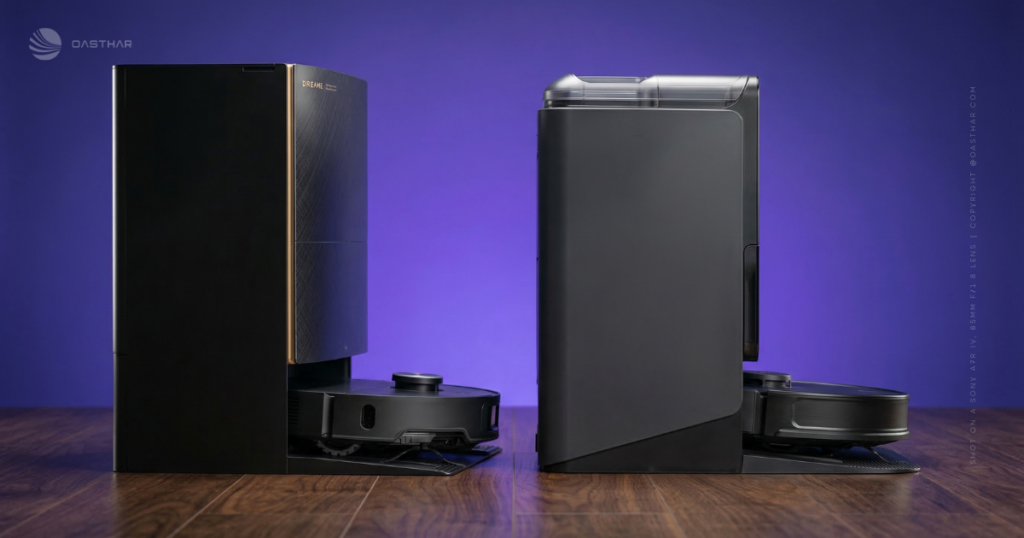
Wear items are still wear items. You’ll replace pads, brushes, and filters over time, and you’ll refill water and detergent. There’s also the real-world reminder that “tangle-free” doesn’t mean “jam-proof.” A sock can still stop the rollers, and that turns into a rescue mission.
For Saros 20, you can assume standard robot vacuum upkeep, but replacement part pricing, bag sizes, and included accessories are not stated in the provided sources, so any cost comparison would be guesswork.
If you’re reading this because $1,700 feels wild, it’s worth sanity-checking what you give up at lower prices. Oasthar’s guide to best budget robot vacuums 2025 helps you spot which features actually matter.
Winner: Dreame X60 Max Ultra Complete, because you have stated bag capacity and included extras, while Saros 20 maintenance details are not stated.
Smart/App Features
Dreame throws in a lot: retracting LiDAR, dual cameras and a front light, and an object recognition claim of 280+ object types. It also has a dirt-spotting light feature and pet-zone logic that can choose between detergents based on where your pets hang out.
Still, smart features only help if they’re predictable. Review notes say pet recognition features didn’t always work, and the app can feel like a messy drawer. Some “intelligent” options also didn’t seem to shorten run time, while turning them off sometimes led to more bumps.
For Saros 20, smart home features, app tools, and object avoidance detail are not stated in the provided sources, so you can’t compare beyond general brand reputation, which isn’t evidence.
If you want more early coverage and expectations around the X60 as a 2026 flagship, see: Dreame X60 Max Ultra Complete first impressions.
Winner: Dreame X60 Max Ultra Complete, because its smart feature set is stated, and the downsides are also documented.
Energy & Water Use
Energy use and power draw are not stated for either model in the provided sources, so you can’t estimate electricity costs from this info alone.
Water use is where you have at least one real complaint for Dreame. In one test, switching the dock to a water-saving mode did not appear to reduce water used compared with deep cleaning. That doesn’t mean it’s always wasteful, but it’s a red flag if you plan to mop daily.
For Saros 20, water use per cycle or per wash is not stated in the provided sources.
Winner: Tie, because energy data is missing for both, and water-use data is only partial for one.
Price & Value
Dreame’s price is clear: $1,699.99 MSRP in the US, and promotions have been reported. Value is trickier. When the X60 behaves, it can vacuum and mop extremely well, and the under-furniture access is a real quality-of-life upgrade. The dock also sounds more pleasant than some rivals.
At the same time, multiple real-world critiques land on the same point: at around $1,700, it’s hard to accept a robot that can get weird in tight rooms, waste water, drag wet pads onto carpet, or turn into a poor vacuum when one feature toggle changes ride height.
Roborock Saros 20 pricing is not confirmed in the provided sources, so you can’t decide value with confidence yet. Unknown price can be good or bad, but it’s still unknown.
Winner: Dreame X60 Max Ultra Complete, because you can evaluate value against a known MSRP, while Saros 20 value is impossible to score without confirmed pricing.
Who is it for?
You don’t buy either of these for “good enough.” You buy them because your home creates problems that midrange bots can’t solve.
Choose Dreame if…
- You need low-clearance cleaning and like the idea of retracting LiDAR to get under furniture.
- You want strong stated cleaning hardware, including 35,000 Pa, heated mopping at 104°F, and 212°F dock washing.
- You care about edges, because the extending side brush and swing-out edge mop target baseboards better.
- You’re willing to tune settings and accept that a few features can backfire.
Choose Roborock if…
- You’re comfortable waiting for more confirmed Saros 20 details before buying.
- You want to compare based on Roborock’s documented Saros 20 sources, once you have them (price, dock behavior, and app details).
- You prefer to decide after you can verify step and threshold behavior, not just read about it in a short review excerpt.
Winner: Tie, because the right choice depends on your home, and Saros 20 details are not fully stated in the provided sources.
FAQs
Which robot vacuum has stronger suction, Dreame X60 or Saros 20?
If you want the higher headline number, the Saros 20 leads at 36,000Pa. The Dreame X60 is close at 35,000Pa, but Roborock looks better for deep carpet pickup.
Is Dreame X60 or Roborock Saros 20 better for mopping?
You should lean Roborock if mopping matters most. Its VibraRise 5.0 sonic system is built for tougher stains, while Dreame mops well but can waste water.
Which one handles carpets and thresholds better in real homes?
The Saros 20 looks stronger for mixed floors because it climbs higher thresholds and manages thicker carpets better. Dreame can still drag wet pads on carpet in some settings.
Does the Dreame X60 clean under furniture better than Saros 20?
Yes, slightly. The Dreame X60 sits at about 3.13 inches, while the Saros 20 is about 3.14 inches. In practice, Dreame has a small edge in tight spaces.
Which robot vacuum has better navigation and obstacle avoidance?
On paper, both are high-end. Roborock lists recognition for 300+ obstacle types, while Dreame lists 280+. Still, Dreame’s real-world reviews mention occasional getting lost or looping.
Is the Dreame X60 worth buying at its premium price?
Only if your home fits its strengths. Reviews praise its slim build and dock, but real use also shows messy compromises, including slow runs, water waste, and app clutter.
Has the Roborock Saros 20 been reviewed enough to trust yet?
Not really. It’s still new, so there aren’t many full long-term reviews yet. You can trust the specs, but you should wait for broader real-home testing.
Final Verdict
If you want the most evidence-backed pick from the provided sources, the Dreame X60 Max Ultra Complete is the only one you can fully assess right now. You get a slim body, stated high suction, heated mopping, and a high-heat wash dock. You also get a list of real-world complaints that you should take seriously, because they affect carpets, water use, and reliability.
If you’re the kind of buyer who hates app friction and hates babysitting, you may want to wait until Saros 20 specs, pricing, and long reviews are confirmed in your sources. On the other hand, if under-furniture reach and hot mop washing are top priorities, Dreame is the clearer known quantity.
Winner: Dreame X60 Max Ultra Complete, because it’s the only model here with enough stated specs and real-world testing notes to support a confident recommendation.