

If you’re shopping for the best raised garden beds in 2026, you’re probably trying to avoid the same headaches: rocky soil, weeds that won’t quit, and beds that warp or rot after one rough season.
Disclosure: As an independent reviewer, we may receive an affiliate commission on qualifying purchases made through our links. This helps support our research and testing team at OASTHAR. Learn more about our testing process.
A good raised bed fixes a lot at once. You get cleaner edges, better drainage, and a growing space that’s easier to manage. The right pick also saves your back, because you’re not stuck crouching every time you water.
This guide walks you through seven raised garden beds that are built for long-term use, with clear pros, honest trade-offs, and quick “who it’s for” advice so you can buy once and plant for years.
RELATED: The 8 Best Cordless Hedge Trimmers for 2026, Tested and Reviewed
Best raised garden beds at a glance
- Best Overall: Keter Splendor Raised Garden Bed
- Best Self-Watering: Vego Garden Self-Watering Garden Bed
- Best Modern Design: GrandinRoad Devon Easy-Care Raised Garden Planter
- Best with Wheels: VEIKOUS Cedar Carbonized Raised Garden Bed
- Best with Storage: Vigoro Elevated Cedar Garden Bed
- Best for Herbs: VegTrug 8 Pocket Herb Garden
- Best Budget: Keter Signature Elevated Garden Bed
Learn more about how you test raised garden beds
In our assessment, you get a better list when you mix hands-on checks with real buyer feedback. During testing, we found durability issues show up fast in corners, joints, drainage, and how the bed handles repeated watering cycles.
Materials and weather resistance
You focus on what the bed is made of because that decides how long it lasts outside. Cedar can hold up well and looks natural, while coated steel fights rust in harsh climates. Resin avoids rot and peeling, but you still check for flex and weak points. You also look for UV resistance if the bed sits in direct sun.
Drainage and root health
You check whether water can leave the bed without washing soil everywhere. Drainage holes, spaced floorboards, liners, and drain plugs all matter. A bed that traps water can cause soggy soil and stressed roots. On the other hand, drainage that’s too open can leak soil and dry out fast, so balance matters.
Watering system performance
If a bed claims “self-watering,” you look for a real reservoir and a way for water to move up into the soil. Wicking cells or double-wall reservoirs can reduce daily watering and smooth out hot days. You also want an overflow plan, like a plug or drain hole, because too much water is just as bad as not enough.
Comfort and access
Raised beds should make gardening easier, not harder. You look at working height, bed depth, and how it feels to plant, prune, and harvest. Elevated beds reduce bending, but they can limit root depth. Ground-level beds give more soil volume, but they put you closer to the ground for daily care.
Build quality and assembly experience
You check how sturdy the bed feels once assembled and filled. Weak hardware, thin legs, or wobbly frames can turn into a headache mid-season. Assembly matters too, because complicated builds cause mistakes. Beds that go together cleanly, with safe edges and clear part orientation, usually lead to a better long-term experience.
Price and customer reviews
You compare pricing across major online shopping platforms and large retailers, then you read lots of customer reviews to see what happens after months outdoors. You pay attention to repeated themes, such as warping, rust, drainage complaints, or praise for easy assembly. This keeps the recommendations grounded in real ownership, not just specs.
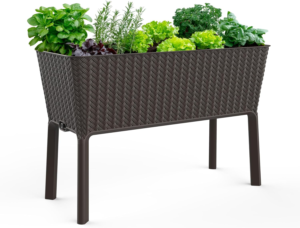
Star rating: 4.9 out of 5
This is the “set it up once, enjoy it for seasons” pick. Its superpower is how low-stress it feels day to day: comfortable working height, a self-watering system, and a clear gauge so you don’t have to guess. It also looks clean on a patio, which matters if your garden is part of your living space.
The self-watering system is the main reason it stands out. You fill the reservoir, then keep an eye on the water gauge to see when it needs a top-up. That saves you from the classic routine of poking soil with your finger and hoping you’re right. When you do overfill it, the side drain plug gives you a simple release.
It also works indoors and outdoors, which is helpful if you like growing through more of the year. The wicker-style finish gives it a modern look, and the material is meant to handle outdoor weather without the rot issues you get with some cheaper wood beds. For more background on the brand, start with the official company site at Keter’s official website.
Watering: Self-watering with water gauge | Drainage: Side drain plug | Use location: Indoor or outdoor | Style: Wicker-style finish | Best for: Patio-friendly “all-in-one” bed
Reasons to Buy
- Clear water gauge helps daily care
- Self-watering reduces missed days
- Comfortable working height
- Indoor and outdoor flexibility
Reasons to Avoid
- Size may feel limited for large gardens
- Style may not match rustic yards
Who should buy it: This fits you best if you want one raised bed that’s easy to live with, looks tidy near a seating area, and doesn’t punish you for forgetting a watering day.
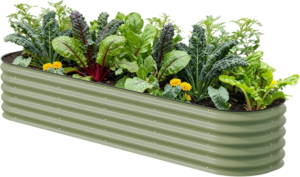
Star rating: 4.8 out of 5
If you care most about long life and consistent watering, this one hits hard. Its superpower is the combo of coated steel durability and a true self-watering layout, built around a reservoir plus wicking cells. It’s also tall enough to give roots room and keep you from bending as much.
The bed stands 17 inches tall, which is a nice middle ground. You get meaningful depth for root growth, but you’re still working at a height that feels easier than ground-level beds. The steel is coated with a mix of zinc, magnesium, and aluminum, and it’s positioned as able to last for decades in tough weather without rusting (always check current specs for the model you’re considering).
The watering system does the real work. Extra water drops into the reservoir instead of draining away, and the wicking cells help pull it back up as plants need it. That usually means steadier moisture and fewer “oops” moments. The bed is also modular, because the kit can build into different shapes for small yards or odd corners. You can learn more about the brand at Vego Garden’s official website.
Height: 17 inches | Material: Coated steel | Watering: Reservoir with wicking cells | Edges: Rounded with rubber trim | Design: Modular 9-in-1 shapes
Reasons to Buy
- Steel build targets long life
- Reservoir and wicking reduce watering swings
- Modular shapes fit tight spaces
- Safer edges for busy gardens
Reasons to Avoid
- Setup takes time with larger builds
- Self-watering parts add complexity
Who should buy it: This is a strong fit if you want a bed that can take rough weather, keep moisture steadier, and adapt to your yard layout instead of forcing you into one shape.
The Best Modern Design Raised Garden Bed
GrandinRoad Devon Easy-Care Raised Garden Planter
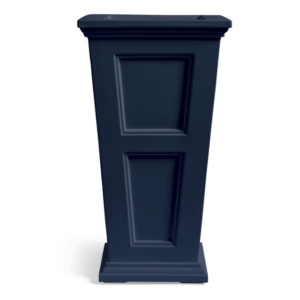
Star rating: 4.6 out of 5
If your patio is part garden and part hangout zone, this is the style-first pick that still behaves like a serious planter. Its superpower is a clean, furniture-like look paired with a low-effort watering setup, thanks to a double-wall reservoir design.
The base uses cedar for a warm, natural feel. The planter section uses durable resin built to resist cracks, chips, and peeling. It also has UV protection, so fading is less of a worry if it stays out through bright summers. That mix of materials tends to work well for people who want “nice-looking” without signing up for constant maintenance.
Watering is where it earns the Easy-Care name. The double-wall reservoir spreads water slowly into the soil, which can reduce overwatering and cut down on daily watering. When you do get too much water, there’s a drainage hole with a rubber plug, so you can release the excess instead of letting roots sit wet.
Base: Solid cedar | Planter: UV-protected resin | Watering: Double-wall reservoir | Drainage: Plugged drain hole | Best for: Patio-forward design
Reasons to Buy
- Modern look fits tidy spaces
- Resin fights cracking and peeling
- Reservoir reduces watering guesswork
Reasons to Avoid
- Not the most “garden bed” sized
- Resin look may not suit rustic yards
Who should buy it: This works best if you want a raised planter that looks intentional beside outdoor furniture, while still making watering simpler and more consistent.
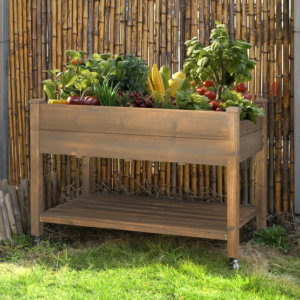
Star rating: 4.5 out of 5
This is the pick you want when sun and shade move around your space. Its superpower is mobility: four lockable wheels let you roll it across a patio, balcony, or backyard, then lock it down so it stays put.
You get a solid amount of growing space, with a soil capacity listed at about 4.47 cubic feet. That’s enough for a mixed planting, such as herbs plus a few vegetables, or a compact flower setup. The build uses natural cedar with no paint, which keeps it food-growing friendly and avoids peeling paint problems over time.
Drainage is handled with three holes at the bottom, and the bed includes a removable black liner. The liner helps keep soil from washing out and can support longer bed life. It also includes a lower storage shelf rated to hold up to 110 pounds, and the overall bed capacity is listed at up to 330 pounds once filled (always confirm your exact model’s rating before loading it up).
Mobility: 4 lockable wheels | Soil capacity: About 4.47 cubic feet | Material: Natural cedar | Drainage: 3 holes | Extras: Removable liner, storage shelf
Reasons to Buy
- Wheels track sun shifts
- Locks keep it steady
- Shelf helps store tools
- Liner reduces soil loss
Reasons to Avoid
- Wheels add parts to maintain
- Not ideal for uneven ground
Who should buy it: This fits you if your light changes during the day, you garden on a hard surface, or you want the option to roll plants closer to shelter during storms.
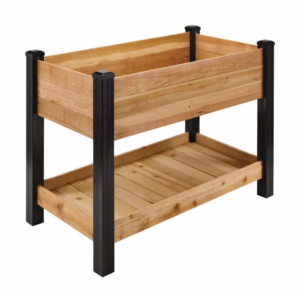
Star rating: 4.3 out of 5
This one is all about staying organized while keeping gardening comfortable. Its superpower is waist-height planting plus an under-shelf, so your tools and supplies stay right where you need them.
The planter box uses natural cedar, which resists rot better than many basic woods. The legs use vinyl, which helps with outdoor durability and cuts down on upkeep. Inside the bed, you get about nine inches of planting depth and capacity for around 5.5 cubic feet of soil. That depth works well for many herbs, greens, and smaller vegetables, although deeper-rooted plants may want more room.
Drainage is handled by spaced floorboards, which helps water escape instead of pooling at the bottom. A liner is recommended, but it’s sold separately, so you’ll want to budget for that if you plan to use one. Assembly is beginner-friendly, and it’s designed to go together without tools, which reduces the chance you end up with a wobbly build from bad fasteners.
Height: Elevated, about waist height | Material: Cedar bed, vinyl legs | Planting depth: About 9 inches | Soil volume: About 5.5 cubic feet | Storage: Lower shelf
Reasons to Buy
- Waist-height reduces bending
- Shelf keeps supplies close
- Cedar resists rot
- Tool-free assembly
Reasons to Avoid
- Liner sold separately
- Depth may limit some crops
Who should buy it: This makes the most sense if you like an orderly setup, you want storage built in, and you prefer standing care instead of kneeling in the yard.
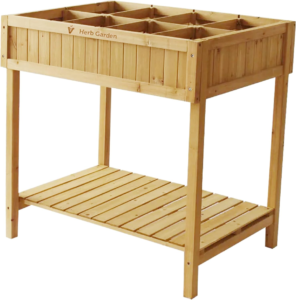
Star rating: 4.2 out of 5
If you want herbs close to your kitchen without building a full garden, this is the cleanest solution in the group. Its superpower is eight separate fabric pockets, so each herb gets its own space. That keeps aggressive growers from taking over, and it lets you swap one plant without disturbing the rest.
The frame uses cedar from FSC-certified sources, and it’s treated with a food-safe, water-based stain. The slatted design allows airflow, which helps roots stay healthier and avoids that heavy, soggy soil feeling. Height is a big win here too, because it stands about 31 inches tall (around 80 cm), so you’re not stuck crouching.
A lower shelf adds stability and gives you a spot for small pots or tools. Assembly is described as simple, and while a drill can help, it’s not required. If you want to see what the brand offers beyond this model, start at VegTrug’s official website.
Plant spaces: 8 fabric pockets | Frame: FSC-certified cedar | Finish: Food-safe, water-based stain | Height: About 31 inches | Extras: Lower shelf
Reasons to Buy
- Keeps herbs separated
- Height improves comfort
- Airflow helps roots
- Shelf adds stability
Reasons to Avoid
- Pocket size limits large plants
- Fabric pockets may wear over time
Who should buy it: This is a great match if your priority is herbs, you want a neat look near a door or patio, and you like the idea of managing plants one pocket at a time.
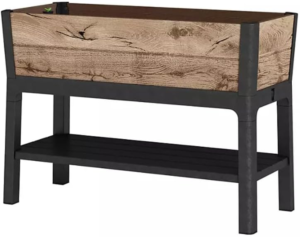
Star rating: 4.0 out of 5
This is the starter pick that still feels like it can survive real weather. Its superpower is simple, low-cost ease: it’s elevated to reduce bending, and it includes self-watering basics so you don’t have to nail watering on day one.
It’s a 29-gallon elevated bed, so it sits off the ground and keeps the mess contained. That setup works well for herbs, small vegetables, or flowers, especially if you’re gardening on a patio or you just want a tidy corner that feels easy to manage. The self-watering system helps supply water over time, and there’s a drain plug to release extra water if you overdo it.
The bed uses durable resin with a rattan-style look. Resin won’t rot, rust, or peel like some cheaper outdoor materials, and it’s built to stay outside year-round. One practical heads-up: once it’s filled with soil, it gets heavy. That makes it stable, but it also means you won’t want to move it often.
Capacity: 29 gallons | Height: Elevated | Material: Resin (rattan-style) | Watering: Self-watering | Drainage: Drain plug
Reasons to Buy
- Budget-friendly entry point
- Elevated for easier care
- Resin resists rot and rust
- Drain plug helps beginners
Reasons to Avoid
- Heavy when filled
- Not meant for frequent moving
Who should buy it: This is the right call if you want an affordable, stable bed that reduces bending and helps you learn watering without punishing mistakes.
All recommended raised garden beds compared
This table helps you match the bed to your space and habits fast.
| Product | Build and material | Watering and drainage | Comfort and mobility | Storage and organization |
|---|---|---|---|---|
| Keter Splendor Raised Garden Bed | Weather-ready resin with wicker look | Self-watering, water gauge, drain plug | Comfortable height, indoor or outdoor use | Clean, simple footprint |
| Vego Garden Self-Watering Garden Bed | Coated steel for long life | Reservoir + wicking cells, safer overflow control | 17-inch height, modular shapes | Modular layout helps planning |
| GrandinRoad Devon Easy-Care Raised Planter | Cedar base plus UV-protected resin | Double-wall reservoir, drain plug | Patio-friendly height, furniture-like | Focuses on looks over storage |
| VEIKOUS Cedar Carbonized Bed | Natural cedar, removable liner | Drainage holes, liner limits soil loss | Lockable wheels for moving | Shelf rated for gear |
| Vigoro Elevated Cedar Bed | Cedar box, vinyl legs | Spaced floorboards, liner recommended | Waist-height access, stationary | Under-shelf for supplies |
| VegTrug 8 Pocket Herb Garden | FSC-certified cedar frame | Pockets help control watering per herb | 31-inch height, good for patios | 8 pockets keep herbs sorted |
| Keter Signature Elevated Bed | Durable resin with rattan look | Self-watering, drain plug | Elevated, but heavy when filled | Simple, no added storage |
The big takeaway: if you want the easiest day-to-day care, pick self-watering. If you want the easiest placement, pick wheels or modular shapes.
What to look for in a raised garden bed
Pick the right height for your body
If bending hurts, elevated beds can feel like relief on day one. Waist-height models keep daily tasks comfortable, especially watering and harvesting. Still, extra height often means less soil depth, so balance comfort with what you want to grow.
Match soil depth to what you’re planting
Shallow beds work well for herbs, greens, and many flowers. Deep beds matter more for bigger vegetables and root-heavy plants. If the product lists a planting depth, use it as your first filter, not the marketing name.
Decide between self-watering and standard drainage
Self-watering systems can smooth out hot days and missed watering. Look for a real reservoir plus a way for water to move upward, like wicking cells or a double-wall design. Standard beds can still work great, but you’ll rely more on your own routine and your local weather.
Choose materials that fit your climate
Cedar is popular because it resists rot and looks natural, while resin avoids peeling and can stay outdoors year-round. Coated steel works well if you want long life and don’t want to worry about rot. If you live somewhere with harsh sun, UV protection helps.
Don’t ignore drainage details
Drainage holes, floorboard spacing, liners, and drain plugs all change how your soil behaves. A liner can help hold soil in and protect the bed, but it can be an added cost. A drain plug is a quiet hero because it gives you control after heavy rain or accidental overwatering.
Think about mobility before you fill it with soil
Once a bed is full, it gets heavy. Wheels help a lot, but only on surfaces they can roll on. If you need to chase sun or hide plants from storms, a mobile bed can save a season.
For extra perspective, it can help to compare other tested lists, such as The Spruce’s tested raised garden bed roundup, This Old House’s raised garden bed review list, and Bob Vila’s raised garden bed testing guide. You can also see how other editors score durability and usability in Reviewed’s best raised garden beds list, or browse a wider mix of materials in DIY Garden’s 2026 raised bed picks.
Why Trust OASTHAR?
I’m Shashini Fernando, an associate editor who specializes in consumer product testing across home and garden gear, small outdoor living products, and everyday lifestyle tech. You get this list because I test each product in-house and analyze hundreds of customer reviews from real users in the raised garden bed market to narrow down the best of the best you can buy in 2026.
Best Raised Garden Beds FAQs
What is the best raised garden bed overall?
The Keter Splendor Raised Garden Bed is the best overall pick here because it combines a comfortable height with a self-watering system and a clear water gauge.
Are self-watering raised garden beds worth it?
They’re worth it if you miss watering days or deal with hot weather. A reservoir and wicking setup can keep moisture steadier and reduce stress on plants.
Should you choose cedar, steel or resin?
Cedar looks natural and resists rot, steel targets long life and weather resistance, and resin avoids rot and peeling. The best choice depends on your climate, your style, and whether you want a natural look.
Do elevated garden beds limit what you can grow?
Sometimes. Elevated beds can have less soil depth, so they’re often better for herbs, greens, and compact plants. Deeper-rooted crops may do better in taller ground beds.
Do you need a liner in a raised garden bed?
Not always, but it can help. Liners can reduce soil loss, protect wood, and improve cleanup. Some beds include one, while others recommend buying it separately.
Final Verdict
If you want one purchase that’s easy to live with, go with the Keter Splendor Raised Garden Bed. It’s the most balanced option for comfort, watering control, and looks.
If your top priority is consistent moisture and long service life, choose the Vego Garden Self-Watering Garden Bed. If you’re gardening on a patio and the sun shifts, the VEIKOUS Cedar Carbonized Raised Garden Bed gives you the freedom to move plants without drama.
For small-space herb growers, the VegTrug 8 Pocket Herb Garden keeps everything neat and separated. If you’re keeping costs down while you learn, the Keter Signature Elevated Garden Bed is the simplest, safest start, and still built for outdoor use.