

If you’re searching for the best stairlifts in 2026, you’re probably feeling the same thing a lot of homeowners feel: the stairs didn’t change, but using them did.
Disclosure: As an independent reviewer, we may receive an affiliate commission on qualifying purchases made through our links. This helps support our research and testing team at OASTHAR. Learn more about our testing process.
The good news is that today’s stairlifts are better, quieter, and more installable than they’ve ever been. Whether you have a straight staircase or a curved one, a tight hallway or a wide open landing, there’s a model designed to fit your home, your body, and your budget.
A good stairlift gives you your home back. It’s not about “getting older,” it’s about staying independent, staying safe, and not avoiding half your house. This guide walks you through seven proven stairlifts, each picked for a clear reason, plus what to look for before you commit — including cost, installation, and the safety features that actually matter.
RELATED: The 8 Best Rollator Walkers for 2026, Tested and Reviewed
Best stairlifts at a glance
- Best Overall: AmeriGlide Rave 2
- Best Customizable: Handicare 1000
- Best Compact: Harmar Pinnacle SL300
- Best Premium: Bruno Elan
- Best Heavy-Duty: Harmar Pinnacle SL600
- Best Curved: Acorn 180
- Best Budget: Acorn 130
Learn more about how we test stairlifts
Our evaluation process treats stairlifts the way any informed buyer should: fit first, then safety, then long-term daily comfort. To build these recommendations, we examined manufacturer specifications across all major models available in 2026, cross-referenced real owner feedback from hundreds of verified reviews, consulted installation guidance from leading manufacturers, and weighed third-party safety data from organizations including the National Council on Aging.
We then ranked each model against a consistent set of criteria:
Space when folded
Most homes still need the stairs usable for everyone else. So we evaluate how far the unit sticks out from the wall when folded, how the footrest and arms tuck away, and whether the rail placement keeps the staircase feeling open. Compact designs matter more on narrow staircases, but even wide stairs feel better with a low-profile lift.
Staircase fit and rail design
First, you match the lift to your stairs, because nothing else matters if the rail can’t fit cleanly. We look at straight vs curved compatibility, rail mounting style (to stairs vs wall), and any options that help with doorways or hall clearance (like hinged rails). If your staircase has landings or turns, this step filters most models out fast.
Ride comfort and controls
Next, we focus on the “everyday feel.” A stairlift can look great on paper, yet feel jerky or noisy in real use. We prioritize soft start and soft stop behavior, speed consistency, and how easy the controls feel in your hand. We also check how the lift behaves on turns (if curved), because that’s where stability matters most.
Safety systems you’ll actually rely on
Safety features aren’t just a checklist. We look for the basics that reduce real risk, including seat belts, obstruction sensors, and braking systems. We also pay attention to swivel seats and interlocks that help you get off at the top landing in a safer body position. If a model stops reliably when it should, it earns points.
Power, charging and outage readiness
Battery-powered stairlifts often keep working during a power outage, which can be a big deal in real life. We check whether the lift runs on batteries, how charging works (continuous charging and charge points), and what the manufacturer claims about backup trips or cycles. You also want simple, predictable behavior when the power goes out.
Price and customer reviews
Finally, we compare value by reviewing listings across major online retailers (including Walmart, Target, Currys, and other large marketplaces), then we cross-check what you’re told versus what owners report after install. We analyze lots of customer reviews to spot patterns, including common install issues, comfort complaints, and battery performance over time.
For broader shopping context, you can also compare general brand guidance from groups like the National Council on Aging in their guide to best stair lift brands and ConsumerAffairs in their 2026 stair lift choosing guide.
You’re here for the picks, though, so let’s get into them.
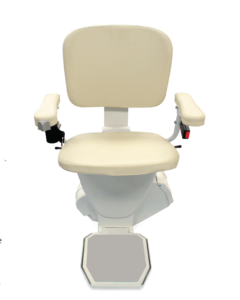
Star rating: 5.0/5
If you want one stairlift that hits the big needs without getting fussy, the AmeriGlide Rave 2 is the cleanest “do-it-all” option in this list. Its standout superpower is balance: strong capacity, practical features, and a setup that’s designed to be approachable for homeowners.
The first thing that matters is capacity. You get a 350 lb maximum weight rating, which keeps it in the “works for a lot of households” category. That’s useful if more than one person may use it, or if you simply want extra margin so the chair never feels strained.
Just as important, it’s built around straightforward daily use. It runs on battery power, so it can keep operating during a power outage. You control it from the armrest, and wireless call stations at both levels let you send the lift up or down without riding it. That’s the kind of feature you stop thinking about after a week, because it just makes the house feel normal again.
Stair type: Straight | Max capacity: 350 lb | Power: Battery-powered | Included track: 15 ft (included) | Controls: Armrest plus wireless call stations
Reasons to Buy
- Strong 350 lb capacity
- Battery power for outages
- Call stations top and bottom
- Self-installable design approach
- Practical safety sensor on footrest
Reasons to Avoid
- Brand page and official specs can vary by seller
- Best fit depends on your staircase length and layout
Who should buy it: This is a smart pick if you want a straightforward straight-stair lift with higher capacity and no-nonsense controls. It also fits well if you care about keeping the lift usable during power outages. If you’re trying to avoid a complicated project, prioritize models that mount to the stairs (not the wall) and include simple call controls. Those details reduce friction on day one and on day 500.
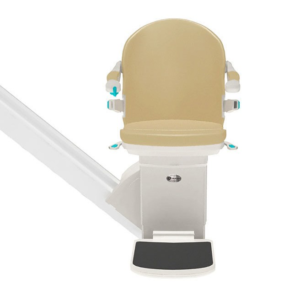
Star rating: 4.8/5
The Handicare 1000 wins when “pretty good” isn’t enough and you need a stairlift that feels like it was made for you. Its superpower is adjustability. You’re not stuck with a one-size seat and a track that looks busy on the stairs.
A big part of the appeal is the track design. You get a slim anodized aluminum track with no exposed gearing, which helps the system look cleaner and reduces obvious pinch points along the rail. In homes where other people will keep walking the stairs, that cleaner setup can matter just as much as the ride itself.
The seating options are where this model really separates. The smart seat can adjust for height, width, and depth, so you can dial in comfort instead of “making it work.” You can also add options like a powered swivel seat, powered footrest, and a body harness for extra support. There’s even a perch seat option if you prefer a higher, near-standing ride position (helpful if bending your knees deeply is uncomfortable).
Capacity stays competitive too. It supports up to 350 lb, while the perch seat version supports 300 lb. You also get battery backup, safety sensors, a key switch to prevent unauthorized use, and fold-up arms, seat, and footrest to keep the stairs clearer when parked.
Stair type: Straight | Max capacity: 350 lb (300 lb with perch seat) | Track style: No exposed gearing | Options: Powered swivel, powered footrest, harness, perch seat | Security: Key switch
Reasons to Buy
- Highly adjustable seat fit
- Cleaner-looking track design
- Perch seat option available
- Strong capacity for straight lift
- Helpful security key switch
Reasons to Avoid
- Options can add complexity to ordering
- Exact configurations vary by model package
Who should buy it: This fits you best if comfort is personal for you, not generic. If you’ve tried chairs that feel too low, too narrow, or awkward at the landing, the Handicare approach gives you more ways to get it right. You can review the official product details on the Handicare 1000 straight stairlift page.
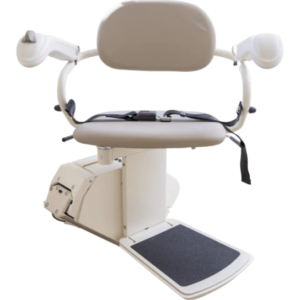
Star rating: 4.7/5
If your staircase feels like it was built with “just enough” width, the Harmar Pinnacle SL300 is the compact pick that still feels like a real machine. Its superpower is low-profile design without giving up core strength.
The rail setup is one of the big wins. The rail mounts about 1 inch from the wall and stands only 3 inches tall, which helps it stay visually quiet. When folded, the unit measures about 11 inches from the wall, a big deal when you’re trying to keep the stairs usable for other family members.
Even though it’s compact, it’s not fragile. You still get a 300 lb capacity, plus a steady travel speed of 20 feet per minute. The drive system uses a nylon polymer gear rack paired with a worm gear drive design, and it doesn’t need grease or lubrication. That usually means less mess and less routine fuss.
Battery backup is another strong point. Harmar states up to 60 trips on battery power in an outage. Real-world results depend on rider weight, staircase length, battery health, and temperature, but the headline number signals a lift built for reliability, not just convenience.
Safety coverage is layered. You get a seat belt, an overspeed brake, an audible alert system, a swivel seat with interlock, and a footrest obstruction sensor. Optional upgrades like a power swivel and power footrest can also make getting on and off easier, especially if twisting at the landing is hard.
Stair type: Straight | Max capacity: 300 lb | Speed: 20 ft/min | Battery backup: Up to 60 trips (claimed) | Folded clearance: 11 inches from wall
Reasons to Buy
- Very compact folded footprint
- Clean, no-grease drive design
- Strong backup trip claim
- Solid safety feature set
- Good choice for narrow stairs
Reasons to Avoid
- Add-ons cost extra
- Capacity is lower than 350 lb models
Who should buy it: This is the right match if your staircase is narrow and you don’t want the lift to dominate the space. It also suits you if you care about low maintenance and a quieter, cleaner-running drive setup. You can confirm the latest official details on the Harmar Pinnacle SL300 product page.
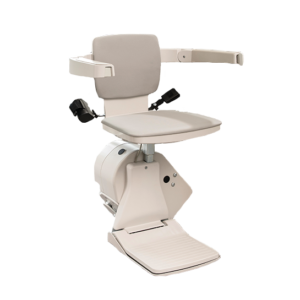
Star rating: 4.6/5
If you’re the type who notices the “feel” of a product every time you use it, the Bruno Elan is the premium straight-stair option that earns its spot through refinement. Its superpower is a polished, consistent ride plus strong long-term confidence.
This model is built for straight indoor staircases, and it keeps the experience simple. The armrest control feels intuitive, and two wireless remotes let you call the lift from either level without riding it. That’s especially useful if you park it upstairs and want to bring it down for someone else.
Power behavior is another reason it fits the premium label. It’s battery-powered and continuously charges, so you’re not stuck if the power goes out. In daily life, that translates to fewer “what if” worries.
Space use stays reasonable too. The rail installs within five inches of the wall, which helps keep the stairs open. When you’re not using it, the seat, arms, and footrest fold flat, so it doesn’t feel like permanent clutter.
You also get clear published sizing and capacity: 300 lb max capacity, a seat that measures 14.1 inches deep by 15.38 inches wide, and 20.25 inches between the arms. Bruno also includes a limited lifetime warranty on major components, which is the kind of policy that matters when a stairlift becomes part of your daily routine.
Stair type: Straight (indoor) | Max capacity: 300 lb | Rail distance: Within 5 inches of wall | Seat size: 14.1 in deep x 15.38 in wide | Warranty: Limited lifetime (major components)
Reasons to Buy
- Premium fit and finish feel
- Two wireless remotes included
- Reliable battery operation
- Strong warranty on key parts
- Folds flat to reduce clutter
Reasons to Avoid
- 300 lb capacity limit
- Premium models can cost more (check quotes)
Who should buy it: Pick this when you want a straight stairlift that feels dependable and refined every day. It’s also a strong choice if you care about warranty coverage and predictable performance. For official specs, see the Bruno Elan straight indoor stair lift page.
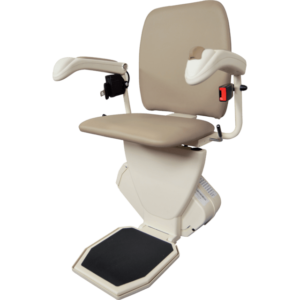
Star rating: 4.5/5
If you want extra strength under you, the Harmar Pinnacle SL600 is the heavy-duty pick that still respects your staircase. Its superpower is higher capacity without turning your stairs into an obstacle course.
Capacity leads the story: it supports up to 350 lb. For many shoppers, that’s not just about body weight. It’s also about confidence. A lift that’s designed for more load often feels more stable during starts, stops, and transfers.
Despite the higher rating, this one keeps a slim footprint. It folds down to about 10.5 inches from the wall, which helps others walk the stairs without feeling squeezed. That’s a key difference between “a lift that works” and “a lift everyone can live with.”
Performance is also a highlight. It runs at 20 feet per minute and uses a patented worm gear drive system paired with a nylon polymer gear rack. The practical upside is no grease and no lubrication, which usually means quieter operation and less mess near the rail.
Battery backup adds peace of mind. Harmar states it can deliver up to 60 cycles during a power outage. Again, real-life results vary, but the intent is clear: it’s built to keep going when you need it most.
Safety and comfort features round it out. You get a retractable seat belt, an overspeed brake, an alert system in the armrest, and obstruction sensors in both the footrest and chassis. Seat height adjusts from 17 inches to 22 inches, which helps you match the chair to your body and your landing height.
Stair type: Straight | Max capacity: 350 lb | Speed: 20 ft/min | Folded clearance: 10.5 inches from wall | Seat height: 17 to 22 inches adjustable
Reasons to Buy
- 350 lb rated capacity
- Slim folded profile
- No-grease drive design
- Strong battery backup claim
- Adjustable seat height
Reasons to Avoid
- Heavy-duty builds can cost more
- Only for straight staircases
Who should buy it: This is a great match if you want more capacity and a stronger-feeling ride, but you still need the stairs to stay usable for everyone else. It also works well when adjustability (like seat height) matters for transfers. You can verify the manufacturer details on the Harmar Pinnacle SL600 product page.
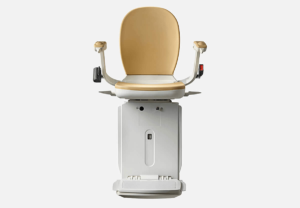
Star rating: 4.3/5
If your stairs turn, curve, or hit a landing before the top, you need a curved model, not a straight lift that almost fits. The Acorn 180 is built for that job, and its superpower is stable turning with a rail system meant to adapt to your layout.
This model uses a modular rail system engineered for curved staircases. It mounts to the stairs, not the wall, which can help keep installation cleaner and avoid structural changes. For many homes, that’s the difference between a simple install plan and a bigger remodeling conversation.
Ride quality is where curved stairlifts earn trust or lose it. The Acorn 180 uses a self-leveling carriage that keeps the seat balanced as it goes around turns. It also slows automatically on curves, which helps the ride feel controlled instead of rushed.
Battery power stays in play here too. It’s battery-powered and can keep running during an outage as long as it’s left at a charge point. You also get practical day-to-day features like a folding footrest, seat belt, a diagnostic display, and remote control operation.
If your base landing is tight, you can add an automatic powered hinged rail to keep the walkway clear. That’s a big deal if the rail would otherwise block a doorway or create a trip point.
Stair type: Curved | Power: Battery-powered | Ride support: Self-leveling carriage | Controls: Remote operation | Option: Powered hinged rail
Reasons to Buy
- Designed for curves and landings
- Self-leveling seat feel on turns
- Auto slow on curves
- Remote control support
- Hinged rail option for clearance
Reasons to Avoid
- Curved systems are more complex
- Exact rail fit varies by staircase
Who should buy it: This model fits you if your staircase has curves and you want a steady ride that stays balanced during turns. It’s also a good match when you need options to keep hallways and doorways clear. You can review the official model page at Acorn 180 curved stairlift details. For a second opinion on brand-level reputation (not model-specific), you can also compare third-party summaries like Which in their best stairlift brands roundup (note that it’s UK-focused, but the brand comparisons can still help your shortlist).
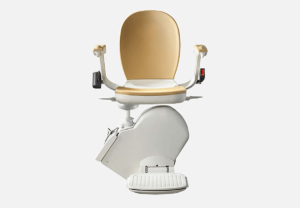
Star rating: 4.2/5
If your stairs are straight and you want a lift that feels simple from day one, the Acorn 130 is the cleanest “starter” model in this lineup. Its superpower is straightforward design: it installs neatly, rides smoothly, and folds away without drama.
Installation is a major part of why people like this one. It mounts directly to the stairs rather than the wall, so you typically avoid structural changes. That also tends to keep the work quicker and less messy, which matters when you just want the house back to normal.
Once you’re seated, the ride aims for calm. You get soft start and soft stop behavior, so it doesn’t lurch. Control is a simple press-and-hold paddle in the direction you want to go. The lift gives an audible beep, pauses briefly, then moves up to speed. At the end of the track it slows and stops on its own.
Safety features cover the basics well. There’s a seat belt, plus backup battery power so it can operate during a power outage. Five safety edges around the carriage and footrest stop the lift instantly if something is detected, which is the kind of real-world protection you appreciate when pets, grandkids, or clutter show up on the stairs.
Daily convenience is strong too. The seat, armrests, and footrest fold up when not in use. Remote controls let you call or send it between floors. If you need more clearance at the bottom, an optional hinge rail can reduce obstruction and trip hazards.
Stair type: Straight | Power: Battery-backed | Ride behavior: Soft start and stop | Safety: Five safety edges plus seat belt | Convenience: Folding seat, arms, and footrest
Reasons to Buy
- Simple, clean straight-stair design
- Smooth start and stop feel
- Good obstruction detection coverage
- Folds up to save space
- Optional hinged rail available
Reasons to Avoid
- Not for curved staircases
- Exact options depend on your install needs
Who should buy it: This fits you if you have a straight staircase and want a dependable lift that doesn’t feel complicated. It’s also a good pick when you care about folding the unit away so the stairs stay easy for others. You can see the official product overview at Acorn 130 straight stairlift details.
All recommended stairlifts compared
Here’s a side-by-side snapshot to help you narrow the list faster.
| Model | Stair type | Max capacity (stated) | Best for |
|---|---|---|---|
| AmeriGlide Rave 2 | Straight | 350 lb | All-around balance, simple daily use |
| Handicare 1000 | Straight | 350 lb (300 lb with perch seat) | Best customization and seat fit |
| Harmar Pinnacle SL300 | Straight | 300 lb | Tight stairs and low-profile install |
| Bruno Elan | Straight (indoor) | 300 lb | Premium feel and long-term confidence |
| Harmar Pinnacle SL600 | Straight | 350 lb | Heavy-duty support with slim fold |
| Acorn 180 | Curved | Not stated | Curves, turns, and landings |
| Acorn 130 | Straight | Not stated | Straight-stair starter pick |
The key takeaway: start by filtering on stair type (straight vs curved), then decide whether you need higher capacity, a tighter folded footprint, or a more adjustable seat.
How Much Does a Stairlift Cost?
Stairlift prices vary more than most people expect, and the range is wide enough that it’s worth knowing before you start requesting quotes. A basic straight stairlift typically starts around $2,000 to $3,000 for the unit itself. Mid-range models with more adjustability and safety options tend to land between $3,000 and $5,000. Premium straight stairlifts with high-end finishes and extended warranties can push past $5,000, depending on the manufacturer and installation.
Curved stairlifts are a different conversation entirely. Because the rail must be custom-built to your specific staircase, prices usually start around $7,000 and can reach $15,000 or more for complex layouts. That’s not a mark-up — it reflects the engineering work of designing a rail that fits your staircase exactly. No two curved rails are the same.
Installation is often separate from the unit price, unless the listing or dealer bundles it in. Professional installation typically adds $100 to $300 for straightforward straight-stair jobs, though complex setups can run higher. Some brands, like the AmeriGlide Rave 2, are designed with DIY-friendly setups to reduce that cost. Either way, get the total delivered-and-installed cost in writing before you commit.
Finally, remember that cost isn’t just what you pay on day one. A model with a strong warranty, a no-grease drive system, and a reliable battery (like the Harmar Pinnacle SL300 or SL600) can cost less over three years than a cheaper unit that needs early servicing. Think of it as a home upgrade, not just a purchase.
It’s also worth knowing that financial help may be available. Veterans’ programs, state-level home modification grants, and some nonprofit organizations offer stairlift assistance. Our guide to stairlift grants and financial help explains what’s available and how to apply.
If you want a full breakdown of stairlift pricing across brands, staircase types, and installation scenarios, our complete stairlift cost guide covers everything in one place. And if you’re not ready to commit to a purchase, our guide to renting vs buying a stairlift compares the real numbers over time so you can make the right call for your situation.
Stairlift Installation: What to Expect
One of the most common questions after picking a model is: how complicated is this going to be? For most straight stairlifts, less complicated than you’d expect. The rail attaches to the stair treads themselves — not to the wall — which means you typically don’t need structural changes or major carpentry work. A professional installer can complete a standard straight-stair install in two to four hours. You should be riding it the same day.
Curved stairlift installations take longer because the rail is custom-built off a detailed survey of your staircase. The survey visit usually comes first, the rail is then manufactured, and installation follows separately — so plan for a multi-week timeline from order to first ride.
A few things to sort out before install day: clear the staircase and the landing area, confirm the nearest power outlet location, and know in advance whether your staircase has any unusual angles, doors, or tight turns that might affect rail placement. Your installer should walk through all of this during a pre-install assessment, but asking upfront saves surprises.
If you choose a DIY-friendly model like the AmeriGlide Rave 2, the process is simpler: you assemble the rail sections, secure them to the treads following the included instructions, and connect to the power source. Most buyers with basic home improvement confidence can manage it, though it’s always worth having a second person present for safety during the first test ride.
For a step-by-step walkthrough of what installation day actually looks like, including how to prepare your home, what to check after the rail is fitted, and what DIY installation really involves, see our full stairlift installation guide.
Stairlift Maintenance and Running Costs
A stairlift isn’t a set-and-forget product, but it’s also not high-maintenance. Most modern models are designed to run cleanly with very little daily intervention. Models like the Harmar Pinnacle SL300 and SL600 use a no-grease, no-lubrication drive system, which keeps the rail clean and eliminates one of the messiest parts of traditional stairlift upkeep. Wiping down the rail and carriage with a dry cloth every few weeks is usually enough between service visits.
Annual professional servicing is worth factoring into your budget. A typical stairlift service covers the drive system, safety sensors, battery health, and mechanical components, and usually costs between $100 and $300 depending on the provider and model. Some manufacturers offer service contracts that lock in a lower annual rate and prioritize you for call-outs. If reliability is important to you — and on a daily-use device it should be — a service contract is worth at least comparing.
Battery replacement is the other recurring cost to plan for. Most stairlift batteries last three to five years under normal use. When they start to go, the most common symptom is reduced trip count per charge or slower-than-usual performance. Replacement batteries are usually available directly from the manufacturer or certified dealers, and the swap is typically straightforward.
On electricity, stairlifts are cheap to run. Most draw under 300 watts during operation, and since rides are short, real-world energy costs are minimal — often just a few dollars per month. The bigger ongoing value is choosing a model built to last, so compare warranty terms as carefully as you compare the price tag.
For a full stairlift servicing checklist, common repair issues, and advice on whether a service contract is worth it for your model, see our dedicated stairlift maintenance guide.
What to Look for in a Stairlift: A Buyer’s Checklist
Straight Stairlift vs Curved Stairlift: How to Know Which One You Need
This sounds obvious, but it’s the biggest buying mistake. Straight stairlifts fit straight staircases. Curved stairlifts are built for turns and landings. If you have any bend at all, plan for a curved solution, because “almost straight” is still curved in stairlift terms.
If you want more general shopping guidance beyond model lists, ConsumerAffairs lays out common pitfalls in their how to choose a stair lift guide.
If you have a curved staircase and want a full comparison of available models, how custom rail fitting works, and what to expect from the quote process, our curved stairlift guide covers it in detail.
Stairlift Weight Capacity: Why It Matters More Than You Think
Capacity ratings show what a lift is designed to support safely. If you’re close to a limit, moving up to a 350 lb model can feel better day to day. It’s not just about weight, it’s also about confidence during starts, stops, and transfers.
If capacity is your primary concern, our dedicated guide to heavy-duty stairlifts goes deeper into what the ratings really mean and which models are purpose-built for higher-weight users.
Folded clearance and rail placement
A stairlift is part mobility device, part hallway furniture. So you want it to “disappear” when you’re not using it. Look for how far it sticks out from the wall when folded, and whether the seat, armrests, and footrest fold easily. Also check rail distance from the wall, because that affects how open the steps feel.
Power Source and Outage Behavior: Battery vs Direct-Wired Stairlifts
Battery-powered units can keep working during an outage, but details matter. Some models need to be parked at a charge point to stay ready. Others claim a certain number of trips or cycles. Either way, you want predictable behavior, because the worst time to learn this detail is when the lights go out.
Stairlift Safety Features: What Every Model Should Include
At minimum, prioritize obstruction sensors, a seat belt, and safe landing behavior (like a swivel seat that helps you exit away from the stairs). If you have pets, a footrest sensor can save you from a scary moment.
Stairlift Warranty and After-Sales Support: What to Compare
A stairlift is a long-term product. Warranty coverage on major components can be a big deal, and it’s worth comparing how manufacturers describe coverage for the motor, transmission, and key electronics. Also keep your install plan in mind, because service access matters more than most people expect.
Comfort options that match your body
Seat height, seat size, and swivel behavior can make a lift feel “right” or “wrong.” If you have joint pain, a powered swivel or powered footrest can be more than a luxury. It can change whether you use the lift confidently every day.
If stairs are only part of your mobility picture, it can also help to compare other assistive seating options. Consumer Reports covers seating aids in their best lift chairs report, which can be useful if standing up from a chair is also a struggle.
Are Stairlifts Safe?
The short answer is yes — when you buy from a reputable manufacturer and have the unit correctly installed, modern stairlifts are very safe. The longer answer is that safety comes from the combination of the right model, the right installation, and the right daily habits, so it’s worth understanding what’s protecting you on every ride.
Modern stairlifts are equipped with multiple independent safety systems. Obstruction sensors on the footrest and, on some models, the chassis detect anything in the path of travel and stop the lift immediately. Overspeed brakes activate if the carriage somehow moves faster than it should. Seat belts keep you secured during the ride, while swivel seat designs let you exit facing away from the stairs — the safest dismount position. These aren’t optional extras on good models; they’re standard.
From a standards perspective, reputable brands build to recognized safety certifications. In the US, look for compliance with UL 1975 or equivalent safety standards. Manufacturers like Bruno, Harmar, Acorn, and Handicare all operate with published safety standards and are tested by independent bodies. If a brand can’t tell you what safety standard their product meets, that’s worth treating as a red flag.
The most common stairlift safety incidents aren’t mechanical failures — they’re user errors, like not wearing the seat belt, getting on or off incorrectly, or allowing children to use the lift unsupervised. Treating a stairlift like the safety device it is, rather than a convenience gadget, keeps the risk profile extremely low. If you want a deeper look at stairlift safety features and what to prioritize, our full stairlift safety guide walks through each system in detail.
Why Trust OASTHAR?
I’m Shashini Fernando, associate editor at OASTHAR, specializing in home accessibility, mobility aids, and adaptive living products. Every stairlift in this guide was evaluated using a structured process: detailed manufacturer specifications were reviewed for all major 2026 models, verified owner feedback was analyzed across hundreds of real-world reviews, pricing was cross-checked against current listings, and safety data was validated against standards referenced by the National Council on Aging and leading stairlift manufacturers.
Our recommendations reflect patterns observed across many homes and households — not a single install experience. The goal is to give you a shortlist you can trust before you ever request a quote, so you walk into that conversation informed rather than overwhelmed. OASTHAR does not accept payment for product placement. Our rankings are determined solely by our evaluation criteria, which you can review in our testing methodology section above.
Best Stairlift FAQs
What is the best stairlift overall?
The AmeriGlide Rave 2 is the best overall pick in this guide because it combines a 350 lb capacity, battery-powered operation, and practical call controls that fit everyday use.
What stairlift do you need for a curved staircase?
You need a curved stairlift, such as the Acorn 180, because the rail must be built to match turns and landings. Straight stairlifts won’t fit safely on curved layouts.
Are stairlifts safe during a power outage?
Many stairlifts run on batteries, so they can keep operating during an outage. Still, performance depends on battery health and whether the lift is parked at a charge point, so you should confirm the charging setup before install.
What matters more, weight capacity or compact size?
It depends on your staircase and household. If multiple people use the stairs and space is tight, compact size can matter every day. If you want extra stability and confidence, a higher capacity model can feel better even if you don’t “need” the full rating.
Do you need a wall-mounted stairlift?
Not always. Several models mount to the stairs rather than the wall, which can reduce the need for structural changes. Your staircase layout and materials still matter, so confirm mounting requirements during the quote process.
How long does a stairlift last?
Most quality stairlifts are built to last 10 years or more with regular servicing. The motor and drive system are typically the longest-lasting components, while batteries generally need replacing every three to five years. Buying from a brand with good parts availability and a strong warranty — like Bruno or Harmar — gives you the best chance of a long service life.
Is financial help available for buying a stairlift?
Yes, depending on your situation. In the US, veterans may qualify for stairlift assistance through the VA. Some states and local governments offer home modification grants for qualifying residents. Medicare does not typically cover stairlifts, but Medicaid waiver programs sometimes do, depending on your state. Our stairlift grants guide covers the main programs and how to apply.
If you’re already a stairlift owner and running into issues, our stairlift troubleshooting guide covers the most common problems — from a lift that won’t move to persistent beeping alerts — with practical fixes before you call a technician.
Final Verdict
If you want the safest all-around choice, pick the AmeriGlide Rave 2 for its strong 350 lb capacity and practical daily controls. If comfort fit is your biggest concern, the Handicare 1000 gives you the most ways to adjust the seat, position, and options — no other model on this list comes close for personalization.
For narrow stairs, the Harmar Pinnacle SL300 is the compact favorite, while the Harmar SL600 is the move when you want heavy-duty support without a bulky folded footprint. If your budget is the limiting factor, the Acorn 130 is the cleanest straight-stair starter option that doesn’t feel like a compromise.
And if your staircase has any curve or landing, stop considering straight models and go straight to the Acorn 180 — it’s the only pick here built for that job.