

You bought a “smokeless” grill, fired up a couple burgers, and the smoke alarm still screamed. So, do smokeless grills work or is the whole category just marketing?
In 2026, the good models are meaningfully better than the old drip-tray-only designs. You’re seeing more infrared heat, built-in fans, and smarter drip cooling that keeps grease from burning.
TL;DR: none are 100% smokeless, especially on fatty foods, but the best ones are roughly 80 to 90% better than basic indoor grills, and your technique matters as much as the machine.
RELATED: The 7 Best Electric Grills for 2026, Tested and Reviewed
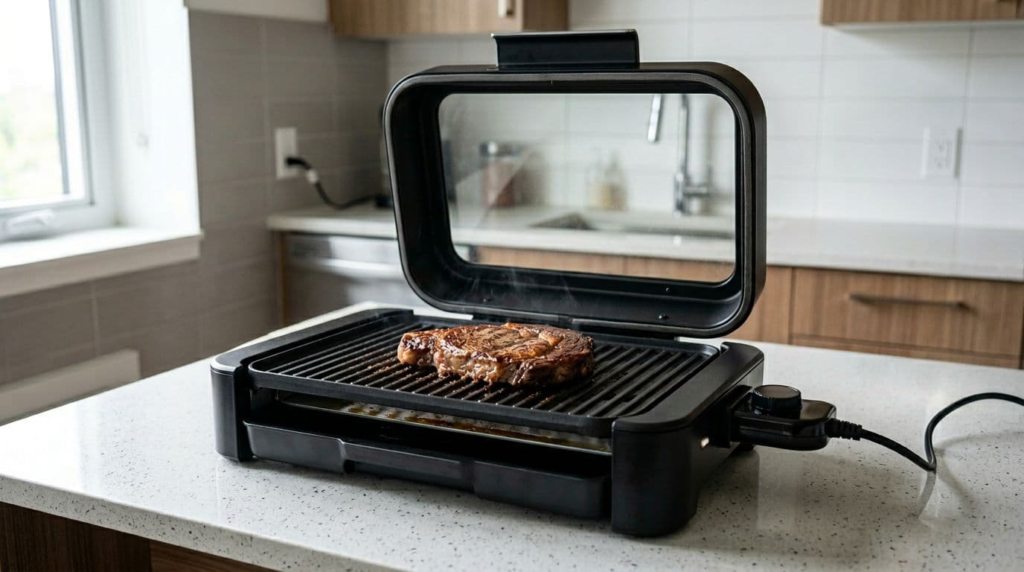
What “smoke” really is, and why electric grills still make it
Most “grill smoke” in your kitchen comes from fat and food sugars hitting a very hot surface and breaking down. That reaction makes visible smoke, sticky residue, and that burned smell that hangs in your curtains. Electric grills don’t get a free pass here because they still run hot enough to scorch drips, and the heating source sits close to the food.
Some of what you think is smoke is actually steam. If you cook wet food (marinated chicken, thawing shrimp, watery veggies), moisture flashes into vapor and carries tiny grease particles with it. Steam looks like smoke under a bright range hood light. Your nose can tell the difference fast.
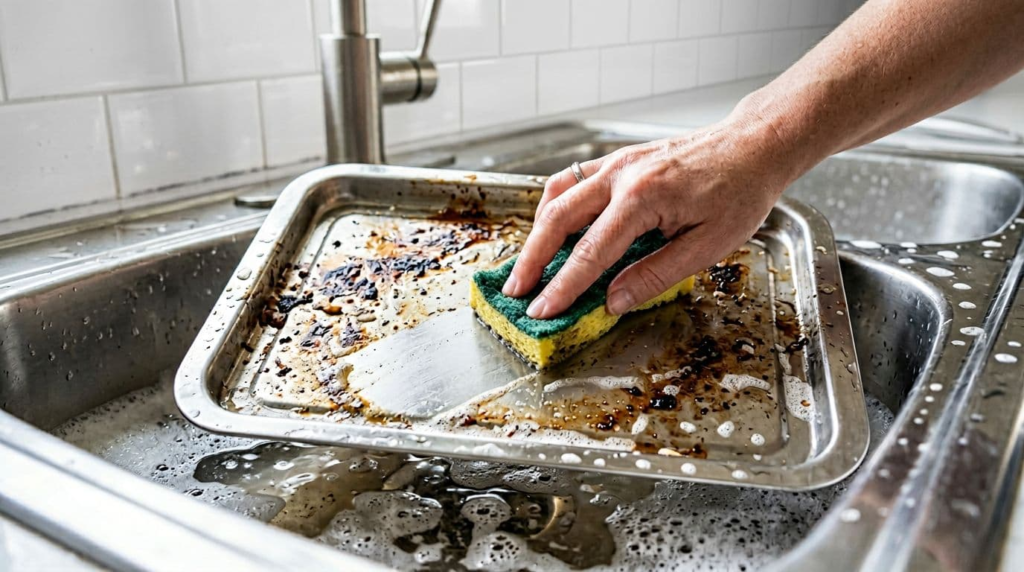
From a cleanup angle, the cause matters. Burned grease turns into a varnish-like film on lids, splatter shields, and the inside walls of the base. That’s why “smokeless” is really a promise about drip management and airflow, not magic.
The biggest smoke triggers in a normal kitchen test
A smokeless grill can behave perfectly on lean food, then fall apart on the stuff you actually want to cook. These are the repeat offenders:
- High-fat meats: ribeye, 80/20 burgers, and sausages drip more, so more hits hot metal.
- Skin-on chicken: rendered fat plus proteins can char fast.
- Sugary sauces and marinades: honey, teriyaki, brown sugar, and some bottled BBQ sauces burn early.
- Overcrowding: packed food traps moisture, which pushes greasy vapor up and out.
- Dirty plates and trays: last session’s carbon becomes today’s smoke starter.
Grease pooling is the multiplier. When fat can’t drain, it sits, overheats, then smokes like a candle wick.
What “smokeless” means on the box
On packaging, “smokeless” almost always means reduced smoke, not “no smoke.” That’s consistent with what you see in independent testing. For example, Food & Wine’s smokeless grill test results praise low smoke, but they still treat smoke control as a spectrum, not an on-off switch.
At home, the reality check is simple: a hard sear on a fatty steak can still trip a smoke detector, even if the room looks mostly clear. You might not see a cloud, but a brief burst near the grill can be enough. If you live in an apartment, plan for “mostly smokeless,” then cook like you mean it.
If a grill keeps grease away from the hottest parts, you’ll see the biggest drop in smoke and the easiest cleanup.
The tech that makes a grill close to smokeless
A good smokeless electric grill is basically three systems working together. One system heats food efficiently, one system moves air, and one system gets grease away before it burns. When a grill nails all three, your kitchen stays clearer and the parts wipe down faster.
Infrared heating
Infrared is radiant heat. Instead of relying only on hot air and contact with the grate, the element throws heat toward the food. That helps you brown surfaces faster, which shortens the time your steak sits there dripping fat.
The upside is obvious: better sear potential with less overall smoke. The limit is also obvious: fat can still smoke if it hits a scorching-hot plate or splatter shield. Infrared improves the odds, but it can’t rewrite physics.
Built-in extractors and airflow
Fans matter more than most people expect. On the best indoor grills, airflow pulls vapor through the unit and reduces the amount that escapes around the lid. Some designs create a cooler path that helps grease mist condense inside, instead of floating into your kitchen.
Tradeoffs come with it:
- Fan noise is real, especially at high heat.
- Filters and splatter screens need wiping, or you’ll smell last week’s salmon.
- Grease mist still lands inside the lid and around vents.
Still, if you’ve ever watched a low-smoke grill keep the air clear while a cheap open-plate grill fogs the room, you get it.
For a broader sense of what top indoor grills get right (and what they don’t), see Serious Eats’ indoor grill testing, which focuses on real cooking outcomes, not just spec sheets.
Drip trays, water trays, and steep grates, the cleanup and smoke combo you should actually care about
If you care about cleaning, focus on one thing: how fast grease gets away from the heat.
Steeper grates drain better. Wide channels drain better. A drip path that doesn’t cross the hottest zone drains better. Water trays help because drips land in a cooler environment, so they sizzle less and smoke less.
Stuck-on sugar is the villain here. Burned marinades glue themselves to nonstick plates and splatter shields. If you cook sweet sauces often, you’ll want removable plates and a tray design that you can rinse immediately.
Honest 2026 kitchen testing
You don’t need a lab. You need a repeatable plan that matches apartment life, meaning standard outlets, limited ventilation, and the smoke alarm sitting two rooms away waiting to judge you.
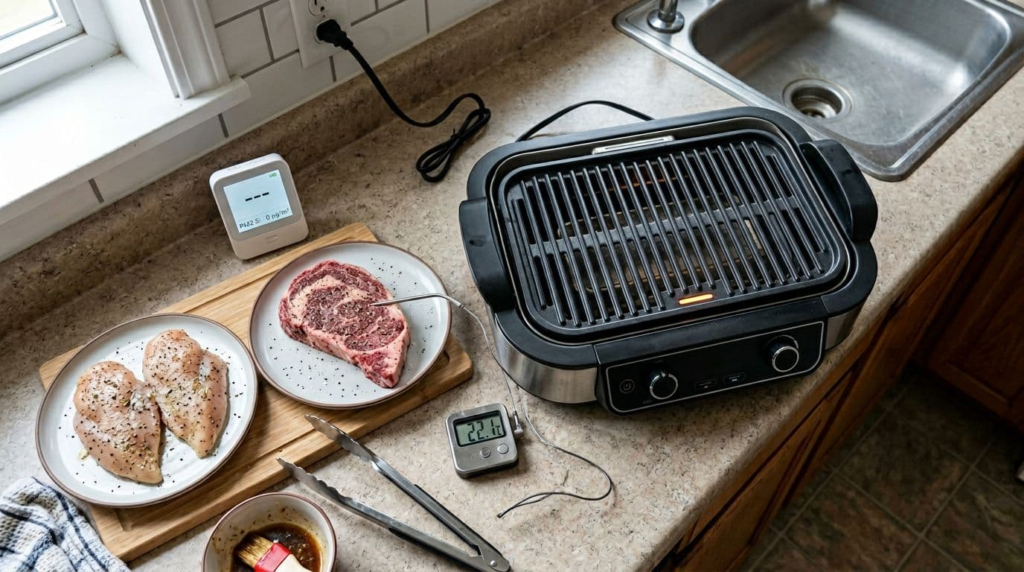
Here’s the simple setup that makes different grills comparable:
- Max temperature: you want 450°F+ if you care about steak. Some models flirt with the 500°F class, and it shows in browning.
- Recovery time: time how long it takes to return to target temp after adding cold food.
- Visible smoke score (1 to 10): 1 is almost nothing, 10 is windows-open panic.
Keep everything else the same. Same oil, same meat weight, same preheat time, same cleaning standard. Also, start with a clean drip tray every single run. Otherwise, you’re measuring last week’s grease, not today’s grill.
The two foods that separate hype from reality
If a grill stays clean with veggies, that tells you nothing. Two foods expose the design fast:
Ribeye steak (or an 80/20 burger) is the fat test. The moment drips hit hot metal, you’ll see the real smoke profile. You also learn if the grill can actually sear, because a pale steak is its own kind of disappointment.
Sugary marinated chicken thighs are the sticky test. Sugar burns early, so it challenges smoke control and cleanup at the same time. If you dread scrubbing, this is the trial that matters.
If you want a mainstream reference point on what indoor grills are expected to handle, Food Network’s indoor grill reviews are useful for seeing how editors frame smoke, sear, and everyday ease.
How to measure smoke without fancy lab gear
The best tool is a cheap PM2.5 air quality monitor. You place it a few feet from the grill and watch particulate levels climb during a sear. That gives you a real number you can compare across models.
No monitor? You can still run a fair test. Track:
- Smoke detector behavior: no beep, warning chirp, full alarm.
- Visible haze: none, light shimmer, obvious haze.
- Smell and residue: does the nearby backsplash feel tacky later?
Write it down. Your memory lies, especially after you eat.
Best smokeless electric grill picks from 2026 tests
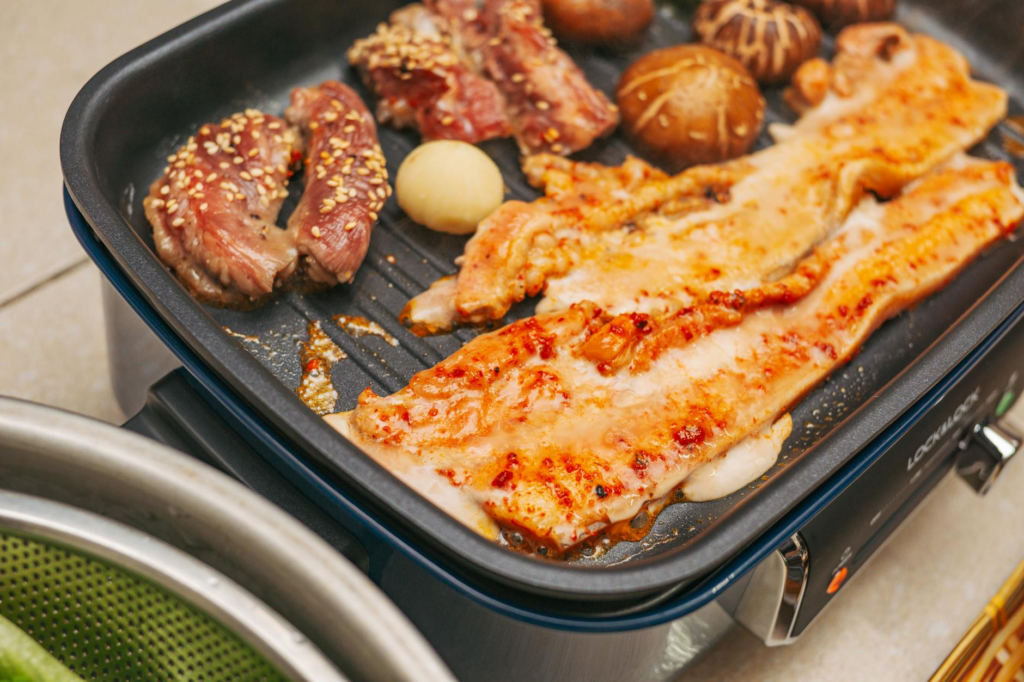
You’re not just shopping for performance. You’re shopping for the kind of cleanup you’ll actually do on a Tuesday night. The best smokeless electric grill for you is the one that matches your cooking habits, not the one with the boldest box claims.
This quick table summarizes how these models tend to behave in real kitchens.
| Model | Smoke control | Sear ability | Cleanup |
|---|---|---|---|
| Ninja Sizzle / Ninja Foodi Indoor Grill | 8.5/10 | 8.5/10 | 8/10 |
| Philips Smokeless Indoor Grill | 8/10 | 9/10 | 7.5/10 |
| Hamilton Beach Searing Grill / PowerXL options | 7/10 | 7.5/10 | 7/10 |
Takeaway: Ninja usually wins the balance, Philips wins the browning, and the value picks can be totally fine if you cook a little smarter.
Ninja Sizzle and Ninja Foodi Indoor Grill
Ninja’s indoor grills tend to heat fast and hold heat well. That helps you sear without running the unit forever, which keeps grease vapor down. You also get solid lid design and airflow support on many models, so smoke stays more contained.
The drawbacks are practical, not fatal. Fan noise can be noticeable, cord length can be annoying in tight kitchens, and some models take up real counter space.
Cleanup is usually straightforward. The grill plate and drip tray come out easily, and the splatter shield is the part you can’t ignore. If you skip it, smells build up.
For a recent, steak-focused perspective, Popular Mechanics’ Ninja Foodi Indoor Grill review lines up with what most owners notice, strong browning with manageable smoke.
Philips Smokeless Indoor Grill
Philips leans hard into infrared. You get even browning and strong grill-mark potential, especially on leaner cuts and vegetables. When you run it hot, it can feel closer to outdoor-grill color than most indoor units.
Still, it’s not a smoke eraser. A ribeye sear can push enough hot fat vapor to irritate a smoke detector, especially in smaller apartments. You’ll see less smoke than a basic open grill, but you won’t see zero.
Cleaning is mostly easy because the plate is simple and grease collection is predictable. The hard part is burned sugar. If you brush sweet marinades onto chicken mid-cook, expect a soak and a gentle scrub.
Value and simplicity picks
If you want fewer parts and a lower price, these can make sense. You typically get a lid, decent heat, and a drip setup that works well enough for burgers, chicken, and vegetables.
Where they lose ground is consistency. Some designs drain better than others, and some rely heavily on water trays or airflow tricks. When the drip path isn’t great, smoke control drops fast on fatty meats.
Your cleaning expectations should be realistic. Nonstick plates help, but coatings don’t forgive metal tools or burned-on sugar. If dishwasher-safe parts are included, that’s a real quality-of-life win. If not, you’ll want to clean warm plates right after cooking, while residue still lifts.
Do Smokeless Grills Work FAQs
Are smokeless electric grills really smokeless?
No. They’re reduced-smoke grills. Fatty foods and sugary sauces can still smoke.
Can you sear steak on a smokeless indoor grill?
Yes, if the grill reaches 450°F or higher and recovers heat quickly after you add the steak.
Why does your smokeless grill still set off the smoke alarm?
Usually it’s hot grease vapor from fatty meat, burned sugar, or leftover grease in the tray from last time.
What’s the easiest way to reduce smoke while cooking?
Preheat fully, don’t overcrowd, keep the drip tray clean, and avoid sugary glazes until the end.
Do water trays actually help?
Yes. Water cools drips so they sizzle less, which means less smoke and easier tray cleanup.
Conclusion
Smokeless electric grills work in 2026 because the best models manage drips, heat food fast, and keep vapor contained. They still aren’t 100% smokeless, especially when you sear fatty meat or cook sugary sauces. If you treat “smokeless” as “way less smoke,” you’ll be happy.
Pick based on your priorities. Choose infrared if sear is your main goal. Choose fan plus water tray designs if lowest smoke matters most. Choose simpler plates if you hate cleaning more than you love grill marks.
Three habits keep things calmer fast: trim excess fat, use a high smoke-point oil, and always use the water tray (plus basic ventilation). Once you match the grill to your space and your food, that smoke alarm gets a lot quieter, and cleanup stops feeling like punishment.