

If you’re shopping for the best portable electric grills for camping, you’re probably trying to solve three problems at once: picking a grill that actually cooks well, figuring out how to power it, and avoiding a setup that turns “easy dinner” into a fuse-blowing mess. This guide gives you 6 smart picks, plus clear advice on power and what to look for.
Disclosure: As an independent reviewer, we may receive an affiliate commission on qualifying purchases made through our links. This helps support our research and testing team at OASTHAR. Learn more about our testing process.
Electric grilling is surging in 2026 for practical reasons. Wildfire seasons and flame bans keep getting stricter, propane tank refills are annoying on the road, and electric is quieter and cleaner at crowded tailgates.
The last piece is power. Portable power stations from brands like Jackery and EcoFlow have made plug-in grilling realistic, even when you’re nowhere near a wall outlet.
RELATED: The 7 Best Electric Grills for 2026, Tested and Reviewed
Best portable electric grills at a glance
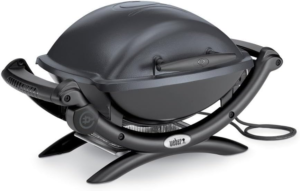
- Best Overall: Weber Q 1400 Electric Grill
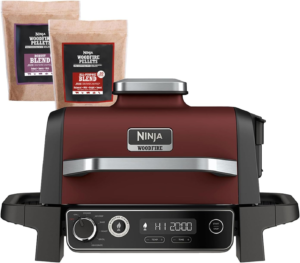
- Best Without Propane: Ninja Woodfire Outdoor Grill and Smoker OG701
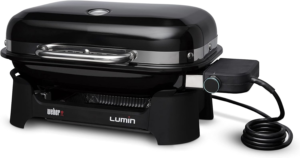
- Best Compact: Weber Lumin Compact Electric Grill
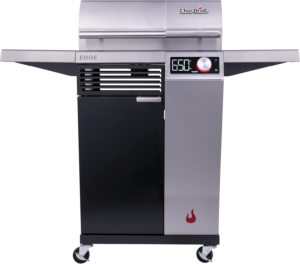
- Best for Quick Meals: Char-Broil Edge Electric Grill
- Best Budget: George Foreman Indoor and Outdoor Electric Grill GFO240
How we choose and test portable electric grills for camping
In our assessment, you get the most honest “best of” list when you combine hands-on checks with real owner patterns. We research Amazon, Walmart, Target, and Currys, then analyze hundreds of customer reviews to see how grills hold up off the product page.
Heat and temperature control
Good looks like fast preheat and enough top-end heat to brown burgers and steak, not just warm them. You’re aiming for 500F-plus class surface temps, which depends on wattage, lid fit, and grate material. Some electric grills shine at steady medium heat, which is great for chicken and veggies, but they won’t give thick ribeyes a hard crust.
Real outdoor performance
Outdoor cooking exposes weaknesses fast. Wind steals heat, and frequent lid openings punish recovery time. During evaluation, you want stable feet or a solid stand, a lid that closes tight, and controls that don’t drift. Open designs lose heat faster in gusts, while closed-lid grills tend to hold temp better and cook more evenly.
Portability and packing
You’re not buying a patio grill, you’re buying something you’ll move a lot. Carry handles, lid latches, and smart cord storage matter more than marketing claims. Heavier grills can still be worth it if they cook better and take more abuse, especially when you’re sliding them in and out of a trunk all summer.
Cleanup and grease management when you are away from home
A great travel grill doesn’t punish you after dinner. We prioritize secure drip trays, removable plates, and grease paths that don’t spill when you lift the unit. Nonstick can help, but durable coatings matter more than shiny ones. If parts are dishwasher-safe once you’re home, that’s a real win. Let everything cool before packing, even if you’re rushing.
Price and Customer Reviews
Price only counts if the grill keeps performing. We weigh cost against build quality, warranty support, and consistent cooking. In reviews, patterns matter: repeat complaints about breaker trips, peeling coatings, or weak heat get flagged. Verified purchases and long-term notes carry more weight than day-one praise. For broader category context, you can compare our impressions against publications that run structured grill tests, like Food & Wine’s electric grill testing.
Rating: 5.0/5
This is the pick you buy when you want steady results, not drama. The Q 1400 holds heat well, cooks evenly, and stays composed in breezy conditions. If you’ve ever fought a flimsy hot plate style grill in the wind, this one feels like a real grill.
You get about 189 sq in of cooking space, about 28.5 lb of carry weight, and around a 1560W draw. It’s a strong match for campsites with solid outlets, RV power, or a properly sized power station. For tailgates, it preheats predictably, so you’re not guessing when to drop the burgers.
Reasons to buy
- Strong heat retention for an electric
- Reliable build that survives travel
- Even cooking across the grate
Reasons to avoid
- Heavy if you’re carrying far
- Needs stable power, no “tiny battery” option
The Best Without Propane Portable Electric Grill
Ninja Woodfire Outdoor Grill and Smoker OG701
Rating: 4.7/5
You buy the Woodfire for one reason: it brings legit smoke flavor to places where you can’t, or don’t want to, run flames. It’s also a crowd-pleaser at tailgates because it does more than grill, so your menu doesn’t get stuck on hot dogs.
Power draw is around 1760W, which is close to the ceiling for many 15A setups, so cord quality and circuit sharing matter. It’s best when you can claim a dedicated outlet. The trade-off is pellet management and a larger footprint than simpler grills. You’ll also want to stay patient if app features feel fussy.
Reasons to buy
- Smoke flavor without charcoal or propane
- Multi-function cooking for mixed crowds
- Strong lid cooking for more even heat
Reasons to avoid
- High watt draw limits power station choices
- Pellets add one more thing to pack
Rating: 4.5/5
If your trips are short, your trunk space is tight, and you still want high-heat performance, the Lumin Compact makes a strong case. It heats quickly and aims for that 600F-plus class output that helps you get real browning, not steamed patties.
It typically runs around 1560W, so it behaves similarly to the Weber Q on power. The smaller footprint is the point, although it’s not the right tool for feeding a huge group. For couples, solo campers, and small tailgates, it’s fast, tidy, and easy to position on a sturdy table.
Reasons to buy
- Quick preheat and strong top-end heat
- Compact shape travels well
- Great for small groups and weeknight-style meals
Reasons to avoid
- Limited capacity for big tailgates
- Needs a stable surface, like most tabletops
Rating: 4.2/5
The Edge is for simple, fast food that still tastes grilled. It’s the kind of electric you bring when you know you’re cooking brats, burgers, and vegetables, and you want controls that don’t need babysitting.
Expect a typical 1500W draw, which plays nicely with standard outlets if you don’t share the circuit. Cleanup is usually straightforward thanks to sensible grease management. The honest limitation is searing. Thin cuts do well, but thick steaks won’t get the same crust you can coax from hotter, heavier designs.
Reasons to buy
- Straightforward controls and even heat
- Easier to carry than heavier premium builds
- Good for quick tailgate batches
Reasons to avoid
- Not the best for deep sear on thick steaks
- Wind can affect open-cook moments more
The Best Budget Portable Electric Grill
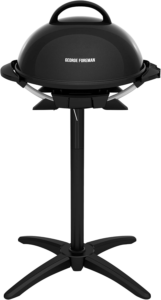
George Foreman Indoor and Outdoor Electric Grill GFO240
Rating: 3.9/5
Sometimes you just want the easiest answer. The GFO240 is light, widely available, and usually priced right. It’s also friendly for casual campers, beach weekends, and travel stops where you’re cooking smaller portions and don’t care about perfect grill marks.
It draws around 1440W, and the stand setup gives you flexibility at campsites or rental houses. Still, you’re trading peak heat and grate heft for portability. If you want simple chicken, sausages, and veggies with minimal fuss, it works. If you want steakhouse sear, you’ll feel the ceiling.
Reasons to buy
- Budget-friendly and easy to pack
- Stand option helps in tight spaces
- Quick meals with minimal setup
Reasons to avoid
- Lower top-end heat than premium picks
- Lighter build feels less “grill-like”
A quick reality check on pellet grills for travel
The Traeger Ranger is a great briefcase-style travel cooker for real BBQ flavor, but it’s not an all-electric grill. It runs on wood pellets, and the electricity mainly powers the controller, auger, and fan. In other words, it still “cooks by pellets,” even though it needs a plug.
It makes sense if you’re tailgating and want smoked food without hauling a full-size smoker. If your goal is a simple, fire-ban-friendly electric grill, it’s a different category. For a wider view of portable grill styles across fuel types, Serious Eats has a helpful roundup of portable grills tested and reviewed.
Portability playbook: what to look for before you buy
Portability isn’t just weight. It’s how the grill behaves when you carry it one-handed, set it on a wobbly table, and pack it back up while everyone else is already in the car.
Before you buy, do a few quick checks at home. Measure your trunk opening (not just trunk volume). Confirm you have a stable table or stand plan. Check how far your outlet will be from your cooking spot. Then do a dry run, place the grill, route the cord, and see if the lid opens without hitting anything.
Also think about your “normal meal.” If you usually cook for two to four people, a compact grill feels great. If you’re always feeding five-plus, you’ll get tired of cooking in batches. Portable doesn’t mean tiny, it means practical for your routine.
For more third-party testing perspective on how portability and performance trade off in the field, OutdoorGearLab’s head-to-head is useful, even when it includes non-electric models, because the testing approach maps to real camp cooking. See their portable grill testing and rankings.
The small details that matter most on the road
Look for lid locks, sturdy feet, and a grease tray that won’t pop out in transit. A good carry handle saves your knuckles and your shins. A locking lid matters more than you’d think because it helps keep old grease contained when the grill rides in your trunk.
Wattage and cord planning so setup takes 2 minutes, not 20
Plan for outlet distance, then buy a short, thick, outdoor-rated extension cord that matches the load. Don’t share the circuit with a coffee maker, space heater, or air compressor. If you’re at a campground pedestal, check the amperage label and treat mystery outlets like 15A unless you know otherwise.
Power first: how to run a portable electric grill without blowing a fuse
Most portable electric grills pull about 1,500W to 1,800W when cranked. On a standard 120V, 15A circuit, that’s right on the edge, because 15A times 120V is 1,800W in perfect conditions. Real life is messier, so you want a little margin.
You’ll face three common setups:
- Campsite or RV outlet (pedestal power): This is the easiest, as long as you’re on a dedicated 15A outlet. If your neighbor’s RV and your coffee maker share the same circuit, breakers trip fast.
- Home outlet for tailgates and parking lots: If you’re running from a garage, a house outlet, or a stadium-provided plug, assume it’s 15A unless labeled otherwise. Keep the cord short and thick.
- Portable power station or inverter generator: For most full-size electric grills, look for a pure sine wave inverter rated at 2,000W continuous (or higher). Many “1,000W” units won’t hold a grill at full heat.
A quick myth-buster: most “battery grills” aren’t truly battery-powered. They’re normal plug-in grills that can run from an external battery inverter, which is why choosing the right power station matters. If you want help sizing one, start with Oasthar’s guide to top picks for camping power stations, then match inverter output to your grill’s wattage.
Also, don’t cheap out on extension cords. Avoid long, thin cords (they drop voltage and create heat). Use a short, outdoor-rated cord, ideally 12-gauge for higher loads. Some grills also spike briefly at startup, so that extra inverter headroom helps.
Safety matters more outdoors. Use a GFCI outlet when possible, keep plug connections off wet ground, and don’t grill in heavy rain. If you’re comparing off-grid options, this overview of reliable solar generators for outages and camping is a useful reality check on what portable power can and can’t do.
Why trust OASTHAR?
I’m Shashini Fernando, an associate editor who specializes in consumer tech accessories, portable power, and outdoor-ready gadgets. I test products in-house and analyze hundreds of customer reviews from real owners. For this portable electric grill list, you’re getting hands-on evaluation plus the patterns that only show up after months of use.
Best Portable Electric Grills for Camping FAQs
Preheat with the lid closed. That one habit fixes a lot of “my grill won’t sear” complaints. In wind, keep the lid closed as much as you can, and avoid long lid-up flipping sessions. An instant-read thermometer is your best friend because electric grills can cook evenly while still running a bit cooler than you expect.
When you’re packing up, don’t rush the cool-down. Hot grease sloshes, cords get soft, and you’ll regret it later.
If your setup feels fussy, it’s usually the cord, the circuit, or both. Fix power first, then judge the grill.
A simple packing system that keeps grease out of your car
Use a “grill bin,” a plastic tote that holds paper towels, disposable drip pans, tongs, a small scrub brush, and a trash bag. Let the grill cool, wipe the exterior, then pack it flat. Keep the cord dry and protected, especially if you’re loading up on wet grass.
What is the best portable electric grill overall?
The Weber Q 1400 is the best all-around pick because it holds heat well and cooks evenly outdoors. Just plan for real power, either a solid outlet or a properly sized power station.
Can you run a 1500W electric grill on a power station?
Yes, if your power station inverter can supply the wattage (ideally 2,000W continuous). Runtime is the catch, because grilling at full heat drains batteries fast, so it’s best for quick cooks, not hours of nonstop high-heat use.
Are electric grills allowed at campsites during fire bans?
Often, yes, because there’s no open flame or sparks, but rules vary by park and campground. Check the site’s posted restrictions, use GFCI outlets when available, and keep cord connections off the ground.
Do electric grills taste as good as propane or charcoal?
You can cook great food, but smoke flavor is different. Strong searing, good seasoning, and keeping the lid closed help, and smoke-capable electric options can add more BBQ character when you want it.
What size portable electric grill do you need for your group?
For solo or two people, compact models cook dinner without wasting space. For two to four, aim for enough room to cook four burgers at once. If you’re feeding five-plus, prioritize a larger grate or you’ll be stuck doing multiple rounds.
Conclusion
The right portable electric grill depends on how you travel. If you want reliability first, go Weber Q 1400. If flavor is the goal and you can support the wattage, Ninja Woodfire is the fun pick. Small-space travelers should favor compact high-heat options, while budget buyers will like the George Foreman’s simple approach.
Your best buying flow is straightforward: confirm your power source first, pick the size that matches your group, then choose the features you’ll actually use. Once those three line up, the rest feels easy.