

Loud tools feel normal until they don’t, because best hearing protections aren’t about comfort, they’re about keeping the hearing you still have. Once noise damage builds up, you can’t rewind it.
Disclosure: As an independent reviewer, we may receive an affiliate commission on qualifying purchases made through our links. This helps support our research and testing team at OASTHAR. Learn more about our testing process.
In the US, noise-induced hearing loss affects over 40 million people, and the scary part is how quietly it happens. A few minutes here, a weekend there, and one day you realize you’re turning everything up.
This guide keeps it simple. You’ll get eight proven picks, what each one does best, and how to choose the right style for your work, hobbies, and sleep.
RELATED: The 8 Best Rollator Walkers for 2026, Tested and Reviewed
Best hearing protections at a glance
- Best overall : Decibel Defense Safety Earmuff
- Best for Hunting : PROHEAR 016 Ear Protection
- Best jobsite: Klein Tools Bluetooth Jobsite Earbuds
- Best Low-Profile: Walker’s Razor Slim Passive Earmuff
- Best Custom Fit: Decibullz Custom Molded Earplugs
- Best Bluetooth: 3M WorkTunes Connect+ Solar
- Best for Sleeping : Mack’s Ultra Soft Foam Earplugs
- Best Budget: 3M Peltor Sport Tri-Flange Earplugs
Learn more about how we test hearing protection
You’re not just buying a number on a box. You’re buying fit, comfort, and the chance you’ll actually wear them every time. Here’s how the OASTHAR Product Research & Testing Team builds lists like this.
Price and customer reviews
We test hearing protection by thoroughly researching major online shopping platforms such as Amazon, Walmart, Target, and Currys. Next, you look at value the way real buyers do: what you get for the money, what breaks first, and what feels “worth it” after a week. We analyze hundreds of reviews to spot repeat complaints and repeat wins.
Noise Reduction Rating (NRR) and real-world use
NRR gives you a baseline, but your real protection depends on fit and consistent wear. So you compare NRR across similar types (foam plugs vs earmuffs) and then match them to tasks like shooting, mowing, or impact tools. We also pay attention to whether users still feel aware enough to work safely.
Fit, comfort, and pressure points
If a set pinches your jaw, hurts your ear canal, or creates hot spots on the headband, you’ll stop using it. Comfort is a performance feature. We track patterns in reviews about side-sleeping, glasses comfort, clamp force, and whether earbuds “back out” over time.
Build quality and durability
Worksite gear gets dropped, stuffed into bags, and exposed to sweat and dust. So we look for sturdy plastics, resilient hinges, and cushions that don’t flatten right away. For earbuds, durability also means case strength and tip longevity. If buyers keep reporting cracked bands or weak hinges, it’s a red flag.
Features that matter
Electronics can be great, or they can be the reason you leave your protection at home. We focus on features that reduce friction: glove-friendly buttons, stable Bluetooth pairing, safe volume limiting, and battery life that lasts a full shift. We also watch for consistent reports of connection drops or hard-to-use controls.
Safety standards and trust signals
When a product claims ANSI or CE compliance, that can add peace of mind for noisy environments. You still want to confirm the latest details because model versions change. We treat certifications as a helpful signal, then weigh them alongside the daily experience buyers describe.
Star Rating: 5.0
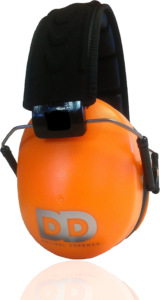
This is the “shut the world down” pick, and it earns that title with NRR 37 dB, which is higher than most common earmuffs. If your routine includes gunfire, loud machinery, or long hours around power tools, you get a stronger buffer without needing anything fancy.
Comfort also lands where it should. You get padded ear cups and a cushioned headband, plus adjustable sizing so you can dial in fit. If clamp force feels tight on day one, a simple overnight stretch (for example, around a box) can help it relax.
The practical win is how easy it is to live with. These fold down for a bag or toolbox, and they come in different sizes (including XL and versions sized for kids). For a second opinion from an established test site, see how this model is treated in Bob Vila’s hearing protection test roundup.
Type: Over-ear earmuffs | NRR: 37 dB | Foldable: Yes | Fit: Adjustable | Certifications: ANSI, CE (varies by model, confirm current listing)
Reasons to Buy:
- Very high NRR
- Comfortable for long wear
- Easy folding storage
- Size options available
Reasons to Avoid:
- Bulkier than earplugs
- Can feel warm outdoors
Who should buy it: If you want one reliable set that works across shooting, shop tools, and loud events, this is the safest default. It’s also a strong pick when you share gear with family and need flexible sizing.
Star Rating: 4.7
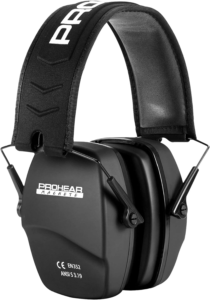
If you shoot rifles or shotguns, bulky ear cups can get in the way when you shoulder a stock. The PROHEAR 016 keeps things low-profile, so you can aim without the muff bumping your gear. That one detail makes a big difference in the field.
Protection is solid, with NRR 26 dB. The ear cups use sound-dampening foam, and the headband design helps keep the seal consistent. You still stay more aware than you would with ultra-high isolation options, which many hunters prefer.
Comfort is also a highlight. You get ultra-soft cushions and a padded headband, plus a lightweight build even with a durable ABS shell. It folds for storage, includes a carrying pouch, and it’s described as ANSI and CE certified for broader noisy tasks like mowing or woodworking (confirm current certifications for your exact version).
Type: Over-ear earmuffs | NRR: 26 dB | Profile: Low-profile | Foldable: Yes | Included: Carry pouch
Reasons to Buy:
- Stock-friendly low profile
- Comfortable cushions
- Folds into a pack
- Good multi-use option
Reasons to Avoid:
- Lower NRR than top muffs
- No built-in audio features
Who should buy it: This fits you best if shooting comfort matters as much as protection. It also works well if you want one set for range days plus chores like mowing and using power tools.
Star Rating: 4.6
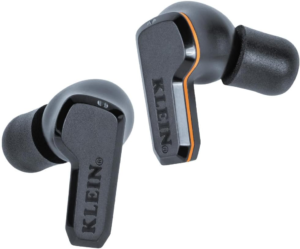
These are for the days when earmuffs feel like too much, but you still need real protection. The standout “superpower” here is the memory-foam tip seal, which expands in your ear and helps cut noise while keeping the fit stable.
You get NRR 28 dB, which is strong for an earbud-style protector. While people often call this “noise cancelling,” the main effect is isolation from the foam seal, not the active noise cancellation used in travel earbuds. The upside is simplicity, and you don’t get that pressure feeling some ANC products create.
The jobsite details are well thought out: Bluetooth 5.0 for stable pairing, built-in mics for calls, and an IP67 rating for dust and water resistance. The charging case is rigid and toolbox-like, and the total playtime is listed at 15 hours with the case. If you’re also comparing everyday earbuds for commuting and travel, this true wireless earbuds buying guide helps you sort “audio-first” models from work-first ones.
Type: In-ear earbuds | NRR: 28 dB | Bluetooth: 5.0 | Durability: IP67 | Battery: Up to 15 hours with case
Reasons to Buy:
- Strong foam-tip isolation
- Work-ready IP67 rating
- Solid call support
- Durable charging case
Reasons to Avoid:
- Not the highest NRR option
- Fit depends on tip choice
Who should buy it: This makes sense if you want one piece of gear for calls and music, but still need hearing protection. It’s also a smart pick if earmuffs feel bulky under hard hats or face shields (fit varies by your other gear).
Star Rating: 4.5
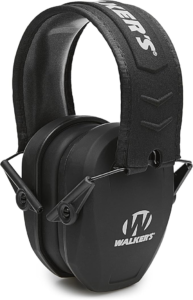
Sometimes you don’t need electronics. You just need something slim that doesn’t smack into your rifle stock, shoulder, or tight work areas. That’s the point of the Walker’s Razor Slim Passive: low-profile ear cups that stay out of the way.
These are passive earmuffs, so the whole focus is blocking sound. With NRR 27 dB, they do a solid job for gunshots and loud tools. Since there’s no battery or Bluetooth, you also avoid the “dead headset” problem on a long day.
Comfort lands above what you’d expect for a compact muff. The ear cups are rubber-coated for a smooth, durable feel, and they’re lightweight at a bit over 8 oz, which helps if you wear them for hours. They fold up neatly too, so they stash easily in a range bag, backpack, or toolbox.
Type: Over-ear earmuffs | NRR: 27 dB | Electronics: None | Weight: Just over 8 oz | Foldable: Yes
Reasons to Buy:
- Slim cups for tight spaces
- No batteries to manage
- Lightweight for long sessions
- Folds for easy carry
Reasons to Avoid:
- No audio or call features
- Passive only, no amplification
Who should buy it: This is a great match when you want less bulk, especially at the range. It also fits anyone who prefers simple gear with fewer failure points.
Star Rating: 4.4
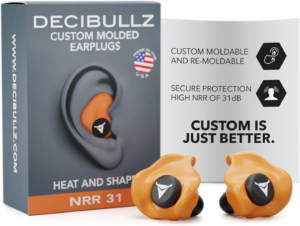
Most earplugs fail for one reason: they don’t fit your ear shape. Decibullz fixes that by letting you mold the plugs at home. The big “superpower” is control, because you’re not guessing small, medium, or large. You shape them to you.
The process is straightforward. You heat the thermoplastic molds in boiling water, let them cool slightly, then place and shape them in your ears. If you don’t like the fit on the first try, you can reheat and re-mold them. That second chance is a dealmaker for beginners.
Protection is strong at NRR 31 dB, which puts them in the serious category for shooting, concerts, travel, loud work, and even sleep (depending on how you like in-ear fit). The kit also includes multiple tip styles, including triple-flange options in different sizes and foam tips, plus a carrying pouch. They’re noted as made in the USA.
Type: Custom-mold earplugs | NRR: 31 dB | Fit: Heat-moldable | Re-moldable: Yes | Included: Tips and carry pouch
Reasons to Buy:
- Personalized fit at home
- High NRR for earplugs
- Re-mold if needed
- Versatile tip options
Reasons to Avoid:
- Setup takes a few minutes
- In-ear feel isn’t for everyone
Who should buy it: If standard plugs never seal right in your ears, this is the first place to look. It’s also a smart middle ground when you want strong protection without the bulk of earmuffs.
Star Rating: 4.3
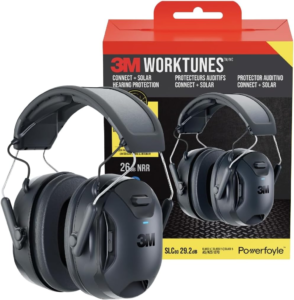
If you work around loud tools, the hardest part is wearing protection consistently. WorkTunes solves that by bundling protection with entertainment and hands-free calls. The “superpower” is simple: you’re more likely to keep them on.
You get an NRR of 26 dB, which helps take the bite out of saws, lawn equipment, and shop noise. It won’t make the world silent, but it cuts harmful intensity in a big way. Bluetooth lets you stream music or podcasts and take calls, and a volume limiter helps keep listening at a safer level.
This version adds solar charging on the headband, topping up from indoor or outdoor light. When there’s no light, you still get 40+ hours from the rechargeable battery, and you can charge via USB-C. Big buttons make control easier with gloves. For official specs on the WorkTunes Connect line, see 3M’s WorkTunes Connect product page. If you want a hands-on style take, Pro Tool Reviews’ WorkTunes Connect review is a helpful read.
Type: Bluetooth earmuffs | NRR: 26 dB | Battery: 40+ hours (rechargeable) | Charging: Solar plus USB-C | Controls: Glove-friendly buttons
Reasons to Buy:
- Music and calls built in
- Long battery life
- Easy controls with gloves
- Helps you wear protection longer
Reasons to Avoid:
- Bulkier than earplugs
- Not “silent” level isolation
Who should buy it: This fits you if you spend hours mowing, sanding, cutting, or wrenching and want hearing protection you’ll actually stick with. It’s also great when you need phone access without pulling out your device.

Star Rating: 4.2
Sleeping earplugs need a different kind of comfort. If the foam feels stiff, you’ll rip them out at 2 a.m. Mack’s Ultra Soft gets the basics right with soft memory foam that compresses easily and sits gently in the ear.
The key detail is slow expansion. You roll them down, insert, then they expand gradually to seal. That helps them stay put instead of pushing back out, which matters if you sleep on your side. It’s the difference between “they worked” and “they ended up on the pillow.”
Noise reduction is strong with NRR 33 dB, which is among the highest ratings you’ll see for foam plugs. You also get a lot in one box: 50 pairs. That makes them a practical choice if you use them nightly for snoring, traffic, or noisy neighbors.
Type: Foam earplugs | NRR: 33 dB | Pack size: 50 pairs | Feel: Soft, slow-expanding | Use case: Sleep and quiet
Reasons to Buy:
- Very high NRR for foam
- Comfortable for long wear
- Good for side sleepers
- Great quantity per pack
Reasons to Avoid:
- Disposable, ongoing replacements
- Fit takes a little practice
Who should buy it: This is the easy pick when sleep is the priority. It also works well for travel, especially when you want quiet without bulky headphones.
Star Rating: 4.0
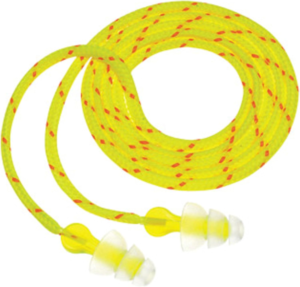
When price and simplicity matter most, tri-flange plugs are a great answer. The Peltor Sport Tri-Flange set gives you a basic, repeatable fit and enough noise reduction for common loud environments.
You get a pack of three, and they’re corded, so you can hang them around your neck between tasks. The neon yellow color sounds like a small detail, but it’s useful when you’re digging through a range bag or tool pouch and need to find them fast.
The tri-flange shape creates a snug seal without needing to roll foam perfectly each time. With NRR 26 dB, they cut harshness from gunshots, concerts, and general loud work without making you feel completely cut off. For many people, that balance is exactly what makes them wearable.
Type: Tri-flange earplugs | NRR: 26 dB | Pack size: 3 pairs | Corded: Yes | Visibility: Neon yellow
Reasons to Buy:
- Simple and affordable
- Easy to keep track of
- Quick insert, consistent seal
- Good everyday protection
Reasons to Avoid:
- Not custom-fitted
- Less comfortable for some ears
Who should buy it: This is for you if you want a no-fuss backup pair in every bag, or if you need basic protection at the range, in a kennel, or around loud weekend projects.
All recommended products compared
Here’s a quick side-by-side so you can match the style to your use case fast.
| Product | Style | NRR (dB) | Best for | Standout feature |
|---|---|---|---|---|
| Decibel Defense Safety Earmuff | Earmuffs | 37 | Loudest environments | Very high noise reduction |
| PROHEAR 016 Ear Protection | Earmuffs | 26 | Shooting and hunting | Low-profile stock clearance |
| Klein Tools Bluetooth Jobsite Earbuds | Earbuds | 28 | Work plus calls | IP67, foam seal, toolbox case |
| Walker’s Razor Slim Passive Earmuff | Earmuffs | 27 | Tight spaces, range | Slim passive design |
| Decibullz Custom Molded Earplugs | Earplugs | 31 | Fit problems, multi-use | Heat-molded custom fit |
| 3M WorkTunes Connect+ Solar | Bluetooth earmuffs | 26 | Long work sessions | Bluetooth plus solar charging |
| Mack’s Ultra Soft Foam Earplugs | Foam earplugs | 33 | Sleep | Soft foam, slow expansion |
| 3M Peltor Sport Tri-Flange Earplugs | Earplugs | 26 | Budget protection | Corded, easy to spot |
The takeaway: pick your style first (muffs, plugs, or earbuds), then choose the NRR and features that match how long you’ll wear them.
What to look for in hearing protection
Getting the right pair is mostly about matching the tool to the situation. The best option for a shooting range might be wrong for sleep, and a “comfortable” set can still fail if it breaks your seal.
Start with the noise and the time
Short exposure changes the math. If you’re around loud sound all day, comfort matters more because you’ll actually keep it on. These are common high-risk spots:
- Loud construction sites
- Power tools and impact wrenches
- Shooting ranges and hunting
- Concerts or motorsports events
- Sleeping near snoring or traffic
If your ears ring after the noise stops, treat that as a warning sign, not a badge of honor.
Understand NRR without overthinking it
NRR is your baseline, but fit decides results. Foam plugs can rate high, yet fail if you don’t insert them right. Earmuffs can rate lower, yet protect better if they seal well on your head. If you want a broader view of what testers prioritize in shop safety, Popular Mechanics’ hearing protection guide is a useful reference point.
Choose the right form factor
- Earmuffs are easy on and off, and they’re great when you need consistent protection with less technique.
- Earplugs pack small and can reach high NRR, but they depend on proper insertion and comfort in the ear canal.
- Protective earbuds sit in the middle, especially when you want calls and music without full-size muffs.
Watch for seal killers: glasses, hair, hats
Anything between the cushion and your head can break the seal. Glasses are a big one. If you wear safety glasses daily, softer cushions and lower clamp force usually feel better. With plugs, the “seal killer” is poor sizing, which is why re-moldable or multi-tip kits matter.
Decide if you want entertainment built in
Bluetooth muffs are great for long jobs because boredom is real. Still, keep expectations realistic. Hearing protection audio isn’t meant to beat your favorite headphones. If you’re looking for pure active noise cancellation for travel and office use (not safety-rated hearing protection), this Wirecutter noise-cancelling headphones guide can help you separate “quiet” from “protected.”
Consider durability and hygiene
Foam plugs are disposable, which is great for cleanliness but adds ongoing cost. Reusable plugs and muffs last longer, but you’ll want to wipe them down, especially after sweaty outdoor work. If woodworking is your main use case, this woodworking noise protection roundup is a good reminder that comfort and consistency matter as much as raw blocking.
Why Trust OASTHAR?
I’m Shashini Fernando, an associate editor who specializes in personal audio, headphones, and wearable tech accessories. For this list, you’re getting a market-wide view because she analyzes hundreds of customer reviews from real users in the hearing protection space, then filters for repeatable patterns you can count on in 2026.
You also benefit from a buyer-first approach. Instead of chasing niche specs, the focus stays on what makes you wear protection every time: comfort, seal, durability, and features that reduce friction.
Best Hearing Protections FAQs
What is the best hearing protection overall?
The Decibel Defense Safety Earmuff is the best overall pick here because it combines high protection (NRR 37 dB) with comfort and simple usability.
Are earplugs or earmuffs better?
Earmuffs are usually easier because you don’t need perfect insertion technique. Earplugs can be more portable and sometimes rate higher, but they only work well if you get a solid seal.
What NRR should you look for?
Higher is generally better, but fit matters more than the number alone. Use NRR to compare similar styles, then choose the one you’ll wear consistently.
Can you use Bluetooth hearing protection for calls and music?
Yes. Products like WorkTunes and the Klein earbuds are built for that. Still, you should keep volume reasonable, even with a limiter.
Is “noise-cancelling” the same as hearing protection?
Not always. Many consumer ANC headphones reduce perceived noise, but they aren’t safety-rated hearing protectors. For tools and gunfire, you want gear designed for hearing protection first.
Final verdict
If you want the safest one-and-done pick, go with Decibel Defense and stop second-guessing. For rifles and field use, PROHEAR 016 keeps your ear cups out of your way. If you need music and calls at work, Klein (earbuds) or WorkTunes (muffs) makes protection easier to stick with.
Most importantly, choose something you’ll wear every time. The “perfect” spec doesn’t matter if it stays in the drawer, but the right hearing protection can keep future you from asking everyone to repeat themselves.