

Sony WF-1000XM6 lands right in the middle of a familiar dilemma. Do you upgrade from the WF-1000XM5, jump ship from AirPods Pro 3, or buy your first “no excuses” pair of premium ANC earbuds?
If you’re anything like most tech fans, you want the basics nailed first: great sound, strong noise canceling, and calls that don’t fall apart outside. After that, you care about the app tools, connection stability, battery reality, and whether the price makes sense in 2026.
This review sticks to confirmed specs and reliable early review findings as of Feb 2026. You’ll get the practical story on sound (bass, mids, treble), ANC, calls, Sony Sound Connect features, connectivity, battery, and value.
RELATED: Sony WF-1000XM6 vs Sony WF-1000XM5: Is it worth Upgrading?
Quick Review
In real use, the Sony WF-1000XM6 feels like Sony doubled down on the stuff you notice daily. The headline changes are a new HD Noise Cancelling Processor QN3e (reported as much faster than the prior generation) and eight microphones total (four per earbud), up from six on the XM5. The goal is simple: better ANC consistency, stronger transparency control, and clearer voice pickup.
The battery rating, however, stays the same on paper: up to 8 hours on the buds, up to 24 hours with the case. So if you wanted a big endurance jump, you won’t get it here.
Pros
- Top-tier ANC with an improved mic array and newer processing
- Stronger call performance in noisy places, based on early reviews
- Rich sound with lots of control in the app
Cons
- Battery ratings do not increase versus XM5
- No aptX support, so some Android setups lose an easy win
For another vetted take, see PCMag’s testing-focused perspective in the Sony WF-1000XM6 review on PCMag.
Specifications
Here are the day-to-day specs that actually matter.
| Spec | Sony WF-1000XM6 (confirmed or reported in reliable coverage) |
|---|---|
| Bluetooth | 5.3 |
| Codecs | SBC, AAC, LDAC |
| Driver | Reported as 8.4 to 8.6mm depending on source |
| Processor | HD Noise Cancelling Processor QN3e |
| Microphones | 8 total (4 per earbud) |
| Water resistance | IPX4 |
| Weight | 6.2g per earbud (reported) |
| Case weight | 47g (reported) |
| Battery (rated) | Up to 8 hours (buds), up to 24 hours (with case) |
| Quick charge (rated) | 5 minutes for about 1 hour playback |
| Multipoint | 2 devices |
| Charging | USB-C, wireless charging supported (reported) |
If you’re still comparing the broader field, Oasthar’s roundup helps you sanity-check the category in one place: best true wireless earbuds 2025.
Design, Comfort & Build Quality
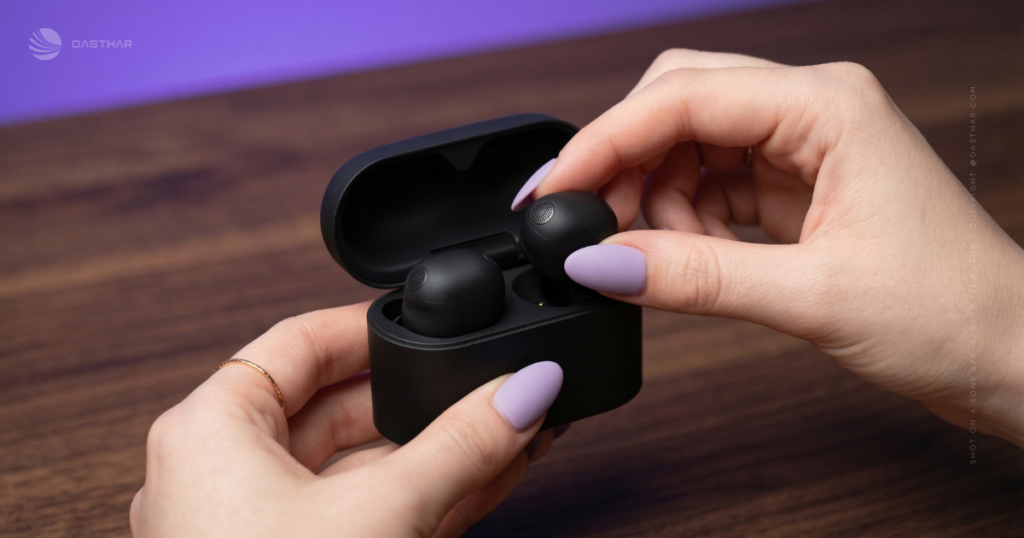
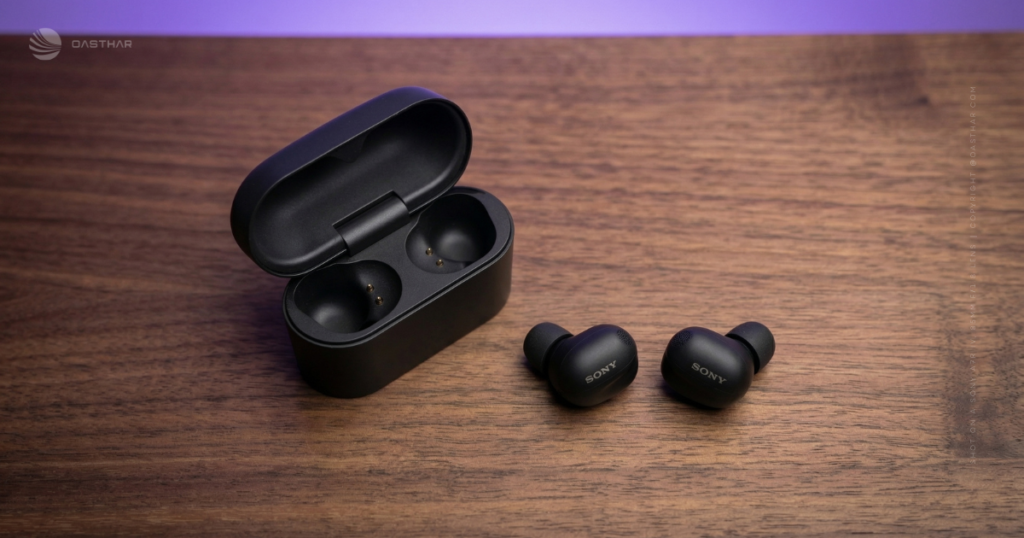
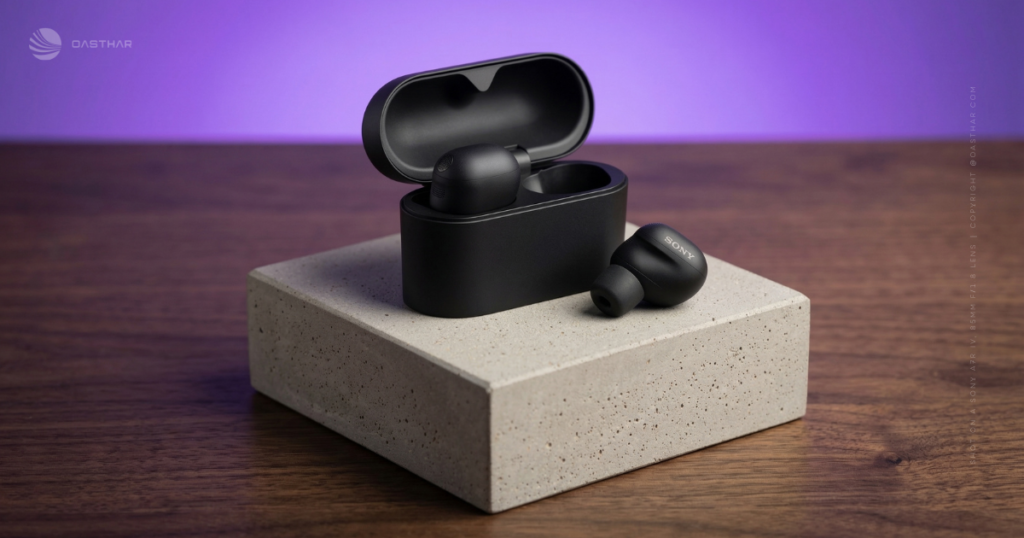
Sony didn’t suddenly go “stem earbuds” here, and that’s a good thing if you like the clean, pocketable look. The XM6 keeps a stemless shape, but multiple reports point to a more ergonomic exterior than XM5, with a profile that aims to sit more naturally in your ear.
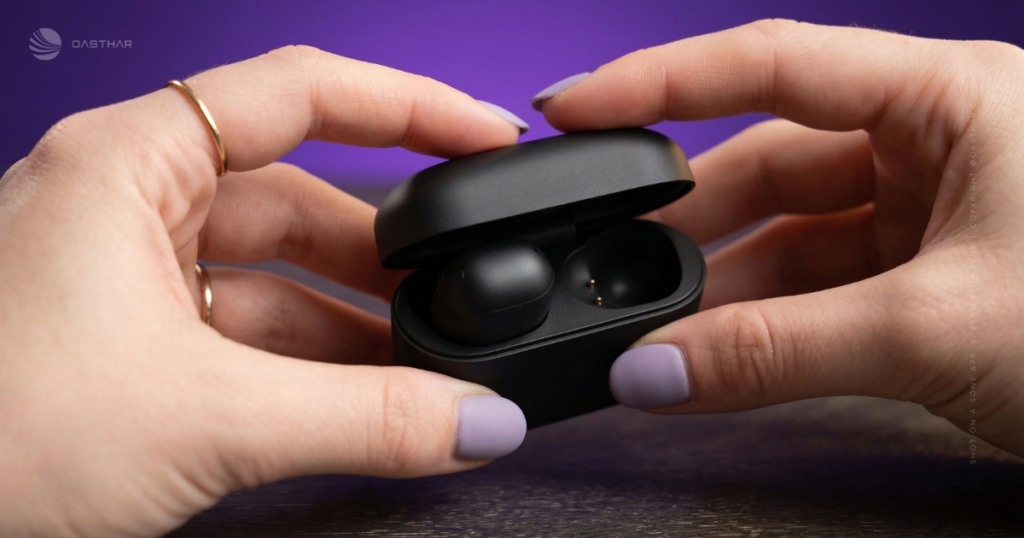
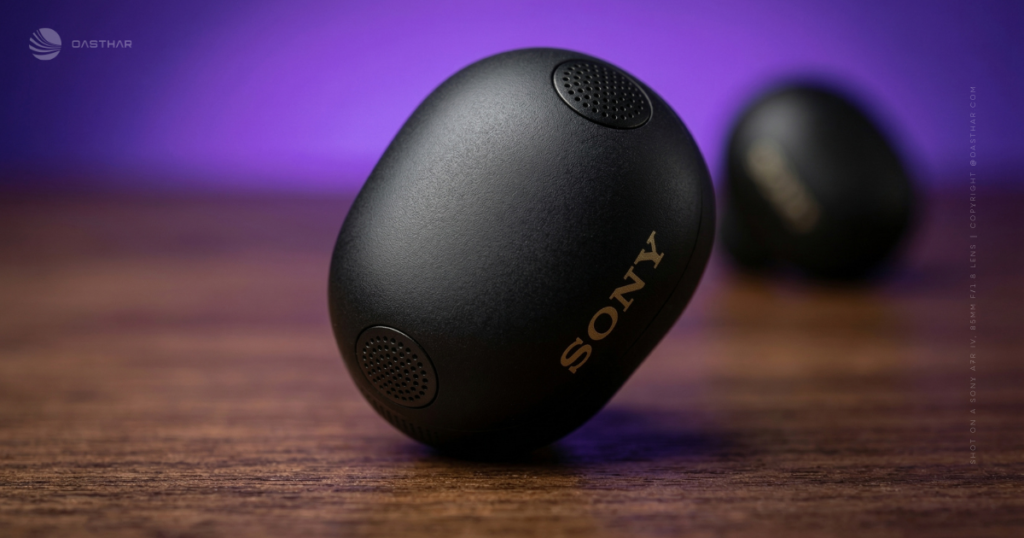
You’ll also notice a practical change from leaked images and spec talk: two mic grilles per earbud are visible, and the overall mic count climbs to eight. That isn’t just trivia. More mic coverage can help the earbuds react faster to changing noise and keep your voice clearer when the environment gets messy.
Build quality stays “premium Sony,” with IPX4 splash and sweat resistance. That’s fine for commuting and light workouts. Still, it’s not the rating you buy for heavy rain runs.
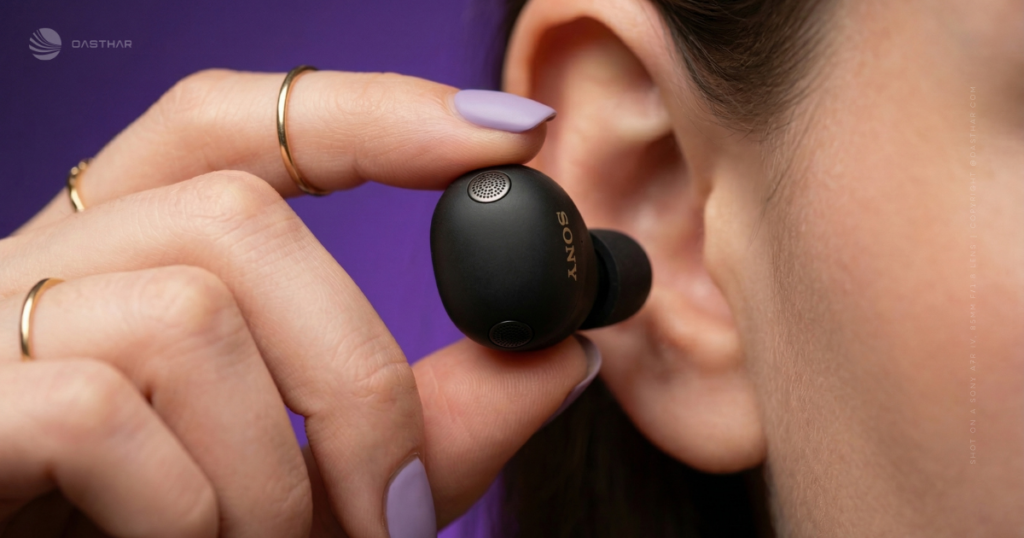
Comfort is where your mileage can vary. For walking, commuting, and desk work, the shape and lighter feel (reported 6.2g each) should work for most ears. However, ear anatomy always gets the final vote, and even great earbuds can feel wrong if the nozzle angle doesn’t match you.
If you want a reference point for Sony’s current tuning and app approach across products, it also helps to read a related flagship review, because the feature philosophy overlaps: Sony WH-1000XM6 review.
Fit, seal and long listening comfort
A good seal is your secret weapon, because it boosts bass and makes ANC work less like a “trick” and more like physics. If the seal leaks, low-end drops first, and noise canceling feels weaker even if the tech is strong.
To check your fit fast, do this:
- Put the earbuds in, then play a bass-heavy track at low volume.
- Press the earbuds in gently for one second.
- If bass jumps up when you press, your seal needs work.
Next, swap tips until the earbuds feel stable without pressure. Also pay attention to depth. A deeper fit can improve isolation, but it can also cause fatigue if it pushes too hard. With the XM6, you want “locked in,” not “wedged in.”
Sound Quality
Sony WF-1000XM6 is tuned to sound like a flagship, not a science project. You get punchy, deep bass that hits with authority, but it doesn’t have to smear into the midrange unless you force it with EQ. For pop and hip-hop, kick drums and sub-bass lines feel strong and controlled, which is what most people actually want from wireless earbuds.
Mids are where daily listening lives, because vocals, guitars, and podcasts sit here. Early reviews consistently describe the XM6 as keeping vocals textured and forward enough to stay clear even when a track gets busy. That matters on a commute, when you’re listening at safer volumes and still want intelligibility.
Treble is crisp without turning sharp. Cymbals and synth sparkle show up, but the sound avoids that brittle edge that makes you wince at “S” sounds. You also get a sense of space that helps separation, so instruments don’t stack into one blob.
A few tech pieces seem to contribute here, based on reported specs: an updated driver approach (size reported around 8.4 to 8.6mm), plus improved DAC and amplification inside each earbud. Sony also keeps DSEE Extreme upscaling, which can make compressed streams feel a bit less flat, especially on older tracks and dense playlists.
For a more general take on where this model sits in the premium market, The Verge frames the XM6 as a top-tier ANC option in its own right, see The Verge’s WF-1000XM6 review.
How to get the best sound in the Sony Sound Connect app
Start simple, because it’s easy to EQ yourself into worse sound.
First, listen with EQ off for a day. Then make small moves:
- Reduce boom before you boost detail. If bass feels thick, pull it down a touch.
- If vocals feel behind the beat, nudge the mid bands up slightly.
- If treble feels dull, add a small lift instead of cranking volume.
Reports also point to more EQ control than XM5, including a higher-band-count EQ layout (often described as 10-band in coverage). That’s great, because it lets you fix one narrow issue without changing the whole signature. Save one “Commute” preset and one “Home” preset, then stop. Constant tweaking turns into a hobby, not a solution.
ANC & transparency
Sony built the WF-1000XM6 story around two pillars: the QN3e processor and an 8-mic system. On paper, that means faster analysis and more mic input to work with. In real life, you feel it most when noise changes quickly, like a train pulling in, a coffee grinder kicking on, or traffic surging at a crosswalk.
For steady low-frequency noise, airplane-style rumble, HVAC, bus engine drone, the XM6 class tends to perform extremely well, and early review impressions put it at the top of the true wireless pile for ANC. Where you’ll still hear leaks is the human voice range. Sudden speech can cut through, especially if someone is close and talking sharply. That’s normal for earbuds, because voices sit in tricky mid frequencies that ANC can’t always erase without damaging your audio.
Transparency (Ambient Sound Mode) matters just as much as ANC if you live in your earbuds. Coverage and leaks around the launch point to smarter ambient behavior, including automatic profiles in some form. In practice, you want transparency to sound natural enough that you don’t yank an earbud out to order lunch.
Engadget’s take is also useful here because it weighs performance against tougher competition. See Engadget’s WF-1000XM6 review.
Mic & Call Quality
Call quality is where older earbuds go to die. The WF-1000XM6 seems built to avoid that fate. With four mics per earbud and newer processing, early reviews describe voice pickup as one of Sony’s best efforts in this form factor.
In day-to-day use, you care about three scenarios: walking outdoors, talking near traffic, and surviving an open office. The XM6 approach aims to keep your voice centered while reducing wind and crowd mush. If you take calls on a subway platform, you should still expect some background presence, but your voice shouldn’t vanish behind it.
Fit still plays a part. If an earbud sits crooked, the mics don’t “see” your mouth the same way. So if callers say you sound distant, re-seat the earbuds and re-check tip size before you blame the tech.
Features
Sony’s feature list is long, but a few items matter every day.
Codec support is still Sony-style: SBC, AAC, and LDAC. If you use Android and you care about higher-quality Bluetooth audio, LDAC remains a real perk. If you live on iPhone, you’ll be on AAC, and you’ll care more about tuning and ANC than codec bragging rights.
DSEE Extreme stays in the mix for stream upscaling. You won’t hear a miracle, but you may notice a bit more life in older or heavily compressed tracks.
Adaptive Sound Control also matters more than it sounds. If it’s set up well, you stop thinking about modes, because the earbuds react as you move between home, commute, and office. Spatial features and head tracking can be fun, but platform support varies, and content matters. If you mostly watch YouTube and listen to stereo music, spatial can feel like a sometimes snack, not a daily meal.
Finally, the “what didn’t change” list matters: rated battery figures stay the same. If you were waiting for a battery leap, you’ll likely feel more satisfied upgrading for ANC and calls.
Connectivity & Controls
Wireless earbuds can sound perfect and still annoy you if they drop connection. The WF-1000XM6 runs Bluetooth 5.3 and supports multipoint for two devices, which is the baseline you want in 2026.
In practice, this is the laptop plus phone setup. You can watch a video on your computer, then take a call from your phone without playing Bluetooth musical chairs. It’s not magic, but it saves you minutes every week, which is the kind of “feature” you only respect after you’ve lived without it.
Controls are still touch-based here, so you’ll deal with a small learning curve. Expect occasional accidental taps while adjusting fit. Once you’ve trained your fingers, it becomes second nature, but it won’t feel like physical buttons.
Voice assistant support is part of the package, and some launch coverage also mentions voice control-style features. Treat those as convenience extras, not core reasons to buy. The core wins are still sound, ANC, and calls.
Battery Life & Charging
Sony rates the WF-1000XM6 at up to 8 hours with ANC on, and up to 24 hours total with the case. For most commutes, that means you can do a full workday of on and off listening without panic, then charge at night like a normal person.
Fast charging is the real safety net. Sony lists about 1 hour of playback from a 5-minute charge, which is the difference between making a flight and raw-dogging airport announcements.
Charging is USB-C, and reliable reporting also points to wireless charging support, which is great if you already use a Qi pad for your phone. No, it won’t change your life. Still, it makes top-ups feel effortless.
Price & Value
The Sony WF-1000XM6 launches around $330 in the US, with prices varying by region and retailer. That puts it right in the premium tier where buyers expect real gains, not small tweaks.
Compared to the WF-1000XM5, the value case is strongest if you care about better ANC consistency and stronger call pickup. The QN3e processor and 8-mic array are the kind of upgrades you feel, especially on commutes and in windy streets.
If you’re cross-shopping:
- AirPods Pro 3 often wins on Apple ecosystem perks and simple UX, but Sony can win on tuning control and codec options for Android.
- Bose QuietComfort Ultra Earbuds (2nd Gen) remains a top ANC name, so your choice may come down to fit and sound taste.
- Sennheiser Momentum True Wireless 4 can appeal if you want a different sound flavor and a premium build vibe.
- Technics EAH-AZ100 is a strong “audio-first” rival, depending on your preferences and fit.
For pricing confirmation and a region-specific summary of the $329.99 street price, PCMag’s listing is a quick reference: Sony WF-1000XM6 price and overview on PCMag.
Who This Is For
You’ll like the WF-1000XM6 most if your daily life has noise, calls, and constant device switching.
Buy if…
- You want top-shelf ANC for commuting, flying, or open offices, and you’ll actually use it daily.
- You take calls on the move, and you want better voice focus than older earbuds manage.
- You use Android and LDAC, and you care about sound quality and app-based tuning.
Don’t buy if…
- You need aptX or aptX Lossless, because Sony still doesn’t support it here.
- Battery is your top priority, since the rated battery figures don’t improve versus XM5.
- You want deep Apple-only features more than anything, like the tightest iOS integration and platform extras.
FAQs
What daily changes will you notice moving from XM5?
You’ll feel the grippier matte finish, notice a more secure seal from revised ergonomics, and hear cleaner tuning with less bass boom, plus more flexible EQ.
Is the Sony WF-1000XM6 noise canceling better than XM5?
Yes, you get stronger low-frequency reduction with more microphones per earbud, plus smarter adaptive optimization and improved wind handling, so commutes and cafes sound calmer.
How good is battery life with ANC on, realistically?
Expect about 8 hours with ANC on, and 24 hours total with the case. Fast charging helps, but it’s not a big step up.
Do the XM6 finally add Auracast and LE Audio support?
Yes, you get Bluetooth LE Audio and Auracast, which can make public audio sharing and lower-latency connections easier, depending on your phone and supported sources.
What does the 10-band EQ change in everyday listening?
You can shape the sound more precisely than before, especially midrange clarity and bass control. The app also adds a fit test, so tuning starts with a solid seal.
Are call quality upgrades noticeable outdoors and on transit?
They should be, with beamforming microphones and AI noise reduction aimed at cutting wind and traffic. You’ll sound clearer in busy spots than with older models.
Is WF-1000XM6 worth upgrading if you already own XM5?
It’s a better buy if you want stronger ANC, newer connectivity (Auracast, LE Audio), and refined tuning. If you’re happy with XM5 battery and fit, it’s a smaller jump.
How does XM6 stack up against Bose and Sennheiser rivals?
You’re choosing between strengths. XM6 focuses on ANC refinement and feature depth, while rivals like Sennheiser Momentum True Wireless 4 and Bose options can offer longer battery.
Final Verdict
Sony WF-1000XM6 is an easy recommendation if you want the best mix of noise canceling, sound quality, and call performance in one pair of earbuds. You’re paying for a faster QN3e platform, a bigger mic array, and the kind of tuning control Sony does well. Comfort should be improved for many people, but fit still depends on your ears and your seal. If your XM5 still fits perfectly and you mainly want more battery, you won’t feel a big upgrade. If you need aptX or you want the deepest Apple extras, you’ll be happier elsewhere.
If budget value is the bigger theme for you, it’s also worth reading a strong mid-priced alternative review so you can compare tradeoffs: Soundcore Liberty 5 review.