

You’re picking between two phones that chase power in totally different ways, and that’s why RedMagic 11 Air vs OnePlus 15 is a real decision. The RedMagic 11 Air puts gaming first with a Snapdragon 8 Elite, built-in fan cooling, shoulder triggers, and a 144Hz OLED, while still keeping the price surprisingly low. The OnePlus 15 goes premium with the newer Snapdragon 8 Elite Gen 5, a gorgeous 165Hz OLED, and an enormous 7,300mAh battery that can last about two days for many people.
If you want the best value for serious mobile gaming, the RedMagic 11 Air usually wins. If you want the better all-around flagship, especially for battery life and day-to-day polish, the OnePlus 15 is the safer buy.
Next, you’ll get a clear breakdown of specs (table), design and build, display, performance, battery and charging, software and ecosystem, connectivity, cameras and speakers, extra features, price and value, who each phone fits, and the final verdict.
RELATED: RedMagic 11 Air vs Asus ROG Phone 9 Pro: Which is Better?
Quick Summary
- Price: RedMagic 11 Air starts at $529 ($629 higher tier), OnePlus 15 starts at $899 (and a higher tier at $999 is mentioned in review coverage).
- Chipset: RedMagic uses Snapdragon 8 Elite, OnePlus uses Snapdragon 8 Elite Gen 5.
- Gaming controls: RedMagic adds capacitive shoulder triggers, a Magic Key, and an active cooling fan.
- Refresh rate: RedMagic is 144Hz, OnePlus is 165Hz.
- Battery size: RedMagic is 7,000 mAh, OnePlus is 7,300 mAh (stacked battery approach is discussed in review coverage).
- Charging: Both support 80W wired, OnePlus also supports 50W wireless (with compatible gear).
- Durability: RedMagic is IP54, OnePlus is described as having higher water resistance in current spec roundups (exact rating varies by source).
- Camera priorities: RedMagic cameras are “good enough” for a gaming phone, OnePlus pushes a triple 50MP rear setup.
Winner: OnePlus 15. You pay more, but you get a more complete daily-phone package on paper.
Specifications
Here’s a side-by-side look at what’s actually confirmed in the provided sources and real-time summaries.
| Spec | RedMagic 11 Air | OnePlus 15 |
|---|---|---|
| Starting price (US) | $529 | $899 |
| Higher tier price (US) | $629 | $999 (16GB/512GB tier mentioned in review coverage) |
| Release timing | January 2026 (reported) | October 2025 (reported) |
| Chipset | Snapdragon 8 Elite | Snapdragon 8 Elite Gen 5 |
| RAM / storage options | 12GB/256GB, 16GB/512GB | Not confirmed in sources (16GB/512GB mentioned) |
| Display | 6.85-inch OLED, 2688 x 1216, 144Hz | 6.78-inch OLED, 2772 x 1272, 165Hz |
| Battery | 7,000 mAh | 7,300 mAh (stacked cells) |
| Charging | 80W wired (charger in box reported) | 80W wired, 50W wireless (compatible charger) |
| Water resistance | IP54 | Higher than IP54 in spec roundups (exact rating not confirmed in provided excerpts) |
| Rear cameras | 50MP main, 8MP ultrawide | Triple 50MP (wide, ultrawide, telephoto) |
| Selfie camera | 16MP under-display | Not confirmed in sources (32MP AF is stated in real-time summaries) |
| Gaming hardware | Fan cooling, shoulder triggers, Game Space, Magic Key | Vapor chamber is mentioned, no triggers/fan confirmed |
If you want more RedMagic-specific context in one place, the internal RedMagic 11 Air review is a useful companion read.
Winner: RedMagic 11 Air. The table makes it obvious, you get more gaming hardware for far less money.
Design & Build Quality
RedMagic 11 Air is “slim” for a gaming phone, not slim in the iPhone sense. In hands-on coverage, it’s described as thinner than chunkier gaming rivals, yet still thick compared to ultra-thin flagships. It also comes with a tradeoff you can’t ignore: the fan intake and exhaust opening. That opening helps performance, but it also explains why you only get IP54, not full dunk-proof confidence.
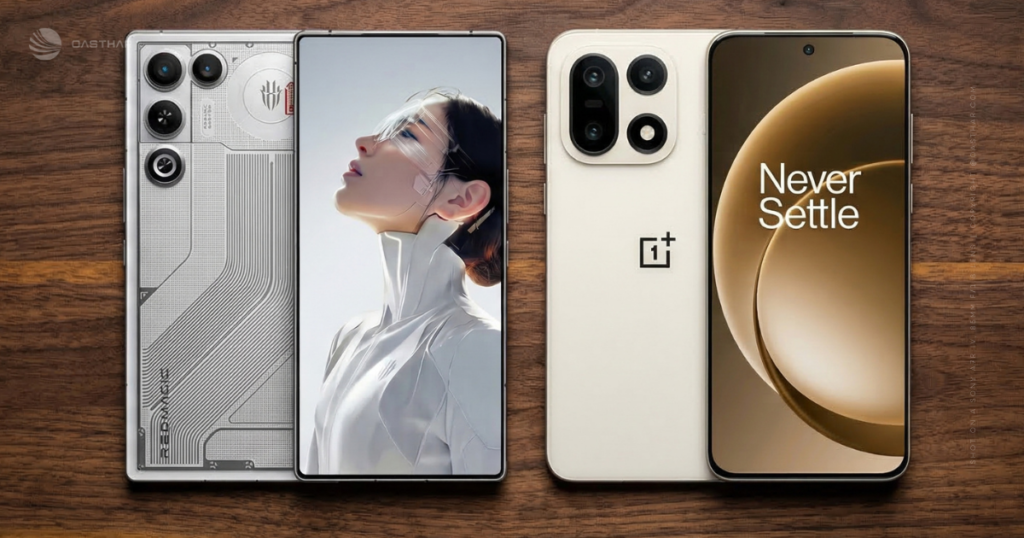
The look is pure RedMagic. Think bold, transparent-style styling with RGB accents. It also picks up fingerprints easily, which becomes annoying fast if you go caseless.
OnePlus 15 plays the opposite card. Review impressions focus more on comfort and “normal flagship” feel, plus a design that fits premium expectations. Real-time spec summaries also point to higher water resistance than IP54, which matters if you live around pools, kitchens, rain, or clumsy sinks.
If you want a phone you can treat like a tool, better sealing and less “gamer styling” usually wins day to day.
Winner: OnePlus 15. You get a more mainstream build and stronger water protection expectations.
Display Quality
RedMagic 11 Air gives you a big 6.85-inch OLED at 144Hz. The cool part is the under-display selfie camera, so you don’t get a hole punch sitting over your game UI. For shooters and MOBAs, that uninterrupted view feels cleaner than you’d think.
There’s one catch. Hands-on notes call out brightness as a weak point outdoors, even in overcast conditions. Meanwhile, other data points claim high peak brightness. The safe takeaway is simple: indoors, it’s excellent; outside, results may depend on your settings and conditions.

OnePlus 15 uses a 6.78-inch OLED with 165Hz refresh and strong “this gets very bright” claims in review-style coverage. The refresh rate difference won’t change your life, but if you’re sensitive to motion clarity, 165Hz can look slightly cleaner in fast scrolling and quick camera pans.
Refresh rate is just “how often the screen updates.” Touch response is “how quickly it reacts.” In games, both matter, but consistent brightness and a clean front panel can matter even more.
Winner: Tie. OnePlus likely wins outdoors, RedMagic wins immersion with the no-cutout screen.
Performance
RedMagic 11 Air runs Snapdragon 8 Elite, and the gaming features aren’t cosmetic. You get a fan, a vapor chamber, and thermal layers (graphene is mentioned) to move heat away. It also includes Game Space (opened by the Magic Key) and capacitive triggers that feel like extra buttons you don’t need to plug in.
Benchmark numbers shared in hands-on coverage show strong results, including Geekbench and 3DMark scores that keep it close to pricier phones. The warning is physical: in long sessions, heat can still transfer to the back. The chip stays happier, but your fingers may notice warmth.
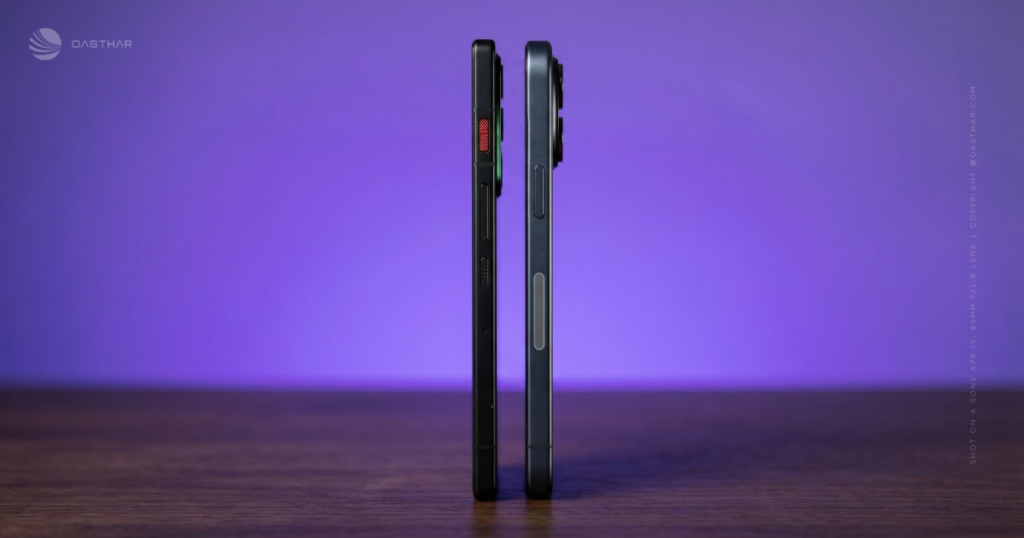
OnePlus 15 uses the newer Snapdragon 8 Elite Gen 5. Review coverage frames it as fast everywhere, with a vapor chamber to manage heat. You’re buying peak performance, plus the polish that tends to come with a mainstream flagship build.
If you play for 15 minutes at a time, peak speed matters. If you play for two hours, cooling and control matter more.
For another take on how these brands approach performance, this CNET head-to-head on gaming-phone design tradeoffs is helpful context.
Winner: RedMagic 11 Air. The active cooling and triggers are built for sustained gaming, not just bursts.
Battery Life & Charging
RedMagic 11 Air packs a 7,000 mAh battery and 80W wired charging, and hands-on coverage notes you often get the power brick in the box. That last part sounds small until you price a real high-watt charger in 2026. It also supports bypass charging, which is a gaming-friendly feature that can reduce heat and battery wear while you play plugged in.

OnePlus 15 goes even bigger at 7,300 mAh using a stacked cell approach, and real-world impressions basically say battery anxiety disappears. It also supports 80W wired and 50W wireless (with compatible accessories). Wireless is convenience, not magic, but it’s hard to give up once your desk and nightstand are set up for it.
If you game while charging, bypass charging matters. If you live on a pad charger, wireless matters more than you expect.
Winner: OnePlus 15. Slightly bigger battery plus wireless charging makes daily life easier.
Software & Ecosystem
RedMagic 11 Air runs Android 16 with REDMAGIC OS 11 in current coverage. The software pitch is straightforward: Game Space, per-game performance profiles, gamer tools, and quick access. It’s a phone that expects you to tweak settings, map triggers, and treat games like “apps with loadouts.”
OnePlus 15 runs Android 16 with OxygenOS 16 and leans into customization. You can tune visuals, gestures, and lots of small system behaviors. The catch, based on review commentary, is that notifications can feel oddly handled, especially on the lock screen and with banner interactions. In plain terms, some everyday actions take more taps than they should.
Update policy is also mentioned in review coverage: 4 years of OS updates and 6 years of security updates. That’s fine if you upgrade every three to four years, but it’s less than the longest promises from Google and Samsung.
Winner: Tie. RedMagic wins for gamer controls, OnePlus wins for general customization, but notification quirks muddy the experience.
Connectivity
Connectivity info is uneven across the provided snippets, so it’s worth being strict about what you can confirm.
RedMagic 11 Air is described with practical basics in current summaries, including dual Nano-SIM support and a USB-C port with DisplayPort output reported in real-time data. That DP support matters if you want to plug into a monitor for a bigger view.
OnePlus 15 has claims in real-time summaries about higher-end connectivity, but specific Wi-Fi standards, Bluetooth versions, and band support are not consistently confirmed in the provided excerpts.
In real use, stronger Wi-Fi matters most if you game on crowded networks, like apartments, dorms, or big households streaming at once.
Winner: RedMagic 11 Air. You can more clearly confirm the practical features that affect how you use it.
Cameras, Mic & Speakers
RedMagic 11 Air offers a 50MP main, 8MP ultrawide, and a 16MP under-display selfie camera. Hands-on impressions are blunt: photos are not the phone’s main skill. The under-display selfie camera also trades clarity for that full-screen look, so selfies tend to look softer than a normal punch-hole camera.
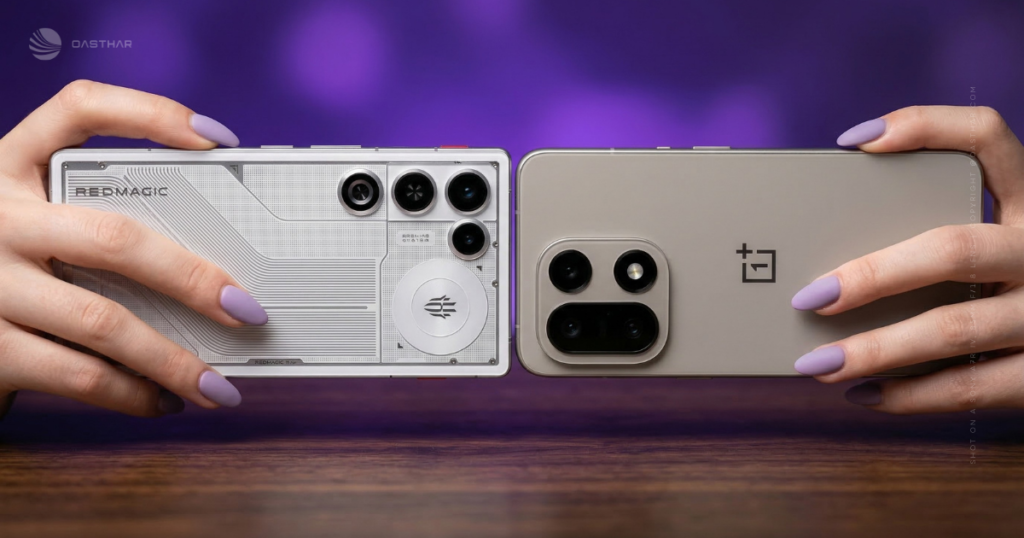
OnePlus 15’s camera setup is framed as more ambitious: three 50MP sensors covering wide, ultrawide, and telephoto. Review coverage also warns that processing can look heavy at times, with contrast and sharpening that can feel “too much,” even when the hardware is capable. Still, it’s positioned as stronger in low light and portraits than many performance-first phones.
If you want a spec-check reference while you shop, PhoneArena’s comparison tool can be a quick way to cross-check camera categories (even though it compares the Pro model on the RedMagic side).
Winner: OnePlus 15. You’re far more likely to like your photos and selfies.
Extra Features
RedMagic 11 Air has features that feel like cheating, in a good way. The shoulder triggers make shooters more comfortable. The Magic Key makes it easy to jump into Game Space. The active cooling fan helps keep frames stable. You also get that true full-screen front, which makes games and video look cleaner.
OnePlus 15’s extras lean practical. Wireless charging is the big one. Review coverage also mentions the lack of built-in Qi2 magnets, which matters if your life already revolves around magnetic accessories.
This section comes down to identity. RedMagic gives you gaming hardware. OnePlus gives you “flagship convenience.”
Winner: RedMagic 11 Air. Triggers plus fan cooling are meaningful, not gimmicks.
Price & Value
RedMagic 11 Air pricing is the headline: $529 for the base model, $629 for the higher spec. In hands-on coverage, it also includes an 80W charger in the box in some regions, which improves value even more. You’re basically paying for performance, battery, and a fast, large screen, while accepting camera compromises.
OnePlus 15 starts at $899, and a higher $999 tier is discussed. The extra money buys you the newer chipset tier, stronger camera ambitions, wireless charging, and better “daily flagship” positioning. It also tends to be the safer pick if you don’t want gamer styling.
If you’re comparing spec sheets while shopping, Gadgets360’s compare pages can help you sanity-check categories, but remember that specific page compares the OnePlus 15R, not the OnePlus 15.
Winner: RedMagic 11 Air. Dollar for dollar, it delivers more gaming-focused hardware and fewer add-on purchases.
Who is it for?
Choose RedMagic 11 Air if…
- You game a lot, and you want triggers and active cooling.
- You want value, because $529 is hard to ignore for this performance tier.
- You hate cutouts, and you want the under-display camera full-screen look.
- You care about charging gear, since the 80W brick is often included.
Choose OnePlus 15 if…
- You want better cameras, especially for portraits and low light.
- You want wireless charging, because you live on a pad charger.
- You want a more normal flagship vibe, not a bold gaming design.
- You want the newer Snapdragon tier, even if you don’t game for hours.
FAQs
Which phone’s better for gaming performance over long sessions?
Pick the RedMagic 11 Air. Its active fan cooling, vapor chamber, and gaming triggers help it hold performance in extended play, while the OnePlus 15 can warm up sooner.
Which one’s the better everyday phone for most people?
The OnePlus 15 fits more lives. You get a bigger 7,300mAh battery, wireless charging, a stronger camera setup, and a more normal, polished daily-use experience.
How big is the battery difference in real use?
OnePlus 15 has 7,300mAh versus 7,000mAh on RedMagic 11 Air. That extra headroom usually means longer unplugged time, plus 50W wireless charging on OnePlus.
Are both displays fast, and which one looks better outdoors?
Both are high-refresh OLED panels, so scrolling and gaming feel smooth. OnePlus 15 tends to be easier outside thanks to higher brightness, RedMagic can feel dimmer outdoors.
Which phone takes better photos and video without effort?
OnePlus 15. It has a triple 50MP rear camera setup and a 32MP selfie camera with stronger video specs, while RedMagic’s cameras are serviceable but not a focus.
Do you lose anything with RedMagic’s under-display selfie camera?
You gain a clean, no-notch screen for games, but selfies and front video quality take a hit. RedMagic tops out at 1080p on the front camera.
What’s the real value play, and which costs less?
RedMagic 11 Air is the cheaper route to flagship-grade speed, a big 144Hz-class display, and gaming hardware. OnePlus 15 costs more, but adds extras like wireless charging.
Which one has better RAM and storage options for power users?
OnePlus 15 commonly ships in higher tiers like 16GB RAM and 512GB storage. RedMagic 11 Air offers 12GB or 16GB RAM depending on whether you pick 256GB or 512GB.
Which phone’s software support is more reassuring long term?
OnePlus 15. It’s advertised with multi-year OS support (4 years OS, 6 years security reported), while gaming phones like RedMagic usually offer shorter, less predictable timelines.
What’s the biggest “gotcha” you should know before buying?
If cameras matter, don’t buy the RedMagic 11 Air expecting flagship shots. If you hate gaming-first styling or want wireless charging, the OnePlus 15 will feel easier to live with.
Final Verdict
If your priority is gaming control and steady performance per dollar, RedMagic 11 Air is the smarter buy. It gives you the fan, triggers, and Game Space tools that mainstream flagships skip. On the other hand, OnePlus 15 makes more sense if you want a phone that’s easier to trust around water, takes better photos more often, and fits a wireless charging routine.
The cleanest way to decide is simple: do you want a pocket console or a do-everything flagship?
Winner: RedMagic 11 Air. The price gap is huge, and the gaming features are the point of this comparison.